




Academic conference on Holocaust discourse in European countries held in Kyiv
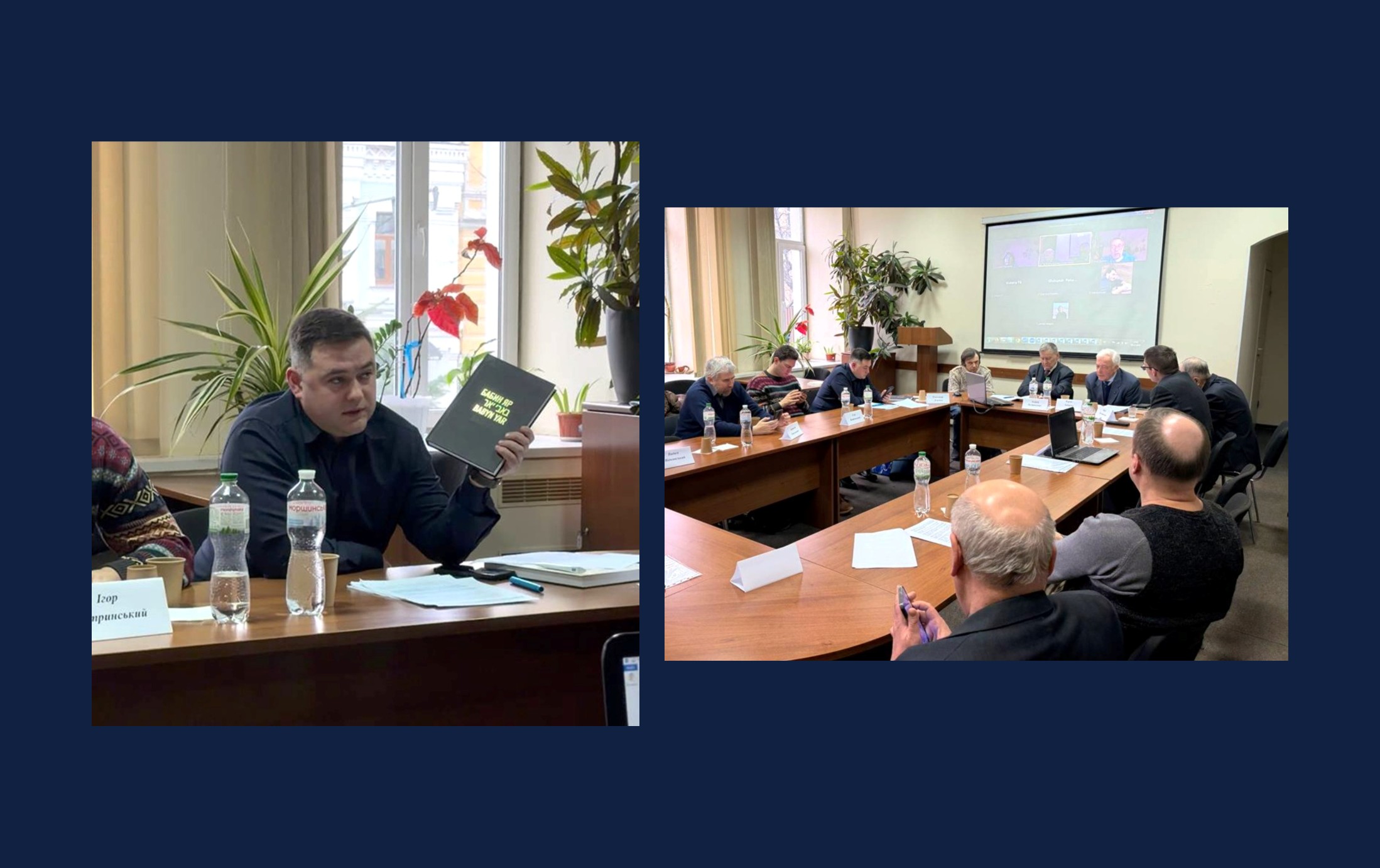
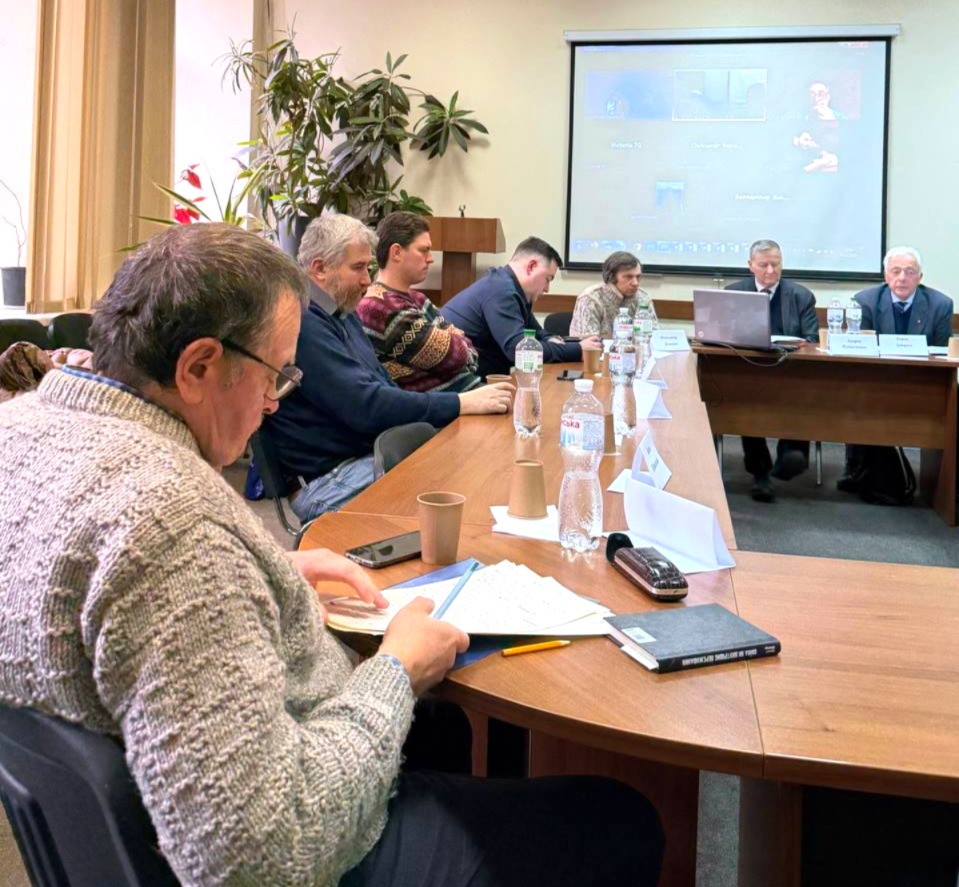
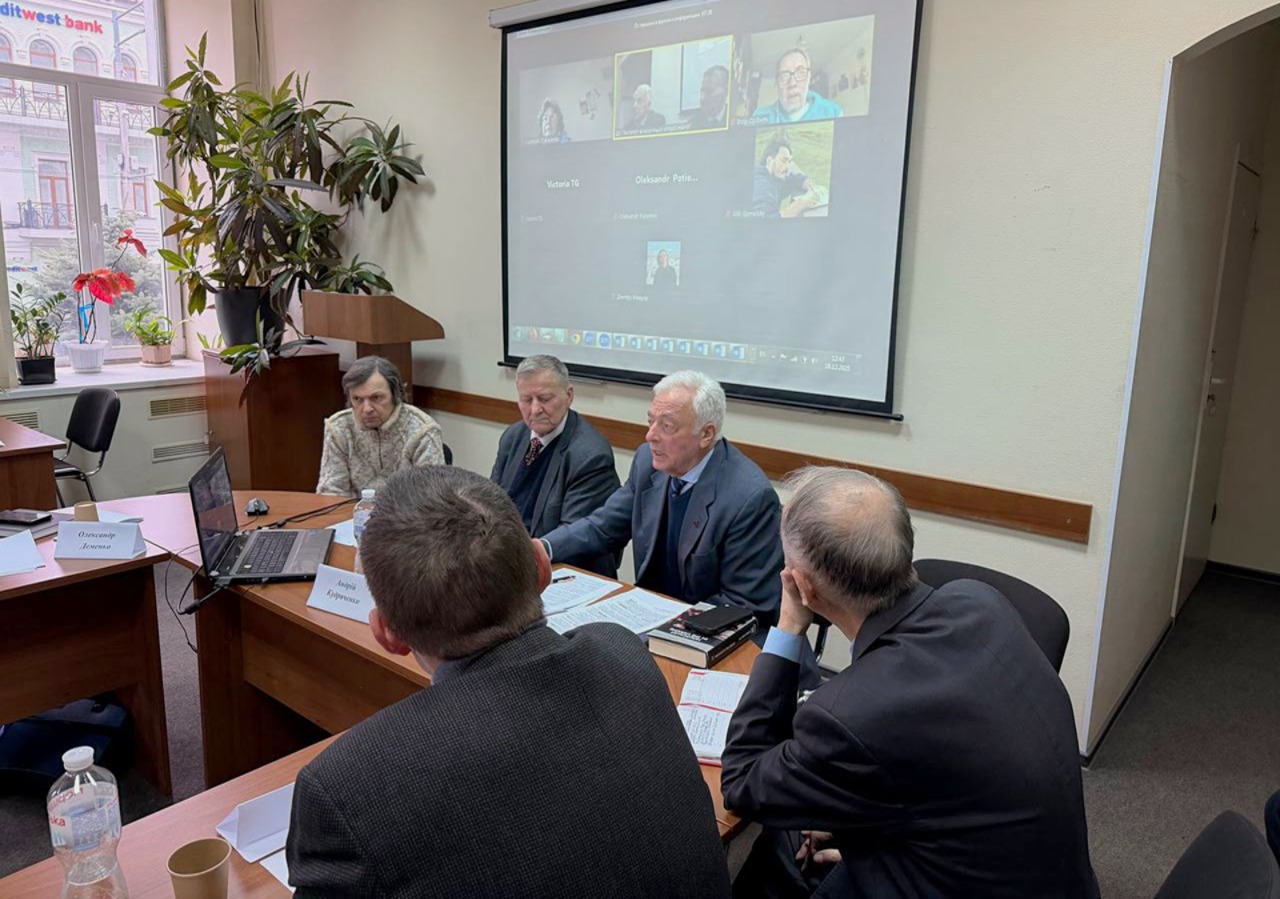
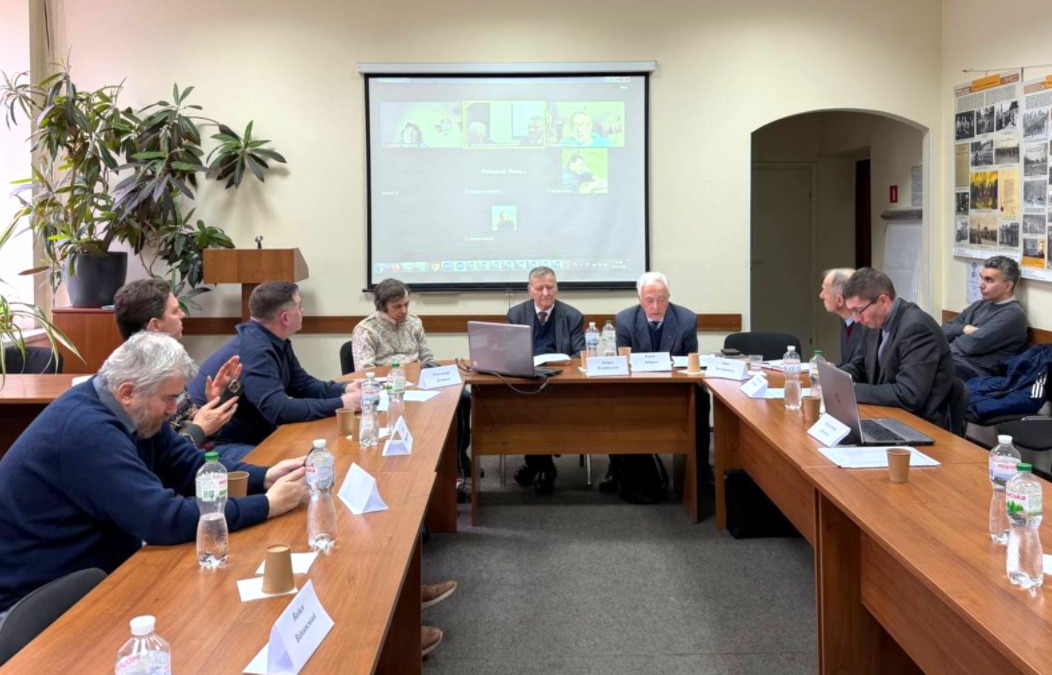
The annual international academic conference "Special Features of Shaping Academic Discourse on the Holocaust in European Countries" was held at the Institute for World History of Ukraine's National Academy of Sciences in Kyiv.
Ukrainian scholars and researchers from different parts of the world gathered to discuss the European and — as became clear during the conference — global academic discourse on the Holocaust. Many participants devoted almost their entire lives to studying the Shoah.
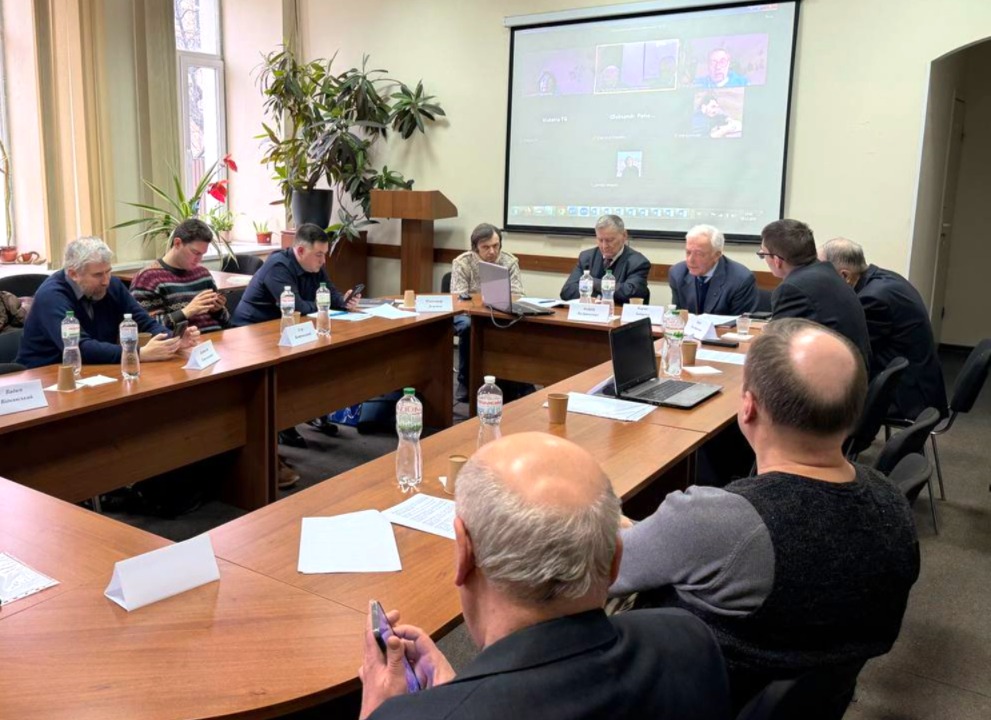
The key issues discussed at the conference include the theoretical and methodological principles of studying modern academic discourse on the Holocaust and its place in world history; distinctive features of how academic and political discourse on the Holocaust is shaped in Western European and North American countries; Eastern European, North American and Israeli approaches to Holocaust studies, and other topical problems of Holocaust research in Ukraine and worldwide.
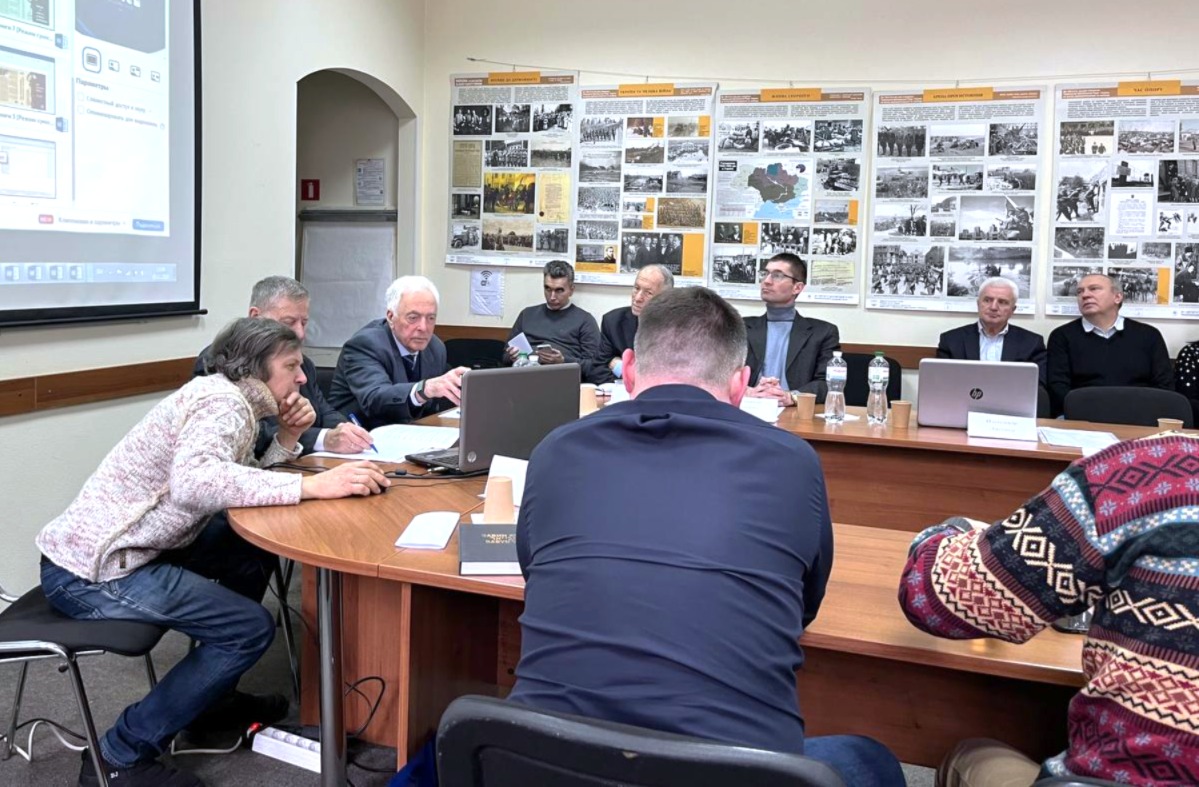
Also mentioned were the preconditions of the Holocaust and its consequences for the present-day European society, the main directions and features of modern Holocaust research, sources for studying this tragedy in Ukraine and other countries, particularly in the USA, Poland, France, Switzerland, and Great Britain, as well as the role of international justice in preserving the memory of Holocaust victims and other important topics in the context of modern society.
Vladyslav Hrynevych, Jr., UJE's regional manager in Ukraine and a PhD student at the Department for World History in Borys Hrinchenko Kyiv University, made a presentation entitled "On resistance to the Soviet policy of destroying the memory of Babyn Yar as a symbol of the Holocaust." It is based on a historiographical analysis of the collective monograph Babyn Yar: History and Memory, supported by UJE. Work on this book began in 2015 with the preparation of commemorative events towards the 75th anniversary of the Babyn Yar tragedy, which were held on 23–29 September 2016 in Kyiv with UJE's financial support. The book was dedicated to these events.
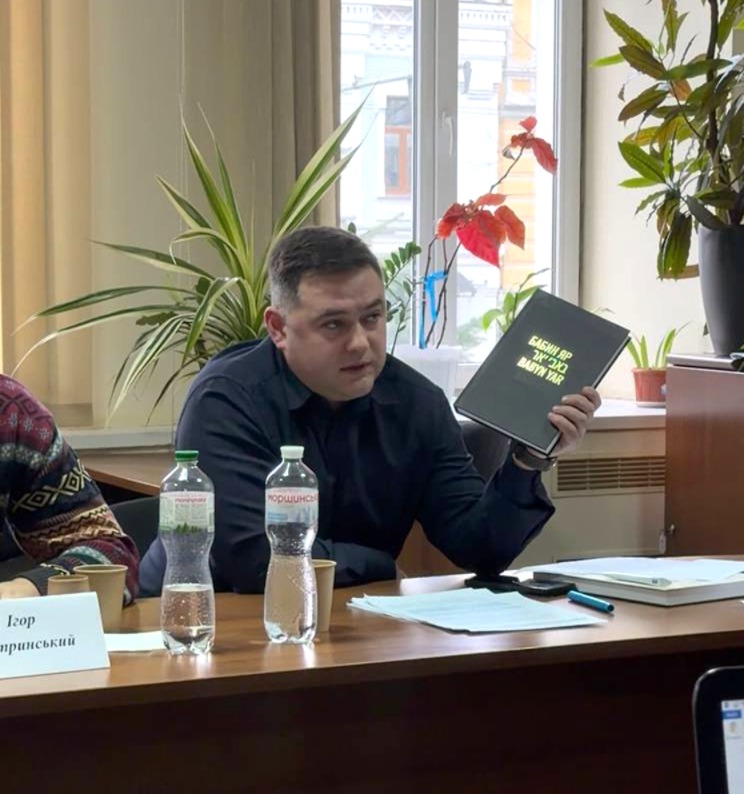
Importantly, the first edition of the book contains contributions by fourteen authors representing different fields of knowledge and countries (Ukraine, Canada, the Netherlands, the USA, Israel, and France) and united by the awareness of how important it is to preserve the memory of Babyn Yar as a symbol of the Holocaust and other 20th-century tragedies. Furthermore, the book's value lies in its representation of a "Ukrainian view" of the Babyn Yar massacre.
Another crucial aspect of its concept is placing the responsibility for the crimes committed in Babyn Yar on two totalitarian regimes — Stalin's and Hitler's. The Ukrainian model of memory of World War II and the Holocaust condemns both criminal regimes. Although Nazi Germany was the direct organizer of the Holocaust, the Stalinist regime also bears its share of responsibility for the Jewish tragedy. The alliance of the two dictators contributed to the beginning of World War II, opening and accelerating the path to the Shoah of European Jewry.
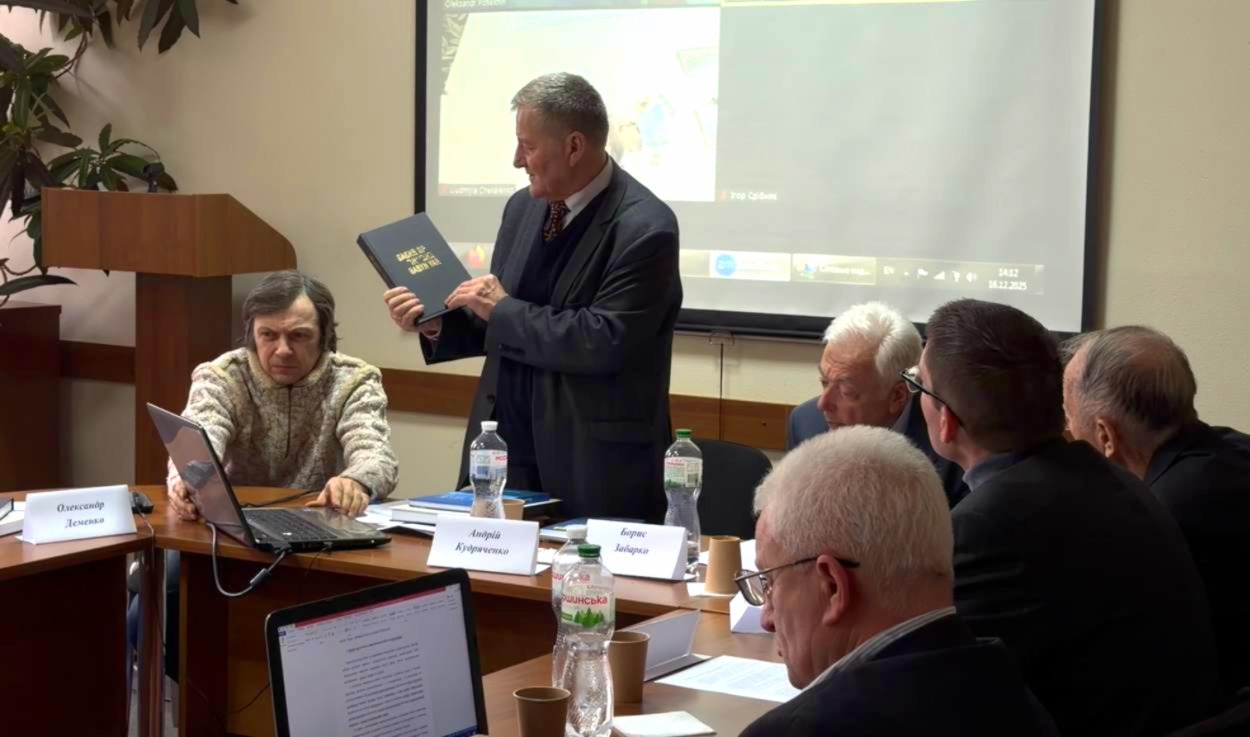
A special presentation was delivered by Borys Zabarko, a prominent Ukrainian historian, Holocaust researcher, public figure, and one of the most authoritative Shoah memory keepers in Ukraine. He is a former ghetto prisoner, a direct witness to Nazi crimes, and the long-time chairman of the Ukrainian Association of Jews/Former Prisoners of the Ghetto and Nazi Concentration Camps. For decades, he has dedicated his scholarly, journalistic, and organizational activities to documenting the testimonies of Holocaust survivors and properly commemorating Nazi terror victims in Ukraine. Zabarko is the author and editor of numerous scholarly publications and memoirs that collect unique oral testimonies of Holocaust eyewitnesses, including children of war and prisoners of the ghetto and concentration camps. His works have become an important source for Ukrainian and foreign researchers, as they introduce into scholarly circulation the voices of those who had long remained outside the official historical narrative of the Soviet era. As an active participant in international academic forums, Zabarko consistently advocates the need to integrate the Ukrainian experience of the Holocaust into the European and global context of memory.
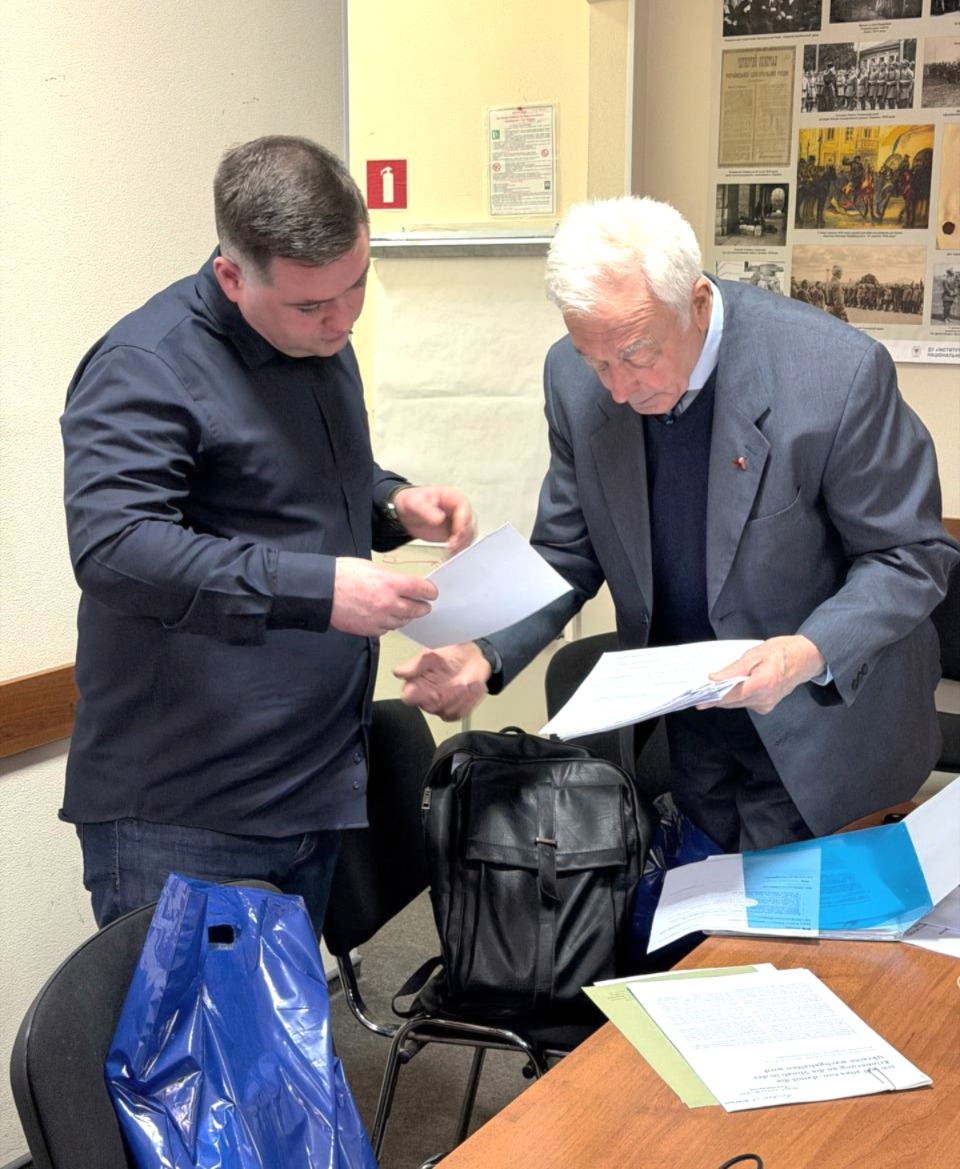
Zabarko's speech at the conference was particularly significant precisely because it combined deep academic reflection with personal experience of the tragedy. His presentation became a moral guide for the participants, once again emphasizing that Holocaust research is not only an academic field but also an ethical responsibility to the past and the future, aimed at preserving historical truth and preventing the recurrence of such crimes.
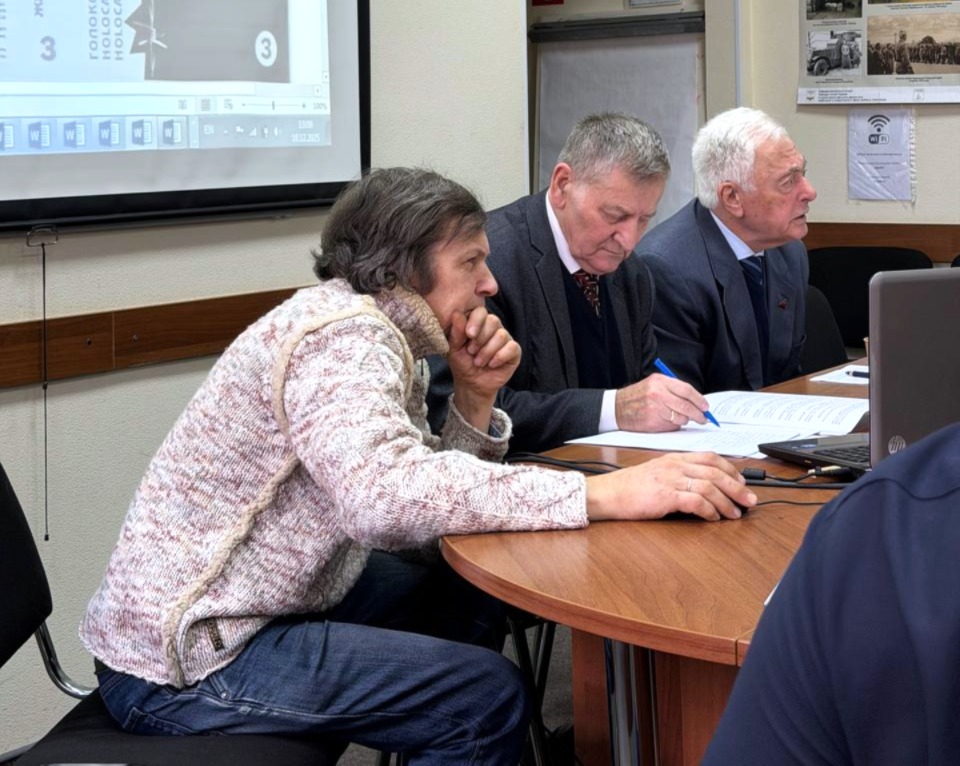
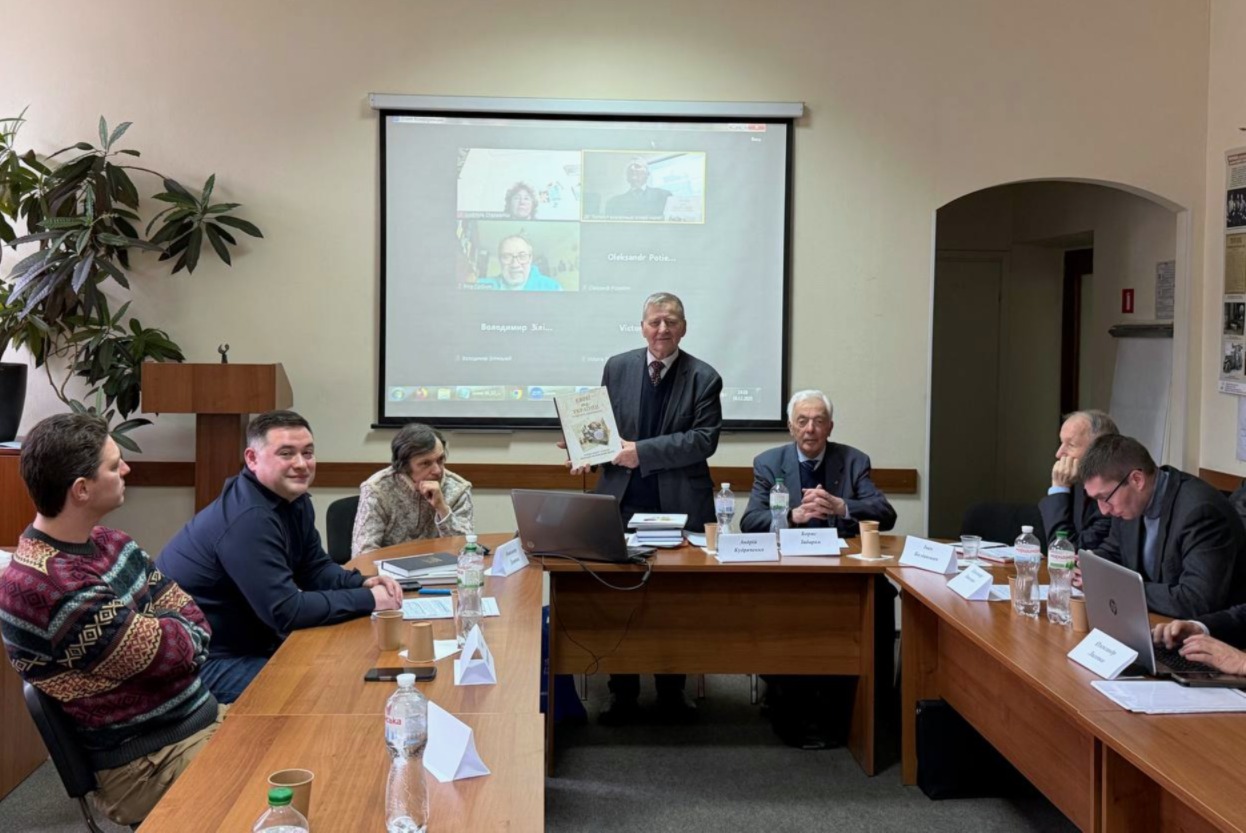
Vladyslav Hrynevych, Jr., Regional Manager, UJE Ukraine