




"Hardly any family in Ukraine does not have WWII victims or participants," says historian Vladyslav Hrynevych, Sr.
Ukrainian historian Vladyslav Hrynevych, Sr., discusses modern practices of commemorating WWII victims and heroes. Ukraine is rapidly rethinking its memorial space and commemorative practices, rejecting many elements of the Soviet narrative. At the same time, it is facing the increasingly urgent task of countering the Russian propaganda campaign, which instrumentalizes various mythologies of the "victory over fascism" in new ways. Vladyslav Hrynevych, Sr., outlines and analyzes the current ways of developing the Ukrainian culture of memory in the context of the Russian-Ukrainian war.
"Despite its legendary victory over Nazism, the Red Army was the main tool of Stalinist imperialism"
The memory of the victory over Nazism is a subject of heated discussions today. As its 80th anniversary approaches, the Global Ukraine group issued a statement calling for the "exploits of Ukrainians in the Red Army" to be recognized. You are one of the signatories of this document. Why is it important for modern Ukraine to honor the memory of those Ukrainians who served in the Red Army?
When discussing Red Army soldiers, we face two extremes. On the one hand, there is a desire to erase the memory of Ukrainians who fought on Stalin's side during World War II. On the other hand, there is an old Soviet tradition of glorifying and memorializing their deeds. How can we find a middle ground here, since this concerns both academic and moral issues?
First of all, hardly any family in Ukraine does not have WWII victims or participants. For example, my grandfather Andrii Hrynevych went missing during the defense of Kyiv in 1941, and my uncle Adrian was critically wounded during the liberation of Odesa in 1944. Of the men, only my father survived. He was studying at a military-technical air force school in Serpukhiv when his war began in 1940; it ended for him in Vienna in 1947.
People started thinking about the difficult fate of Ukrainians during this war long ago. Vasyl Barka, a Red Army soldier and later an émigré writer, was one of the first to raise this issue in his novel Paradise. He wrote: "Perhaps the war will strike like steel or flintstone, sending sparks all round and burning the eyes of everyone looking indifferently at the fighting. They will run in all directions and will be forced to choose sides. Does your soul serve heaven or hell? That's where the crunch is. It is difficult to choose, because Moscow and Berlin are two of a kind. Ukrainians who will fight against the red death will be right, as will those fighting against the black death and those fighting against both. Only Ukrainians who will proclaim the none-of-my-business attitude as the highest wisdom on earth will be wrong" [1].
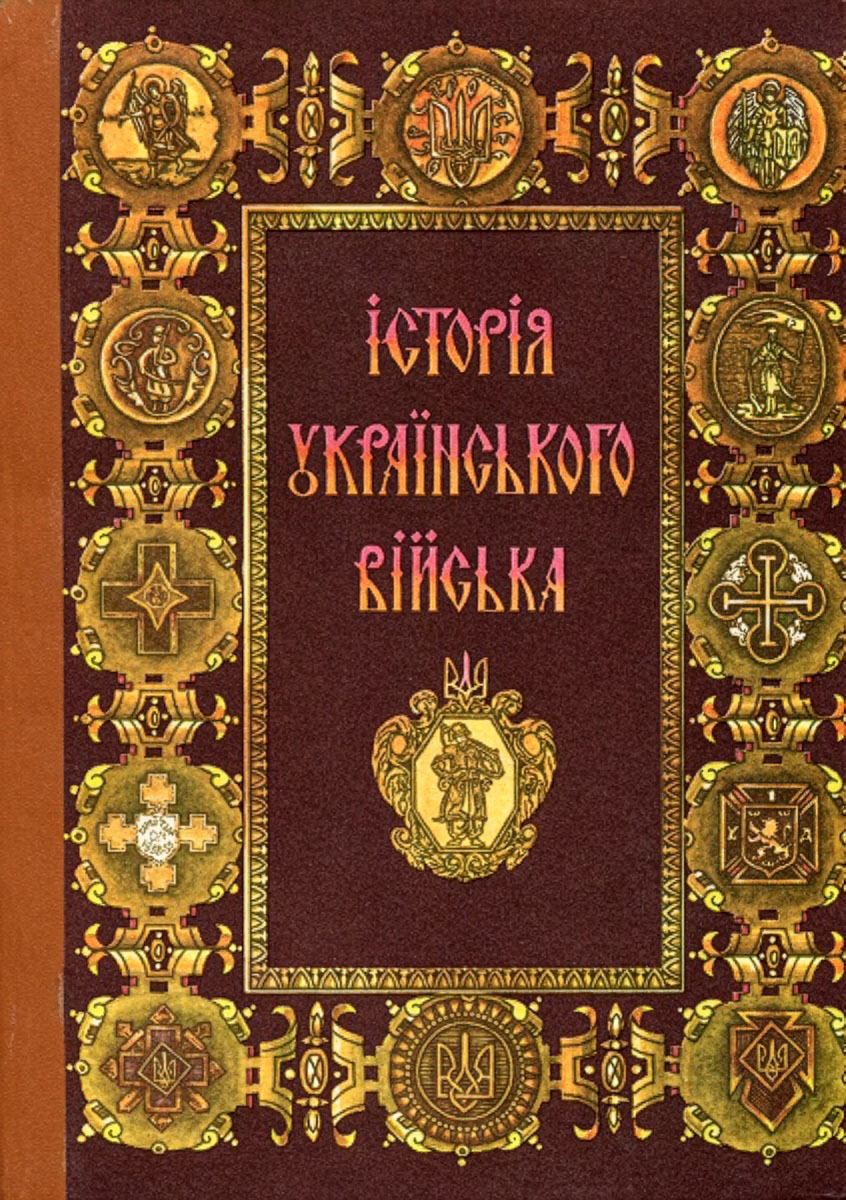
After the collapse of the USSR, we, as young scholars, faced the above problem in the scholarly dimension. In the mid-1990s, prominent historian Yaroslav Dashkevych invited Liudmyla Hrynevych and me to a project to write a monograph entitled A History of the Ukrainian Army (1917-1995) (Lviv, 1996). It included essays on the UPA, the Carpathian Sich, the Galicia Division, and the Armed Forces of modern Ukraine. We wrote new chapters about Ukrainians in the Red Army, which eventually made up more than half of this massive tome, conceptually changing the entire format of the publication. "A history of the Ukrainian army (especially in the 20th century) involves not only individual Ukrainian national formations as part of foreign armies or completely independent Ukrainian armed forces but also Ukrainians who found themselves in the ranks of foreign armies and navies without their own distinct external organizational national characteristic," Dashkevych wrote [2]. He also noted that our texts were an entirely new view of Ukrainians in the Red Army, unknown to historiography until then. Of course, the key topic was not the glorification of Ukrainians' heroism in Stalin's imperial army but an analysis of how they were not allowed to form their own army. Dashkevych noted in this regard that "Moscow's military and ethnic policy was determined by a single factor: the fear of the revival of Ukrainian national armed formations."
In addition to the academic dimension, this issue has a political dimension, especially during the ongoing Russian-Ukrainian war. First and foremost, it is about the role Ukrainians played in the victory over Nazi Germany, which leads to the question of its consequences for Ukraine. Writer Vasily Grossman aptly noted that in addition to the victory over Hitler and Nazism, there was also Stalin's victory over his own people.
The national liberation movement in Ukraine was suppressed, and Ukrainian independence was postponed for another 50 years. Trains packed with hundreds of thousands of deported Ukrainians were sent to the Gulag. Another famine occurred in 1946. Totalitarianism became even stronger. The country found itself behind the Iron Curtain for decades. Despite its legendary victory over Nazism, the Red Army was the main tool of Stalinist imperialism. It occupied Eastern and Central Europe and threatened the entire democratic world. It is through this prism that Ukrainians' participation in the Red Army should be viewed.
"At least six million Ukrainians fought in the Soviet army"
What was the ethnic composition of the Red Army? How many Ukrainians fought in its ranks during the entire period of the German-Soviet war? How many of them died?
Mobilization in 1941. On the eve of the German attack, the Red Army and NKVD troops numbered 4.3 million, of whom more than 20% were Ukrainians. The total mobilization covered those liable for military service and born between 1890 and 1922–23. By the end of 1941, around eight million people had been mobilized, significantly increasing the number of Ukrainians in the Red Army. The troops on the Southwestern and Southern fronts, which had lost most of their previous personnel during the initial months of the war, were manned primarily by the local population. For example, the 206th Rifle Division was formed by reservists from the Zaporizhzhia and Dnipropetrovsk regions, while the 255th and 297th divisions filled their ranks in the Kyiv and partly Sumy regions, and so on. The 37th, 38th, and 40th armies were formed mainly from the residents of the Ukrainian SSR, with Ukrainians accounting for more than 50%.
However, such large-scale mobilization efforts were quickly brought to naught. After the defeat of the first echelon (staffed mostly by experienced and relatively well-equipped and armed professionals) in the border battles, conscripts with little or no military training joined the Red Army in Ukraine. There was neither time nor opportunity to train them, so they were initially assigned the role of cannon fodder. Of the 5.7 million Soviet prisoners of war, 3.3 million were captured in 1941, including about 75% in 13 large "kettles" organized by the Wehrmacht for the Red Army. In Ukraine, about one million people were encircled: 665,000 near Kyiv, 100,000 near Uman, 100,000 in the Azov Sea region near Melitopol, and 100,000 in the Crimea near Kerch. Most of the encircled Red Army troops offered little resistance to the enemy and surrendered en masse, indicating low morale.
Amid the rapid German offensive, catastrophic military defeats, and the massive flight of local authorities, Ukrainians no longer thought about fighting "for the motherland and Stalin" but rather about avoiding conscription or returning home from the army. They were not afraid of the Germans, thinking that nothing could be worse than the Bolsheviks. This was true in both western and eastern Ukraine. For example, unlike in the western regions, where the rapid German offensive almost completely disrupted all plans, the Soviet authorities had four months to carry out mobilization in the east, but it was also unsuccessful. As of 16 October 1941, conscript turnout at the recruiting stations in Voroshylovhrad was extremely unsatisfactory: a mere 10% came to the Artemivsk recruiting station (18% to Klymivsk). As of 23 October 1941, just 43% of the conscripts in the Kharkiv Military District (KhMD) reported for duty. Mobilized men often escaped during transportation to the active army. Military enlistment offices in the Kharkiv and Stalino regions reported a high percentage of deserters at the end of October 1941: up to 30% in Chuhuiv, up to 35% in Stalino, 45% in Izium, and 50% in Derhachi.
Up to 2.5 million people were mobilized in Ukraine in 1941, but most never reached military units. Over 5.6 million people who were subject to mobilization remained in the occupied territory of the USSR due to various factors, such as desertion, negligence of military enlistment offices, rapidly advancing front lines, etc. Up to 3 million of these were in Ukraine — 1,625,174 in the Kyiv Military District (KMD), 813,412 in the Odesa Military District (OMD), and 603,129 in the Kharkiv Military District (KhMD without the Donetsk and Voroshylovhrad regions).
The share of Ukrainians in the Red Army dropped from 20% in mid-1941 to 12% as of 1 July 1942. However, Ukrainians retained second place after Russians on the "southern fronts." For example, in March 1942, the Separate Coastal Army defending Sevastopol had 64,971 people, including 15,893 Ukrainians, 28,134 Russians, and about 20,000 others. In April 1942, on the eve of the offensive near Kharkiv, 31,000 Ukrainians and 201,000 Russians fought on the Southwestern Front. The structure of the ethnic composition of the Don Front in September 1942 was similar: 33,554 Ukrainians, 216,412 Russians, and about 40,000 others. From 1 July 1942 to 1 July 1943, Ukrainians accounted for over 11% of the Red Army men, and their share began to grow again during the Soviet autumn offensive.
Mobilization in 1943. Given the disastrous experience of the 1941 mobilizations, the Soviet leadership took steps to improve the conscription system. On 9 February 1942, the Supreme Command Staff issued Order No. 089 "On the Conscription of Citizens in the Territories Liberated from Occupation and the Formation of Reserve Regiments," empowering military councils in the armies to conscript locals fit for military service and without previous Red Army experience to serve in reserve regiments. To this end, special units were set up in regiments, divisions, and brigades. Unofficially, they were called "field military enlistment offices," and the active army received carte blanche to make use of local human resources. This was not typical for the military in general, as it was extremely challenging to mobilize and train new recruits in field conditions. The official explanation offered by the Soviet leadership boiled down to "the shortcomings in the operation of transport." It was supposedly overloaded, making it difficult for recruits to arrive on time.
The active army's involvement in mobilization made it possible to significantly speed up the deployment of new reserves to combat operations. At the same time, this affected the quality of selection and training, causing numerous violations of conscription standards (in terms of age, medical fitness, etc.) and training time, and ultimately affecting combat ability. In practice, this kind of mobilization looked like a roundup of the male population. After entering the liberated settlements, all men were taken to a reserve regiment. They were supposed to be screened and undergo combat training where their army operated. In reality, however, nothing of the kind happened. The mobilized, many of whom did not even have military uniforms or firearms, were immediately thrown to the front line. Worse still, they were sent into minefields, against enemy firing points, and so on, to supposedly atone to Comrade Stalin with their blood for staying behind in the occupied territory.
Even the Germans did not understand this Soviet attitude toward their own. Having examined the captured Red Army soldiers during this period, they came to the paradoxical conclusion that the Soviet Union had finally exhausted all its human resources, as the POWs included many local teenagers and the elderly who had been mobilized a few weeks earlier. A large number of cases when field military commissariats sent the untrained newly mobilized men to the front line gave rise to such descriptors as pidzhachnyky' men in suit jackets', chornobushlatnyky' men in black pea coats', and chorna pikhota' black infantry'. The apogee of this brutal practice came during the Battle of the Dnipro in September-November 1943, when peasants from surrounding villages, unarmed and without military uniforms and often without even any floating devices, were driven to cross the Dnipro. According to some estimates, more than 200,000 forcibly mobilized people aged 16 to 60 died in the Battle of the Dnipro.
Eventually, the arbitrariness of the military command, when every regiment or division commander could mobilize locals and throw them into battle, was ended by Order No. 0430 of the Supreme Command Staff of 15 October 1943.
Mobilization in western Ukraine had its distinctive features, primarily because of the UPA's activities there. The Soviet military command wondered whether any mobilization was worthwhile in the region. General Vatutin, commander of the 1st Ukrainian Front, posed this question to Nikita Khrushchev. In January 1944, Khrushchev traveled to Sarny, one of the first western Ukrainian towns liberated from the Germans, to explore the issue himself. He informed Stalin about the results of his trip: western Ukrainians had to be drafted into the Red Army on the same basis as eastern Ukrainians, only with "more careful screening and filtering out of unreliable people, as well as agents that the Germans will certainly try to send to us through these OUN members, through Bandera and Bulba followers."
On 25 January 1944, Stalin signed the special order of the State Defense Committee "On the Mobilization of Soviet Citizens in the Areas of Western Ukraine and Western Belarus Liberated from the German Occupiers," launching the mobilization campaign. But Khrushchev overreacted. Things turned out to be not so simple. In March 1944, he drafted a letter to Stalin and Malenkov and a resolution of the State Commissariat of Defense titled "On Special Measures for the Western Regions of Ukraine," suggesting that the Kremlin leaders conduct total mobilization to fight the UPA. His letter read: "It is necessary to mobilize the entire male population of military age in order to deprive the nationalists of the opportunity to recruit, either voluntarily or forcibly, [new] members to their gangs." [3] Khrushchev also said he had already instructed the commander of the Kyiv Military District to mobilize persons aged under 30 "as the most active segment of the male population." He also informed Moscow that, since it would be difficult for the Kyiv Military District alone to cope with this task, he had agreed with Marshal Zhukov that the army and frontline recruitment departments, i.e., field military enlistment offices, would also get involved. According to the draft decree, all mobilized men were to be immediately taken to the rear districts and, after screening and training, the "best half" would be sent to combat units, while the rest would be used in rear units for construction, road works, etc.
On 23 March 1944, the State Commissariat of Defense issued Decree No. 5460ss on forming reserve rifle brigades to train Soviet citizens mobilized in western Ukraine and western Belarus regions liberated from German occupation. Nearly the entire male population of more than 30 age groups, born between 1894 and 1926, was subject to mobilization and conscription. To a large extent, reserve regiments were also used to filter out disloyal and hostile elements. Nevertheless, tens of thousands of ex-UPA men ended up in the rear units of the Red Army.
Another feature of this mobilization campaign was that, in addition to Ukrainians, it targeted other ethnic groups. According to the report of General Vasyl Herasymenko, People's Commissar of Defense of the Ukrainian SSR, dated 23 September 1944, the Soviets mobilized 453,000 Ukrainians, 73,878 Poles, and 5,588 Czechs in the Lviv Military District.
Conscription in the region continued until the end of the war. In some oblasts, such as Volyn (16% of the population mobilized), it had the character of total mobilization. Moreover, the so-called early conscription of 17-year-olds began in the western regions at the end of 1944. As of March 1945, 30,799 individuals were drafted in the Lviv district, of whom nearly 10,000 were sent to military units at the end of 1944. A total of over 600,000 people were mobilized in the region during the war.
Ukrainization of the fronts. The proportion of Ukrainians in the Red Army grew from 15.11% in early 1944 to 21.17% by mid-1944. The military mobilization carried out by the army resulted in the physical Ukrainization of the fronts. At the beginning of 1944, 200,000 Ukrainians fought on the 1st Ukrainian Front, 66,352 on the 2nd Ukrainian Front, and 140,882 on the 3rd Front. In the second half of 1944, Ukrainians accounted for 50% to 70% of the personnel in multiple combined arms armies of the 1st Ukrainian Front, such as the 5th Guards Army, 27th, 60th, etc. Although the 2nd and 3rd Ukrainian Fronts soon left Ukraine, they continued to receive Ukrainian recruits, and the share of Ukrainian soldiers in multiple armies exceeded 50%. For example, the 4th Guards Army of the 2nd Ukrainian Front had 57% Ukrainians, 35% Russians, 0.8% Belarusians, 1.3% Tatars, 1.5% Jews, 1.4% representatives of the Transcaucasian republics, 1.7% Central Asians, and 1.3% others in the spring of 1944.
During offensive operations in 1944–45, the percentage of Ukrainians in the Red Army decreased again, receding to 20.44% as of 1 January 1945. At the same time, Ukrainians mobilized from the liberated territories prevailed in infantry units and among the rank and file, while Russians outnumbered them in units requiring special military and technical training and in the command staff. For example, the 8th Air Army of the 4th Ukrainian Front had 20-25% Ukrainians among its personnel, including 33% among the officers, in mid-1944.
As far as the ethnic composition of the rank-and-file and command staff is concerned, let us look at the example of the 121st Guards Rifle Division. As of 1 June 1944, Ukrainians outnumbered Russians by a factor of two. Meanwhile, on 28 April 1944, the division had 1.4 times more Russian officers and 5.5 times more Russian sergeants than Ukrainian ones, even though the numbers of Ukrainians and Russians were almost the same among the rank-and-file.
Nevertheless, Ukrainians were the second largest ethnic group in the officer corps after Russians in the Red Army as of 1 May 1944, accounting for 1,044 colonels, 3,301 lieutenant colonels, and 12,286 majors for a total of 16,631 (15.23%) officers. There were 380 Ukrainians and 2,916 Russians among the total number (3,765) of Soviet generals.
During the last stage of the war in Ukraine, 265,091 seventeen-year-olds were drafted in four military districts. Women's conscriptions were also carried out, bringing tens of thousands of women into the army ranks. Non-Soviet citizens were also mobilized, as in Transcarpathia.
A total of up to three million people were mobilized in Ukraine in 1943–45, and at least six million Ukrainians fought in the Soviet army during the entire war. This number amounted to approximately 20% of the more than 30 million soldiers who served in the Red Army during this period. Nearly three million Ukrainians died in the war.
Therefore, the overall contribution of Ukrainians to the victory over Nazi Germany is hard to overestimate. Ukrainians formed the vanguard of the nations that contributed the most to the victory, and we should certainly be proud of this. At the same time, we should not forget that Ukrainians fought in an army that utilized them primarily as cannon fodder. So whenever we use the lofty word heroism, we should remember the black infantry soldiers who were forced to cross the cold waters of the Dnipro unarmed and in civilian clothes in 1943. We should also remember the tens of thousands of soldiers whom Marshal Zhukov sacrificed near Berlin as he urged his troops to storm the deeply entrenched German fortifications made of reinforced concrete in order to take the German capital before the Allies. This pertains to the question of how "not to ignore the exploits of Ukrainians in the Red Army."
"There should be no place for Soviet myths in the Ukrainian model of memory"
One of the narratives popular in Ukraine leads to the conclusion that only the Ukrainian national liberation movement deserves to be properly honored. One reason is that the fighters in its various formations fought for independence. Second, they served in the UPA voluntarily, while mobilization into the Red Army was forced. This idea looks like a beautiful myth, because sources often contain information that the UPA, like most armies in the past and present, also used mobilization practices. In this light, can we at least partially trace the motivation of those Ukrainians who served in the Red Army? Does the very fact of forced mobilization negate the value of a mobilized person's subsequent actions and deeds?
I don't think it's about the voluntary or forced nature of mobilization. During large-scale and brutal wars, the line between voluntary actions and coercion is often lost. It is more important to look at these historical events from the viewpoint of memory politics. Specifically, how do we currently assess the role of the UPA and the Red Army in Ukraine's history, and how do they fit into our modern political and ideological coordinates? In other words, let's talk about myths.
In the 1940s, the Ukrainian national liberation movement lost its battle for Ukraine to Russia for the second time. However, the result of this struggle (as was the case in eastern Ukraine from 1918 to the 1920s) was the creation of a heroic and sacrificial myth, anti-imperial by nature, about the struggle for an independent and sovereign Ukrainian state. On the other hand, we have the myth of the "Great Patriotic War," which was created by communist ideologues and is currently being used by Putin in his genocidal war against Ukraine. In general, the three main Ukrainian national symbolic myths create the modern Ukrainian identity:
- The Ukrainian Revolution of 1917 culminated in the adoption of the Fourth Universal in January 1918, proclaiming the independence of the Ukrainian National Republic (UNR) from Russia and calling on all UNR citizens to fight the Bolsheviks. This was followed by the Russian/Soviet-Ukrainian war — the Ukrainian War of Independence — that lasted until the early 1920s. This battle became the most clear evidence and demonstration of Ukraine's desire to create its own independent state. The Bolshevik rule, on the other hand, was not a voluntary choice of the Ukrainian people but resulted from occupation by the Red Army.
- The Holodomor was a horrific crime against the Ukrainian nation and at the same time a testament to its resistance to Stalin's empire, which manifested itself in various active and passive forms, including the preservation of the historical memory about the atrocities. The Holodomor is an eternal reminder to Ukrainians that genocide against a nation is possible under imperial rule and in the absence of their own state and army.
- The national liberation struggle of the OUN and UPA against the Stalinist empire demonstrated the desire of Ukrainians for independence and their own state, while also showing that the imperial genocide against Ukrainians continued.
These symbolic myths laid the foundation for the model of historical memory that contributed to establishing the independent Ukrainian state in 1991 and currently shapes our modern political identity, democratic and anti-imperial in its essence.
In contrast, the Red Army defended, from the very beginning, the violence-based Bolshevik regime. Thus, the memory of the Red Army is immanently present in Russian imperial discourse and does not fit into the formation of a Ukrainian identity.
In 1920, the Red Army occupied Ukraine for the third time, which had long-lasting consequences. The almost million-strong military force that "liberated" Ukraine was composed of more than 80% Russians from Russia's central provinces and only 8% Ukrainians. The ethnic composition of Ukraine was exactly the opposite. This imbalance was so evident that the Bolshevik leaders themselves — Mikhail Frunze, Leon Trotsky, and others — noted that it looked more like an occupation. The so-called Ukrainian government arrived in Ukraine in the Red Army's convoy as a real colonial administration, whose members did not even speak the language of the "aborigines." An anti-Bolshevik insurgency movement continued across Ukraine throughout the 1920s, most prominently manifested in the Kholodny Yar Republic in the Cherkasy region. Immortalized by Yuri Horlis-Horsky, this heroic struggle inspired young OUN members and UPA fighters.
The Red Army returned in 1943–44 not only to liberate Ukraine from the Germans but also to restore Stalin's totalitarian regime. During the second occupation of Ukraine's western regions, the Red Empire acted even more brutally than in 1939–41. Lacking support from the vast majority of the population, the Soviet government could only rely on a handful of local collaborators and functionaries brought from the east. In fact, the main threat posed by the OUN and UPA was that they made it impossible for Stalinism to establish itself in western Ukraine for a long time.
The Red Army was the main embodiment of Soviet rule in western Ukraine during this period. There were no party and Soviet bodies to speak of. The ones that had been created were so weak and helpless that they could not even defend themselves without military support. After the retreat of German troops, the Red Army set about establishing a communist regime in western Ukraine, and it was on its bayonets that this regime held on. Stalin's army was involved in all large-scale activities there, such as campaigns against the insurgency, including operations carried out together with the NKVD, mobilization, resettlement, deportation of the local population, etc.
The involvement of regular troops in anti-UPA operations inevitably led to their demoralization and, at the same time, to the brutalization of warfare methods, as the troops had to fight mainly against the civilian population. Certain analogies come to mind here. The American researcher Omer Bartov carried out the most significant revision of the standard assessments of the German army during World War II, causing scholars to radically change their views on the issue in the early 1990s. He proved that not only the SS troops, but also the Wehrmacht soldiers had a significant impact on the barbarization of the war in the east and turning it into a genocidal massacre. This is very similar to the situation in western Ukraine, where both the NKVD and the Red Army acted against the UPA, and the consequences of their brutal activities fit the genocidal murder of the Ukrainian people. In addition to numerous criminal offenses committed by individual soldiers (looting, raping of women, etc.), the Red Army itself was responsible for war crimes against the civilian population, as it destroyed entire villages and killed people. Lavrentiy Beria's son Sergo Beria, who was in the Lviv region in the summer of 1944, recalled witnessing the destruction of a "nationalist detachment" near Mostyska. Soviet troops surrounded the insurgents and urged them to surrender, but they refused. Three artillery regiments were moved to the area. After a powerful artillery bombardment, not a single insurgent was left alive. "I later learned that Generals Konev and Petrov [Marshal Ivan Konev and General Ivan Petrov were the commanders of the 1st and 4th Ukrainian Fronts, respectively. — V. H.] had allocated up to ten artillery regiments to 'clean up the rear,' as they put it. The territory was cleared in this way. Even the Soviet border guards, who were charged with securing the rear, did not conceal their indignation: 'It is inhuman to conduct an almost frontline operation against a handful of people.' [...] It was difficult to come to terms with this. We condemned the German generals for fighting partisans, while our own army units used the same methods, often in an even more brutal way. They burned down entire villages," Beria wrote. [4]
The documents in Stalin's "Special Folders" include information on how the Soviets burned down Ukrainian villages as they fought against the insurgents. For example, it describes a battle between a 120-member Chekist military group and a 300-member UPA detachment near the village of Sorotske in the Ternopil region on 25 October 1944. The insurgents put up fierce resistance. The battle lasted from 7 a.m. until 3 p.m. Unable to drive the insurgents out of the village, the Chekists turned to military aviation for help. Il-2 attack aircraft, dubbed "flying tanks," attacked UPA defense centers from the air, killing 76 insurgents, 15 of whom were burned to death in the houses set on fire from the aircraft.
Pilot Georgy Beregovoy also noted in his memoirs that Soviet attack aircraft shelled "Banderite villages" from the air. The UPA's war against Stalin is striking in its scale, duration, uncompromising nature, and sacrifice on the part of the insurgents. In general, western Ukraine paid a high price for its desire for freedom: nearly half a million people were repressed there from 1944 to 1952, with more than 134,000 arrested, more than 153,000 killed, and more than 203,000 exiled for life. This extermination can be characterized as genocidal murder of the Ukrainian people due to its nature and devastating consequences. This is not a metaphor. There is already an international precedent when the European Court of Human Rights recognized that the Soviet Union's repression of Lithuanian partisans as a significant part of the ethnic group could be considered genocide.
The role of the Red Army in Russification is also worth mentioning. In the Russian Empire, the army was always the most powerful tool for Russifying peoples. Ukrainian peasants who were conscripted into the tsarist army for 25 years often returned home Russified. However, there was a short period of Ukrainization in the Red Army, which was a forced measure. For a number of external and internal reasons, the Bolsheviks were forced to carry it out. In particular, Ukrainian peasants en masse did not speak Russian but made up the vast majority of the army under the territorial system. The most heated disputes and even clashes between Ukrainians and Russians occurred precisely on the grounds of language and indigenization policy in general. Of course, the Russians with their imperial mentality could not tolerate this. Many among Ukrainians were ready to fight back. Some even proposed removing everything Russian from the army. There were plenty of mutual insults at the everyday level: name-calling (katsap for Russians and khokhol for Ukrainians), as well as real altercations and heated discussions. One example is a good illustration of the different mentalities of the two peoples: in response to the Russians' reference to Lenin, one Ukrainian said during an argument, "Your Lenin is no match for Petliura!"
Indeed, Ukrainian national consciousness increased significantly during the war for independence, and Ukrainians were ready to defend their national rights. But this did not last long, as the Bolsheviks quickly discerned the threat, leading to the shutdown of Ukrainianization and the "executed Renaissance." The concept of the "great Russian people, the older brother of the peoples of the USSR," a soft Soviet version of Russian nationalism, prevailed in national politics and propaganda.
However, during World War II, a certain déjà vu occurred. The USSR adopted constitutional amendments during the strong physical Ukrainization of the army in early 1944. There was talk at the highest level about creating national military formations and People's Commissariats of Defense of the Union Republics. Supreme Commander-in-Chief Stalin noted in an order issued towards the 26th anniversary of the Red Army that "the creation of new military formations in the Union republics, prepared by the fighting commonwealth of the peoples of the USSR in the Patriotic War and the entire history of our state, will further strengthen the Red Army and bring new combat forces into its ranks." [5]
Speaking at a session of the Supreme Soviet of the USSR, Chairman of the Supreme Soviet of the Ukrainian SSR Mykyta Hrechukha said: "If the current world war has not taught some people wisdom, then in the upcoming battles for the honor, freedom, and independence of our socialist homeland, the soldiers and officers of Ukrainian formations will once again prove the combat ability of the descendants of the glorious Ukrainian heroes — Bohdan Khmelnytsky, Danylo Halytsky, and Mykola Shchors." [6] During the "debates" at the 6th session of the Supreme Soviet of the Ukrainian SSR, he assured "the great Stalin, our wise commander," that the Ukrainian Red Army, nurtured in the spirit of the glorious traditions of the Cossack ancestors and the heroes of the Patriotic War, would become a faithful, powerful, and reliable support for "our Red Army."
Two years earlier, such statements would have been perceived as manifestations of nationalism. On 30 June 1942, Oleksandr Dovzhenko wrote in his diary: "I will ask N. S. [Nikita S. Khrushchev. — V. H.] to organize a Ukrainian army or at least a Ukrainian Red Cossack corps, the Zaporozhian Sich, with an exemplary political unit and outstanding personnel. What a great political significance it would have, and what a strong impression it would make on the people during the offensive." [7] These dreams were also reflected in his story "Victory," which glorified the military triumph of Ukrainians in the war. The story was submitted to the Znamya magazine, but Soviet ideologues considered it "politically erroneous and harmful," banning it from publication. Georgy Aleksandrov, head of the Soviet Communist Party's Central Committee's Propaganda and Agitation Department, criticized Dovzhenko, among other things, because the military unit described in his story consisted mainly of Ukrainians. "This does not happen," Aleksandrov argued, concluding that the story "artificially separates the struggle of the Ukrainian people from the Russian people and all the peoples of the USSR against the Germans." [8]
In early 1944, General Vasyl Herasymenko was appointed chief of the newly established People's Commissariat of Defense of the Ukrainian SSR. He was one of the few Ukrainian generals who were not ashamed of their Ukrainian origin and spoke their native language. This irritated the Russian generals Ivan Konev and Fyodor Tolbukhin, who disparagingly called Herasymenko khokhol behind his back.
The expansion of the rights of the Soviet republics turned out to be another Stalinist fiction aimed at gaining additional votes in the UN.
Thus, there should be no place for Soviet myths in the Ukrainian model of memory. This pertains, above all, to the myth of the "Great Patriotic War," the main factor in forging Russian national identity in Putin's Russia. The old communist-imperial memory model has no place in modern Ukraine, just as there was no place for National Socialism in democratic Germany after World War II, despite large numbers of its supporters still being there. The Soviet model is not compatible with the Ukrainian statehood model, just as freedom is incompatible with slavery, independence with colonialism, and so on. We clearly understand this now.
"It would be more productive to counter Russian propaganda by condemning, jointly with Europeans, the two totalitarian regimes."
What do you think of the trend to equate the Nazi and Soviet totalitarian regimes, evident not only in Ukraine but also in multiple other Central and Eastern European countries? Is this trend consistent with the commemoration of the victory over Nazism, since such narratives often emphasize that one totalitarian regime defeated another?
First, let me note that this is not a trend but a recognized pan-European practice already enshrined in EU documents. Here we again have to talk about historical memory or, more precisely, its various models.
The sociopolitical events of the 1990s — the velvet revolutions, decommunization, and European unification — significantly impacted approaches to shaping official memory policies in European countries, which, however, have significant differences in the West and East.
Relying on the ideological heritage of the Enlightenment and humanism and the experience of World War II, Western Europe embarked on the path of creating a new culture of memory. The Nazi regime's massacre of Jews, who lived in almost all European countries and formed a significant part of their societies, was recognized as a tragedy by all European nations. At the same time, the sense of guilt was clearly manifested in its comprehension, since part of the population in both the aggressor and victim countries was involved in this crime, which became one of the most shameful pages in European history. Such ideas have led to the centrality of the Holocaust as a symbol in the historical memory of Western Europe, where repentance and condemnation of nationalism have become an essential element of culture.
In contrast, Central and Eastern European countries, after decades of communist rule, prioritized the restoration/creation of their historical memory with an emphasis on national and cultural revival. Having been deeply injured by both totalitarian regimes, post-communist countries tend to victimize national history. The radical rejection of the entire Soviet legacy and the fostering of "cultural" nationalism are important components of their model. This certainly applies to Ukraine, as nationalism was the basis of the ideology of the liberation movement and Ukrainian statehood, from the time of the Ukrainian Central Rada to World War II. During the ongoing Russian-Ukrainian war, this ideology in its modern sense — liberal, cultural nationalism, etc. — has, naturally, become vital for us.
Despite certain differences, the EU is currently forming a common model of World War II memory, which has room for understanding the Holocaust, atonement for collective guilt, and comprehension of the crimes of the "two totalitarianisms." This was clearly evidenced, in particular, by the resolution "On the Importance of Preserving Historical Memory for the Future of Europe" adopted by the European Parliament on 19 September 2019. It states that World War II began primarily as a result of the German-Soviet Non-Aggression Pact of 23 August 1939 and its secret protocol, which referred to the division of Europe into zones of influence between the two dictators. A separate paragraph of the resolution recalls that "the Nazi and communist regimes carried out mass murders, genocide and deportations and caused a loss of life and freedom in the 20th century on a scale unseen in human history, and recalls the horrific crime of the Holocaust perpetrated by the Nazi regime."
The current Russian model of historical memory of World War II can be defined as neo-imperial. Following the Stalinist tradition, this war in Russia is called the "Great Patriotic War" and is marked by a heroic and victorious tone. The official memory of this war serves as a core for shaping modern Russian identity. In general, within the Russian model of memory, the Stalinist myths of the "Great Patriotic War" are not refuted but "nationalized." Even more so than in the Soviet Union (where the "outstanding role of the great Russian people in the victory over Germany" was mentioned), the neo-imperial model patently exaggerates Russia's role in the past war. Its central thesis is that Russia was capable of winning without any external assistance, such as from its Western allies, not to mention the Soviet republics, including Ukraine. On 16 December 2010, then-Prime Minister of the Russian Federation Vladimir Putin, speaking to Russians in a live TV broadcast, said in response to a journalist's question: "I beg to differ with you when you just said that if we had been divided, we would not have won the war. We would have won anyway, because we are a country of victors."
Neo-imperialism manifested itself even more radically in the myth of the "Great Patriotic War" against the backdrop of the Russian-Ukrainian war. After the victory of the Revolution of Dignity, Moscow, preparing for the war, launched a massive anti-Ukrainian propaganda campaign based on the thesis that a "fascist junta" came to power in Kyiv through a coup d'état. This narrative positions Russia as the successor to the USSR and its "Great Victory" over fascism, which brought freedom to all of Europe. As such, Russia supposedly has a special responsibility for world peace and the punishment of those who threaten it. Emphasizing its special contribution to the victory over Hitlerism, Russia equates all national liberation, anti-Stalinist, and anti-Soviet movements of the time with Nazism and collaboration. This vocabulary dominates everywhere, from the media to education and science. The tragedy of the Holocaust is exploited as an element of propaganda warfare with a clear emphasis on the responsibility of nationalists from Ukraine and the Baltic states. Even such a world-famous Holocaust symbol as Babyn Yar is utilized in Russian propaganda as "convincing evidence" of the crimes supposedly committed by Ukrainian nationalists, who are portrayed as Hitler's collaborators.
Let us ask ourselves: Does fighting with the Russians for the legacy of the "Great Victory" make sense? I believe it would be more productive to counter Russian propaganda by condemning, jointly with Europeans, the two totalitarian regimes. The fact that one of them did not sit in the dock at Nuremberg but was among the judges should not mislead anyone. That Stalinism remained unpunished and its crimes were not analyzed in detail, including in the imperial discourse, resulted in Russia's current war against Ukraine. Therefore, we obviously should not continue the old policy of memorializing and glorifying the exploits of Ukrainians in the Red Army.
"The problem of honoring the memory of those who laid down their lives for Ukraine's liberation and rejecting the old myth can be solved without radical measures"
Russia's full-scale invasion triggered the destruction of many monuments dedicated to World War II and the victory over Nazism (due to the war, as well as part of de-imperialization). The initiative partly comes from the bottom, from local governments. Should we stop these processes? What consequences can they have for the Ukrainian culture of memory, the Ukrainian-Russian confrontation in the information sphere, the decolonization of Eastern European studies, and, more broadly, the culture of memory in Western societies?
An equestrian monument to the English king stands in downtown Toronto. This is quite usual for Canada, which was a British colony. There are many monuments to English monarchs, and the streets are named after them. In the United States, however, you won't see anything like this, neither street names nor monuments, because this country fought for its freedom through the War of Independence against the British crown. But the meaning here is different. That monument is a gift to Toronto from India, which became independent and decided to get rid of British imperial symbols in such an elegant way.
There is another way to get rid of unwanted "gifts." This is what they did with the monument to Marshal Konev in Prague. After being regularly sprayed over with red paint, it was eventually dismantled and sent to an open-air museum of totalitarianism. This Stalinist marshal first liberated Prague from the Germans in 1945 and then occupied it during the Velvet Revolution in 1968.
Despite certain similarities, the problem with monuments is more complicated in Ukraine. First, a bit of theory. Among national symbols, such as flags, coats of arms, anthems, etc., war memorials and traditions of honoring those who died for the nation play an important role, because, as Anthony D. Smith notes, they embody such key ideas of nationalism as independence, identity, national genius, unity, and brotherhood, making these ideas understandable to every member of the community and turning the principles of abstract ideology into concrete expressions.
After the flight of the Soviet government in the summer of 1941, Ukrainian nationalists began to build monuments in the form of mounds in western Ukraine as a kind of memorial to those who had fallen for the nation. According to Soviet military documents, most work was done in September-October 1941. The mounds were made by OUN members with the participation of the local population (given the hostile attitude of the Germans, usually at night) and were perceived as ritual places. Easter memorial services were held semi-legally near them, and villagers gathered there to call for the struggle for an independent Ukraine against both Moscow and the Germans. All this contributed to the rise of Ukrainian national consciousness and effectively boosted the OUN's influence.
When the Soviets returned, the Red Army immediately started destroying these "OUN shrines." However, the Bolshevik leadership soon changed its tactics. They decided to turn these mounds from symbols of the struggle against Soviet rule into symbols of its establishment. On 12 June 1944, the political department of the First Ukrainian Front, acting on Khrushchev's orders, drafted directive No. 027, instructing political offices to intensify propaganda work among the population and military personnel. They were to focus on explaining "a) the counter-revolutionary, anti-popular nature of these graves; b) the fact that they have nothing to do with religion and the liberation of Ukraine, but signify the enslavement of Ukraine by the Nazi occupiers; c) that the followers of Bandera, Melnyk, and Bulba who died in the fight against the Soviet troops are not fighters for the freedom of Ukraine, but enemies of the Ukrainian people and defenders of Hitler and Nazi executioners in Ukraine." [9]
The directive called for the mounds to be redesigned, replacing crosses, "nationalist" inscriptions, and tridents with pyramids or monuments bearing, a star, sickle, hammer, and such inscriptions (necessarily in Ukrainian) as "Eternal memory to the Red Army fighters who fell in the struggle for Soviet Ukraine against the Nazi invaders!" and "Long live our native Soviet Ukraine! Death to the Nazi invaders!"
Special instructions were given regarding the opening ceremony for the new monuments. The organizers had to arrange joint rallies involving soldiers from nearby military units and local residents. The military would deliver mandatory speeches (always in Ukrainian and pre-approved personally by the head of their political department). The directive also set 20 June 1944 as a deadline for the "anti-mound campaign." On 25 June, the heads of political departments had to report on the campaign to Lieutenant General Konstantin Krainyukov and Major General Sergey Shatilov.
According to military documents, the local populace was wary of these measures undertaken by the Red Army. Peasants did not exhibit outright hostility to these measures, clearly fearing reprisals. And for good reason: while the Red Army was implementing the order to redesign the mounds, the NKVD began "identifying" and arresting those involved in their construction in 1941. In some places, such as the Stanislav region, even district party committees did not dare remove the crosses in a joint action with the military, claiming they had not been instructed to do so. This was reported, for example, by the political department of the 8th Air Army. In reality, the district party committees — weak, small, and lacking support among the local population as they were — simply tried to avoid responsibility for such a patently unpopular act.
Not the least factor was the fear of revenge from the OUN, which closely monitored all anti-mound activities through its informants in villages. The reports of Ukrainian nationalists carefully recorded cases when Soviet troops blew up burial mounds (as in Pylypy near Kolomyia), redesigned them, and even buried Soviet soldiers in them (as was the case in the Sniatyn district). However, as soon as the Red Army moved further west, the OUN began to reinstall the crosses on the mounds and restore the tradition of celebrating significant events near them. On 7 May 1945, a UPA unit commander sent the following letter to a local priest in the Lviv region: "Reverend Father, the insurgent unit has a burning desire to hold, according to the old custom, memorial services during the Easter holidays in Lubin Malyi and Lubin Velykyi (Horodok district, Lviv region) on the graves of the fighters who laid down their lives for the freedom of Ukraine, Christ's faith, and God. Proof of this can be seen in the crosses newly erected in places where they were cut down by the Bolsheviks..." [10].
After the war, the many graves of fallen Soviet soldiers urgently needed to be taken care of. For example, in the Zaporizhia region alone, 3,600 individual and 1,697 mass graves were registered in 1946, while 3,415 mass and individual graves were identified in the Vinnytsia region by early 1948. A similar situation was typical for other areas.
As was its wont, the Soviet government set about standardizing the problem. A resolution of the Soviet Council of People's Commissars of 18 February 1946 included provisions for putting all "Great Patriotic War" graves in order. Furthermore, it mandated that 50 standard monument designs for military cemeteries, mass graves, and individual graves be completed by 1 August 1946. During the 1950s, over 19,000 graves were arranged in Ukraine, and over 11,000 monuments, obelisks, tombstones, and memorial plaques were installed.
When the myth of the "Great Patriotic War" gained a second wind during the neo-totalitarianist period, commemoration efforts were scaled up. More than 250 monuments were erected in honor of Soviet partisans and underground fighters in Zhytomyr, Zaporizhia, Poltava, and Chernihiv regions in Ukraine. Approximately 100 buildings were marked with memorial plaques referring to the activities of underground patriotic groups in Volyn, Donetsk, Zhytomyr, Ivano-Frankivsk, Kyiv, Luhansk, Mykolaiv, Poltava, Rivne, Chernihiv, and other regions. In the second half of the 1960s, construction works to erect obelisks were launched in hero cities in Ukraine. In the 1970s and 1980s, a number of architectural ensembles were created, such as the memorial complex to the soldiers-liberators of the Donbas at Savur-Mohyla in Snizhne, Donetsk region; the monuments "Ukraine to the Liberators" in Milove, Voroshylovhrad region, and Uzhhorod; the memorial complex on Sapun Hill in Sevastopol and in Korsun-Shevchenkivsky; the Belt of Glory around Odesa, and so on. By the mid-1980s, more than 8,000 monuments to soldiers from Ukraine had been erected in cities, towns, and villages.
These efforts reached their apex on 9 May 1981, when the Museum of the Great Patriotic War opened in Kyiv, with Leonid Brezhnev coming from Moscow to attend the ceremony.
After the collapse of the USSR, the dismantling of Great Patriotic War monuments and the installation of new ones predictably began in western Ukraine. In 1995 alone, 20 memorials were erected in the Lviv region on the graves of UPA soldiers. Symbolic crosses and trident-shaped memorial signs were installed on the mass graves of UPA soldiers in villages in the Kalush, Kolomyia, Rohatyn, and Tysmenytsia districts (all in the Ivano-Frankivsk region).
At the same time, the authorities deregistered 177 monuments in the Ternopil region in 1992, including buildings that housed the headquarters and command posts of the 302nd and 338th Infantry Divisions, as well as military equipment installed to commemorate the liberation of cities and towns from Nazi occupation. On 10 October 1995, the Ivano-Frankivsk City Executive Committee adopted the resolution "On Dismantling Memorial Plaques and Memorial Signs," which provided for the demolition of two memorial signs and 37 memorial plaques on the buildings where the Heroes of the Soviet Union resided.
However, this process did not take on the same destructive character as with Lenin's monuments. This concerned, above all, the graves of the fallen soldiers. For the most part, they were simply remodeled in the Ukrainian style. Soviet symbols such as pyramids with stars, sickles, and hammers were removed, while crosses, tridents, and Ukrainian flags were added instead. Many such monuments dedicated to Soviet soldiers can be seen along the Kyiv-Lviv highway. These include the standard figure of a soldier with his head bowed and an assault rifle in his hands, tanks on a pedestal, grieving mothers, and so on. All of them are de-Sovietized and Ukrainianized. In addition, religious aspects are clearly visible in the form of erected crosses or Mother of God figurines. In other words, the problem of commemorating those who died for the liberation of Ukraine and rejecting the old myth has been solved without radical measures. And there is no need to return to it.
So, what should our stance be on the question you raised at the beginning?
- We should be proud of Ukrainians' participation in the defeat of Nazism and keep the memory of our loved ones who took part in this.
- At the same time, we condemn red imperialism, whose main instrument was the Red Army, and refuse to attempt to resuscitate the Soviet-Russian myths in various disguises.
Interviewed by Petro Dolhanov.
Photos from open sources were used in the publication.
References and notes
1 Barka, Vasyl. Rai (Paradise). A Novel (Jersey City/New York, Svoboda, 1953), 307.
2 Istoriia ukrainskoho viiska (1917‑1995) (History of the Ukrainian Army (1917-1995)). Lviv, 1996, p. 4.
3 TsDAHOU, fond 1, op. 23, no. 703, fol. 17.
4 Kiyevskiye novosti (Kyiv News). 9 June 1993.
5 Stalin, Joseph. O Velikoy Otechestvennoy voyne… (On the Great Patriotic War...), p. 138.
6 Radianska Ukraina (Soviet Ukraine). 9 February 1944.
7 Dovzhenko, Oleksandr. Ukraina v ohni. Kinopovist. Shchodennyk (Ukraine on Fire. Film Story. Diary). Кyiv,1990, p. 194.
8 RGASPI, fond 17, op. 125, no. 212, fol. 1.
9 TSAMO RF, fond 244, op. 2980, no. 17, fol. 346.
10 TsDAHOU, fond 1, op. 23, no. 1717, fol. 14.
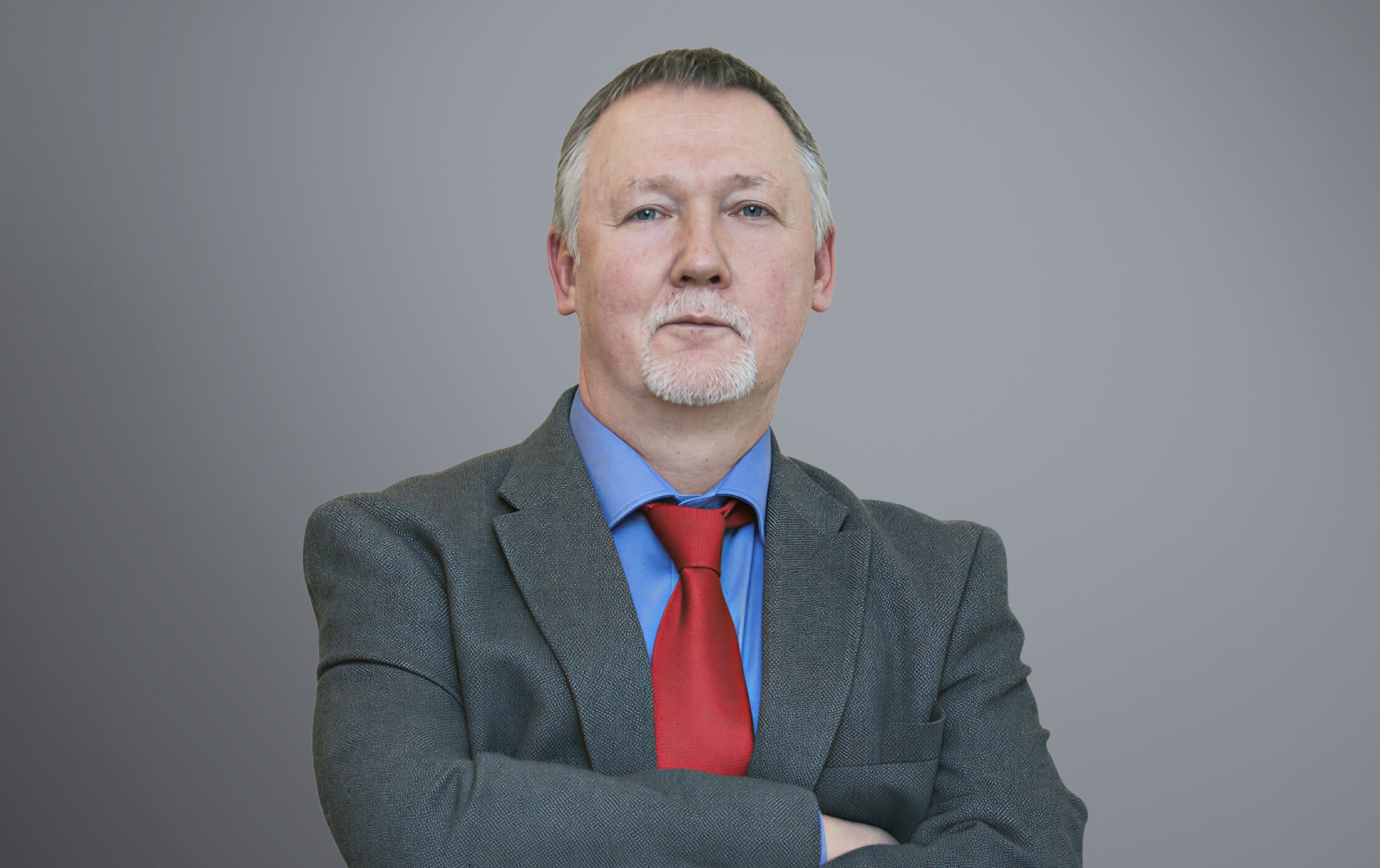
Vladyslav Hrynevych, Sr.
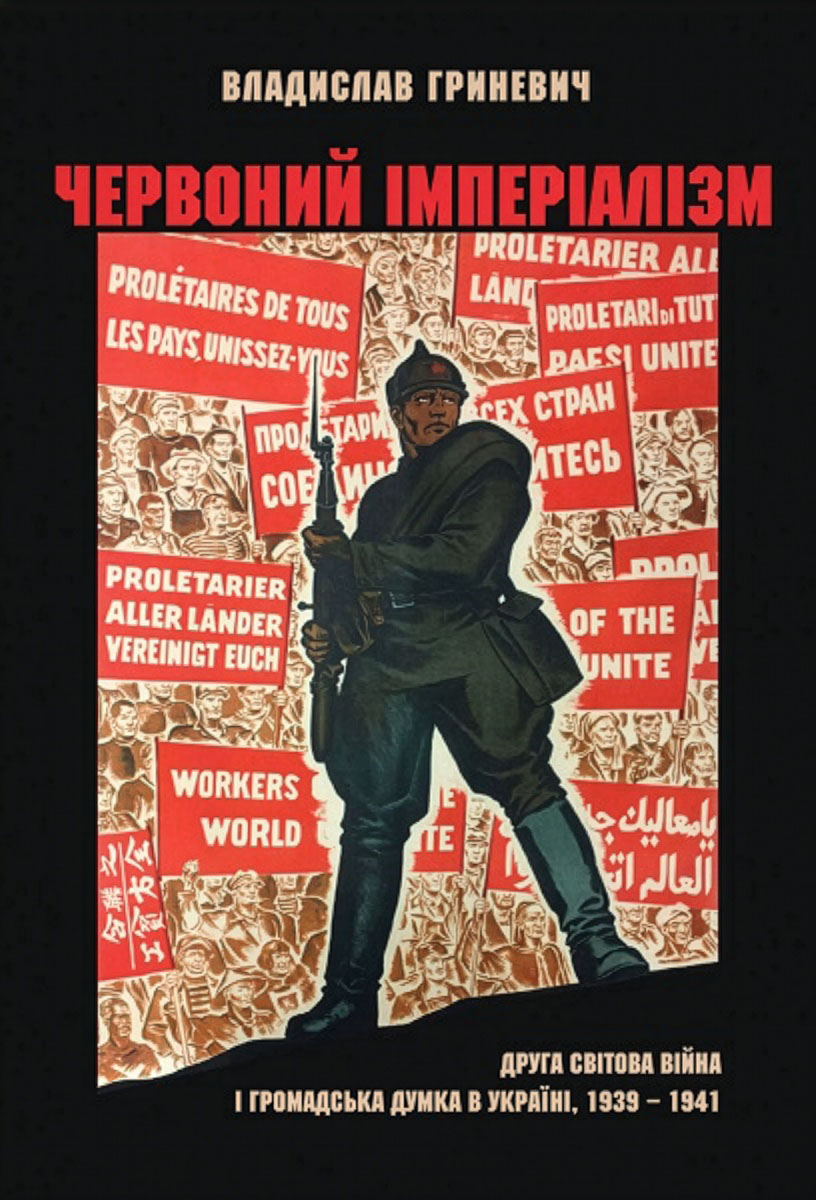
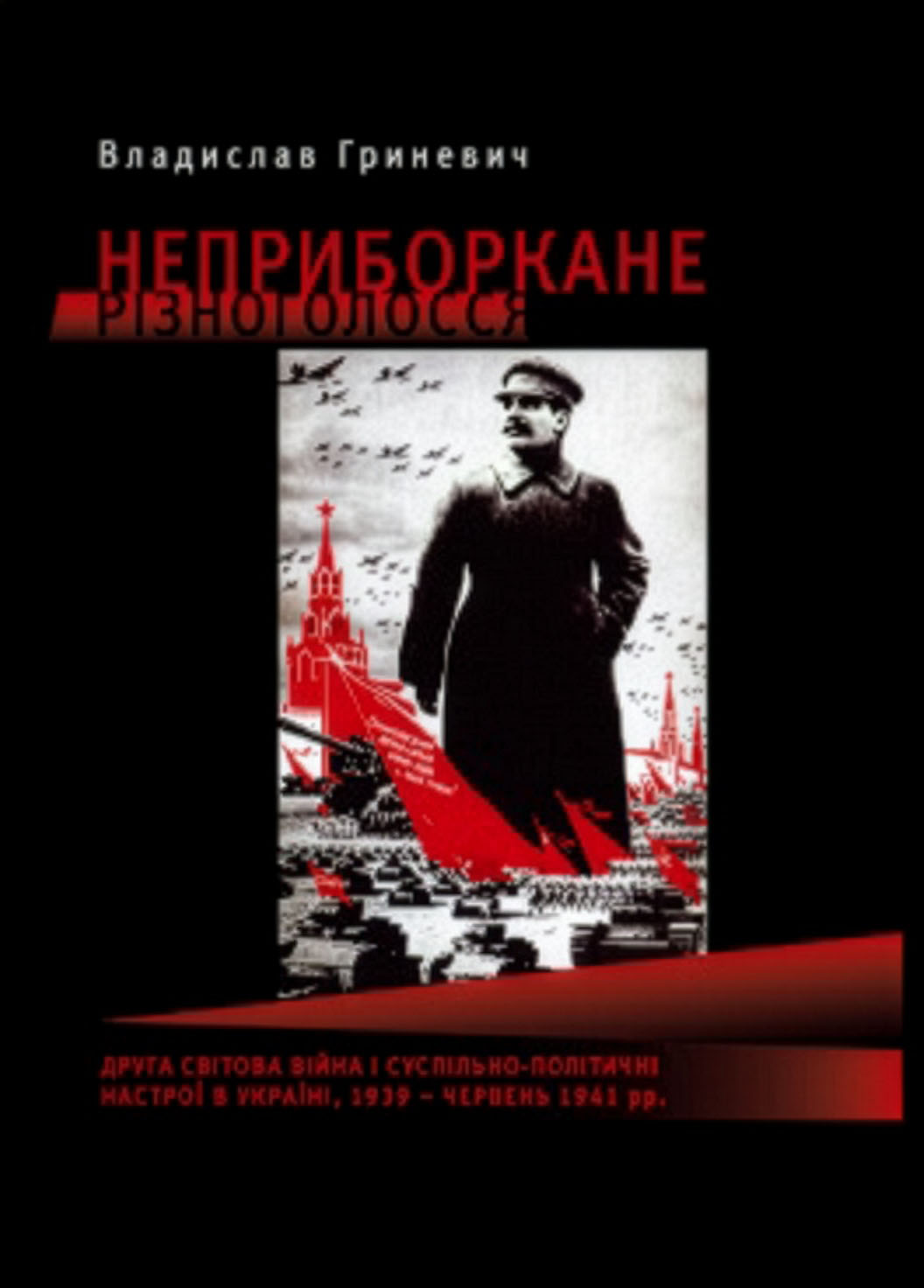
Director of the Institute for the Study of the Territory and Landscape of Babyn Yar Memory at the Babyn Yar Holocaust Memorial Center, PhD in History, Doctor of Political Science, Senior Research Fellow. Member of the UJE Academic Council, permanent member of the Ukrainian-German Historical Commission, and recipient of the Fulbright, Kennan, Carnegie, Yatsyk, Koliska, and other scholarships. Author of over 100 publications, including: Babyn Yar. History and Memory. Ed. by Vladyslav Hrynevych, Sr., and Paul Robert Magocsi. Distributed by the University of Toronto Press for the Chair of Ukrainian Studies. University of Toronto, 2023. 455 pp.; Red Imperialism. The Second World War and Public Opinion in Ukraine, 1939-1941. 2nd ed., revised and supplemented. Kyiv: HREC PRESS, 2019. 493 p.; Socio-Political Attitudes of the Population of Ukraine During the Second World War (1939-1945). Kyiv: I.F. Kuras Institute of Political and Economic Studies of the National Academy of Sciences of Ukraine, 2007. 520 c.
Originally appeared in Ukrainian @Ukraina Moderna
Translated from the Ukrainian by Vasyl Starko.
This article was published as part of a project supported by the Canadian non-profit charitable organization Ukrainian Jewish Encounter.