




Ilya Epstein linked Ukraine, Israel, and the USA
How a Jewish boy from a Ukrainian town lost in the forests and swamps of the Chernihiv region became a friend of the US president and played a key role in the recognition of the State of Israel by the USA.
Ilya (Eliahu in Hebrew) Epstein was born in 1903 in the small town of Snovsk, Chernihiv province. His father, Menachem-Mendel, traded in wood harvested from local forests, while his mother, Rivka, who came from a family of famous rabbis, was a housewife. Snovsk's population of 2,500 included nearly 1,000 Jews (42%).
Ilya first studied at a cheder, a Jewish primary religious school, and then at a gymnasium. While he was in senior grades, the revolution and civil war turned his entire life upside down. Various armies and governments succeeded each other in the town, which was cut off from cities and big politics by rivers, forests, and swamps. Young Ilya dreamed of the fabulous and distant Land of Israel. He joined the Zionist organization "Zeirei Zion" (Youth of Zion) in Snovsk and headed it at the age of 17.
In 1922, Epstein moved to Kyiv and began studying medicine at Kyiv University, but he was not destined to become a doctor. The communist authorities outlawed Zionist organizations, so he had to go underground to continue his activities in Kyiv. At one of the clandestine Zionist conferences, Epstein was arrested along with all the participants.
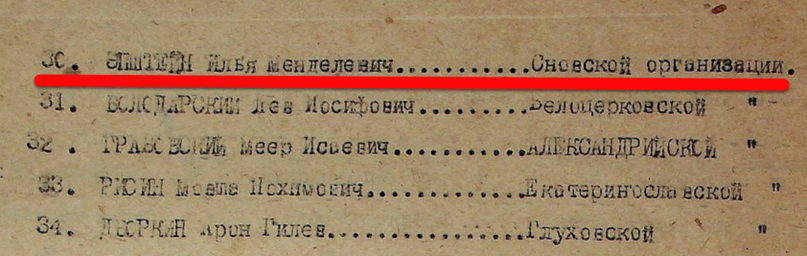
The Bolshevik secret police (State Political Directorate, DPU) put the young student under surveillance. The reports of the DPU branch in Kyiv for 1922 contained a list of leaders of Zionist organizations in Ukraine who participated in the underground congress, and Epstein was listed under No. 30 as a representative of the Snovsk organization.
Interestingly, the Zionist underground in Kyiv and Ukraine was crushed not by some "secret antisemites" but, according to all of the SPU's archival documents, by Jewish communists.
Epstein was an ordinary participant, rather than a speaker, at that fateful Zionist underground conference. This could be why the Cheka did not consider him a leader and decided to simply get rid of him without a court verdict. Thus, one of the miracles in his life happened: he was exiled from the USSR in 1924 as punishment for his activities. The communist ideology of those years claimed that "the greatest punishment for enemies of the Soviet government is to deprive them of the happiness of living in the USSR."
Epstein went to Latvia to join his fellow Zionists there. In 1925, he participated in the European Conference of Young Zionists in Danzig and later settled in the Land of Israel, which was then under the British Mandate.
Until 1930, Epstein was an agricultural and construction worker. He then enrolled at the Hebrew University in Jerusalem and later continued his studies in the politics and culture of the Middle East at the American University in Beirut, where he learned English. In the early 1930s, he immersed himself in the ethnography of the Arabs so deeply that he wandered with a Bedouin tribe in the desert for almost a year.
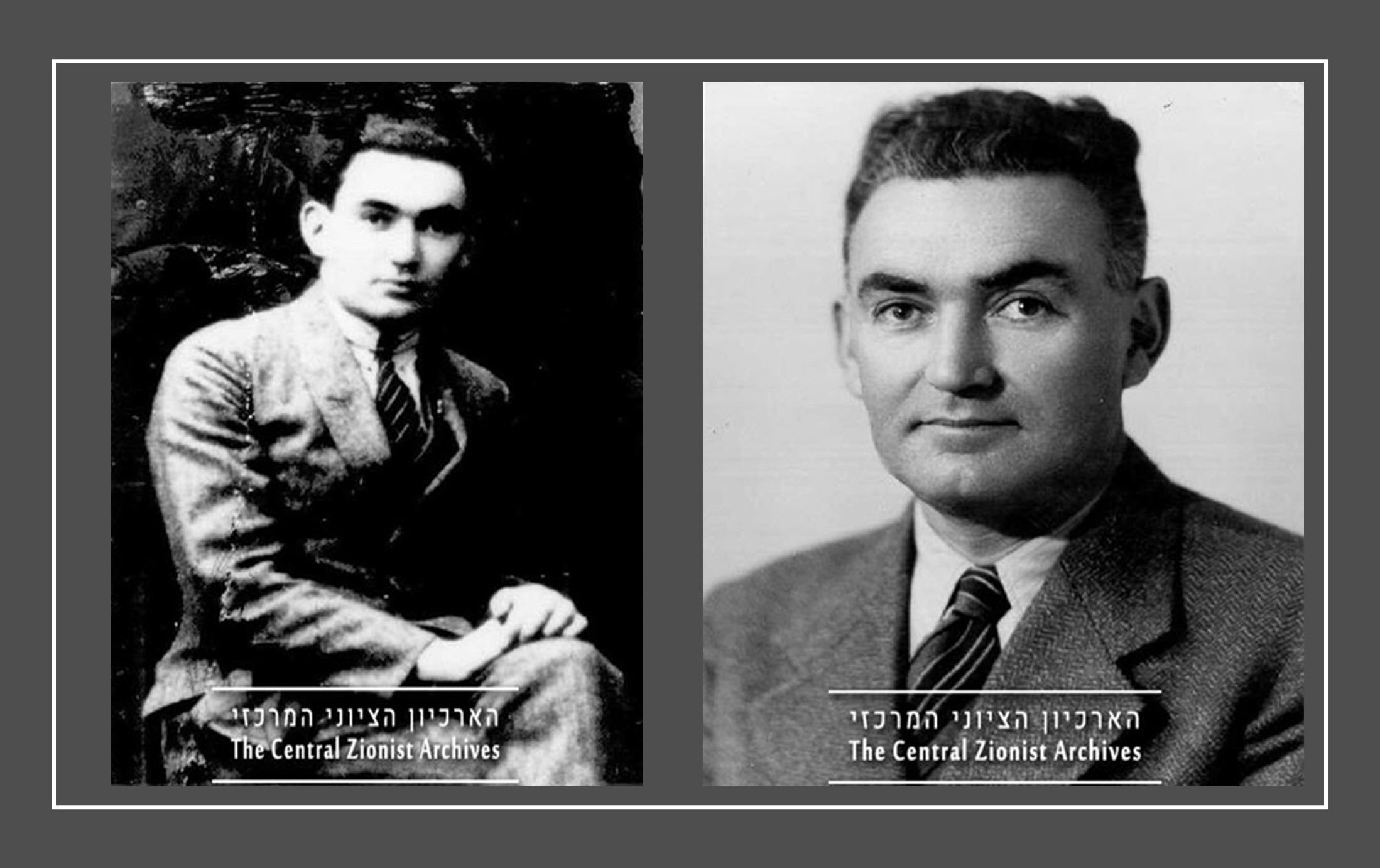
As a young specialist, Epstein was hired in 1934 by the Middle East section of the political department of the Jewish Agency, which served as the de facto Foreign Ministry of the future Jewish state.
In the spring of 1945, Epstein was sent to the political representation of the Jewish Agency in Washington. In May of that year, he worked in San Francisco at a world conference to develop the charter and main documents for the creation of the UN.
The most important task Epstein faced was transferring to the documents of the newly created UN all the legal norms of the League of Nations, which in the 1920s had recorded the right of the Jewish people to create their own state in the future, based on the decisions of the San Remo Conference (1920) and the Balfour Declaration (1917). Delegations from Arab countries strongly opposed the transfer of these norms to UN documents.
Epstein demonstrated his enormous talent for persuasion in San Francisco. He worked actively with diplomats from leading countries around the world. Among those who were supportive of the Jews' right to their own state was the delegation of the Ukrainian SSR, which included several famous Ukrainian scientists, such as the rector of Kyiv University, where Epstein had once studied.
Dmytro Manuilsky, People's Commissar for Foreign Affairs of the Ukrainian SSR and head of the Ukrainian delegation, played a key role in preparing UN documents, leading the drafting of the preamble and the first chapter of the Charter on the purposes and principles of the UN. As a result of Epstein's efforts, paragraphs important to the Zionists were included in UN documents.
Success in San Francisco in 1945 raised Epstein's standing in the eyes of the future Prime Minister of Israel, David Ben-Gurion, who appointed Epstein head of the Jewish Agency office in Washington in early 1948, thereby de facto entrusting him with the ambassadorship of future Israel in the USA, the world's most dominant superpower at the time.
However, the crucial task was to enlist the support of President Harry Truman for the creation of the State of Israel and its recognition by the USA. There were enormous difficulties along this path because Secretary of State George Marshall was categorically opposed to the idea, fearing a conflict with the Arab world. Marshall refused even to meet with Epstein.
The Jewish envoy established contact with Clark Clifford, a young assistant to the US president, who supported the creation of a Jewish state. Clifford entered the Oval Office and reminded Truman of the tragedy of the European Jews and the horrors of the Nazi concentration camps, which the president had personally seen when he came to the Potsdam Conference in the summer of 1945. Truman agreed to receive Epstein, bypassing the Secretary of State.
Thus, the native of the Chernihiv region became friends with the leader of the free world. Epstein told the US president a lot about the Middle East. Truman was a devout Southern Baptist evangelist, and the Bible was his life's book. To him, a devout Christian, the basic truth that the Creator himself had given the Holy Land to the people of Israel was obvious. Truman liked the straightforward, academic yet passionate style of the Israeli envoy. As a specialist on the Middle East, Epstein provided Truman with the historical context he needed.
On the historic day of 14 May 1948, when the ceremony of proclaiming the independence of the State of Israel and signing the Declaration of Independence of the revived Jewish state was held in Tel Aviv under the leadership of David Ben-Gurion, Epstein delivered his letter to Truman at the White House:
"The Act of Independence will become effective at one minute after six o'clock on the evening of 14 May 1948, Washington time.
With full knowledge of the deep bond and sympathy which has existed and has been strengthened over the past thirty years between the Government of the United States and the Jewish people of Palestine, I have been authorized by the provisional government of the new state to tender this message and to express the hope that your government will recognize and will welcome Israel into the community of nations.
Very respectfully yours,
Eliahu Epstein."
Truman's response to recognize the State of Israel came 11 minutes later, at 6:11 pm! An Israeli diplomat later recalled that the speed of the recognition was so unexpected that it stunned the diplomatic world, especially the US Department of State, which had tried to prevent it.
Epstein was appointed Israel's first official ambassador to the United States. Upon taking office, he Hebraized his last name, changing it to Eilat, after a city in southern Israel. When Israel's first foreign minister, Moshe Sharett (Moisei Chertok from Kherson), decided to covertly inform his ambassador to the United States about the capture of the city of Eilat by the Israeli army, he sent an urgent telegram to Washington, which was recorded in the annals of Israeli diplomacy: "To Eliahu Eilat. Epstein in our hands."
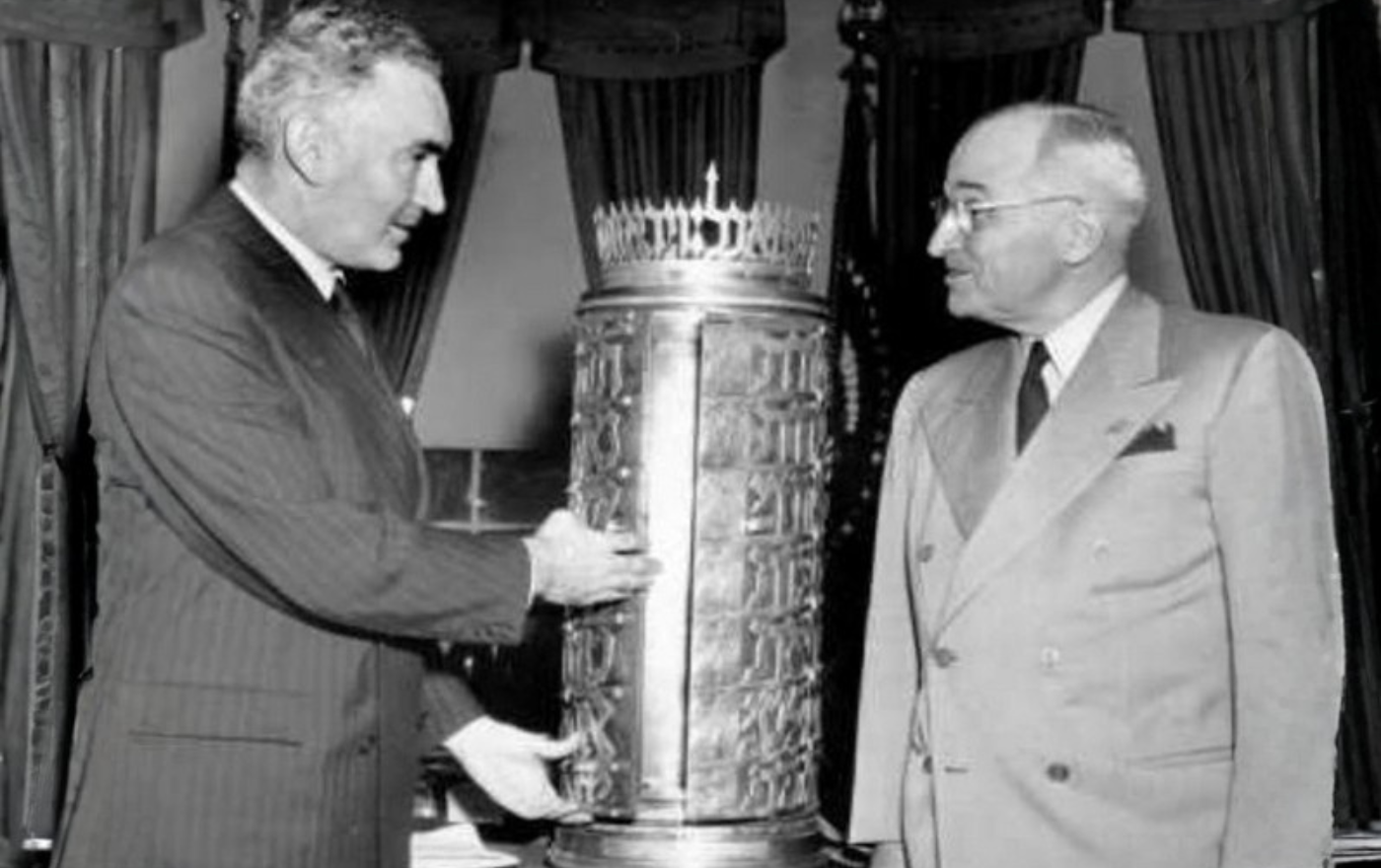
In 1949, the Israeli ambassador gave the US president a gift in the Oval Office — a large copper-and-silver case made by a Jerusalem jeweler for the Torah scroll Truman had earlier received from Israel's first president, Dr. Chaim Weizmann. The case and scroll are still housed at the Harry S. Truman Presidential Library and Museum in Independence, Missouri.
From 1948 to 1950, Eliahu Eilat was Israel's ambassador to the United States and a member of the Israeli delegation to the United Nations; from 1950 to 1959, he was Israel's ambassador to Great Britain.
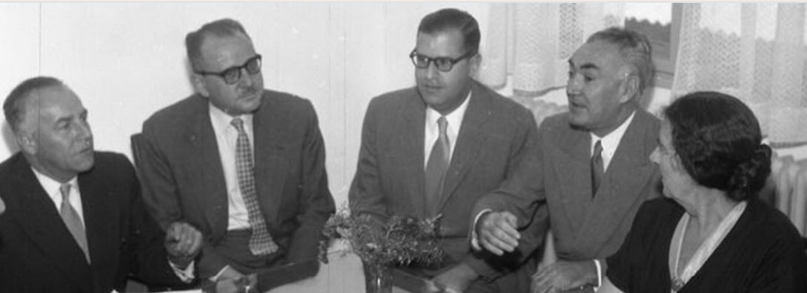
Eliahu Eilat published a number of books and studies on the politics of the Middle East and the history of world diplomacy. In 1962, he was elected president of the Hebrew University of Jerusalem, a position he held until his retirement in 1968. As president of the country's oldest university, he visited his old friend, Truman, in 1966 and asked for permission to name the Research Institute for the Advancement of Peace in his honor. According to eyewitnesses, Truman was moved to tears by the thought of his name being immortalized in Israel and associated with this institute in the heart of Jerusalem.
In its article on the death of Eliahu Eilat in 1990, The New York Times called him "a founder of the State of Israel." However, had he not been expelled from the USSR in 1924, his activities and background would have given him almost no chance of survival. As a Zionist, he would have been shot during the Stalinist repressions of the late 1930s, and, as a Jew, he would have faced death during Hitler's occupation of Ukraine.
More than 700 Jews from the town of Shchors (as Snovsk was called in 1935–2016 after being renamed in honor of a Red Army commander) were shot by the Nazis during the Holocaust; among them were relatives of Ilya Epstein.
From the end of February to the end of March 2022, the town of Snovsk in the Chernihiv region was temporarily occupied by new invaders — the Russian army. Currently, Snovsk remains in the frontline zone, under constant attack by the aggressor. I hope that after the end of the war in Ukraine, the local authorities in Snovsk will find an opportunity to commemorate one of their most prominent compatriots by naming a street in honor of Ilya Epstein — Eliahu Eilat.
Text: Shimon Briman (Israel).
Photos: National Library of Israel and Central Zionist Archives.