




On Qumran and the Dead Sea Scrolls
The Encounters program features a discussion about Qumran and the Dead Sea Scrolls with Vitaly Chernoivanenko, president of the Ukrainian Association for Jewish Studies.
Yelyzaveta Tsarehradska: What is Qumran? What are the Dead Sea Scrolls? Let us start with the basics, embark on an intellectual journey, and find out from Vitaly Chernoivanenko, president of the Ukrainian Association for Jewish Studies and senior researcher at the Jewish Collection Department in Ukraine's National Library.
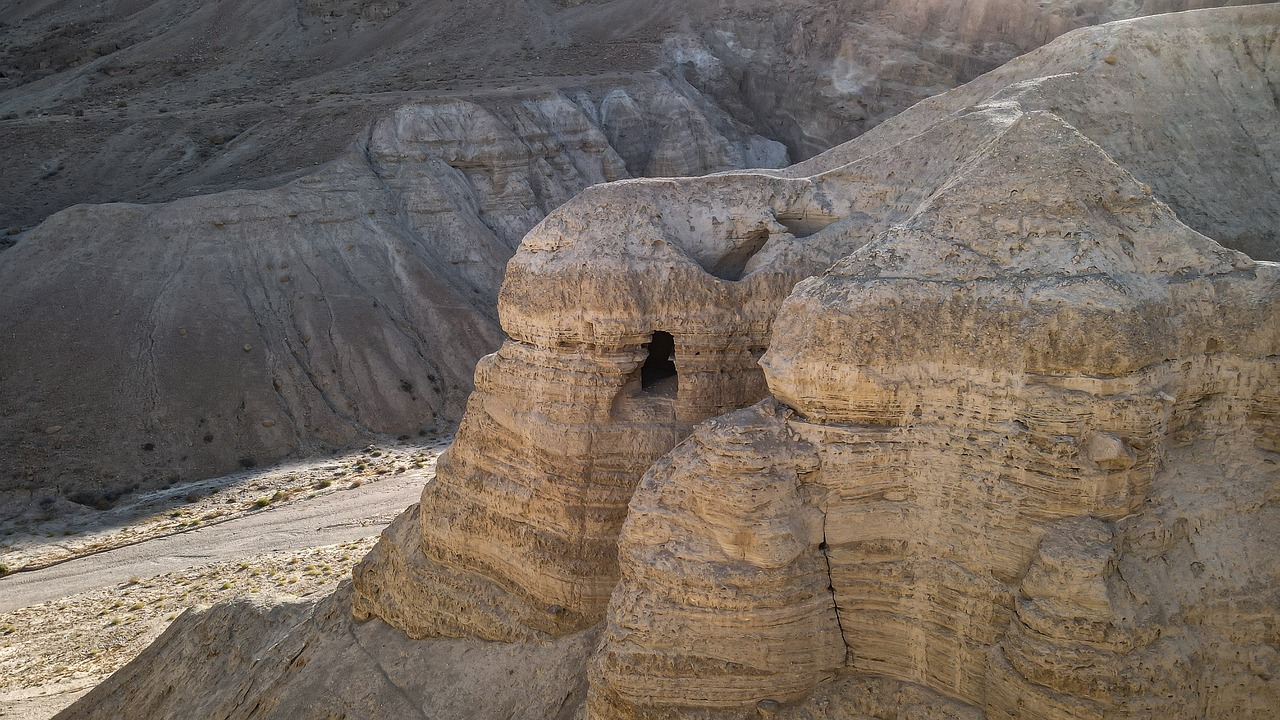
Vitaly Chernoivanenko: The name "Dead Sea Scrolls" is used in various languages to refer to the location where they were found. What was located there remains a matter of debate. Qumran is a place in what is now Israel, whereas it was part of the Kingdom of Israel in the past. Since the Romans conquered these lands, the area has been called Palestine, but this was not always the case.
Yelyzaveta Tsarehradska: Did the Dead Sea Scrolls come from a specific historical period?
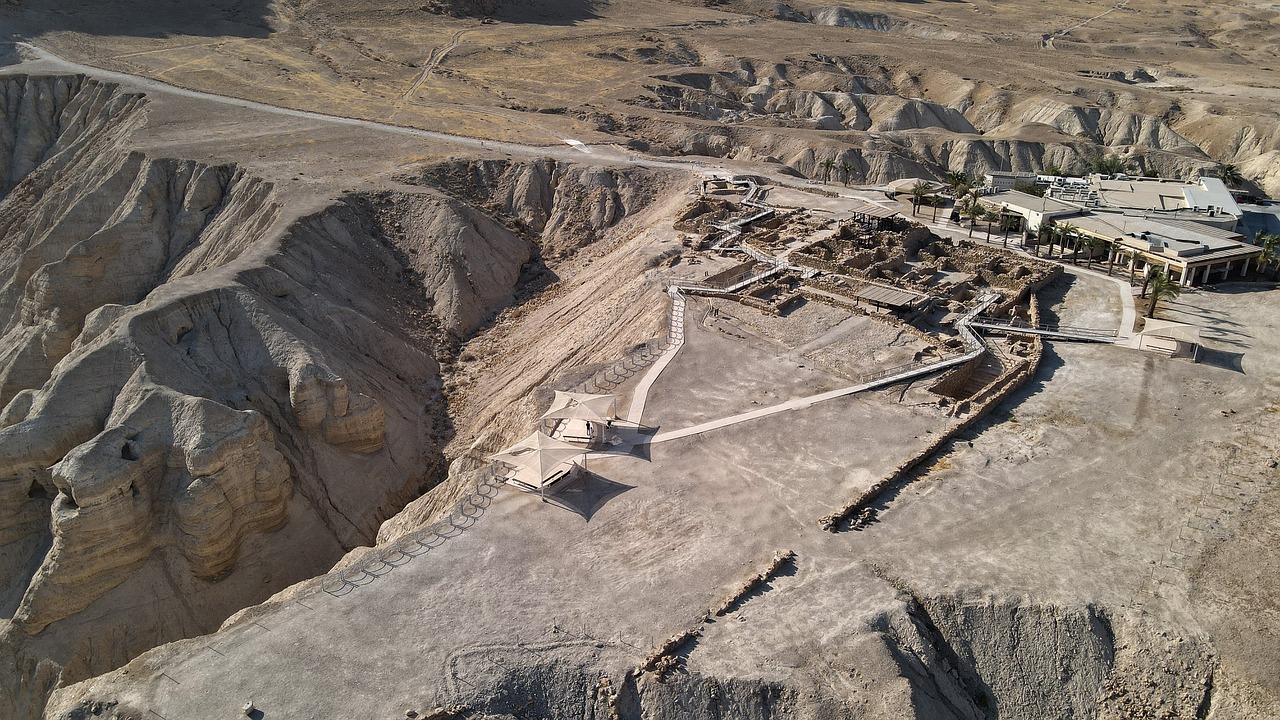
Vitaly Chernoivanenko: Yes. They date back to the second century BCE until the first century CE, but are unevenly distributed, with not so many coming from the earliest century. Geographically, Qumran lies in the Judean Desert, not far from Jerusalem and close to the Dead Sea.
This place is described in literature as Khirbet Qumran or Wadi Qumran. Wadi is an Arabic word referring to the place of a dry desert river. This region receives precipitation only in winter. This is when rivers are filled with water, only to dry out, leaving the earth parched and cracked. Khirbet means 'ruins,' suggesting that something was there that was later destroyed.
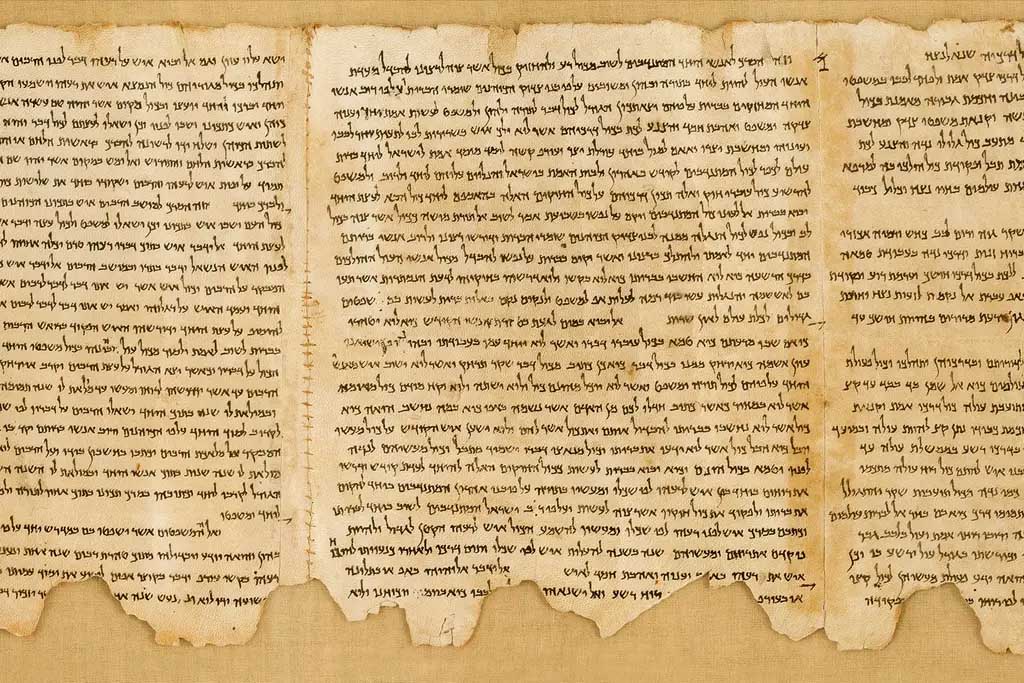
I'd like to make one additional terminological comment. We say "scrolls," even though other artifacts were also found there. The term "Dead Sea Scrolls" refers to scrolls discovered at various sites near the Dead Sea, including Qumran. Meanwhile, "Qumran Scrolls" refers only to those found in Qumran.
The largest number of Dead Sea Scrolls were found in Qumran and are known as "the Qumran Scrolls." However, scrolls and other objects were also discovered at other sites.
Yelyzaveta Tsarehradska: What language are they written in?
Vitaly Chernoivanenko: Three languages were recorded among all these scrolls: Old Hebrew, Aramaic, and some Ancient Greek. Why Ancient Greek? The scrolls were written after Hellenism, when Greek culture had penetrated the Middle East and spread throughout the region.
Yelyzaveta Tsarehradska: What do the scrolls speak about? You mentioned ongoing debates. What are they about?
Vitaly Chernoivanenko: I wrote a historiographical book entitled Qumran and the Dead Sea Scrolls: Authorship, Identification, and Historiography and published a while ago. Qumran studies have been going on since the first scrolls were discovered in 1947. The first theory of their origin was soon put forward, triggering an avalanche of discussions. During the first decade, this research field was second only to biblical studies in terms of intensity, with some 6,000 papers published by various scholars, even despite very limited access to the scrolls themselves until almost the 1990s.
There is this legendary story of a Bedouin shepherd supposedly coming across clay jars and finding the first scrolls there, which is also covered in my book. More archeologists and other researchers became involved in the 1950s and the 1960s. Since then, research and archeological excavations in Qumran and the area near the Dead Sea have continued with only short interruptions, and various new objects have been found.
If we consider only handwritten material, we'll see that few scrolls have been found intact. Most of them have survived as small or miniature fragments. A total of over 1,000 items have been discovered.
In my book, I analyzed various theories and hypotheses about the scrolls' origin and the identification of Qumran, the central site where they were found. Simply put, researchers face two big questions: What was Qumran, and who wrote the Dead Sea Scrolls?
The most popular theory of the Dead Sea Scrolls' origin
Yelyzaveta Tsarehradska: What are the most popular or best-substantiated theories?
Vitaly Chernoivanenko: One theory was and, to some extent, remains popular. I don't think there is enough evidence to support it, but we cannot ignore it. Almost immediately after the first scrolls were discovered in 1947, an international group of researchers was formed to study them. However, it was a closed group that not everyone was allowed to join. There was not a single Jew there. Christians, namely Catholics, played a key role in that group. There were several Catholic monks, and the priest Roland de Vaux was the most prominent figure.
The picture Roland de Vaux presented to the public was based on the idea that Qumran was similar to medieval Europe. European monasteries had scriptoria where scribes busied themselves with writing or copying scrolls. So, it was claimed that certain ascetic groups produced the Qumran Scrolls in a similar fashion.
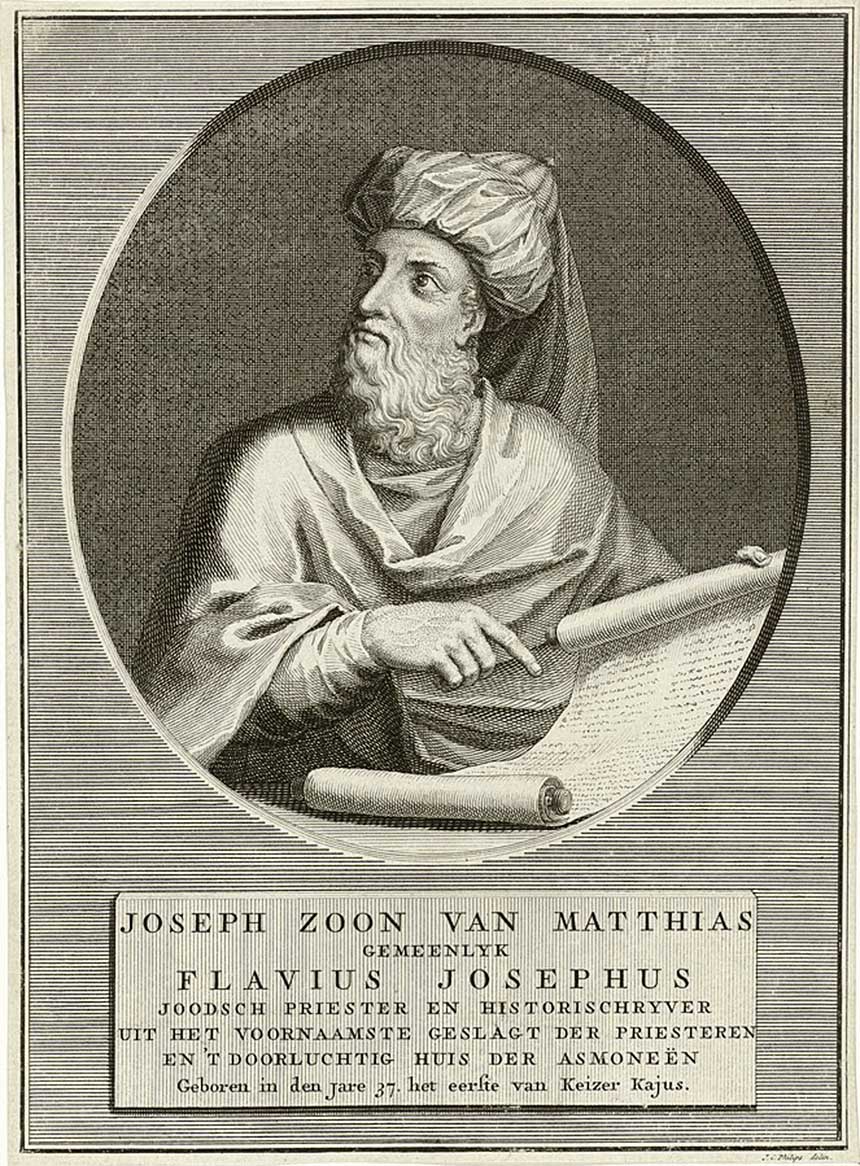
Qumran has been a known archaeological site since the 19th century. Roland de Vaux and other proponents of the first theory referred to ancient historians, such as Flavius Josephus, Philo of Alexandria, and Pliny the Elder, who described the people populating that area. These authors mentioned the Essenes, a slightly mysterious and marginal Jewish community. They were ascetics, lived in small groups, and were guided by a special premonition that the end of the world was near. The life of the Essenes thus portrayed is similar to what we read about the first Christians in the New Testament.
The Dead Sea Scrolls are important because they shed light on Jewish society at the time and provide researchers with additional information beyond the New Testament literature.
So, the authors of the first, Qumran-Essene, theory found the scrolls. Qumran was not directly mentioned there, but there were references to the territory northwest of the Dead Sea. They saw that this is where Qumran was located and where the monk-like Essenes lived and made the connection.
Roland de Vaux was knowledgeable about ancient Jewish history. However, Judaism and ancient authors point out that the Essenes did not marry. This is a marginal practice in Judaism because there is a biblical commandment to be fruitful and multiply. This commandment is indisputable, but, according to ancient authors, the Essenes did not follow it.
Perhaps there was indeed a small group of ascetics, or it could be a complete myth. Still, the proponents of the first theory imagined that, similar to medieval monks, the authors of the Dead Sea Scrolls sat in the Qumran caves and copied these manuscripts. This is how they formulated their Qumran-Essene theory, which was widely accepted but also rejected by many.
Content of the Dead Sea Scrolls
Yelyzaveta Tsarehradska: What kind of information do the scrolls provide about how people lived at the time? And how are the scrolls organized in terms of structure and content?
Vitaly Chernoivanenko: Let me answer your question while linking it to an alternative theory.
The Dead Sea Scrolls are a very diverse and heterogeneous layer of literature in terms of languages, genres, and handwriting. Many people were involved in writing or rewriting these manuscripts.
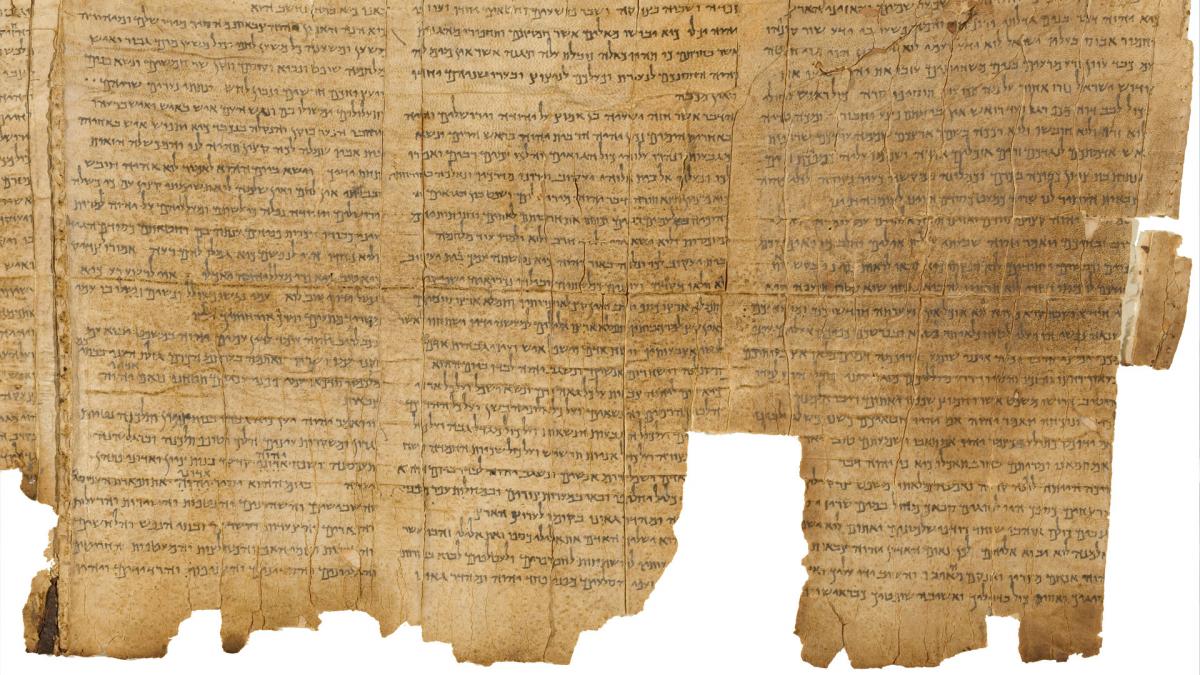
A number of editions of the entire corpus of the Dead Sea Scrolls have been published. There is no Ukrainian translation, except for the texts I translated and put in an appendix to my book. The entire corpus has been published in English and Hebrew. There is a bilingual edition. Some scrolls are published online as nicely scanned documents where you can put the cursor on a word, and a window pops up with information about the word, its meaning, and its translation.
There are virtually no chronicles in the Dead Sea Scrolls, but they are rich in allusions, prompting researchers to use them to identify the historical characters and events referred to.
Yelyzaveta Tsarehradska: So, it's the fiction of that time.
Vitaly Chernoivanenko: Yes. Many texts in the Dead Sea Scrolls have an eschatological, apocalyptic, and messianic nature, offering additional evidence of how much the society of that time was preoccupied with messianic ideas. In particular, this shows how Christianity arose. Christianity eventually spread beyond the Jewish world, becoming what it is now. But initially, it was an ordinary sect in Judaism, one of several such movements. We read about these movements in the scrolls and see that they were different.
The Dead Sea Scrolls are extremely diverse in terms of genres. Some are biblical books, such as the books of the prophets. Others contain non-canonical texts, while still others are commentaries on biblical books, and so on.
An alternative theory of the Dead Sea Scrolls' origin
Yelyzaveta Tsarehradska: Let's move on to an alternative theory.
Vitaly Chernoivanenko: When we learned more about the scrolls themselves, when they were written, on what material, and in what handwriting, it became clear that any small, secluded community with so many scribes was out of the question. Many different kinds of handwriting were identified. People need to understand that a scribe is not just someone who decides to sit down and start copying some texts. It is a profession going back to ancient times. Modern Judaism also has scribes, soferim. This is a painstaking job that requires training and skill. So, it's hard to imagine there could be several hundred professional scribes for several thousand people, i.e., one scribe per ten people. But that's not all.
In portraying a group of hermetic scribes, the authors of the Qumran-Essene theory relied heavily on the Essene community charter, found in one of the Qumran scrolls. It bore a resemblance to the acts of the apostles and how the life of early Christians is shown in the New Testament literature. They had communal ownership of everything, were like-minded, lived in perfect harmony, etc. However, some Dead Sea Scrolls are incompatible with one another, so their authors could not have come from the same community at Qumran.
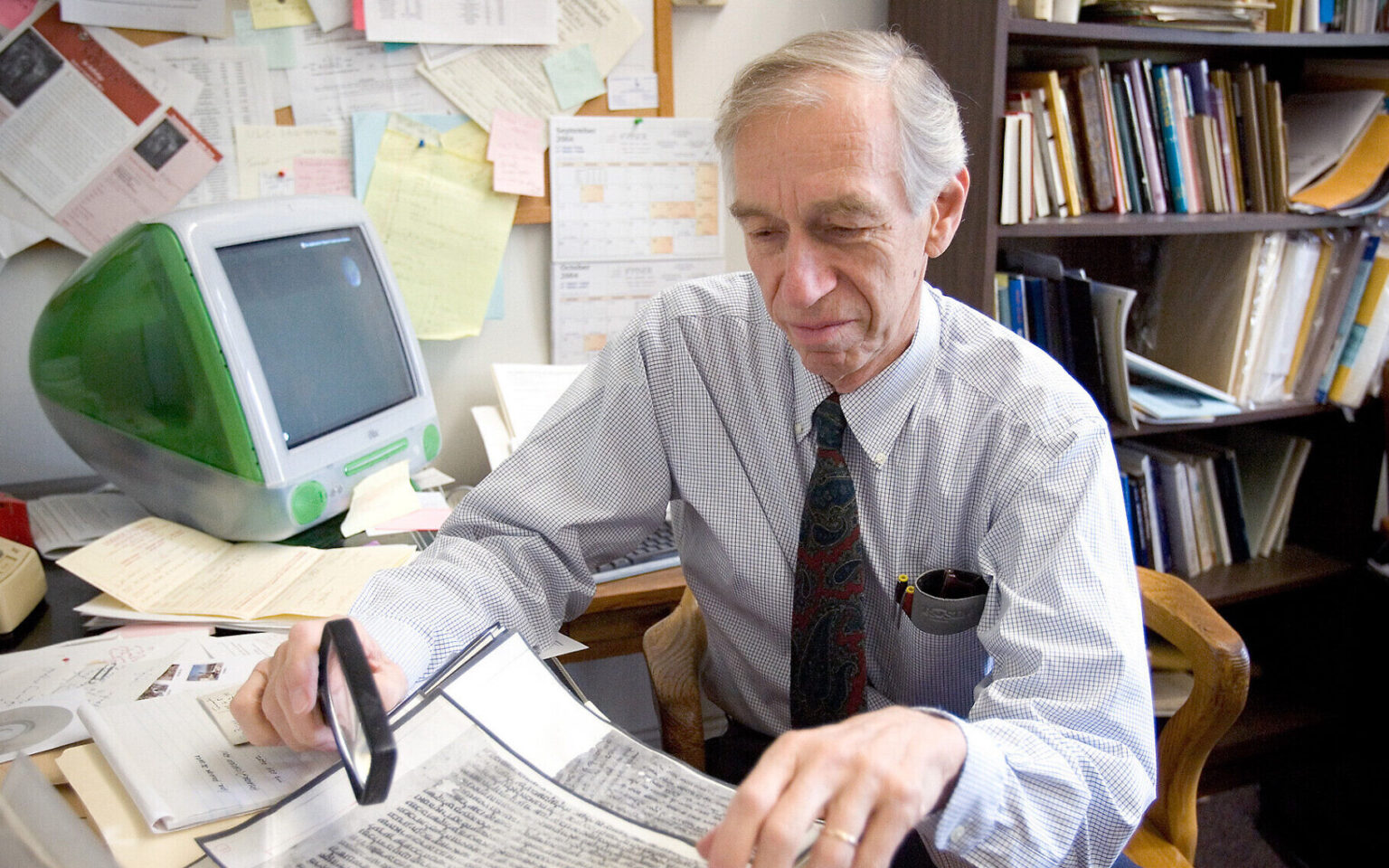
Now, let me explain an alternative theory. My research supervisor, the late Norman Golb, was a professor at the University of Chicago. In 1980, he published the article "Who Wrote the Dead Sea Scrolls?" and followed it with other papers and a book in the 1990s. He is the author of the Jerusalem theory of the scrolls' origin. Golb pointed out that they were written in different hands and contained incompatible ideas. I explain these and other arguments he put forward in my book.
His arguments point to Jerusalem rather than Qumran. At the time, the Jewish capital was the only place where such a large number of scribes and different groups could be found.
How did the manuscripts end up in Qumran? Golb provided an alternative answer. He placed this question in the context of the First Jewish-Roman War (66–73 CE). This revolt against Rome ended with the Romans seizing Jerusalem in 70 CE. The Jews fled the city, taking along the most valuable things, including scrolls. Flavius Josephus described in which directions they fled, and one of them was towards the Dead Sea. It is reasonable to assume that survival was a priority for Jews back then, as it is now. When the Jews saw that they might not be able to flee from the Romans with all the possessions they were carrying, they might have stored valuables in certain locations to be picked up later. The caves by the Dead Sea could be such a storage place where the scrolls remained for nearly 2,000 years.
This program is created with the support of Ukrainian Jewish Encounter (UJE), a Canadian charitable non-profit organization.
Originally appeared in Ukrainian (Hromadske Radio podcast) here.
This transcript has been edited for length and clarity.
Translated from the Ukrainian by Vasyl Starko.
NOTE: UJE does not necessarily endorse opinions expressed in articles and other materials published on its website and social media pages. Such materials are posted to promote discussion related to Ukrainian-Jewish interactions and relations. The website and social media pages will be places of information that reflect varied viewpoints.