Posted In:
Ukrainian statehood and identity,
Diverse VoicesThe number of flags honoring Ukrainian servicepeople who have died in Russia's genocidal war against Ukraine grows, as evidenced on 29 August 2025.
On 24 February 2022, Russia launched a full-scale invasion of Ukraine. In reality, Russia's war against Ukraine is centuries long, with its most recent reiteration starting in 2014 with its illegal annexation of Crimea.
Over the last four years, millions of Ukrainians have suffered displacement, increased civilian deaths, and, most recently, blackouts during Ukraine's harshest winter in over a decade because of consistent Russian attacks on civilian infrastructure. Despite the challenges, Ukrainians have persevered. Buildings are rebuilt, Ukrainian culture develops, and a new generation of Ukrainians is born.
Reflecting on four years of war, the photo essay below illustrates life in Kyiv and Lviv during the war and moments of international support for Ukraine.
2022
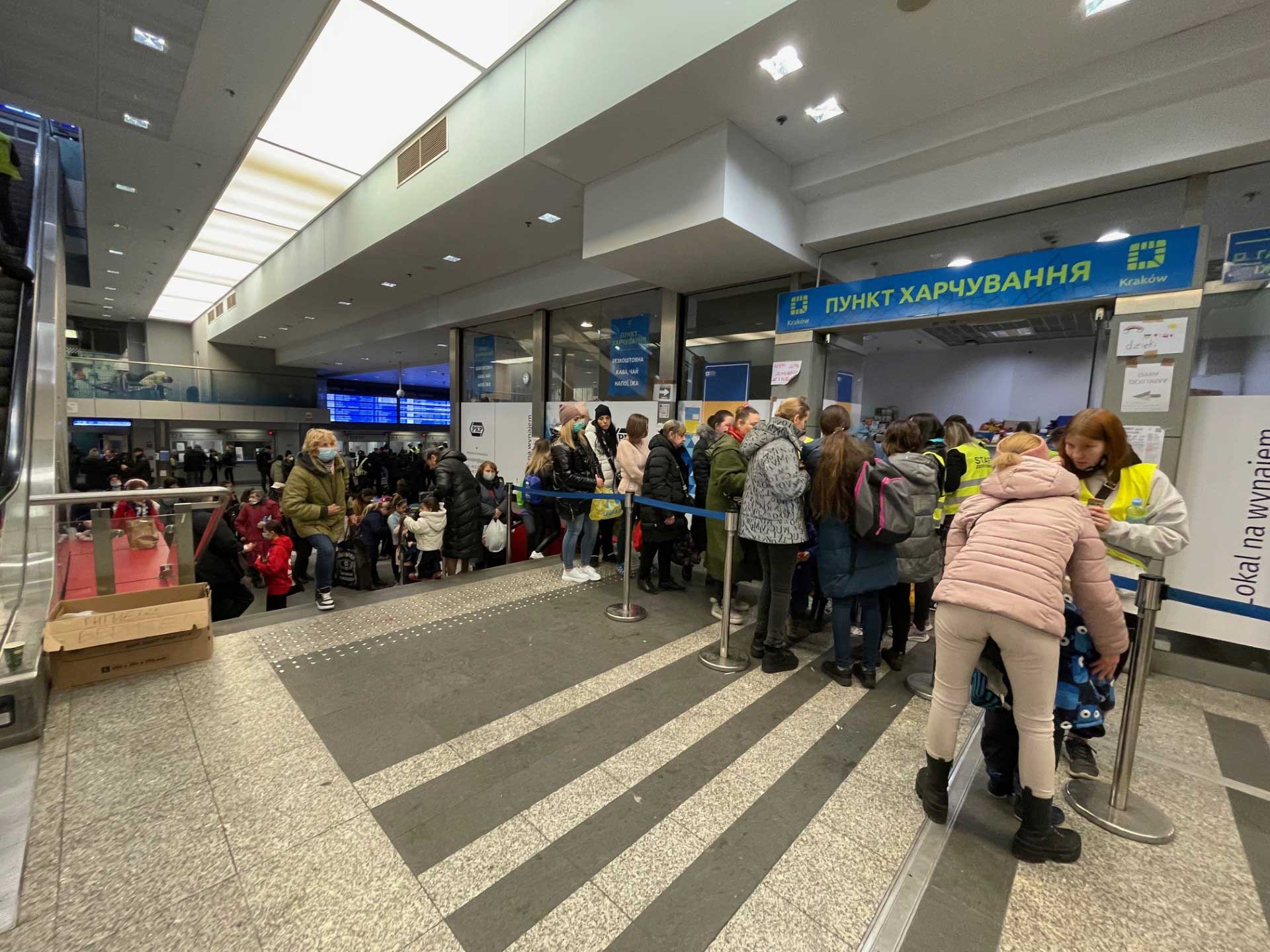
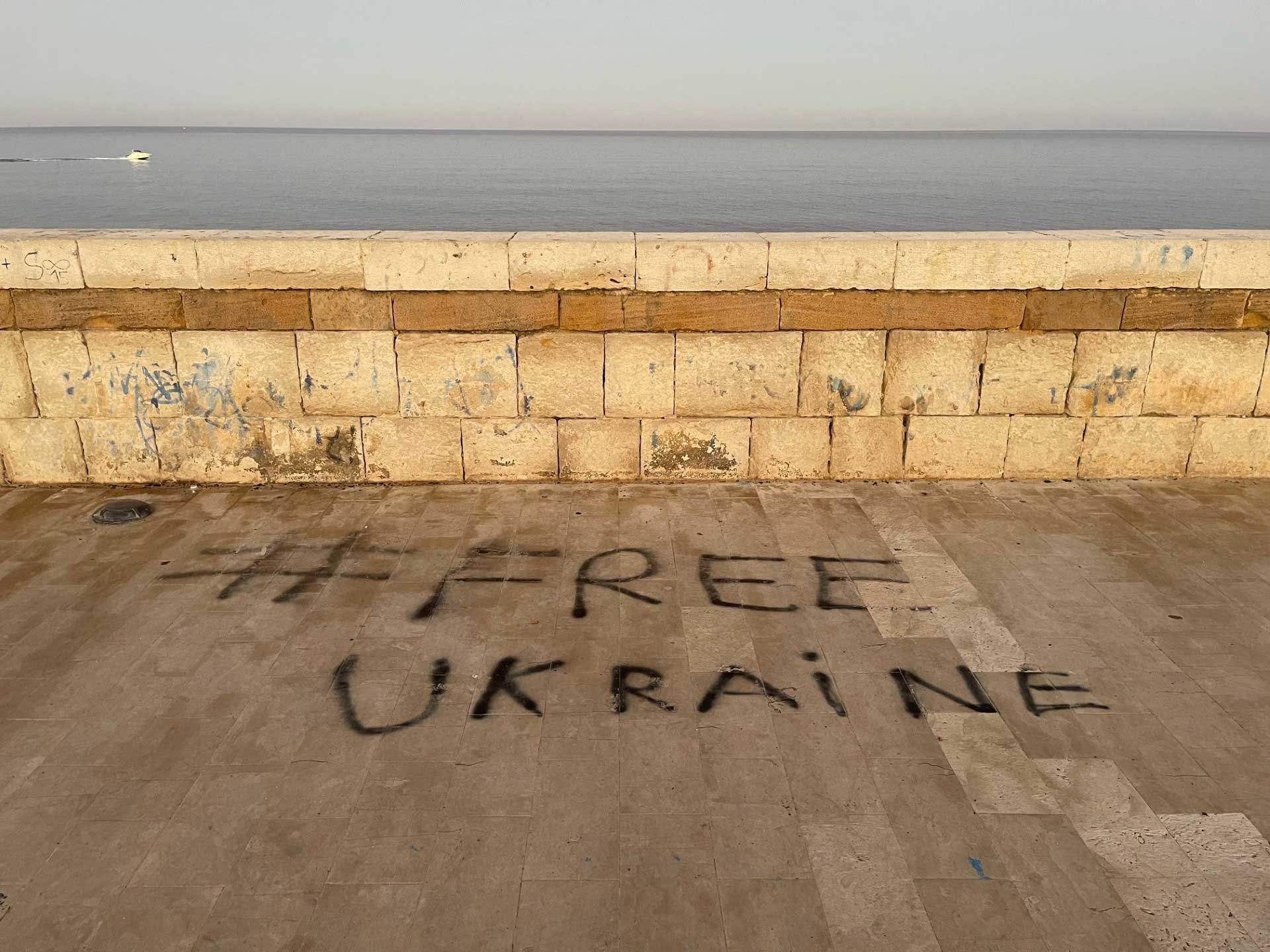
Ukrainian refugees, mostly women and children, wait in line at a food bank at Krakow's central train station on 20 March 2022. Men aged 18-60 are banned from leaving Ukraine amid the country's declaration of martial law. As of December 2025, approximately 970,00 Ukrainians have protected status in Poland.Siracusa, Sicily, 26 December 2022.
2023
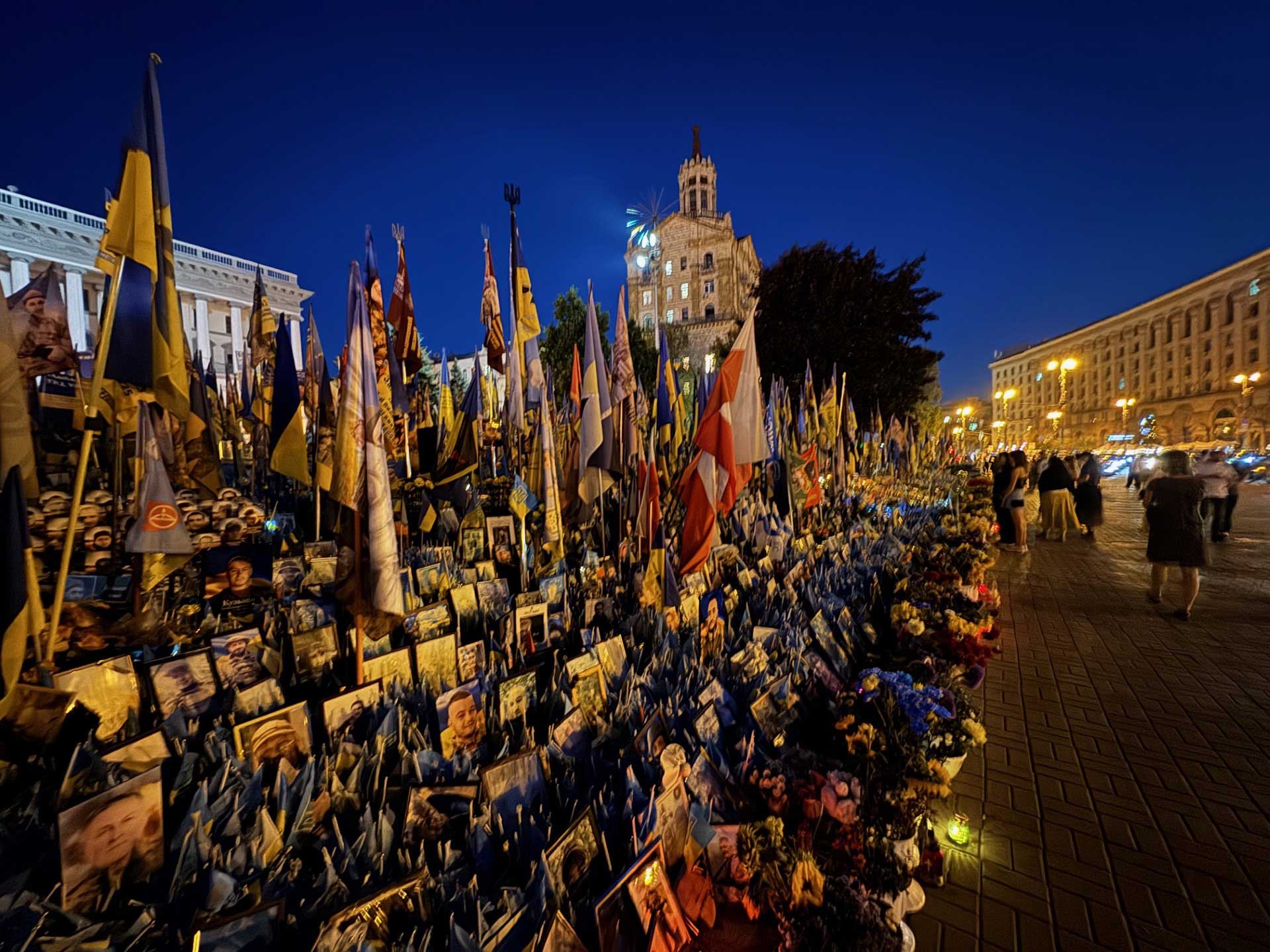
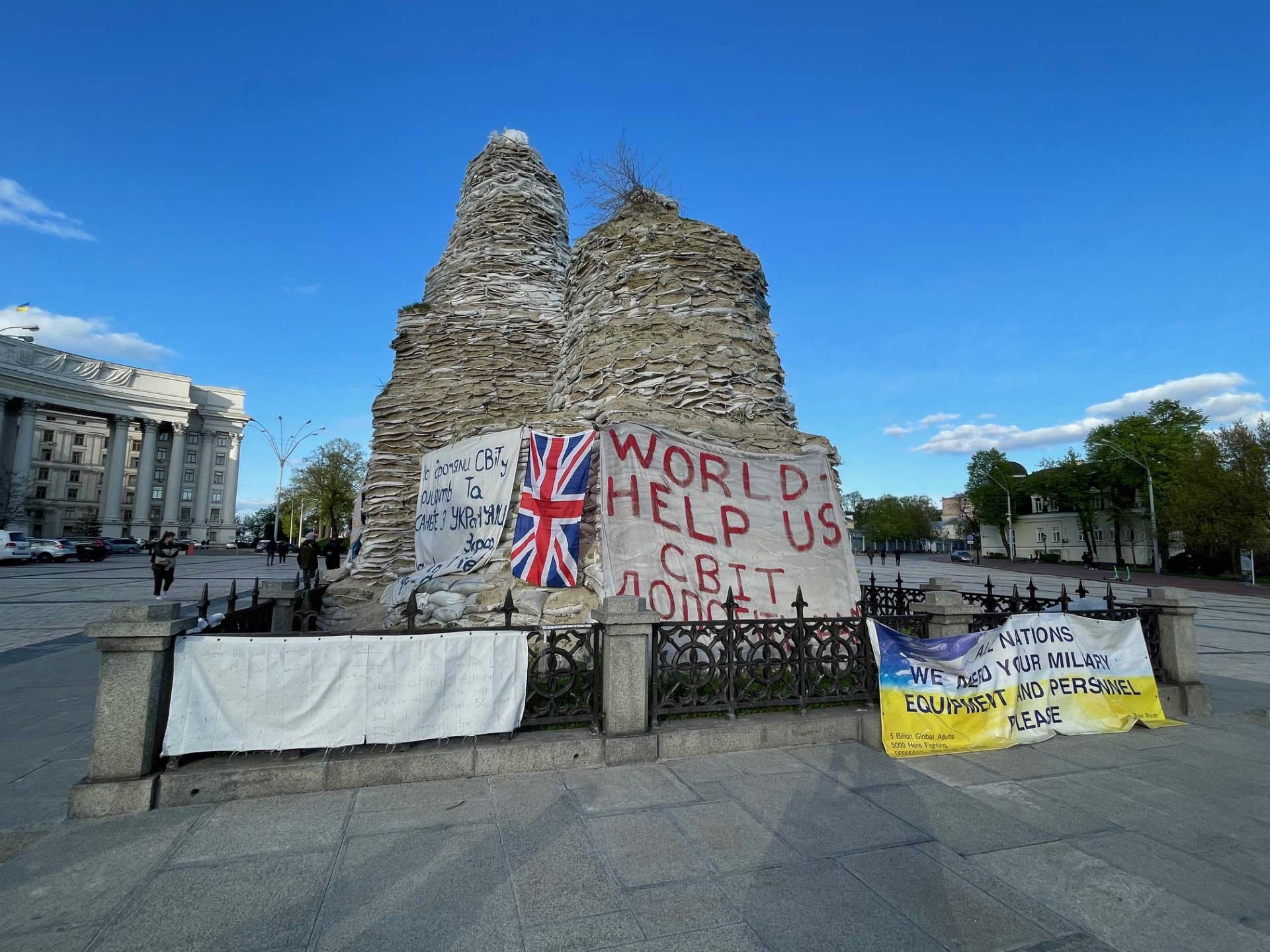
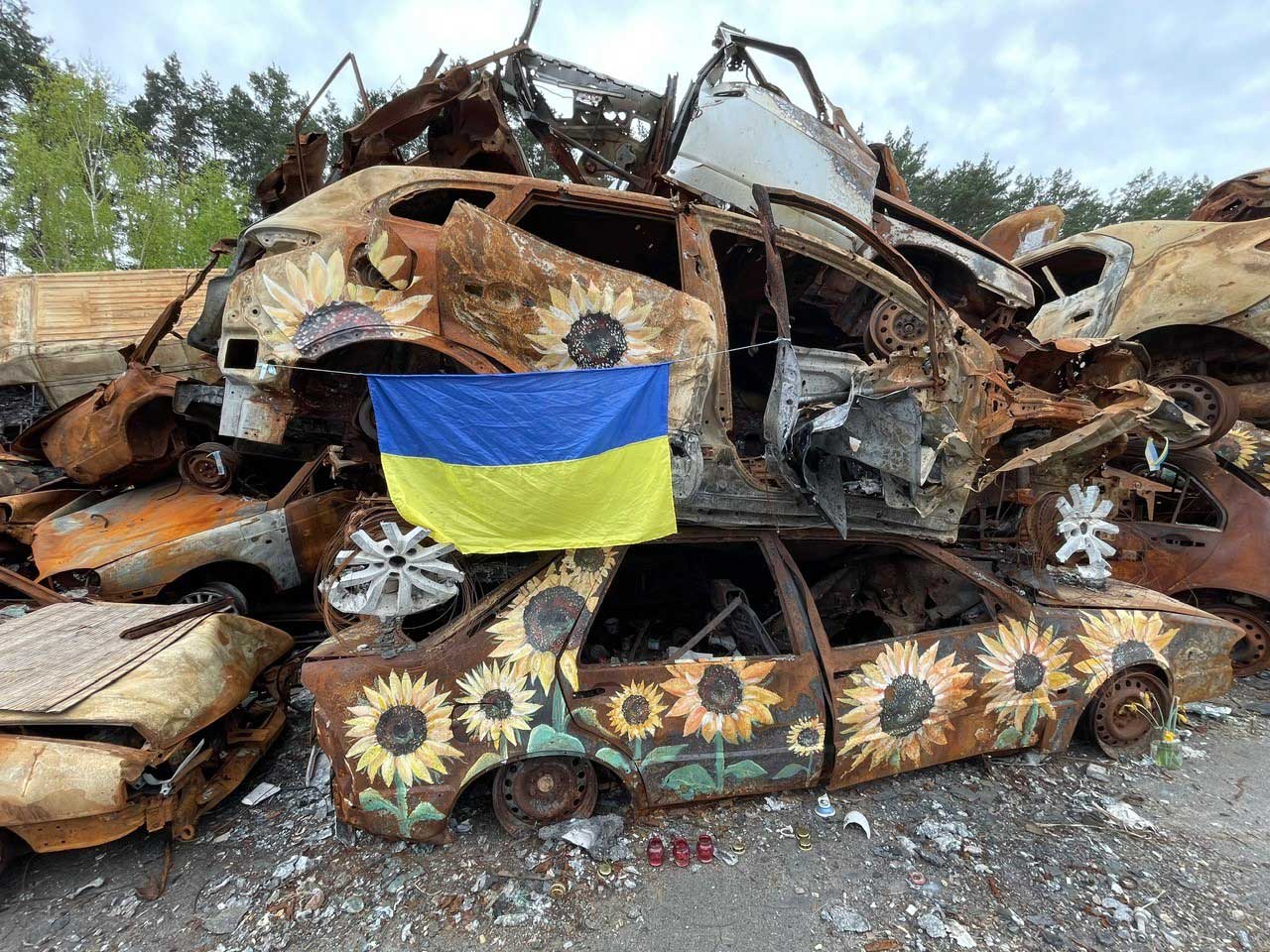
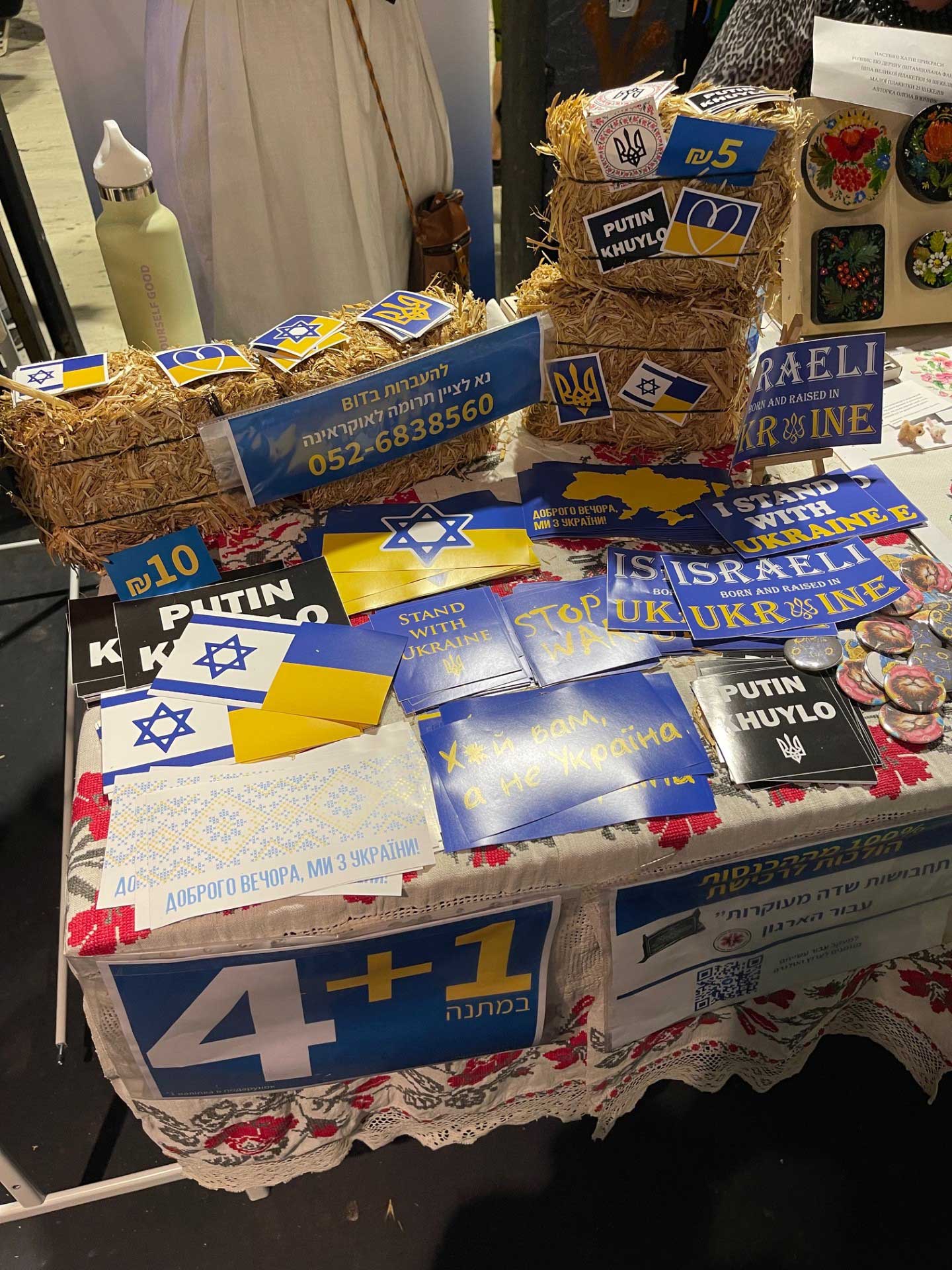
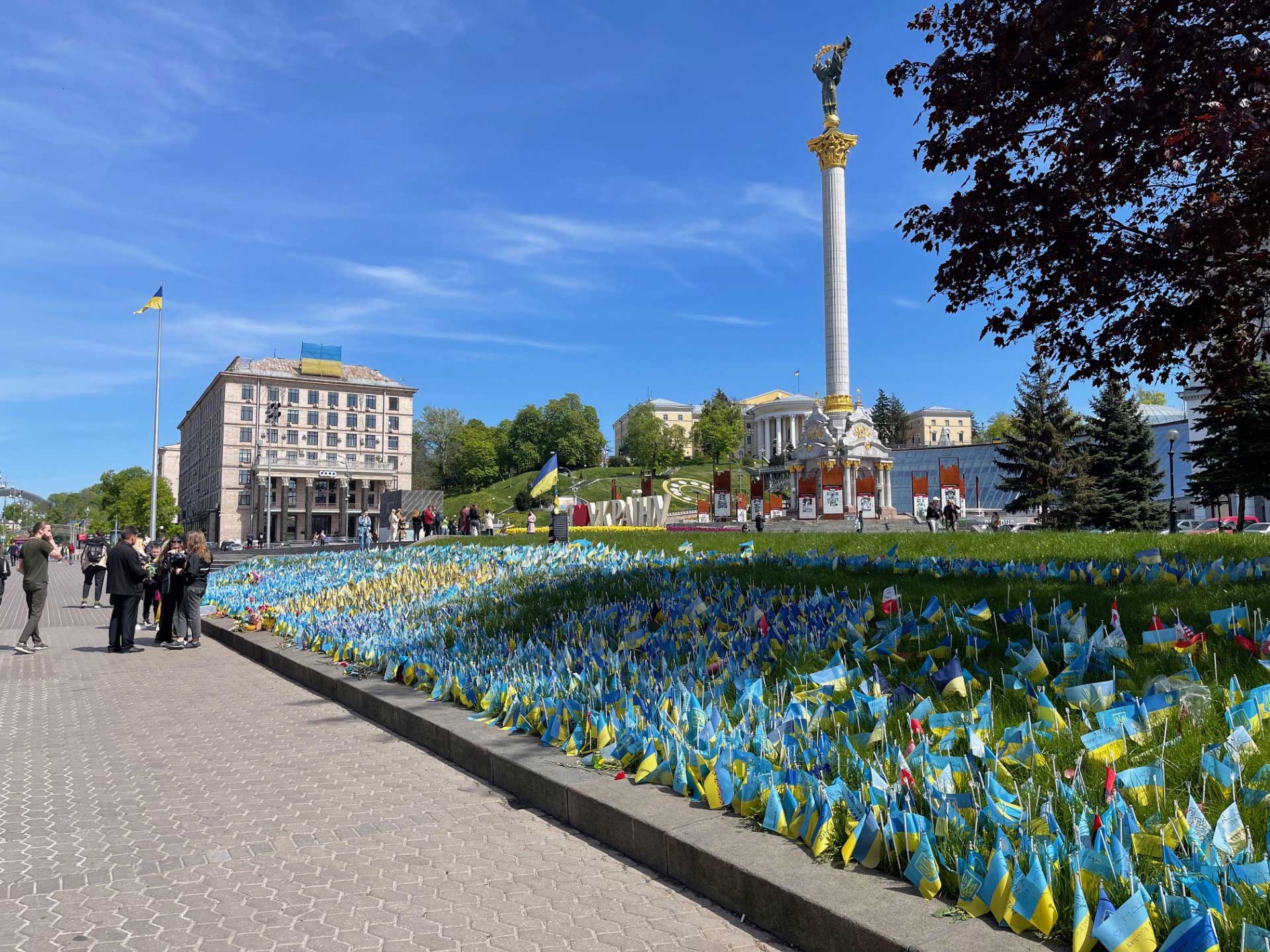
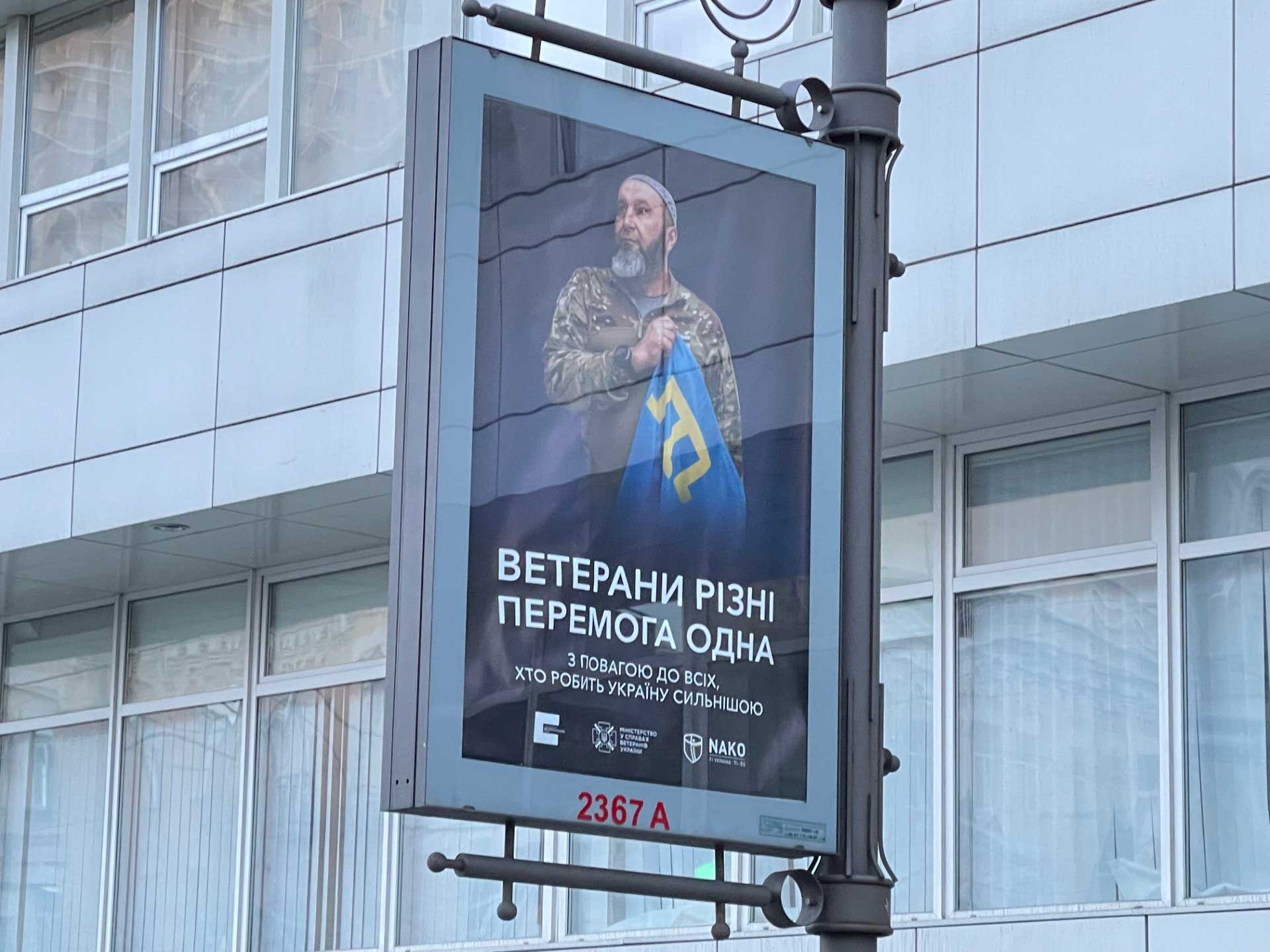
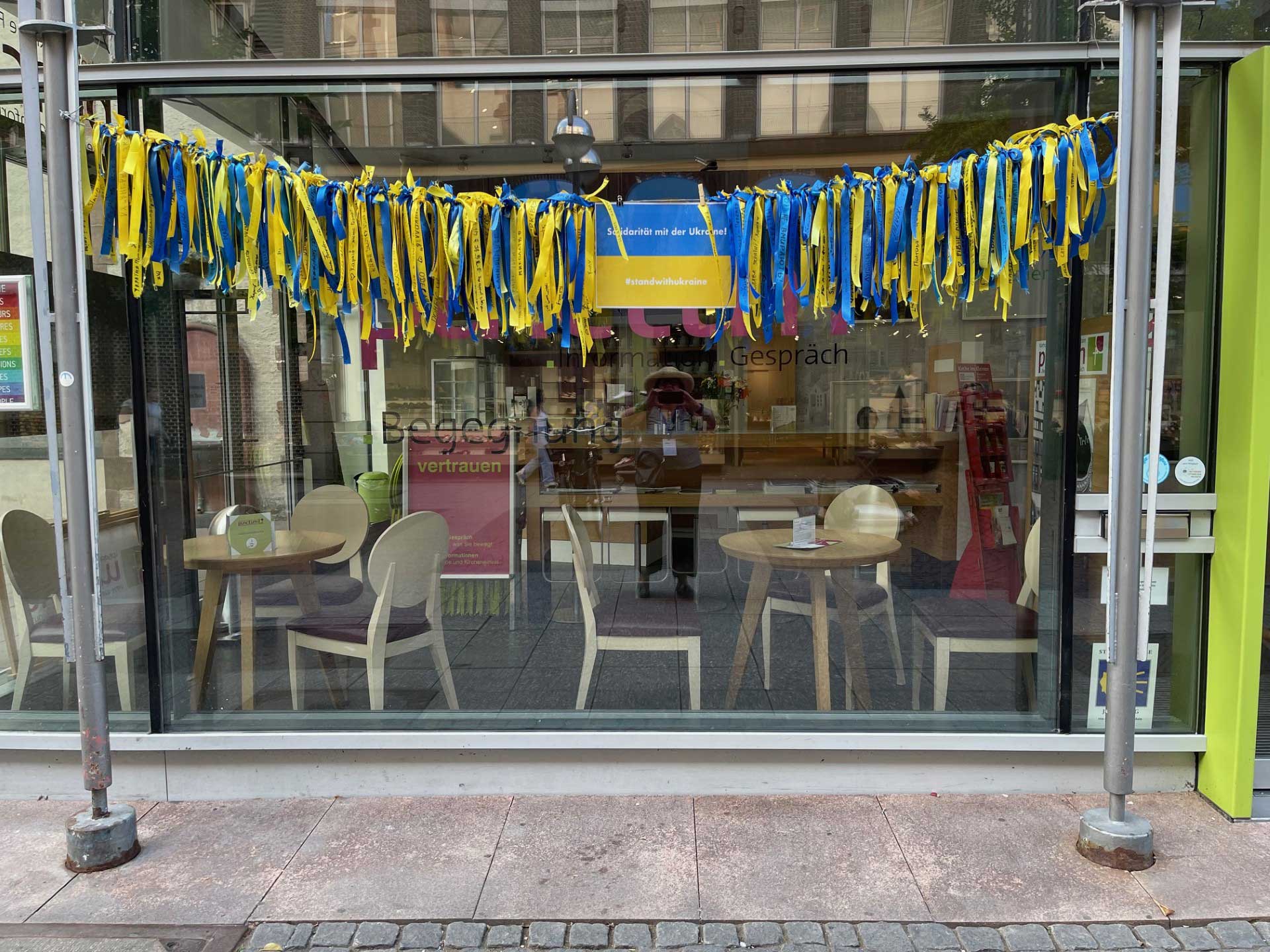
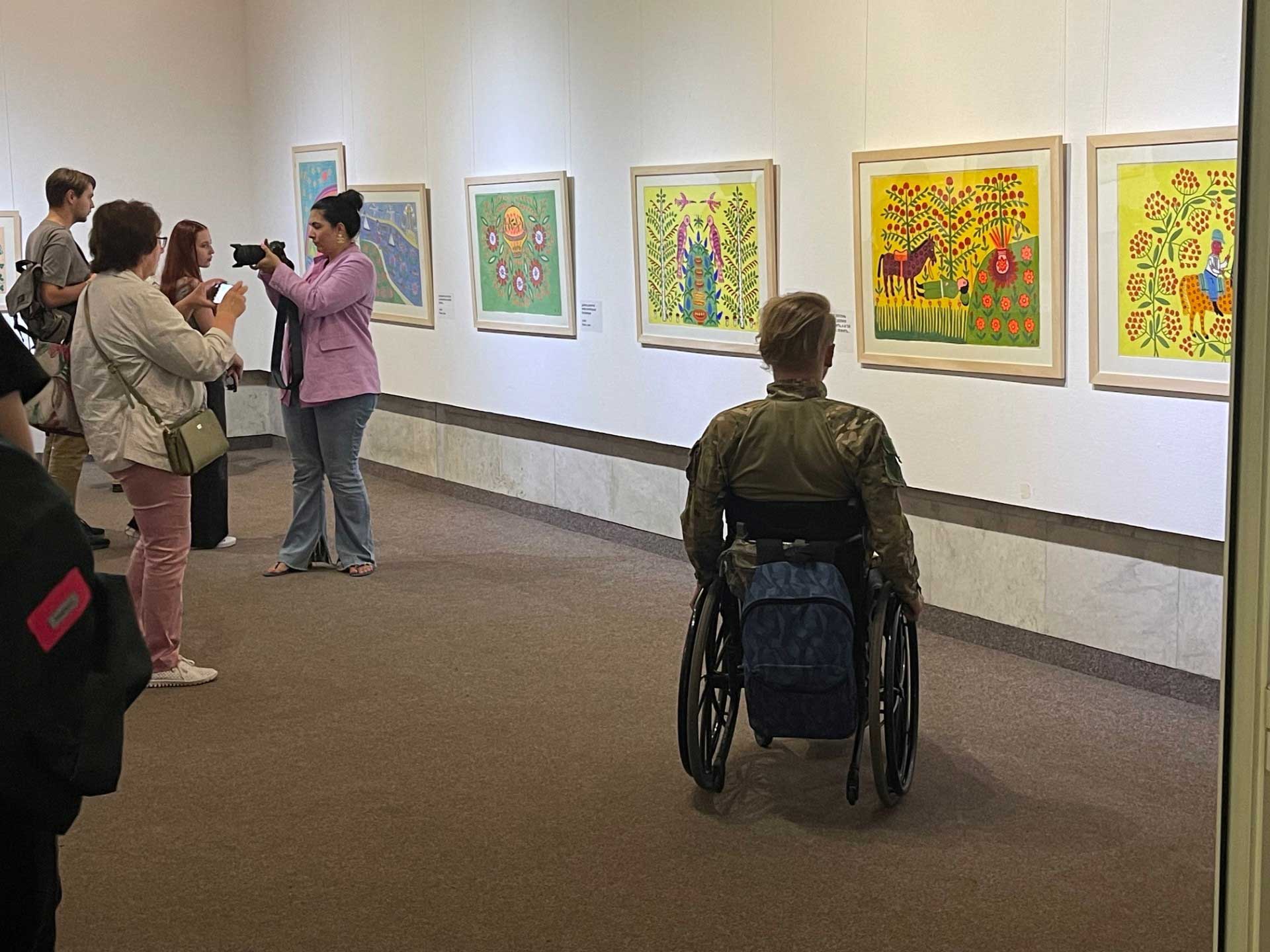
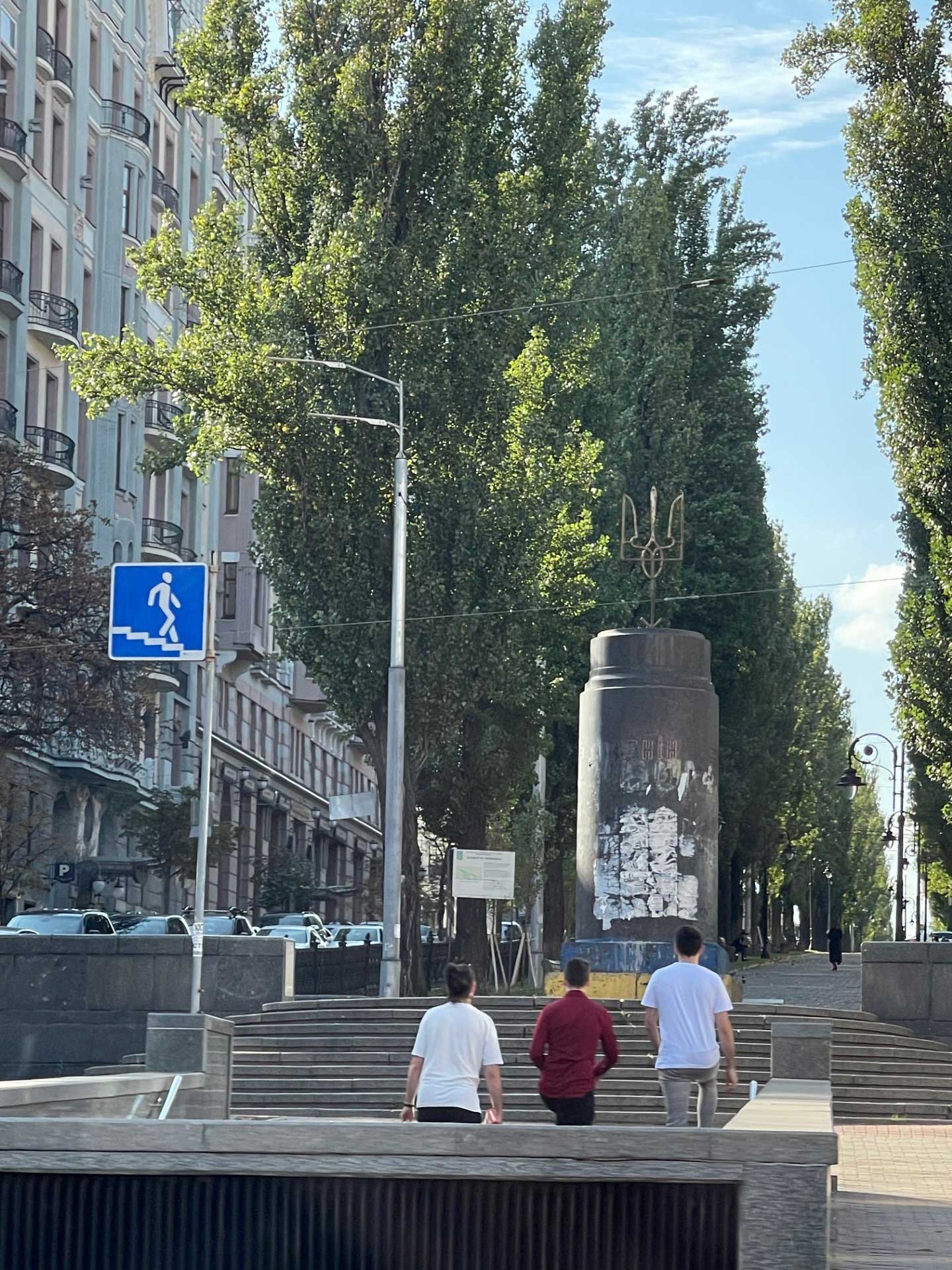
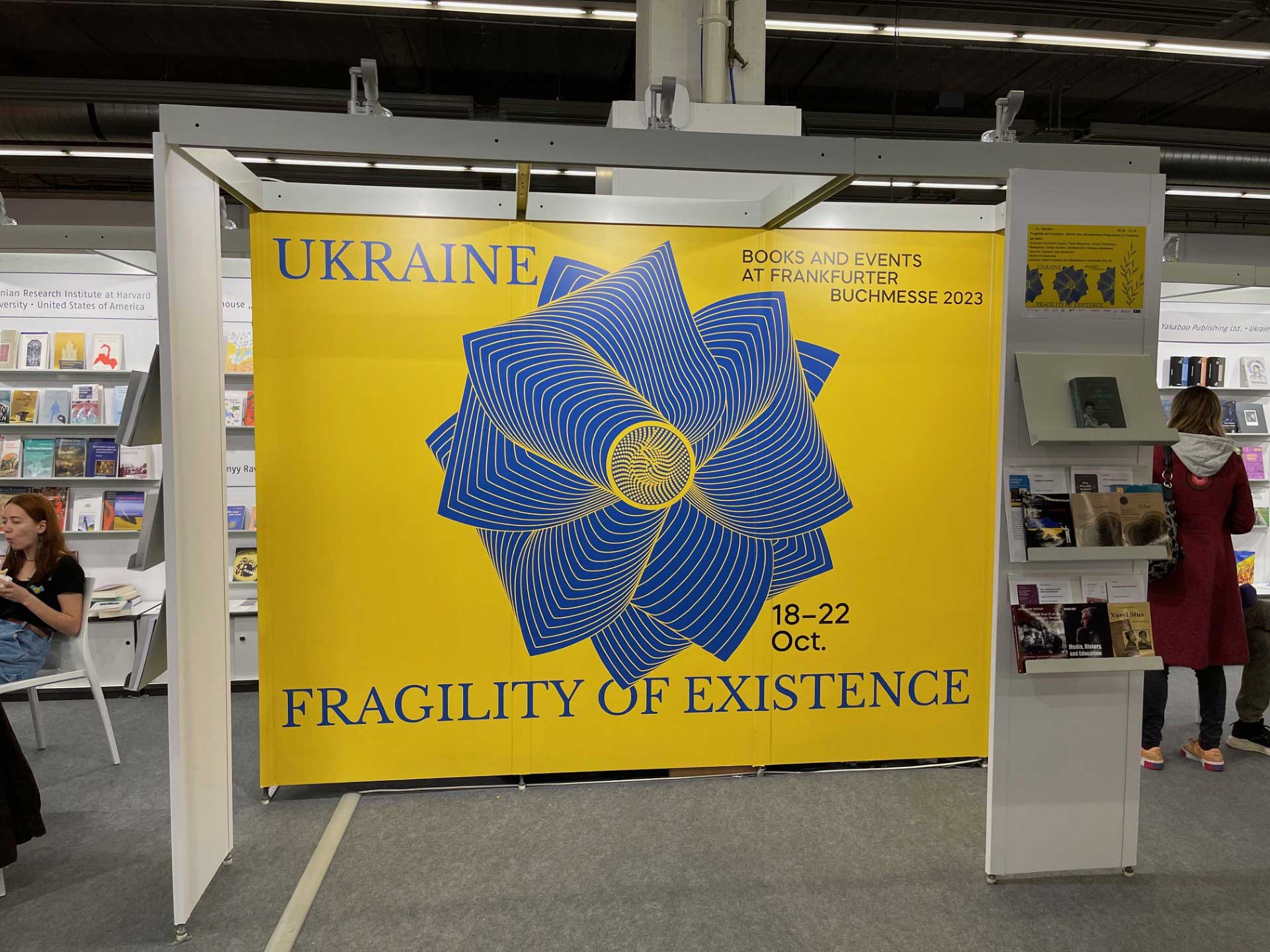
Mykhailivska Square in Kyiv on 28 April 2023.Cars destroyed during intense fighting in 2022 are part of a makeshift memorial outside Irpin, a city near Kyiv, on 30 April 2023.Israel's "Ethnokhutir" Ukrainian festival held in Tel Aviv on 23 June 2023 provided an opportunity to protest Russia's full-scale invasion of Ukraine and to show solidarity between Ukrainians and Jews. The fair, organized by the non-profit Israeli Friends of Ukraine, is held annually to celebrate Ukrainian food and culture. The organization has been instrumental in raising awareness of Ukraine in Israel.Each Ukrainian flag in this photo, taken on 2 May 2023 in Kyiv's central square, the Maidan, represents the life of a fallen soldier. The Maidan has become a citizens' memorial to those killed in Russia's genocidal war against Ukraine.A sign on Kyiv's main boulevard Khreshchatyk on 2 May 2023 reads "Veterans are various, the victory is one. With respect to everyone who makes Ukraine stronger." The soldier is a Crimean Tatar who is holding the flag of Crimea, an autonomous region of Ukraine. Russia illegally invaded and annexed the peninsula in 2014.Seen in Frankfurt on 18 July 2023. Germans stand in solidarity with Ukraine. As of early February 2026, Germany has provided temporary protected status to approximately 1.25 million Ukrainian refugees, mostly women and children.A Ukrainian soldier visits an exhibition honoring famed Ukrainian artist, Maria Primachenko on 17 September 2023 at Kyiv's Ukraine House. A self-taught artist in the Native art movement, Primachenko was awarded the Shevchenko National Prize, Ukraine's highest state prize for cultural achievements, in 1966. Over 20 of her works that were held in a museum outside Kyiv were destroyed during Russia's full-scale 2022 invasion. Fragments of her works are now reproduced in popular lapel pins.A Ukrainian trident in Kyiv on 22 September 2023 stands atop a pedestal that once held a Lenin memorial. The removal of this Soviet figure marks a nationwide movement to remove Soviet and Russian memorials from the country.Despite challenges, Ukrainian publishers continue to participate in international book festivals with relevant themes such as "Fragility of Existence", as seen on 20 October 2023 at the Frankfurt Book Fair. Ukrainian writers are increasingly recognized internationally, with their works translated into major languages.
2024
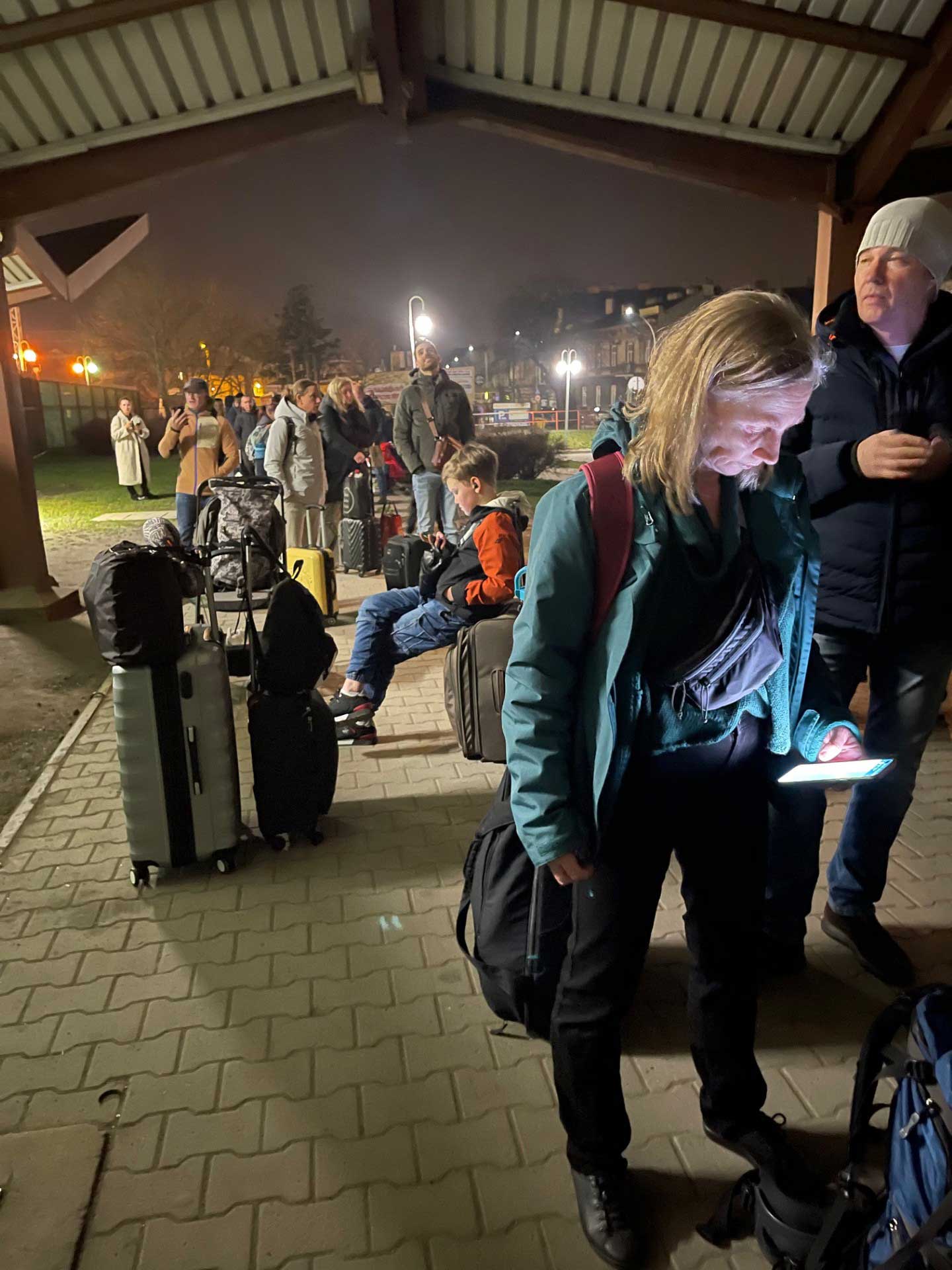
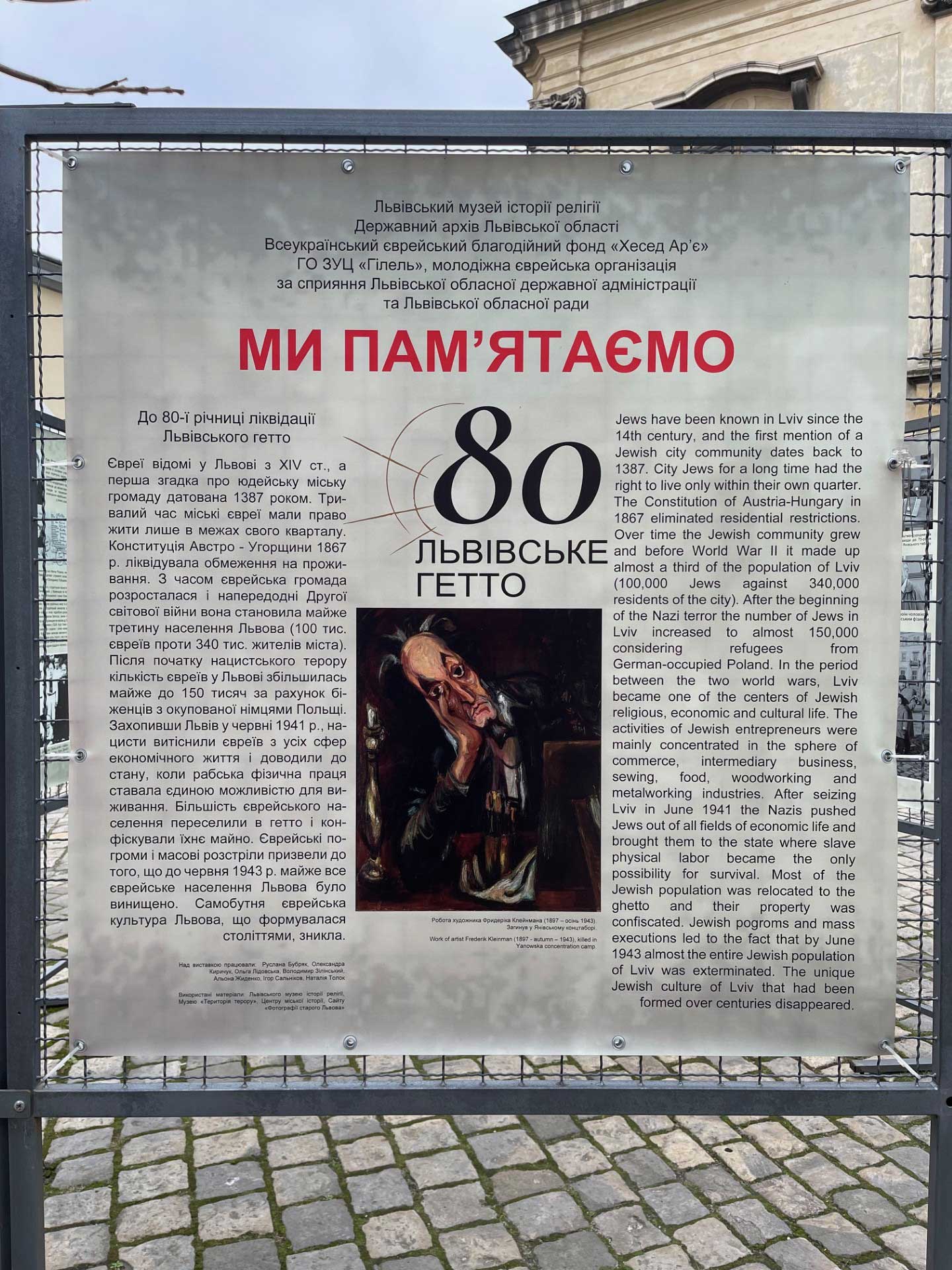
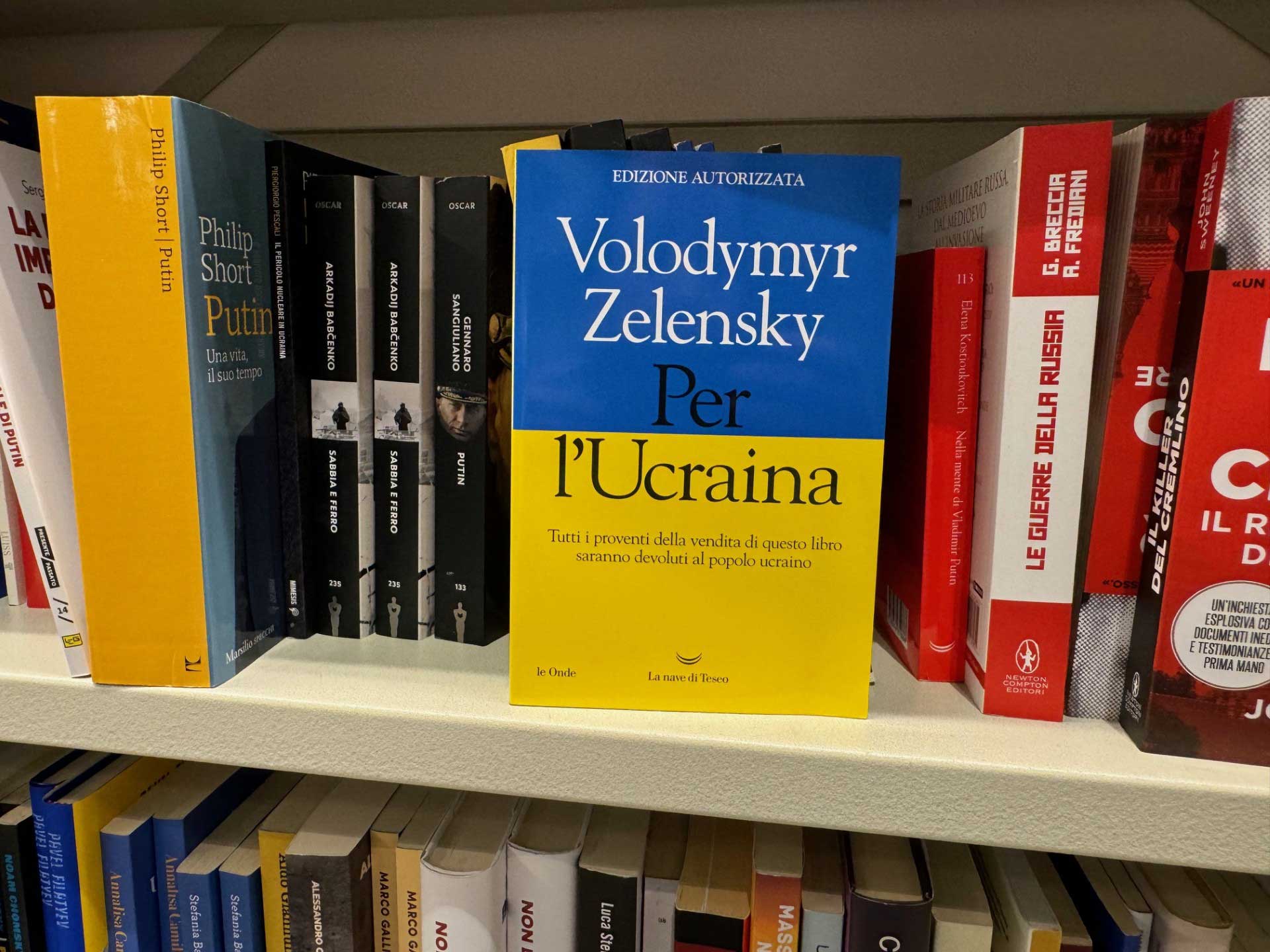
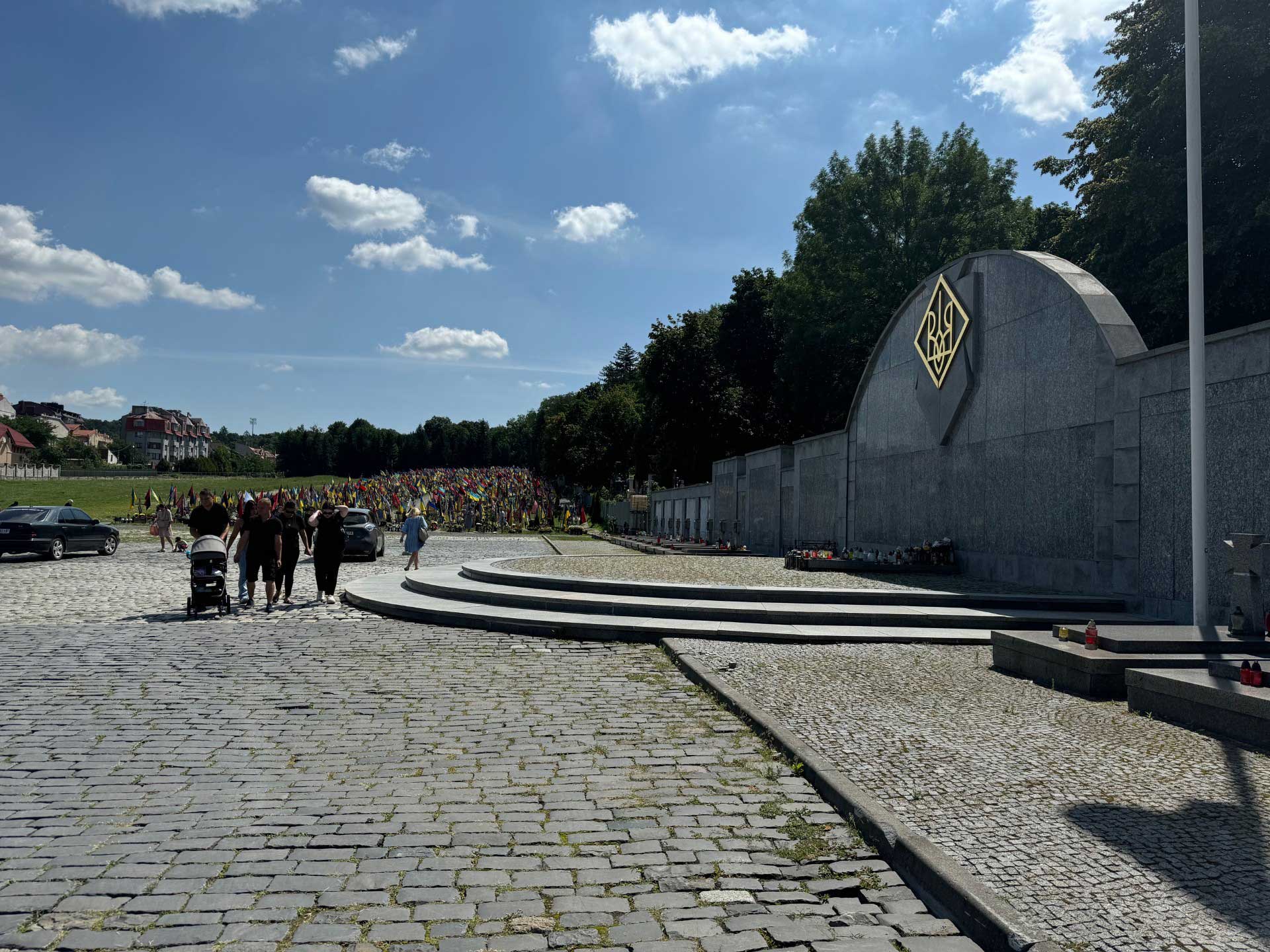
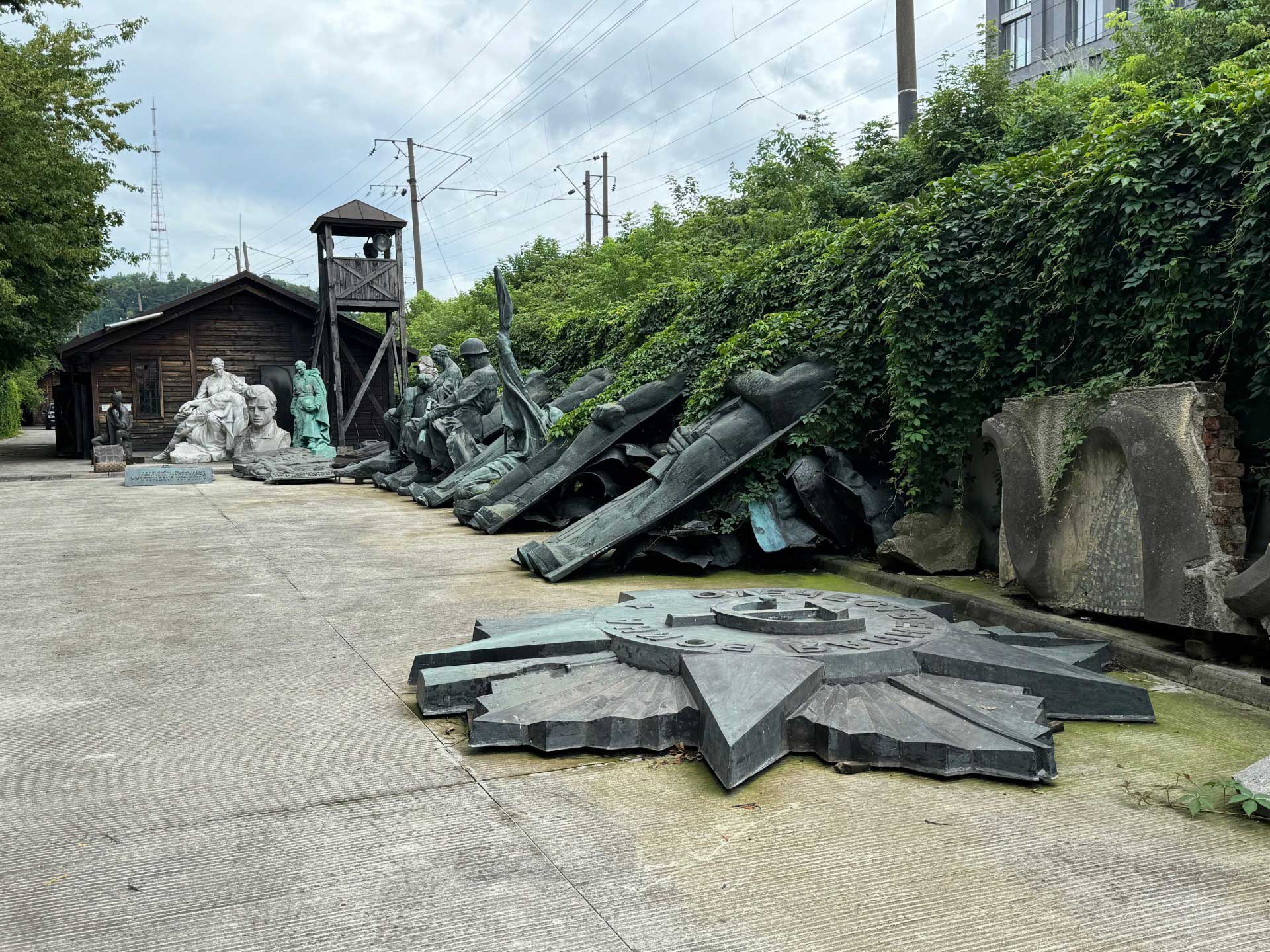
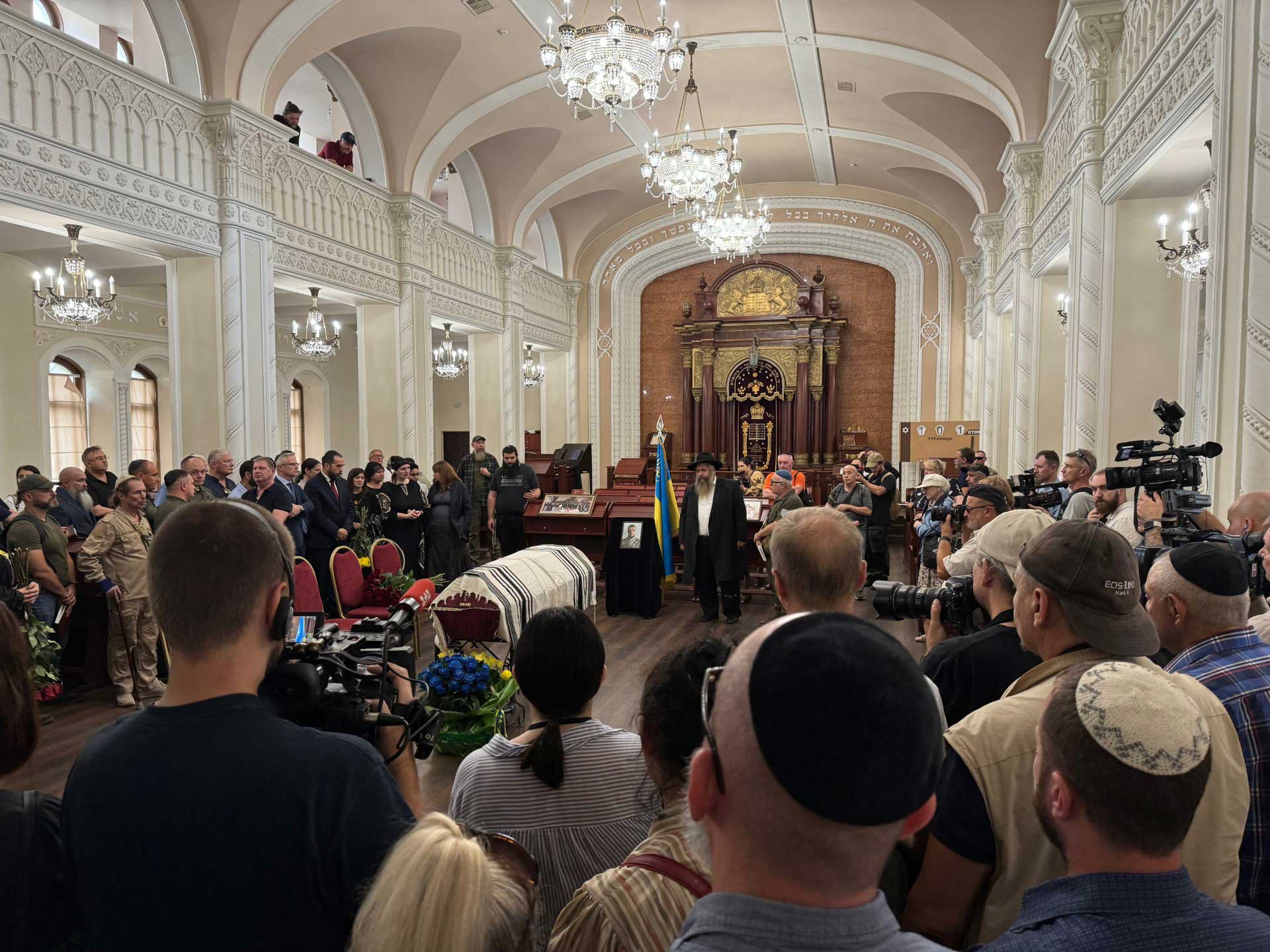
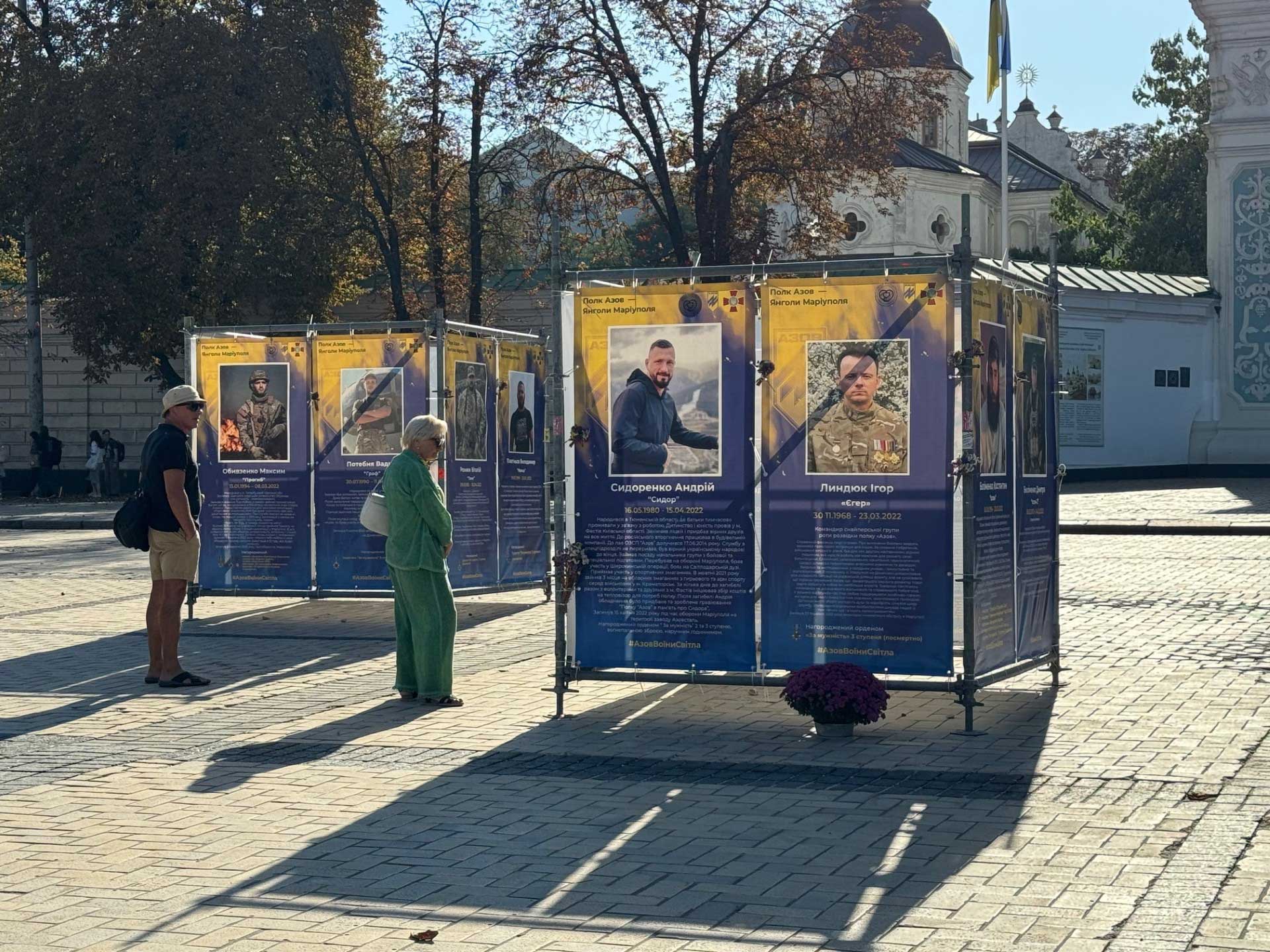
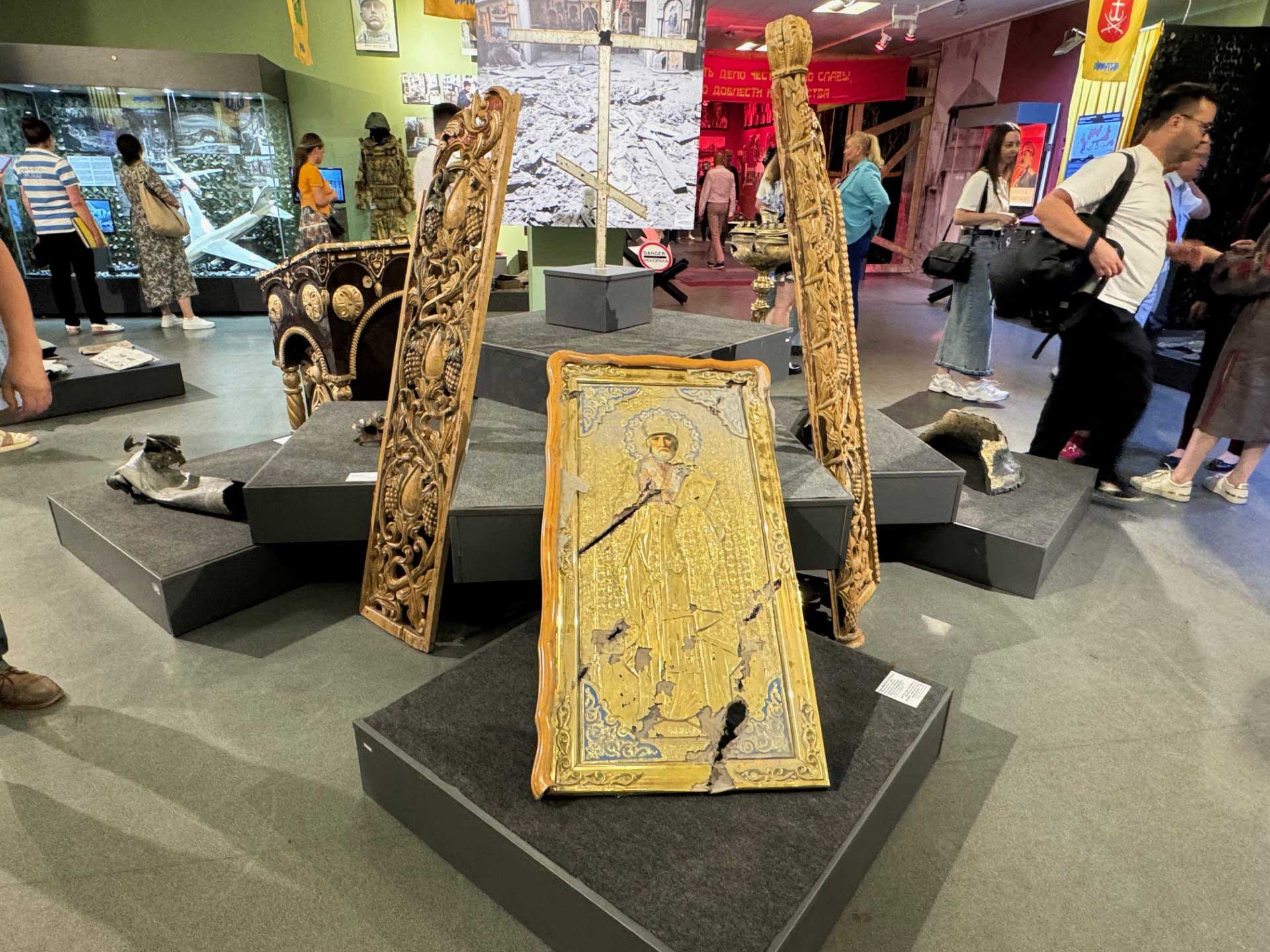
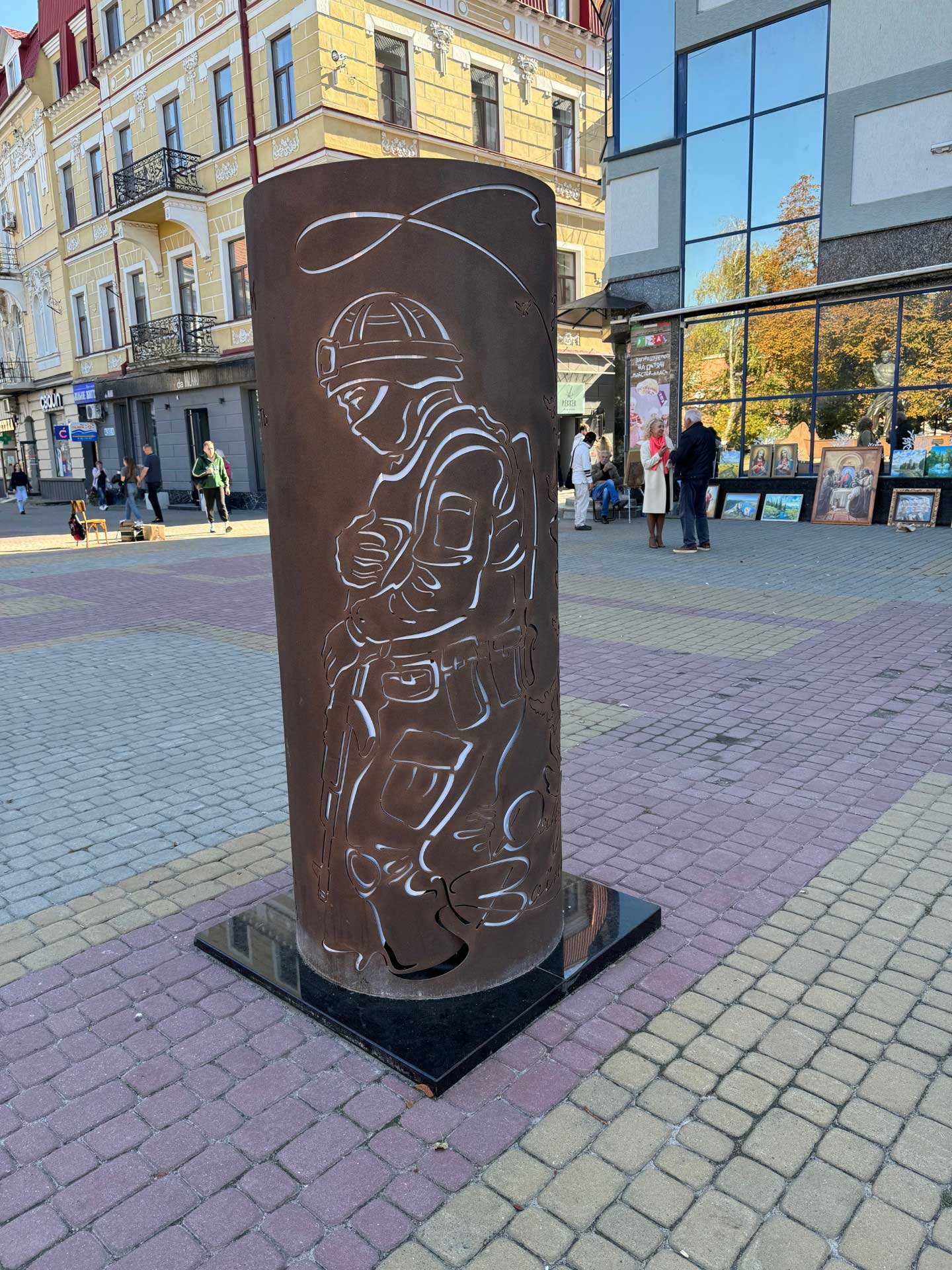
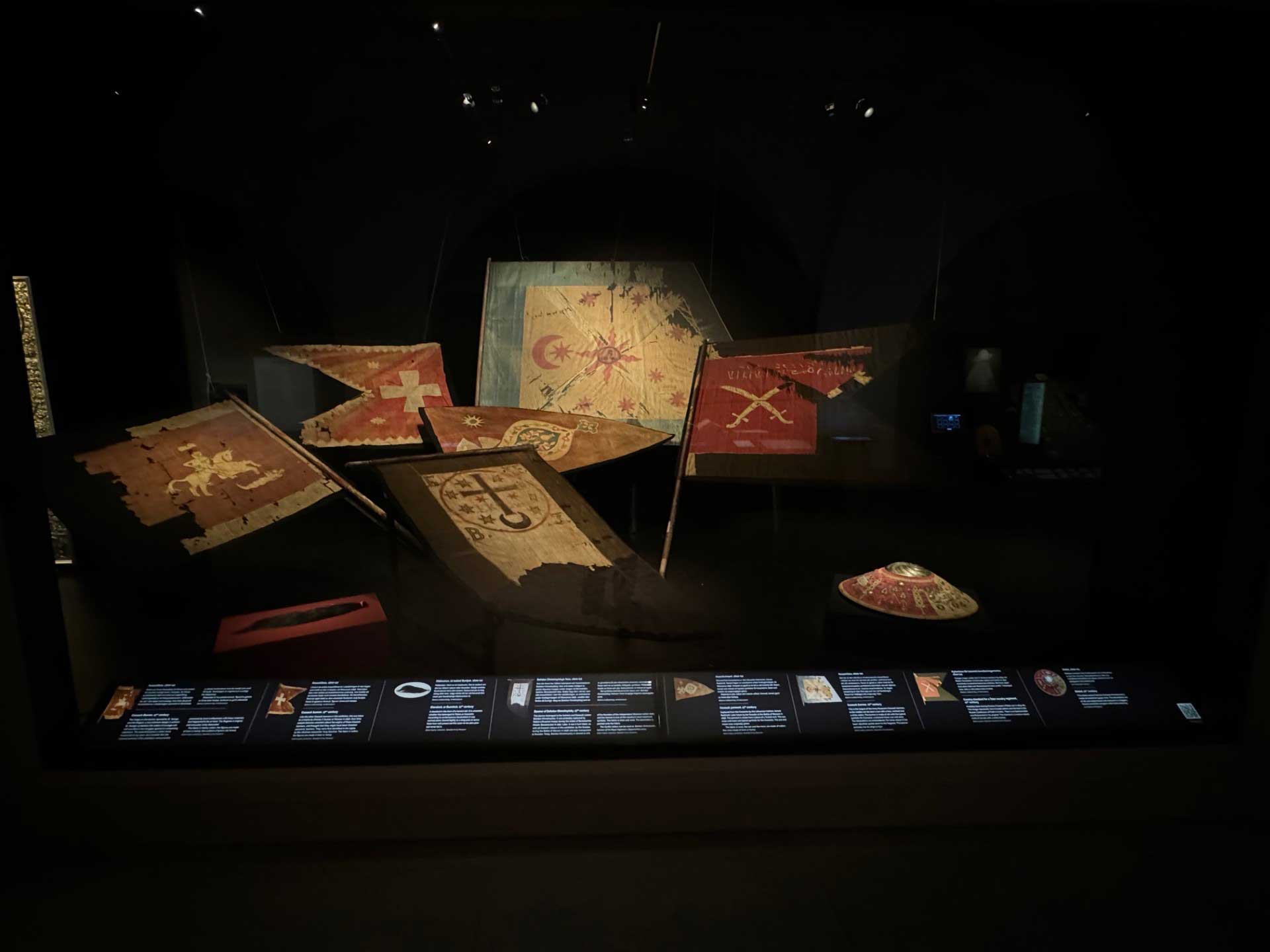
Waiting at the train station in Przezmyshl on 29 February 2024 to pass customs and board the train to Ukraine. Przezmyshl, located on Ukraine's western border, is a major transit point.Ukrainians continue to research, discuss, and memorialize the Holocaust, as evidenced on 7 March 2024 in an outdoor exhibit dedicated to the eightieth anniversary of the ghetto in Lviv. The poster reads, "We remember, 80 years of the Lviv ghetto."The Italian-language translation of Ukrainian President Volodymyr Zelensky's book "A Message from Ukraine" is seen in a bookstore in Rome on 5 June 2024. Recent publications by Italian scholars like Simone Bellezza, who wrote the book "Identita ucraina: Storia del movimento nazionale dal 1800 a oggi" (" Ukrainian Identity: A History of the National Movement from 1800 to Today"), and translations of works by Ukrainian historian Yaroslav Hrytsak and Ukrainian writer Andrei Kurkov have changed perceptions of Ukraine and countered a long-standing pro-Russian narrative in Italy.Lviv's military cemetery, known as the Field of Mars, on 8 July 2024.Soviet monumental art as seen in Lviv's Territory of Terror Museum on 26 July 2024. The museum aims "to explore, comprehend and present the tragic pages of the history of the mid-twentieth century." The collection dedicated to Soviet monumental art was collected in 2019 and focuses on the politics of memory as it "integrates examples of visual art as a form of Soviet memorialization and propaganda in public space." Russia's war against Ukraine has led to a break with the country's Soviet past.A memorial service was held at Kyiv Brodsky Synagogue on 12 September 2024 to honor the life of Matisyahu (Moty) Samborskyi, the adopted son of prominent Ukrainian rabbi Moshe Reuven Azman. The rabbi has traveled extensively to garner religious and political support for Ukraine. Ukrainians of all ethnic backgrounds are fighting and dying for Ukraine to remain a sovereign and democratic country.A memorial to fallen soldiers from the 3rd Separate Assault Brigade, a unit of the Armed Forces of Ukraine, at an outdoor exhibition at St. Sophia Square on 24 September 2024. Outdoor exhibitions honoring servicepeople killed in Russia's war against Ukraine are common in cities and towns throughout the country.Religious icons damaged by Russian attacks as seen on 26 September 2024 at the opening of the exhibition "On Guard of St. Sophia" at the Kyiv History Museum. The exhibition, curated by historian Vitaly Nakhmanovych, was "dedicated to the Russian-Ukrainian war as a consequence of the centuries-long confrontation between civilizations, which have been bringing opposing values to the world from the very beginning."A memorial in Ternopil, western Ukraine, on 10 October 2024, thanking Ukraine's warriors for, among other things, their heroism, patriotism, sacrifice, freeing occupied territories, and children's laughter.Stockholm's Swedish Army Museum in 2024 hosted an exhibition titled "Crossroads: Sweden-Ukraine (1000 Years)". This photo, taken on 20 October 2024, features banners representing Ukrainian statehood from the museum's collection: Cossack banners, pennants, a shield, a bunchuk, and a cavalry standard for a Tatar cavalry regiment. Bohdan Khmelnytsky's banner, also from the 17th century, is visible in the lower center. The exhibition notes that the flag "was probably captured by Polish-Lithuanian troops during the battle of Berestechko (Polish: Beresteczko) in 1651. Later, it was in turn taken, as with all Cossack colours in this exhibition, by the Swedes during the Battle of Warsaw in 1656 and later transported to Sweden. Today, Bohdan Khmelnytsky is viewed as one of the founders of the independent Ukrainian nation state, and the banner is one of the country's most important symbols. The fabric is linen and wool. The decoration is painted on the fabric. The Cyrillic letters can read as: Bohdan Khmelnytsky, hetman of His Royal Highness's Zaporozhian army."
2025
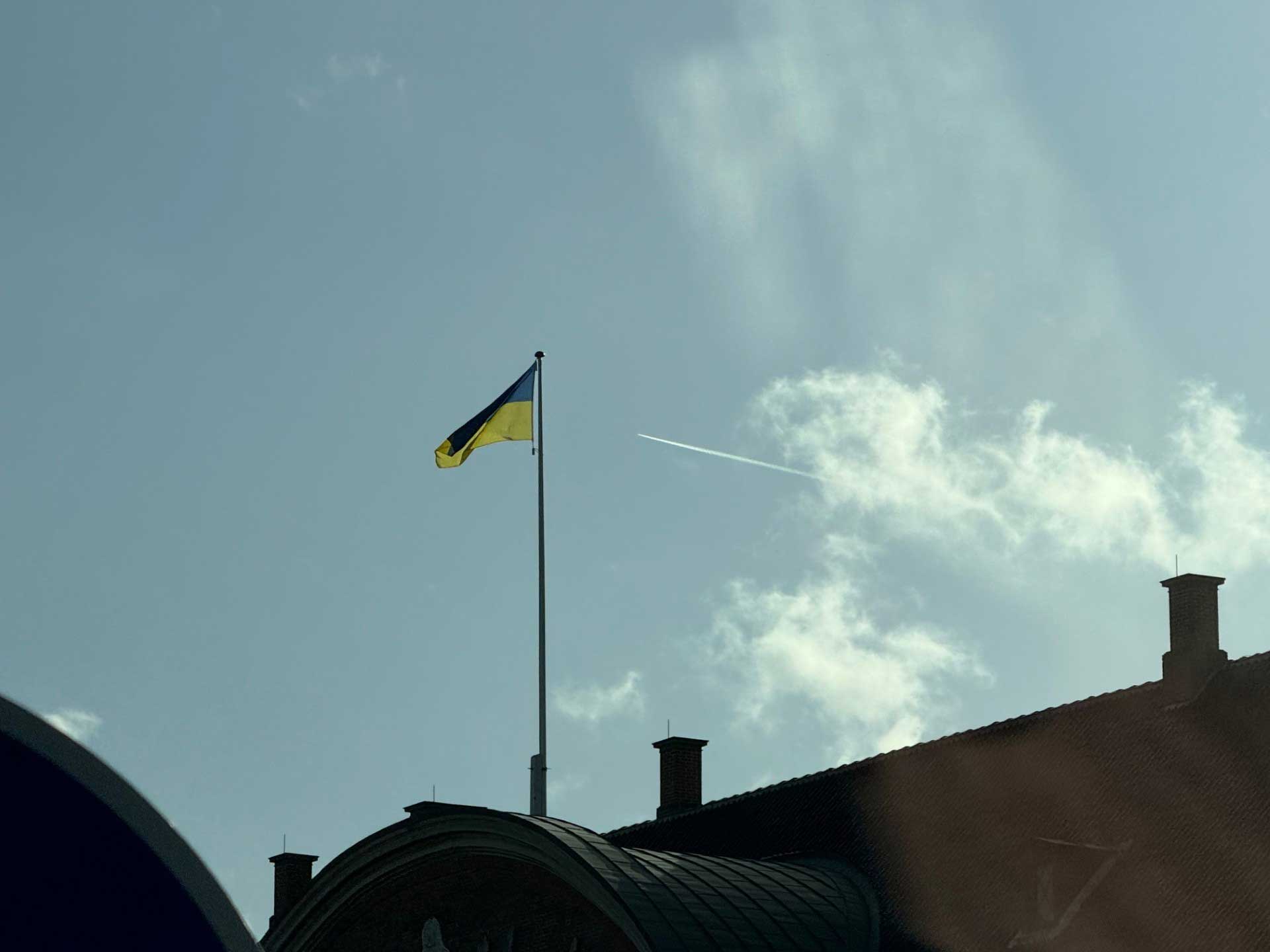
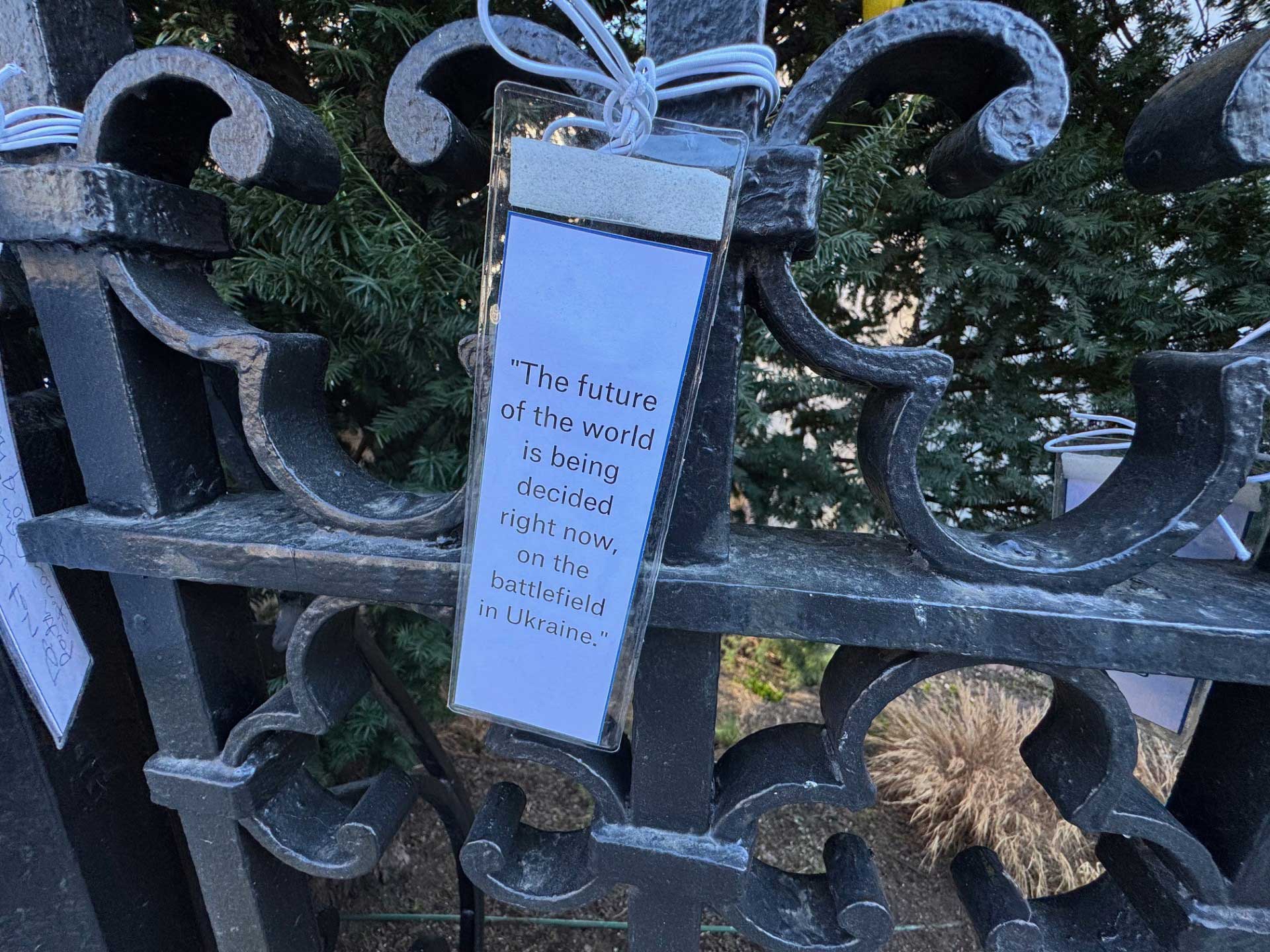
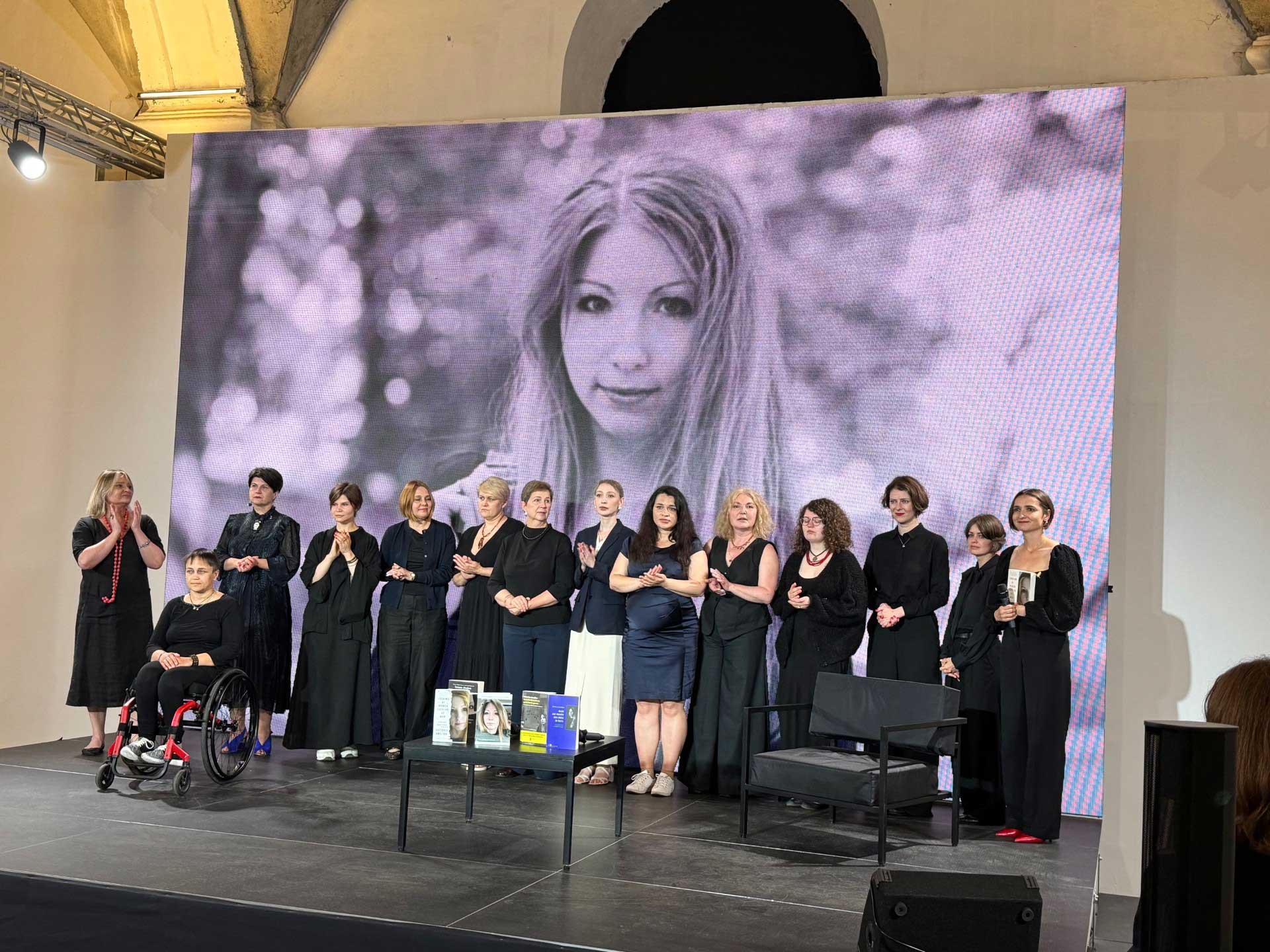
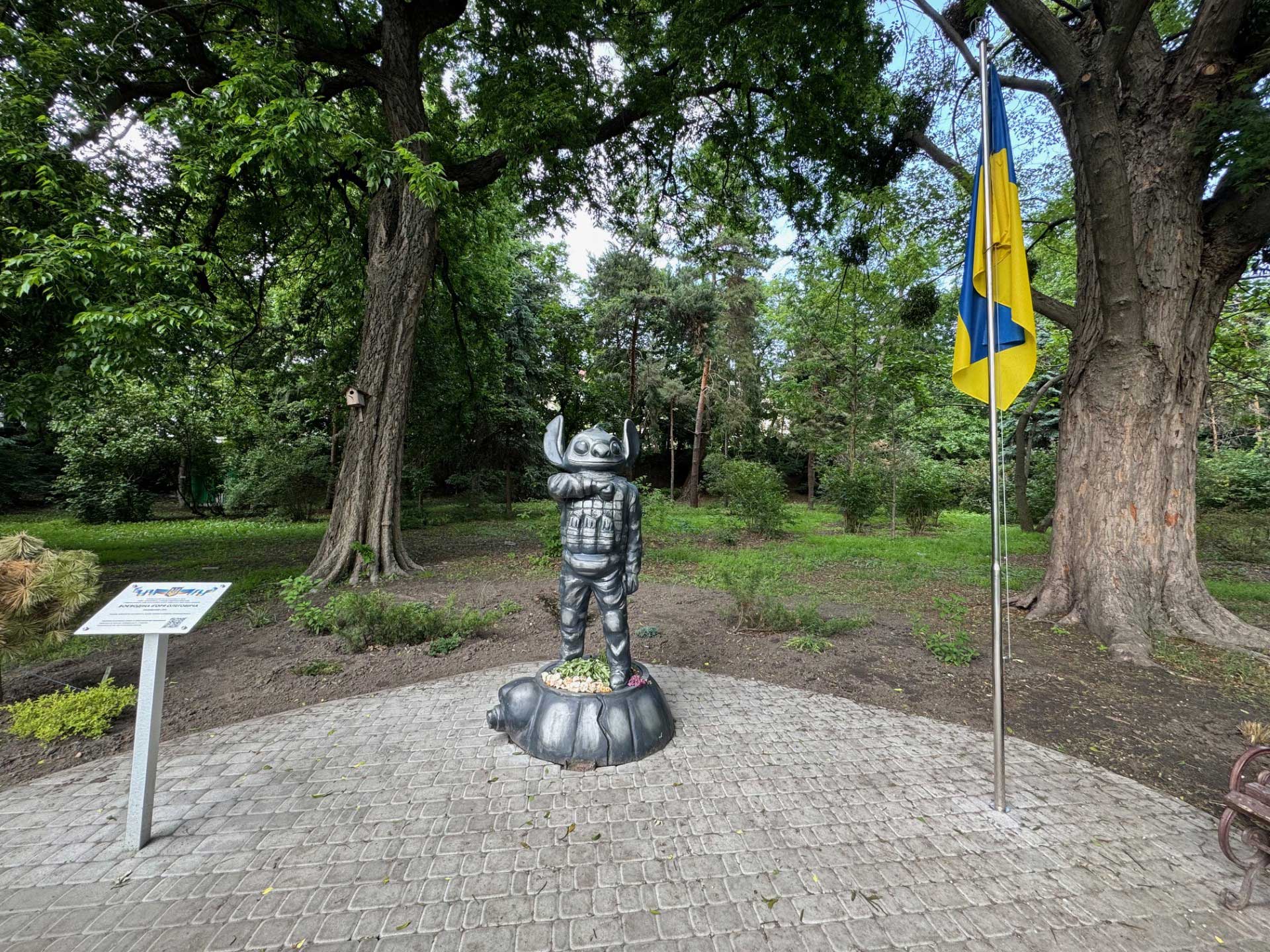
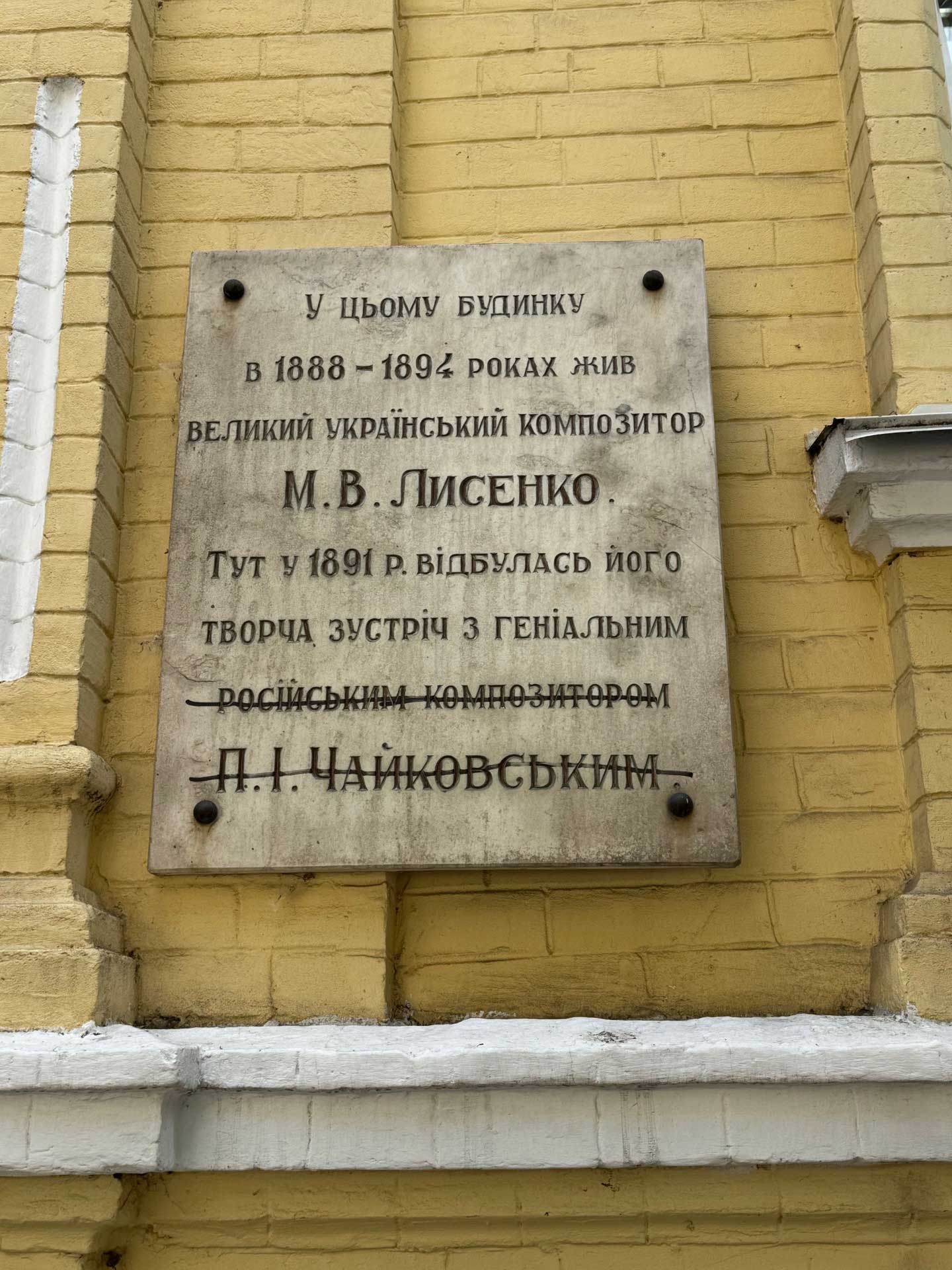
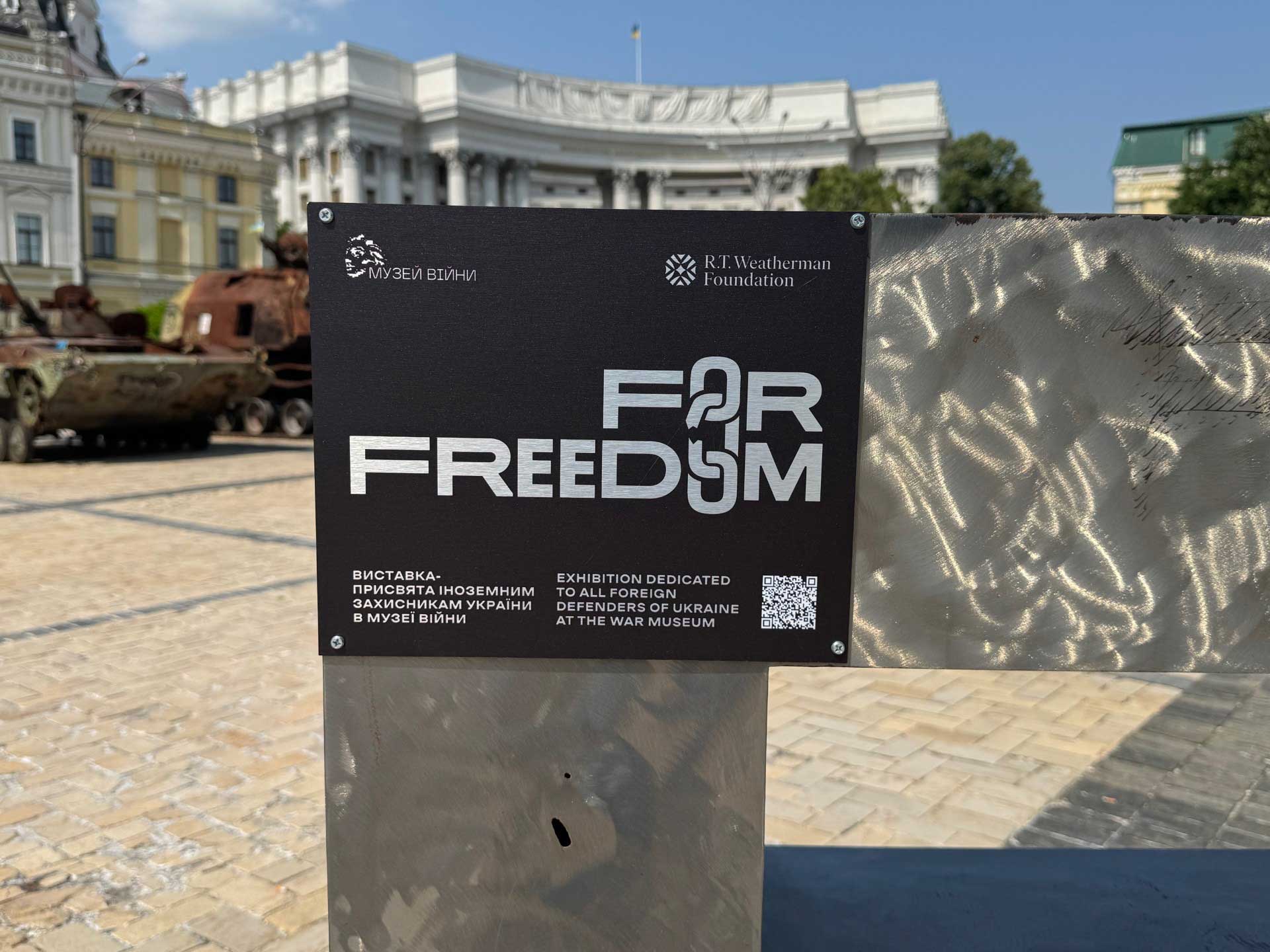
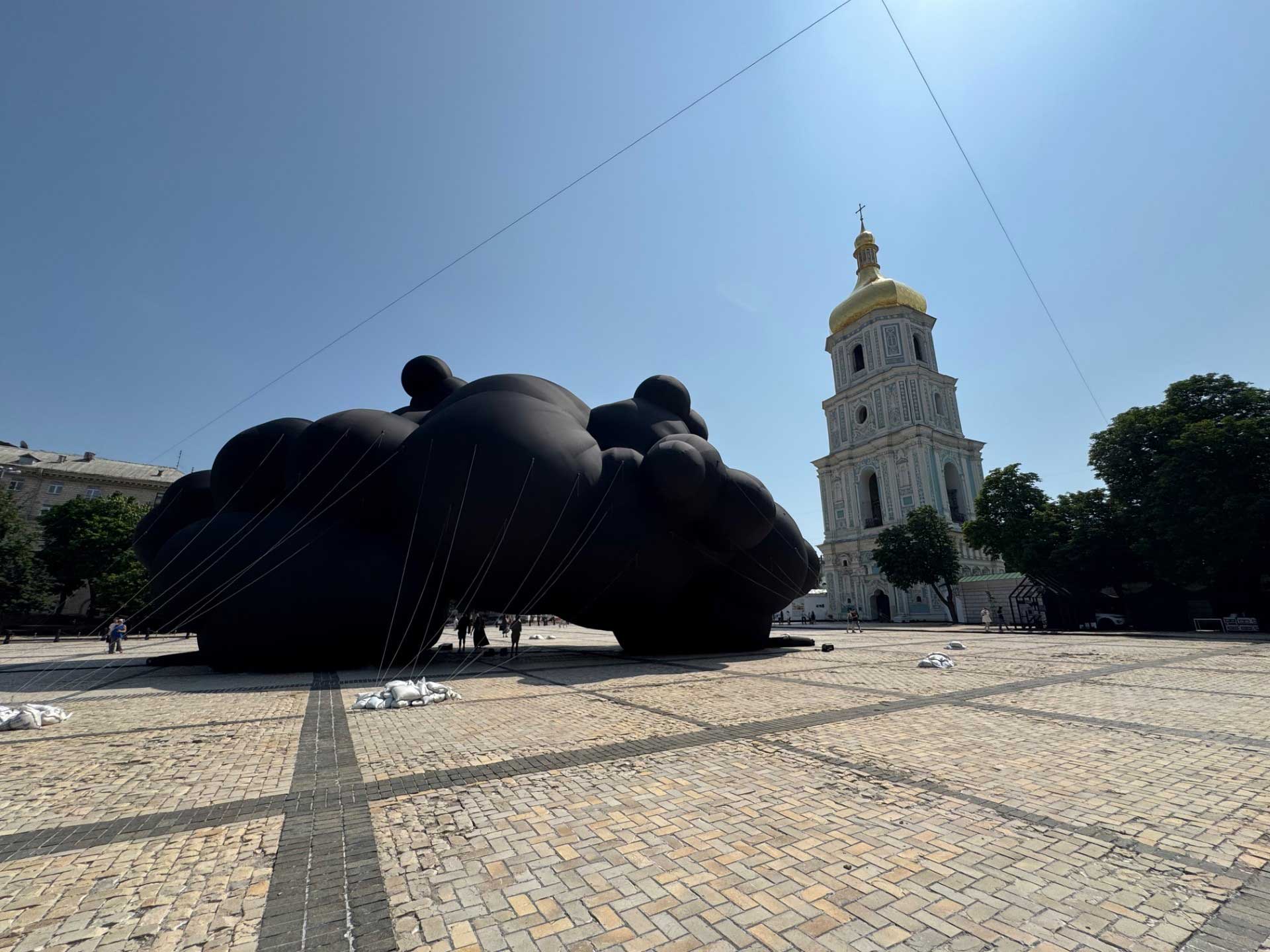
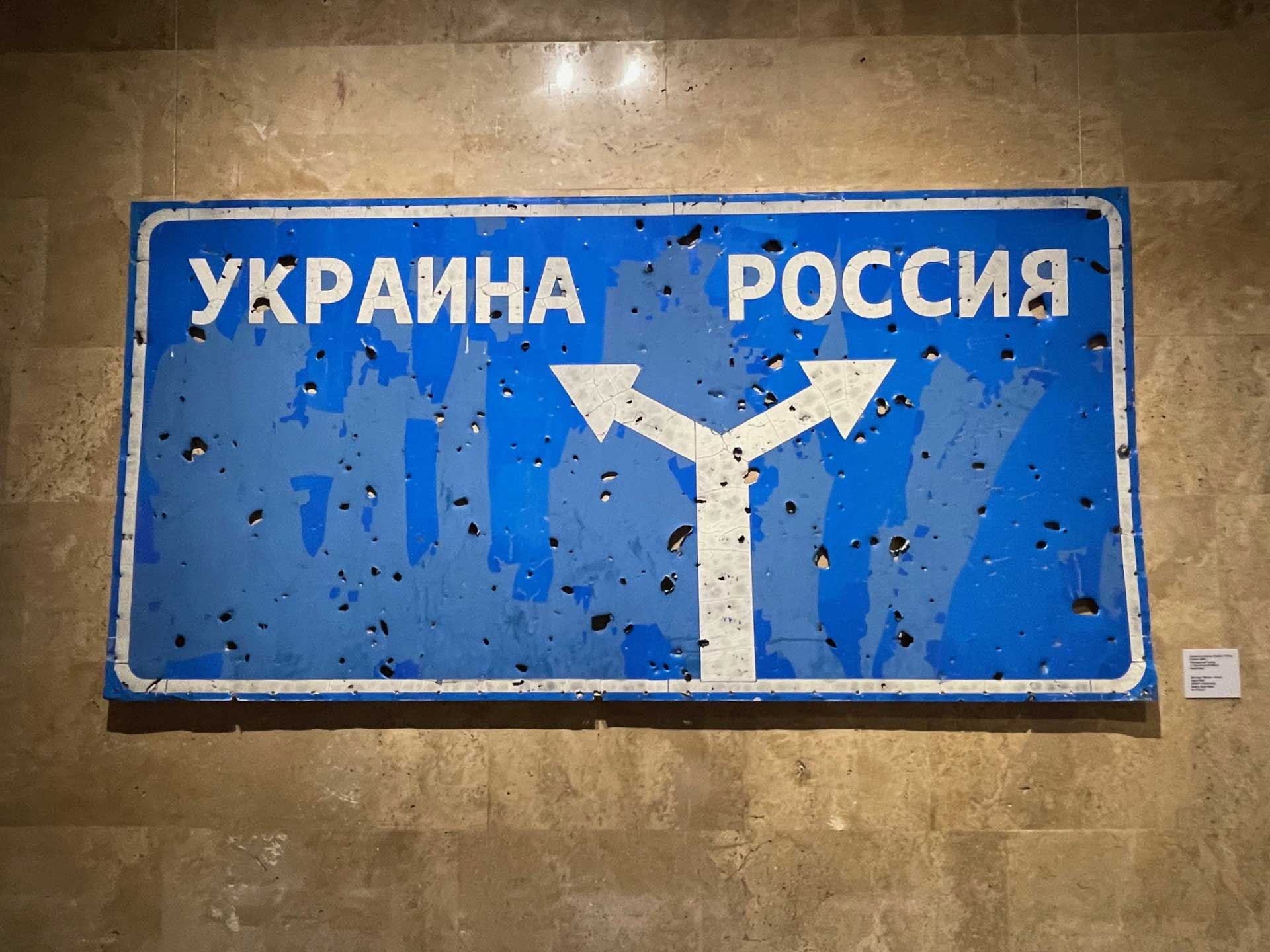
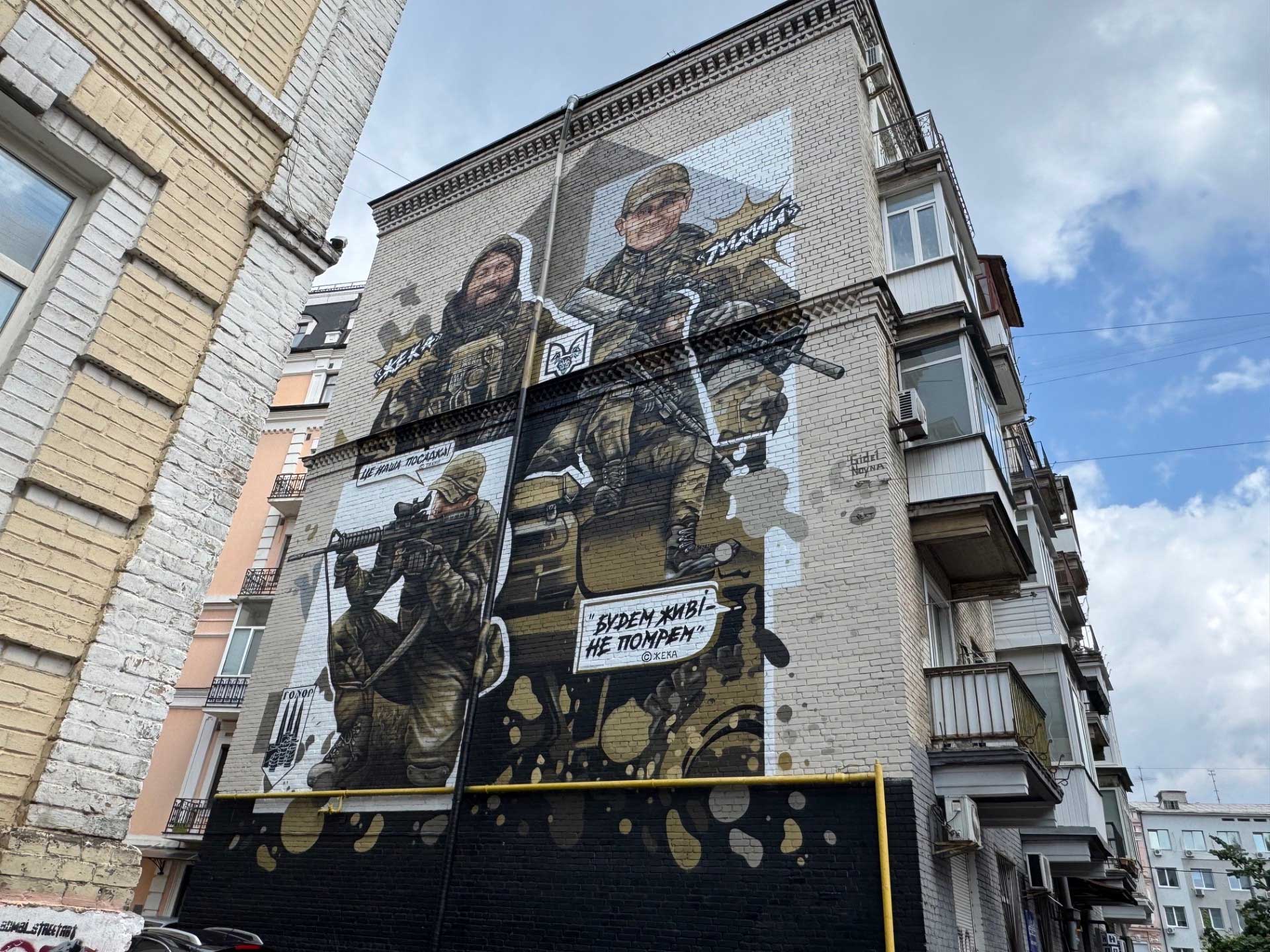
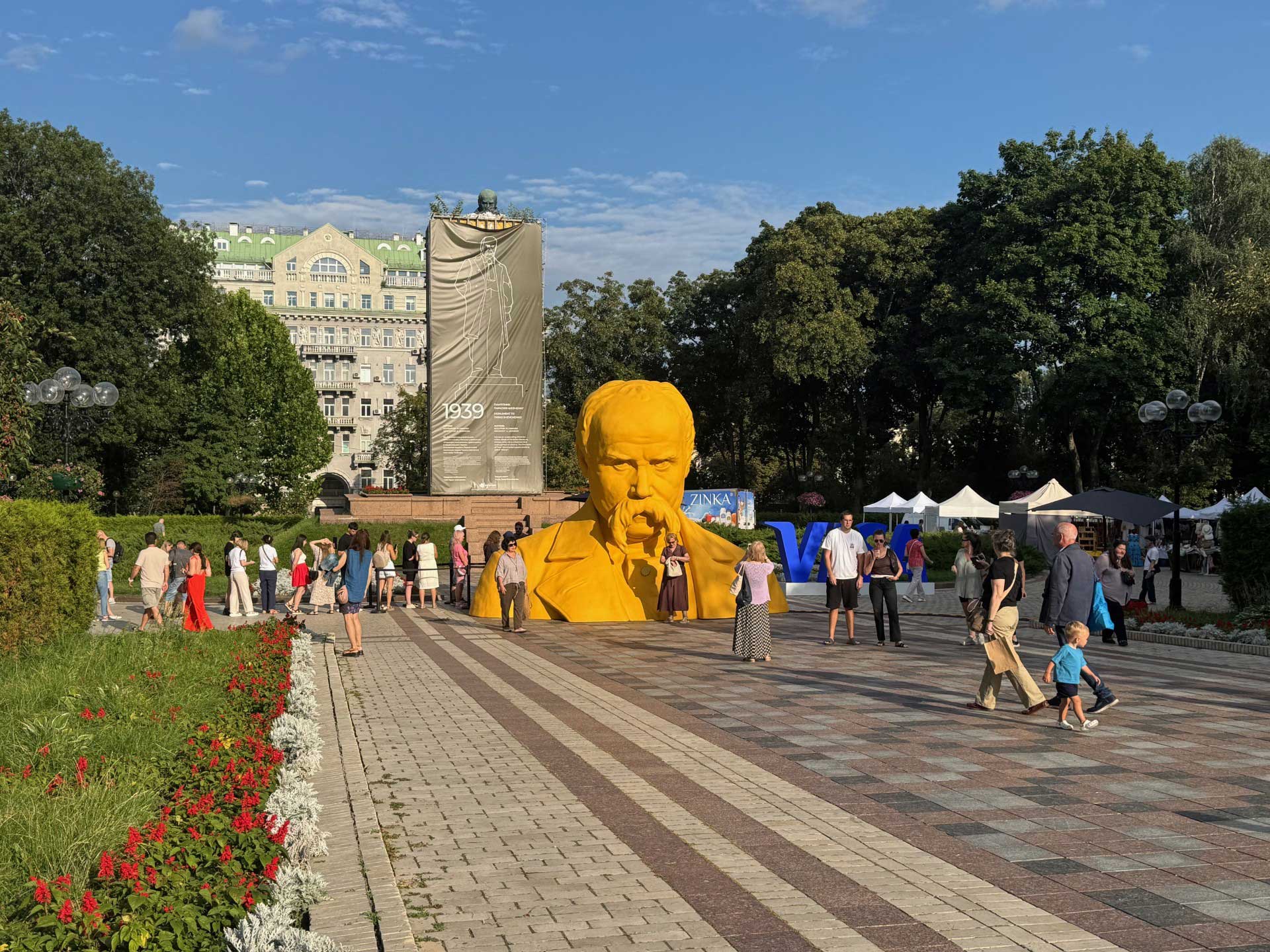
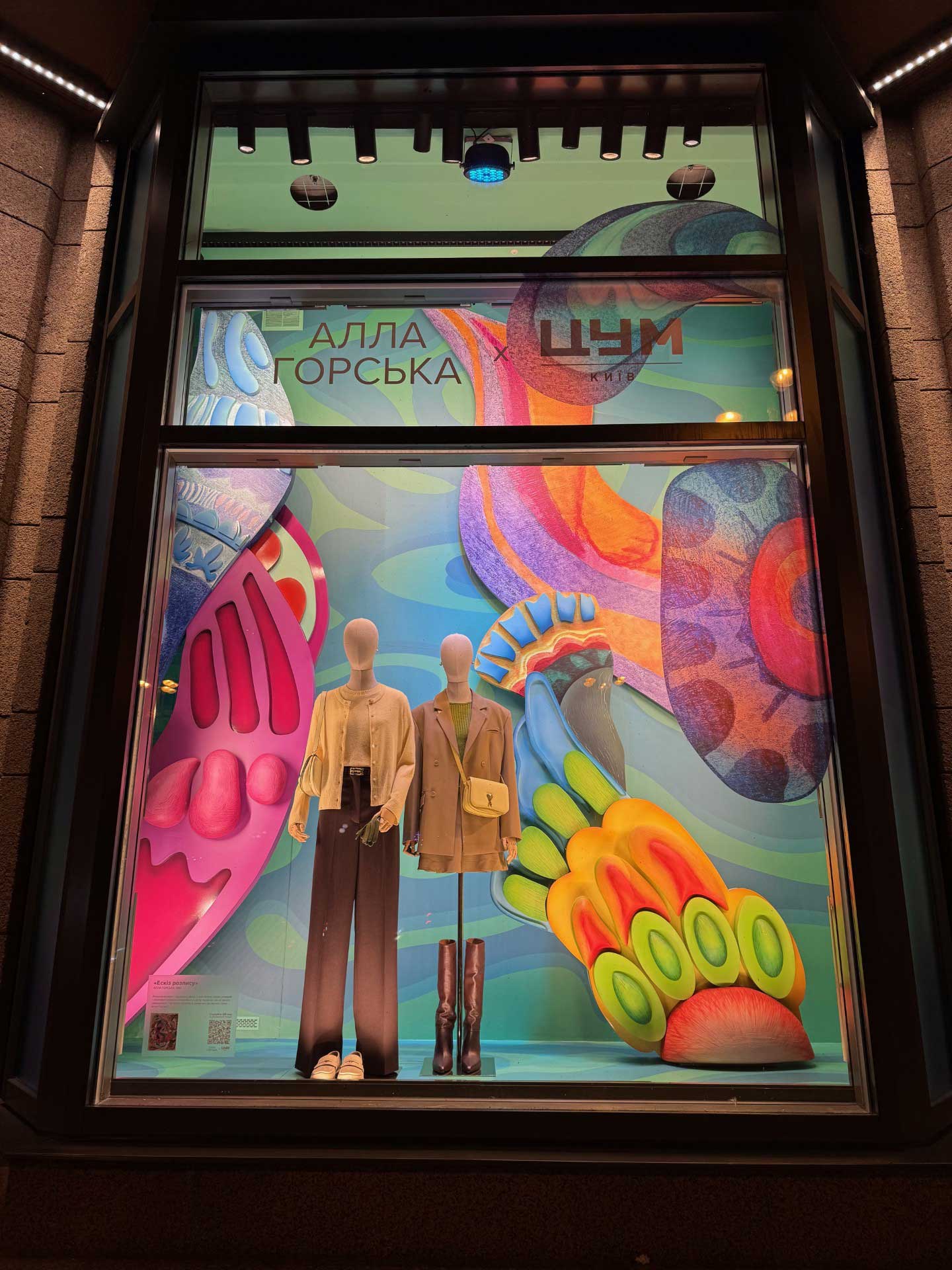
Ukrainian flag flies over buildings in Copenhagen, 23 October 2024.Seen on 22 March 2025 outside New York's Ukrainian Institute of America: "The future of the world is being decided right now on the battlefield in Ukraine." This non-profit organization is "dedicated to promoting the art, music, and literature of Ukraine and the Ukrainian diaspora. It serves both as a center for the Ukrainian-American community and as America's "Window on Ukraine," hosting art exhibits, concerts, film screenings, poetry readings, literary evenings, children's programs, lectures, symposia, and full educational programs, all open to the public."A tribute to Ukrainian writer and war crimes researcher Victoria Amelina on 1 June 2025 at the International Book Arsenal festival in Kyiv. Amelina was fatally injured on 27 June 2023 during a Russian attack on Kramatorsk when an Iskander missile hit the pizzeria where she was with reporters and politicians from Colombia. She died at the age of 37 on 1 July 2023, leaving behind a son and husband.A memorial to Ihor Voyevodin, a student at Taras Shevchenko National University of Kyiv, who died fighting for an independent Ukraine near the eastern city of Kreminna, Luhansk Oblast, as seen on 4 June 2025. The gardens are adjacent to the university.As seen in June 2025, the name of Russian composer Pyotr Tchaikovsky is crossed out on a memorial plaque placed on the home of famed Ukrainian composer Mykola Lysenko, where he lived in Kyiv between 1888 and 1894. The two men met at Lysenko's home in 1896. Ukraine has been taking steps to remove the Russian composer's name from public and cultural institutions as part of a "decolonization" push, including dropping his name from Kyiv's top conservatory.A fragment of a sculpture as seen on 8 June 2025, dedicated to foreign defenders of Ukraine on Kyiv's Mykhailivska Square. The exhibition took place at Ukraine's war museum and was organized by the R.T. Weatherman Foundation, a US pro-democracy non-profit operating in Ukraine since 2022.The Black Cloud, an "artwork that visualizes the threats we choose not to see — blindly hoping that someone else will preserve the stability of the world around us," as seen on Kyiv's St. Sophia Square on 8 June 2025. The cloud, as a warning, later traveled to the United States to the Burning Man festival, where it was destroyed by a storm and reemerged as a new artwork, "No Fate".From the exhibition "…beyond the borders of our native land" on 14 June 2025 at Kyiv's War Museum. The exhibition documents Ukraine's defensive operation in Russia's Kursk region as well as Ukrainian settlements that developed in the Kursk, Belgorod, and Voronezh regions since the second half of the 17th century. The sign is in Russian, with Ukraine pointing left and Russia pointing right.Illustrations on a building in Kyiv in June 2025. The mural reads "Will live, won't die".A temporary statue of Taras Shevchenko on 10 August 2025 in the park named after him opposite Kyiv University. The permanent statue of Ukraine's poet laureate was wrapped in protective wear, much like many statues in the city. The statue was unveiled on 6 March 1939 on the site of the former monument to Russian Tsar Nicholas I and dedicated to the 125th anniversary of Shevchenko's birth. The university was named in the poet's honor on the same occasion.A window in Kyiv's main shopping center, Tsum, is decorated with artwork by famed Ukrainian artist Alla Horska on 20 August 2025. Horska was also a Soviet dissident who was associated with the Ukrainian underground and Sixtiers movements during the 1960s. Sixtiers rejected the principles of social realism, embraced creativity, and refused to allow their art to serve the interests of the Soviet authorities. Soviet special services killed Horska at the age of 41 in circumstances not fully clarified.The number of flags honoring Ukrainian servicepeople who have died in Russia's genocidal war against Ukraine grows, as evidenced on 29 August 2025.
2026
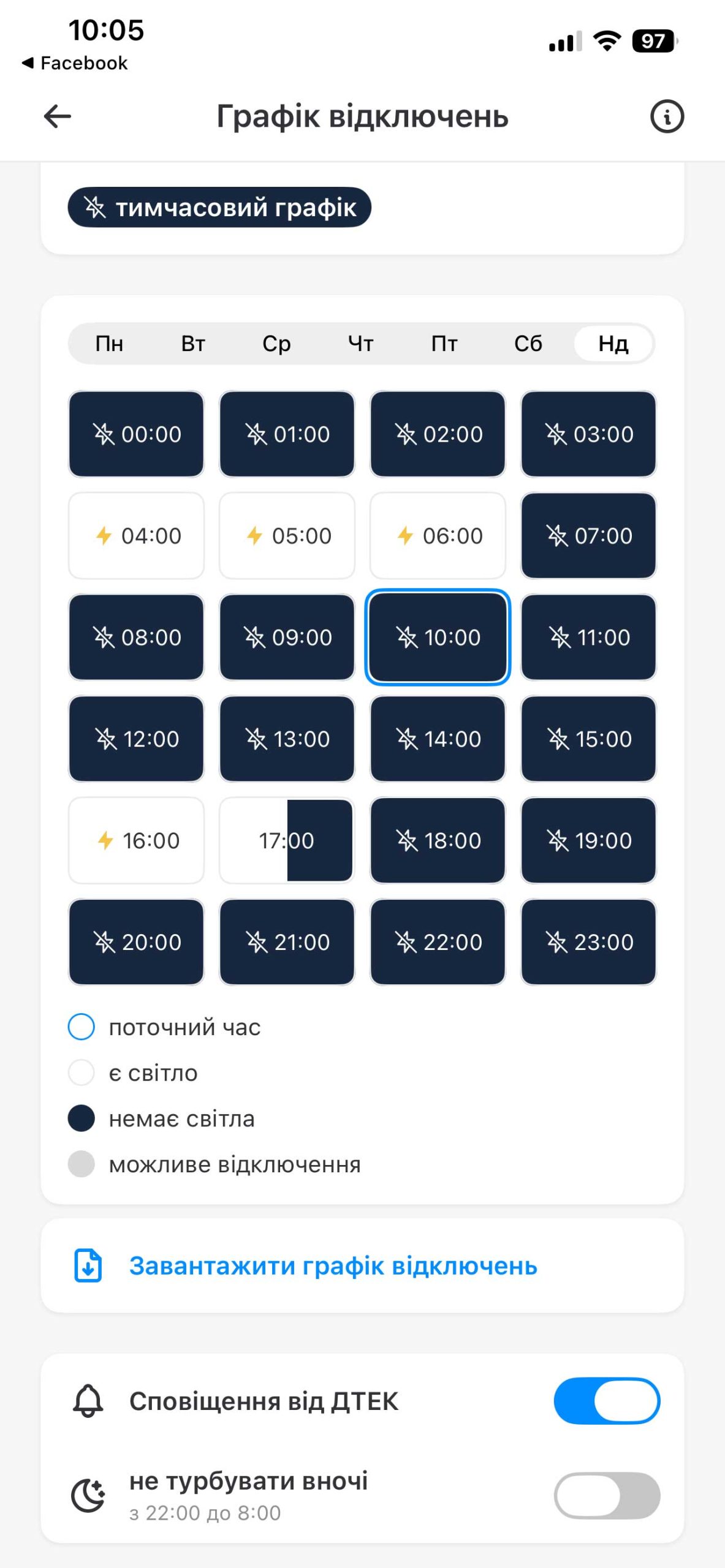
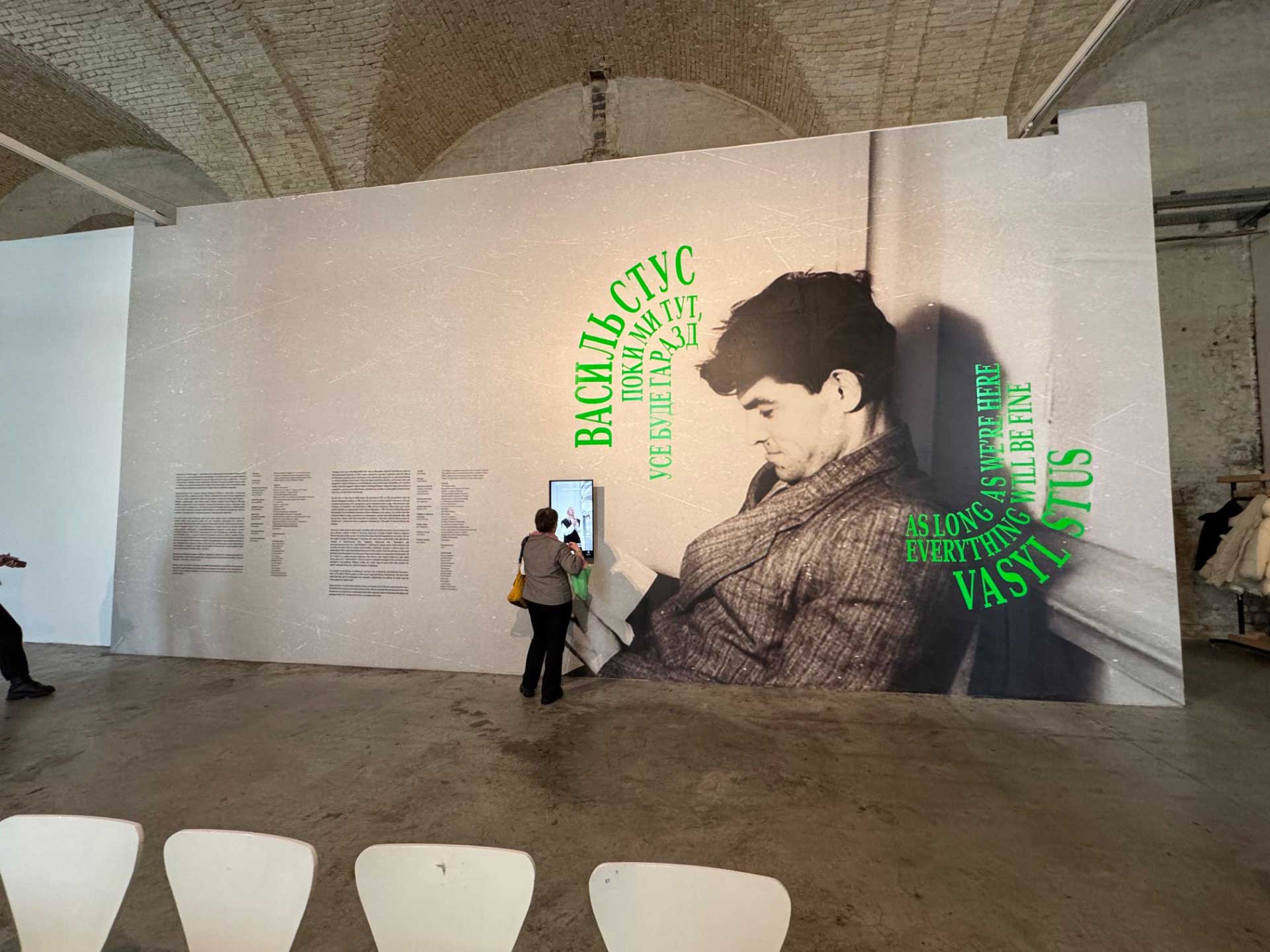
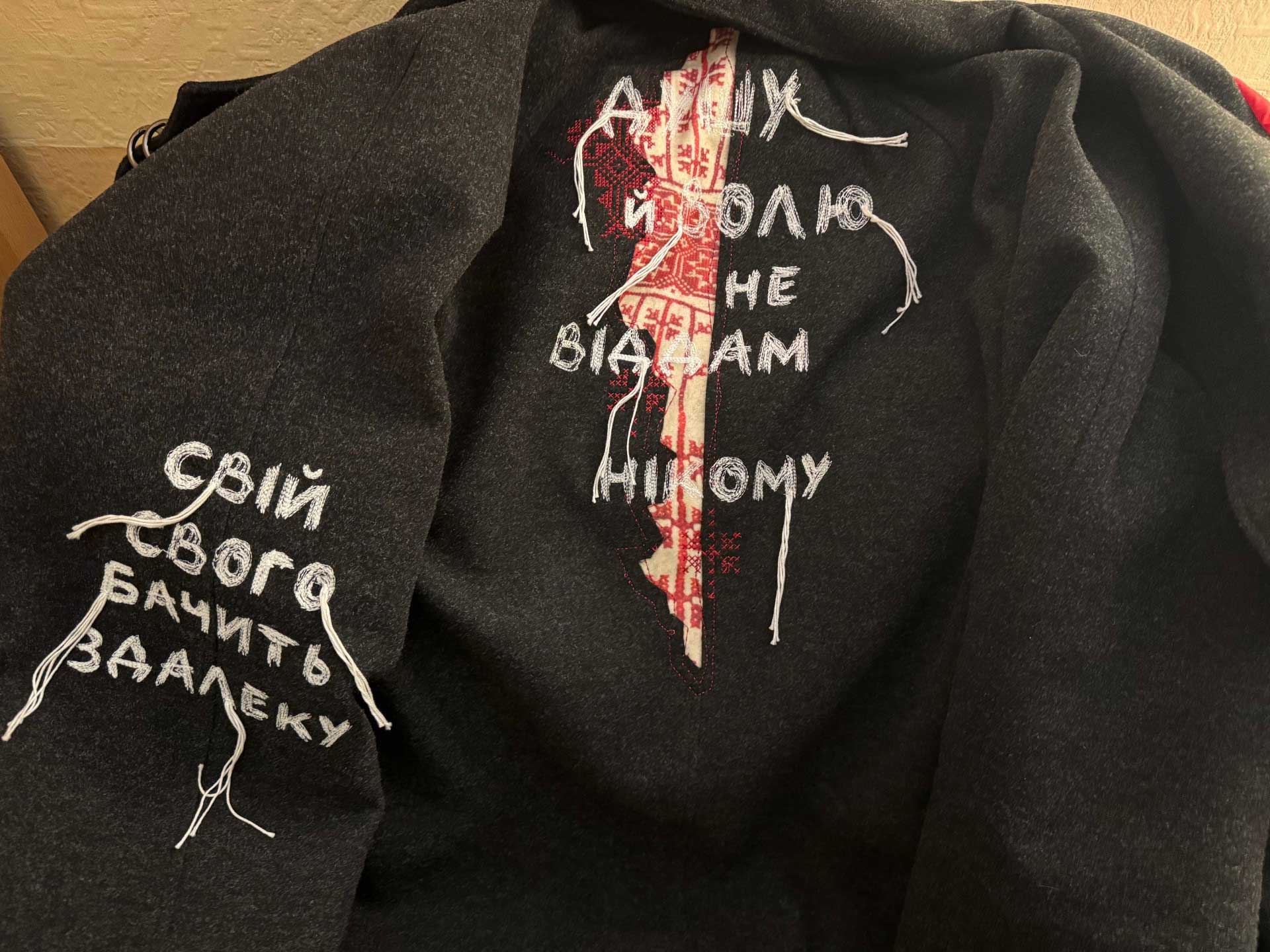
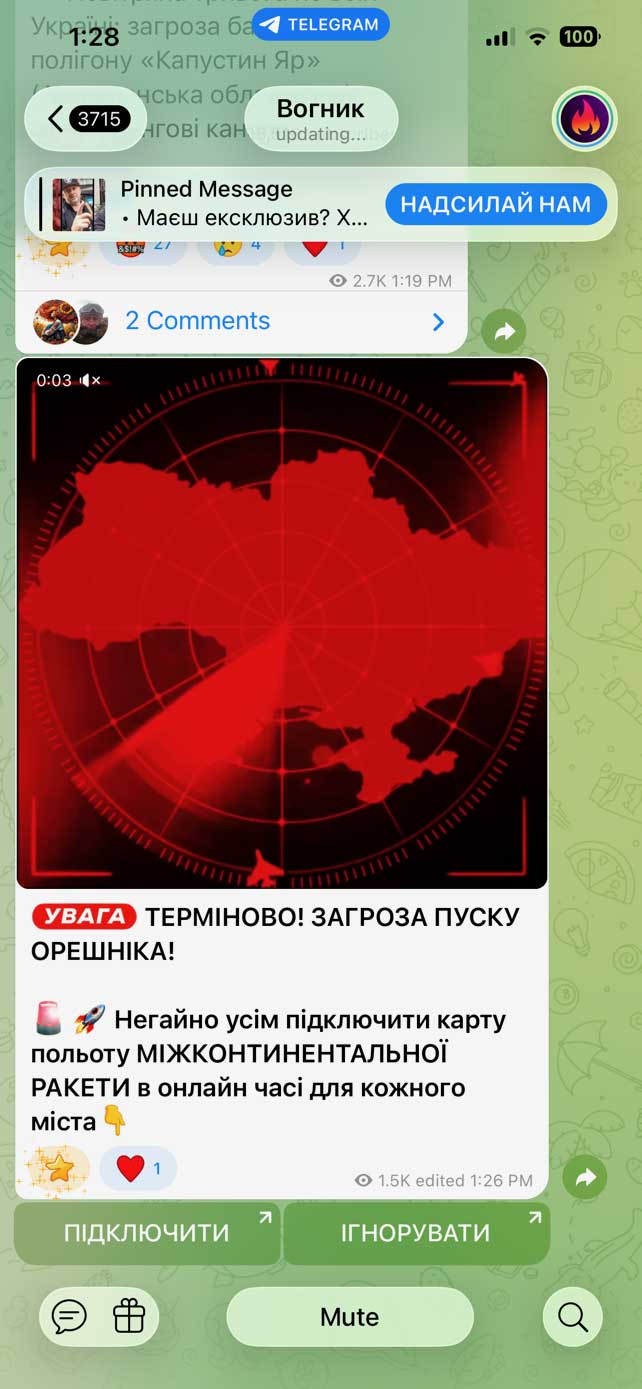
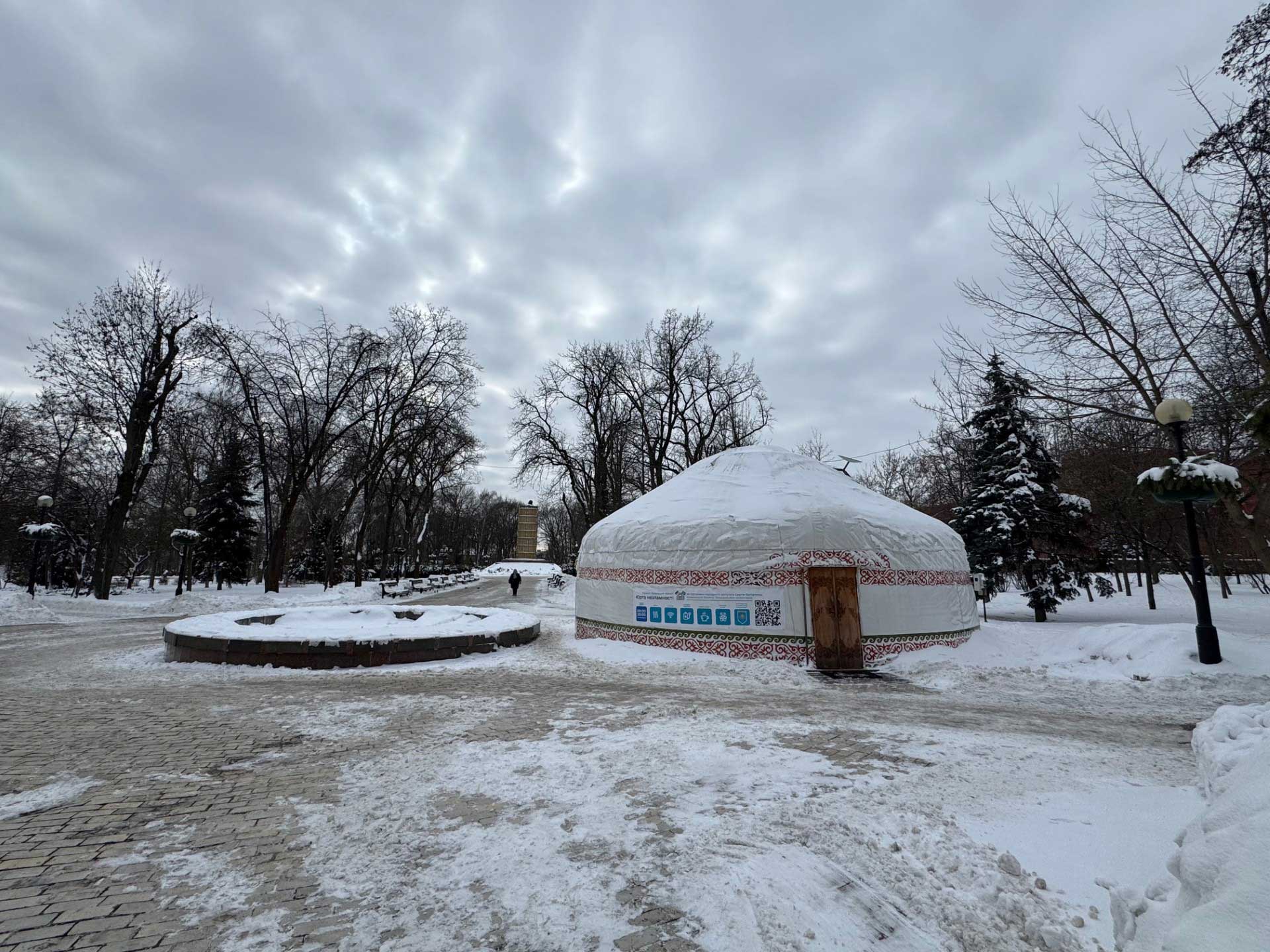
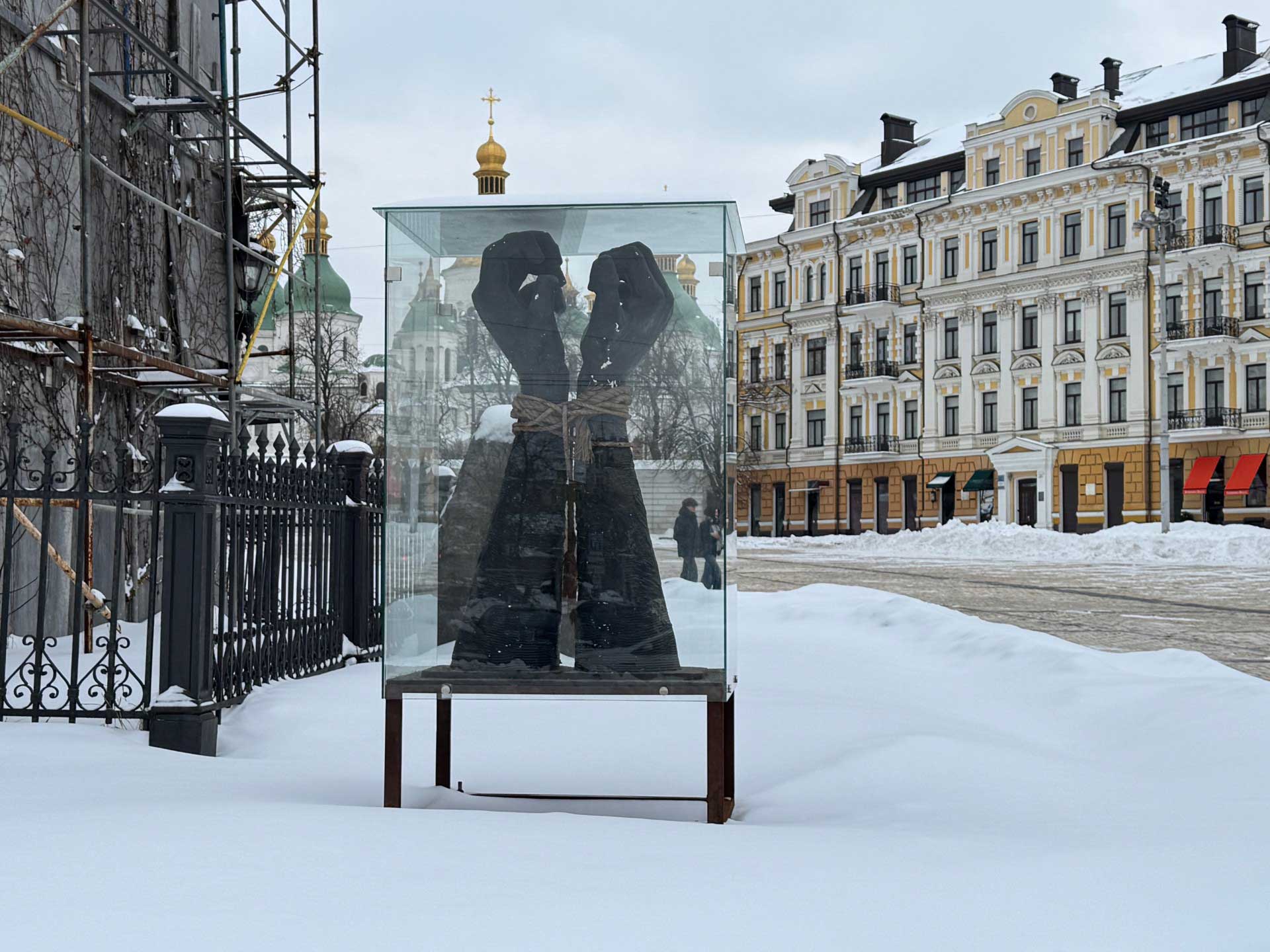
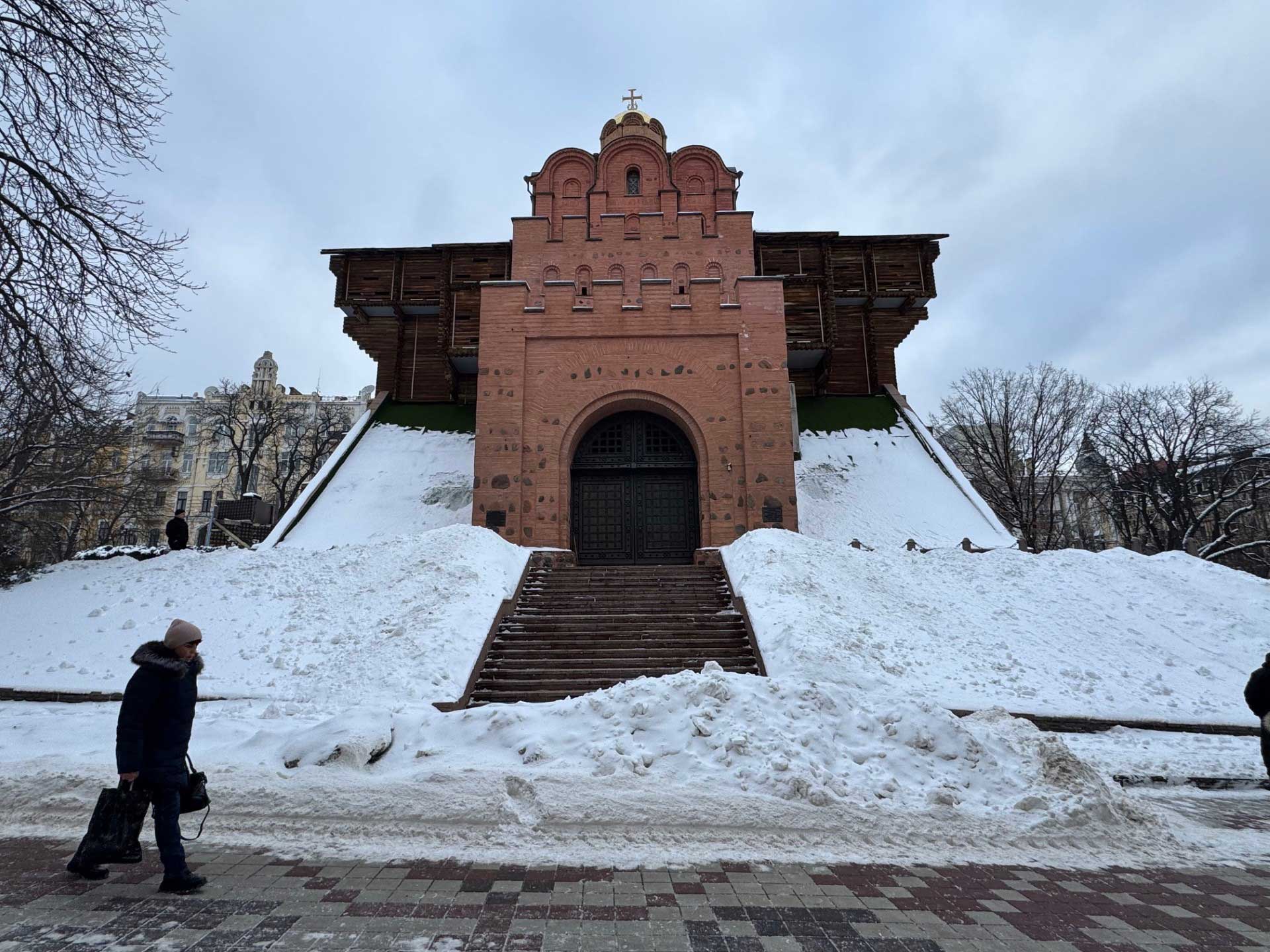
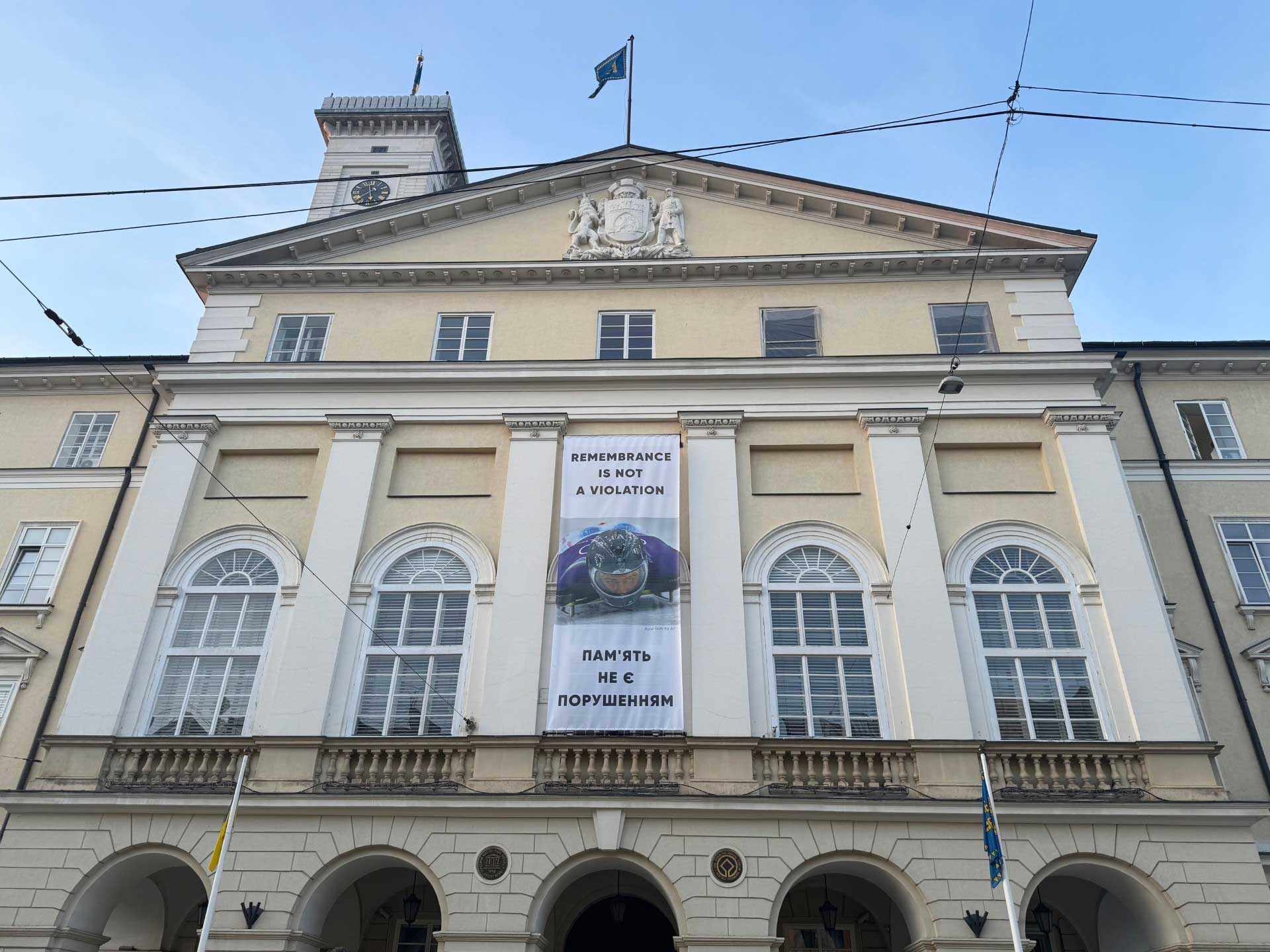
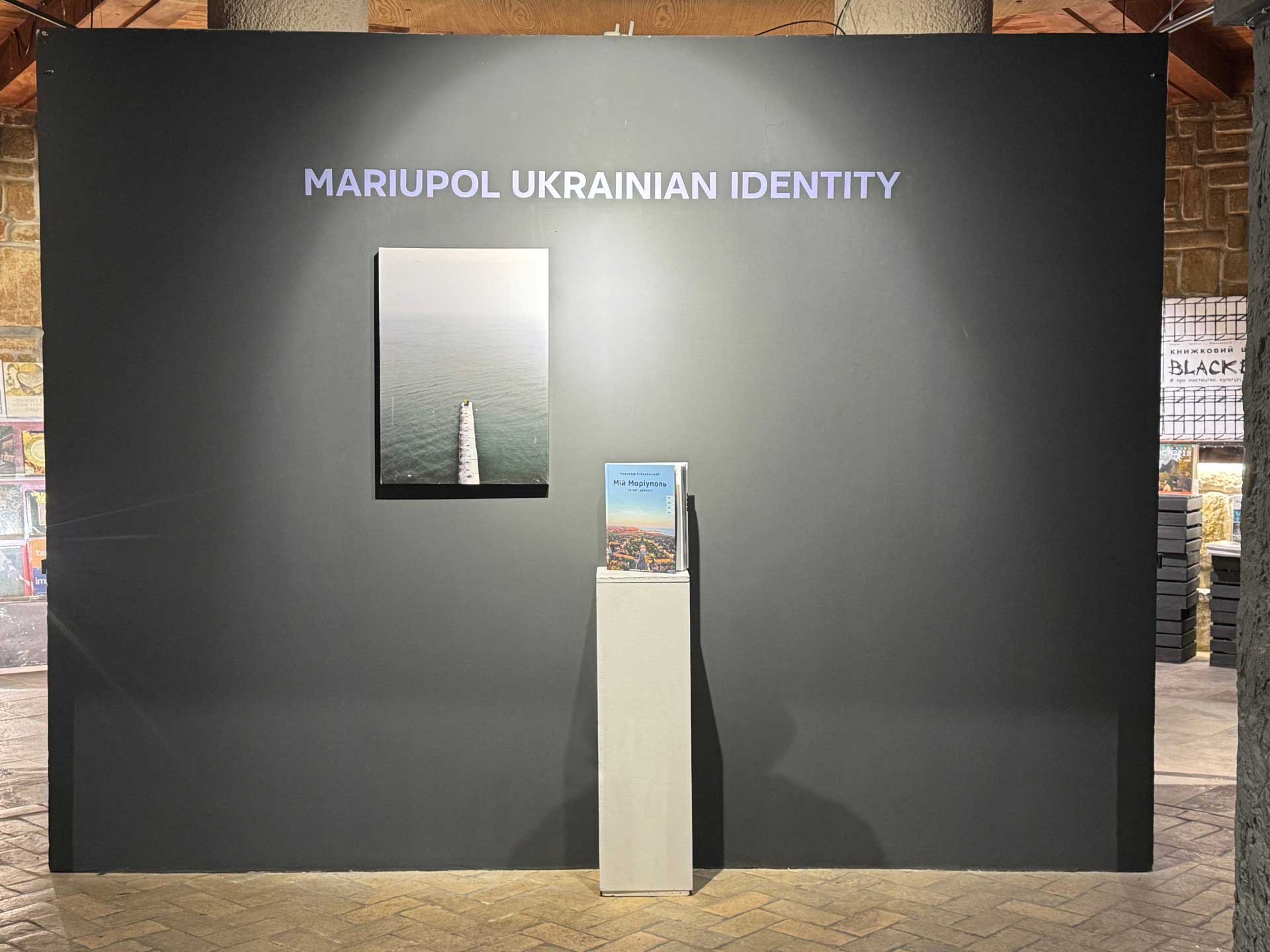
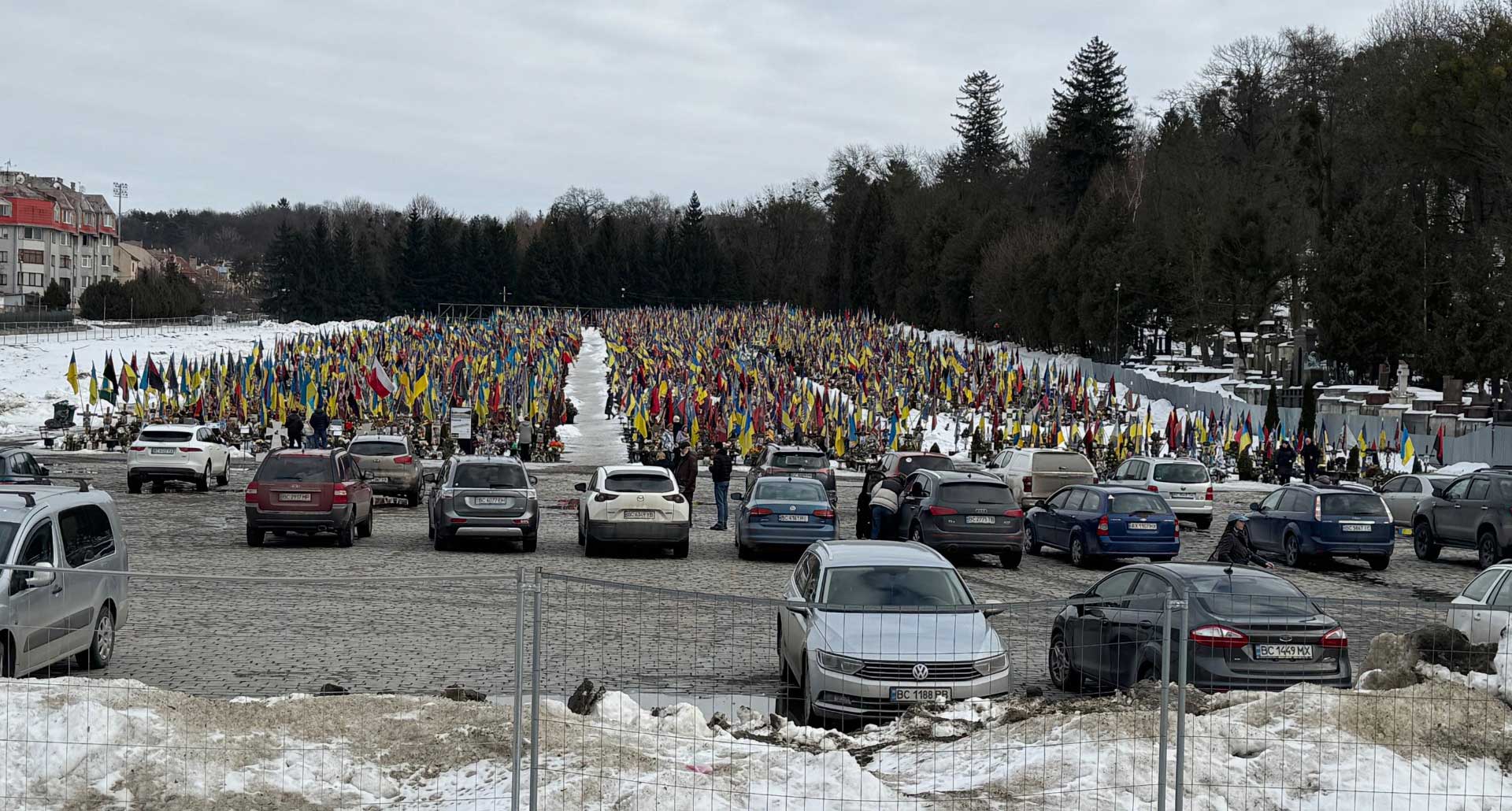
An 8 February 2026 screenshot shows when electricity is available in a central Kyiv residence. Russia has relentlessly attacked Ukraine's electrical grid, causing blackouts in Ukraine's largest cities. The black boxes indicate when electricity is unavailable. Workers have toiled in freezing conditions to restore power to residences and businesses.The entrance on 8 February 2026 to a widely heralded exhibition at Kyiv's Mystetskyi Arsenal about the life of Ukrainian poet and dissident Vasyl Stus and his literary circle. In an explanation of the exhibit, Arsenal notes: "As long as we're here, everything will be fine," was an affirmation coined by Vasyl Stus in a letter to his friend Anatolii Lazorenko in 1962. These words will find purchase with those who crave steadiness amid the whirl of a turbulent world. Ukraine's past is full of guiding figures; Vasyl Stus, in particular, has become something of a cult icon — a beacon for the restless." Stus died at the age of 47 on 4 September 1985 in Perm-13, a Soviet forced labor camp.Kyiv's bitter winter, the coldest in over a decade, forced the purchase of a new coat on 8 February 2026. The slogan on the back of this Kharkiv-made coat by the firm Your Way reads, "I will not give away my soul and freedom to anyone." The sleeve reads "You see your own from afar."On 17 February 2026, Ukrainians nationwide received an alert that Russia's Oreshnik missile had been launched in the direction of Ukraine. Daily alerts of missiles and drones targeting Ukraine from Russia have been a daily fact of life for Ukrainians.Kyiv's famed Point of Invincibility Yurt in Taras Shevchenko Park on 19 February 2026. These points have provided places to recharge cell phones, work, warmth, and hot drinks for residents facing daily Russian attacks on the country's electrical grid. The Yurt is provided by the parliamentary Ukraine-Kazakhstan group, Ukrainian parliamentarian Serhiy Nahorniak, Kazakh businessman Daulet Nurzhanov, and representatives of the Kazakh diaspora in Ukraine.Kyiv's St. Sophia Square on 19 February 2026.Kyiv's Golden Gate, as seen on 19 February 2026, is, according to The Encyclopedia of Ukraine, "one of the most important architectural and historical monuments remaining from the Kyivan Rus' period. Located in the southwestern part of ancient Kyiv, the Golden Gate was begun in 1037 during the reign of Yaroslav the Wise. It was constructed at about the same time as Saint Sophia Cathedral and the upper city fortifications, and functioned as the main triumphal entrance and as a defendable portal to the fortified section of the city." Remnants of the gate were still standing in the 1970's; it was reconstructed in 1982 for the 1500-year anniversary of Kyiv. The Ukrainian capital is over six centuries older than Moscow.In the photo taken on 20 February 2026, Lviv's City Hall honors Ukrainian skeleton racer Vladyslav Heraskevych, who was disqualified on 12 February to compete in the Olympic Games after refusing to not wear a helmet that honors Ukrainian athletes killed by Russia's war. The International Olympic Committee said the helmet equaled political speech, an assertion Heraskevych denied. Meanwhile, Russian and Belarusian athletes were allowed to compete in the games as neutral athletes, even though some have voiced support for Russia's war against Ukraine. Meanwhile, the International Paralympic Committee said athletes from Russia and Belarus could compete with their national flags and anthems at the games in March 2026. The decision has been decried by several governments, including Italy, the host country.A 22 February 2026 preview of the exhibition "Mariupol Ukrainian Identity" dedicated to the eastern Ukrainian city that will open to the public in Lviv on 24 February 2026, the fourth anniversary of Russia's full-scale invasion of Ukraine. The project "emerged in response to the loss of the city and the need to preserve its history, memory, and meaning. At the time, Mariupol had been physically destroyed but not eradicated as part of Ukrainian culture." A group of architects, researchers, artists, and Mariupol residents documented the city as a multi-layered historical and social space, not only as a territory. Key elements include a virtual rendering of the city's drama theatre, which was destroyed on 16 March 2022 by Russian airstrikes with hundreds of people sheltering inside it, and a large-scale 1:4,000-scale model of Mariupol made of more than 300 separate pieces. The exhibit will run through 22 March 2026 at Lviv's Powder Tower.Lviv's military cemetery, known as the Field of Mars, on 22 February 2026.
Each day, Ukrainians stop at 9 a.m. for a national moment of silence to honor those who have died in Russia's genocidal war against Ukraine. The announcer in the video taken on 23 February 2026 in Lviv's Danyla Halyts'koho Square says, "The national moment of silence has begun in Lviv. Stop for a moment to honor the memory of those who died because of Russia's attack on Ukraine…Glory to Ukraine. Glory to the Heroes."
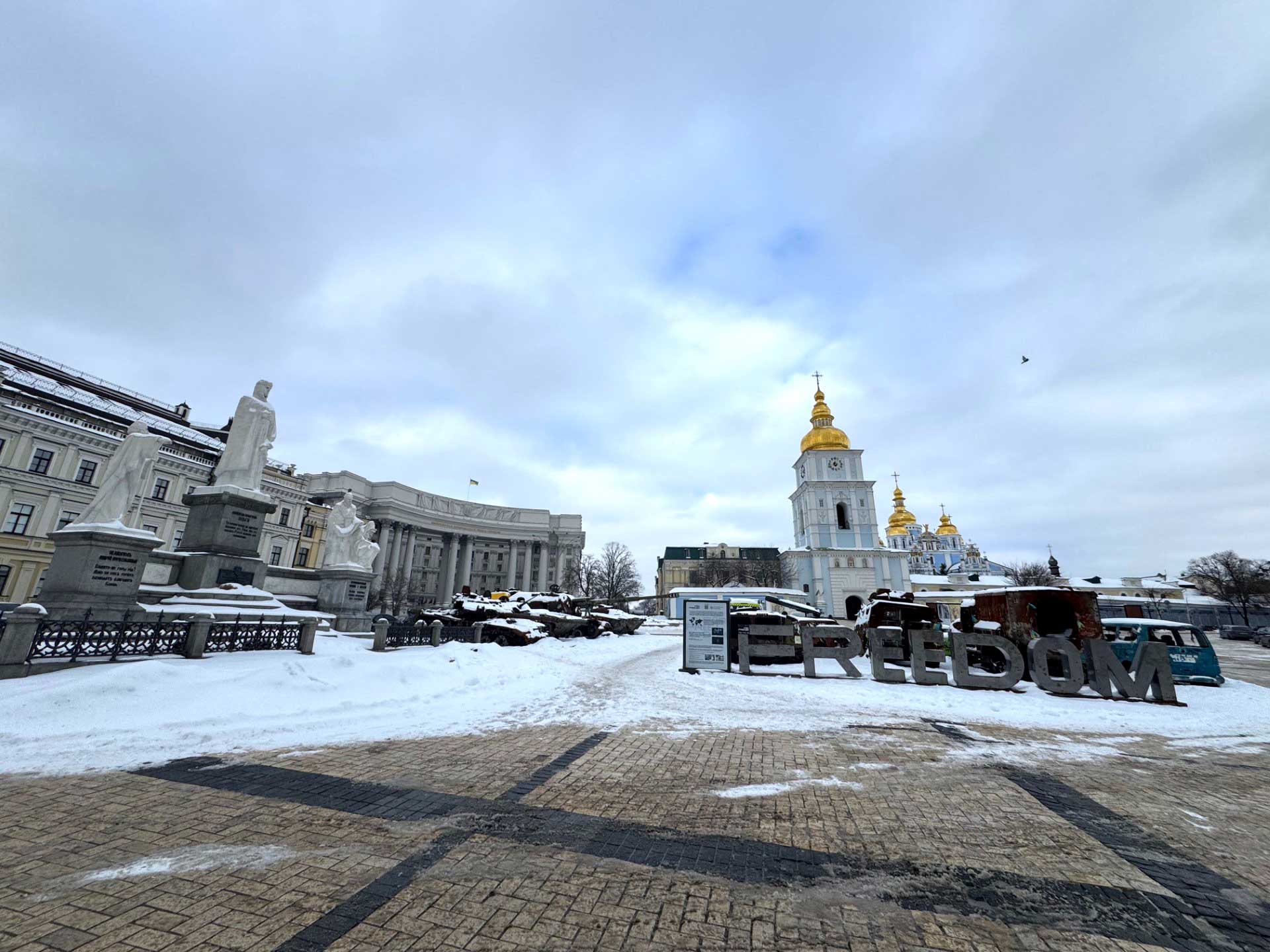
This 19 February 2026 photo of Mykhailivska Square in Kyiv best sums up what Ukraine is fighting for: Freedom.