




Romaniv hosts the exhibition "A Journey Through the Ukrainian-Jewish Encounter: From Antiquity to 1939"
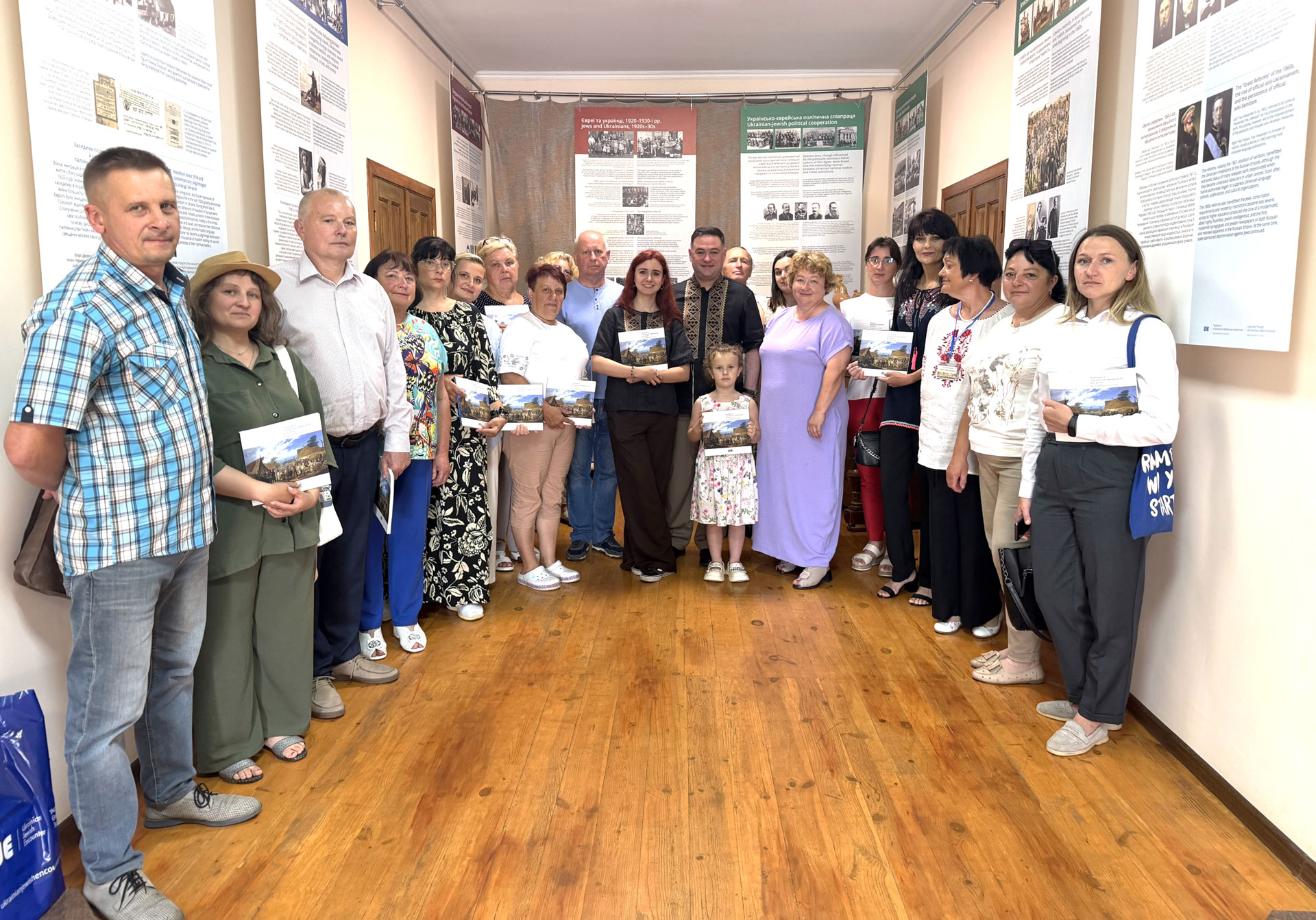
Continuing its tour across Ukrainian cities and towns, the exhibition "A Journey Through the Ukrainian-Jewish Encounter: From Antiquity to 1939," created by UJE, came to Romaniv in Zhytomyr Oblast. The opening ceremony took place on 26 June at the Romaniv Local History Museum. The event became an important milestone on the exhibition's cultural and educational itinerary, designed to showcase the centuries-old history of coexistence between Ukrainians and Jews, their interactions, cultural influences, and shared historical experience.
The formal event was opened by Yurii Kondratiuk, an Honored Worker of Culture of Ukraine, director of the Romaniv Local History Museum, member of the National Writers' Union of Ukraine, and master of folk art. He welcomed guests and shared the history of the museum, which operates out of the former estate of the Counts Ilinsky. While developing small-scale manufacturing and crafts on their lands, they began inviting Jewish artisans to Romaniv at the end of the 18th century. Following an 1817 decree by the Governing Senate granting Romaniv town status, dozens of fairs were held here annually, pushing its trade turnover to third place in the Volhynia District. By the early 20th century, the vast majority of the town's shops, tanneries, and other enterprises were Jewish-owned.
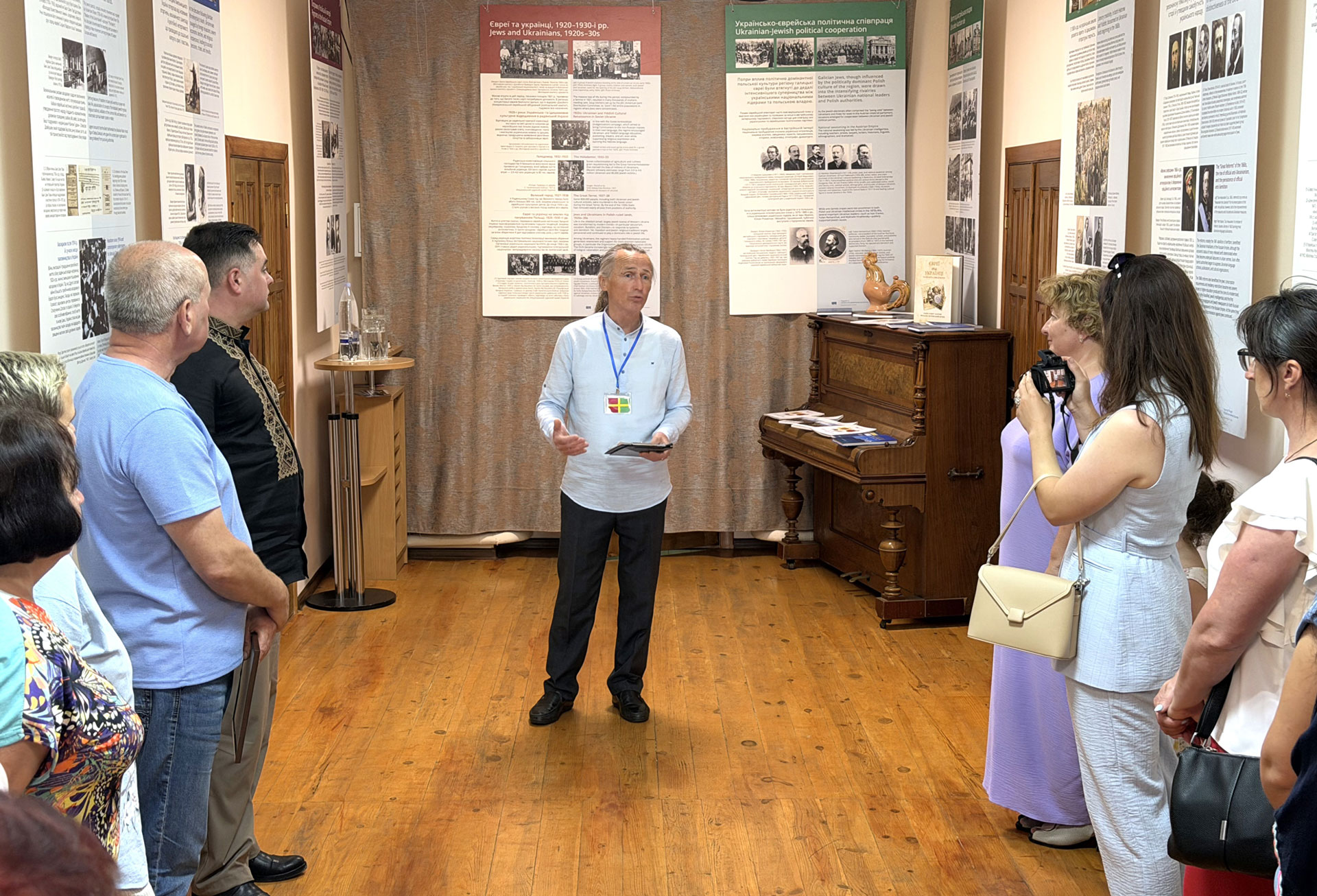
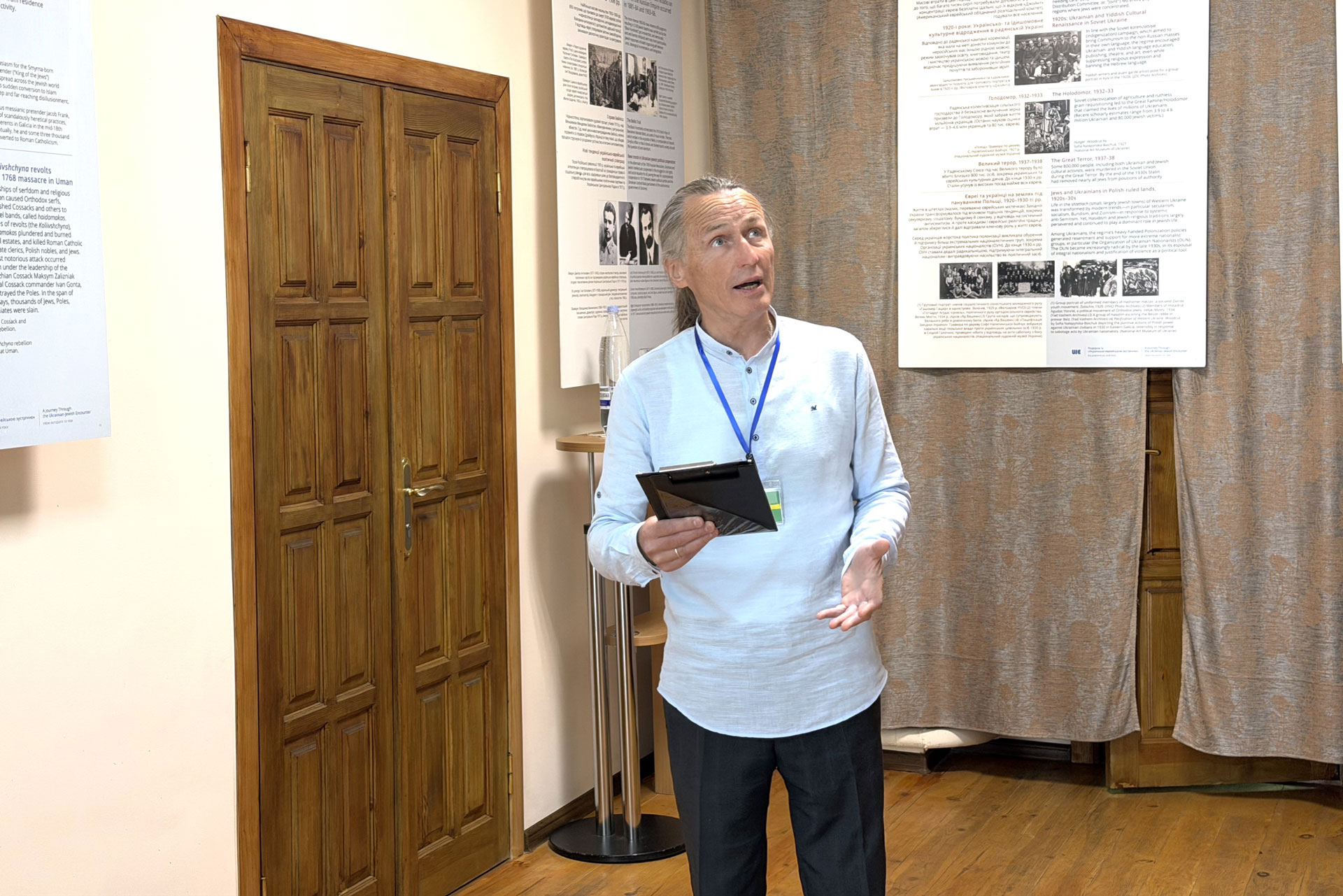
Vladyslav Hrynevych, Jr., UJE's regional manager in Ukraine, highlighted UJE's activities and key initiatives, while outlining the exhibition's history and central goal: to promote a deeper understanding of the centuries-old relations between Ukrainians and Jews. Additionally, he detailed the traveling exhibition's tour itinerary, underscoring its cultural significance for communities across Ukraine.
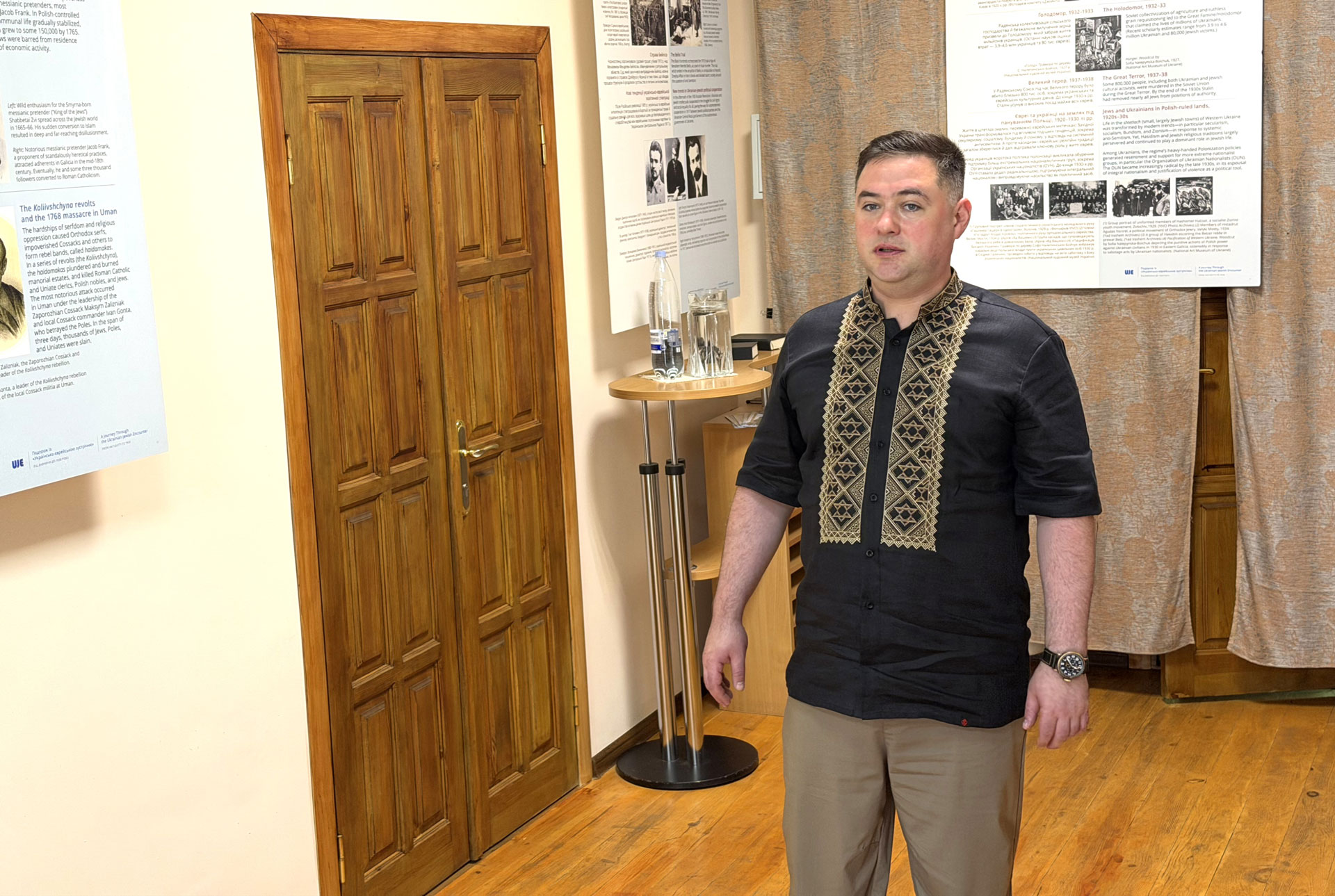
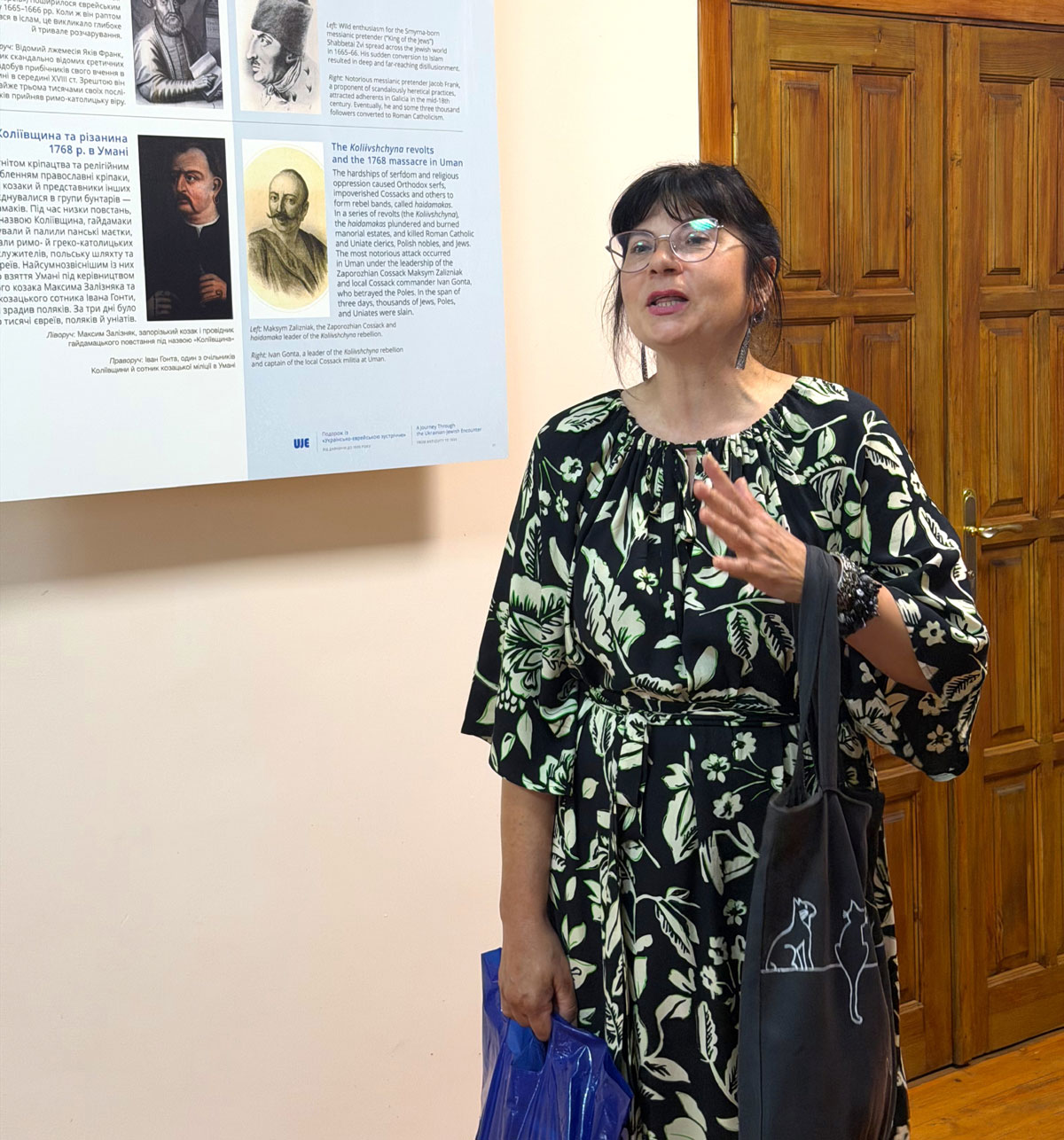
Vasyl Khodiuk, deputy head of the Romaniv Settlement Council, welcomed the guests on behalf of the local community. He highlighted the region's multinational history, noting that various peoples, including Jews, had lived together here for centuries, shaping a unique local culture. After thanking the organizers for the opportunity to deepen knowledge of local history, he presented Hrynevych with a letter of appreciation from the Romaniv community for the exhibition.
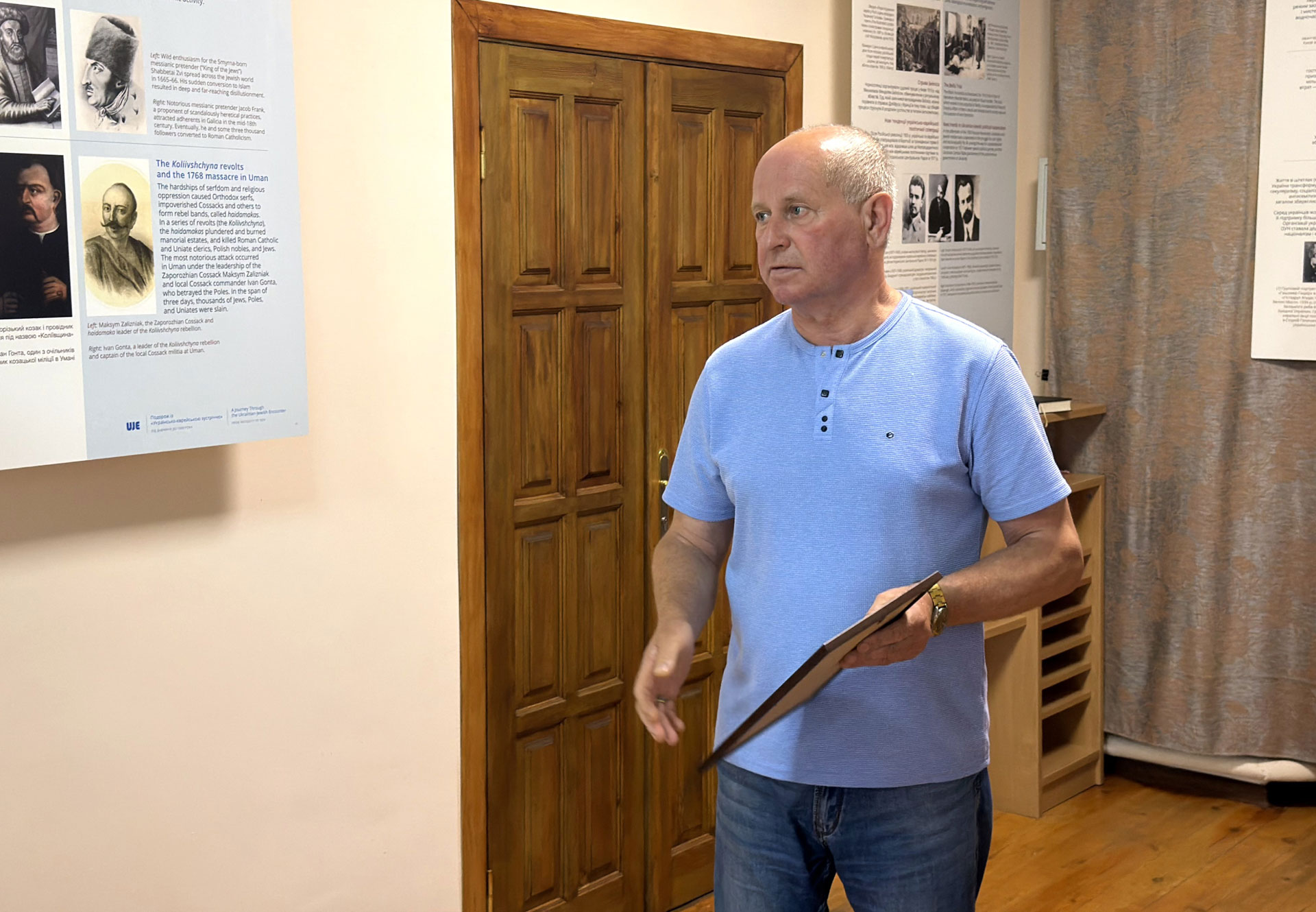
Oksana Havrylova, head of the humanitarian department of the Romaniv Settlement Council, emphasized the importance of such cultural and educational projects for preserving the community's historical memory and fostering intercultural dialogue. She also thanked the organizers for the opportunity to host the exhibition in Romaniv.
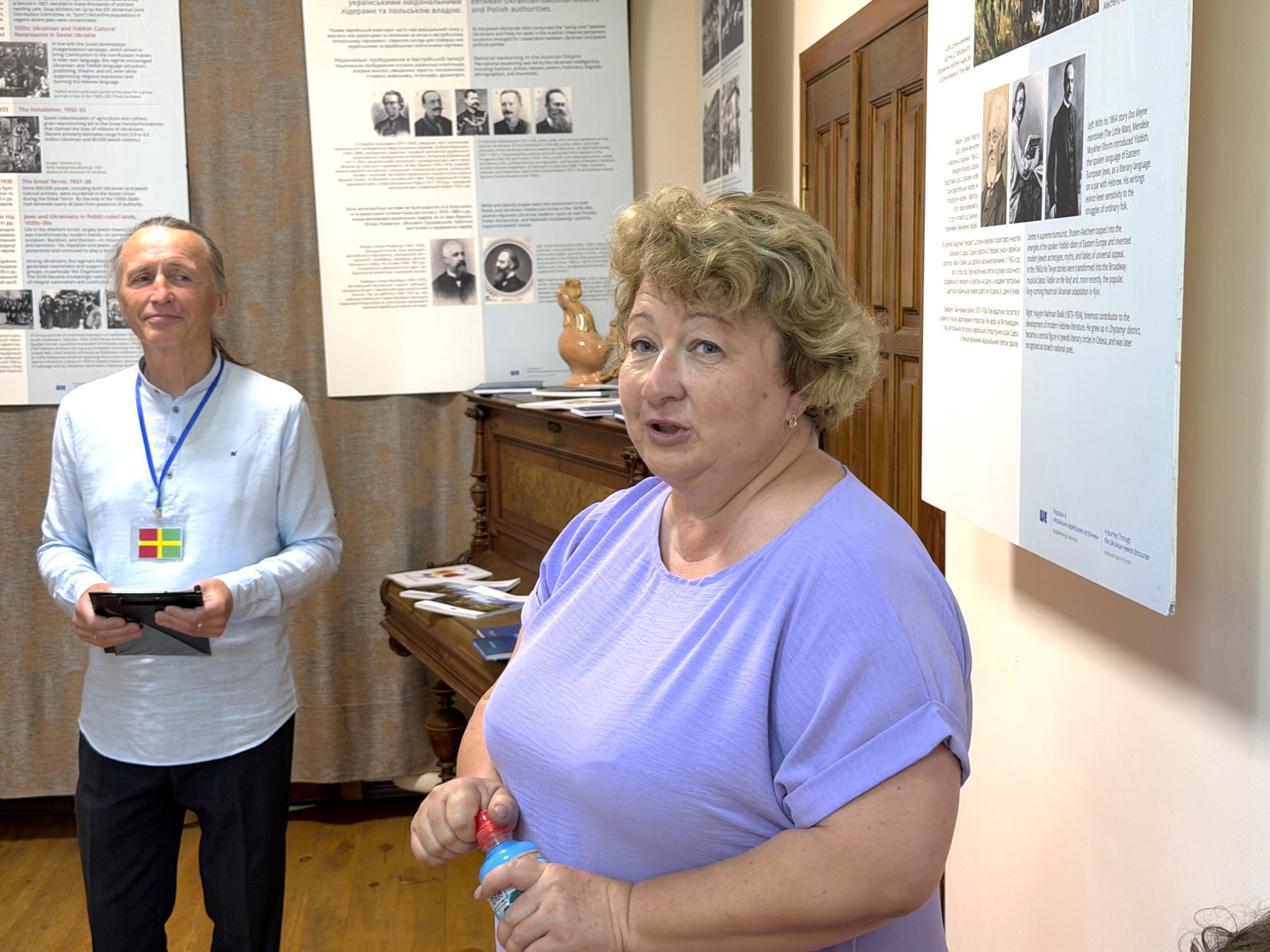
Valentyna Basha, director of the Romaniv Public Library, expanded on Romaniv's Jewish history. According to the 1897 census, nearly 2,600 of the town's 5,600 residents were Jewish, and on the eve of the war in 1939, the Jewish population stood at 1,720. She noted the operations of a Jewish credit union and a Talmud Torah school, opened in 1926, and a glass factory leased by a Jewish businessman, Dmytro Rozenfeld, which employed 168 workers. Also highlighted as vital to the town's history was the essay "The Tale of the Town of Romaniv" by journalist Harry Feldman, which preserves the memory of the local Jewish community and the Jewish cemetery that remains intact to this day.
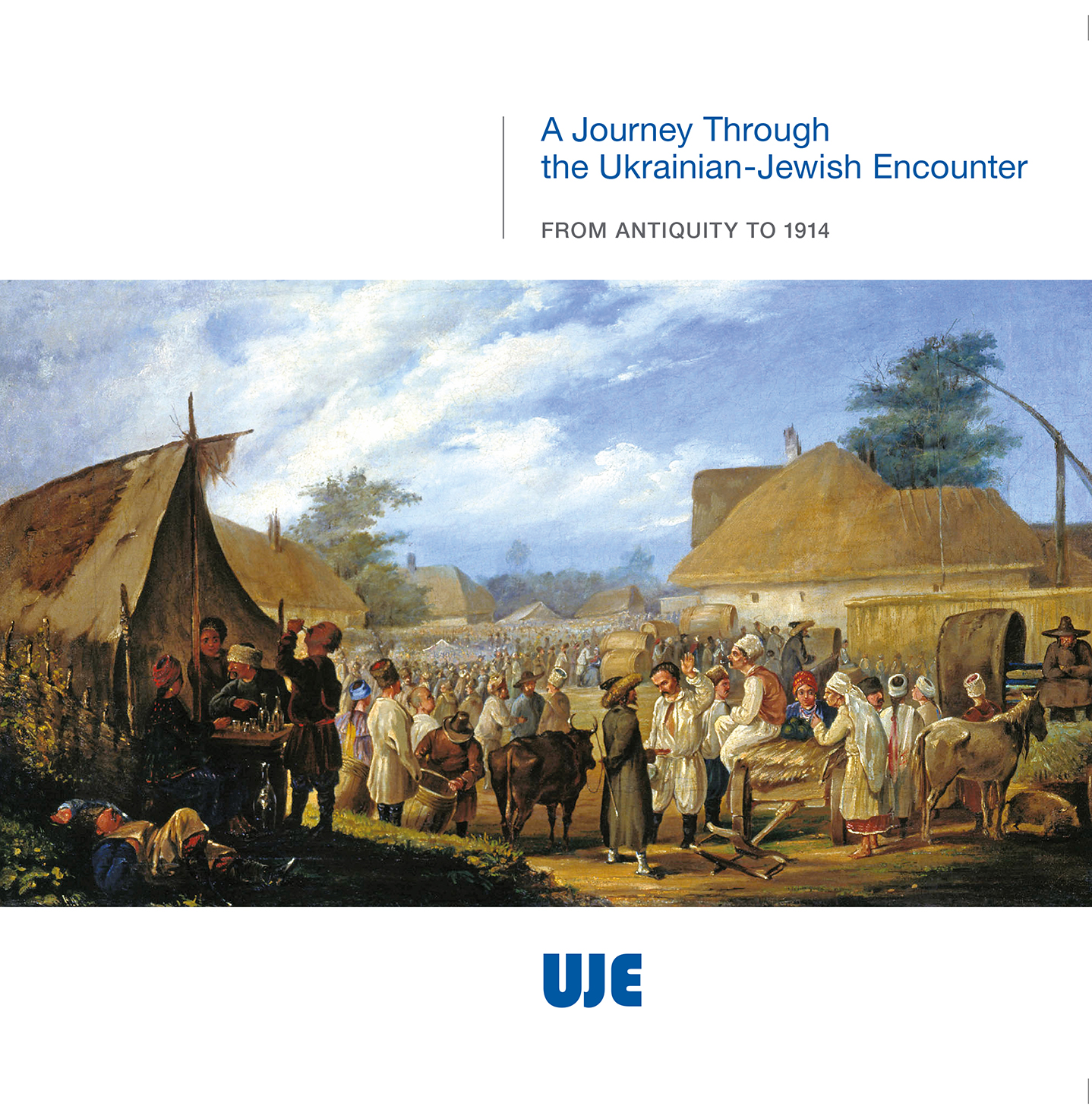
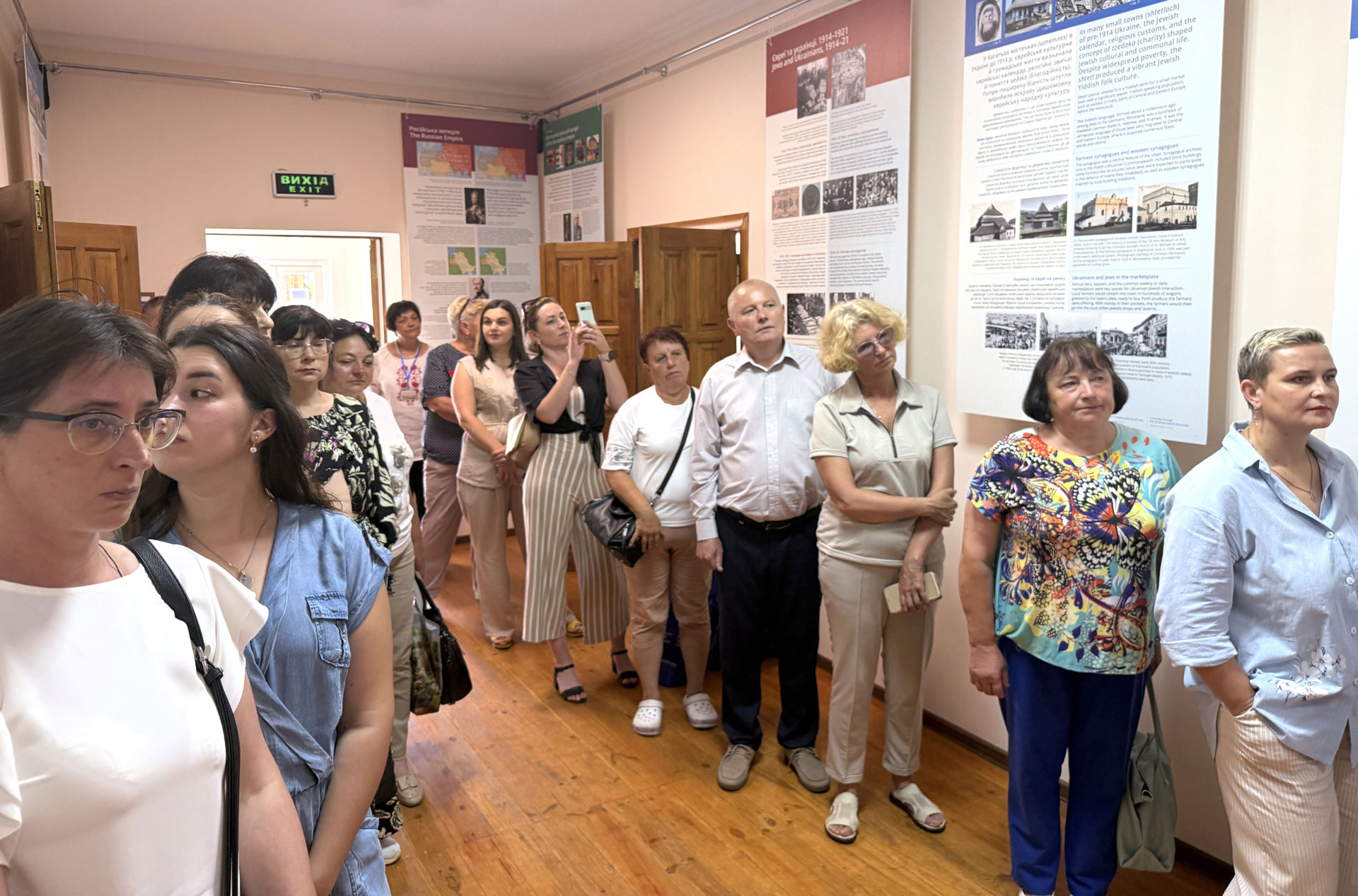
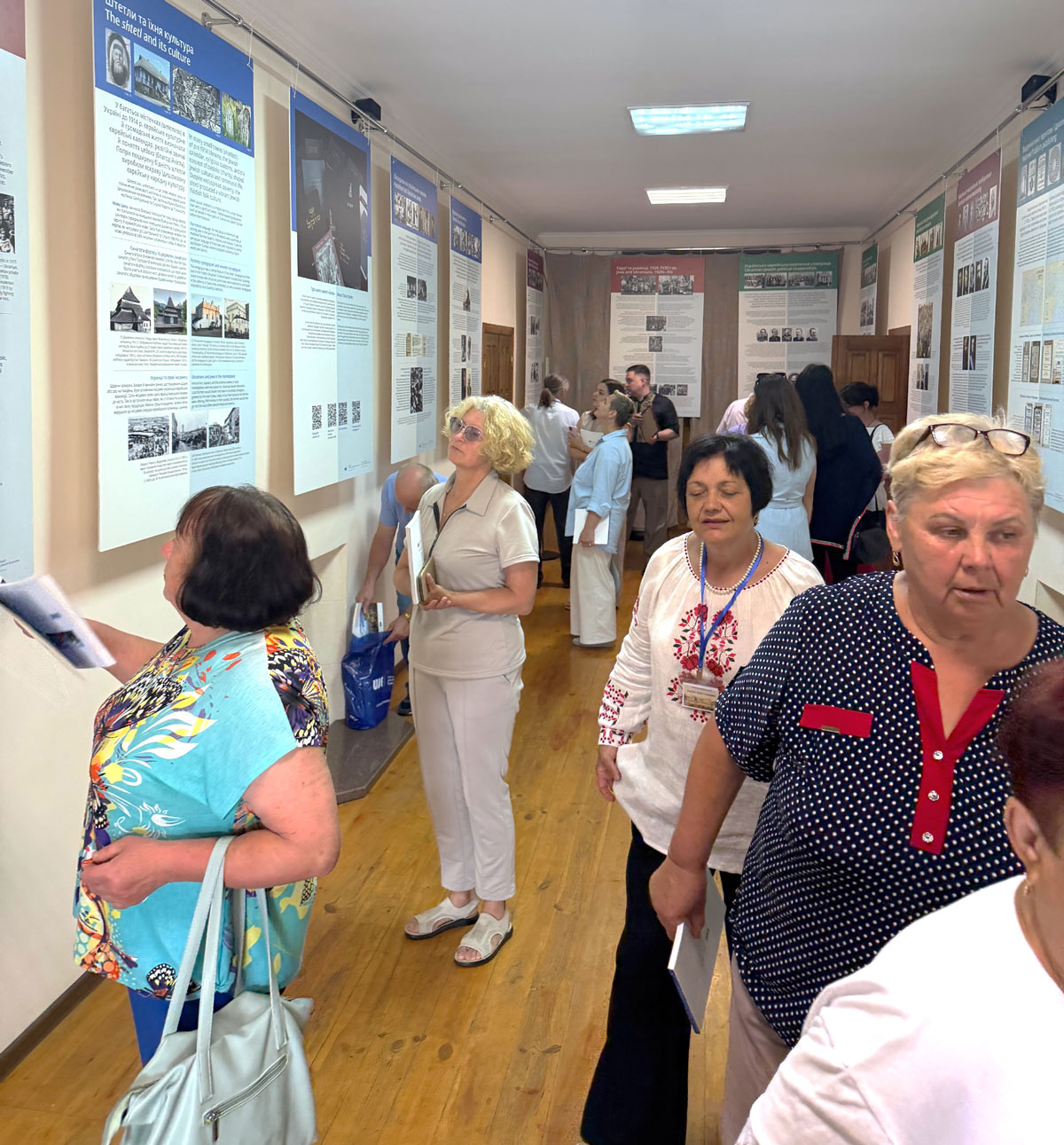
After the official part, visitors explored the 20-panel exhibition, actively discussing the materials and sharing impressions. An important addition to the event was the distribution of dozens of copies of the catalog A Journey Through the Ukrainian-Jewish Encounter: From Antiquity to 1914, which visitors received as a gift.
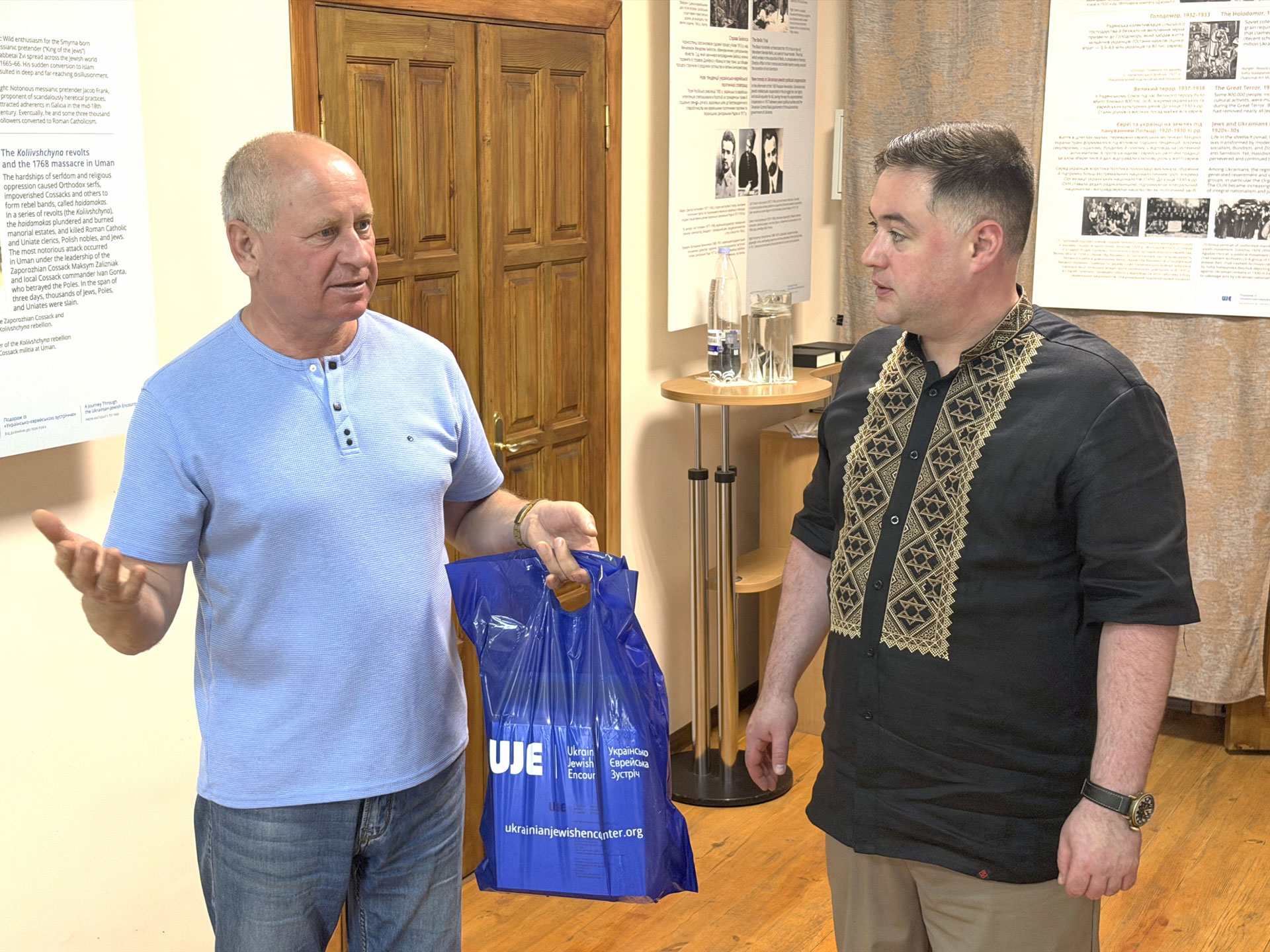
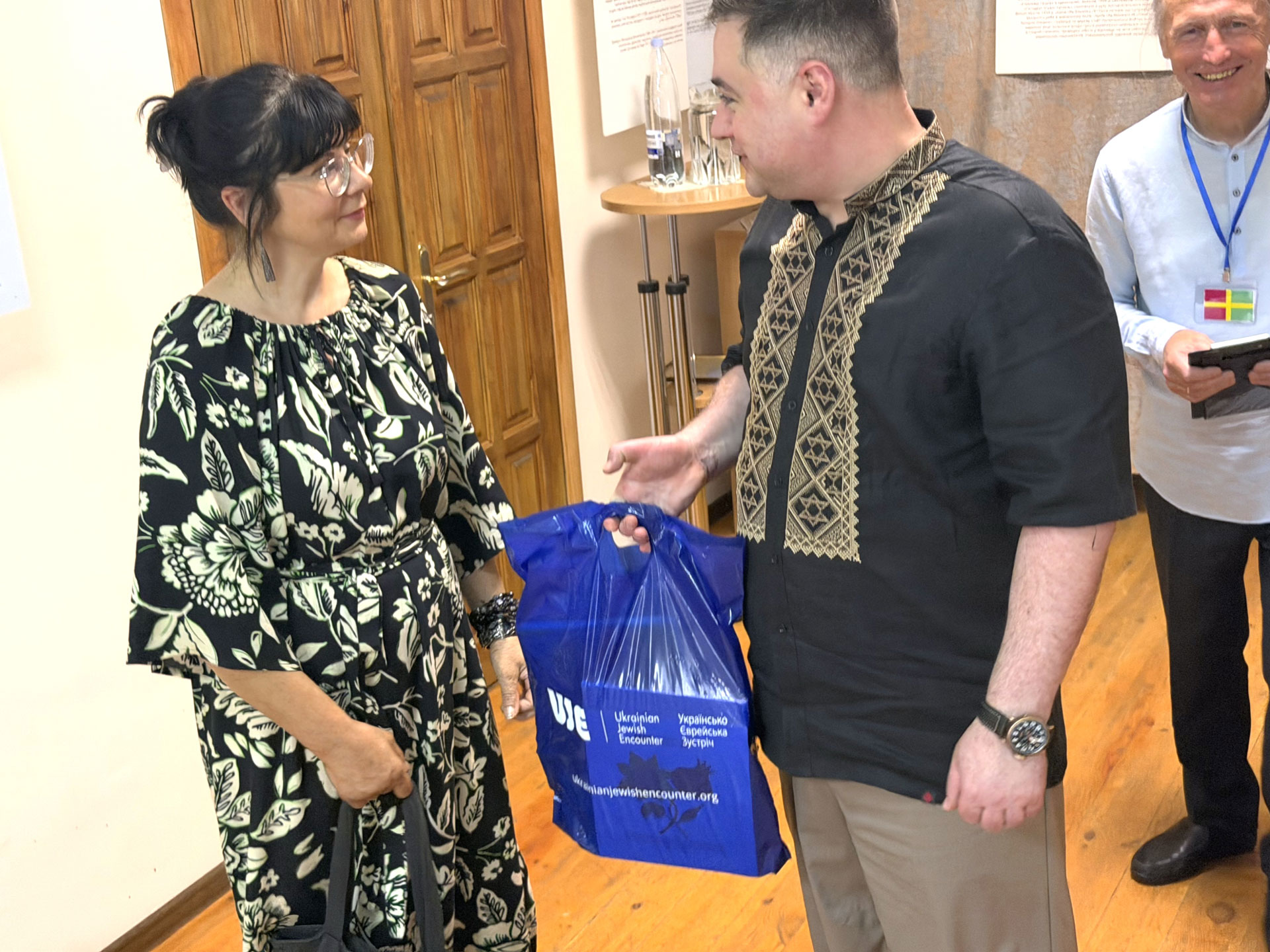
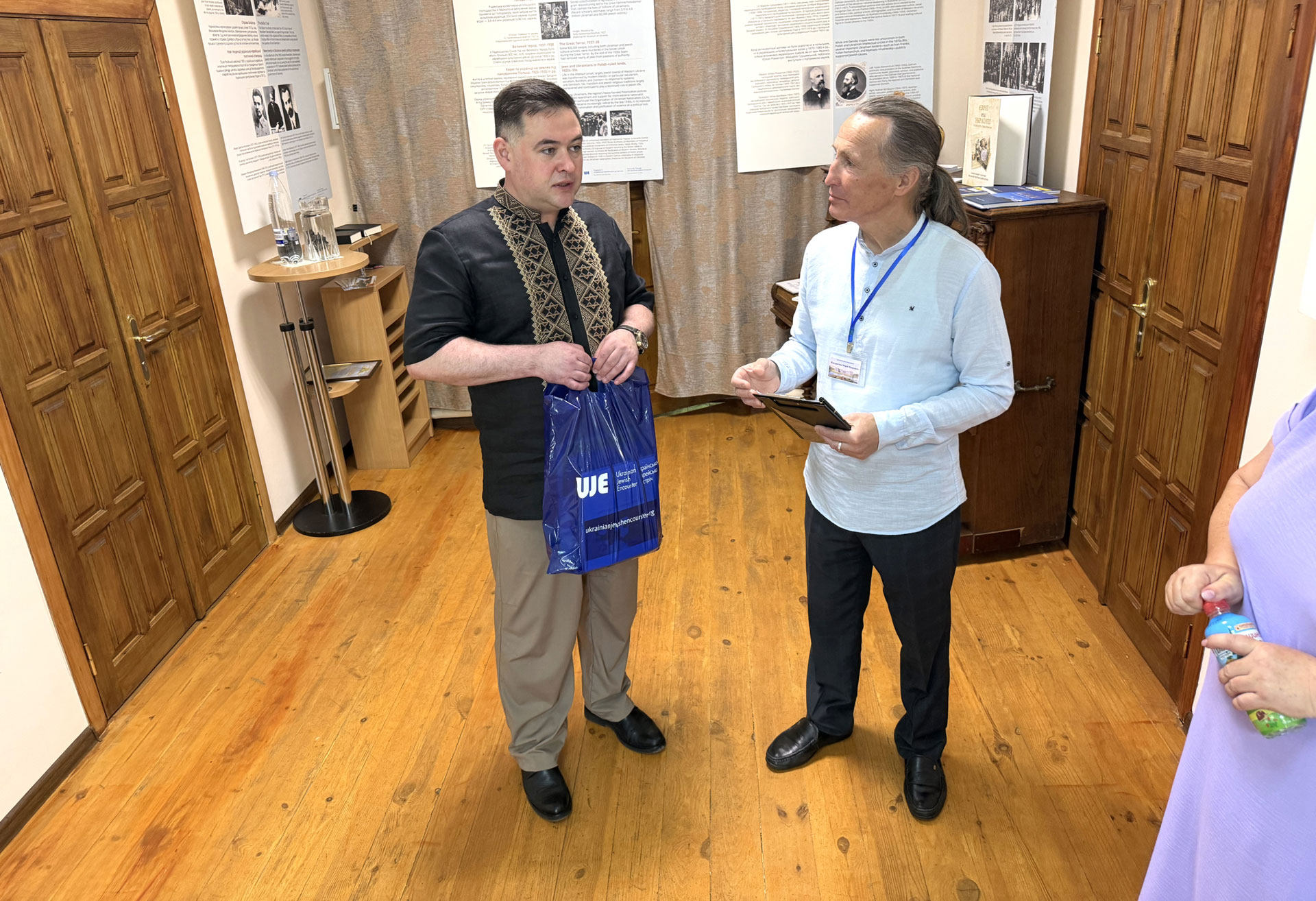
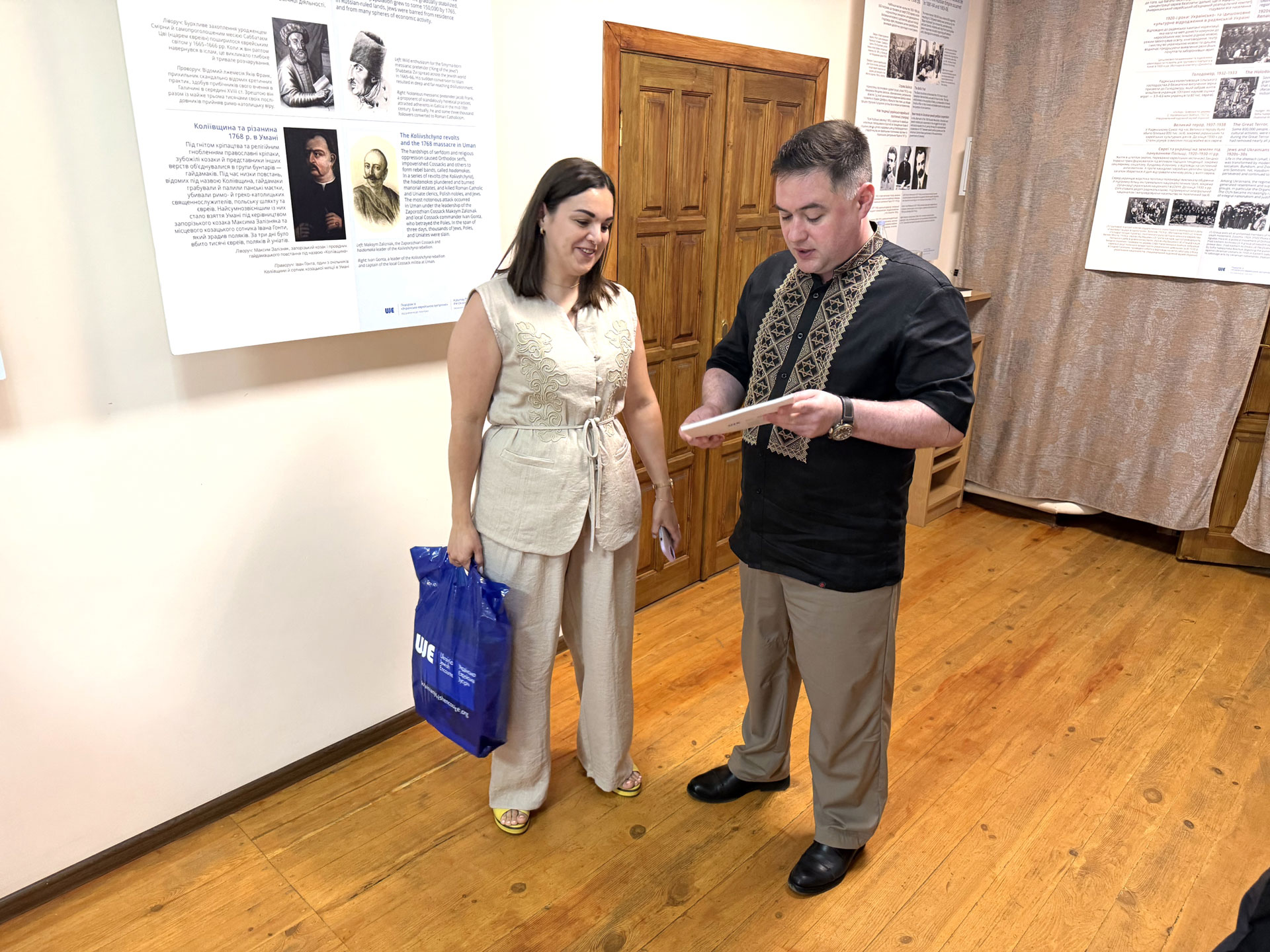
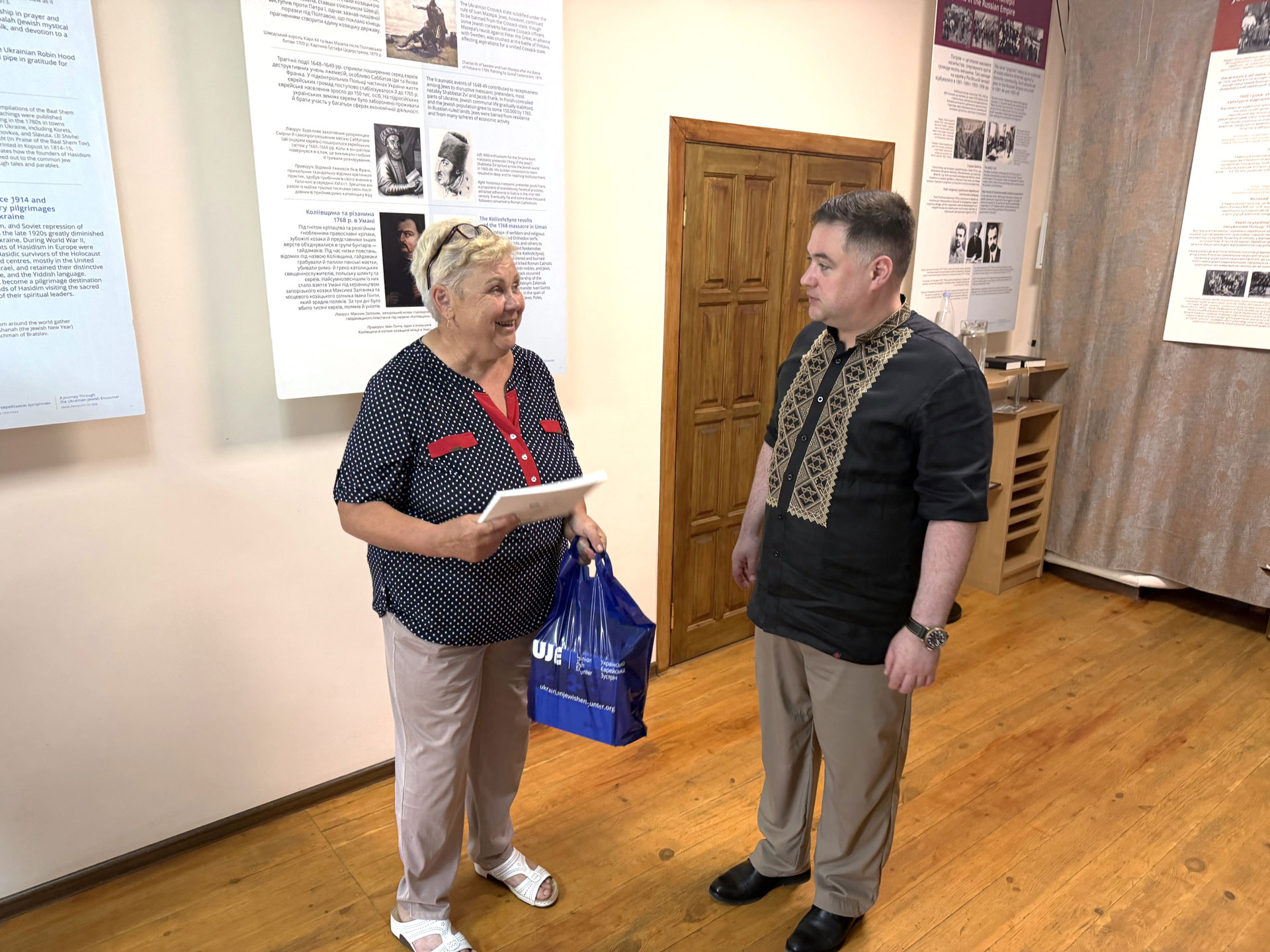
Scenes during and immediately following the opening of the exhibition "A Journey Through the Ukrainian-Jewish Encounter: From Antiquity to 1939." Romaniv, 26 June 2026.
Vladyslav Hrynevych, Jr., Regional Manager, UJE Ukraine