




Rose Ausländer: Poetry is never late
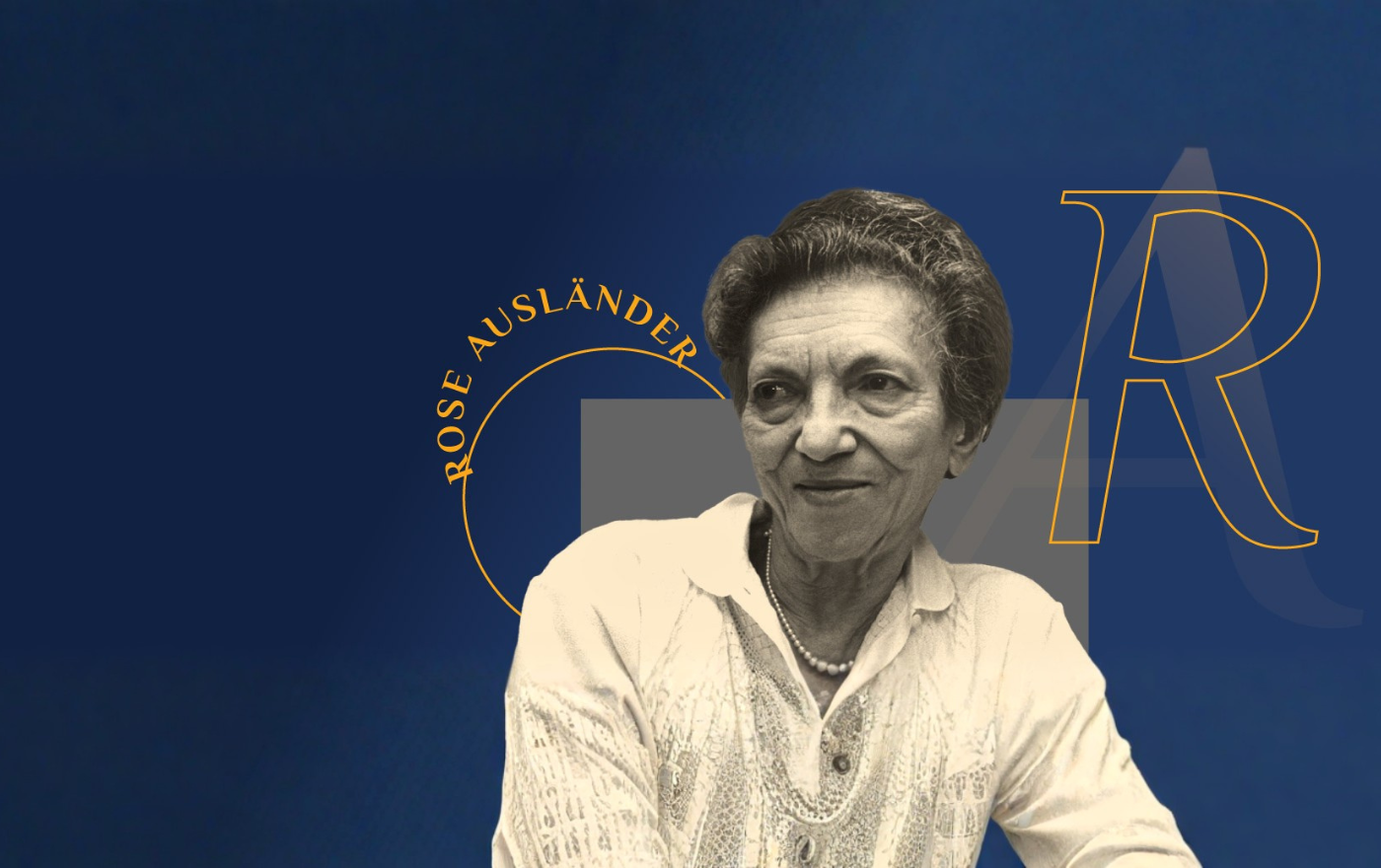
Rose Ausländer (née Scherzer) was a prominent representative of modernist German-language Jewish poetry that emerged in Czernowitz (now Chernivtsi) in the 1920s and 1930s. She was born in Czernowitz on 11 May 1901. Her mother, Kathi Etie Rifke Binder, also came from Czernowitz, while her father, Sigmund Scherzer, was born in Sadagura. This suburb was famous for its Hasidic tradition at that time. However, Hasidism was no longer a significant mystical branch of Judaism for Rose's generation. (After all, religion was losing its importance in the life of secularized Jewish intelligentsia.) Instead, it was a colorful — at times, also fairytale-like and quaint — semi-folklore tradition.
Today, Sadagura is called Sadhora. The Hasidic town has become part of Chernivtsi and now has a trolleybus connection. Meanwhile, the fairytale-like, whimsical spirit seems to remain forever embedded in Rose's poems, testifying, in particular, to the importance that Romanticism, with its constant link to folklore, had for her and her generation. Ausländer reminds us: with its whimsies and individualism,
(Neo)Romanticism is a key foundation of the crazy 20th century in literature, where statues of Rilke and Heine stand at the entrance to almost every verbal garden. This is also where Mykola Khvylovy's dictum "Forgive me my Voltairianism, I am ... a romantic" is not just a naive formula from a playful modernist novella.
European-American swing
However, to be influenced by Romanticism, one had to be at least alive. In one of her memoirs, Ausländer recalled how, at the age of four, she almost died under the wheels of a cart. She did not notice it as she sped down the street to meet her father. Luckily, the cart stopped just in time, so the girl suffered nothing more than a slight fright. Meanwhile, her parents were hit hard, as a cart killed their son in a similar accident several years before Rose was born, according to her biographers. This was the origin of not only an obsessive, terrible image but also a motif of a nervous, precarious, and yet strong bond with her parents. Rose developed a similar attachment to her younger brother Max, whom she helped financially and generally took care of for many years.
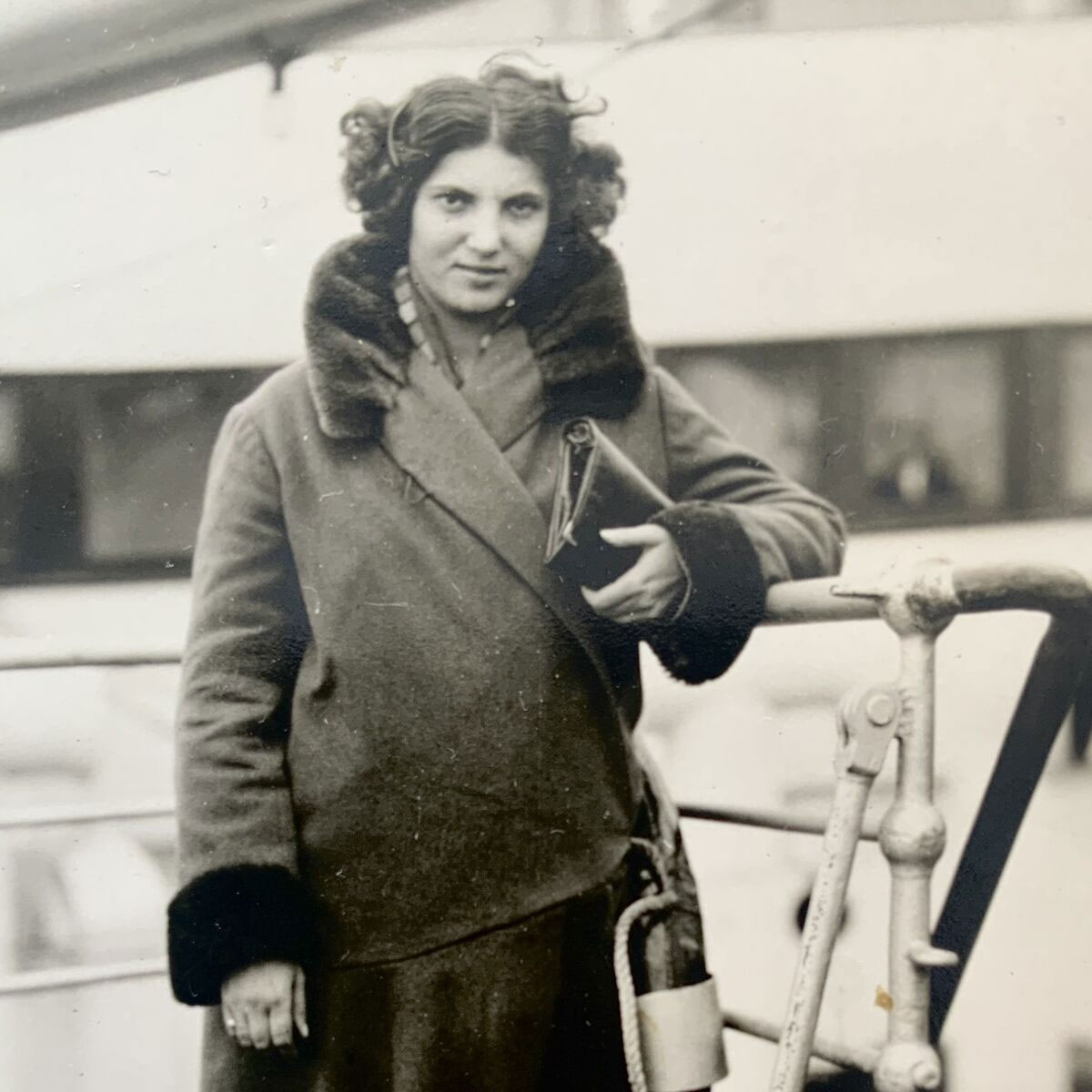
Young Rose went to Chernivtsi University, where she was more interested in philosophy than literature. At Friedrich Kettner's seminar, her attention was drawn to the works of Constantin Brunner, Spinoza, Plato, etc. However, circumstances were not exactly conducive to education. The clouds of World War I loomed over Europe with devastating lightning strikes here and there. Czernowitz even fell under Russian occupation for a while, and the Scherzer family had to become refugees, just like Ukrainians these days. After the war ended, the flag hoisted over the city changed again: the city was now part of Romania. Increasingly brutal Romanianization and general reorganization processes were launched. The worst thing happened in 1920, when Rose's father died. It was a massive catastrophe, both psychological and financial, for the family. University education was out of the question as they struggled to make ends meet. Rose's mother sent her to work in the USA.
According to researcher Oksana Matiichuk, Ausländer was not thrilled with the prospect of emigration. She was offended but eventually accepted it. This conflict, however, did not destroy the special bond with her mother, which remained one of the key moving forces in Ausländer's poetic pursuits.
She went to America with a friend named Ignaz Ausländer. As you may have guessed, Rose married him in the USA and took his last name. She found it symbolic that Ausländer means 'foreigner' in German. Otherness and alienation are other constant topics in her poems.
Rose Ausländer started publishing her poems in America and was, in general, actively involved in preserving the German-speaking space there, as she worked for a German newspaper, compiled a German anthology, etc. Her early texts are sometimes interpreted in the context of expressionism and then the "New Objectivity." One can, of course, argue with this interpretation. The "New Objectivity" is applied too abstractly to literature, especially if we recall the influence of Rilke, Heine, etc. Writing about Czernowitz, Ausländer also mentioned other figures that were important to her and her milieu there: Hölderlin, Kafka, Trakl, and George. This literary "irradiation" is one of the secrets (alongside the significance of the university) of the poetic outburst in the city located on the border between cultures.
Indeed, when it comes to a certain literary era or phenomenon — such as the contradictory and vivid world of poetic modernism and the avant-garde — we do not always think about what those authors read and what shaped their literary production. Sometimes, there is an illusion of integrity and an impression that they read approximately the same things they wrote. In reality, however, the difference could be enormous, and the origins very complex.
Meanwhile, Ausländer adapted quite well in America. She worked in a bank and became an American citizen. However, she got divorced but kept her symbolic married surname. Her marriage proved to be accidental. In 1931, she had to return to Czernowitz and stay there for a long time to care for her sick mother. The "swing" between Europe and America completed its first cycle.
The turbulence zone
In Czernowitz, Rose had a new love affair. Her biographers claim that this was the main love of her life and a source of inspiration for many passionate poems. True or not, there is no doubt that this love story was spiced up with several vivid facts. First, Rose's partner had a "sunny" name, Helios Hecht. Second, he was a graphologist, a profession that interestingly echoed Rose's own occupation. Finally, Hecht published a selection of Ausländer's poems without her permission, supplying them with his analysis of her handwriting. She took exception to such a surprise move and broke off the relationship.
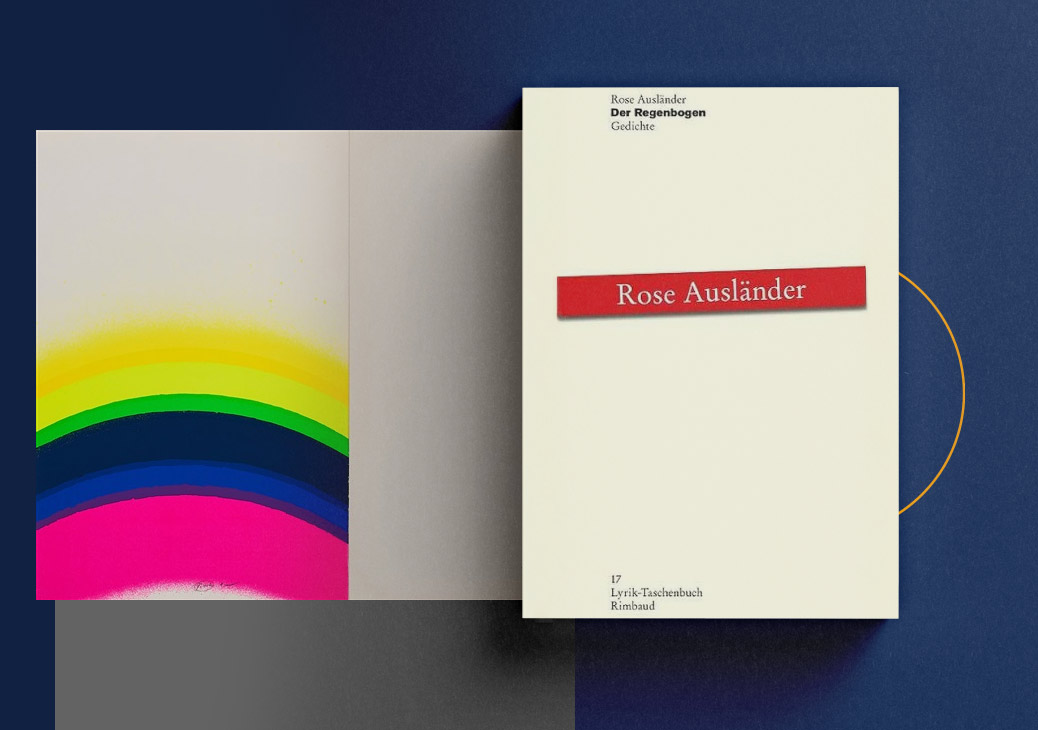
Rose Ausländer published her first collection, The Rainbow, in 1939, not the most opportune time for a book debut. However, it was imbued with powerful symbolism as it stood in opposition to Nazism at its zenith and the beginning of World War II. The publication was facilitated by Alfred Margul-Sperber, an important poet and organizer of the literary environment in Czernowitz. This collection seems to be best described not through associations with expressionism or the "New Objectivity" but with Walter Hinck's formula of "the corsage of an established tradition," cited by Petro Rykhlo, Ausländer's main translator into Ukrainian. That said, the poet did search for unusual moves and found some.
The Rainbow contains a poem from which Paul Celan likely borrowed the image of "black milk" for his famous "Death Fugue." In the tumult of the subsequent years, the vast majority of copies of The Rainbow were lost, with just a few surviving. They did not define Ausländer's image, which is probably good.
In 1940, Czernowitz was occupied by the Soviet army and became the center of the Chernivtsi region in Soviet Ukraine. Ausländer got a good taste of the new regime. As a former US citizen (after returning to Chernivtsi, she lost her US citizenship), Ausländer suddenly found herself in the focus of attention of Soviet "law enforcement officers" and was arrested on suspicion of espionage. Her criminal case was first discovered in the archives by Rykhlo in 2001, creating a sensation in literary studies.
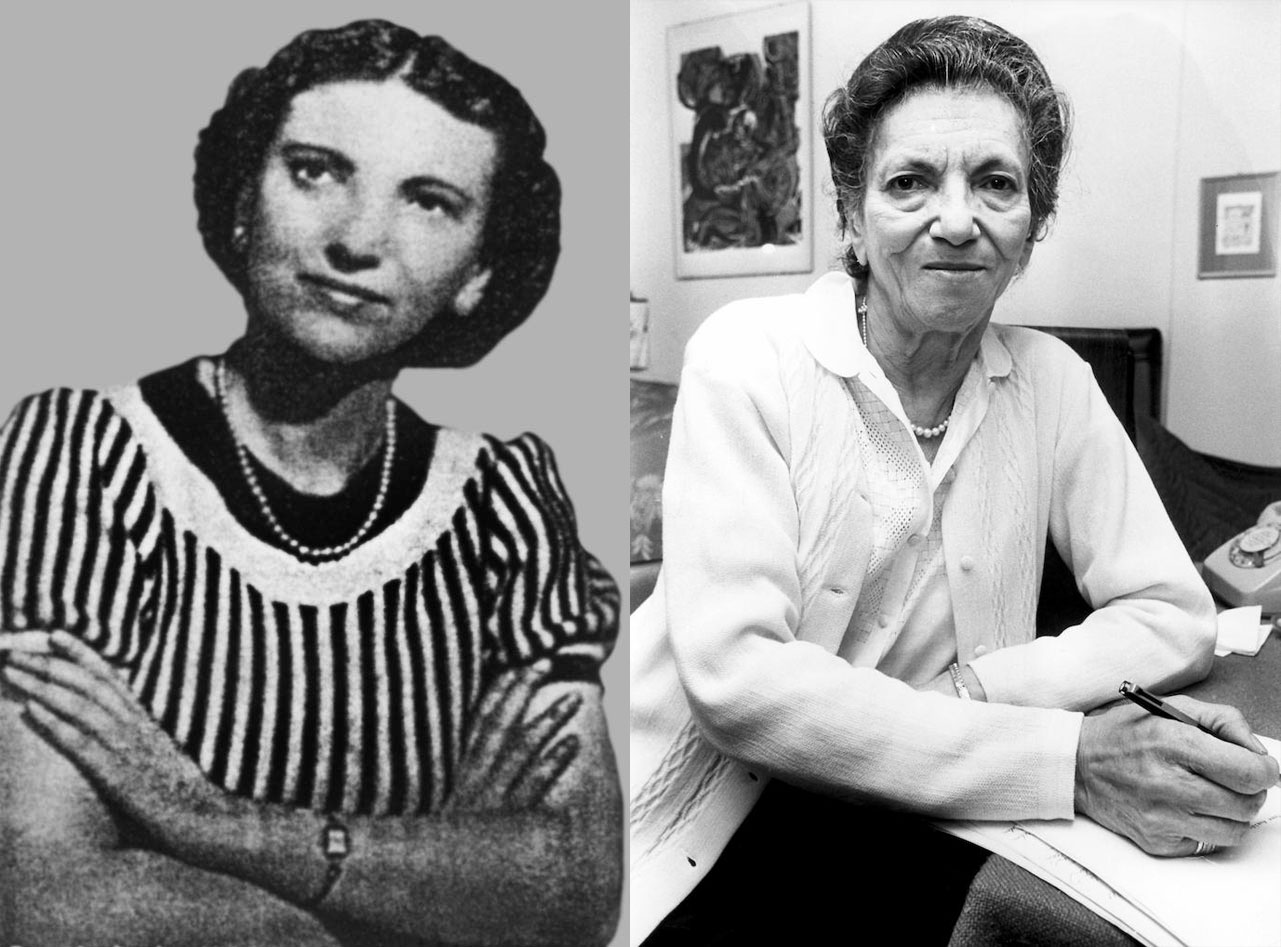
No less sensational was the short duration of the arrest. Ausländer spent about three months behind bars in the Chernivtsi NKVD and was eventually released. This was as easy as it got with the Soviet secret police. "The accusation turned out to be ungrounded," Rykhlo calmly writes. Given the NKVD's practice in such cases, Ausländer was incredibly lucky. We do not know the details, but this experience was apparently highly traumatic for her. It is believed that she did not talk about it but used the unpleasant memories in her late poem "In Prison."
There is a distance of 40 years and seemingly an even greater aesthetic gap between the publication of this poem in the collection A Little Further (1979) and the previously mentioned Rainbow (1939).
In 1941, Romania, now as part of the Hitlerite coalition, regained control over Chernivtsi after short battles. The city, and especially the local Jews, faced difficult times. However, the chances of survival under Romanian occupation were significantly higher than under German occupation. Ausländer and her family managed to make it through those terrible years.
Symbolically, Ausländer met Paul Celan during that period. A lot of shared background and some intersections in writing and reading laid the foundation for their friendship and intertextual connections.
The Holocaust was a profound formative experience for them, both in life and in poetry. Ausländer often returned to this theme. While she did not seem to avoid suffering, her intentional focus was on overcoming the catastrophe and moving on.
Loss of homeland and the path to new poetry
After the liberation of Chernivtsi from Romanian occupation and the final establishment of Soviet power, Ausländer left the city, as did nearly all German-speaking literati. Czernowitz was now her heartfelt memory. The real Soviet city, where Ukrainian, Russian, and Romanian languages and cultures prevailed, became alien, "went under water": "The sunken city. The sunken world" (from the essay "Memories of one city").
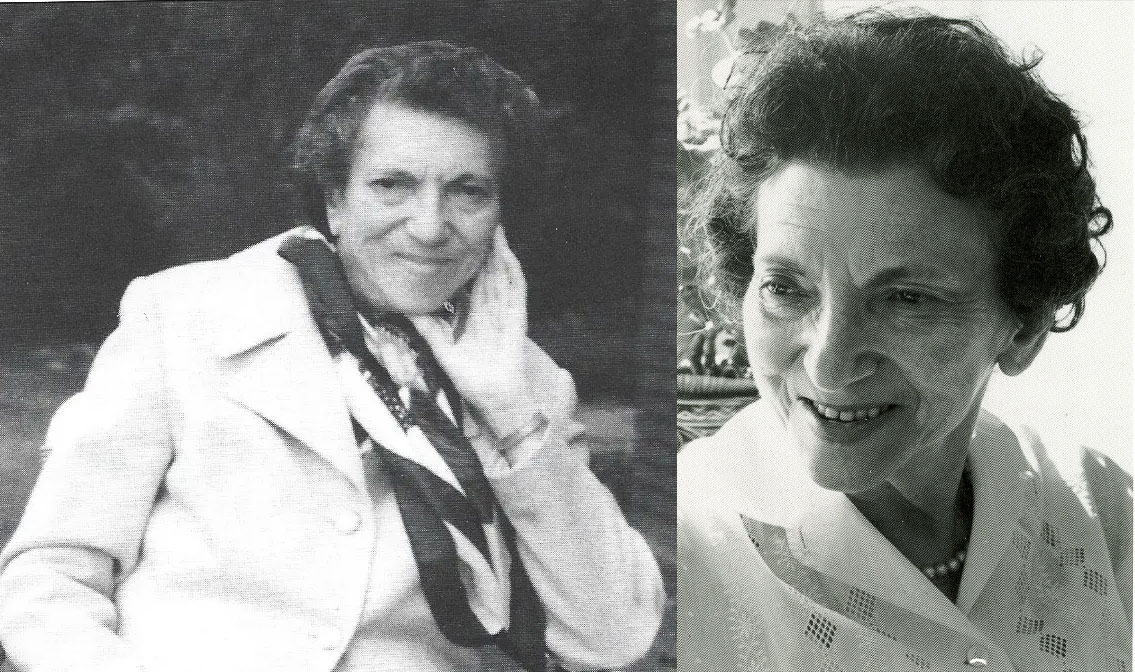
Ausländer's poetic memoirs of Czernowitz were often filled with rich imagery of an imaginary idyll of human diversity.
Czernowitz before the Second World War
Peaceful hill town
encircled by beech woods
Willows along the Pruth
rafts and swimmers
Maytime profusion of lilac
About the lanterns
May bugs dance
their death
Four languages
Speak to each other
enrich the air
The town
breathed happily
till bombs fell
Source: poetryintranslation.wordpress.com
Ausländer left the Soviet Union following the classic route of her milieu: she went to Bucharest and from there, again, to the United States.
While her first American emigration was marked by her first publications, the second one saw a profound crisis of writing and language. Ausländer faced a typical problem of a German-speaking Jewish poet: her native language was now associated with the extermination of her people. Second, when her mother died, she suffered a psychological catastrophe. It felt like her mother's language had left her with her mother. As a result, when Ausländer was able to return to poetry, she switched to English for nearly a decade. She found a literary company in the USA to publish her poetry.
Her biographers often note a radical change in the style of her poetry. (I would venture to say that this was the emergence of the real poet Ausländer.) They link it to her European visit in 1957, familiarization with poetic novelties, and communication with Celan. However, I believe the turn occurred earlier, perhaps in America.
Free verse, more complex images, distancing from the quasi-romantic tradition, colloquial-like rhythms, and increased paradoxicality are the noticeable new hallmarks of Ausländer's poetics manifested in her English-language texts, which made up the collection Forbidden Tree.
Apotheosis
In the second half of the 1950s, Ausländer returned to the German language. This decision is believed to have been prompted by external factors: the advice of the famous American poet Marianne Moore, with whom Ausländer was friends, and her several-month-long trip to Europe in 1957. Naturally, the trip brought a lot of literary impressions, including long conversations with Celan about poetry. However, I think it would be fair to assume that Ausländer already wanted to return to Europe, and the stress associated with the language had subsided. So, she resumed writing poems in German and left America forever in the mid-1960s. The transatlantic swing came to a stop.
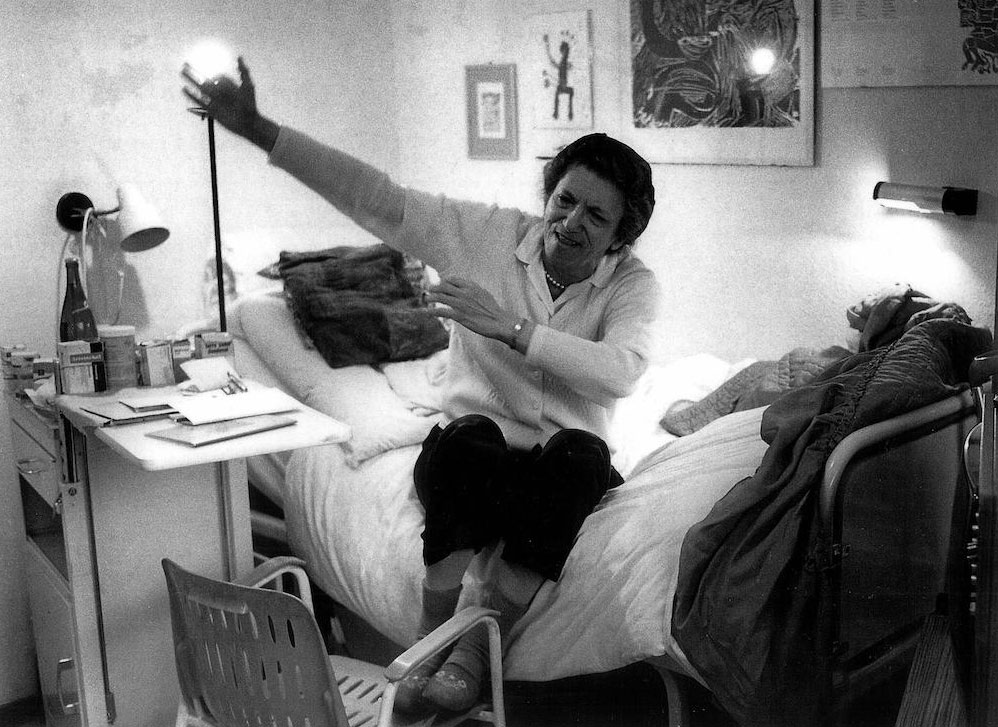
In Europe, Ausländer first lived in Vienna, but the Austrian capital seemed too antisemitic to her. She then moved to Düsseldorf in Germany. After a dangerous leg fracture, Ausländer was bedridden for a long time, staying at a pension there. She later remained in voluntary self-isolation (having to do, of course, with her increasingly weak health).
Her German period, spanning over two decades, was a time of extremely active writing, numerous publications, and noticeable success among poetry buffs. Biographers sometimes call this success belated.
When the Bavarian Academy of Fine Arts awarded Ausländer a literary prize in 1984, she herself expressed this sentiment in her acceptance speech, submitted by post. The poet noted with the biting irony quite characteristic of her late period: "Your award found me very late, but not too late — I am grateful to you!"
To give you a sense of the overall atmosphere, let me quote from Ausländer's speech: "You have gathered in Munich; the string quartet, I hope, will play Brahms at the end; the hall is stuffy, and the exquisite company is sweating. Another solemn performance, another grand speech, another thank-you, gloomy faces, and polite applause. All this may look completely different, but if it is as I have described, then believe me, I would gladly be with you today and allow myself to be honored." However, I believe that Ausländer's oeuvre received attention and recognition, oddly enough, more or less at the stage when her poetry truly blossomed.
Ausländer's "gold standard" involves mysterious associations, details of memory, and generalizations of myth, as well as efforts to reach the heights of brevity and balance.
Over time, the desire for conciseness led Ausländer to a style reminiscent of parables and maxims ("A conversation about trees / endless / as long as there are words / and trees / Who can live / without the consolation of trees / The tree of knowledge / has not been comprehended / by anyone"). Curiously, at about the same time, a similar path was taken, for example, by Andriy Chuzhy (Storozhuk) in Ukrainian poetry. A member of Ausländer's generation (approximately), he also loved (Neo-)Romanticism and avant-garde, and his works echoed some of the trends manifested by the Sixtiers and "post-Sixtiers." Notably, chuzhy, just like Ausländer, means 'foreigner.'
Working with myth and memory, Ausländer often delved into Jewish religious motifs: sometimes in simpler ways or a more multi-layered fashion at other times, but with the indispensable dialectic of devotion-rebellion:
In memory of Chane Rauchwerger: Ghetto Hunger March
At 30 degrees below zero
slept my pious aunt
(always she prayed
believed fervently in justice)
slept my sinless aunt
her daughter her grandson
after many hunger march days
on the ice field in Transnistria
irrevocable
they fell asleep
The belief
of the mountains
O wise wonder Rabbi of Sadagora
Chane Rauchwerger believed in you
Where have you been
at that time
where was your miracle
Source: allpoetry.com

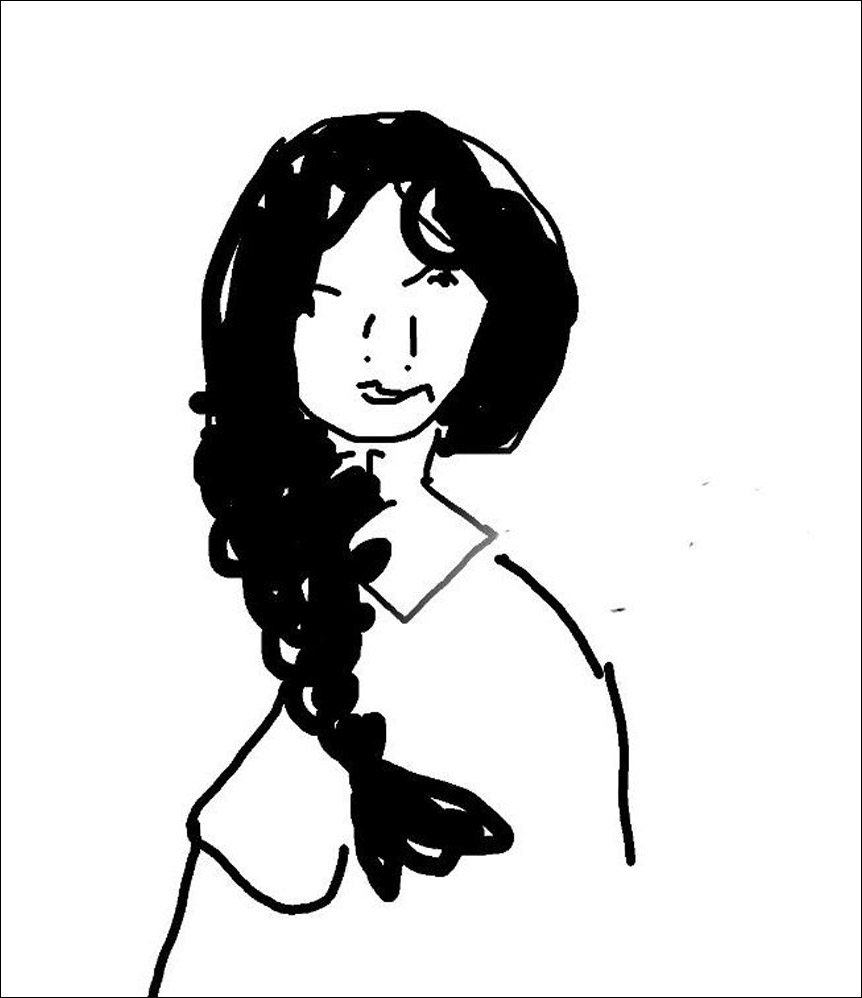
In the last period of Ausländer's life and work, fans of her poetry often wrote to her, asking for meetings and interviews. However, she mostly refused to communicate or turned rare contacts into anecdotes, a bit like Hasidic stories. One such case is cited by researcher Oksana Matiichuk in Life in Words, a graphic biography of Ausländer published by Vydavnytstvo 21 and created together with artists Olena Staranchuk and Oleh Hryshchenko:
After all, she agreed to accept one young man (…). He crossed the threshold of her room with a large bouquet of roses, her favorite flowers.
"What do you want?" Rose asked.
"Just to see you. I really appreciate your poems."
"Okay, you've seen me, and now you can go," she replied calmly, making it clear that the audience was over.
Ausländer continued to communicate mainly with a handful of people: publisher Helmut Braun, her doctor, the nurses, and her brother Max.
In 1986, Ausländer wrote the poem "Enough," which contained the line "A dream / will live / my life / to the end," and announced she had written everything she wanted. She died on 3 January 1988, finally moving into the world of legends of German-language poetry.
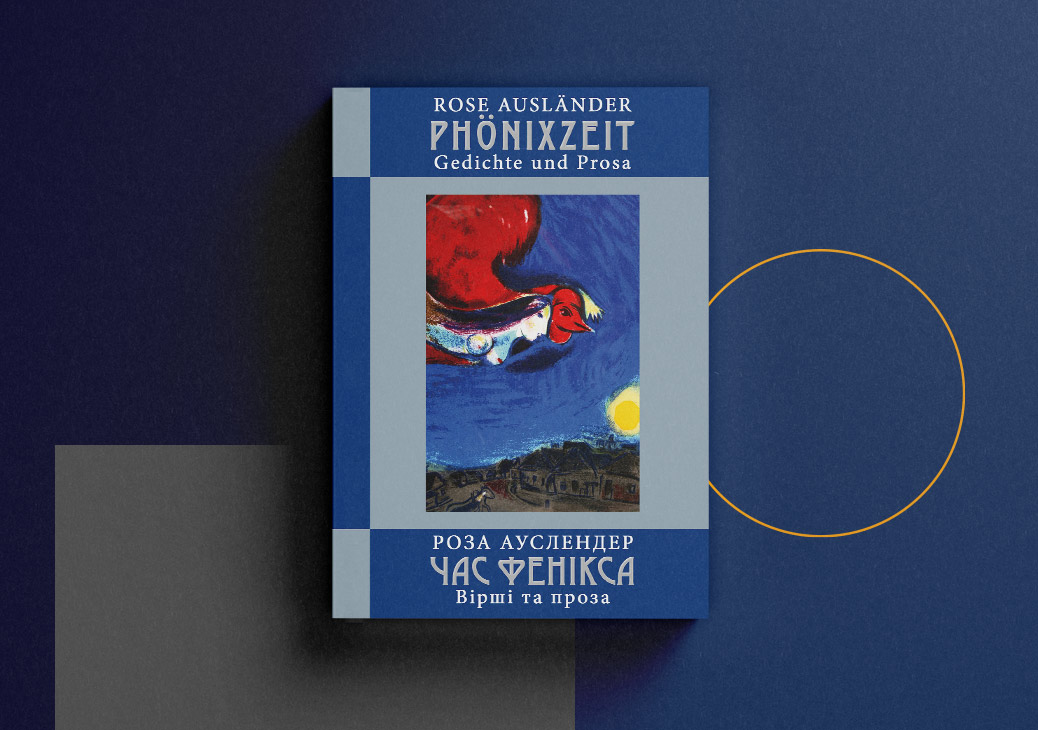
In Ukraine, to which Ausländer's connection is not apparent but inevitable, her texts have been published and researched gradually over the past decades. While biographical material also comes out, only two books focusing exclusively on Ausländer have appeared so far in Ukrainian: Phoenix Time (Vydavnytstvo 21), containing poems and miniature essays translated by Petro Rykhlo, and Life in Words by Oksana Matiichuk. There is also a small selection of English poems translated by Iryna Vikyrchak and published in Umbrella, an online journal of translated poetry, and a series of individual publications in scholarly editions. Obviously, it would be excellent to see the circle of enthusiasts working with the German-language poetry of interwar Chernivtsi become wider.
A moving monument to Ausländer was erected on St. Mary Square in Chernivtsi in 2018, near the house where she was born and raised.
[Editor's note: Even though Rose Ausländer is considered one of the most popular German-language poets of the 20th century, her poetry is still largely unavailable in the English language. More recently, a book of poetry, While I am Drawing Breath, was published in 2014. Several translations of her poems into English are available online at martyncrucefix.com, Four Way Books, exceptindreams.livejournal.com, asymptotejournal.com, poemhunter.com, allpoetry.com, and poetryintranslation, which includes the poem "Czernowitz before the Second World War." Lyrikline.org offers Rose Ausländer reading several of her poems in German and with translations into multiple languages, including English, French, Bulgarian, and Persian.]
 Oleg Kotsarev
Writer, journalist, essayist, and translator. His latest books are the novel People in Nests and the poetry collection Charlie Chaplin Square. Co-editor (with Yulia Stakhivska) of the anthology Ukrainian Avant-Garde Poetry (1910s–1930s).
Originally appeared in Ukrainian @Chytomo
Translated from the Ukrainian by Vasyl Starko.
This material is part of a special project supported by Encounter: The Ukrainian-Jewish Literary Prize. The prize is sponsored by the Ukrainian Jewish Encounter (UJE), a Canadian charitable non-profit organization, with the support of the NGO "Publishers Forum." UJE was founded in 2008 to strengthen and deepen relations between Ukrainians and Jews.