




"Solomon's temple" near Kyiv: How a Jewish scholar developed Ukraine's agricultural industry
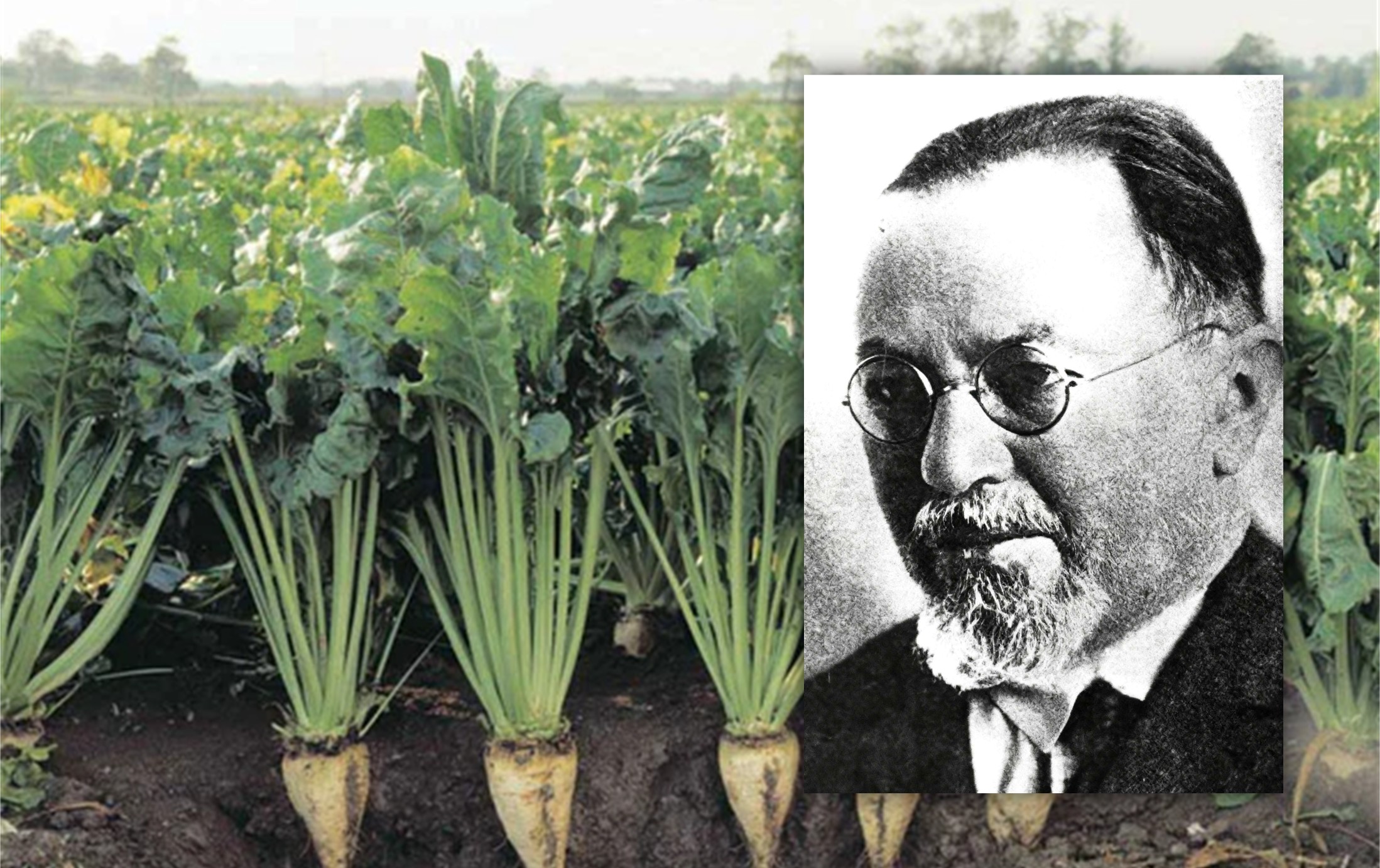
The Ukrainian Institute of National Memory recommends celebrating a number of famous people this year. Among them is Professor Solomon Frankfurt, an outstanding agrobiologist and economist. He was a statesman during the Ukrainian Revolution and a founder of the Academy of Sciences of Ukraine.
Solomon Lvovych (Shlomo Meyerovich) Frankfurt was born in January 1866 in Vilno (now Vilnius, Lithuania) and received his higher education and a doctorate in chemistry from the University of Zurich. He worked as an assistant to the famous agrobiologist Ernst Schulz, a professor at the Swiss Polytechnic, researching the properties of sugar in various plants. Later, these studies would be applied in the development of Ukrainian sugar beet growing.
Despite his scientific achievements, Solomon Frankfurt, as a "person of the Judaic faith," was denied the position of professor at the Moscow Agricultural Institute in 1898. Unable to obtain a worthy place at universities due to the state antisemitism in the Russian Empire, Frankfurt accepted an offer from a private business in Kyiv in the agro-industrial sector, where Ukrainian and Jewish capital held strong positions. The next two decades of his life (1901–1920) were linked with Kyiv and Ukraine, and these were his most fruitful years as a scientist and public figure.
Even now, a century later, Frankfurt's achievements in new methods of growing and selecting sugar beets, potatoes, and wheat continue to have a huge positive effect, making modern Ukraine one of the largest global producers of agricultural products.
Frankfurt headed the agrochemical laboratory of the Kyiv Agricultural Syndicate. He developed and implemented the latest scientific methods for seed production, evaluation, and improvement for various agricultural crops on Ukrainian lands. The laboratory set up by Frankfurt grew into what is now the academic Research Center of Ukraine's Institute of Agriculture.
In the early 20th century, Frankfurt established a network of experimental fields to increase sugar beet yields in the Volhynia, Poltava, Kyiv, Kharkiv, and Podillia provinces. He developed and implemented a special program for the use of mineral fertilizers in agriculture on Ukrainian lands. Thanks to Frankfurt, the concepts of "sugar beet culture" and "seed culture" were finally established in world scientific practice.
On Frankfurt's initiative and with funds from local sugar producers, the Central Research Station for Sugar Beet Culture was established near the village of Myronivka, Kyiv province, in 1909.
A little later, the Myronivka Research and Selection Station (now the Myronivka Institute of Wheat) was opened there. Experiments were conducted at the station to develop new varieties of wheat. The world's first variety of soft winter wheat, "Ukrainka 0246," was named by Solomon Frankfurt.
He was active as a popularizer of science, writing the books What a Farmer Needs to Know to Successfully Grow Sugar Beets (Kyiv, 1913) and Agrarian Reform and the Sugar Industry (Kyiv, 1918).
Frankfurt's multifaceted activities are evident from the following list of his initiatives and positions:
- a founder of the Kyiv Agronomic Society (1909)
- an initiator of the First All-Ukrainian Agrarian and Economic Congress in Kyiv on 22–26 October 1917, which passed a resolution to establish the Academy of Agriculture and Forestry
- a member of the Supreme Land Commission of the Ukrainian National Republic (UNR)
- a member of the commission to establish (in 1918) the Ukrainian Academy of Sciences (now the National Academy of Sciences of Ukraine)
- the chairman of the Agricultural Scientific Committee of Ukraine (1919–1920), from which the National Academy of Agrarian Sciences of Ukraine (NAAS) later developed.
For many years, Frankfurt was one of the leaders of the Party of People's Freedom (Cadets) in Kyiv. Historians say that he and his friends, the Kyiv Cadets, belonged to a liberal Masonic organization.
Frankfurt perceived the emerging Ukrainian statehood as an alternative to the threat of the Bolsheviks, who seized power in Russia in October 1917. Therefore, he consistently supported first the Ukrainian National Republic and then the Ukrainian State of Hetman Pavlo Skoropadsky. As one of Frankfurt's biographers put it, "he believed in Ukrainian statehood more than many Ukrainians did."
In the Hetman's government, Frankfurt was the chief specialist in the agricultural sector, de facto serving as Deputy Minister of Agriculture and Food. He worked most productively in the Agrarian Commission under the Ministry of Agriculture of Ukraine. Frankfurt was involved in drafting the laws "On the Right to Sell and Buy Land Outside Urban Dwellings" and "On the Transfer of Grain of the 1918 Harvest to the State," as well as on the principles of land reform in the Ukrainian State. Frankfurt also participated in national Jewish congresses and public movements of that period.
Professor Ruslan Pyrih of the Institute of Ukrainian History (National Academy of Sciences) has studied the government and statehood activities of Solomon Frankfurt. According to Pyrih, he twice represented Ukraine in complex economic negotiations with Germany and Austria-Hungary — in early 1918 on behalf of the Central Rada and later in September–October 1918 on behalf of the Ukrainian State. In both cases, the scientist and diplomat defended Ukrainian interests during the signing of trade agreements. For example, Frankfurt achieved the sale of Ukrainian sugar to the Central Powers at a fair price. The German Emperor Wilhelm II highly valued Frankfurt's role in the negotiations, awarding him the Imperial Order of the Crown.
During the Directory's rule, Frankfurt served on the Commission to Develop a Trade Agreement with Poland (June 1920). In August–September 1920, he represented the UNR's economic interests at the conference of the Baltic countries in Riga. After the military defeat of the UNR, Frankfurt did not go to work for the Bolsheviks out of principle; instead, he emigrated to Germany in late 1920, where his wife and children soon joined him.
The next 33 years of his life were connected with ORT, a global Jewish organization, where Frankfurt led projects of technological education and assistance to Jewish artisans and farmers in various countries of Europe. He did work for ORT in Berlin, London, and Paris.
After the outbreak of World War II, the 73-year-old scientist received a U.S. visa at the American consulate in Bordeaux. In early 1940, Solomon Frankfurt and his wife Doba reached the shores of the United States. From 1947 onward, Professor Frankfurt served as president of World ORT.
Frankfurt passed away on 18 November 1954 at the age of 88 and was buried in Yonkers, New York.
In 2016, Ukraine marked the 150th anniversary of Frankfurt's birthday, celebrating his enormous contribution to the development of Ukrainian agricultural science. A memorial plaque dedicated to Solomon Frankfurt, including a Hebrew inscription, was unveiled at the Myronivka Institute of Wheat.
Viktor Verhunov, an academician of Ukraine's National Academy of Agrarian Sciences, referred to the research agricultural centers created by Frankfurt in Ukraine as "Solomon's Temple." These include the Myronivka Agricultural Research Station for Sugar Beet Cultivation and Selection, the Vasyl Remeslo Myronivka Institute of Wheat, the Institute of Agriculture, and the Institute of Bioenergy Crops and Sugar Beets.
Academician Verhunov emphasized: "Ukraine was very fortunate to have Solomon Frankfurt — a unique personality of a European type, a man of encyclopedic knowledge, and a powerful generator of new ideas, who knew how to implement them and did so much to organize a high-level research system for the development of agriculture in the early 20th century."
Together with all Kyiv residents, Jewish School No. 141 in Kyiv, which operates under the auspices of World ORT, once headed by Solomon Frankfurt, is now going through the most difficult winter amid a war, suffering from barbaric Russian shelling and being cut off from electricity and heat supply.
Text: Shimon Briman (Israel).
The author is grateful to Jennifer Brunton, an employee of the World ORT Archive in London, for her assistance in finding materials and providing a photograph of Solomon Frankfurt.
Translated from the Ukrainian by Vasyyl Starko.