




UJE-supported round table "Latest Studies on Ukrainian-Jewish Relations" held in Kyiv
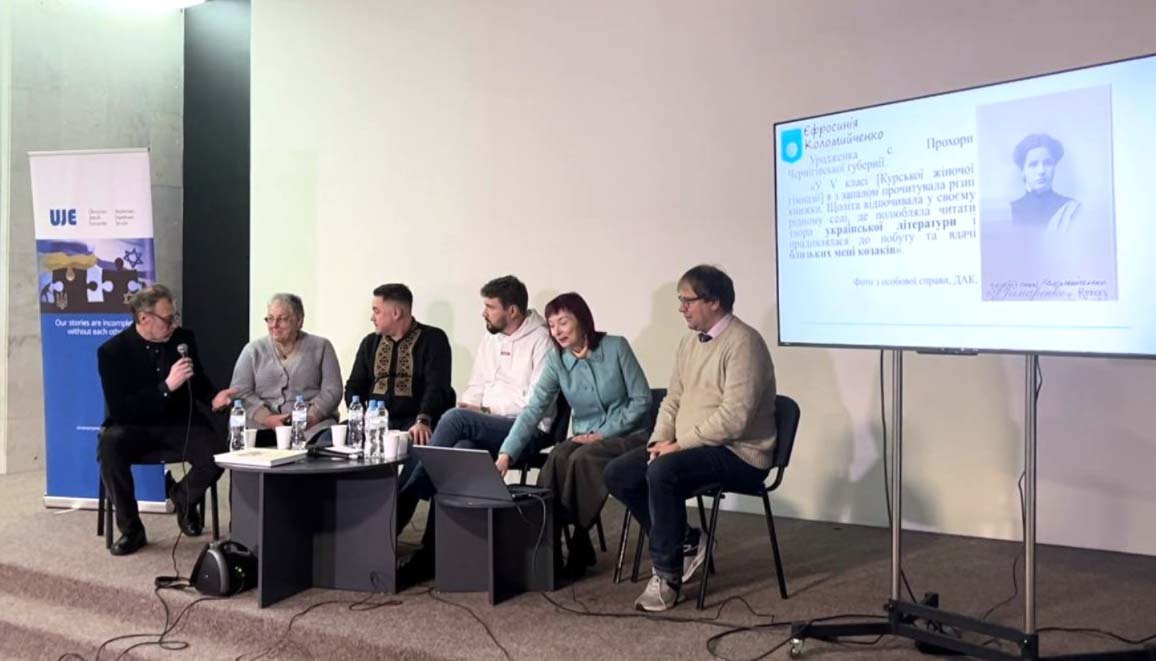
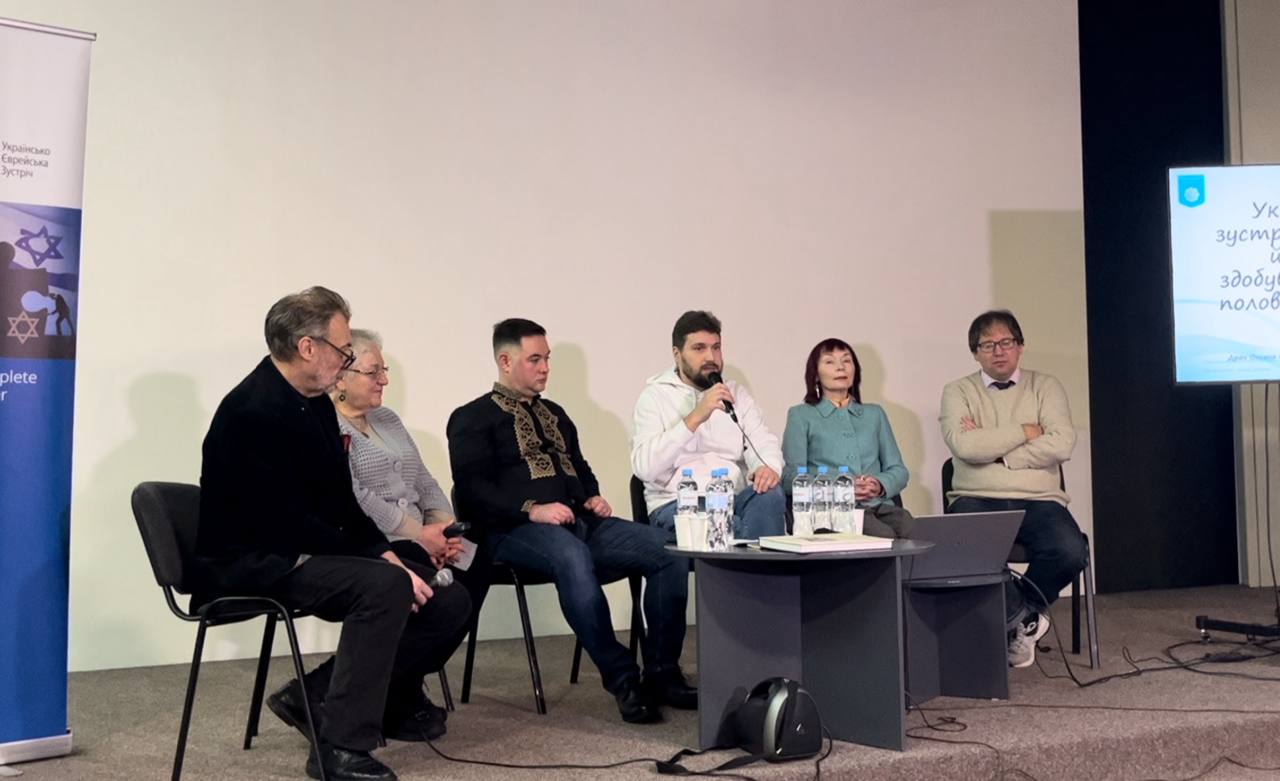
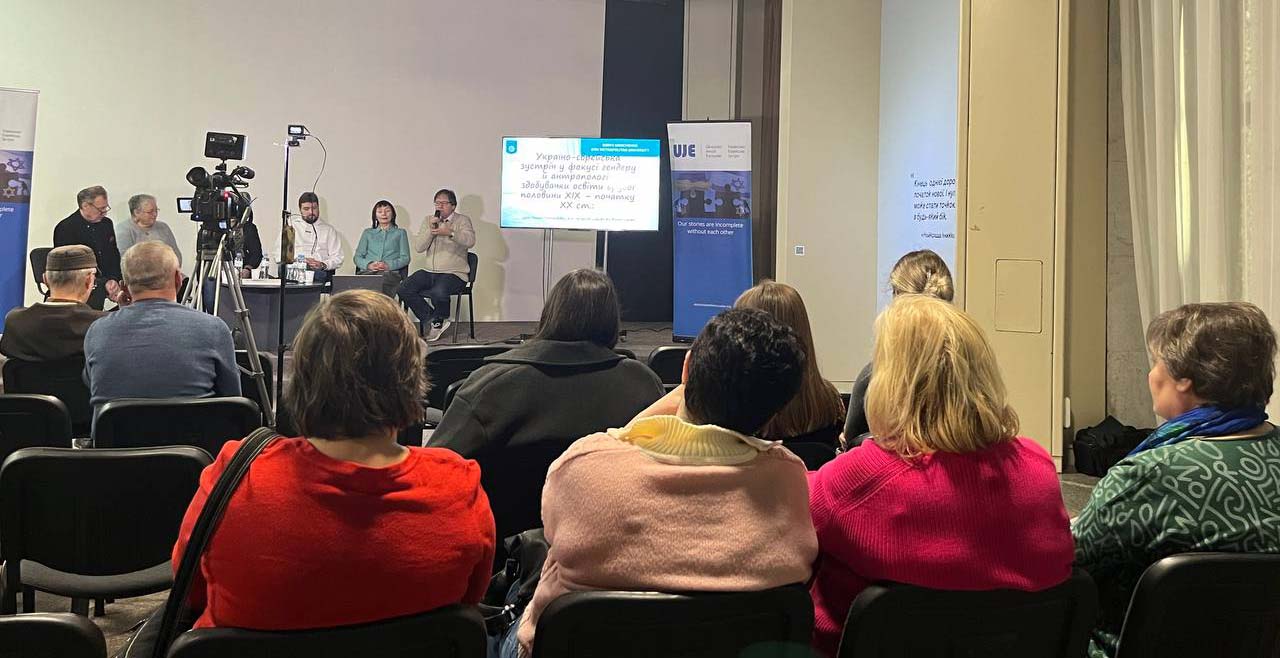
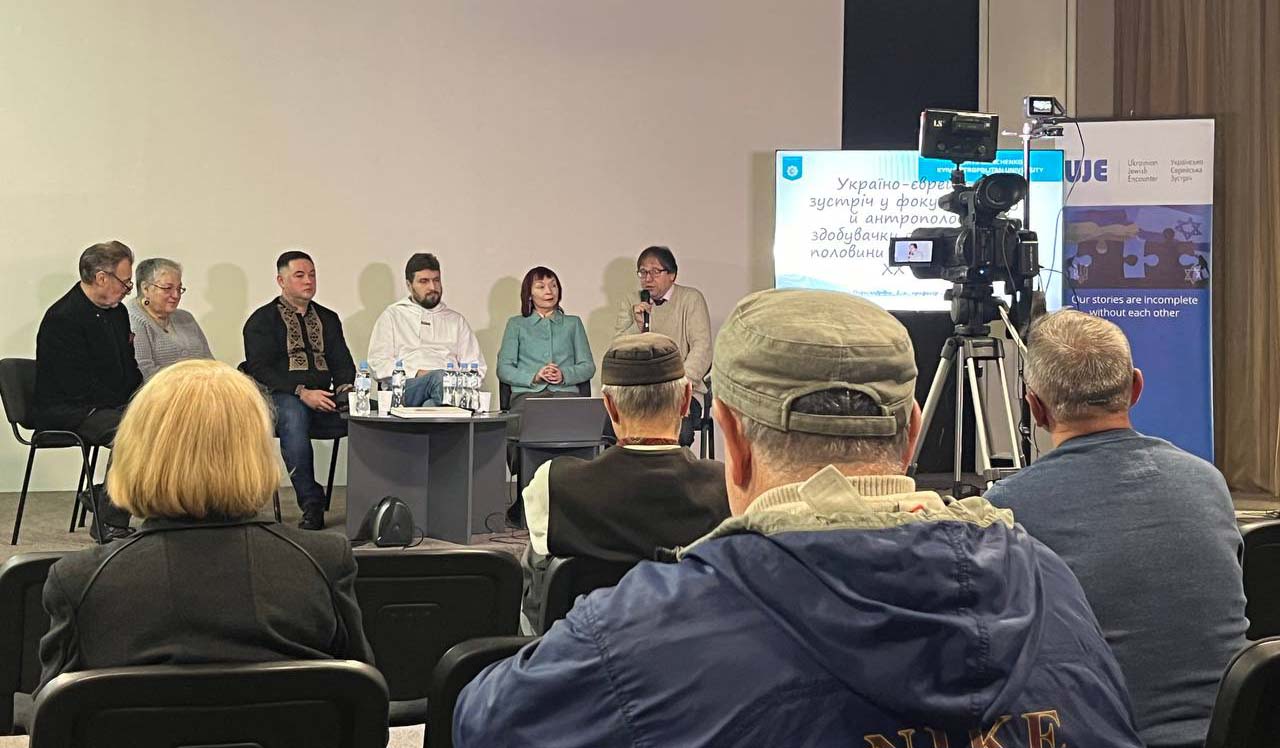
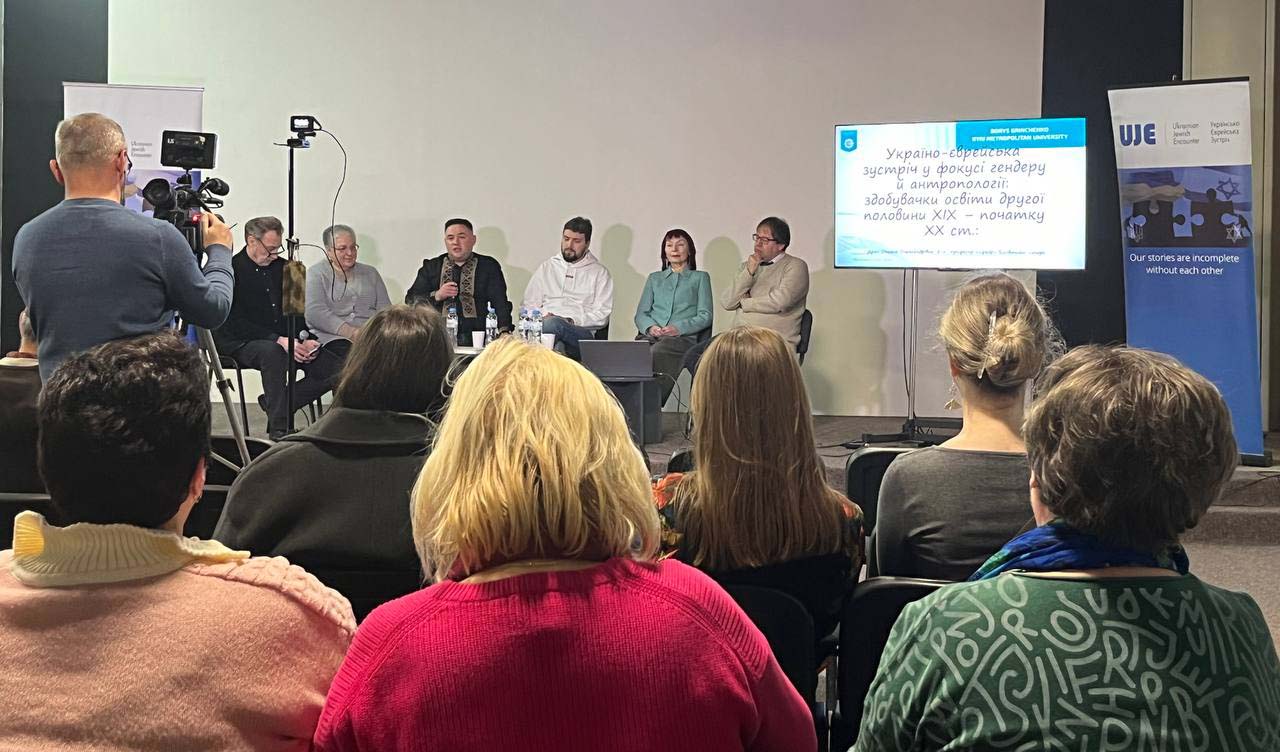
On 26 October, Kyiv hosted a roundtable discussion titled "Latest Studies on Ukrainian-Jewish Relations," organized by UJE with the support of the Ukrainian House and held as part of the Foundation Book Festival.
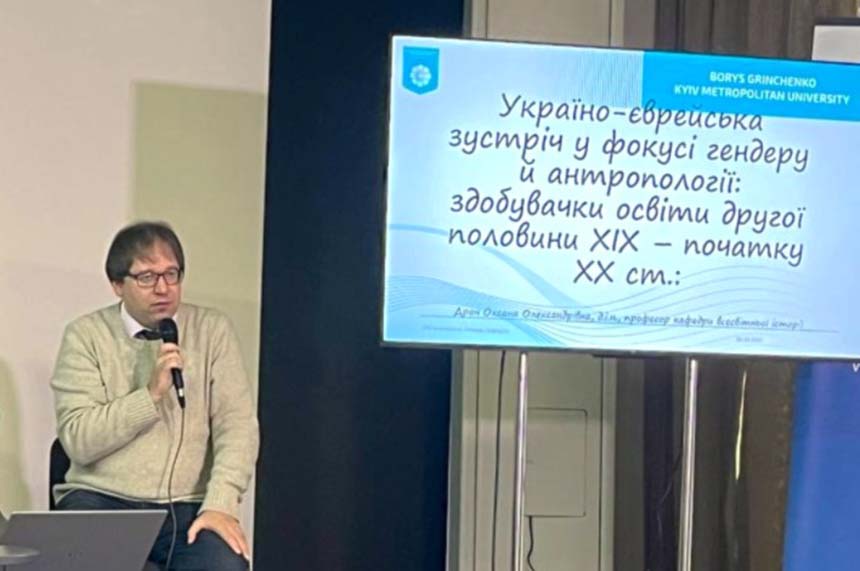
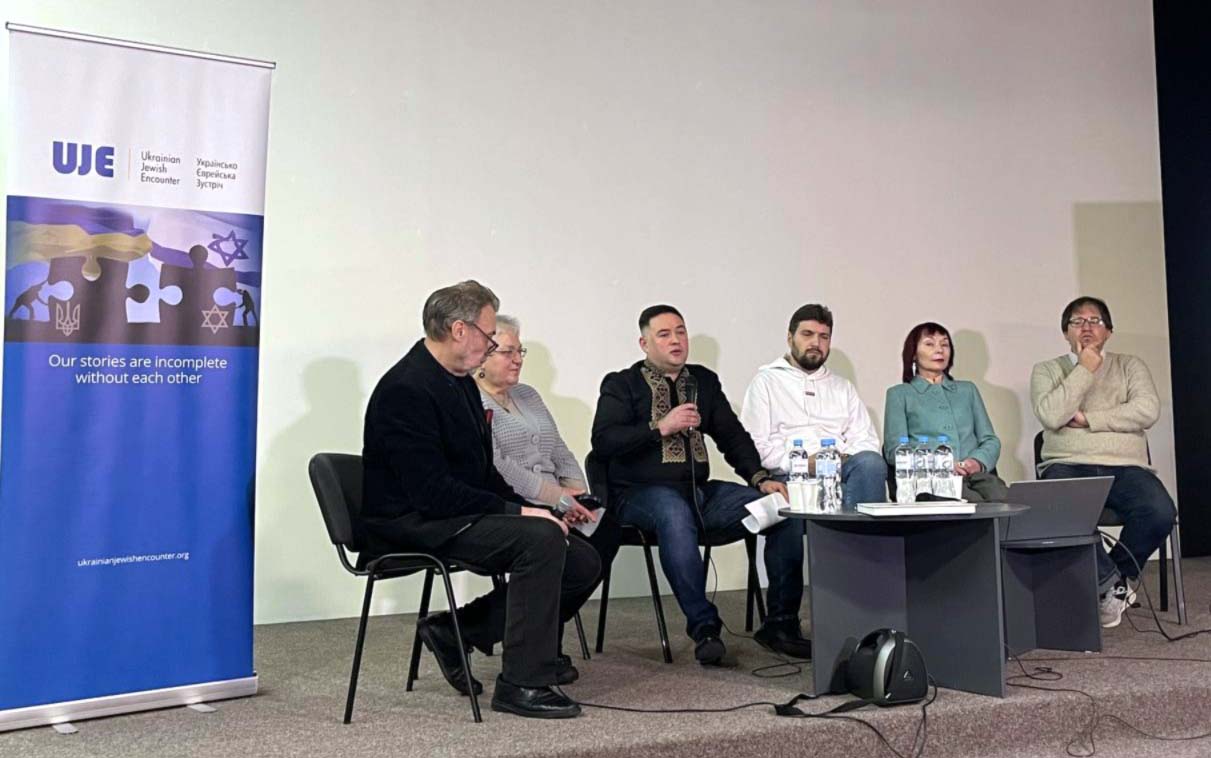
The participants of the discussion included Prof. Ihor Sribniak, Head of the Department of World History at Borys Hrinchenko Kyiv Metropolitan University and moderator of the event; Vladyslav Hrynevych, Jr., UJE's Regional Manager in Ukraine; Iryna Klymova, Ukrainian artist, art historian, and Director of the Sholem Aleichem Museum; Prof. Oksana Drach of the Department of World History at Borys Hrinchenko Kyiv Metropolitan University; Dr. Vitaly Chernoivanenko, senior researcher at the Judaica Department of the Vernadsky National Library of Ukraine and President of the Ukrainian Association for Jewish Studies; Dr. Serhiy Hirik, Vice-President of the Ukrainian Association for Jewish Studies and Academic Director of the Master's Program in Jewish Studies at Kyiv Mohyla Academy.
The event brought together specialists working in the fields of history, Jewish studies, cultural studies, and art history, offering a platform for discussing the latest approaches to understanding the Ukrainian-Jewish past, relations, and cultural exchanges.
In his opening address, Vladyslav Hrynevych, Jr., UJE's Regional Manager in Ukraine, explained to the audience why the topic was formulated as "Latest Studies on Ukrainian-Jewish Relations." Modern world historiography of Ukrainian-Jewish relations primarily focuses on the complex and dramatic events in the history of both peoples, while also considering the historical past of Ukrainians and Jews on Ukrainian lands as separate and largely unrelated phenomena. In Ukrainian historiography, this situation has been caused, to a certain extent, by the limitations imposed on Ukraine's history first by the imperial and then by the national paradigm.
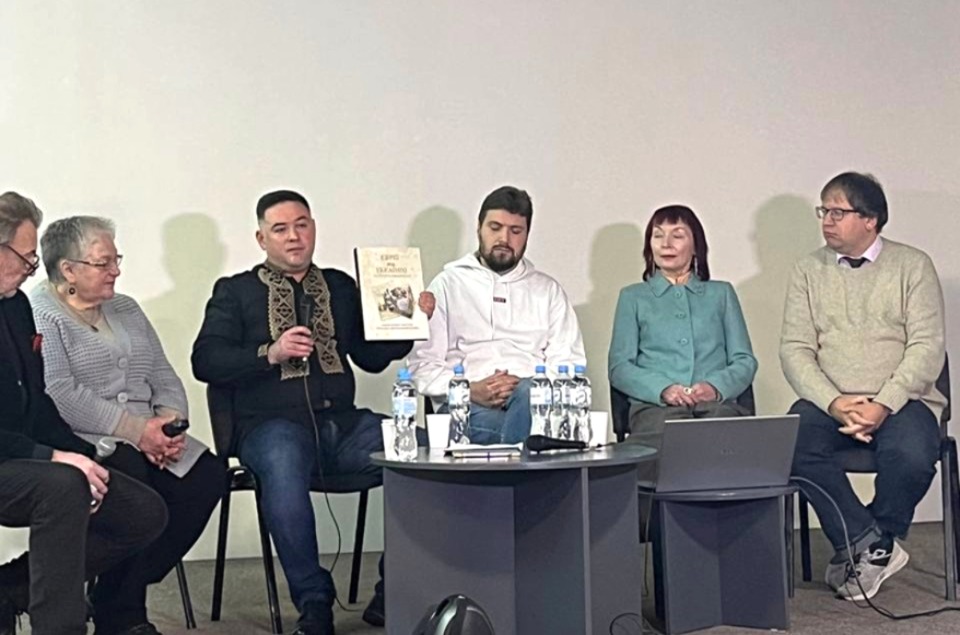
For these reasons, the book Jews and Ukrainians: A Millennium of Co-Existence by Paul Robert Magocsi and Yohanan Petrovsky-Shtern is an important achievement of the latest historiography. The authors propose a new concept of presenting Ukrainian history as territorial, multiethnic, and multicultural, with a special place assigned to Ukrainian Jews and other nationalities. Accordingly, coverage of the relations between Ukrainians and Jews is not limited by dramatic events.
This book also offers a systematic analysis of the Ukrainian-Jewish history, not bypassing difficult and dramatic periods or ignoring the stereotypical ideas of Ukrainians about Jews and Jews about Ukrainians, but focusing on the influences that have shaped the positive perception of both peoples for centuries.
A significant portion of the discussion at this roundtable focused on the current problems facing Jewish studies in Ukraine. Although there are many professional studies, articles, and monographs in this field in Ukraine, very few reach a wide audience in popular/accessible Ukrainian-language books. This hinders the integration of knowledge about Jewish history into the Ukrainian public space. Moreover, the education system is not yet doing enough to include Jewish studies: specialized university courses are still lacking, and school materials on the history of Jews in Ukraine need to be expanded and revamped. Existing programs often fail to cover important topics or provide students with an incomplete understanding of Ukraine's multinational history. That is why the development of educational resources, teacher training, and the expansion of available publications were identified as the field's priority tasks.
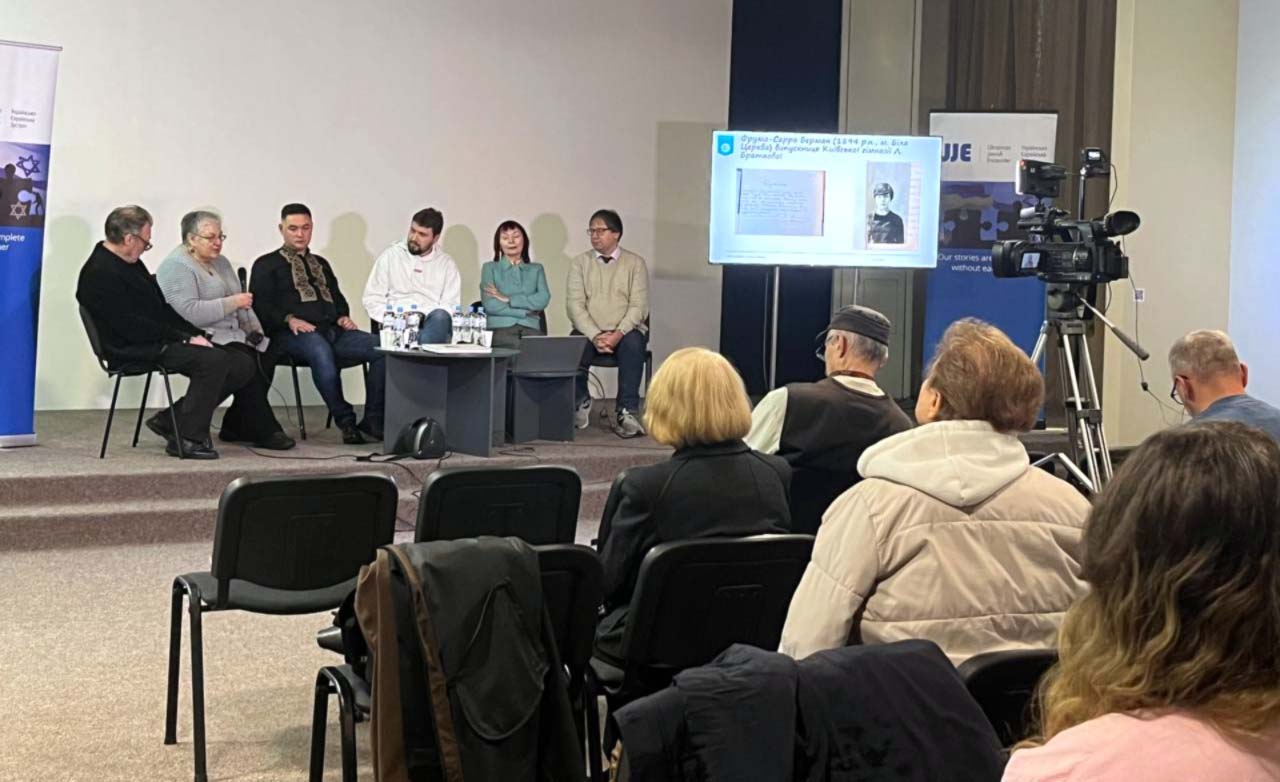
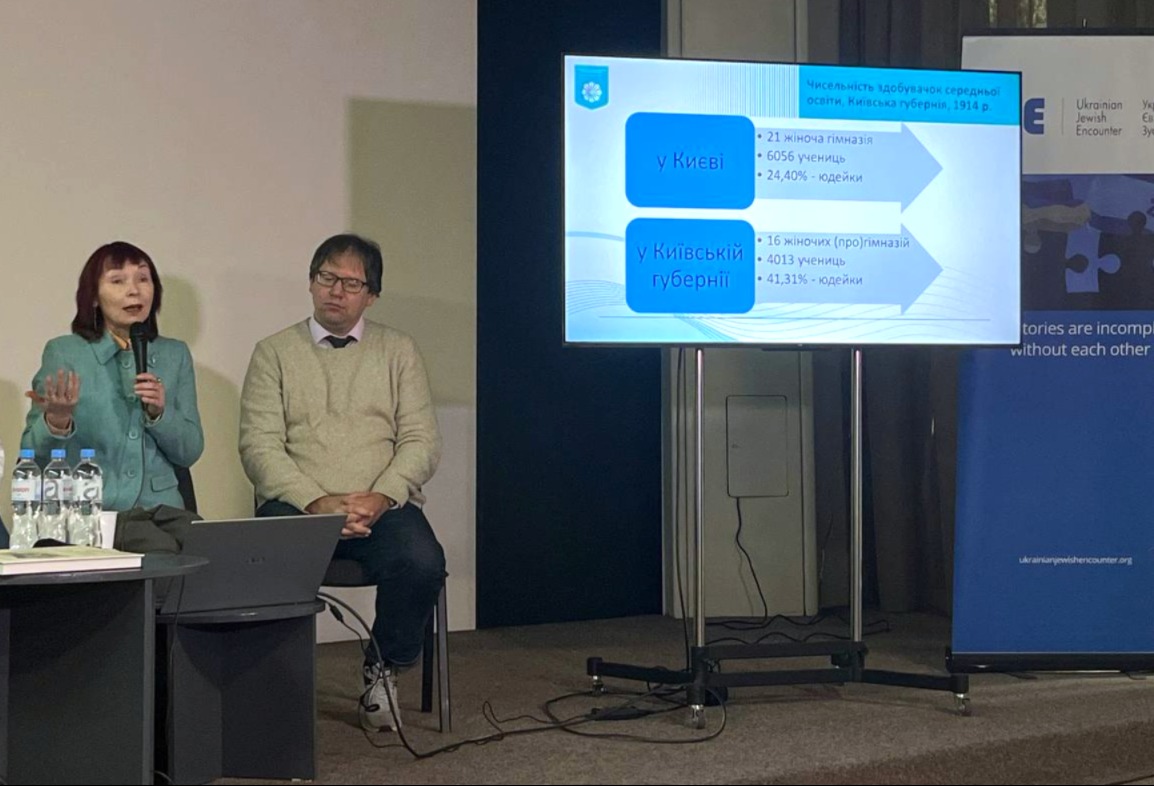
Prof. Drach delivered an insightful presentation on Jewish girls in Ukrainian women's gymnasiums in the 19th century. This story highlights underresearched aspects of social history, particularly the integration of Jewish families into the urban educational environment, the dynamics of cultural interaction, issues of mobility, educational opportunities, and the formation of female intelligentsia. Such stories enable us to examine the multilayered nature of interethnic contacts in a new light, illustrating how the trajectories of Ukrainian and Jewish communities intersected in everyday life.
At the end of the meeting, the organizers emphasized that such discussions are particularly important in the context of modern transformations in the Ukrainian humanitarian sphere. They contribute to the field's professional development and help shape a culture of memory that recognizes the polyphony of the Ukrainian past. As a token of gratitude for their participation, all guests were presented with books, a gesture aimed at further disseminating knowledge and popularizing Ukrainian-Jewish studies.
To sum up, the event demonstrated heightened interest in the history of Ukrainian-Jewish relations and the potential for modern research in this area to significantly impact public dialogue and opinion in Ukraine. The video recording of the roundtable discussion is available for viewing. (In Ukrainian)

Vladyslav Hrynevych, Jr., Regional Manager, UJE Ukraine