




Baptism of Jews, Odesa text, and "White Rabbits:" An interview with writer Sonya Kapinus
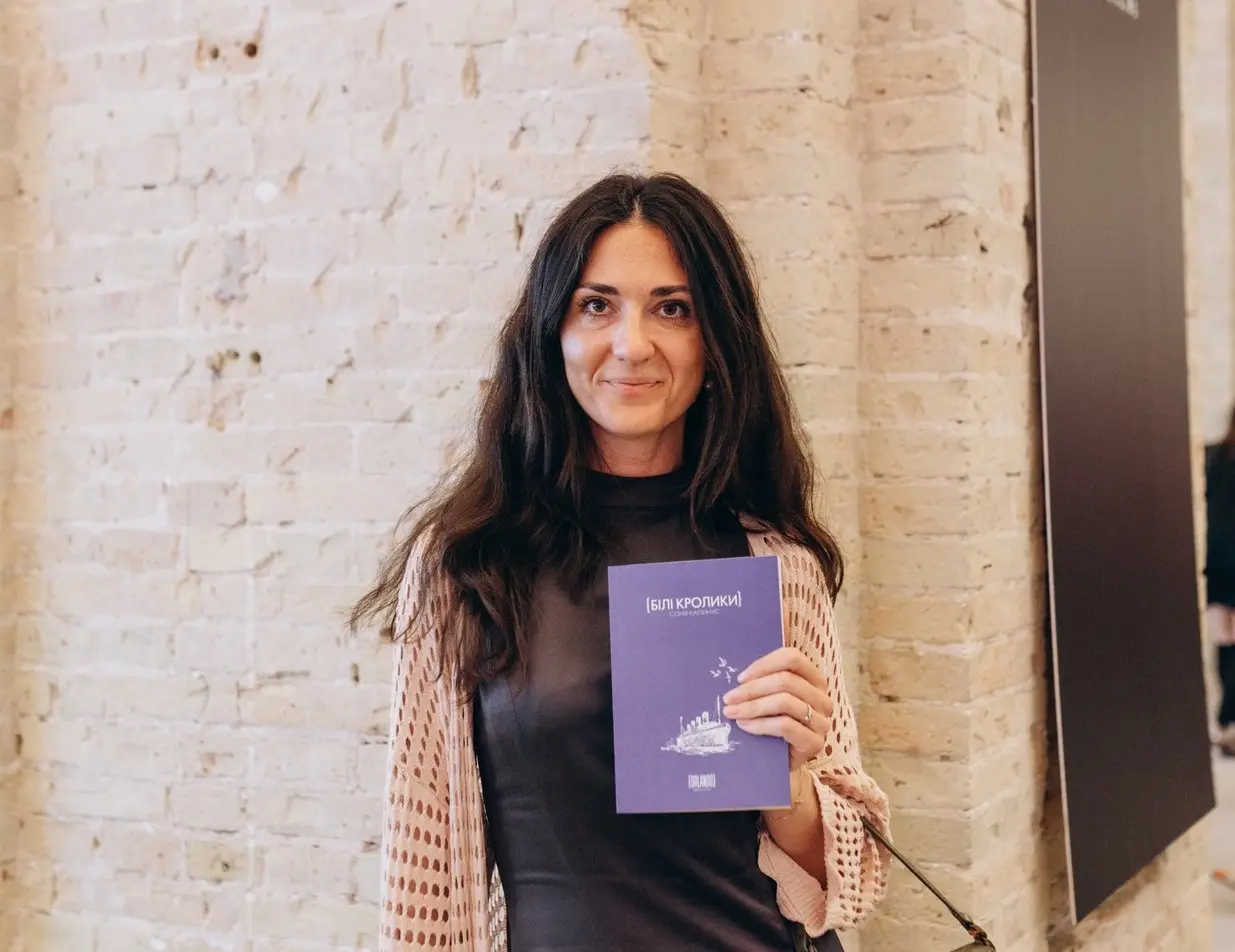
[Editor’s note: Sonya Kapinus’ book White Rabbits was shortlisted for Encounter: The Ukrainian-Jewish Literary Prize in 2025. The winner of the 2026 Encounter prize will be announced at the 33 Lviv International BookForum on 11 September.]
The writer and philologist Sonya Kapinus discusses her novel White Rabbits, the assimilation of Jews in Europe a century ago, Odesa literature, and the texts she considers worth paying attention to.
How the novel White Rabbits was written
Yelyzaveta Tsarehradska: Today, we will discuss Encounter: The Ukrainian-Jewish Literary Prize, specifically the shortlisted novel White Rabbits, with its author, Sonya Kapinus. You are a philologist and a researcher of Odesa literature. Could you tell us how you started writing your novel?
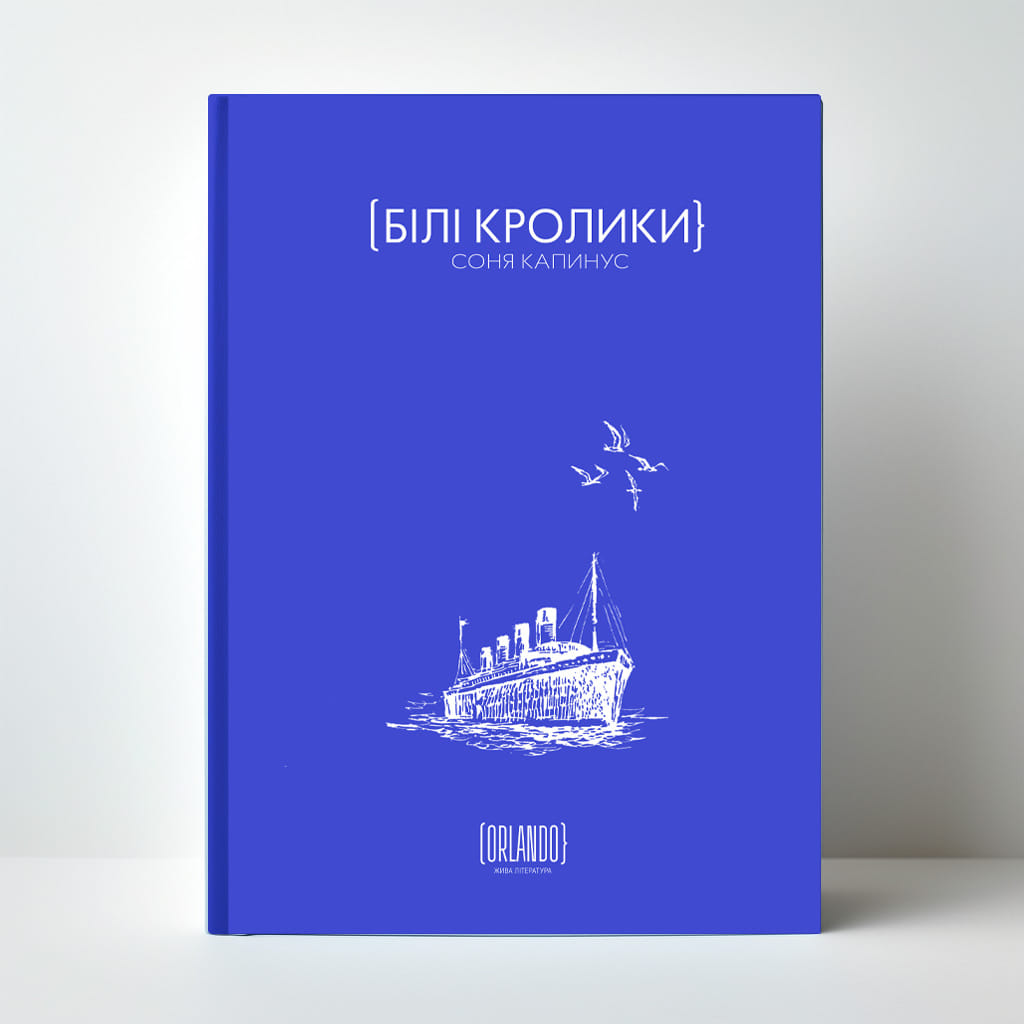
Sonya Kapinus: I started working on the text in September 2020 while taking Jack Grapes' Method Writing course. I took it as a student, and I never conceal the fact that both of my novels were written during the course. I started working on an exercise called "The Lost World." We had to work on the slow and slightly melancholic melody of the text and complex sentence structures. This task became the first letter and the first chapter of my debut novel.
I wrote a chapter from the perspective of a woman named Sonya. I do not consider her my alter ego, but it was easier for me to give her the same name as mine. She is an immigrant living in Greece, in a suburb of Athens. Sonya writes a letter to her friend in Constantinople, reconnects with him and tells him how her life has turned out. This is the starting point for future chapters. Everything written later has some hooks or hints in that first letter. When I read it, Natali Skorykova, my mentor and a publisher, said, "Enough, this is not an exercise. This is the first chapter. Please think about the plot you are ready to tell and work on it." That's how it all began.
Loss of Jewish identity in White Rabbits
Yelyzaveta Tsarehradska: This seems to be a multi-layered story that includes, among other things, the search for identity or the problem of lost identity, namely Jewish identity. Tell us more about this.
Sonya Kapinus: Honestly, I am used to thinking of it as reflections of a pregnant person rather than a problem of losing identity. At this moment, she begins to understand how it happened that Sofia Menachemna became Sofia Mikhailivna, the wife of an Odesa doctor turned into the wife of a former officer, and how they all turned out to be Greek. The issue of loss is, of course, dictated by the realities of that time and the sweeping assimilation of Jews living not only in Odesa but in Eastern Europe, the central part of Ukraine. They lost their identity and became cosmopolitans, luminaries, doctors, writers, and patrons of the arts who belonged to another culture, no longer considering themselves Jews and severing ties with the Jewish community.
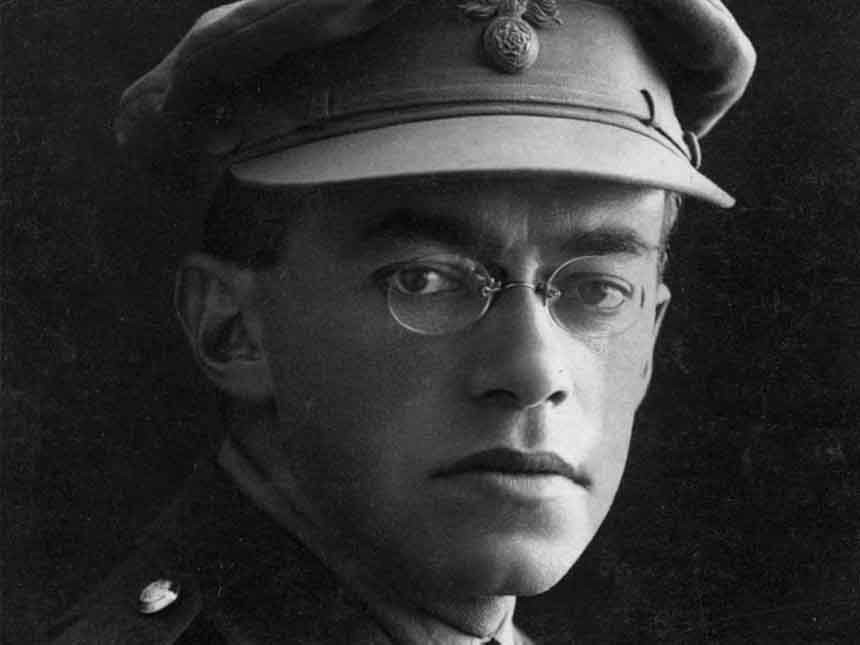
Of course, all this began with name changes. I was struck by how a person could be deprived of the right to their own name. I keep encountering this when researching Odesa literature: every Odesa writer has their own Jewish name and the name under which they are known in literature. For example, Vladimir Jabotinsky was, in fact, Ze'ev Jabotinsky.
This moment triggered a process of reflection. How does it happen that everything — your name and faith — is lost? You live and develop in an environment that is not natively yours and does not correspond to what is inherent in you by blood and family history. This large-scale assimilation had to do with the legislation of that time and numerous restrictions Jews faced throughout their lives, from severely restricted college enrollment to settlement only in certain cities and to the limited selection of professions they could engage in. Jews could not obtain an education and had to get permits to come to Kyiv or St. Petersburg, for example. All this left an imprint on their lives, and I think about it quite a lot.
That is probably why the last sentence in the epigraph is from Jabotinsky's The Five, where the fifth and last child is baptized, i.e., symbolically dies for the family and the Jewish community.
Current perceptions of Jewish assimilation
Yelyzaveta Tsarehradska: Did you try to provide your assessment of this phenomenon while writing the novel? On the one hand, these things really happened, and people were forced to change their names. On the other hand, their lives continued, and they found their places and gave life to other people. One might think that it was not such a great tragedy. Did you try to provide your own perspective and vision of this phenomenon?
Sonya Kapinus: I try not to judge anyone who was in circumstances I have never experienced myself and who lived under other legal systems. You see, other legal, social, and ethical norms triggered completely different processes in a person. It seems to me that the main thing is to remember that these things happened and not to lose respect for these people. I can't say that the topic of baptism is supercharged right now in the Jewish context. But they still gravitate towards people who have preserved their identity despite difficult circumstances.
When I needed to describe the moment of baptism and its causes, I requested consultations and received two refusals, because people simply said they didn't want to talk about it. Borys Khersonsky is a known baptized Jew in Ukraine's public space. He openly declares that he is a Christian and adheres to the Christian faith, but for the most part, this is a "gray area" that people are reluctant to comment on.
Therefore, it is very important for me not to make value judgments or condemn those who did this, whether to improve their family's lives or even to survive, or because they had creative, scientific, or business ambitions. It was their choice, and no matter how empathetic we are, we will never fully understand how our ancestors lived.
Everything changes too much and too quickly. I always give the example of a child who is hit, for example, with a ruler on the fingers in a classroom. A century ago, this was an acceptable norm, but now it is a criminal offence, and there are many such cases. I don't think I am in a position to judge. I am saddened that an entire nation has gone through this, and I would not want it to have happened.
Studying Odesa's literature
Yelyzaveta Tsarehradska: How did you become interested in Odesa literature of the early 20th century?
Sonya Kapinus: It's a typical story. It all started at university, where I studied philology as my second higher education. Around 2017, I had to decide on the topic of my further research. The decision was made jointly by my future research supervisor and me. Ukrainian scholars almost never considered the Odesa text as a distinct object of study. She suggested approaching it from a philological perspective. I wrote a term paper on the Odesa city myth and text, the contributions famous Odesa writers made to the city's image, its foundations, and the generalizations it has led to today.
This coursework turned into a scholarly article. Later, I delved into the topic while finishing my bachelor's degree, and then it became tangential to my master's thesis. Eventually, I have studied the topic for 7–8 years now.
In 2023, we launched a project of literary soirées in Odesa, dedicated to Odesa writers, literature, and culture. We looked at these topics not from an ideological position, not from the perspective of the correctness or incorrectness of narratives, but from the perspective of how they were executed technically and artistically. The project has been running for two years now. I have lectures dedicated to Zhabotinsky, Babel, modern Odesa literature, and the Odesa myth. This year, we expanded a little and took up the films of Kira Muratova as an example of what the Odesa myth looks like on screen and how it extends into visual and dramatic art.
Yelyzaveta Tsarehradska: Regarding the themes that you discover for yourself in Odesa literature, what is key for you, and what moves you the most?
Sonya Kapinus: The most impressive text that I will probably uphold as the standard for the rest of my life is Zhabotinsky's The Five. This is, again, a story of assimilation and loss, as he compares the mother of the five main characters with Niobe, a figure in Greek mythology who lost her children.
In terms of lightning prose, a high example of modernism and ornamental prose, Babel naturally stands out from the rest. He seems so different, compared to everything that is, was, and perhaps will be, that his every sentence is worth studying. However, this is not the kind of text that is easy to read at night.
Odesa literature is quite diverse and is not limited to Soviet-era writers. Of course, the 1920s were the heyday of Odesa's literary tradition, but there was more.
The texts dedicated to Odesa and based on memories of the city include Yuri Yanovsky's The Shipmaster and the song "By the Black Sea." They are quite different, but the Odesa myth can be traced in both. This eclectic, multinational, very authentic city by the sea, one that lives by its own laws and order, is also described in other texts.
Historical background of the novel
Yelyzaveta Tsarehradska: Did you refer to any historical sources while working on the novel White Rabbits? Should it be perceived as a historical novel?
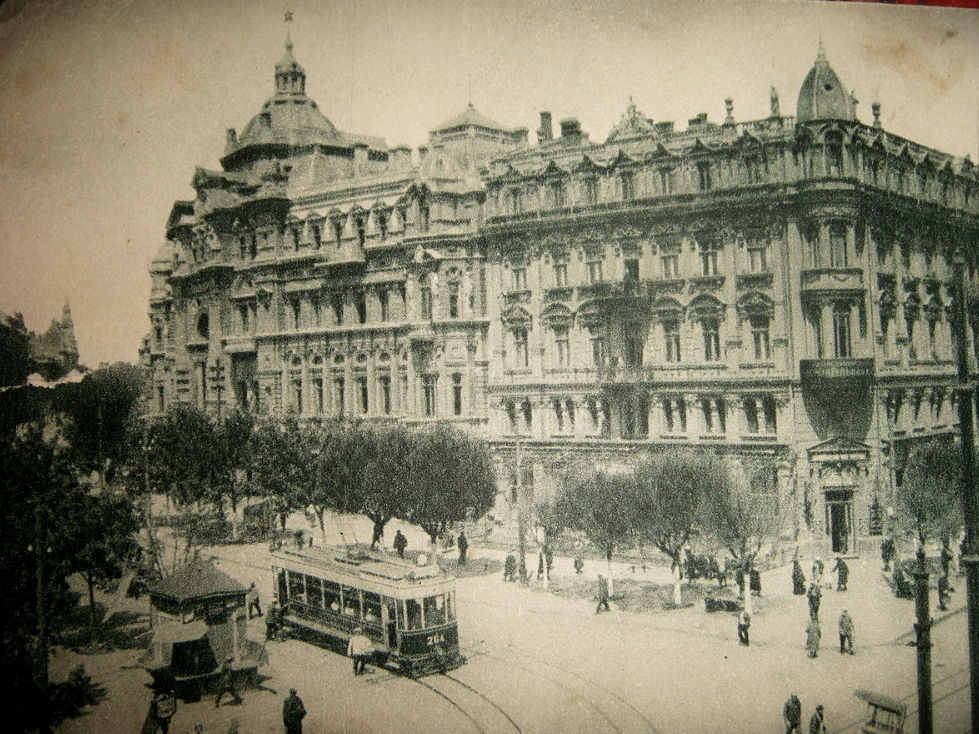
Sonya Kapinus: Yes, I consider it a historical novel. I referred to sources and worked with digitized archives because most of the novel was written during the lockdown. I read the press of the time, walked around Starokonka, the largest flea market in Odesa, and studied postcards and letters of the time. I relied on the traditions of migrant prose because, of course, this is a migrant novel written 100 years later. My attitude towards these events and my reflections on what I learned built the body of the text. The culminating moment — the rescue of 130 junior cadets on 24 January 1920 — is described by the researchers Varnyk and Shteiman in their articles about the evacuation from Odesa.
I tried to make absolutely everything truthful and based on sources. The names of cookies, streets, dressmaking, prices, the general situation in the city, transport, performances, repertoires, and so on — all this is a restored picture of Odesa at the beginning of the 20th century, up to the 1920s.
Russian and Ukrainian myths of Odesa
Yelyzaveta Tsarehradska: The novel itself and the way Odesa and its residents are depicted have been criticized as being largely in line with the Russian myth. Do you accept this reproach, and what do you think about it?
Sonya Kapinus: This is the reader's perception. I did not set myself the goal of showing Odesa one way or another. I tried to write the truth, as it was. Again, the optics may be different because the number of Ukrainian figures in the novel is quite consistent with the time. They mention generals and doctors who were ethnic Ukrainians. At the same time, of course, there are characters copied from imperial figures. It's absolutely true, but this, in my opinion, corresponds to the reality of the time.
Yelyzaveta Tsarehradska: On the one hand, it is impossible to completely ignore this myth. Russian imperialism flourished not only in Odesa. However, when we look back and analyze, what did it lead to, particularly in the cultural sphere? The influence of literature, figures, and Moscow or St. Petersburg, as large Russian cities, was significant. How do you feel about this?
Sonya Kapinus: Of course, the influence was felt. It seems to me that this is a separate topic for research: What happens to the colony when there is a metropolis? There is an orientation towards the center but also opposition to it. These are two opposing forces, but this seems to be a universal story that always plays out when there is a metropolis and a colony.
It affects both private lives and artistic products created at the time or reflecting on that period. From the viewpoint of thinking and self-knowledge, this influence may indeed be considered negative. From the viewpoint of artistic value, strong texts were created, and strong artists worked back then, as in any other period and under any other government.
Of course, they very often identified with the center, tried to move there, and make products that would be welcomed there. At the same time, there were people who put Odesa in opposition to the center and showed in every way that they were Odesa residents, that everything was different in Odesa, and that they had a European city.
Figures of note in Odesa literature
Yelyzaveta Tsarehradska: When we talk about the value of Odesa literature and writers for the Ukrainian context, who, in your opinion, should be highlighted for our audience?
Sonya Kapinus: I think it would be really cool if Zhabotinsky was in the school curriculum, with his novel The Five — of course, in Ukrainian translation — to be studied in the 10th or 11th grade. It is not big, very deep, and great to read for anyone.
As far as Odesa figures are concerned, Yanovsky wrote The Shipmaster, a grand novel about Odesa. I am very happy that this book was recently republished by several publishing houses at once. I like it that people read the novel and see a different Odesa — through the eyes of a filmmaker, Odesa emerges as a setting for a large-scale love story and a love triangle.
Yelyzaveta Tsarehradska: What can we expect from you in the near future? Are you working on something new?
Sonya Kapinus: Unfortunately, I am not writing now. I am taking a deep breath after many presentations of the Kuriadis Sisters. I will probably return to writing in the next calendar year. It will definitely be about Odesa. In Odesa, more than anywhere else, people love to read about their city and recognize every little detail in texts. I myself already miss descriptions of Odesa.
This program is created with the support of Ukrainian Jewish Encounter (UJE), a Canadian charitable non-profit organization.
Originally appeared in Ukrainian (Hromadske Radio podcast) here.
This transcript has been edited for length and clarity.
Translated from the Ukrainian by Vasyl Starko.
NOTE: UJE does not necessarily endorse opinions expressed in articles and other materials published on its website and social media pages. Such materials are posted to promote discussion related to Ukrainian-Jewish interactions and relations. The website and social media pages will be places of information that reflect varied viewpoints.