




Centenary of Symon Petliura's assassination: A Ukrainian-Jewish look at the past and the future
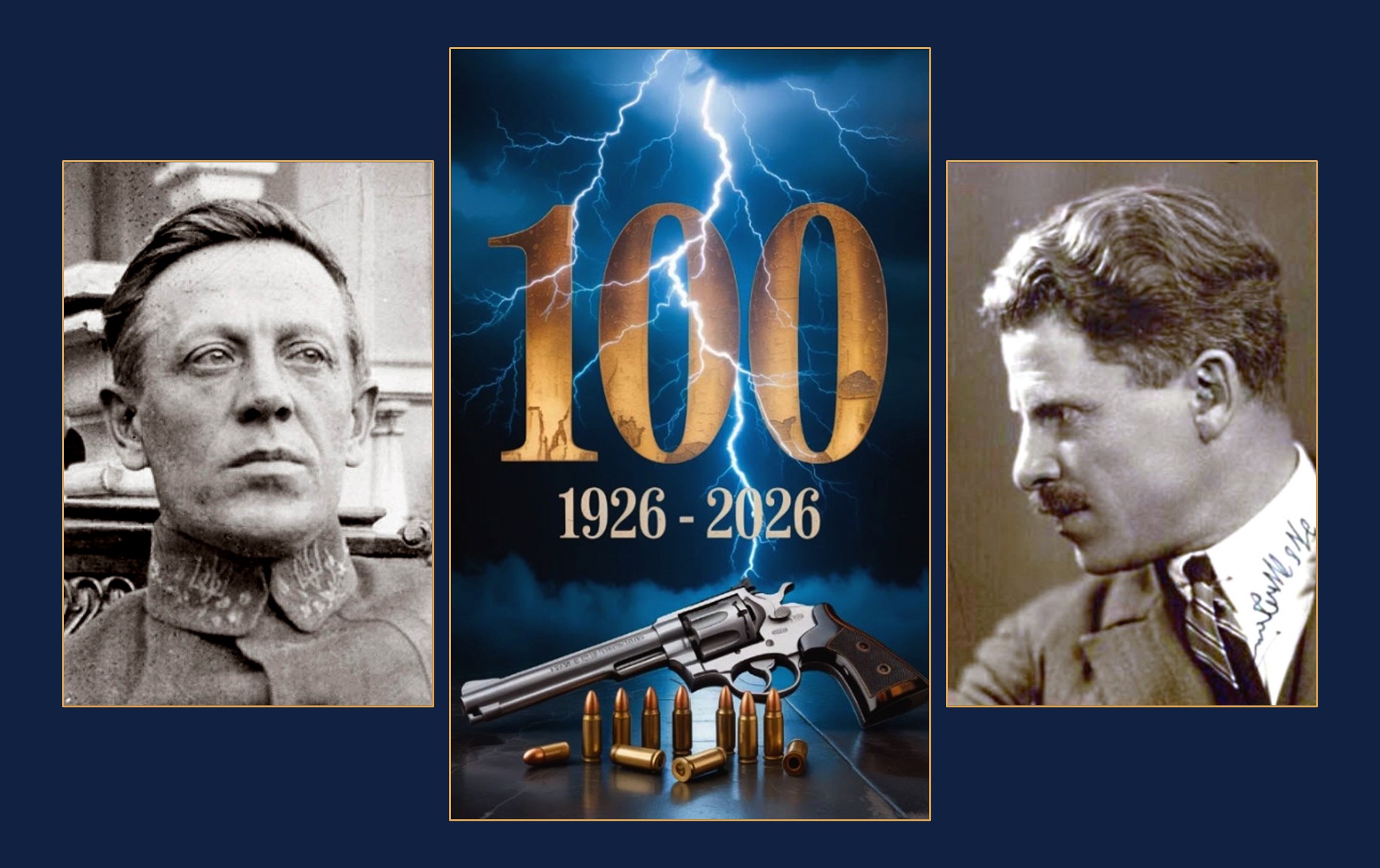
One hundred years ago, on 25 May 1926, Symon Petliura, the leader of the Ukrainian Directory in exile, was shot dead on a street in Paris by Sholem Schwarzbard, a Jewish poet, anarchist, and watchmaker. The shooter told the police he had "murdered the murderer" as a revenge for the mass Jewish pogroms in Ukraine in 1918–1920.
This event, as well as the 1927 trial that followed it, had a profound impact on Ukrainian-Jewish relations for decades.
On the eve of the 100th anniversary of this murder, I asked historians specializing in that period to answer three questions:
- What is your personal perception of those shots fired in Paris on 25 May 1926 — as a terrible tragedy, just retribution, or something else?
- What place does this event have in the historical memory of your people, what stereotypes and myths are linked to it, and why?
- How can we, modern people, view the painful and sometimes bloody moments of the common Ukrainian-Jewish history one century later and against the backdrop of the threats and challenges currently faced by Ukraine and Israel?
Dr. Daria Mattingly, lecturer in Contemporary European History, University of Chichester, United Kingdom

1.
I cannot accept the assassination of Symon Petliura as either "just retribution" or as an event that can be morally romanticized. It was a political assassination, and as such it is a tragedy — not just personal or national, but also historical. It closed the door to a difficult, painful, but necessary conversation about responsibility, violence, statehood, and statelessness in revolutionary Ukraine.
At the same time, I do not think we should talk about this assassination as if it happened in a vacuum. For many Jews of that time, Petliura's name was associated not with the idea of Ukrainian statehood, but with the memory of pogroms in which tens of thousands of people died.
Was Petliura personally the organizer of anti-Jewish violence? No, this claim does not withstand serious historical analysis. Does he bear political responsibility as the head of a state project, an army, and a government that failed to stop the violence, committed also under Ukrainian flags? Yes, this question cannot be avoided.
Thus, for me, this event is not "retribution" and not just "martyrdom." It is a tragic historical knot in which statelessness, revolutionary chaos, imperial legacy, antisemitism, institutional weakness, the memory of victims, and the struggle for Ukrainian political agency converged.
2.
In Ukrainian memory, Petliura's assassination has long been primarily a story about the loss of a leader of the liberation struggle and as an episode in the broader history of the defeat of the Ukrainian People's Republic. In this narrative, Petliura often appears as a symbol of unfinished statehood, a man who tried to keep the Ukrainian political project alive in extremely unfavorable conditions: between the Bolsheviks, the Whites, Polish interests, the Ottomans, military disintegration, and the lack of international recognition.
However, several dangerous simplifications have formed around this memory. First, it is a heroization without a shadow, when Petliura is presented only as a martyr for the Ukrainian cause, and the topic of pogroms is perceived as a "hostile attack" or "anti-Ukrainian propaganda."
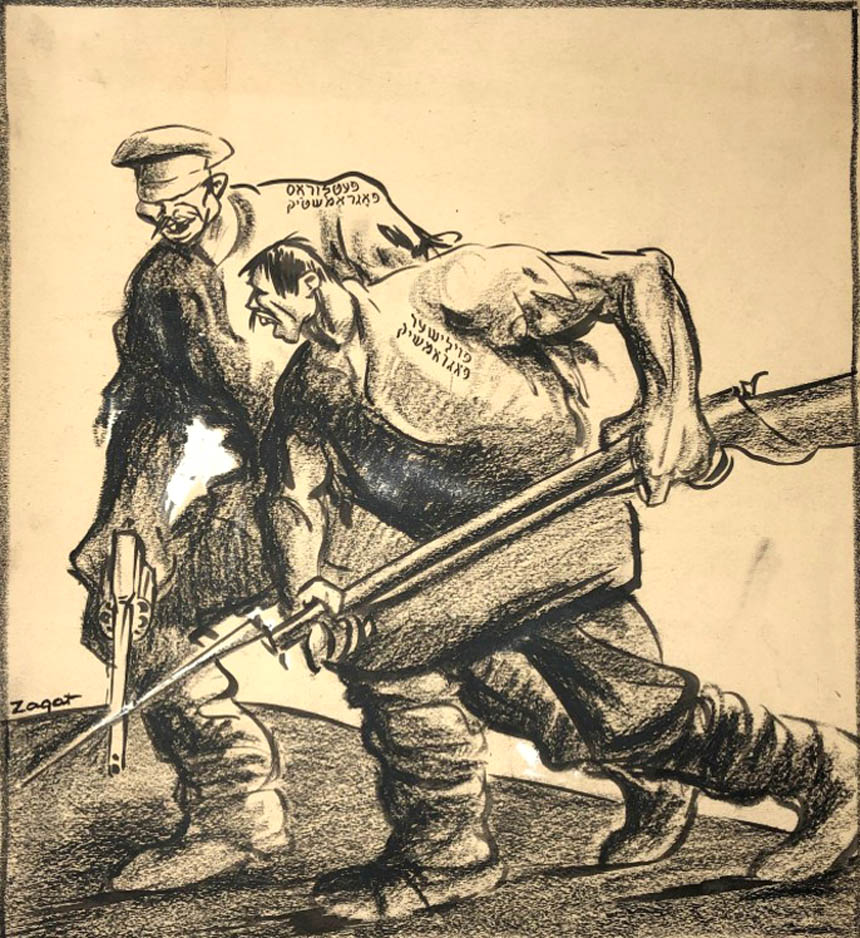
Second, it is an opposite stereotype, especially strong in the Soviet and Russian tradition, where "Petliurism" has become almost synonymous with wild nationalism, antisemitism, and pogrom violence. Both approaches are bad in that they leave no room for history as a complex analysis.
The reasons for these myths are clear. Ukrainian memory of the 20th century was long shaped amid statelessness, Soviet censorship, Russian imperial optics, and the need to protect Ukraine's right to its own history. When national history is portrayed as criminal for decades, there is a temptation to respond not with analysis but with defensive heroism. However, mature memory cannot be built only on defense. It must withstand difficult questions, in particular the question of violence committed by "one's own people" or under "one's own" flags. For Ukrainians, Petliura cannot be reduced to the Soviet caricature of a pogromist. But neither can he be removed from the conversation about the anti-Jewish violence of 1918–1921. This is where mature historical memory begins.
3.
It seems to me that the first principle is not to compete with traumas. Ukrainian and Jewish history in Eastern Europe are the histories of peoples who lived side by side in the space of empires, inequality, violence, social conflicts, revolutions, and wars. At different times, they could be neighbors, allies, rivals, victims of the same regimes, and sometimes participants in violence against each other. This does not cancel either the Ukrainian right to statehood or the Jewish right to remember the pogroms.
The second principle is not to allow Moscow to be the arbiter of our memory. Russian and Soviet propaganda has systematically used the Jewish tragedy as a tool to discredit the Ukrainian national movement, while simultaneously silencing or minimizing its own role in producing imperial violence, antisemitism, deportations, the Holodomor, mass terror, and the destruction of political alternatives.
I completely agree that Moscow will try to exploit the centenary of Petliura's murder. Most likely, it will again talk not about a complex history, but about "perennial Ukrainian antisemitism," trying to tie the UNR to modern Ukraine and justify its own aggression. The best answer to this is not silence, but honesty. Ukrainian history will not become weaker if we recognize the tragedy of the Jewish pogroms. On the contrary, it will become stronger, because it will show that Ukrainian political culture is capable not only of defending itself but also of critically reflecting on its own past.
The third principle is to see not only moments of violence, but also histories of coexistence, solidarity, and mutual influence. Ukrainian-Jewish history is not only about pogroms and the Holocaust, but also about towns, languages, trade, culture, socialist movements, Ukrainian-Jewish political contacts, the common experience of the imperial periphery, and now Jews' participation in Ukraine's defense and Ukrainians' understanding of the Holocaust as part of the history of the Ukrainian land.
So, I would say this: Petliura remains an important figure in Ukrainian history, which is precisely why he should not be turned into an icon immune from questioning. And the pogroms remain a terrible page in Ukrainian-Jewish history, which is precisely why they should not be turned into a tool for denying Ukrainian statehood. One hundred years after the Paris shooting, our task is not to pass a simple verdict but to learn to talk about responsibility without imperial clichés, about memory without hatred, and about history without fear of its complexity.
Dr. Volodymyr Viatrovych, historian, Ukrainian MP
1.
I perceive those shots in Paris on 25 May 1926 as a tragedy — and not only for Ukrainians, who lost one of the leading politicians of the national movement in a particularly difficult period after the defeat of the Ukrainian Revolution. It was also a tragedy for Ukrainian-Jewish relations. The assassination of Symon Petliura and the subsequent trial of Schwarzbard poisoned relations between the two peoples for decades.
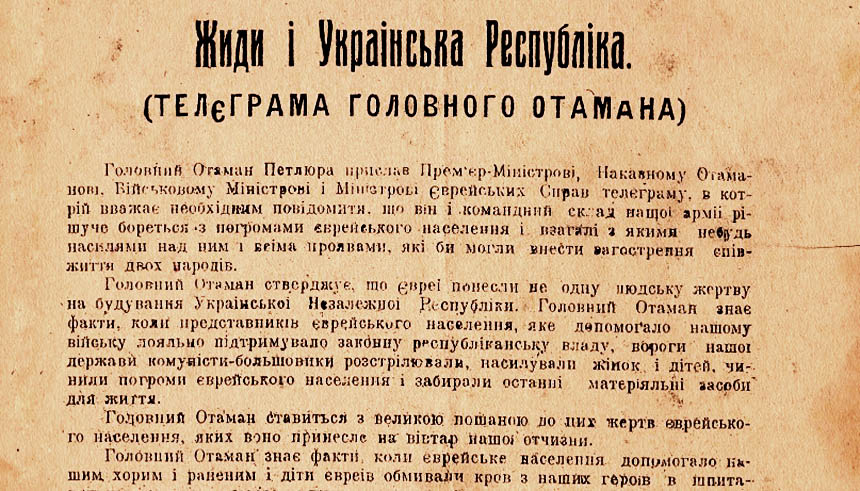
Moreover, there are serious reasons to assume that this story could have been a successful Soviet special operation aimed precisely at deepening mutual distrust between Ukrainians and Jews.
We have indirect evidence of Schwarzbard's connections with the Chekists. Obviously, the documents that could finally clarify this case are still stored in the Moscow archives and will remain inaccessible as long as Russia is ruled by the successors of the Soviet special services. But even the sources that are already available to historians make it clear that the Soviet regime and its special services received the greatest political benefit from Petliura's assassination.
2.
This event was imprinted in Ukrainian and Jewish memory in very different ways. For many Jews, Petliura's assassination was an act of revenge for pogrom victims and a symbolic retribution for the sufferings of thousands of people. For many Ukrainians, it is a symbol of great injustice: one of the key figures of the liberation movement was unjustly held responsible for the anti-Jewish pogroms and assassinated.
This event gave rise to mutual stereotypes that for a long time shaped the perceptions of both peoples: Ukrainians as supposedly inherent antisemites and pogromists, and Jews as Ukrainophobes or supporters of the communist regime. These prejudices did not remain only in historical memory. They also influenced mutual perceptions and even the behavior of some people during World War II. The tragedies both Ukrainians and Jews experienced at that time should have brought them closer, but very often became an additional source of mutual alienation.
3.
We must honestly admit: there have been all sorts of things in the history of Ukrainian-Jewish relations — cooperation and conflicts, friendship and hatred, solidarity and mutual violence. It is essential not to gloss over difficult pages and not to focus exclusively on one's own suffering. Only the willingness to see the full complexity of our shared history opens the way to mutual understanding.
We seem to be gradually returning to this path. This may be facilitated by both Ukrainians and Israelis again experiencing war and existential threats — something that became history for many other nations long ago. That is why it is especially important now not to allow Moscow to once again use the 1926 tragedy as a tool for sowing distrust and damaging Ukrainian-Jewish relations.
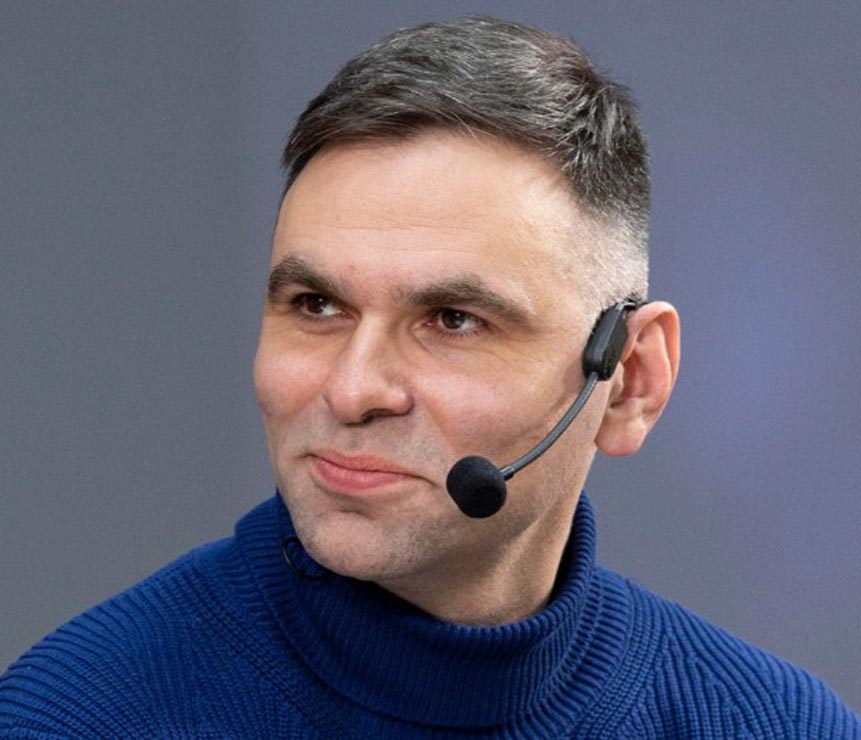
Dr. Artem Kharchenko, historian, Kharkiv National University of Arts
1.
I see this shot as a tragic consequence of misunderstandings between Jews and Ukrainians who were active in the nation-building projects that were made visible by the revolutions of 1917 and subsequent events, and those who were outside observers of the political turmoil but suffered as a result.
That a possible compromise between the two large groups (Ukrainians and Jews) never materialized ultimately led to a wave of violence against many Jews and the destruction of the idea of autonomy for those Ukrainians who supported the UNR. The shot in Paris a few years later was an echo of those events.
2.
As a history professor with 15 years of experience, I can say that this event is almost unknown, at least for Kharkiv students who are not historians. Petliura appears to be just one of many figures in the rather chaotic 1917–1921 period whose fates are largely unknown [to the general audience today. — Transl.].
One could argue extensively that a kind of traditional perception of this event has developed among both Jews and Ukrainians. One explanation is that Petliura was assassinated on Bolshevik orders from Moscow, although no documentary evidence has been provided. Other versions include the idea of just revenge/political reprisal for mass anti-Jewish violence and the sudden assassination of one of the Ukrainian leaders. However, we have almost no works that would adequately cover Jewish-Ukrainian relations in those events. Henry Abramson's book Prayer for Government is one of the few examples.
3.
In my opinion, Ukrainians should also remember that hundreds of thousands of Ukrainian Jews live in Israel, and Israelis can remember that they themselves or their parents came from Ukraine. And I would like this understanding to be grounded in the awareness of long-term coexistence, which Yohanan Petrovsky-Shtern and Paul Robert Magocsi wrote about.
This coexistence obviously included difficult and tragic moments, as in any neighborhood that has lasted for centuries. However, this is our common history; we have many examples of joint marriages; transitions from one group to another have not always been welcome; some, like Raisa Troianker, developed double identities.
This story has its own extraordinary importance for Ukraine, because Jews have been a significant and valuable part of our history.
Finally, there are, obviously, those for whom picking at old wounds is a way to reap some benefits, if not a profession. In the current situation, when both countries are threatened, it makes sense to create platforms that unite and a network of people who think about common things, rather than the other way around.
Dr. Vasyl Rasevych, historian and publicist, Ukraine

1.
As a historian and Ukrainian, I treat the event that occurred on Rue Racine in Paris a hundred years ago as an important, but historical fact. Historians can study the historical background, motives, and goals of this act for a long time, but have no right to get emotional, justifying both peoples — Ukrainians and Jews — or imputing them with collective responsibility for the events of 1917–1921.
2.
The assassination of Symon Petliura, the former head of the UNR Directory, by Sholem Schwarzbard was most profitable for Soviet propaganda. It led Ukrainians and Jews into a "dichotomy tunnel" for decades, where Petliura became a symbol of "all Ukrainians" and Schwarzbard an avenger for the pogroms on behalf of "all Jews."
Clearly, dozens of thorough studies of anti-Jewish pogroms in Ukraine, in which the "Denikinists," the Ukrainian otamans, and even the Bolsheviks were actively involved, could not compete with emotion-based propaganda unequivocally blaming the Ukrainian authorities for the pogroms. And this assassination became an emotional apogee, a point of no return for peaceful Ukrainian-Jewish dialogue.
Instead of honestly admitting that the Directory was weak and unable to control the "subordinate" territory or even its individual military formations, the Ukrainian side began to hide or deny its involvement in the pogroms. Moreover, the idea was spread that Ukrainian statehood was forcibly liquidated by Jewish Bolsheviks and that the UNR was defeated not because of its internal weakness and a lack of mass social support, but because of a "Jewish-Bolshevik conspiracy." This was a more convenient explanation, removing the need to look for internal causes that led to the defeat or to admit one's own mistakes.
As a result, Petliura ended up in exile and became a politically bankrupt figure of sorts, with no influence on political processes in Ukraine (already under Soviet rule at the time) and no prospects for changing the situation. However, his figure could be turned into a symbol in order to "close" the propaganda cycle. It was necessary to publicly execute the symbol that represented the Ukrainian movement, i.e., a person who had lost influence in Ukraine, was not popular among the people, and remained despised in a significant part of Ukraine (former Eastern Galicia), had to be turned into a symbol calling for revenge on enemies. Thus, a bloody confrontation between Ukrainians and Jews would be programmed, with subsequent mutual accusations of pogroms and the man-made Holodomor, also serving as a justification for the subsequent collaboration with Nazi Germany.
Even without making recourse to conspiracy theories or searching for the truth, whether Schwarzbard was an agent of the Soviet secret services or was used by them while at the peak of emotional grief and seeking to avenge his relatives, the fact remains — a Jew killed a Ukrainian political figure.
Later, this fact acquired an existence of its own, where the significant thing was not the 1926 assassination itself but the 1927 Schwarzbard trial and his acquittal.
The Ukrainian national movement made a sharp turn towards anti-Jewish options after 1927. Petliura was not popular among Ukrainians in former Galicia prior to 1926 for having signed a separate treaty with Polish leader Józef Piłsudski, ceding the lands of Eastern Galicia and Western Volhynia to Polish control. Then, he turned into a symbol and a victim who called for inevitable revenge. Thus, Petliura became a common place of memory for the majority of nationally conscious Ukrainians on both sides of the Zbruch River, and the anti-Bolshevik orientation of the interwar Ukrainian movement acquired anti-Jewish features.
After World War II, the Ukrainian and Jewish movements in exile, and especially in Israel, continued to compete with each other. Petliura firmly established himself in the collective memory as the builder of the Ukrainian state and the victim of the "Jewish assassination attempt." He became an integral part of the national pantheon.
Schwarzbard also entered the epos of the Israeli people as the avenger of Jewish pogrom victims. He was reburied with military honors in 1967, and streets in Beersheba, Netanya, and Jerusalem bear his name.
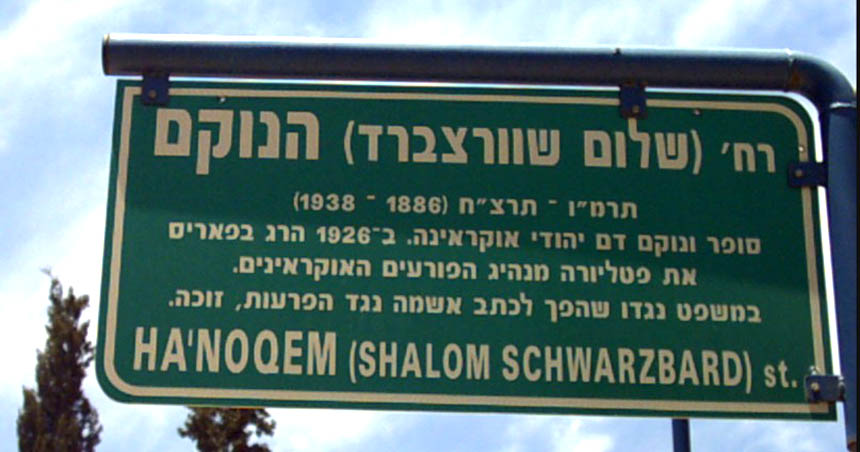
Both have become elements of antagonistic memory. And since we are talking about memory, it is difficult for academic historians to change anything in this area.
3.
What appears to be most likely is a "correction" in relations due to the current Russian-Ukrainian war and the discrediting of Russian propaganda narratives about "neo-Nazis" in Ukraine and modern Ukrainians as carriers of ideologies of the interwar period.
It is important to persistently dismantle the "dichotomy tunnel" imposed by Soviet and modern Russian propaganda, where Ukrainians and Jews can only be antagonists. Goodwill is needed on both sides so that the echoes of shots from over 100 years ago cease to serve expansionist Russian policy. We must work persistently and responsibly with memory.
Dr. Samuel Barnai, Adjunct Lecturer, The European Forum (Faculty of Social Sciences) and Rothberg International School, The Hebrew University of Jerusalem, Israel

1.
This was, of course, a tragedy for Petliura's family and associates. It can hardly be described as an act of just retribution. Such a characterization might have been appropriate had Schwarzbard targeted an otaman directly responsible for the pogroms.
Instead, Schwarzbard attacked a symbolic figure associated with a period during which Ukraine was engulfed in anti-Jewish violence.
At the same time, Petliura himself neither initiated nor personally participated in the pogroms. In my view, he was a leader whose authority was largely nominal, and his appeals to halt the pogroms — like many of his other proclamations — were ultimately incapable of producing meaningful results.
2.
The pogroms of 1917–1920 naturally occupy a significant place in Jewish collective memory. Consequently, Petliura's legacy and assassination have become intertwined with numerous myths and political interpretations.
Soviet propaganda fully exploited these tragic events for ideological purposes. Just as advocates of Ukrainian independence had previously been labeled "Mazepists" during the tsarist era, they were later branded "Petliurites" in the 1920s and 1930s, and "Banderites" from the Second World War to the present day. These labels functioned primarily as instruments of defamation and political stigmatization.
3.
This issue ultimately concerns the maturity of national memory. In any country, historical scholarship typically passes through an initial "adolescent" stage characterized by simplistic moral dichotomies — our "good" heroes versus their "bad" adversaries — as well as the construction of national historical myths.
Over time, however, a more mature phase emerges, one in which a critical reassessment of the past and of national heroes becomes possible. Although this process is often painful, such critical reflection should be understood as a sign of intellectual and civic strength rather than weakness.
Importantly, this approach also challenges those who manipulate history for political purposes and repeatedly seek to sow division between Jews and Ukrainians by setting them against one another.
Text and collage prepared by: Shimon Briman (Israel).
Photo by Shalom Schwarzbard from the collage at the beginning of the article: National Library of Israel.
Personal photos of historians are taken from their personal Facebook pages.
Translated from the Ukrainian by Vasyl Starko.