




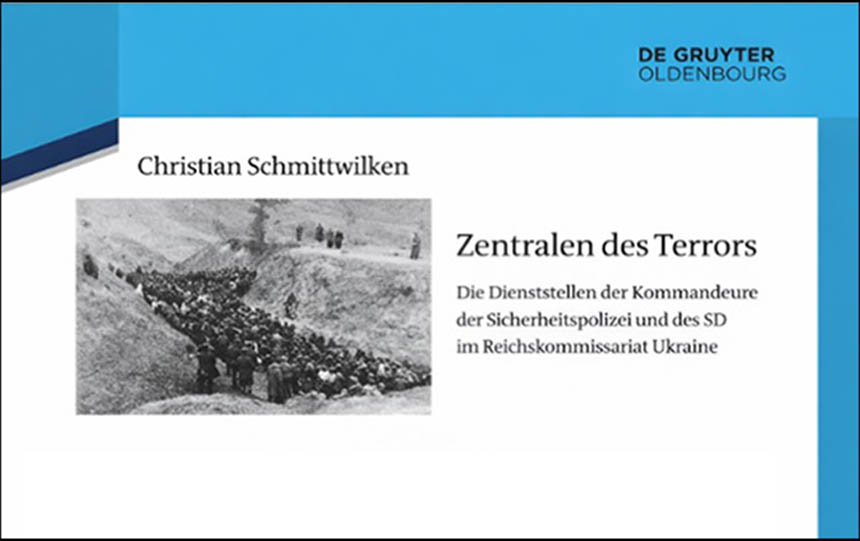
Centers of terror: The Nazi security police and SD in the Reichskommissariat Ukraine
Tetiana Pastushenko
Tetiana Pastushenko reviews Centers of Terror. The Offices of the Chiefs of the Security Police and SD in the Reichskommissariat Ukraine, a book by the German historian Christian Schmittwilken published in Germany in 2024. She provides a brief overview of its structure and most striking conclusions, as the publication is currently inaccessible to readers in Ukraine. The publication contains previously little-known information about the structure of the Nazi Security Police and Security Service units under the civilian occupation regime. The author also offers a new, somewhat unexpected periodization of the main waves of mass executions of Jews in the Reichskommissariat Ukraine, which differs from the one previously established in the historiography of the Holocaust.
In the summer of 2018, a young German researcher, Christian Schmittwilken, asked me to help him with archival research in Kyiv. I was very surprised to hear his topic — "The activities of the Security Police and SD departments in the Reichscommissariat Ukraine." Some of their documents can be found in Ukrainian archives, but only as small, scattered fragments that do not create a general picture. In addition, it was a risky topic to choose for an academic qualification work. Later, in 2024, Christian sent me his book Centers of Terror. The Offices of the Chiefs of the Security Police and the SD in the Reichskommissariat Ukraine, published after the successful defense of his dissertation.
The study explores the reconstruction of the activities of special units of the Reich's penal system in the territory of Ukraine, which became an important tool for carrying out the Nazi occupation policy and mass murders. The names of these institutions can be translated as "the Offices of the Chiefs of the Security Police and the Security Service" (in German, Kommandeure der Sicherheitspolizei und des Sicherheitsdienstes, abbreviated as KdS; hereinafter, I will use the German abbreviation for convenience).
These departments began to be created in December 1941, when the German-Soviet front stabilized, and it became clear that Hitler's plans for a Blitzkrieg had failed. The KdS were subordinate to the Main Directorate of Imperial Security of the RSHA (Reichssicherheitshauptamt) — the department that united the party and police power structures of Nazi Germany. The RSHA played a significant role in the implementation of mass terror in the occupied territories, especially the shootings and other forms of murder of Jews directly in their places of residence. It was responsible for the creation and operation of the Einsatzgruppen (operational groups) — mobile units comprised mainly of former police officers and employees of the security service (SD), who committed mass murders directly near the front line. The personnel of the Einsatzgruppen became the basis for the formation of these KdS departments in the occupied Soviet territories. Importantly, both the Einsatzgruppen and the Security Police and SD structures were independent of the civil administration and military commanders in the occupied territories in their operational activities.
The role of the offices of the chiefs of the Security Police and the Security Service as part of the occupation apparatus that organized terror, exploitation, and mass murder of the local population has so far been almost unexplored. Due to problems with accessing literature and sources, Ukrainian scholars usually just mentioned these occupation structures or generally described their activities in the context of the events of the Holocaust and other punitive practices carried out by the occupation authorities. The activities of the KdS office in Kyiv are best known in the history of Babyn Yar. Ukrainian historians have mainly focused on studying crimes, while the criminals themselves remained abstract, faceless structures and institutions. For Western historiography, the stationary units of the Security Police and the SD are still "in the shadow" of the history of the Einsatzgruppen and the mass murder of European Jews in the death camps.
Schmittwilken's book presents a reconstruction of the various activities of the KdS offices in Ukraine and Belarus within the administrative borders of the Reichskommissariat Ukraine (RKU), starting from the creation of the RSHA and Einsatzgruppen to the disbandment of the Security Police and SD units in 1944 after the Nazi retreat from Ukraine's territory. Crucially, the author paid close attention to the personnel and the study of the KdS's occupation and mass murder practices. According to him, "these practices consciously or unconsciously guide people in their actions. These are not rituals, but rather routines, habits, ways of acting, and customs that are learned not only by individuals, but also by collectives."
Given the fragmentary nature of the sources, the author used documents from the funds of 13 Ukrainian regional and central archives, as well as data from the archives of Belarus and the Russian Federation (GARF, RGVA) for his study. In Germany, sources on the activities and personnel of the KdS are kept in the Federal Archives in Berlin — these are the personal files of NSDAP members. Documents in the military archive in Freiburg contain information on the Wehrmacht's cooperation with the KdS. Copies of documents from the KdS office in Rivne were found in the archives of the Polish Institute of National Remembrance, Yad Vashem's archives in Jerusalem, and the former Stasi archives in Berlin.
Of course, the main material on which the study is based consists of documents from postwar investigations and trials in West Germany, held in the archives of the Central Office of State Justice Administrations for the Investigation of National Socialist Crimes in Ludwigsburg.
Schmittwilken's study consists of two parts and 10 chapters. In the first part, the author examines the origins and institutional development of the Security Police and the SD from the seizure of power by the National Socialists in January 1933 to the creation of Security Police and SD offices modeled on the RSHA throughout occupied Europe. The author emphasizes the consistency of the Nazi leaders' policies and considers the creation of KdS structures a step towards the complete unification of the state police and the party SS, which was never realized in Nazi Germany itself.
Of particular interest to Ukrainian researchers is Chapter 4, which presents the structure of KdS offices in Ukraine, the process of personnel formation, and the career paths of personnel in these units. Five KdS offices were set up on the territory of the Reichskommissariat Ukraine (Rivne, Zhytomyr, Kyiv, Mykolaiv, and Dnipropetrovsk), which corresponded to the number of actually operating general commissariats. Each office had its own branches (German Außenstellen): the Volhynia-Podilia KdS had branches in Rivne, Brest-Litovsk, Pinsk, Starokostiantyniv, and Kamianets-Podilsky; the Zhytomyr KdS — in Mozyr, Ovruch, Berdychiv, and Vinnytsia; the Kyiv KdS — in Bila Tserkva, Uman, Lubny, and Poltava; the Mykolaiv KdS — in Kherson and Kirovohrad; the Dnipropetrovsk KdS — in Kryvyi Rih, Zaporizhia, and Nikopol. The Security Police and the SD in the Reichskommissariat Ukraine were headed by the commander of the Security Police and the SD (Befehlshaber der Sicherheitspolizei und des SD, BdS). From March 1942 to March 1943, this position was held by Max Thomas, commander of Einsatzgruppe C.
The offices of the chiefs of the Security Police and the SD were staffed with Gestapo officers, the criminal police, as well as members of the Security Service and the SS troops, thus reflecting the relationship between the Nazi party's secret services and the police. Furthermore, the departments were staffed by German women from the Reich as secretaries and typists, as well as ethnic Germans and local residents who served as translators, investigators, and agents of the criminal police or the military personnel of the Security Police's security units. From 1941 to 1944, 14 persons served as KdS chiefs in the Reichskommissariat Ukraine. Since it is difficult to buy Schmittwilken's book in Ukraine, it is worth listing their names for further use by domestic researchers. The Volhynia-Podilia KdS was headed at various times by Dr. Karl Pütz and Bruno Müller; the Zhytomyr KdS — by Dr. Franz Razesberger, Ernst Kaußmann, Dr. Ernst Weimann, and Hans-Joachim Böhme; the Kyiv KdS — by Erich Ehrlinger and Fritz Oellermann; the Mykolaiv KdS — by Dr. Leopold Spann and Friedrich Hegenscheidt; the Dnipropetrovsk KdS — by Karl-Günther Hussmann, Wilhelm Mulde, and Dr. Helmut Schlierbach. In the fall of 1943, Friedrich Kallbach was the chief of the Security Police and SD in both Zhytomyr and Mykolaiv.
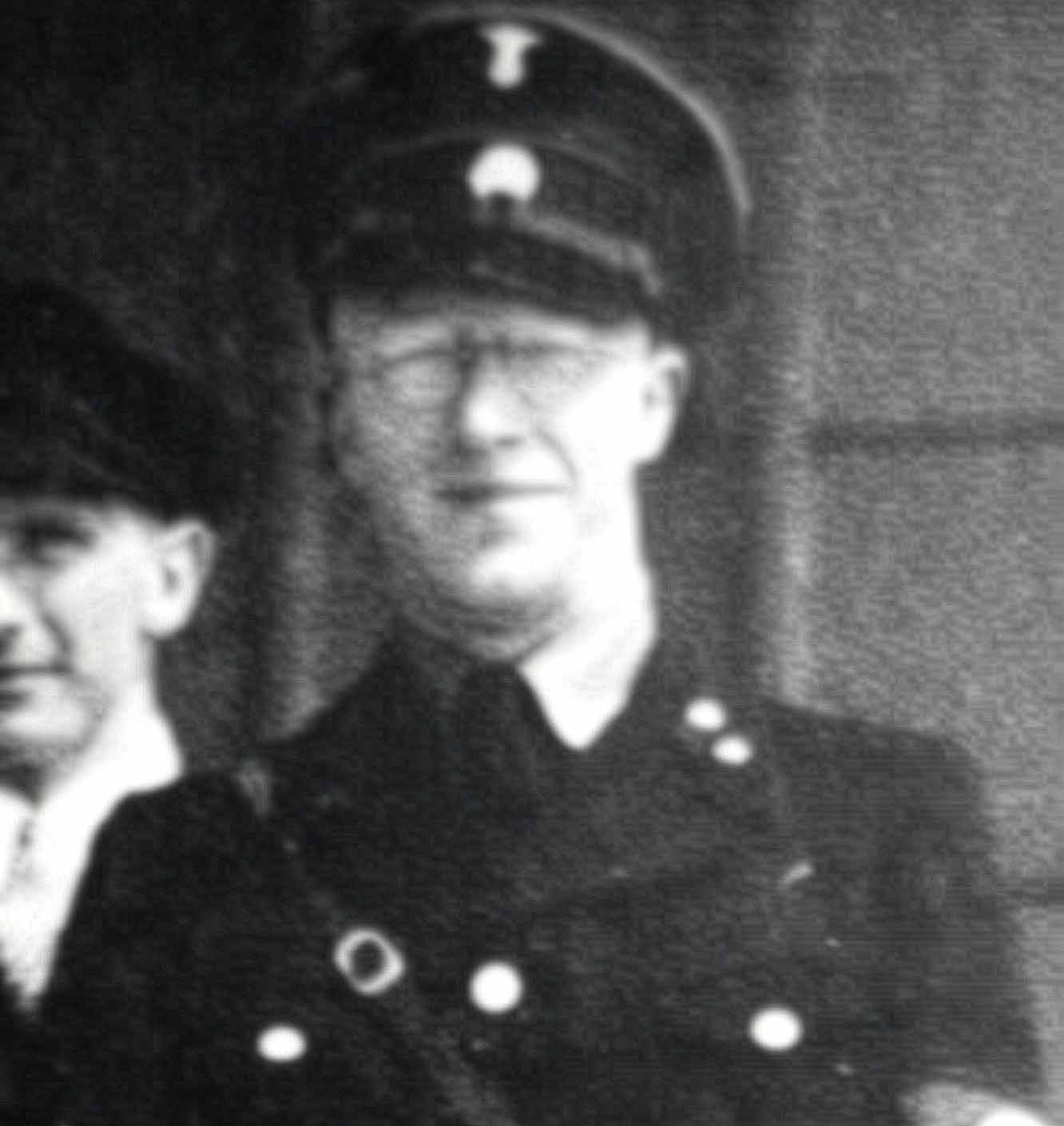
The career paths of these chiefs were very similar in many respects: 12 of them studied at university, where, with the exception of one, they majored in law, and four received a doctorate. Half of them joined the Nazi Party or one of its paramilitary formations at a young age, even before 1933, and were therefore considered established party members. Before the war, they all held various leadership positions in the Security Police and the SD apparatus, and after the outbreak of hostilities, they headed RSHA departments or led Einsatzgruppen in Poland and the Soviet Union. Some of these functionaries were KdS chiefs in Ukraine for a very short time. This was probably due to the need to gain experience in Eastern Europe to advance up the career ladder. Aware of this, persons appointed heads of the Security Police and SD departments saw themselves as part of a long-term project and, accordingly, acted radically and uncompromisingly towards the local population.
In the second part of the study, the main focus is on the practical activities of the Security Police and SD departments. The author describes in detail how the KdS behaved on the ground, the means they used, how they prioritized in a constantly changing reality, and the consequences of their activities. Schmittwilken has sought to question and partially refute the myth of the omnipotent and omnipresent Security Police and SD, especially in the fight against the resistance movement, and has succeeded to a certain extent.
Chapter 5, the largest one in the book, discusses the participation of the KdS in the Holocaust and the murders of Roma and psychiatric hospital patients. The researcher presents the Holocaust in the Reichskommissariat Ukraine as part of a pan-European crime and connects the murder of Jews in Ukraine and Belarus with the decisions of the Nazi leadership in Berlin and the persecution of Jews in other territories. Schmittwilken argues with Christian Gerlach and Wendy Lower about the specifics of the events in the RKU and concludes that the fundamental decision to kill all Jews in the German occupation zone was made only in the summer of 1942, after the death of Reinhard Heydrich. He links the beginning of a new wave of mass shootings in the Reichskommissariat Ukraine with the visit of Heinrich Himmler, as the head of the RSHA, to Ukraine in July 1942. Himmler then visited Zhytomyr and Vinnytsia and met with Hans-Adolf Prützmann, the commander-in-chief of the SS and police in Ukraine. A few days after Himmler's visit, the Nazis began destroying the ghettos and murdering Jews near Rivne and other settlements in the General District of Volhynia and Podilia, where they still remained after the mass shootings of 1941.
In general, Schmittwilken divides the events of the Holocaust in the RKU into three stages: the first involved mass killings of mainly Jewish men in the summer and autumn of 1941, which began even before the establishment of the Reichskommissariat; the second included the murders of weakened, old, and sick Jews who were considered unfit for work; the third encompassed the murder of all Jews and the liquidation of the ghettos. This classification seems somewhat strange, since the mass killings of Jewish children and women began in Ukraine from the very start of the Nazi occupation, as early as the summer of 1941 (for example, the killings in Kamianets-Podilskyi or Berdychiv). The author illustrates the last stage with the example of how KdS employees in Pinsk killed more than 30,000 Jews in the ghettos of Lakhva, Luninyets, Stolin, Yanov, Pinsk, and other villages and towns during September–October 1942. He describes in detail how the Security Police and the SD methodically killed tens of thousands of people over a short period of time. At the same time, the author shows, without emphasizing, that this technology of mass murder could be resisted, as vividly evidenced by the uprising in the Lakhva ghetto.
Little known is the information provided in Schmittwilken's study about the use of Jews by some KdS functionaries as personal domestic servants and sex slaves. Such examples once again demonstrate that simplified explanations (such as inherent antisemitism) are insufficient to understand the motives of individual criminals.
Chapter 6 addresses KdS crimes against Soviet prisoners of war and the participation of stationary units of the Security Police and the SD in the shootings of “undesirable” prisoners in camps. The author does not provide a complete picture but describes in detail two cases of shootings in the camps in Darnytsia and Berdychiv. What one could add to the issue of the treatment of Soviet prisoners of war is the role of the KdS offices in searches for escaped POWs. The majority of so-called "trophy documents" in Ukrainian archives are reports and wanted lists of Soviet POWs.
To this day, the existence of SD work labor camps on the RKU territory is fraught with many myths. Ukrainian historical literature often calls them concentration camps, or their status and location generally remain unidentified. Chapter 7 discusses such KdS camps, their creation, functioning, and liquidation. The author established the existence of five SD camps in Ukraine: Shubkiv (Rivne KdS), Syrets (Kyiv KdS), Berdychiv (Zhytomyr KdS), Ihren (Dnipropetrovsk KdS), and Hreihovе (Mykolaiv KdS). Work labor camps were also set up under civilian administrations (Gebitskommissariate). The study gives an example of a correctional labor camp in Koziatyn. The history of a correctional labor camp in the town of Brovary, Kyiv region, is also quite well known. The author suggests why work labor camps, rather than concentration camps, were set up in the RKU. The system of work labor camps in the Reich was not subordinate to the economic and administrative administration (WVHA), i.e., the SS. Therefore, such camps in the occupied territories were run directly by the Security Police and the SD, who sought to use the labor of prisoners for their own purposes. During the retreat, this distinction was removed: the prisoners from the KdS camps were taken to the concentration camps of the Reich. Thus, the SD work labor camps "served not only for the implementation of terror, but were also a means of demonstrating power, with the help of which the Security Police and the SD consolidated and expanded their positions in the SS and the police apparatus."
Chapter 8 explores the struggle of the Security Police and the SD against various resistance groups: (pro-)Soviet partisans, both wings of the Organization of Ukrainian Nationalists, the Polish underground, and imaginary and real criminals. The author also analyzes collaboration and the formation and operation of the criminal police and security units of the Security Police. A relatively large number of sources have survived on this topic. These include reports of stationary units of the Security Police and the SD, which pay close attention to the issues of "security and order." The author's observation that the Nazis sometimes publicly executed pro-Soviet resistance movement members by hanging in order to scare their folds is interesting. Ukrainian nationalists, on the contrary, were always killed secretly: shot in KdS prisons or killed in the so-called Gaswagen. Although the German side did not allow an independent Ukrainian state under any circumstances, the Nazis did not intend to publicly declare their anti-Ukrainian position either.
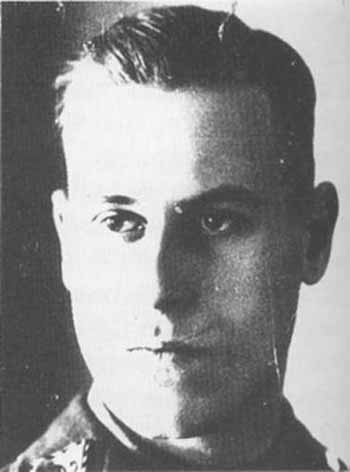
Chapter 9 examines the activities of the Security Police and the SD against two influential Orthodox churches in the territory of the Reichskommissariat Ukraine — the Ukrainian Autotomous Orthodox Church and the Ukrainian Autocephalous Orthodox Church. The main goal of the German special services was to maintain a balance so that none of the church organizations gained an advantage in the RKU. Despite the extensive network of informants and personal contacts with church leaders, the Security Police and the SD still had little influence on events, because church policy was determined by Reichskommissar Erich Koch.
Schmittwilken's study concludes with a description of the retreat of the Security Police and SD units from the territory of Ukraine (chapter 10) and new crimes: the murders of prison inmates and aiding Aktion 1005, which was intended to destroy traces of the 1941 mass shootings.
Another important topic that could be added to this study is the results of postwar investigations into crimes committed by the Security Police and the SD in Ukraine. The author actively uses information from the interrogation protocols of former KdS chiefs and employees, as well as other investigative materials, but does not summarize the results of these activities. He begins his work with the issue of justice and proper commemoration of the victims of Nazi crimes and discusses the story of the grave of Karl Pütz, the former chief of the Volhyn-Podilia KdS. The local community of Sankt Märgen took care of his burial as a war grave for 70 years, and no one inquired that this man was a war criminal. In the end, Pütz's name was removed from the tombstone in 2015, but only because he committed suicide in the spring of 1945. However, I believe the story of Erich Erlinger, the chief of the Kyiv KdS, is even more impressive. Despite numerous crimes, decades of investigations, and several trials, he was never punished. Therefore, the important question of justice raised by Schmittwilken's research remains relevant and unresolved.
I should also note the book's solid research apparatus, thorough comments and references, and the name and geographical indexes. The Ukrainian reader may be somewhat surprised by the author's decision to use contemporary geographical names, whereas the German toponyms of the RkU period were mainly based on Russian designations. However, this step by the German researcher may be justified by the need to avoid confusion and the lengthy process of clarifying the modern names of particular settlements that would otherwise be necessary. In general, it would be good to produce a Ukrainian-language translation of this important study for national history.
The publication uses photos from open sources.
This text is an expanded version of a review published in the Ukrainian Historical Journal 5 (2025): 221–226.
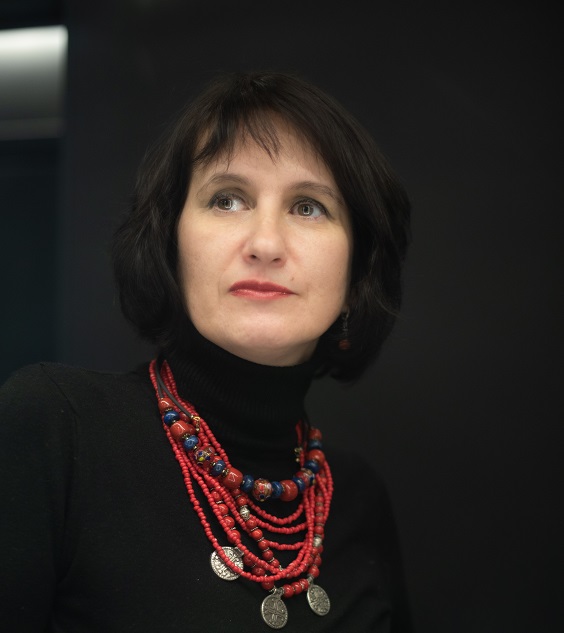 Tetiana Pastushenko, PhD, is a senior researcher at the Institute of History of Ukraine (Ukraine's National Academy of Sciences), head of the interdepartmental laboratory "Center for Oral History" at the Faculty of History of Taras Shevchenko Kyiv National University, and a member of the Ukrainian Oral History Association. Currently, she is a Philipp Schwartz Foundation scholar at the Ruprecht Karl University of Heidelberg (Germany). After graduating from Taras Shevchenko Kyiv National University, she worked, from 1989 to 2004, at the National Museum of the History of the 1941–1945 Great Patriotic War (now the Museum of the History of Ukraine during World War II). In 2007, she defended her PhD thesis Ostarbeiters from Ukraine: Recruitment, Forced Labor, Repatriation (Historical and Social Analysis Based on Materials from Kyiv Oblast). Since 2004, she has worked in the Department of the History of Ukraine during World War II at the Institute for the History of Ukraine. Her main research interests include the Nazi occupation regime, forced labor of foreigners in the Third Reich, concentration camp prisoners, Soviet prisoners of war, Stalinist repressions during wartime, culture of World War II memory, and oral history. She is the author of academic and popular publications, museum and exhibition expositions, and websites.
Originally appeared in Ukrainian @Ukraina Moderna
Translated from the Ukrainian by Vasyl Starko.
This article was published as part of a project supported by the Canadian non-profit charitable organization Ukrainian Jewish Encounter.
NOTE: UJE does not necessarily endorse opinions expressed in articles and other materials published on its website and social media pages. Such materials are posted to promote discussion related to Ukrainian-Jewish interactions and relations. The website and social media pages will be places of information that reflect varied viewpoints.