




Dnipro, "a city that constantly reinvents itself"
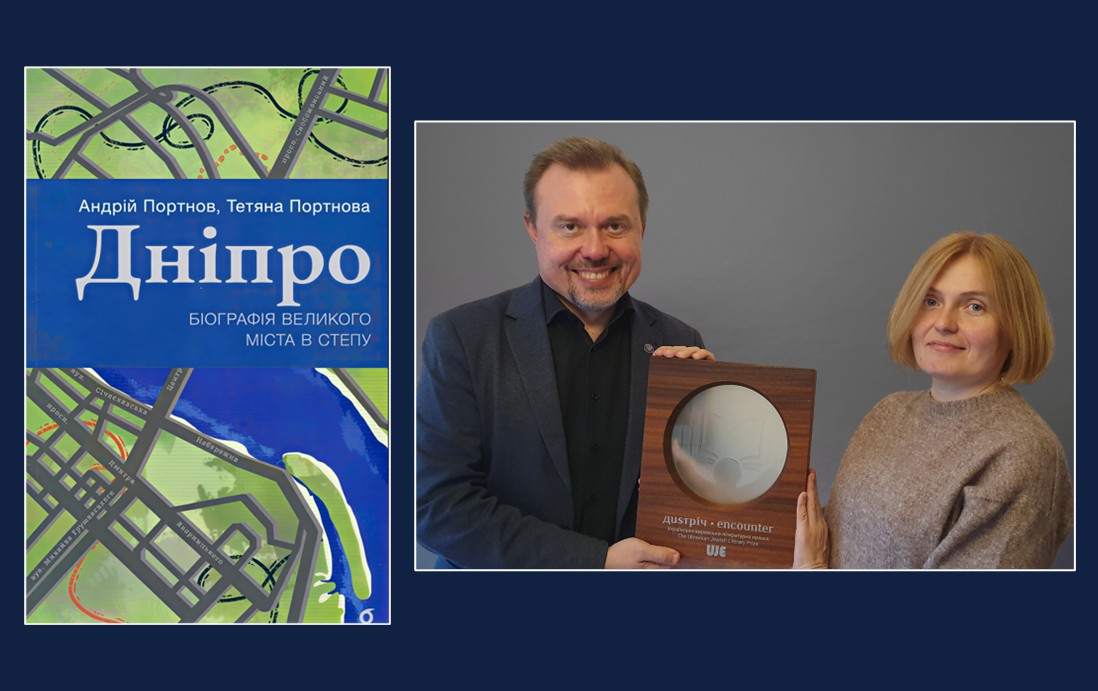
Historian Andrii Portnov discusses the book Dnipro. Biography of a Great City in the Steppe he has co-authored, highlighting Dnipro's uniqueness and the special stories it conceals.
The Encounter prize
Yelyzaveta Tsarehradska: Congratulations on winning the 2026 Encounter prize! How do you feel about this achievement?
Andrii Portnov: Thank you so much! This book is a short biography of Dnipro, co-authored with my sister Tetiana and published by Vikhola in Kyiv. I must admit, I didn't expect any awards, let alone one from UJE. It's a celebrated project that I've known about for many years, and I deeply respect the people involved. During the ceremony, Tetiana and I had no idea what the outcome would be until the very last moment. When we finally heard that our book had won, I was absolutely thrilled.
This is, I hope, another opportunity to draw broader attention — not just to the book, but to the city itself. Dnipro deserves far more recognition, both within Ukraine and globally. And in that sense, it was wonderful.
Two different books about Dnipro
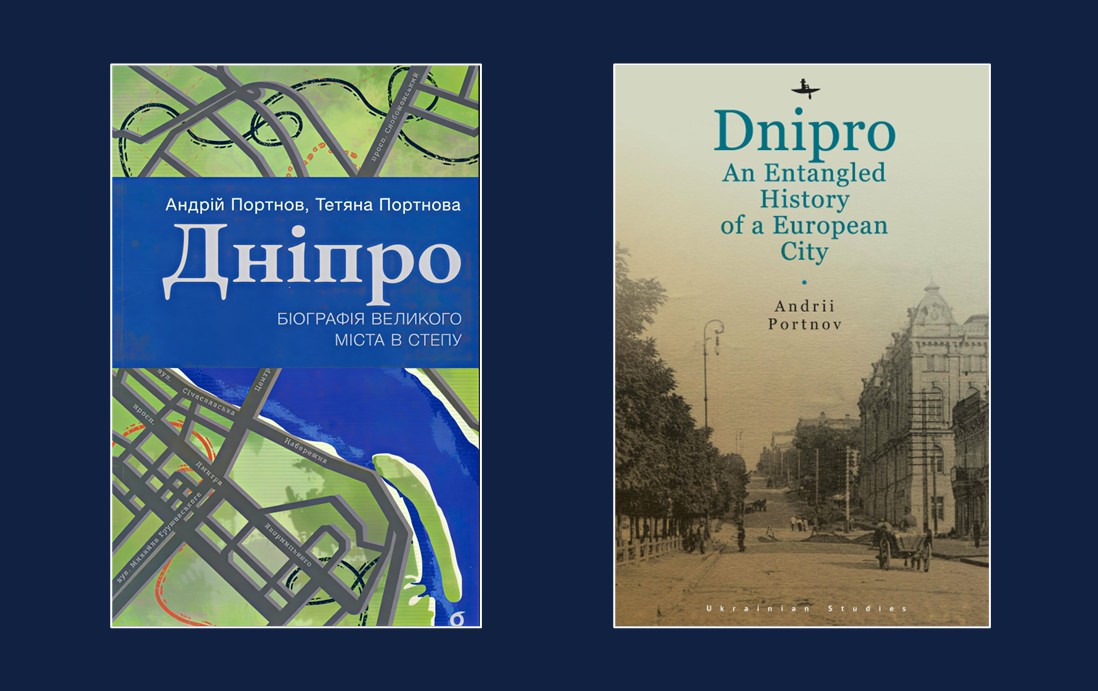
Yelyzaveta Tsarehradska: Is this the same book as the English edition released by a Boston publisher, titled Dnipro: An Entangled History of a European City?
Andrii Portnov: This is an important, perhaps even key, question. The short answer is no. This is a completely different book in every sense — it was written for a different purpose, in a different language, and with a different design. The only thing they share is that both books are about Dnipro, and that I am among the authors. However, my sister, who has studied the history of Dnipro just as much as I have, if not more, contributed a great deal of her own insights to this Ukrainian version.
The English-language book was written and published back in 2022, just before the full-scale invasion. It is targeted primarily at an English-speaking audience, with the aim of placing Dnipro within the context of European history.
In contrast, the Ukrainian-language book published by Vikhola was intentionally written as a work of popular history. This book is an engaging, quick-read essay designed for the general public. While Dnipro residents will love it, it's truly meant for anyone curious about the city's fascinating history, even if you've never set foot there.
Furthermore, this is not just a book on local history. While I deeply respect the tradition of detailing every building, street, and local figure, Tetiana and I aimed for a broader, national appeal — something that speaks directly to any Ukrainian reader.
Motivation and the writing process
Yelyzaveta Tsarehradska: What motivated you and your co-author to write this book?
Andrii Portnov: Originally, the idea came from the Vikhola publishing house. I assume they saw the English-language edition and approached me about writing a short, popular essay about Dnipro. I told them, 'To make it a truly different, new, and more interesting book than the Boston one, let me work on this with my sister. She actually defended her dissertation on a Dnipro-related topic and had already published another book about the city years ago in Dnipro itself. They agreed, Tetiana did too, and that's how it happened.
Your question has made me realize, with absolute clarity, that I truly wanted this Ukrainian edition to be completely distinct from the English one. Achieving this is naturally much easier when a co-author comes on board, bringing her own vision, sources, and chapters. Thanks to that, we were able to put the Ukrainian version together quite quickly. We are deeply touched that our colleagues, particularly those in Canada and the academic circles studying Ukrainian-Jewish relations, have noticed this Ukrainian book.
Yelyzaveta Tsarehradska: What did the writing process look like? Did you have any disagreements, discussions, or debates?
Andrii Portnov: That's exactly how it should be. The whole point is to have disagreements and discussions—in fact, that is precisely what I wanted. Tetiana and I already had experience writing joint articles. I also have a history of co-authoring with other people, including various scholars from both Ukraine and abroad. In my case, it usually works like this: we divide the work right at the outset. Roughly speaking, one of us takes the first chapter, while the other takes the second. Then, we carefully read, critique, correct, and comment on each other's sections, adding our own insights. Finally, we review the entire text together. For me, co-authorship is always about bringing more perspectives to the text, making it deeper and more engaging.
I am delighted that Tetiana agreed, because she is a very serious researcher. In other words, family dynamics played no role here. Unfortunately, it wasn't a case of us sitting down together at the same table to read through pages. Instead, everything was shaped through remote edits and discussions during our regular meetings.
What makes Dnipro unique
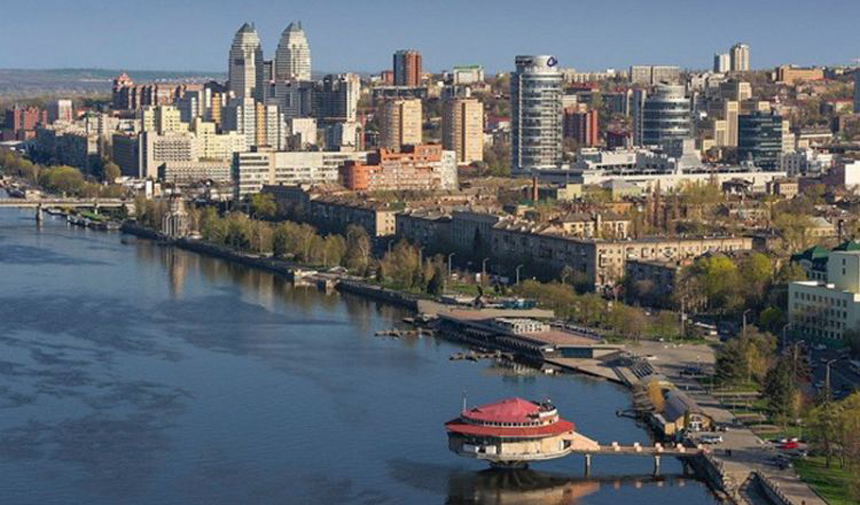
Yelyzaveta Tsarehradska: How would you describe Dnipro briefly? What is its significance for you, considering your knowledge of the city's history?
Andrii Portnov: You asked the very question I found myself asking when I started writing the English-language book. I spoke with various people, both from Dnipro and elsewhere, and asked them: "When I say 'Dnipro,' what comes to mind?" I heard all kinds of answers back then; it was fascinating and truly helped me because the associations were so incredibly diverse.
I think you are right to describe the city as contradictory. I would say that it is, without a doubt, a southern city. While this might not be as noticeable in the winter, it becomes undeniable in the spring. Dnipro is truly a southern city on a massive river—just like the title of our book suggests. During his visit to the city, Timothy Snyder actually told me that he was most impressed by the Dnipro River. It is a majestic, powerful body of water that historically both divides and connects the two banks. Indeed, the city's life has always been split between the right bank and the left bank — forming two distinct, yet deeply interconnected, stories.
I would also say that Dnipro is an unfinished city. When Viktor Petrov-Domontovych, one of my favorite Dnipro natives, set his novel On Shaky Ground there, he knew exactly what he was doing. Dnipro is very much like that: on shaky ground, or unfinished. This category is also ambiguous. Some might say it's a bad thing, but it actually means that this is a city that constantly reinvents itself. Right now, it is doing so again — in the face of the ongoing war and the approaching front line. Dnipro is a city that defies a fixed identity or symbolic identification, unlike, for example, Odesa or Lviv.
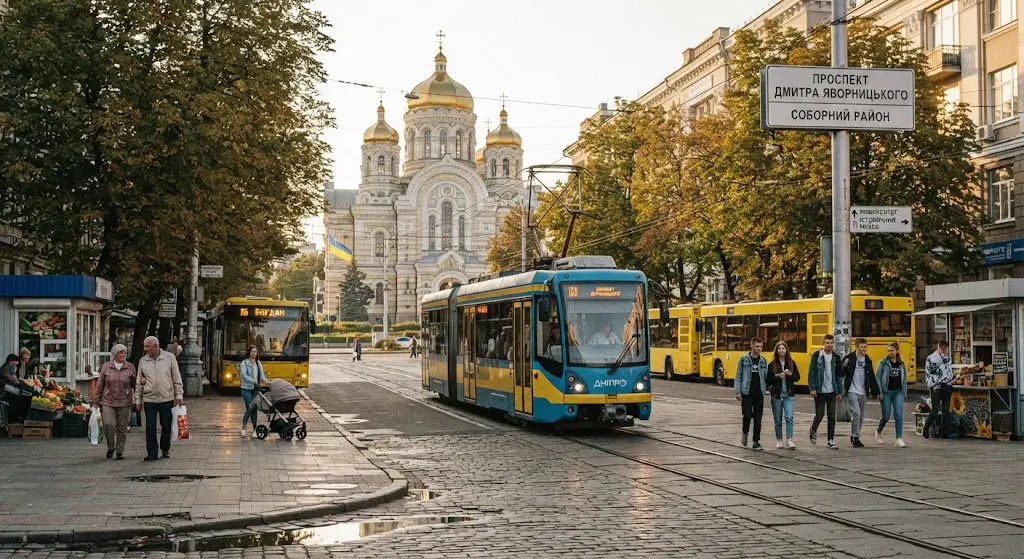
Dnipro is a history of ruptures, fractures, and grand ambitions, even if they haven't quite led to global status or worldwide recognition. I have often heard a similar impression: first-time visitors are surprised by what they see. My German colleagues told me they had arrived expecting a depressed, industrial city. There is certainly that side to it, but there is also a vibrant Jewish life with deep-rooted traditions — ones that, unfortunately, we still don't know well enough. And, of course, there is the rich Ukrainian tradition. I mentioned Petrov, but we could also name Valerian Pidmohylny, Dmytro Yavornytsky, Ivan Manzhura, and many others.
Dnipro is also a city that endured all the horrors of the 20th century: the Holodomor, the Holocaust, Nazi occupation, mass migrations, and waves of refugees. Many believe that what Dnipro is experiencing today is entirely unprecedented. However, many elements of this major war have actually played out in the city's history before, only to fall into oblivion. For instance, Dnipro served as a primary military hub during the Crimean War in the second half of the 19th century. In 1856, the number of wounded soldiers and officers treated there nearly equaled the city's own population. I hope that, by reading this book, people will discover these parallels with the present. Wartime experiences, the Ukrainian movement, and the flourishing of Jewish life — none of this started just now; it all has a backstory, however forgotten. I find it fascinating that this is a city where everything seems to start completely from scratch, when in fact, it has all happened before.
Yelyzaveta Tsarehradska: Was there anything in your research and writing process that particularly struck or surprised you?
Andrii Portnov: There was a lot of that, actually. My sister built practically her entire academic career in Dnipro. In contrast, right after finishing my studies, I left for Warsaw, Lviv, and Kyiv. It was only after I moved away that I truly developed an interest in the city. I was completely surprised to discover that the data, the figures, and the history were far more vast than I had ever realized while living there. As for some of the places I walked past every single day, it was only later that I learned major events had unfolded there during the Soviet era, or even earlier.
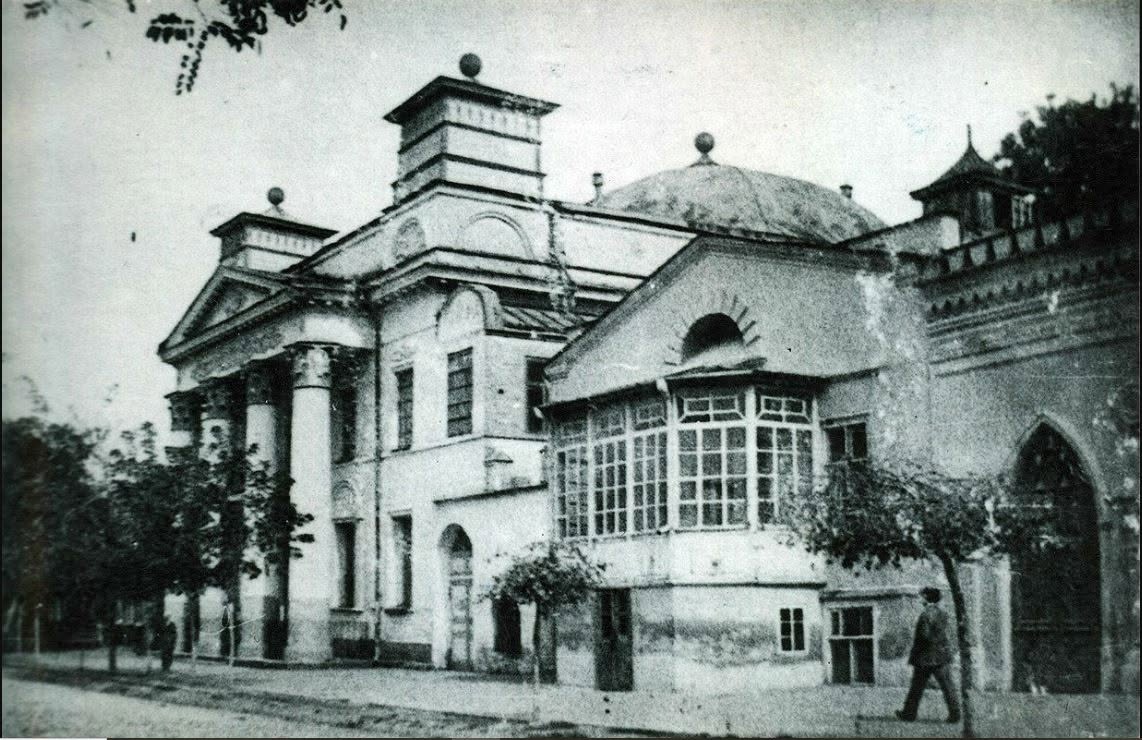
The city's Jewish past is a prime example. Before 1917, there were at least forty synagogues here, if not more. This doesn't mean they were all grand buildings; many were small, single-story, unassuming structures that blended seamlessly into the surrounding neighborhood. When I went looking for them later, examining what remained, it was a true revelation.
Historical connections to the southern and eastern Ukraine
Andrii Portnov: In the 19th century, Sloviansk, Kramatorsk, Mariupol, and the now partially occupied Donbas looked to Katerynoslav (modern-day Dnipro) as their administrative center. What is the fundamental, core Ukrainian component of this history? The answer is very simple, and it applies to the other cities I mentioned as well, not just Dnipro: it is the Cossacks and their memory. This dates back to the early modern period, the Polish-Lithuanian Commonwealth, and later the Russian Empire, which ultimately destroyed them. Yet, it was precisely on the foundation of this Cossack history that various narratives were built, eventually merging into the Ukrainian national narrative.
This is where all the people I previously mentioned come into play: Yavornytsky, Manzhura, Pidmohylny, and many others. It was on this Cossack foundation that southern Ukraine was shaped in the 1920s, encompassing Kherson, Mykolaiv, Zaporizhzhia, Dnipro (as the largest hub), as well as Mariupol, stretching further into the steppes of the Donetsk region.
Historically, this is part of a unique territory that formed right along a civilizational border — a contact zone between the Polish-Lithuanian Commonwealth on one side and this vast, incredible, and the vast and wealthy Ottoman world on the other.
This program is created with the support of Ukrainian Jewish Encounter (UJE), a Canadian charitable non-profit organization.
Originally appeared in Ukrainian (Hromadske Radio podcast) here.
This transcript has been edited for length and clarity.
Translated from the Ukrainian by Vasyl Starko.