




Exhibition "A Journey Through the Ukrainian-Jewish Encounter: From Antiquity to 1939" opens in Myropil
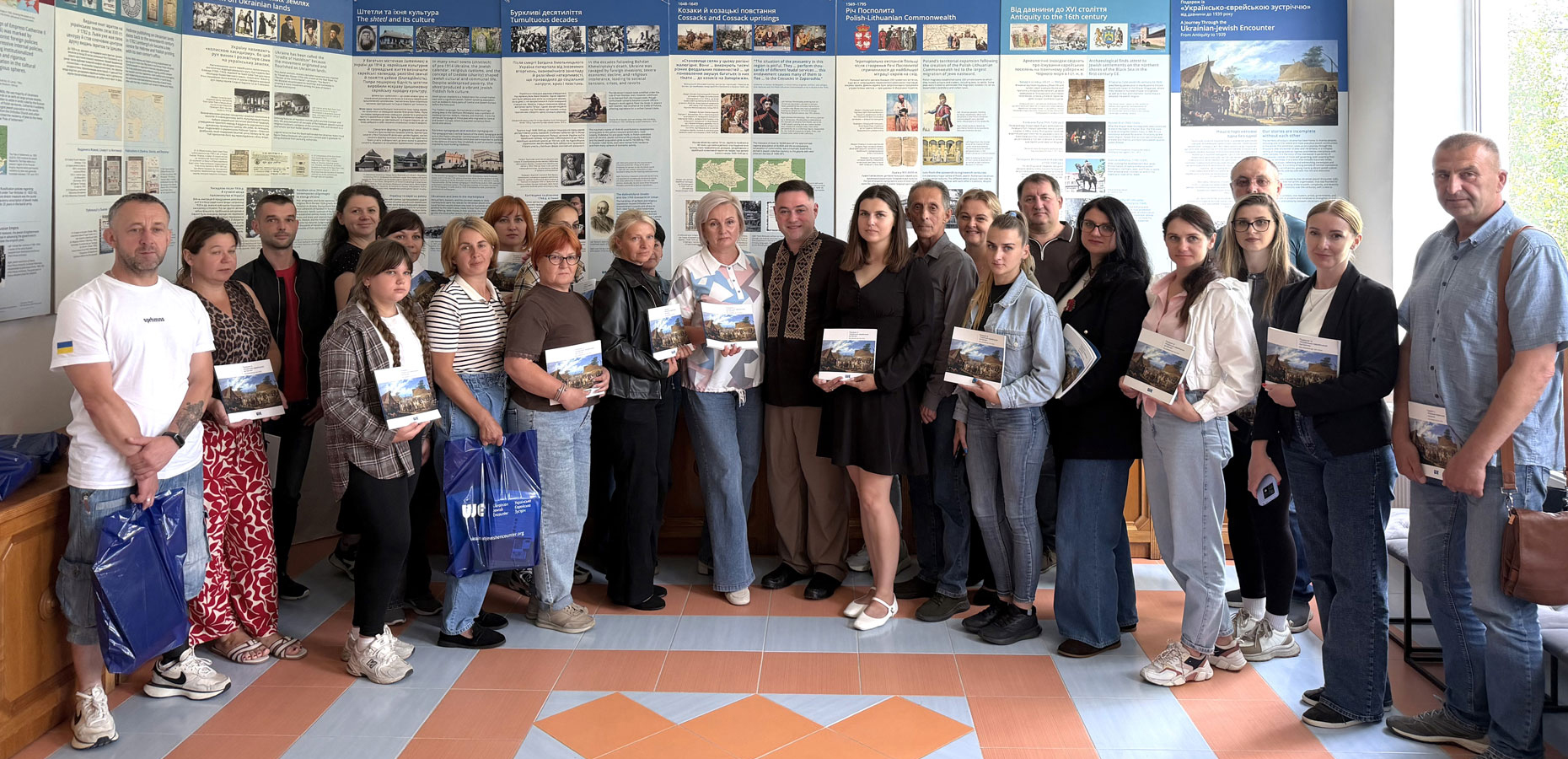
The UJE-created exhibition “A Journey Through the Ukrainian-Jewish Encounter: From Antiquity to 1939” came to Myropil in the Zhytomyr region. The exhibition opened on 28 July at the Myropil Museum of History and Local Lore. The event was an important milestone in the exhibition’s cultural and educational tour, which aims to showcase the centuries-long coexistence of the Ukrainian and Jewish peoples, their interactions, mutual cultural influences, and shared historical experience.
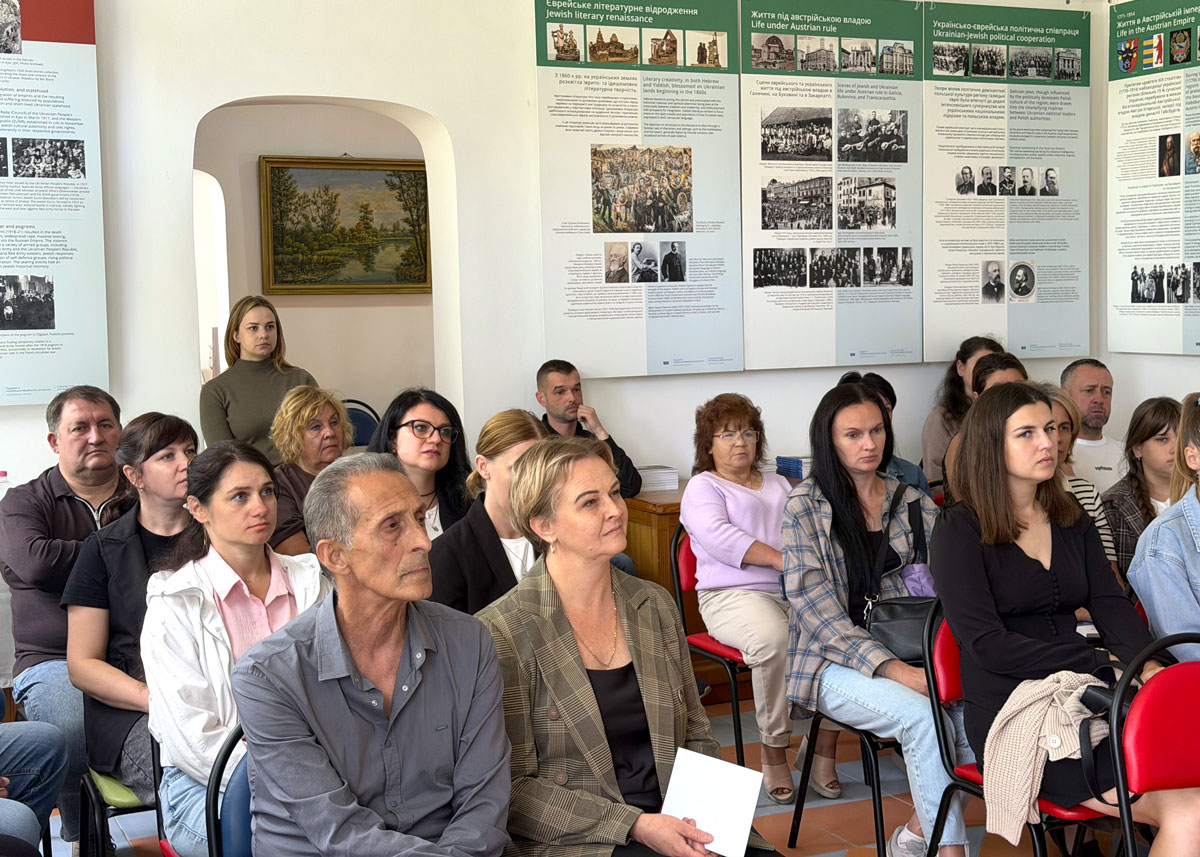
The event was officially opened by Svitlana Vlasiuk, the head of the Myropil settlement. Welcoming the attendees, she emphasized the importance of studying the multicultural history of their native region. Delivering her opening remarks, she emphasized how deeply meaningful the exhibition is for both the local community and its youth. She pointed out that understanding centuries of Ukrainian-Jewish coexistence across the wider Volyn region helps people reconnect with their roots, inspires mutual respect, and shows that Myropil’s heritage belongs to a much larger, shared history. Vlasiuk expressed hope that such educational initiatives will continue to resonate with the local youth and introduced Vladyslav Hrynevych, Jr., UJE’s regional manager in Ukraine.
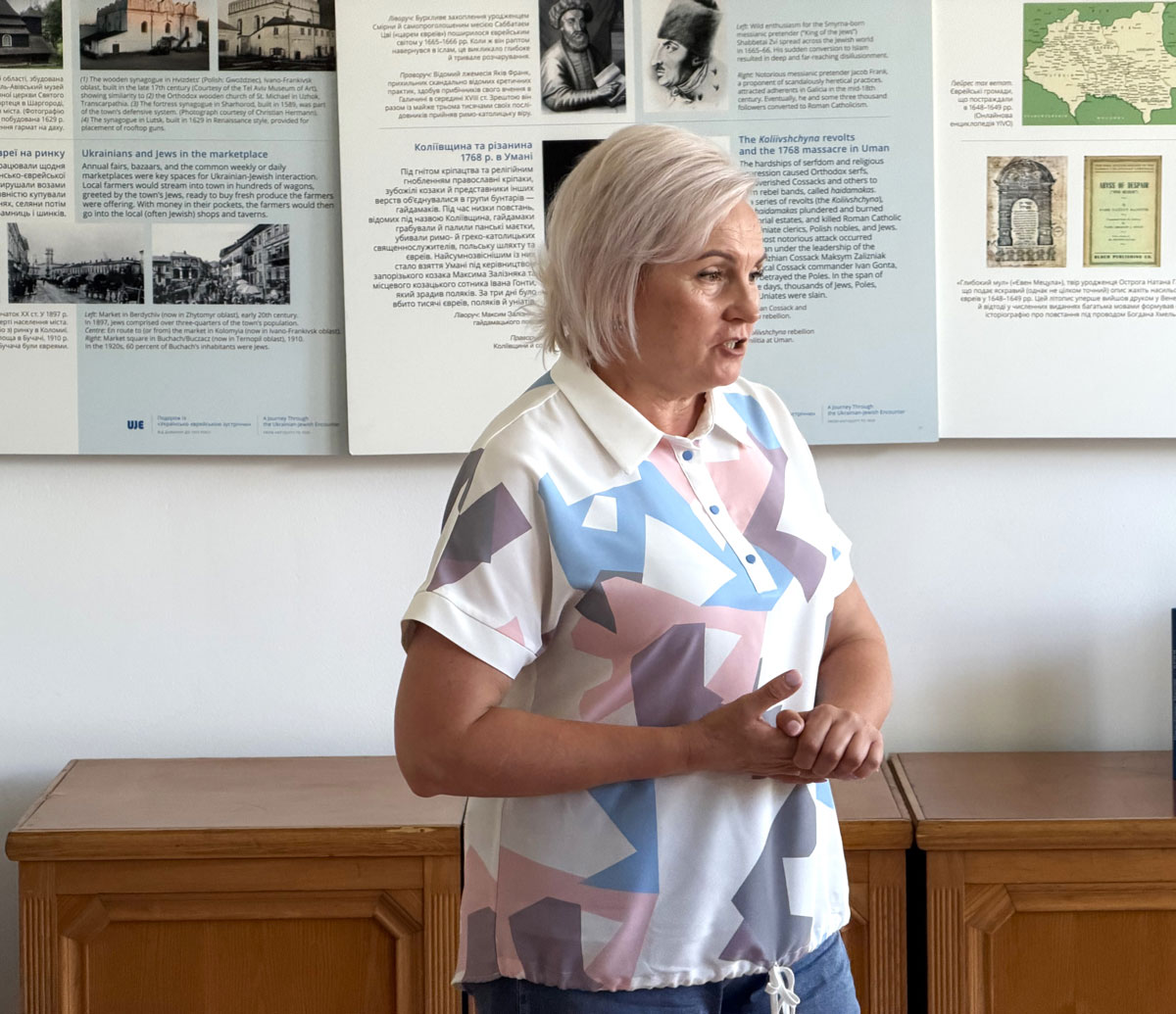
After a brief greeting, he spoke about the organization's work, its core initiatives, and the history behind the exhibition. Hrynevych emphasized its primary goal: to foster a deeper understanding of the centuries-long relationship between Ukrainians and Jews. Additionally, he shared the itinerary of the traveling exhibition, highlighting its significance for communities across various regions of Ukraine.
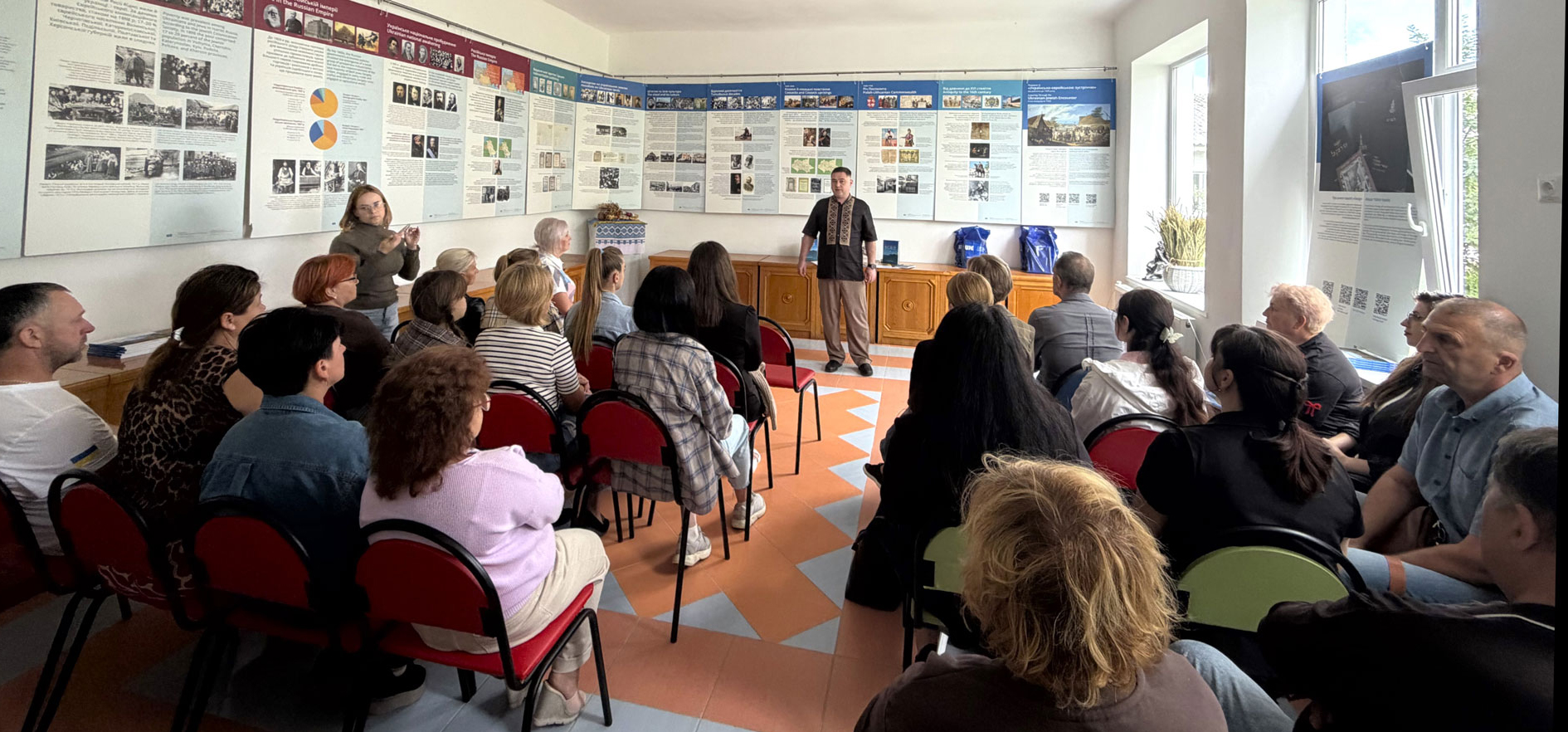
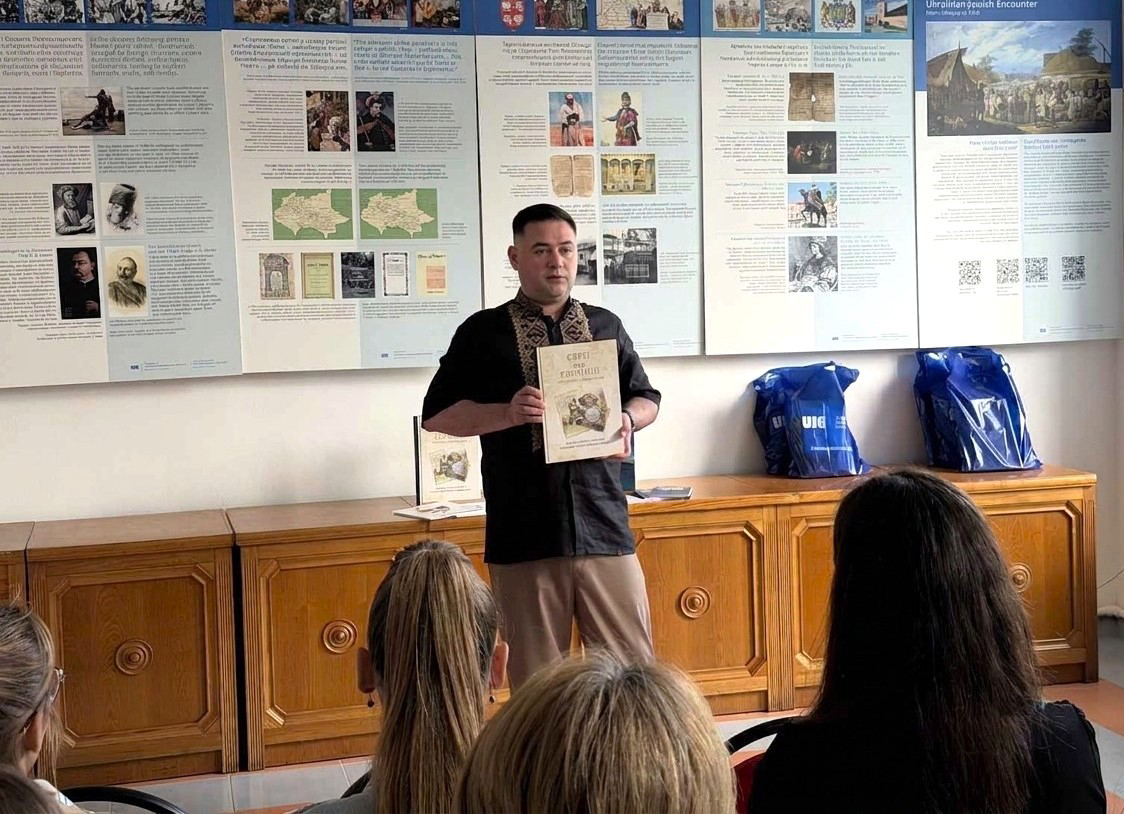
Volodymyr Yatskov, a history and law teacher at the Myropil Lyceum, spoke about Myropil’s rich Jewish history, which is an inseparable part of its heritage. Notably, he pointed out that in the mid-18th century, Myropil was home to Rabbi Pinchas of Koretz, one of the closest disciples and associates of the Baal Shem Tov (the founder of Hasidism). Rabbi Pinchas contributed significantly to the spread of these new teachings among the wider public, temporarily turning Myropil into a prominent center of the early Hasidic movement in Volhynia.
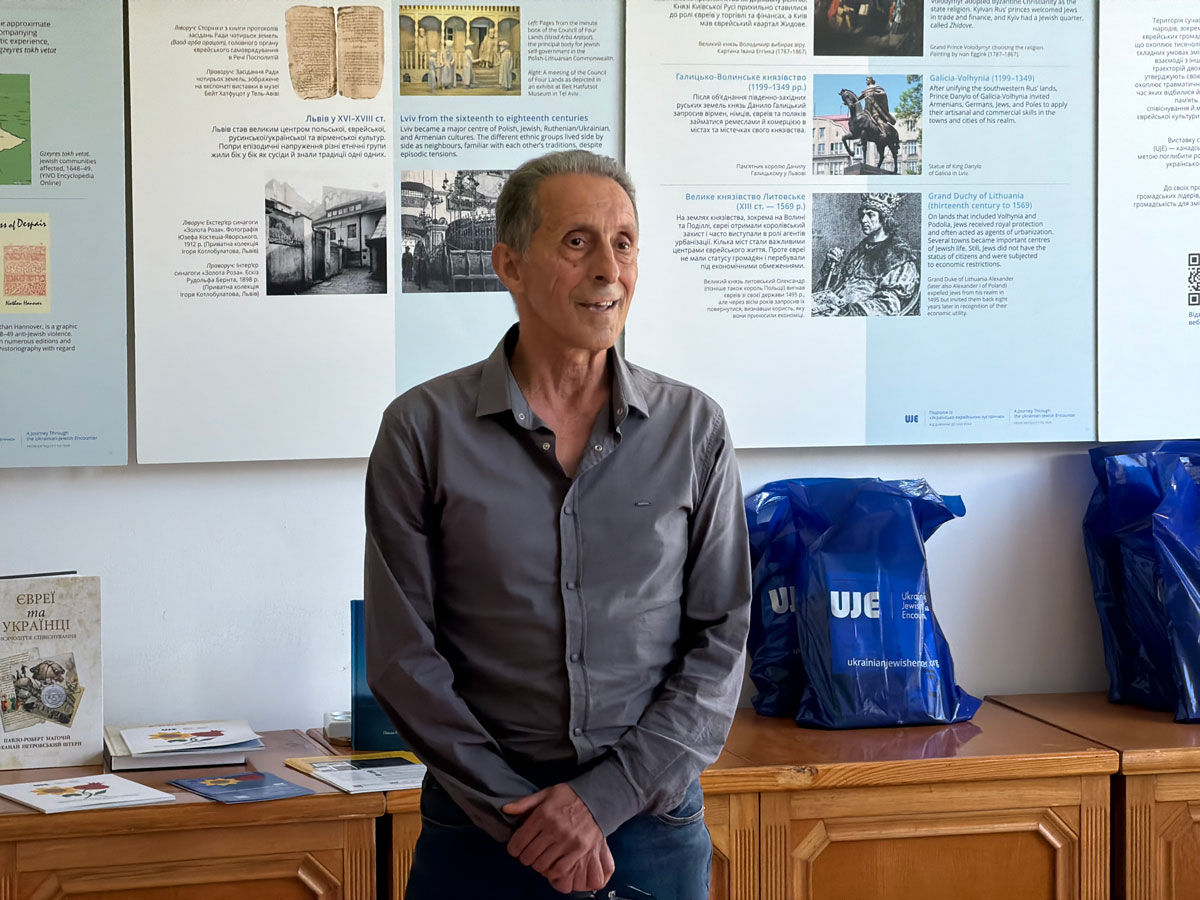
Equally captivating was the story of Myropil native Bernard (Berl) Gantmacher, the son of a local miller, who emigrated to New York in 1907 at the age of seventeen. After years in the garment industry, he established his own shirt manufacturing company, Par-Ex, in Brooklyn. In 1949, alongside his sons Marty and Elliot, he founded the Gant brand, which would become a defining symbol of American style and achieve global recognition. Yatskov emphasized that Gantmacher’s journey is a striking example of how the fates of Volhynian shtetl Jews were woven into the broader fabric of 20th-century history.
Ihor Hyndych, Director of the Myropil Museum of History and Local Lore, also joined the discussion. He highlighted the museum’s collections and exhibits related to the local Jewish heritage, emphasizing that this specific material requires further study and systematization. Expressing the museum’s commitment to expanding the collection with new findings and testimonies, he noted that such exhibitions provide a powerful impetus to explore this chapter of Myropil’s history.
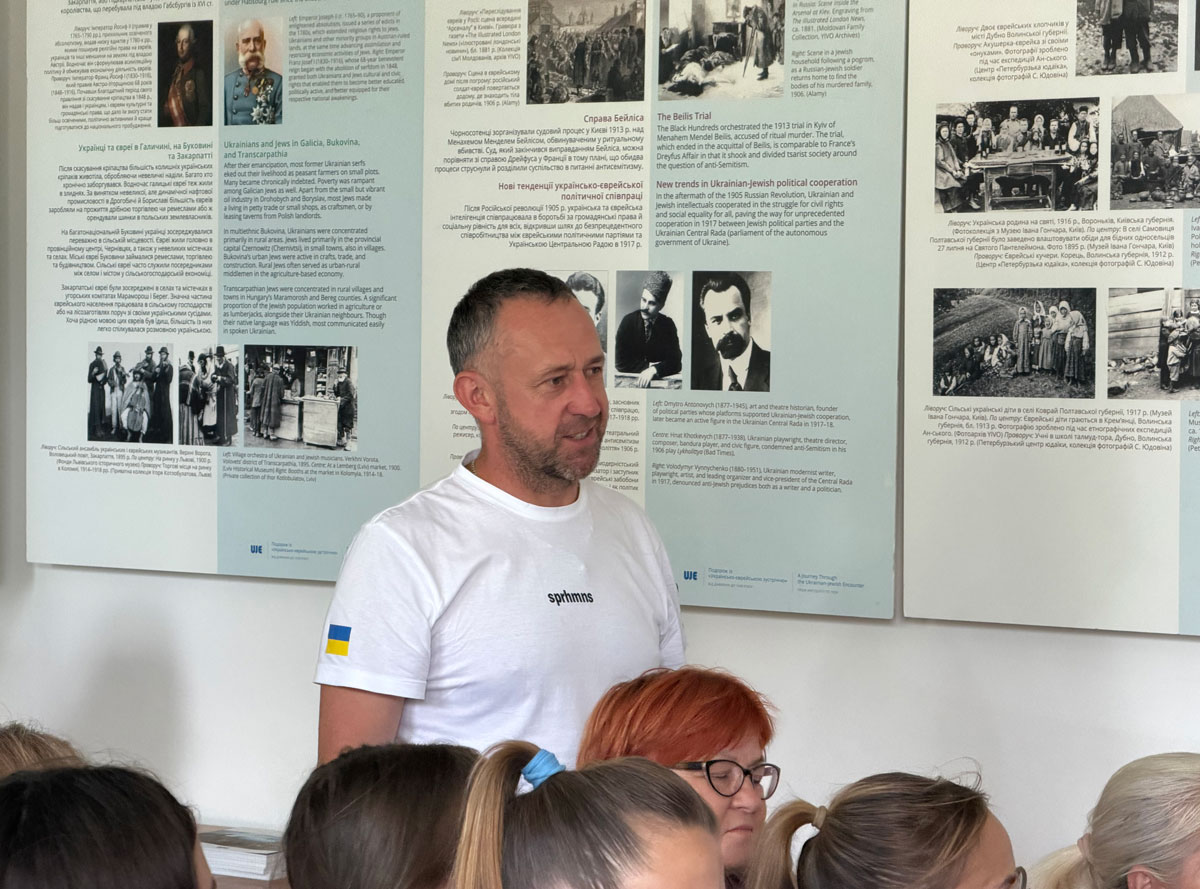
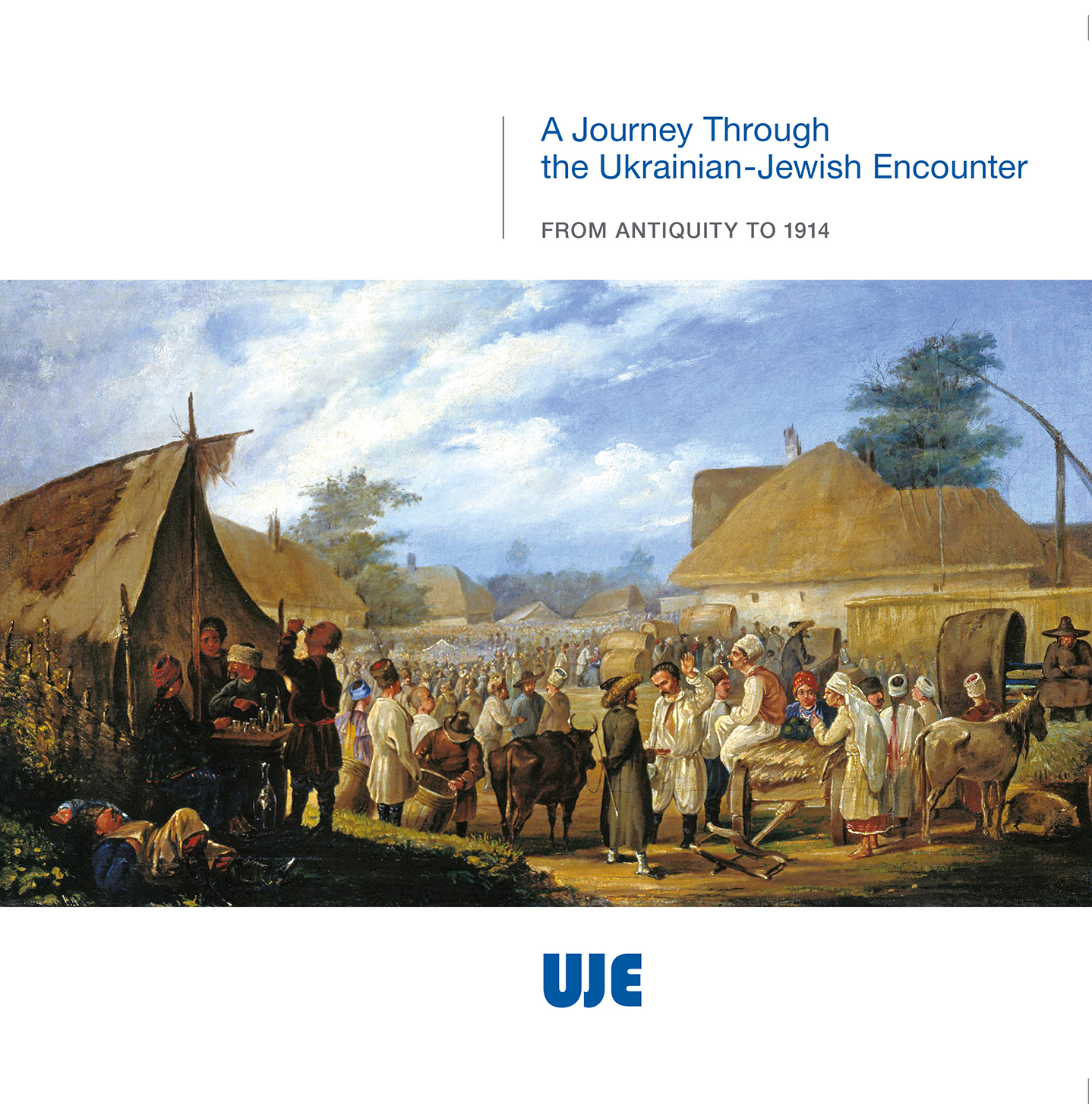
Following the official part, visitors had the opportunity to explore the exhibition in detail. The guests actively discussed the presented materials and shared their impressions. A significant addition to the event was the distribution of complimentary copies of the catalog A Journey Through the Ukrainian-Jewish Encounter: From Antiquity to 1914.
The exhibition in Myropil marked another important step toward preserving historical memory, fostering intercultural dialogue, and deepening knowledge of Ukraine’s multifaceted past.
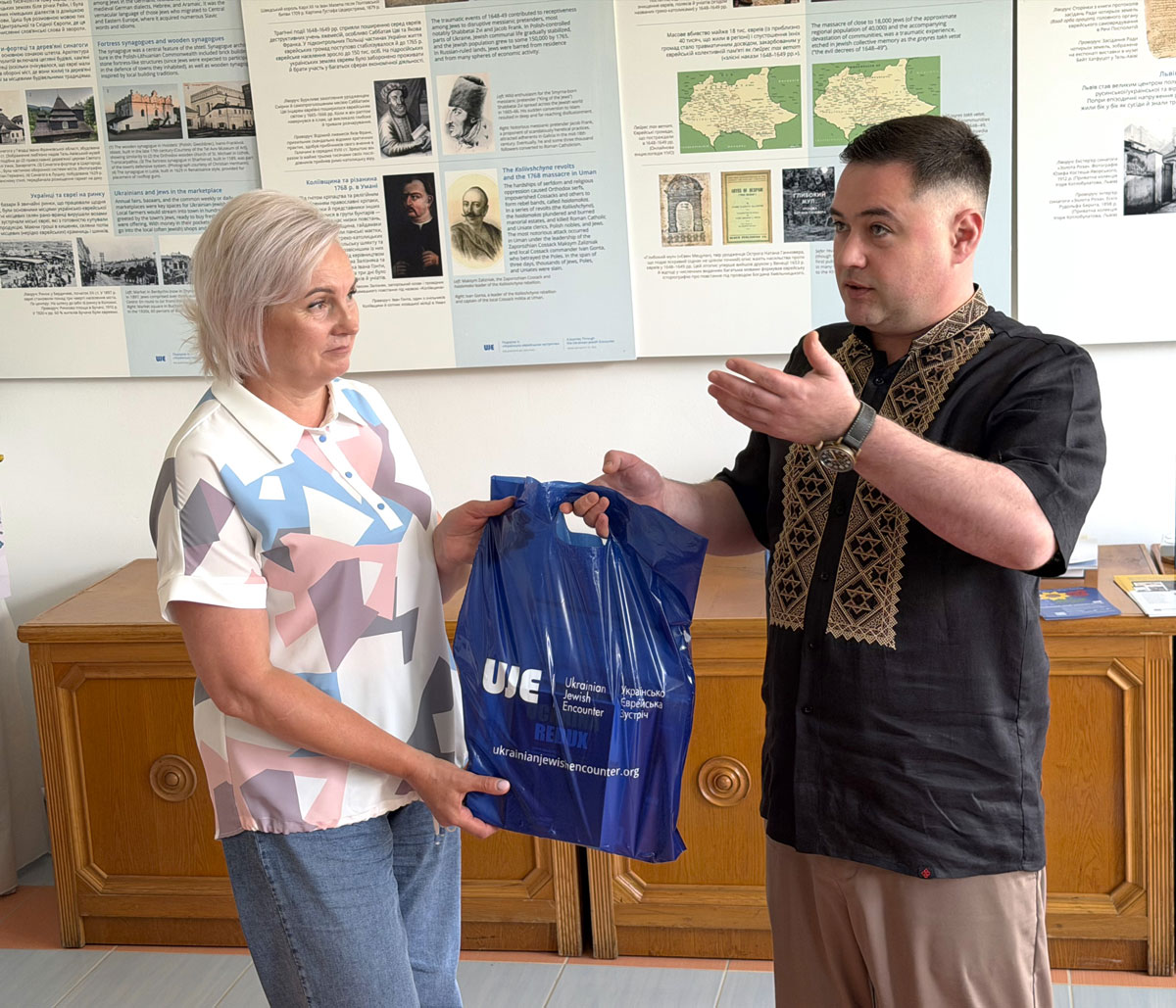
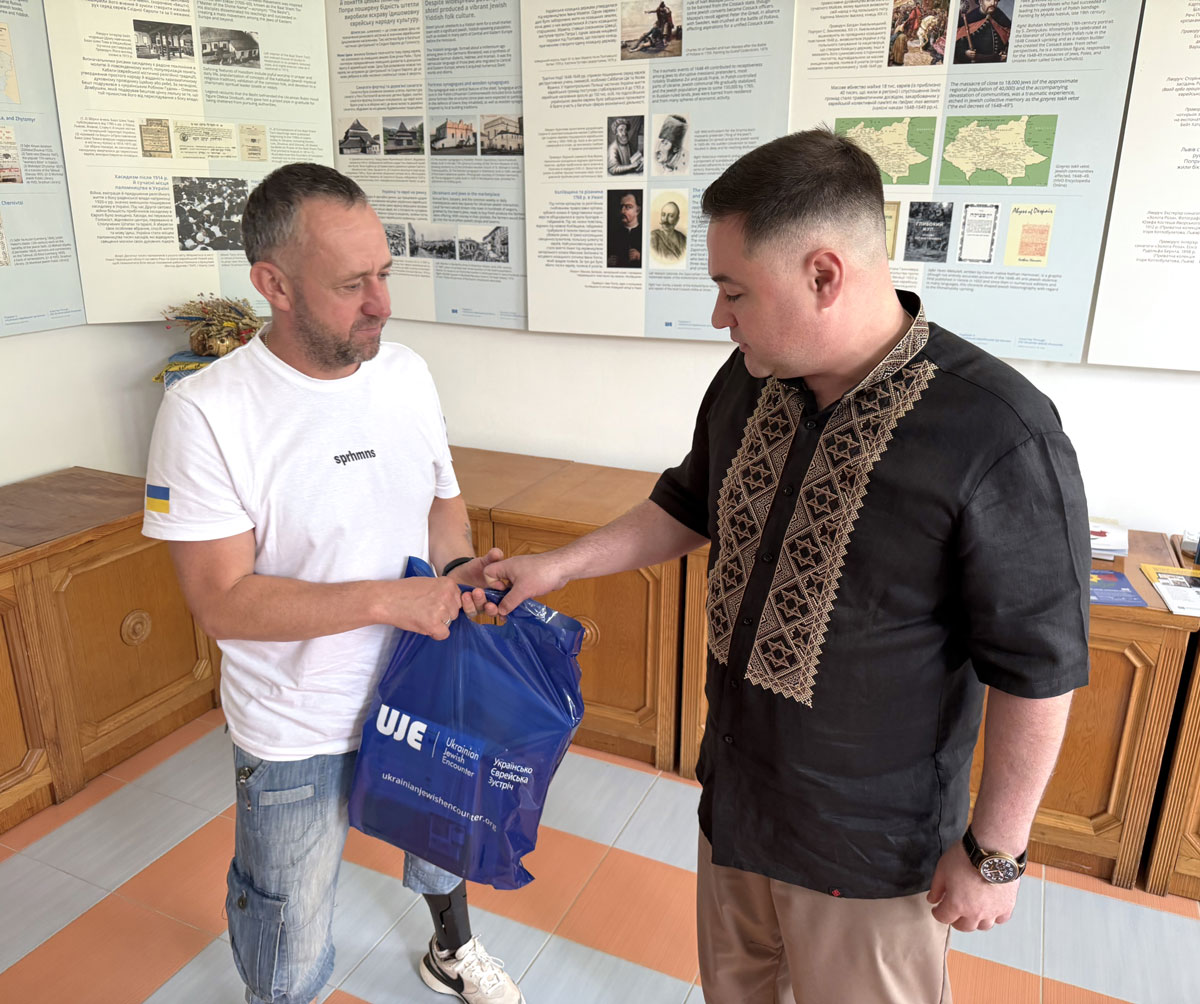
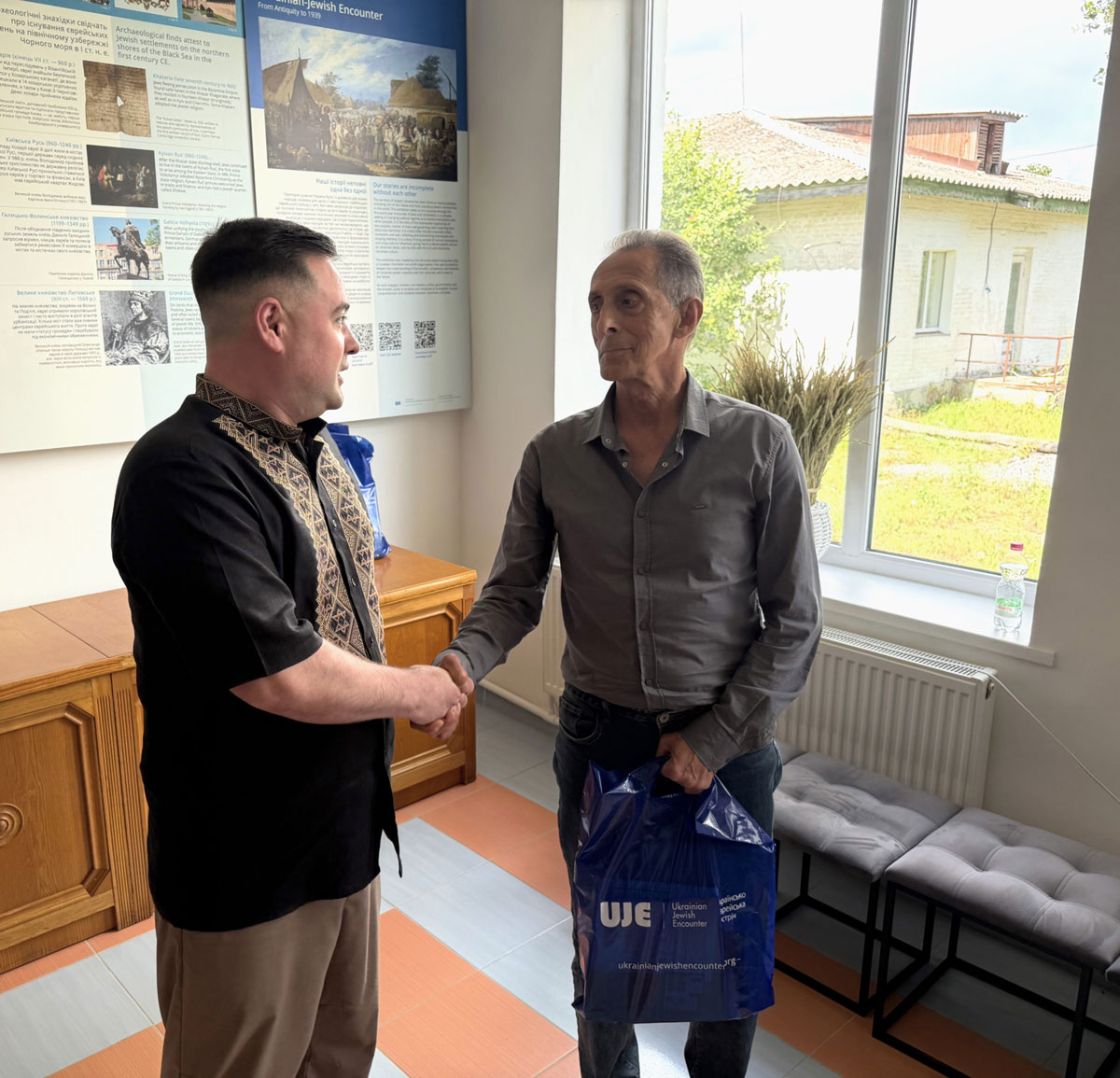
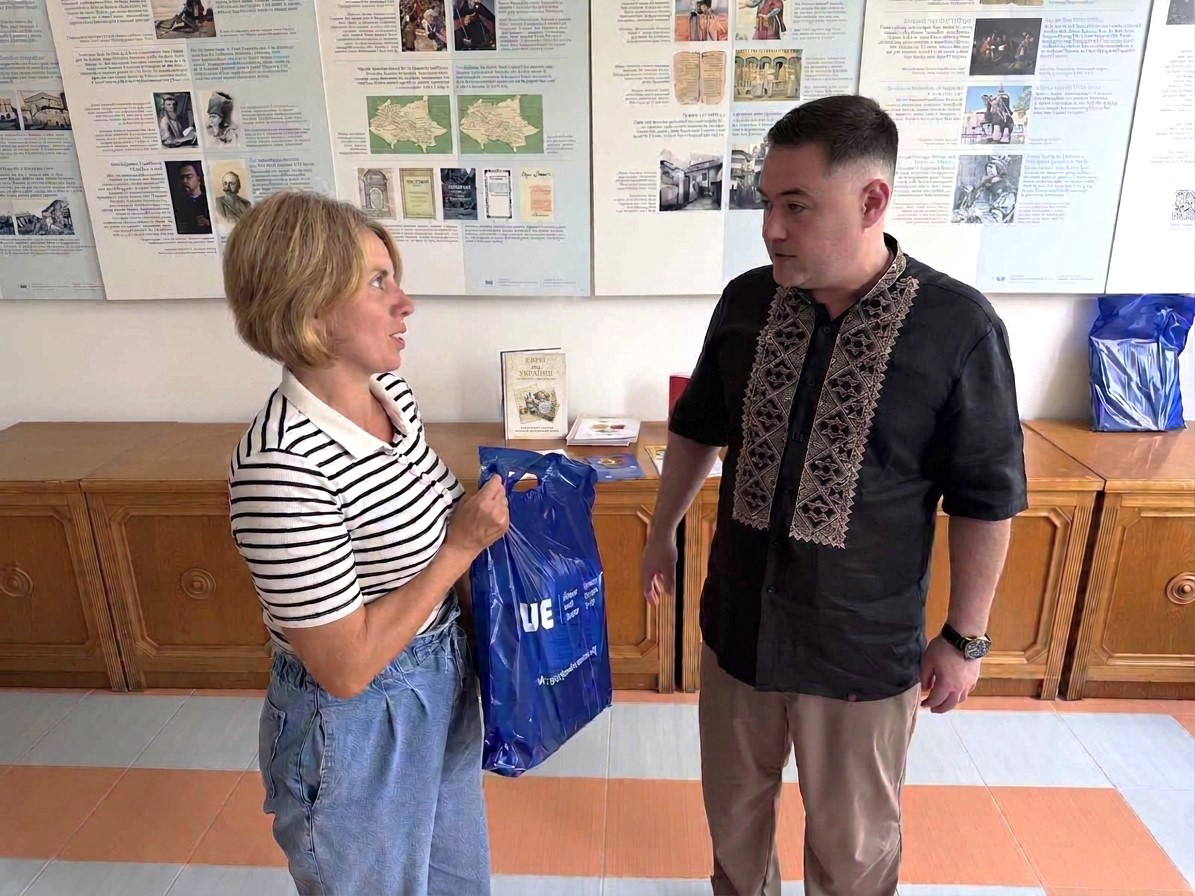
Vladyslav Hrynevych, Jr., Regional Manager, UJE Ukraine
Translated from the Ukrainian by Vasyl Starko.