




From involvement in the Holodomor to dissidence: Lev Kopelev's life story
[Editor’s note: Ukraine commemorates Holodomor Remembrance Day annually on the fourth Saturday of November. Ukrainians attend memorial services, light candles, and place symbolic vessels of grain to honor the victims of the Holodomor and other famines in Ukraine. In 2026, the day falls on 28 November.]
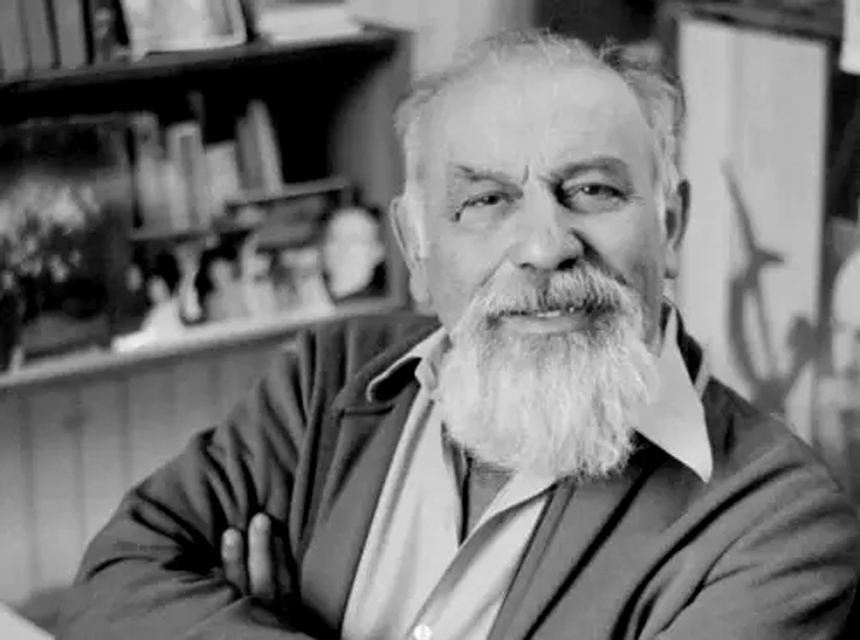
Who was Lev Kopelev? How did he transition from helping organize the Holodomor to becoming a dissident and speaking out against the Soviet regime? What vital testimonies of the era are contained in his book The Education of a True Believer? The questions are explored by Professor Yurii Shapoval.
Lev Kopelev's significance for Ukrainian culture and history
Yelyzaveta Tsarehradska: We are here today to talk about the very fascinating figure of Lev Kopelev. Although I have been researching Ukrainian-Jewish relations for several years, I have only just learned about him. Could you please tell us in general about the significance of Lev Kopelev in his field and his time?
Yurii Shapoval: This figure is very important to me, appealing in his own way, and controversial in his own way. To answer your question briefly, Kopelev is interesting for several reasons: he is a moral authority, a witness to the totalitarian era who left behind unique memoirs and records, and, finally, he is a man who served as a bridge between cultures. We are talking about German culture, and about Ukrainian and Russian cultures — or rather, Russian-Ukrainian. Overall, he was prominent in the cultural sphere because he participated in a very major project on German-Slavic relations — the so-called Wuppertal Project.
Plus, as the old Soviet-era joke went: if a talented writer wasn't born in Odesa, then they must have been born in Kyiv. Well, Kopelev was born precisely in Kyiv in 1912.
Relations with the Soviet regime
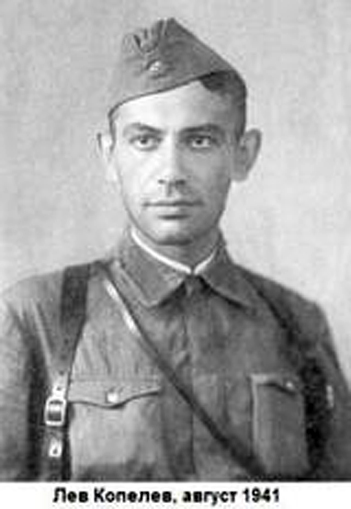
Yelyzaveta Tsarehradska: The story of his personal formation and evolution is fascinating. After all, he was a staunch Trotskyist, meaning he supported the Bolshevik ideology. How did he eventually transform into a dissident?
Yurii Shapoval: He had been keeping documents that his cousin had passed on to him. This was the late 1920s, a time when the Trotskyist opposition was strong in Ukraine. Kopelev was studying at Kharkiv University at the time, and later at the Moscow Institute of Foreign Languages, where he mastered German. When Kopelev's brother was arrested, Kopelev went directly to the GPU and handed over those documents. They treated him with suspicion but let him go. So, he already had that kind of experience early on. Back then, he was distributing literature protesting the arrests of Bolshevik-Leninists; in other words, he was defending the Trotskyists.
He was eventually detained in the spring of 1929 but later released. This allowed him to carry out the very mission he would later write about in his famous book, The Education of a True Believer. In other words, his political views at the time were mixed. He believed in socialism and a certain kind of justice, even though he witnessed the regime's violence.
On the other hand, when Kopelev found himself in the Ukrainian countryside, he was convinced that he was fulfilling a vital mission by requisitioning grain from Ukrainian peasants. Thus, the late 1920s and early 1930s were a period of great moral and political difficulty for him. He had to choose whose side he was on.
Ultimately, he would indeed join the ranks of those who supported the dissidents, but that happened a bit later. In fact, he did this for the first time during World War II. However, his first doubts and his first real understanding of the regime's true nature were linked to those trips to the Ukrainian countryside, where he officially confiscated grain from Ukrainian peasants, thereby contributing to the Holodomor.
Kopelev's role in the Holodomor
Yelyzaveta Tsarehradska: What documents, sources, or perhaps memoirs from Lev Kopelev do we have regarding this? There are certain quotes where he admits that it was horrifying, that he supported this policy, and even when he saw the deaths of starving children — eyes drained of life — he still convinced himself that it was all being done for some greater good. Yet his true realization that something was deeply wrong only surfaced during World War II, when he witnessed what Soviet troops were doing to Germans, prisoners of war, and others.
Yurii Shapoval: I once conducted an experiment while speaking at a conference dedicated to the Holodomor in Vienna in 2023. At the time, I wanted to showcase the experiences of individuals who were not victims of the Holodomor but, to some degree, were its co-implementers: Viktor Kravchenko, Dmytro Hoichenko (a pseudonym), and Lev Kopelev.
I analyzed his memoir, The Education of a True Believer, because there are no more vivid documents about him; I consider it an absolutely unique source. By the way, it was republished in Ukrainian in 2023 by the Dukh i Litera publishing house, after its original publication in 1978. Kopelev wrote it, one might say, for himself, because it was vital for him to reflect on that era. He writes there that he was convinced of his ideological superiority over the peasants, and when they were being robbed, he notes: "I was ashamed of my simple feelings." This means he did feel empathy for the peasants, but he actively pushed it away. He writes: "I will never be able to pray away this sin, nor can I ever redeem it."
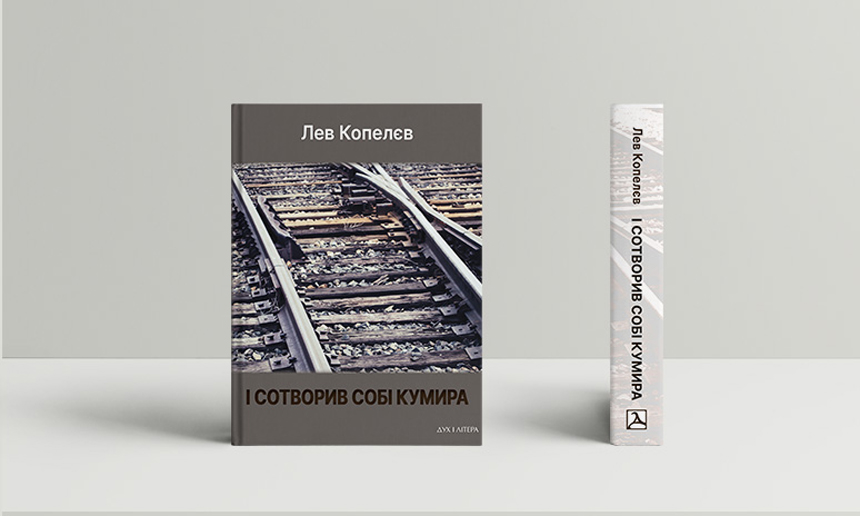
He participated twice in the grain requisition process — the robbery of the peasants — in 1932–1933, in the Myrhorod and Stara Vodolaha districts of the Kharkiv region. He went there as part of a propaganda editorial team, a group of four people from Kharkiv tasked with publishing leaflet-style newspapers to encourage the peasants to surrender their grain. The most interesting thing is that all the figures referenced in my Vienna speech went into the countryside with the exact same briefing. They were all instructed on what they had to do and how they had to treat the peasants. This is very important for understanding that the Holodomor was neither spontaneous nor the result of a natural phenomenon.
Kopelev recalls being instructed by a Cheka officer upon their arrival in the village. He remembers a curious episode in which one of the top-ranking leaders — Roman Terekhov, the second secretary of the Central Committee of the Communist Party of Ukraine — addressed them. Interestingly, Kopelev, who was Jewish, spoke of his cultural split between Russia and Ukraine. For a time, he even wrote poetry in Ukrainian. However, when filling out a questionnaire in the early 1930s, he wrote "Soviet" in the nationality section. In other words, he held these illusions and conveyed them very self-critically in this book.
There is one thing I want to emphasize regarding the causes of the famine. He had a friend, a professor's son named Roman. And this Roman said to him: "You know, Liova, there is no such thing as a Ukrainian nation; it was invented by uneducated rural bumpkins." This was in 1932, right at the height of the Holodomor. "Today in the Russian state," Roman said, "the Russian communists are in power. This state may be called the Soviet Union, but its capital is Moscow, and the foundation of state power is the Russian people and the Russian army."
Transition to dissidence and criticism of the regime
Yelyzaveta Tsarehradska: Let us return to the book we are discussing. It was first published in 1978, during the Soviet era, the time of censorship and total control. To what extent could it affect mindsets and the course of events, expose things, or shed light on them?
Yurii Shapoval: Kopelev belonged to the generation aptly described by Jerzy Giedroyć, a Polish public figure and editor of the independent journal Kultura, who coined the formula that without a free Ukraine, there will never be a free Poland. He spoke of the "magic power of the word." It might sound strange today, and it did back then, too, but Kopelev was one of those individuals for whom speaking out was vital. He had to show that there were people who did not think the way the authorities imposed on them.
His book tells precisely the story of his evolution — how he ceased to be a pro-communist figure. For instance, he describes how he was arrested in 1945 for standing up for the civilian German population that suffered barbaric treatment by Red Army soldiers. He was then expelled from the party, spent time in a sharashka (a secret research facility within the Gulag system), and worked there as a specialist. Aleksandr Solzhenitsyn depicts him in his novel In the First Circle, where the character Rubin corresponds to Kopelev.
In 1956, he was reinstated in the party as de-Stalinization was underway, albeit on a limited scale. Later, however, a series of measures to rehabilitate Stalin began during the Brezhnev period, following the coup against Khrushchev. Kopelev then did the impossible. In 1967, he published an article titled "Is the Rehabilitation of Stalin Possible?" in an Austrian communist journal. This marked the beginning of the pressure against him; he was castigated at party meetings in the Writers' Union. Yet he went further, standing up against these Stalinists and daring at that time to say that Stalin and Hitler were similar phenomena. As a result, he was fired from his job at the Institute of Art History in Moscow.
Leaving the USSR
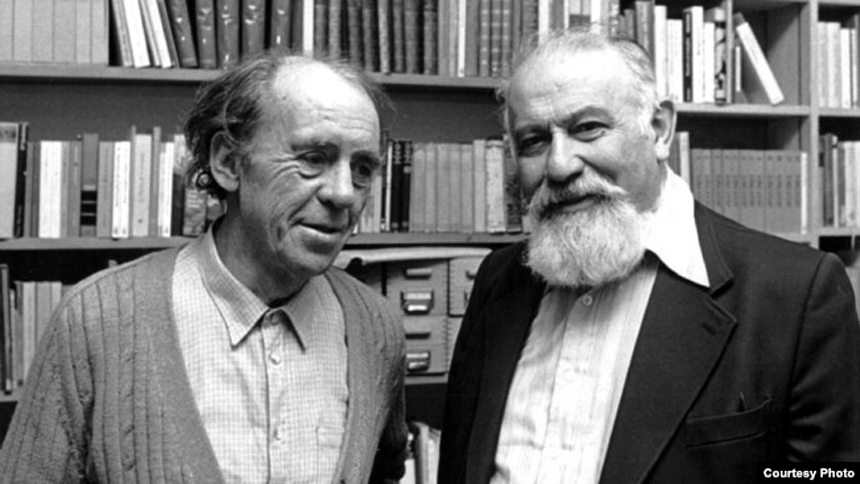
Yurii Shapoval: In fact, Kopelev was saved by his acquaintance, the Nobel laureate Heinrich Böll, a German writer who was living in Cologne at the time. At his invitation, Kopelev and his wife, Raisa Orlova, traveled to Germany in 1980, and the following year, he was stripped of his Soviet citizenship "for conduct unbecoming of Soviet citizens."
Yelyzaveta Tsarehradska: But that was a gift at the time; the Soviet regime practically let him go. Everything could have turned out much worse, considering he was generating very serious bad press for the Soviet Union.
Yurii Shapoval: Exactly. The authorities were also cunning — they didn't let Ukrainian dissidents leave. However, they did release Solzhenitsyn back in the 1970s.
Yelyzaveta Tsarehradska: However, Solzhenitsyn also held somewhat xenophobic views, which were quite focused on Russia and its greatness.
Yurii Shapoval: Yes, yes, that was the case as well. You see, these are complex characters. Solzhenitsyn was one of the first to write about the role of Ukrainian prisoners in the Kengir uprising and about Ukrainian prisoners in general, particularly UPA members — I mean, in The Gulag Archipelago. As for what Solzhenitsyn wrote later on, Kopelev would never stoop to that, as he was a different person from a different culture. He was never a chauvinist.
Yelyzaveta Tsarehradska: That is why they couldn't find common ground later on.
Yurii Shapoval: Precisely. Another assessment by Kopelev strikes me. Back in the 1990s, while abroad, he was asked for his views on the government of modern Russia. Those were still the "vegetarian" times, the Yeltsin era. Kopelev replied: "There have been worse times, but none meaner." This is yet another testament to the alienation of all governments from the people. And it does not matter what flag the rulers march under: whether it is the tricolor or the red flag. So, both in this book and in his later life, until the end of his days, he remained a man who saw the true nature of Russia, the Soviet regime, and the government that supposedly replaced it.
Kopelev's activities in Germany
Yelyzaveta Tsarehradska: What was Kopelev's role when he stayed in Germany in the 1980s and built his life there? What did he do, and what was his subsequent influence?
Yurii Shapoval: He held immense authority in Germany. Back then, there were still two Germanies, and we are talking about West Germany here. Thanks to Heinrich Böll, he became involved in the so-called Wuppertal Project, which studied mutual understanding and perception between Slavs and Germans over several centuries. The Germans deeply respected Kopelev for this and highly valued his extensive knowledge of German history and culture. Of course, he also spoke absolutely flawless German. His final years were marked by his close involvement in this project.
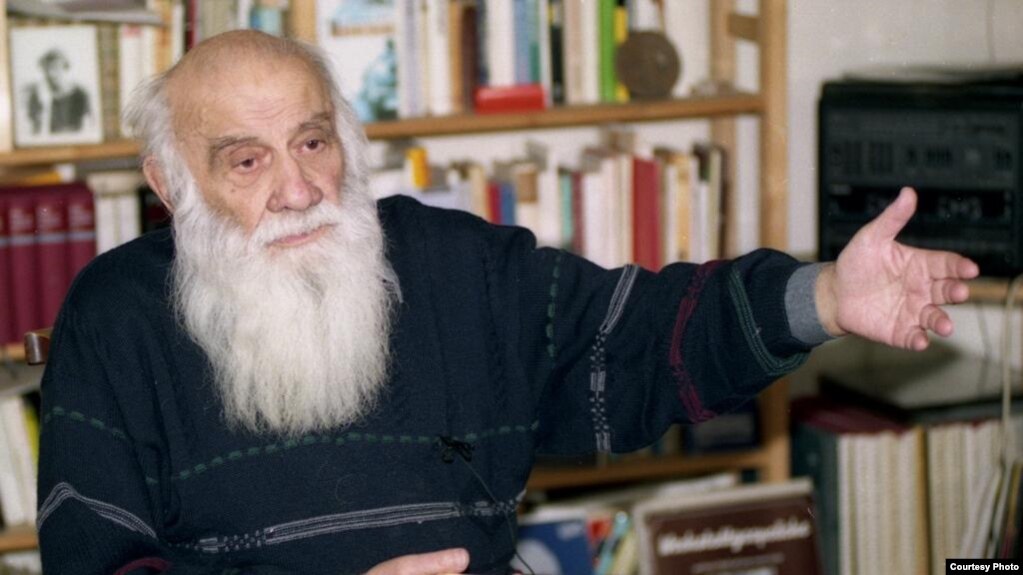
The memory of this lives on. I saw it in Cologne, where there are streets named after Kopelev. Incidentally, there is no Lev Kopelev Street in Kyiv, although I would overcome any prejudices and would have a street named in his honor here.
He was an honorary doctor of philosophy at the University of Cologne. Later, in 1990, his Soviet citizenship was restored, but he no longer needed it. Formally, this perestroika-era government practically apologized to him. However, Kopelev had more than enough of his own philological work to keep him busy, while politically he spoke out very sharply against the Yeltsin-led Russia of that time.
Furthermore, he has very interesting reflections on progress. He was no retrograde; he wrote that people are overly captivated by the latest things — this progress of incredible proportions — which could negatively impact human consciousness and culture. This is a lesser-known part of his legacy.
This program is created with the support of Ukrainian Jewish Encounter (UJE), a Canadian charitable non-profit organization.
Originally appeared in Ukrainian (Hromadske Radio podcast) here.
This transcript has been edited for length and clarity.
Translated from the Ukrainian by Vasyl Starko.