




From Lviv University to introducing the concept of genocide: the story of Raphael Lemkin
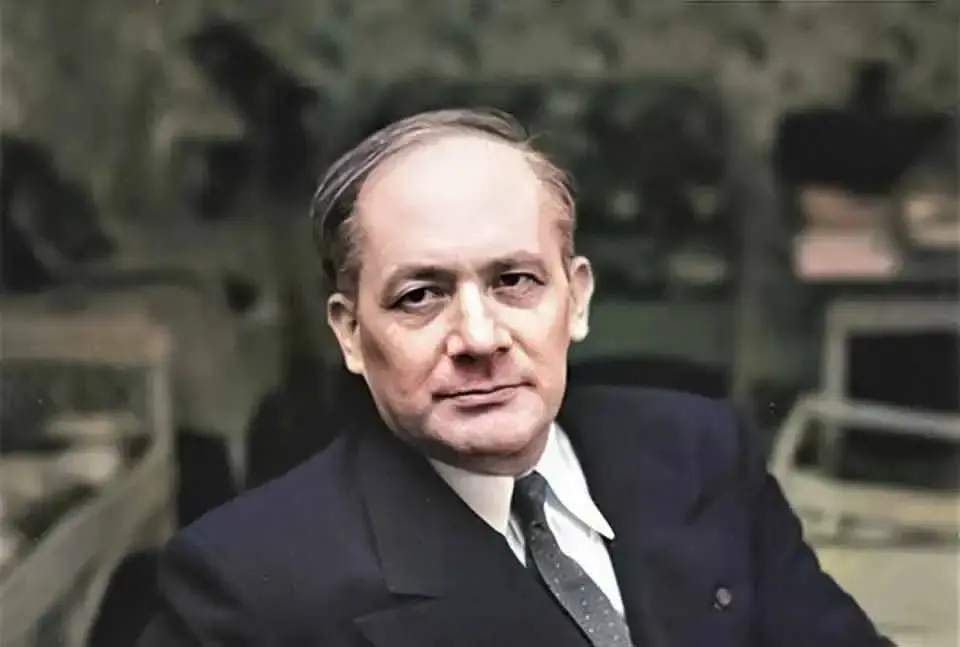
Raphael Lemkin was a lawyer of Jewish origin, a graduate of Lviv University, the author of the concept of genocide, and the initiator of the Convention on the Prevention and Punishment of the Crime of Genocide. Viacheslav Likhachov, a historian, orientalist, political scientist, and member of the expert council at the Center for Civil Liberties, discusses his life and activities. Lemkin was born 24 June 1900 and died 28 August 1959.
Recognition of Raphael Lemkin's contribution worldwide
Yelyzaveta Tsarehradska: I first learned about Raphael Lemkin when reading Philip Sands' absolutely fantastic book East West Street. I was utterly taken aback by the remarkable life of Lemkin and the significant contributions he made to the history of law, Ukraine, and the world. However, he is not widely known, although this may be just my perception. From your point of view, why is it that such prominent personalities do not have the popularity that I think they deserve?
Viacheslav Likhachov: First of all, Raphael Lemkin's name is not entirely unknown. His legacy is now more widely recognized than it was, say, in the 1980s, even though he was lonely and largely unknown to the general public in the last years of his life. Second, he was not a public figure in the usual sense. He did not lead any global civil movements, nor was he a public leader, like Mahatma Gandhi. He was a lawyer by profession and could be successful in various fields.
Raphael Lemkin promoted an important idea, remaining behind the scenes. The very mechanisms of creating the legal history of the modern world are usually not public. For example, we do not know the name of the author of the UN Declaration of Human Rights, which was adopted almost simultaneously with the Genocide Convention.
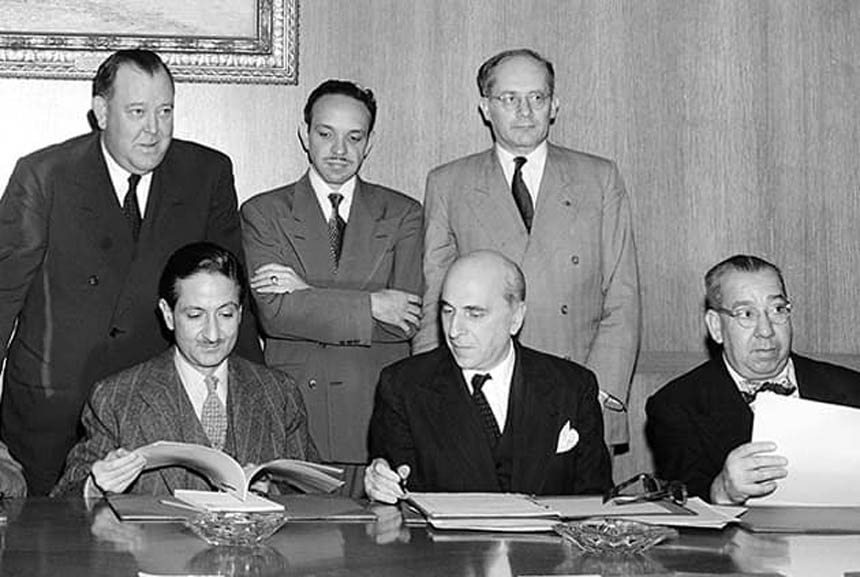
Of course, different people made their contributions, and we cannot say with certainty who was the first to articulate the need to consolidate fundamental human rights at the public level, so that all states would recognize it. Thus, it is rather an exception when a person, during their life, manages to articulate a particular concept, convince everyone of its importance and necessity, and even implement it at least at the declarative level. Raphael Lemkin himself believed that he was not very successful in his life's calling. But it is quite an exception for a person to conceive of such a concept, articulate and introduce it, and then see it fixed in law during their lifetime. In this sense, he was, one might say, happy.
Childhood and formative years
Yelyzaveta Tsarehradska: That is also true. Let's start from the beginning. What shaped Lemkin as a person? After all, he graduated from Lviv University, where he studied law. What was his life path like? Who raised him? How was he formed as a person?
Viacheslav Likhachov: If you asked him, he would probably say that books shaped him. He may have written about it in his biography; I don't remember for sure. Lemkin took many of his ideas, thoughts, and feelings from what he read. It made a huge impression on him.
According to his memoirs, he was first struck by the idea that people can be killed, deprived of the right to life, only because of belonging to a community when he was ten years old and reading Quo Vadis by Henryk Sienkiewicz. He learned about the persecution of Christians in the Roman Empire at the time of Nero. This pushed him towards the path he followed all his life.
Lemkin came from a Jewish family that lived in the territory of the Russian Empire. They lived in the Grodno Province in what is now Belarus. He was born in 1900, and his parents had two more sons. They were raised at home by their mother, who was a fairly developed person. They had a library at home, which later burned down during the First World War. Raphael's father worked on leased land himself. They were a family of farmers.
Raphael knew several languages since childhood. Polish, Russian, and Yiddish were spoken at home. Being simultaneously immersed in different worlds helped Lemkin see different cultures at the same time. The complex and tragic history of this region in the early 20th century was, in fact, a significant formative factor for him.
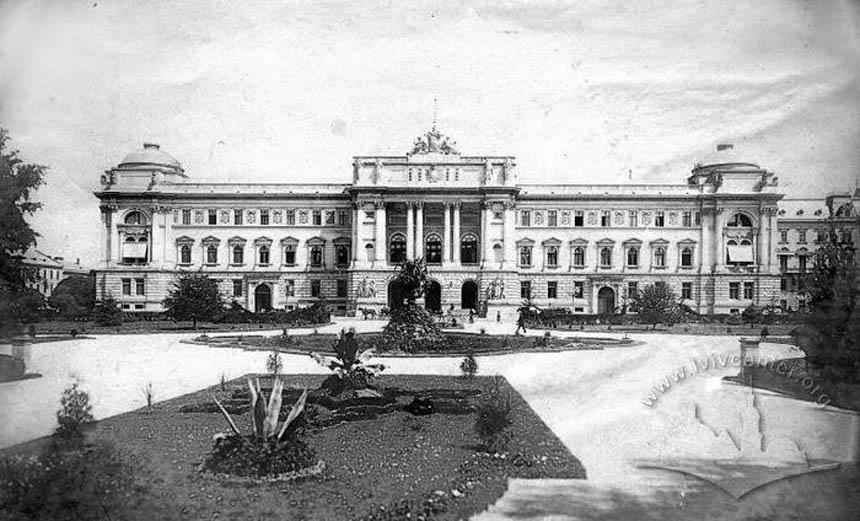
During the interwar period, the area where Lemkin lived became part of Poland, and he ended up in Lviv. Initially, he attempted to study at the Jagiellonian University in Kraków, and subsequently continued his studies at Lviv University, from which he graduated. He experienced shifting borders, the emergence of new states, and different attitudes towards minorities and vulnerable communities.
Of course, Lemkin encountered the context of antisemitism in Poland. Before that, the First World War literally swept through the territory where his family lived. He and his parents hid in the forest during the German occupation. He then served in the sanitary battalion during the Polish-Bolshevik War in 1919. That is, Lemkin experienced this history. And then the Second World War broke out. The complex history of this region, with its intricate layering of cultures — from his family to the society around him — encompassed books, languages, and culture. Initially, given his proficiency in multiple languages, he pursued a degree in linguistics. All this shaped him as a person and, probably, defined the circle of his interests.
Raphael Lemkin and his family during World War II
Yelyzaveta Tsarehradska: Where did Lemkin and his family live during World War II, and what happened to them?
Viacheslav Likhachov: Lemkin's family, his parents, and nearly all of his relatives died in the Holocaust. He lived in Poland in 1939, as he had for the previous two decades. Lemkin even managed to enlist in the army during the defense of Warsaw. However, with the help of former colleagues, he was able to get to Lithuania and Sweden, where he stayed for a while, and then travelled to the United States. When possible, he maintained contact with his relatives. First in Stockholm and then in the USA, he studied what had happened since the German occupation of Poland through his family, which is also indicative of the dramatic nature of the region's history.
Raphael's brother, his wife, and their two sons survived. Lemkin helped them get visas and leave for Canada in 1948. His brother's family survived only because, following the Soviet occupation of Eastern Poland, they were deported to Central Asia, where they were forced to work in exile. Thus, this part of the family was saved, regardless of their will. This is a miniature representation of Polish history, the history of Polish Jews during World War II, caught between two totalitarian regimes that divided Poland and destroyed its population.
Emigration and the introduction of the concept of genocide
Yelyzaveta Tsarehradska: What happened to Lemkin in emigration, first in Sweden and later in the USA, in terms of professional activities, legal practice, and research? What difficulties did he face here?
Viacheslav Likhachov: Lemkin was well-known by then. He was already preoccupied with the idea of introducing legal responsibility at the international level for incitement to violence, repression, and destruction of ethnic or religious groups. He was a highly professional lawyer in various fields, primarily in criminal law, but not only. Lemkin was the secretary of the commission responsible for creating Polish legislation and taught at universities.
Thanks to his extensive knowledge of languages and his presence in the international legal environment, Lemkin was well-known in various countries and published articles in French, English, and German. It was thanks to his acquaintances and friends that he was saved. So, roughly speaking, he had a place to work. He taught at Stockholm University and in the United States, first at Duke University and subsequently at several other institutions. That is, he was professionally recognized, despite being an emigrant and exile.
Of course, Lemkin could not have known back in 1939 or 1940 that all Jewry under the Germans was doomed to destruction. However, even then, while analyzing the legal acts and actions of the Third Reich, he came to the conclusion that the Third Reich could conceal its own crimes under a "legal umbrella" and tried to inform the world about this. His most thorough work was about the policies of the Axis countries in the occupied territories. In it, Lemkin warned the world about the danger of genocide, introducing the concept for the first time.
The work was published in 1944, although it was finished earlier, probably in 1942. It gathered dust for two years, as Lemkin sought support for its publication. After the publication, he and his concept became famous.
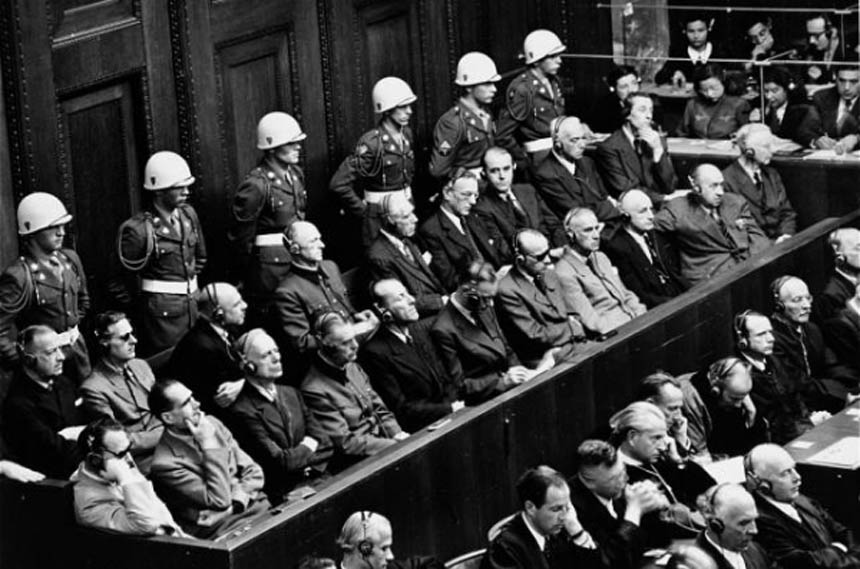
Lemkin became famous not as a law professor but as the author of the concept of genocide. The United States engaged him as an advisor to the US Supreme Court in the Nuremberg Trials. Lemkin then actively promoted the adoption of the Convention on the Prevention and Punishment of the Crime of Genocide, which was eventually adopted by the UN General Assembly in Paris in 1948.
Lemkin made enormous efforts to ensure that specific countries joined this declaration and supported it. It was not as obvious as it seems to us now, when this is an unshakable pillar of international law. Suffice it to recall that the United States joined the Genocide Convention only in the 1980s. To a large extent, Arab countries were the first to support this Convention.
Lemkin was not just an ethnic Jew; he also supported the Zionist movement all his life, participating in Zionist political activities. But at the same time, he was able to find a common language with representatives of Egypt and Lebanon, which significantly contributed to the adoption of the Genocide Convention early on. Lemkin exhibited outstanding diplomatic talent during these years.
Controversies around the Genocide Convention
Yelyzaveta Tsarehradska: Were there people with other points of view or those who rejected Lemkin's ideas? Or was this topic unambiguous and one that did not generate resistance among his colleagues?
Viacheslav Likhachov: On the one hand, the topic of genocide is unambiguous, since everyone recognizes that killing people based on the fact of their birth is intolerable and criminal, at least after World War II. Before the war, Lemkin felt alone in this desire to bring to justice the criminals guilty of millions of deaths.
When he was a student at Lviv University, Lemkin chose the Armenian genocide as the topic of his coursework in 1921. This was influenced by the trial of an Armenian student who killed Talaat Pasha, one of the organizers of the genocide. At that time, Lemkin asked why we put a person on trial for one murder, while the murder of a million people remained unpunished.
At the 1933 League of Nations conference in Madrid, Lemkin insisted for the first time on the introduction of such international responsibility, but received no support. Poland, the state he represented, even forced him to resign from his government posts after that. He then worked in private universities, no longer cooperating with the state. It was the year when Hitler came to power, and the terrible massacre of Syrians took place in Iraq, but the world was not ready to accept this concept at the time.
After World War II ended, the Nazis were defeated, and information about their crimes became public knowledge, everyone was ready to agree that it was wrong to kill people by the millions and that there had to be responsibility for this. However, the concept of genocide was convenient for everyone in the political sphere, just to be used against opponents. Nobody wanted to be accused of genocide, especially considering the lack of a statute of limitations at that time.
Nobody wanted to be reminded of situations from the colonial past or even events of that time. Therefore, there was an active artificial inhibition and narrowing of the criteria of genocide. The legally established meaning of this term was that it was a policy of extermination directed against an ethnic, national, racial, or religious group. Meanwhile, Lemkin believed that social groups also had to be included. Of course, the Soviet Union and its satellite China, where entire social classes were wiped out during the Cultural Revolution, were against it. Therefore, due to the political situation, Lemkin's ideas were incorporated into a legal definition in a highly limited manner.
Lemkin and Ukrainian contexts
Yelyzaveta Tsarehradska: When Lemkin was developing the concept of genocide and when it was finally recognized and consolidated, what legal processes took place in Ukraine?
Viacheslav Likhachov: At the time when Lemkin was developing his concept, Ukraine was a Soviet republic, with the exception of the interwar period, when part of its territory was annexed to Poland. Clearly, there was no talk of this concept in the Soviet Union, and this line of thought was not pursued in general.
It was considered natural that certain categories of people were more useful in achieving the "collective good." As part of such social engineering during the construction of communism, it was considered normal for some groups to have their rights limited.
It was possible to evict or repress certain categories of the population: on class and social grounds, as was the case with Raphael's brother Isak in Western Belarus, or on ethnic grounds, as happened with millions of Germans, Crimean Tatars, and many other ethnic groups who lived in the Soviet Union, including Ukraine. The ethnic composition of the population was changed as a result of deportation, during and after the war.
The Soviet Union clearly had no legal restrictions oppressing people on the grounds of religion, ethnicity, or nationality. But then the USSR seized on the concept of genocide, after social groups were removed from its definition. In this form, it could be used against the USA, South Africa, and Western colonialists. Ukraine, which was not a separate subject of international law, followed suit.
As far as the Ukrainian diaspora is concerned, members of the Ukrainian Congress Committee of America were friends with Raphael Lemkin and collaborated with him. Lemkin did not use the term Holodomor but repeatedly brought up the man-made famine in Ukraine as an example of genocide in his Madrid speech in 1933. He wrote a separate article about it, which Russia recognized as extremist material and banned ten years ago. Lemkin was aware of what was happening in the Soviet Union and considered it an example of genocide, as clear as the Armenian genocide before World War II.
This program is created with the support of Ukrainian Jewish Encounter (UJE), a Canadian charitable non-profit organization.
Originally appeared in Ukrainian (Hromadske Radio podcast) here.
This transcript has been edited for length and clarity.
Translated from the Ukrainian by Vasyl Starko.
NOTE: UJE does not necessarily endorse opinions expressed in articles and other materials published on its website and social media pages. Such materials are posted to promote discussion related to Ukrainian-Jewish interactions and relations. The website and social media pages will be places of information that reflect varied viewpoints.