




How the Studites hid Jewish children during the Holocaust
[Editor’s note: Yuriy Skira won Encounter: The Ukrainian-Jewish Literary Prize in 2024 for his book Solid. The Life-Saving Footwear Factory. His book Beckoned: Studite Monks and the Holocaust was shortlisted for the prize in 2021.]
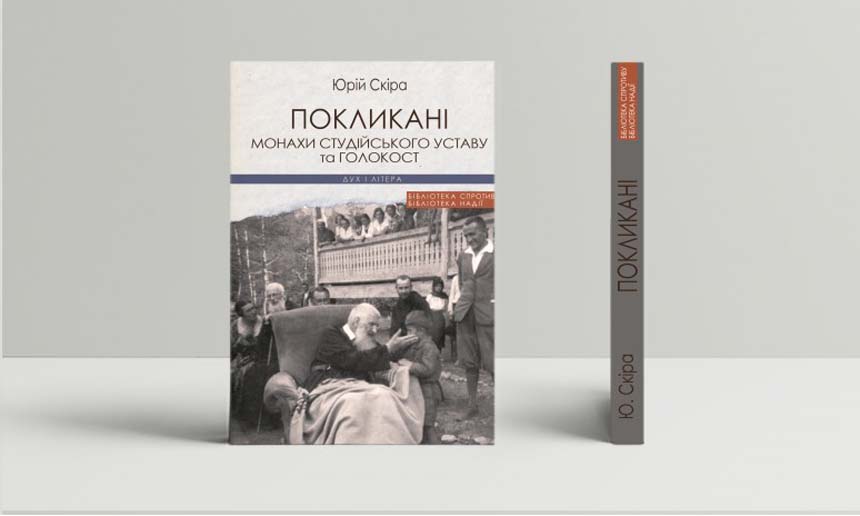
Who are the Studites? How did they and other monastic orders organize a network to hide Jewish children during the Holocaust? These questions are answered by historian Yuriy Skira.
The Studites and their activities
Yelyzaveta Tsarehradska: You published a book about the rescue of Jewish children in Studite monasteries during the Nazi occupation and the Holocaust. To begin with, could you explain who the Studites are? What kind of phenomenon and movement is this?
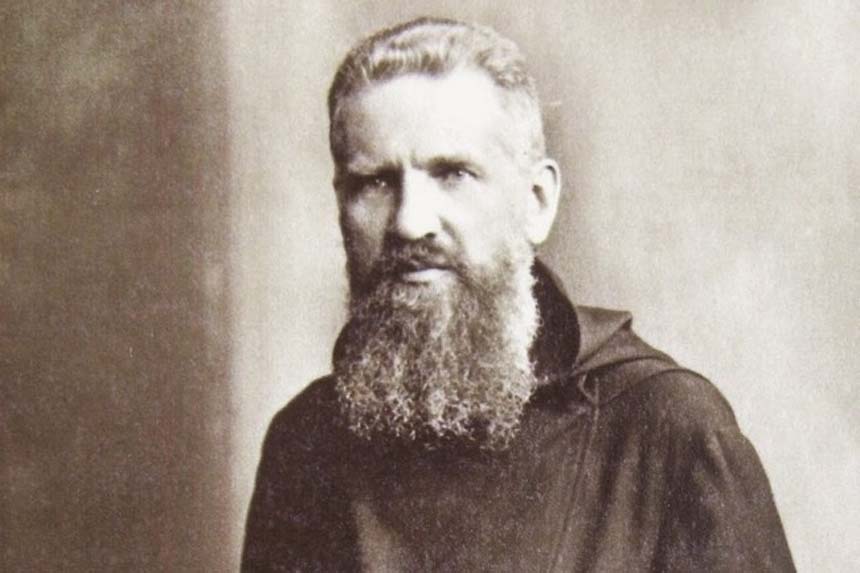
Yuriy Skira: Studites is more of a folk name. Officially, they are Monks of the Studite Rule. This monastic congregation includes both men and women and is closely connected with Metropolitan Andrei Sheptytsky. Their monastic tradition itself is very ancient; it was lost over the centuries and then revived at the end of the 19th century. Metropolitan Sheptytsky supported the revival of Studite monasteries. He was extremely invested in this, together with his brother Klymentii, who later led the Studites in the first half of the 20th century.
At that time, they were already a close-knit community of monks who tried to live according to the traditions of the Eastern Church. The Studite congregation of nuns was revived in the 1920s. Mother Yosyfa (Viter) was a key figure in their history in the 20th century.
Yelyzaveta Tsarehradska: Where were the Studites most densely represented? In what regions, particularly within Ukraine?
Yuriy Skira: Ecclesiastically, it's the territory of the Lviv Archdiocese. Today, various Studite houses, monasteries, and convents are scattered across the Lviv, Ternopil, and Ivano-Frankivsk regions.
How the Studites started rescuing Jewish children
Yelyzaveta Tsarehradska: How did the Studites rescue Jewish children? What is the beginning of this story?
Yuriy Skira: The Studites started hiding Jewish children in 1942. There is a very important event in this story: the rabbis who were already in the Lviv ghetto approached Metropolitan Andrei Sheptytsky, asking him to hide some literature that could be destroyed.
In the course of the conversation, they asked if the metropolitan could rescue Jewish children whose parents had died and who had very little chance of survival. Sheptytsky agreed but said he had to talk to his closest circle on how to organize this and promised to give a more specific answer the next day.
He wanted to talk to Klymentii Sheptytsky, his younger brother, who led the Studite monks, and to Mother Yosyfa (Viter), who was the abbess in charge of the Studite nuns. Both agreed, saying they were ready to take on the organizational part, i.e., figuring out how to rescue those children. But no one knew how it would all work.
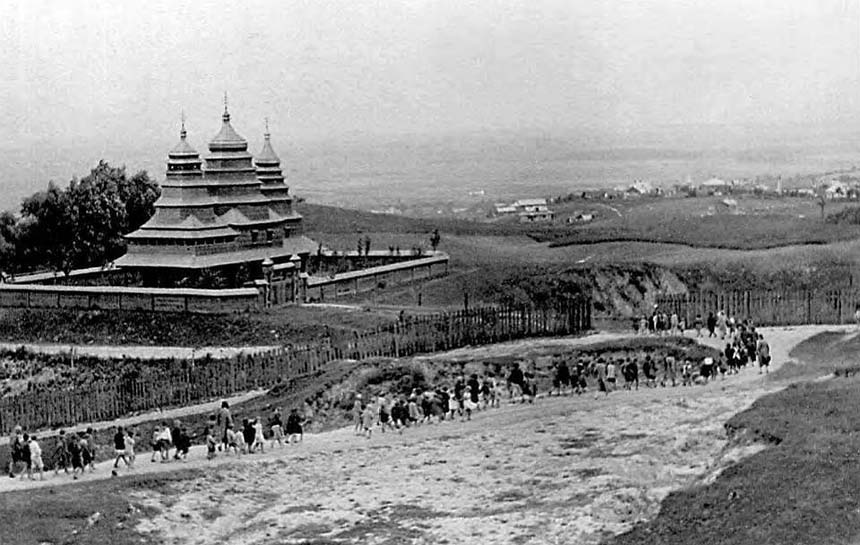
To begin with, they offered to rescue Jewish girls. Two institutions were highly significant in this story. The first was the convent of the Studite sisters in Yaktoriv, not far from Peremyshliany. The second was their house on Ubocha Street in Lviv. This house is gone; the street is now called Zbarazka, and it's hard to find your way around there, as everything has been rebuilt. The convent in Yaktoriv is in terrible condition, but at least it's still there. That was the beginning of a broader systematic rescue campaign led by Metropolitan Andrei Sheptytsky.
Who did the Studites rescue?
Yelyzaveta Tsarehradska: How many children were rescued?
Yuriy Skira: No historian can answer this question now, because there are no archival documents containing any lists. Therefore, exact numbers are out of the question.
Yelyzaveta Tsarehradska: Who can be named, at least from among famous people or those whose rescue was witnessed?
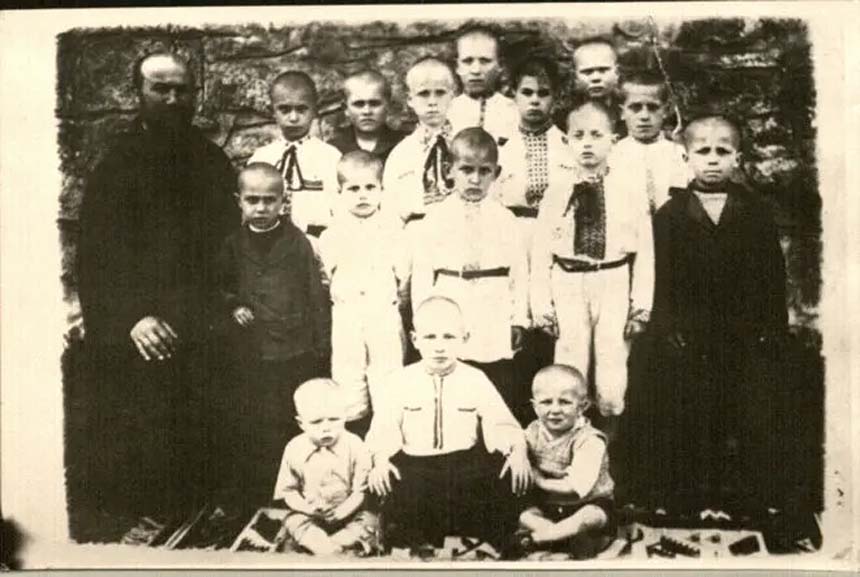
Yuriy Skira: It is indeed better to talk about the people whose rescue is known for certain. They testify or even name their friends whom they met while hiding. First of all, we should mention Herbert and Leon Chameides here. They were the sons of the Katowice rabbi Kalman Chameides. Leon hid out largely in the orphanage at the Holy Dormition Univ Lavra, while Herbert moved from place to place more frequently because his situation was more complicated.
Another person who also left much testimony is Adam Daniel Rotfeld, who served as Poland's Foreign Affairs Minister in 2005. A son of a lawyer from Peremyshliany, he was taken by the Studites to the Holy Dormition Univ Lavra, where they hid him in the orphanage.
As far as the girls who were in the care of the Studite sisters are concerned, Lili Pohlmann-Stern, who died in 2021 in London, left numerous interviews and highly valuable historical material. We can also mention the Finks, including Anna Fink, who shared particularly interesting memories of her time in hiding at 4 Ubocha Street.
Other places where Jewish children were hidden from the Nazis
Yelyzaveta Tsarehradska: Were there more monasteries or convents besides the two you have mentioned?
Yuriy Skira: There was a whole network there. In Lviv, there was the monastery of the Holy Hieromartyr Josaphat, a highly important node in this network that served a slightly older age group.
Metropolitan Sheptytsky's chambers at St. George's Cathedral became a collection point. Children were brought there; they usually stayed overnight and were taken to some monastery or convent the next day. There was also an orphanage at St. John's Lavra in what is now the Shevchenko Grove (Klymentii Sheptytsky Museum of Folk Architecture). The Solid factory near Rynok Square was used to hide children, including the Finks, for a short time, about two months.
The Studite sisters hid Jewish children in the house on 4 Ubocha Street, in another house on Ivan Franko Street in Peremyshliany, and in the orphanage at the Holy Dormition Convent in Yaktoriv.
The Studite monks sometimes served different parishes during the war if there was no priest there. Usually, two monks lived in each parish, and they would sometimes also hide one child on the spot. That is, these were very different places where Jewish children were hidden within the Lviv Archdiocese.
The dangerous art of hiding people under Nazi rule
Yelyzaveta Tsarehradska: What about the obvious risks? What contributed to the Studites' success in rescuing Jewish children? How were they able to pull it off?
Yuriy Skira: While the danger in their territory was no less severe, several factors contributed to the success of their mission. There were multiple participants in this rescue operation besides the Studites: sisters' servants, sisters of the Holy Family Congregation, sisters of Charity of St. Vincent de Paul, Redemptorists, and Basilians. That is, each congregation contributed something. What they had in common was extreme circumspection and an ability to act in harmony during crises.
Let's move away from the Studites to Przemyśl, where the nuns hid Jewish children in their orphanage. Both the nuns there and the sisters' servants in Ternopil always had a priest who was, to use a modern turn of phrase, a crisis manager for their mission. He solved critical issues and was always in contact with the sisters, helping them.
For example, Rev. Vasyl Velychkovsky was this kind of person in Ternopil. He is a major figure in the Greek Catholic Church because he served as the Archbishop of the Underground Church after the war. He helped the sisters when they needed documents, ration cards, and other things. In Przemyśl, the nuns had Rev. Vasyl Hrynyk, a cult figure in post-war Poland who helped preserve the church during the communist persecution. In Stryi, the sisters of the Holy Family Congregation had Rev. Artemii Tsehelsky, who helped them tremendously with hiding Jewish children.
Returning to Lviv, the sisters of the Holy Family Congregation, who lived in a convent in Znesinnia, not far from the Lviv ghetto, had Rev. Filaret Yaminsky. He was a priest of a respectable age, but nonetheless a great help to them in times of crisis.
As far as the Studites are concerned, I would even say that they were technically prepared. For example, if there was a search or danger, they would ring to let the people in their care know they had to hide. That is, there were small things indicating that the process was very well-honed.
I have not found a single case where the Studites or members of other congregations were exposed. The only situation I have questions about as a researcher concerns the Sheptytsky Hospital in Lviv, where the sisters of Charity of St. Vincent de Paul hid a Jewish woman, but the Germans found her. The system failed in this case, but we do not know the details.
What is known about Mother Josyfa (Viter) and other sisters
Yelyzaveta Tsarehradska: What could you tell us about Mother Josyfa (Viter)?
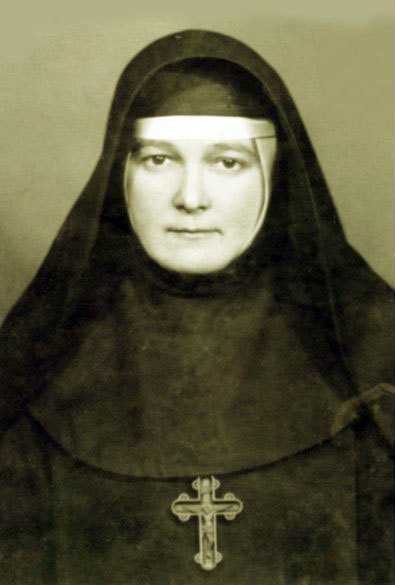
Yuriy Skira: She is a monumental figure from the viewpoint of the history of the Studite sisters. She was successful in greatly expanding their convents. In their memoirs, Holocaust survivors portray her in extremely warm terms, emphasizing her dedication to the cause of rescue, kindness, sensitivity, attentiveness to people, and readiness to come to the rescue and solve problems in critical moments.
These memoirs construct a monument to Mother Josyfa (Viter), which overshadows other sisters. This is a very interesting question, and I have not found any mentions or descriptions of other sisters anywhere. People refer only to Mother Josyfa (Viter). This is also notable and informative about how people remember and what they want to share.
On the difficulty of research and the importance of the topic
Yelyzaveta Tsarehradska: This topic remains under-researched. Is it due to a lack of sources or something else?
Yuriy Skira: I did not really have a problem with information sources. Various archives in Ukraine and abroad store testimonies and are available, some even online. Why the topic has not attracted scholars' attention is an open question. Many Studites and members of other congregations who took part in those events during the Holocaust were still living in the 1990s. However, at that time, research on the history of the Greek Catholic Church focused on communist persecution and the Underground Church period. Therefore, there was no great interest in this story. But everything changes, and now you can find something to read on this topic.
Yelyzaveta Tsarehradska: How does your research help us understand that period? Why do we need to remember this information?
Yuriy Skira: We have to know this because such studies are quite well developed in Western Europe, for example, research on how the Roman Catholic Church and its members helped the Jews. Until recently, this aspect was practically absent in our country, and it looked a little strange. There is so much material out there, yet nothing to read about the Greek Catholic Church in this regard. Thus, this Greek Catholic aspect needs to be present in a broader context.
From a purely human viewpoint, it's the memory of great people who took responsibility during the darkest pages of history. This is experience. It's important to study people's experiences, hardships, and the motivations of various participants. This is important for history and for understanding Ukrainians at that time.
This program is created with the support of Ukrainian Jewish Encounter (UJE), a Canadian charitable non-profit organization.
Originally appeared in Ukrainian (Hromadske Radio podcast) here.
This transcript has been edited for length and clarity.
Translated from the Ukrainian by Vasyl Starko.
NOTE: UJE does not necessarily endorse opinions expressed in articles and other materials published on its website and social media pages. Such materials are posted to promote discussion related to Ukrainian-Jewish interactions and relations. The website and social media pages will be places of information that reflect varied viewpoints.