




Kyiv Jews helped create the Kyiv Polytechnic Institute and gave rise to Golda Meir
Yulia Smilianska, Director of the Institute for Jewish Studies, talks about Jewish life in Kyiv over many centuries.
History of Kyiv Jews
Yelyzaveta Tsarehradska: What did Kyiv sound like in the past? Where was Yiddish spoken the most? How did Kyiv Jews live? I am discussing these questions with Yulia Smilianska, Director of the Institute for Jewish Studies.
Yulia Smilianska: If you delve into it, it will be a very deep dive because we don't know when Jews first appeared in Kyiv. What we do know is that the Radhanites, Jewish merchants, established trade routes between Europe and India sometime in the 7th to the 9th centuries. One of them passed along the Dnipro, and it's quite possible that Jews were already present on these hills during that period. Kyiv was formed as a port city and a meeting point for different peoples, languages, and goods, which propelled the city to prosperity.
However, the first written record of Jewish presence in Kyiv dates back to the 10th century CE. It is the famous Kyivan Letter.
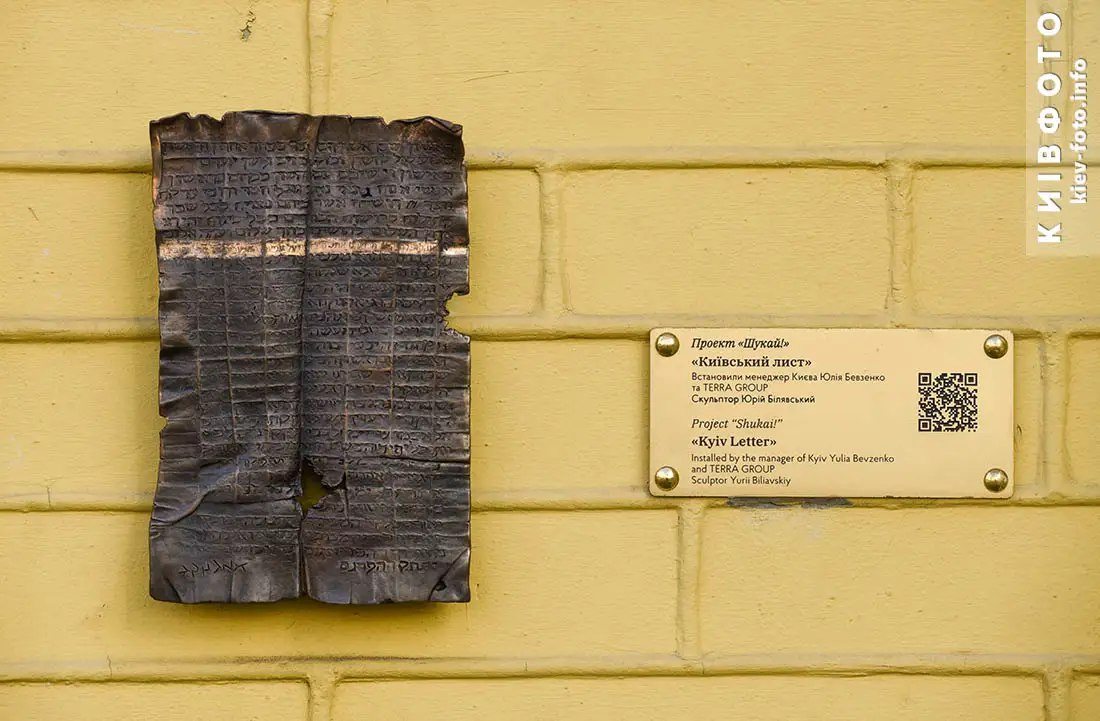
This letter was written after a very unfortunate incident. Two Jewish brothers lived in Kyiv. One never dealt with money, while the other was a moneylender who also received money. He once received 100 coins, went somewhere with them, and was killed, and these coins were taken away. The first brother, Yakov Ben Hanuka, was his brother's guarantor, so he had to return 100 coins. Yakov never had that kind of money. He found himself in slavery for an entire year, after which the Jewish community raised 60 coins and bought him out on bail. However, he had to return the remaining 40 coins. So, he was given this letter and had to visit Jewish communities across Europe to collect the necessary amount.
We don't know whether he succeeded, but the letter was found during archaeological excavations in Cairo many centuries later. It was kept in a genizah, a kind of document cemetery. In Jewish tradition, documents bearing the name of the Almighty are not to be destroyed, so they are buried like people. This genizah contained a great many documents, which we sent to different cities, with the majority going to Cambridge.
Norman Golb found this letter many more decades later, in 1962. He invited the great Ukrainian-American historian Omeljan Pritsak to join him, and they published the letter, supplying it with excellent commentary. A list of personal names was provided at the end, which is crucial for me as it gives us several names of Jews who lived in Kyiv in the 10th century, while we know very few names from the 10th-century Kyiv.
The later history of Kyiv Jews is rich and varied. Kyiv was part of the Great Duchy of Lithuania, the Kingdom of Poland, and then the Polish-Lithuanian Commonwealth. Great Talmudists lived in this city. For example, Moses of Kyiv is known worldwide, and his texts are still read occasionally. However, as soon as Kyiv became part of Muscovy, things changed dramatically. Jews were forbidden to live in Muscovy throughout its history.
Yelyzaveta Tsarehradska: Are you talking about the Pale of Settlement?
Yulia Smilianska: We are talking about the 17th century, and the Pale of Settlement was introduced later. During the period I'm referring to, all Jews were expelled from Kyiv, and none were left there by 1794.
How was the Pale of Settlement formed? When Poland was torn apart, the Russian Empire annexed lands densely populated by Jews, who, according to Russian laws, were not allowed to live in the country. Something had to be done. Catherine II issued a special decree allowing Jews to live where they already lived. That was how the settlement boundary emerged, and Jews were forbidden from leaving these lands a few years later. That is, the decree initially had the nature of permission, which was later turned into prohibition.
The Pale of Settlement was such a shameful thing. The Russian Empire was practically the only country in the world with something like this.
Kyiv and Kharkiv gubernias were not part of the Pale of Settlement, unlike all other Russia-ruled lands in Ukraine. Interestingly, Jews had the right to live in Zhytomyr, Berdychiv, Bila Tserkva, and Sviatoshyn but not in Kyiv. Everyone understood that Kyiv was a unique city that had existed for 800 years within the boundaries outlined by Yaroslav the Wise. That is, Kyiv at that time was the Golden Gate, Starokyivska Hill, and Podil. Everything else was not included in the Pale of Settlement.
The Kyiv Jewish community began to take shape in the late 18th century. Initially, Jews lived, I believe, somewhere in the Zvirynets area because the first Jewish cemetery was located there. You will find a botanical garden in its place now. When you enter it, on the right is an area with climbing plants, which was the territory of the former Jewish cemetery. A street near the botanical garden was named Staroyevreiska (Old Jewish Street) until the 1920s.
Jews lived in Kyiv under Catherine and Alexander I, while Nicholas I expelled all Jews from the city by a decree in 1827. The governors tried to keep at least some Jews until 1832, saying that all trade would stop, which would be very unfortunate for the city. But Nicholas I was relentless, and all Jews were evicted.
It was only in 1859, after the death of Nicholas I, that a decree was issued on the so-called useful Jews. What were they? Merchants (of the first and later of the second guild) and those with higher education. These Jews were allowed to live outside the Pale of Settlement, particularly in Kyiv.
Then, the first highly influential Jewish figures appeared in Kyiv. Those were merchants: the Brodskys, first of all, Israel Markovich Brodsky, then the Galperins, then the Zaks, and David Semenovich Margolin a little later. They were businessmen, first and foremost, but also made charitable donations. In the Jewish tradition, you must give a tenth to charity if you have any income. So, if your income is very high, your donations also become substantial.
Charitable institutions, most importantly hospitals, began to spring up. The enormous Jewish hospital, which today is the Kyiv Regional Hospital, was built exclusively with the money of Jewish philanthropists — the Brodskys and then the Galperins. Everyone in the Jewish community contributed. If the donor had a lot of money, they could equip an operating room. They could buy everything for one bed if they didn't have much money. If people were absolutely poor, they chipped in a small amount of money at least once a year for one patient's visit to this hospital.
About the charity of Kyiv Jews
Yelyzaveta Tsarehradska: Were charitable donations channeled also into other domains, such as education and culture?
Yulia Smilianska: Of course. Let me first add a little more about medicine. The hospital the Zaitsevs built on Kyrylivska Street continued to be used as a regular and maternity hospital throughout the Soviet era. Lev Brodsky had a wonderful building constructed on what is now Bulvarno-Kudriavska Street for sick children of any faith, not just Jewish. In Soviet times, it housed a children's clinic.
I'll digress from the topic of charity here for a while. In the early 1860s, the Kyiv governor conducted statistical analysis and realized prices were rising. They increased by a factor of 2.5-3 in the areas where the Jewish community lived, i.e., in the Pale of Settlement around Kyiv. Meanwhile, they grew sevenfold in Kyiv because non-Christian merchants had a monopoly there.
The governor asked permission to allow small Jewish merchants to trade outside Kyiv twice a week in order to provide the city with goods at affordable prices.
Jews were indeed allowed to trade in a square on the edge of Kyiv starting from the mid-19th century. It is now called Halytska Square, previously Peremohy Square, but Kyivans always called it Yevbaz [short for Jewish bazaar. — Transl.]. The Jews would come, trade, and return to the Pale of settlement. However, a Jewish settlement formed around Yevbaz over time.
You asked where Yiddish was spoken in Kyiv. You could hear it on Dmytrivska Street in the 1970s. There were large yards, wooden buildings, some sheds, and barracks. Many poor Jews lived there, and you could hear something like this: "Monya, Froime, Moishe, Tetianka, Vasylechko, come to lunch." That is, they fed all the children in the yard, both Jewish and non-Jewish. The food was cooked in huge bowls right in the yard.
Now, back to the topic of charity. Education was an equally important field of charitable activity. Kyiv received increasing numbers of poor people, and the education issue came to the fore. A wealthy merchant could hire a private teacher. But when there were many poor people in Kyiv and melamedim, traditional Jewish teachers, did not have the right to live in the city, they began to build some educational institutions — of course, at the primary level of schooling.
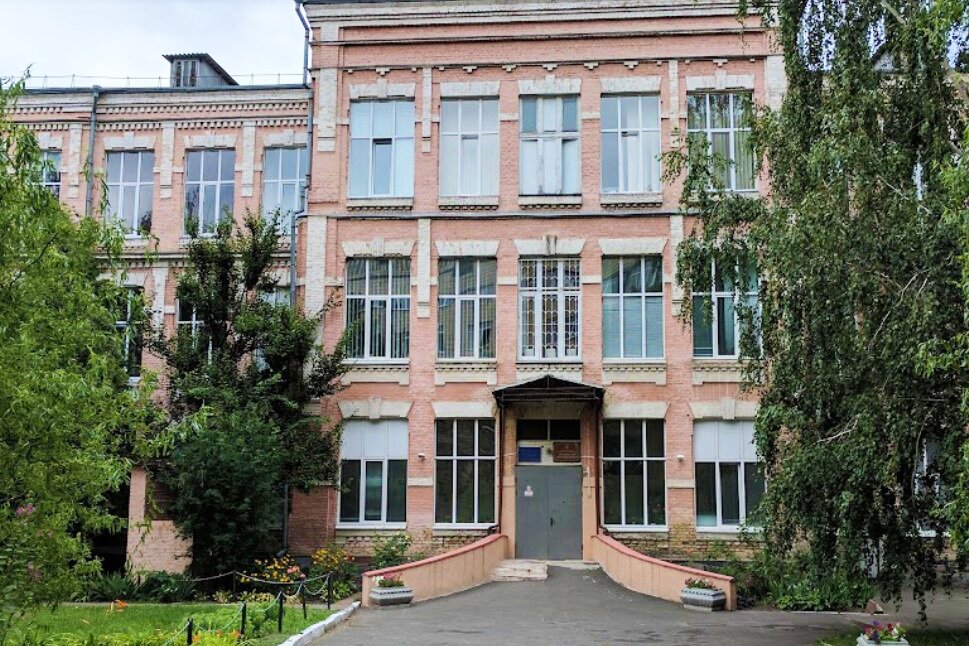
Solomon Brodsky, brother of Lev and Lazar, died, and his brothers built a vocational school named after him. It is now a building of the Paton Institute on Antonovycha Street. The vocational school was in a grand, palace-like building with American equipment. There were also several commercial schools, including the Kyiv Commercial Institute. Its building is now home to the Drahomanov Pedagogical University.
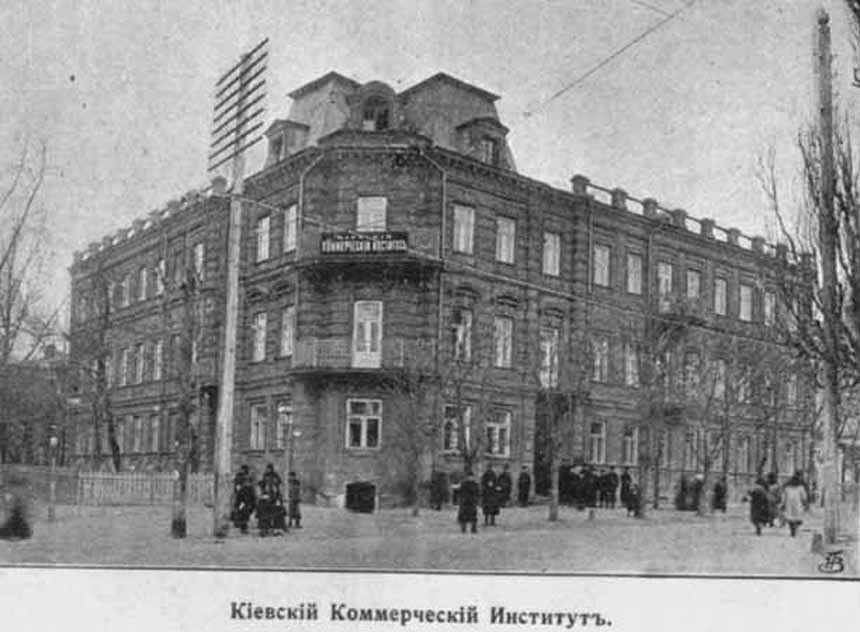
At the time when there was a Jewish quota in the Russian Empire (a shameful thing when only a small percentage of Jewish students were able to study in universities), the Kyiv Commercial Institute had three outstanding students. They were Isaac Bobel (later Babel), the famous poet David Hofstein, and Solomon Vovsi, better known as Solomon Mikhoels. He was the founder of the Jewish theater and head of the Jewish Anti-Fascist Committee. But such people were no longer needed in the Soviet era, and he was killed by Stalin.
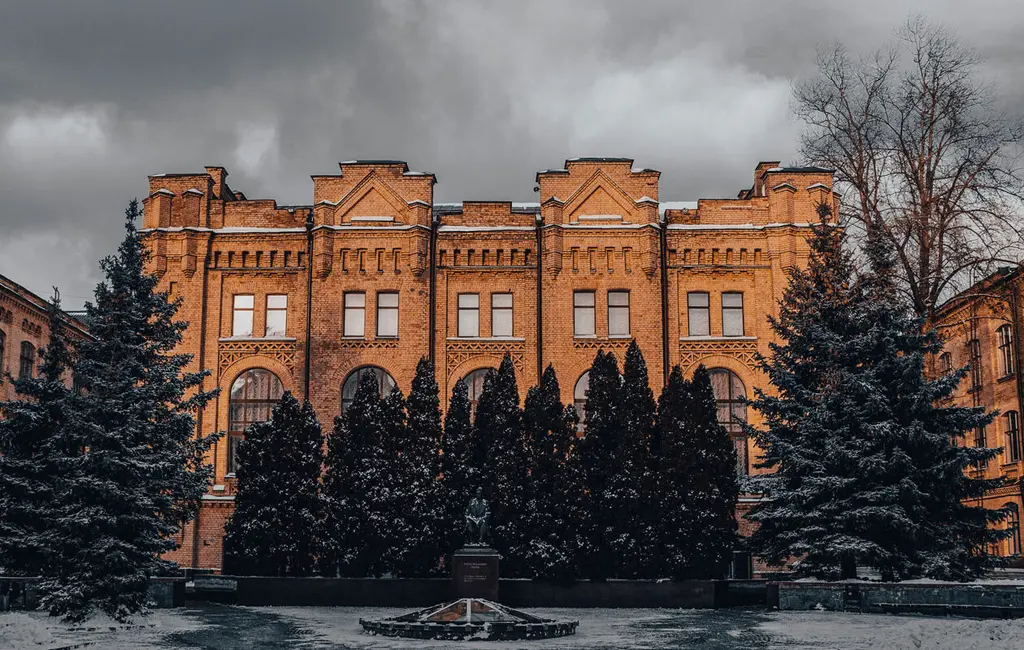
We also remember that Kyiv was the sugar capital of the Russian Empire at the turn of the 20th century, with sugar capital flowing to and being deposited in Kyiv banks. There was a great need for people who would work at sugar factories. Therefore, non-Jewish (Tereshchenkos and Symyrenkos) and Jewish entrepreneurs (Brodskys, Galperins, and Zaks) joined forces to found the Kyiv Polytechnic Institute. That was another significant contribution to Kyiv's culture, science, and architecture.
Where Yiddish was spoken in Kyiv
Yulia Smilianska: Rich merchants and people with higher education had the right to live wherever they wanted. So, they lived in what is now the Lypky district, which still has many fabulous mansions. In contrast, artisans coming to the city had to pass a very difficult exam to obtain the right to live in Kyiv. They were allowed to live in the Lybidska police district along the Lybid River and the Ploska police district, beyond the ramparts and behind Nyzhnii Val in Podil. Podil is traditionally considered a Jewish district, but only wealthy Jews lived there during the Russian Empire, while poor Jews settled beyond the ramparts.
A carpenter named Mabovitch also lived beyond the ramparts to begin with. He came to Kyiv, passed the exam, made a mahogany chess table, and got a job. He made furniture for the Solomon Brodsky Vocational School. But then the work ended, and he was left with no money. His family was starving, and their four children died one after another. When a daughter was born in the family, they named her Golda. A wealthy Jewish family then took in her mother as a wet nurse. Golda later wrote that she had survived thanks to her milk-brother. The family saved some money and moved to Baseina Street. The girl later became known as Golda Meir and served as the Prime Minister of Israel in 1969–74.
An increasing number of Jews moved to live in the neighboring streets in Podil. Osip Mandelstam wrote that three languages — Ukrainian, Polish, and Yiddish — were spoken in Podil. He eloquently described the "martyrs of private capital," such as the carpenter Rosiner, who wept like a tree.
Jewish contractors had a major impact on Kyiv's architecture. The most prominent of them was Lev Ginzburg. His company built nearly all large objects, including the Bessarabsky Market, Lazar Brodsky's last gift to Kyiv. Brodsky allocated funds for its construction in his will. Ginzburg also built the Solovtsov Theater, the Opera Theater, the Polytechnic Institute, the Commercial Institute, and many other important buildings. Mandelstam wrote that "Kyivites told legends about the incredibly rich contractor Lev Ginzburg who died a beggar in a Soviet hospital."
What to read about Kyiv Jews
Yelyzaveta Tsarehradska: What literature would you recommend to those interested in the history of Kyiv Jews?
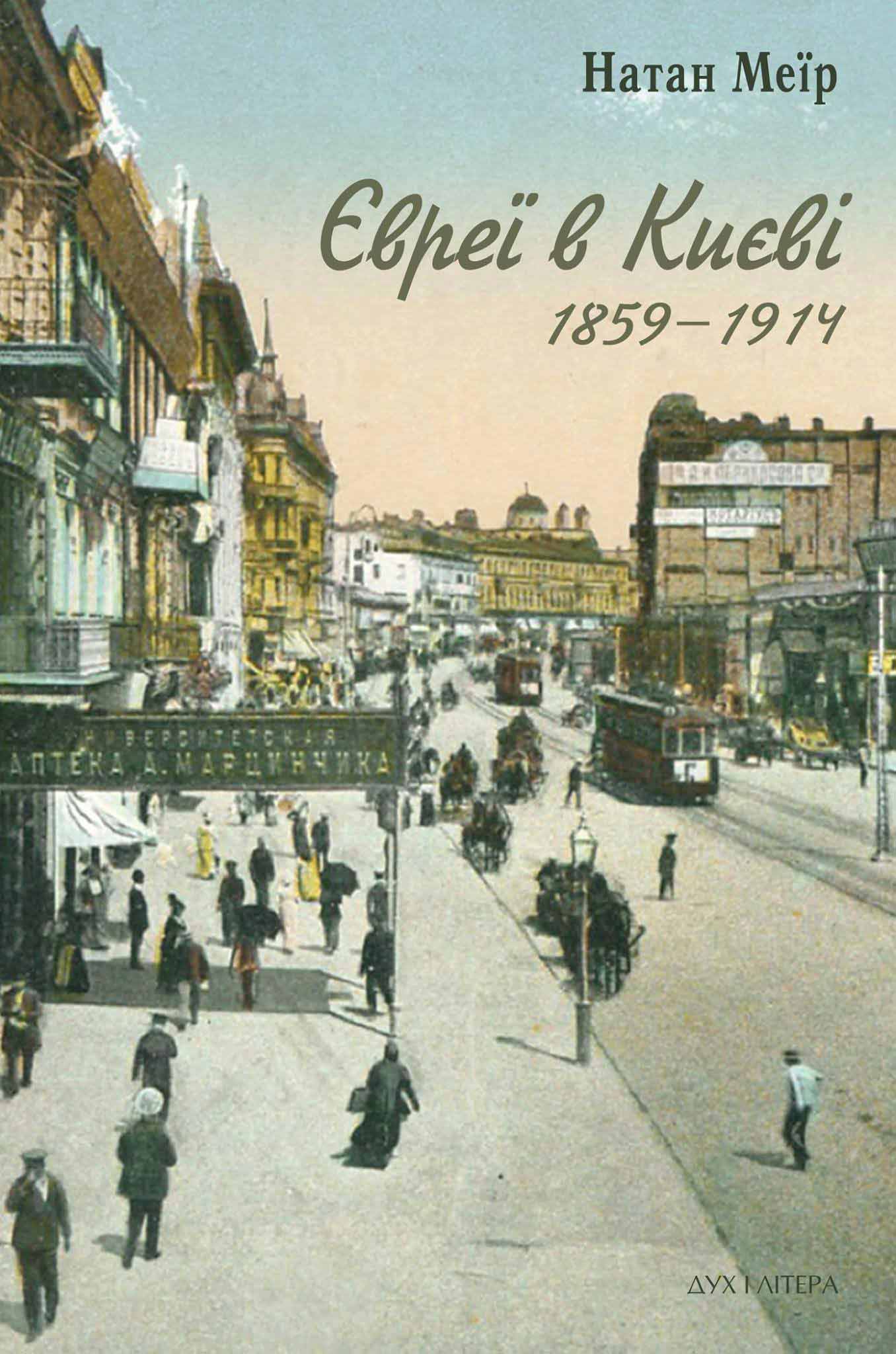
Yulia Smilianska: There is an excellent map entitled "Jewish Addresses in Kyiv" by Mykhailo Kalnytsky. There is also a dissertation by an American researcher translated into Ukrainian, Jews in Kyiv. 1859–1914 [Kiev, Jewish Metropolis: A History, 1859–1914 — Ed.] It is a very deep study. The Institute for Jewish Studies published a book I compiled. Entitled Journeys in Space and Time. A Journey Through Jewish Places in Ukraine, it includes a large chapter about Kyiv Jews.
You can also come and see the buildings. Kyiv is now home to six Jewish communities, three of which occupy buildings constructed as synagogues at the turn of the 20th century. These are the Galician Synagogue (near Halytska Square), the synagogue on Shchekavytska Street, and the Brodsky Synagogue.
In addition, I highly recommend visiting the Center for Studies of History and Culture of East European Jewry at 5 Voloska Str. The Dukh i Litera publishing house is located there, and it houses a vast amount of literature with many publications explicitly dedicated to the history of Kyiv Jews and Jews in Ukraine.
This program is created with the support of Ukrainian Jewish Encounter (UJE), a Canadian charitable non-profit organization.
Originally appeared in Ukrainian (Hromadske Radio podcast) here.
This transcript has been edited for length and clarity.
Translated from the Ukrainian by Vasyl Starko.
NOTE: UJE does not necessarily endorse opinions expressed in articles and other materials published on its website and social media pages. Such materials are posted to promote discussion related to Ukrainian-Jewish interactions and relations. The website and social media pages will be places of information that reflect varied viewpoints.