




Shmuel Yosef Agnon: He who has gone through the world's fires three times
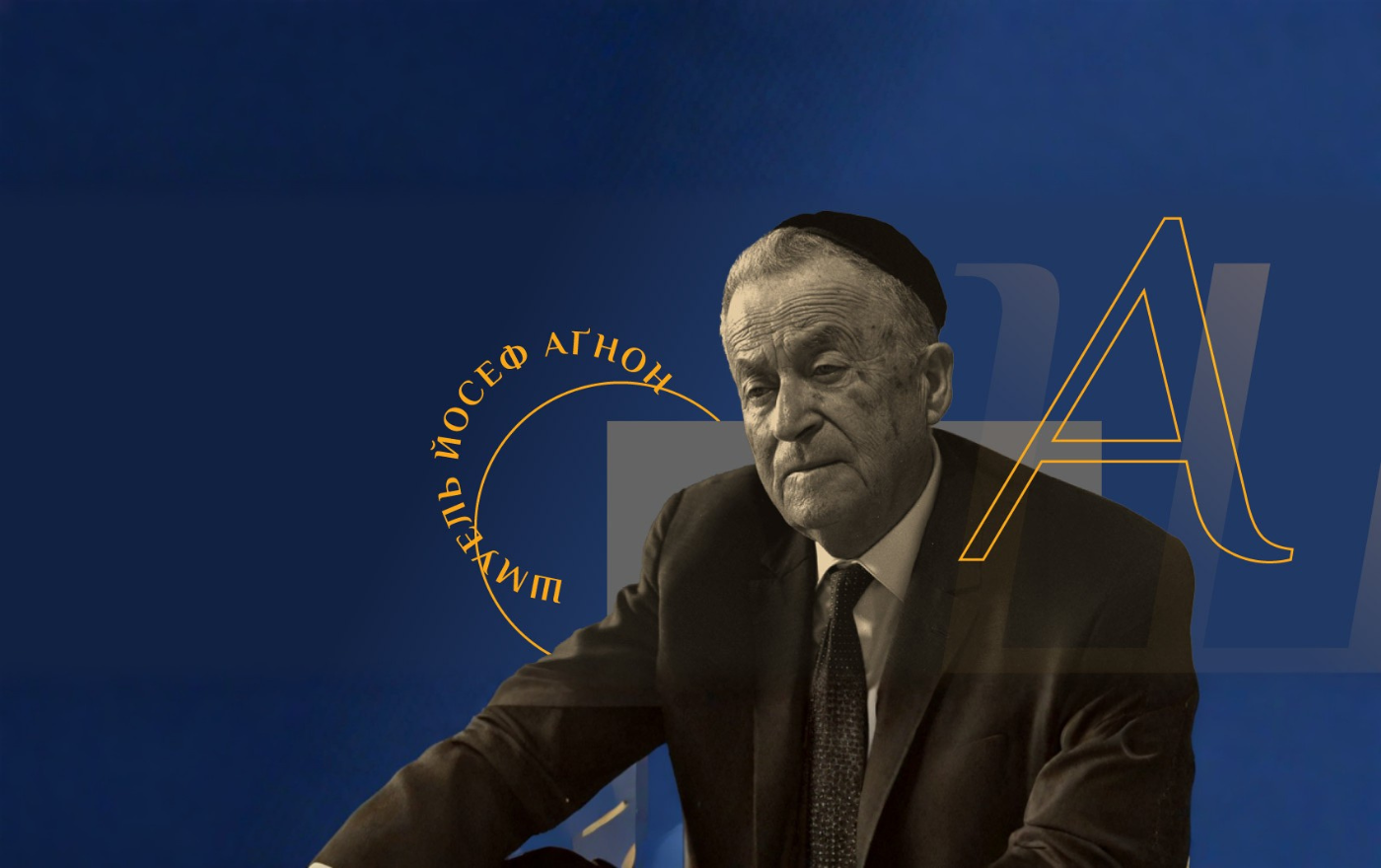
When Shmuel Yosef Agnon received the Nobel Prize, he reportedly said in jest, "Yesterday, half of Israel didn't know who Agnon was, and the other half didn't know who Nobel was. Today we are both famous." Most Ukrainians still don't know who Agnon is, even though he, unlike Nobel, was born in Ukraine. The only book by Agnon published in Ukrainian to date, A Guest for the Night, was translated from English, rather than Hebrew, the language in which he lived and of which he remains the best expert, according to Yohanan Petrovsky-Shtern. This language — which he chose, studied, and loved — became the only home for him and tens of thousands of other Jews, even when they had no other home. Agnon was Hebrew, and at some point, Hebrew became Agnon.
[Editor’s note: 2025–2026 marks the Year of Agnon in Ukraine.]Hebrew: doing the impossible
Let's start with a brief excursion into the Hebrew language and literature. The revival of Hebrew, which had not been in everyday use for two millennia (the Jews spoke Aramaic even at the time of Jesus Christ) and which became the spoken language of an entire nation, is considered a miracle. However, it usually takes hard work to make a miracle happen.
During the Middle Ages and Renaissance, Hebrew spread far beyond the religious setting: it was used to write songs and love poems (search for "Judah Halevi"), letters, and secular documents. Yes, the language was written, rather than spoken, but it was not dead. And yet what happened to it in the second half of the 19th century was nothing short of exceptional.
The Haskalah, the 18th-century Jewish enlightenment movement in Europe, was based on a humanistic, utopian vision of universal reconciliation through rational thought and education. Indeed, Moses Mendelssohn, one of its founding fathers, said: "Be a Jew at home and [just] a human being in the street." However, after a series of Jewish pogroms in Russia in 1881–82, it finally became clear that no humanistic utopia was anywhere near, and age-old antisemitism had not vanished. Deep in their hearts, European Jews heard a clear call: "Home!"
Jewish nationalism (Zionism), which emerged at that time, differed from other European nationalisms in that it grew not from identification with "one's own" land under one's feet but was directed at a faraway mythical homeland. The only guarantee of the Jews' return to that land was the ancient promise given by their prophets. In fact, Jews could find the only real common home only in language at that time. And they set about developing it, sparing no effort.
The central figure in this cause is Eliezer Ben-Yehuda, a linguist who "created" modern Hebrew. From what? For him, the revival of Hebrew had both symbolic and practical significance: it was intended to help Jews who spoke different languages and dialects understand each other and become a unified linguistic community. He compiled a dictionary of Hebrew, drawing from the Bible, rabbinic writings, secular poetry, and stories. Thanks to Ben-Yehuda, Hebrew finally became a language that could be spoken. And indeed, it gradually began to spread as a spoken language.
The only thing missing was modern Hebrew-language literature. In the late 19th century, the writings of Haskalah figures sounded to the Jews about the same as Skovoroda's works to us, modern Ukrainians. The language had to be revamped. The revamping was done by Mendele Mocher Sforim (Mendele the Bookseller), the "grandfather" of two modern Jewish literatures at once — Hebrew and Yiddish. He tried to take all the main "ingredients" from the lively, witty, and vibrant Yiddish — which the Zionists often despised as a shameful mixture, a dialect of exile — and inject them into Hebrew in order to revive it. And he succeeded. His Hebrew was later designated with the musical term nusach, meaning harmony, taste, and knowledge of tradition, which together create the "formula" of good style.
Without Ben-Yehuda and Mocher Sforim, the two builders of the language-home for the Jews, there would have been no Agnon, who became the heart and spirit of Hebrew in the 20th century. Agnon was the key Hebrew writer of this century, so tragic for the Jews.
First fire: Buchach
It could have been otherwise. For example, Agnon could have become a rabbi. That was what his father wanted — a rabbi, and a fur trader to boot. Or, on the contrary, a trader first and then a rabbi.
Shmuel Yosef Czaczkes (not yet Agnon) was born in 1888 in Buchach, Podolia, a town that was slightly larger than a shtetl but smaller than a city at the time. They say that Zionism emerged when the disputes between the "advanced" Haskalah and mystical-provincial Hasidism reached a dead end. The same can be said of the young Czaczkes, who later became a Zionist in Lviv. As a child, he could observe the main ideological confrontation of Eastern European Jewry unfold in his home. His father, Shalom Mordechai Levi Czaczkes, was a zealous follower of the Chortkiv rabbi, one of the main Hasidic tsaddiks. His mother, Estera Farb, was a linguist and admirer of modern Western literature. She intensively taught her son German and introduced him to Goethe, Schiller, Hamsun, and Björnsson. In the morning, he would attend Beth Midrash (a Jewish study hall), while in the evening, he would study European modernism.
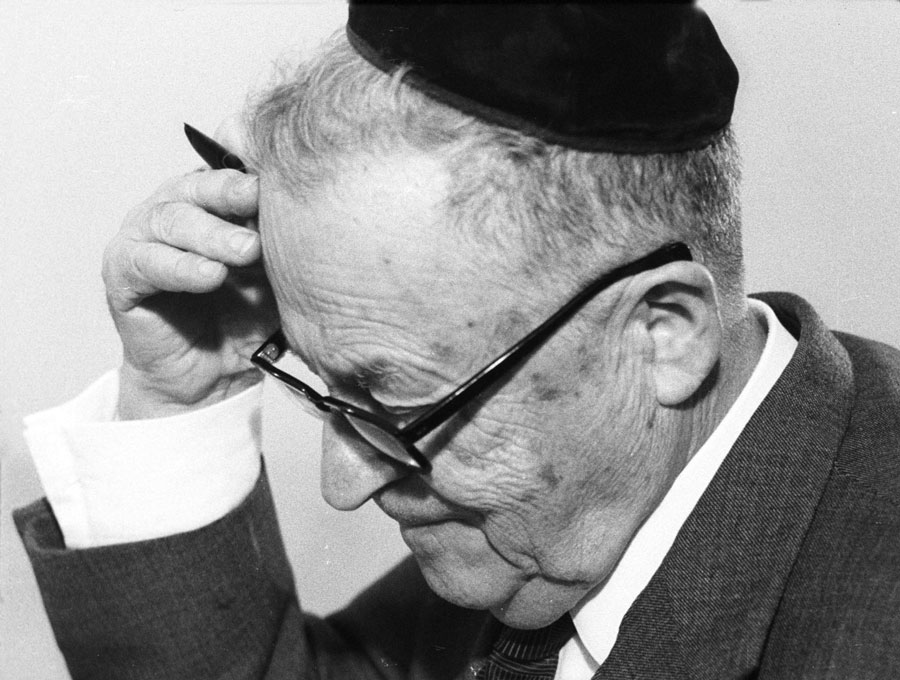
In his Nobel Prize speech, Agnon recalled that he wrote his first poem at the age of five. When his father went to the market in another town, he was overcome with longing and composed a song. We do not know what language the song was written in. It could be Yiddish, which was spoken at the Czaczkes home, or Hebrew, which Shmuel, the son of a pious rabbi, might have known a little by then.
Ten years later, the 15-year-old Shmuel began to be published, but nearly none of those early works have survived. His parents' house, including "an entire room of manuscripts," burned down in World War I. This was the first of three disasters that Agnon's library and archive suffered during his lifetime. Each of them could be a harbinger of a tragedy for the Jews, as suggested by Agnon in his Nobel Prize lecture. For him, that first fire was a metaphor of the Great War, which brutally destroyed the Jewish Buchach, leaving behind ruined homes and fragmented families. "Young artisans, tailors, and shoemakers, who used to sing my songs at their work, were killed in the First World War," he said. Gone together with them were the poems that didn't survive on paper, either.
Agnon left his hometown, Buchach, even before World War I broke out. He would return there several times for brief visits, only to diagnose with bitterness the progressive stages of emptiness and decline.
In the novel A Guest for the Night (1939), the protagonist arrives in a town remarkably similar to Buchach both in topography and name. Agnon calls it Szibucz, the Hebrew for 'mistake' or 'confusion.' The carefully picked name reflects the author's attitude towards his hometown — touchingly nostalgic but also somewhat restrained and irritated. This trail of conservative, provincial, and slightly roguish Hasidism and the stamp of "Galician Jewry," which meant inferiority and backwardness, haunted him for a long time. For Agnon, Buchach was an ever-pestering shadow. A dear and heavy shadow.
The protagonist of A Guest for the Night, which Agnon wrote after visiting Buchach in the summer of 1930, witnesses a town being abandoned by its Jewish population. There was never an ideal coexistence between nations, but the post-war pogroms called into question the very existence of Galician Jewry. The imprint of World War I and its long aftermath is visible everywhere: "There were no boys and girls standing on streetcorners, there was no singing, no laughter; and the well spouted water, pouring it into the street, as water is poured in the neighborhood of the dying. [...] But the odor of Szibucz had not yet evaporated — the odor of millet boiled in honey, which never leaves the town from the day after Passover until the end of November…" [Transl. by Misha Louvish]
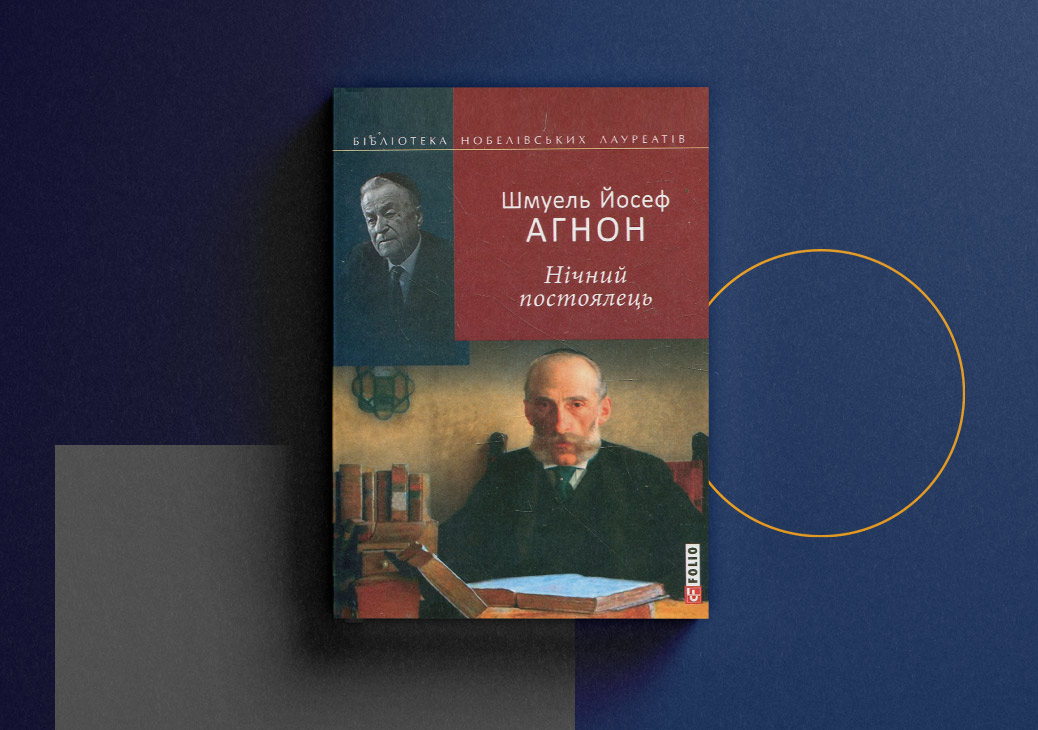
Most of the Jews the protagonist meets are planning to leave the town and go to Palestine. At the same time, he himself seems to be moving along the next turn of this spiral: he has recently come back from Palestine and has decided to re-enter the river of the past, returning to his native Szibucz. He is handed the key to the Beth Midrash, the reading room where he studied since childhood. History and biography, moving along opposite arcs, momentarily make a complete circle. The protagonist remains in the middle of a half-empty town, with the key to his own past, but what should he do next?
Agnon himself (then still Shmuel Czaczkes) had made his journey in the opposite direction — from Buchach to Palestine — 22 years earlier.
However, he had a sojourn in Lviv on his way. (Few of those Jews from the Galician "backland" bypassed this city on their way to the big, wide world.) A young man full of talent and enthusiasm, but lacking systematic education, Agnon found himself in a vibrant Jewish environment, infused with the ideas of Zionism, which he himself had come to embrace. As he learned more about the idea of reviving a Jewish state, he realized with increasing clarity that his true home was elsewhere.
Second fire: Bad Homburg
While in Lviv, Shmuel Czaczkes faced the personal prospect of mobilization into the Austrian army, as a possible war loomed on the global horizon. Not an enviable combination. The idea of moving to the Holy Land, which the young Czaczkes had contemplated for some time, became more urgent, and in 1907, he set off for Palestine with a group of Buchach Jews against his parents' will.
The life of the Jewish settlers was not easy at the time. "During the day, it was as hot as in an oven. Dust covered the town, and the water we drew from the wells was swarming with worms," Agnon complained later.
Nevertheless, two important things occurred to him in Palestine. First, he finally and irrevocably switched to Hebrew. Second, he made his literary debut as an adult with the story "Agunot," which can be translated from Hebrew as "abandoned wives" or "straw widows." An aguna is a woman whose husband abandoned her either by disappearing altogether or leaving without giving her a divorce, so that the woman cannot remarry. Her husband is gone, but he still holds her hostage. This was the first work that Shmuel Czaczkes signed with his pen name "Agnon," which would later become his official surname.
Hebrew does not have the masculine noun agnon. Agnon means 'abandoned, left in trouble.' Hostage of the invisible and absent. A prisoner of a bygone past and a ghostly future.
Yohanan Petrovsky-Shtern once remarked that by inventing this pen name, Agnon seemed to have suggested playing a game of symmetry. According to the rules of this game, if the abandoned person is a man, the one who abandoned him must be a woman or, in any case, some feminine entity. For example, it could be the shekhinah, divine presence in the world. Agnon always searched for it — in places, books, people, and their stories. Or it could be a land: Galicia or the Land of Israel. The Hebrew name for a city is feminine, so it could be Buchach or Jerusalem.
"I was born in one of the cities of the Exile. But always I regarded myself as one who was born in Jerusalem. In a dream, in a vision of the night, I saw myself standing with my brother-Levites in the Holy Temple, singing with them the songs of David, King of Israel," Agnon said in his Nobel Prize speech.
He had been searching for his Jerusalem all his life, first in language and then in physical space. And yet, having come so close to it, he returned to Europe, just like many of those Jews who participated in the so-called "second Aliyah," the wave of Jewish migration in 1904–14, mainly from Eastern Europe. Fueled by faith, zeal, and despair, they rushed to the Promised Land, only to return soon. Some came back because of hard work, heat, and worms in the wells; others due to the hostility of the local Arabs; and still others due to a lack of proficiency in the Hebrew language. Agnon claimed that in his case, it was all because of Russian-language books: "most of the books in the Land of Israel were in Russian," and he did not read in that language.
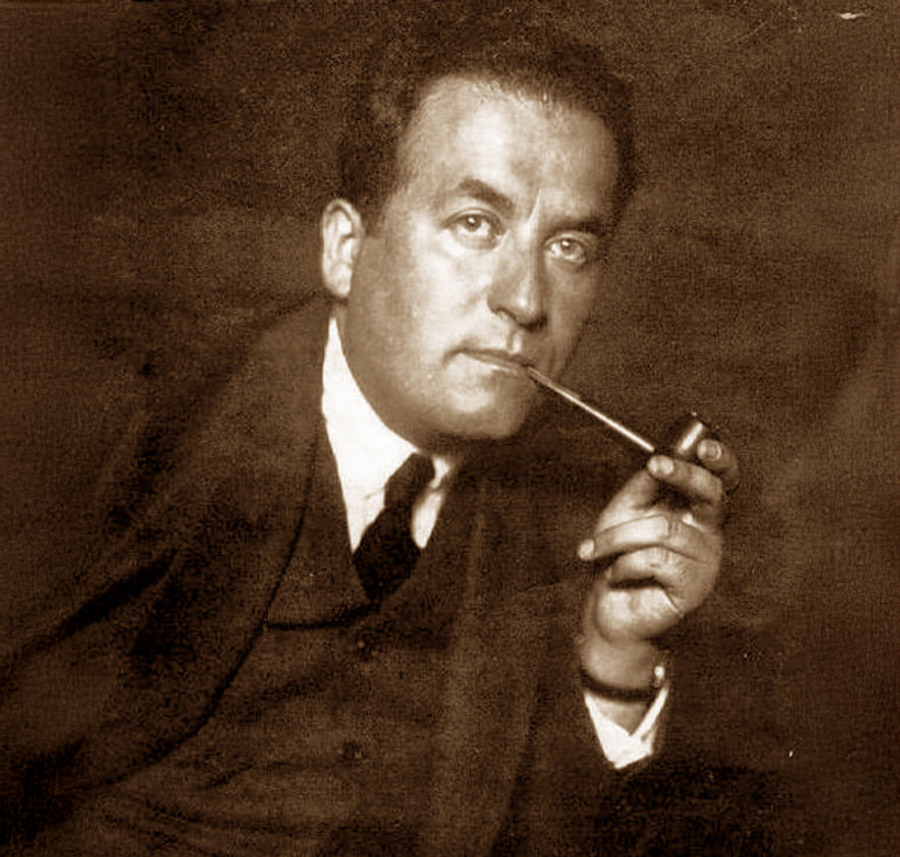
In any case, Agnon sailed from the Holy Land to Germany in 1912.
For a while, the great dream gave way to a great reality. In Germany, Agnon became close to the philosopher Martin Buber, also a native of Galicia and the intellectual leader of the German Zionists. He found a patron and publisher in the wealthy merchant Salman Schocken, who gave him a five-year scholarship. Agnon also found love: the young Hebrew tutor fell in love with his student, Esther Marx.
It was a drama of Shakespearean proportions: Esther's father, a wealthy banker, flatly rejected the idea of his daughter's marriage to some poor Galician Jew, and she ran away from home in protest. Shmuel and Esther got married in secret, causing her father to abandon his daughter in anger. However, he cooled down after a while, possibly because Agnon's deep knowledge of the Talmud and Torah softened the heart of the old Orthodox Jew.
The German period of Agnon's life again, as in Buchach, ended in flames. While he was in the hospital, a fire broke out in his apartment in Bad Homburg, destroying his entire library and manuscripts, including his great novel, Eternal Life, and a collection of Hasidic stories he had compiled with Buber.
For Agnon, the fire brought both loss and liberation. "After all my possessions had been burned, God gave me the wisdom to return to Jerusalem," he said many years later in Stockholm, accepting his Nobel Prize.
Third fire: Jerusalem
In 1924, Agnon returned to Palestine to stay there forever. In the Holy Land, he wrote all of his most important novels (The Bridal Canopy, A Guest for the Night, A Simple Story) and became a global author, translated into dozens of languages. An anecdote of unknown veracity but high plausibility is related to this topic. When Agnon was asked for permission to translate his novel into English for the first time, he was surprised: Why? Why translate something written in Hebrew, the language of God, into a human language?
For Agnon, writing in Hebrew was "ascending," just like moving to Jerusalem was approaching the divine.
In Jerusalem, the city of cities, all the places and spaces important to Agnon came together: Galicia and Buchach, Germany, and the Holy Land of Israel. In the end, he would go to Galicia in 1930, and it would be one of his two foreign journeys for the rest of his life. The second trip was to receive the Nobel Prize.
Torn by the winds of history, his unhappy homeland did not let him go for decades, until the very end. It appears in The Bridal Canopy, an adventurous novel where the protagonist, an old orthodox Jew, searches for bridegrooms for his daughters throughout Galicia. A Simple Story, a kind of ironic "reverse love novel," brings us back to Szibucz to laugh at and shed tears over its good-natured, cunning, and naive small-town heroes. Ukrainian themes appear more than once in these stories — the world of Ukrainian culture was not invisible to Agnon; he felt and described it. People in Ukraine most eagerly remember Agnon's story about Oleksa Dovbush, where the legendary brigand breaks into the house of the Kolomyia rabbi on Saturday just as he was performing Kiddush. After a drop of ritual wine falls on Dovbush's axe, he is no longer capable of using it on Saturdays, holy days for Jews.
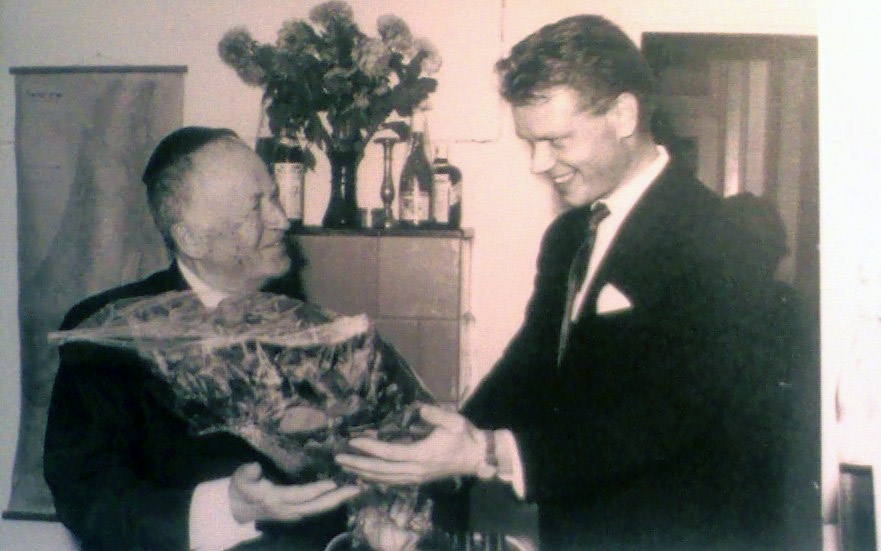
Germany, the birthplace of Agnon's thoughts, appears in the stories "Fernheim" and "Between Two Cities."
The Holy Land — Jaffa and Jerusalem — is a constant presence in almost everything Agnon wrote, while his mature post-war novels are primarily set in Israel. The novel Only Yesterday traces the adventures of a poor Galician Jew who moves to Palestine and a homeless dog he takes in, which appears to be an allegory of the Jewish people. In his last, unfinished, and posthumously published novel, Shira, Agnon returns to the theme of the interwar Arab-Israeli conflicts in Jerusalem. Against the restless background of Arab uprisings, an elderly university professor searches for Shira, a charming nurse who once assisted his wife during childbirth. This is Agnon's last, desperate rebellion against the passage of time, aging, and death.
In Palestine — beyond East and West, in a place seemingly removed from this familiar dichotomy — Agnon also finds a balance between the Jewish religious and literary tradition and the aesthetics of modernism. These two worlds, which had torn him apart over the previous decades, converge here in harmonious unison. Agnon finally finds his voice, his style, his nusach.
In Jerusalem, Agnon experienced his third and last fire. Unlike in Buchach and Bad Homburg, there were no literal flames, but it was just as painful and destructive, a watershed moment for him. During the Arab pogrom of 1929, Agnon's house was looted, and his library and archive were destroyed for the third time. His wife and children were fortunately not at home and survived. "Three thousand books, overturned, scattered, and torn apart," Agnon recalled bitterly. He interpreted this third disaster that befell his library — his most valuable possession — as a metaphor for the fate of Jews in Palestine and postwar Israel. They were constantly forced to fight for the right to live in the Promised Land, a prolonged and still ongoing tragedy. "At a time like this, one must rejoice that one is alive, healthy, and unharmed," Agnon wrote to his wife after the pogrom. He started all over again by building a new house and planting a few olive trees near it.
"In Agnon's works, Jewish tradition has undergone a modernist consecration by fire," Ariel Hirschfeld wrote. It's hard to say something as literal and, at the same time, metaphorical about him.
Even during the German period of Agnon's life, his colleague and friend Gershom Scholem called him "a Jew for Jews," referring to his excessive immersion in Jewish tradition. It is surprising how this insightful philosopher and historian could have been so wrong. Indeed, Agnon was an embodied paradigm of Jewishness: tradition and learning, Hasidism, Haskalah and Zionism, Galicia and the West, return to the Holy Land, disappointment and another return, abandonment and dreaming, fires and pogroms, the struggle for the right to exist, persistent and highly focused work, and quiet departure in the Holy Land of Zion. All of that is the Jewish song of the ages — without beginning and, most likely, without end. At the same time, it was the discovery and cultivation of a language and intonation that enabled him to reveal this paradigm to the outside world, breaking the exotic "windowpane" through which the West (and its eastern part, i.e., us) has always looked at Jewry. The most modern of the 20th-century Jewish realists, Agnon paved the way for Amos Oz, Yehuda Amichai, and Etgar Keret, who are now read across the world. Agnon is one of those who made Jewish global, removing the fundamental paradox: Jews scattered throughout the world were nevertheless not heard or read by the world, existing in thousands of scattered bubbles.
We, Ukrainians, are also responsible for Agnon's locality as the current owners and stewards of his small homeland, his land of galut (exile), the bittersweet land where he grew up. Agnon returns home — for the third time, slowly, and hopefully forever.
Sources and links:
- Agnon House Article Library
- Agnon, Shemu'el Yosef. The YIVO Encyclopedia of Jews in Eastern Europe
- The Road from the Graveyard to the Town (An Oleksandr Fraze Frazenko film)
- Agnon, Shmuel. Nobel Prize Speech
- Kryven, Bohdan. 50 Shekels for a Nobel Prize winner from Galicia (in Ukrainian)
- Kushnir, Yulia. Agnon's Buchach: A town in the Ternopil region puts itself back on the literary map (in Ukrainian)
- Agnon Literary Center (Buchach)
 Ostap Slyvynsky
Ostap Slyvynsky is a poet, translator, and literary scholar. He is the author of five poetry collections, numerous essays, columns, and reviews in Ukrainian and foreign periodicals. His works have been translated into 16 languages. He translates fiction and scholarly literature from English, Belarusian, Bulgarian, Macedonian, Polish, and Russian.
Originally appeared in Ukrainian @Chytomo
Translated from the Ukrainian by Vasyl Starko.
This material is part of a special project supported by Encounter: The Ukrainian-Jewish Literary Prize. The prize is sponsored by the Ukrainian Jewish Encounter (UJE), a Canadian charitable non-profit organization, with the support of the NGO "Publishers Forum." UJE was founded in 2008 to strengthen and deepen relations between Ukrainians and Jews.