





"The Ukrainian-Jewish Encounter: Cultural Dimensions": Part 1.4

The Ukrainian Jewish Encounter was founded in 2008 with the goal of building stronger relations between Ukrainians and Jews, two peoples who, for centuries, lived side by side on the territory of what is modern-day Ukraine. Since then, in keeping with its motto, "Our stories are incomplete without each other," UJE has sponsored conferences, round-table discussions and research, as well as translations and publication of works the organization anticipates will promote a deeper understanding between the two peoples and an appreciation of their respective cultures.
We offer for the first time the book The Ukrainian-Jewish Encounter: Cultural Dimensions in an eBook format.
The book is a collection of essays that examine the interaction between the Ukrainian and Jewish cultures from the seventeenth century onwards. Written by leading experts from Ukraine, Israel, and other countries, the book presents a broad perspective on parallels and cross-cultural influences in various domains — including the visual arts, folklore, music, literature, and language. Several essays also focus on mutual representation — for example, perceptions of the "Other" as expressed in literary works or art history.
The richly illustrated volume contains a wealth of new information on these little-explored topics. The book appears as volume 25 in the series Jews and Slavs, published by the Hebrew University of Jerusalem since 1993. In several previous volumes, considerable attention is given to the defining role of the Old Testament in Ukrainian literature and art and to the depiction of Jewish life in Ukraine in the works of Nikolai Gogol, Taras Shevchenko, Ivan Franko, Lesia Ukrainka, Vladimir Korolenko, and other writers.
This collection of essays was co-edited by Wolf Moskovich, Professor Emeritus, Hebrew University of Jerusalem, and Alti Rodal, Co-Director of the Ukrainian Jewish Encounter, who also wrote the introduction to the volume. It was published in 2016 by Hebrew University of Jerusalem.
Click here for a pdf of the entire book.
Part 1.4
The Israelite Hospital in Lemberg/Lwów/Lviv, 1898–1912: "Jewish" architecture by an "International" team
Sergey R. Kravtsov (Hebrew University of Jerusalem)
The Israelite Hospital, today the Maternity Hospital, is the most sumptuous Jewish landmark in today's cityscape of Lviv. Its exotic appearance does not raise special attention among fellow citizens who see it every day, who were treated or born there, like were my two sons. My grandfather had undergone a serious operation in 1974 in that hospital, and I was pacing from corner to corner in the vestibule waiting for the results, and gazing at the cupola covered with arabesques. I did not know that soon it would become a maternity hospital, the arabesques would be whitewashed for hygienic reasons, and males would not be allowed in. The structure puzzled me seriously later on, when I became an architectural historian interested in Jewish identities expressed by architectural means.
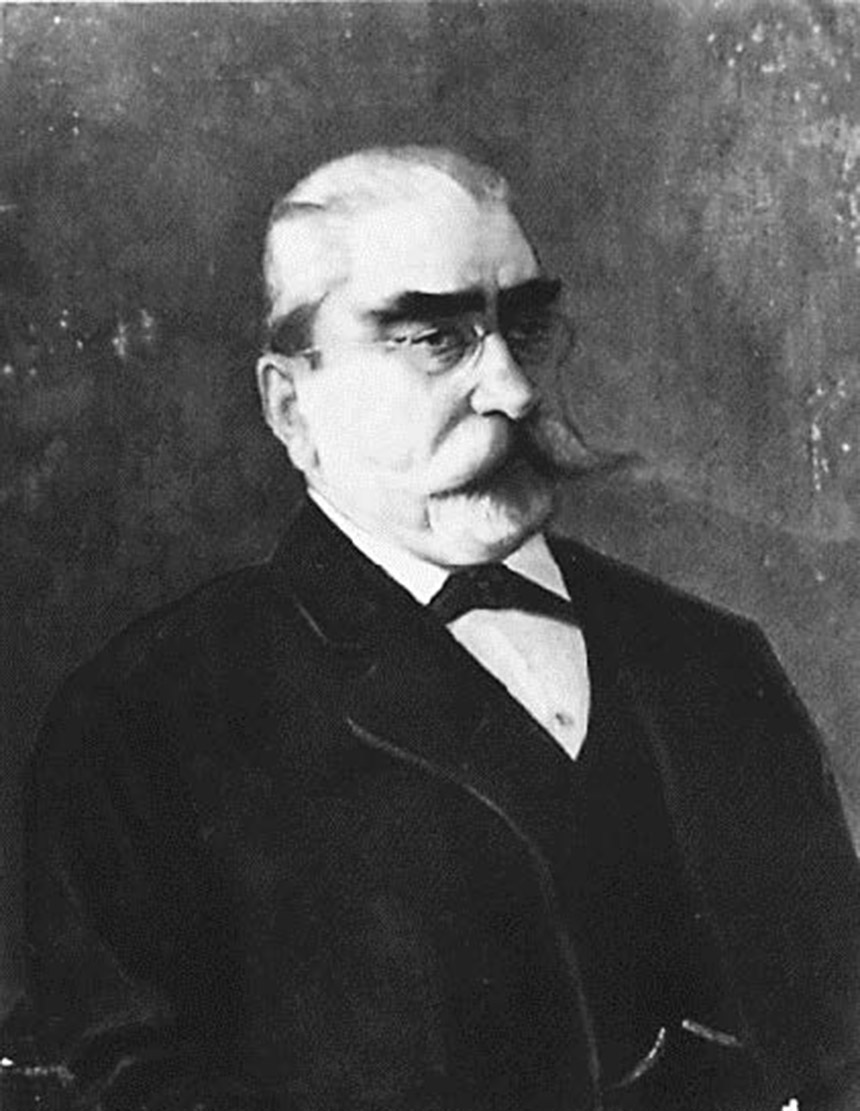
This hospital is known to most people as the Rappoport Hospital, which is a conflation of the street and institution names. Originally, it was the Israelite Hospital of the Maurycy Lazarus Foundation. The founder was not Professor Moritz Lazarus (1824–1903), German philosopher and psychologist. His namesake, Maurycy Lazarus (1832–1912) was born in a Lviv family, and as a young man took part in the Revolution of 1848 in Vienna (fig.1). He dreamed of the Academy of Fine Arts; however, the Academy of Trade was the first to reopen after the revolution, and this decided Lazarus's career as the founder, and for four decades, the director of the Galician Hypothec Bank. Lazarus's experience during his youth as a freedom fighter, his early contacts with needy people, and interest in arts and literature, saved him from becoming a cartoon capitalist; instead, it turned him into an outstanding philanthropist. [1] His compassion for the miserable was inherited by his daughters: Hermina Sydonia (1872–1951) was married to her "party comrade" Herman Diamand (1860–1931), a socialist party politician and a member of the Austrian and Polish parliaments; she wrote in socialist periodicals under the pen name of Helena Rawska. [2] Her sister, Eleonora Beatrice (1877–1944), a microbiologist, was married to Herman Diamand's youngest brother Aleksander Samuel (1874–1942). She was helping Polish political prisoners and deportees. Their sister Frederyka (1879–1942), one of Janusz Korczak's circle, was a member of the Polish Social Democratic Party, and perished in the Holocaust. [3]
The construction of the hospital in 1898–1903 marked the culmination of Jewish health care in the city. The oldest Jewish hospital was founded by the community senior Mordechai ben Yizhak in about 1600 in his downtown domain. It was disassembled in 1795. [4] The next hospital was built beyond the city walls, on a plot within the Jewish cemetery, which had been in Jewish possession at least from 1414. That hospital was financed from private donations and by a charity established by Izak Warringer (1741–1817). The compound grew slowly from 1800, reaching a capacity of 82 beds in 1902. The patients could observe funerary processions from the windows. The morgue, a ruin under a shingled roof, included the guard's family apartment, and his children played around. To enhance his description of the old hospital, historian Majer Bałaban mentions scores of rats occasionally damaging dead bodies. Most of this hospital was demolished in 1902, only the wing for the incurable remained. [5]
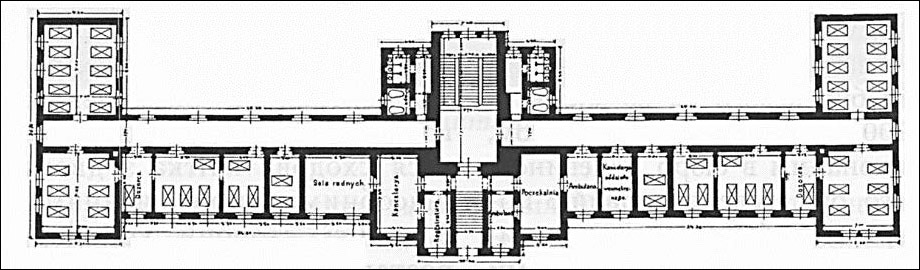
The new building of the Israelite Hospital was constructed following the initiative and donations of Maurycy Lazarus and his wife Róża Marja, née Jolles, mostly by the autumn of 1902. Their donations reached 660,000 crowns, an equivalent of £36,000,000 today. The new hospital, which was constructed close to the old one, included 48 rooms above a basement (fig. 2). The wards were designed for two, three, and up to ten patients, every ward having a marble basin with cold and hot water. [6] Beside these, there were separate wards for those who could pay, a perfectly equipped operating room, two bathrooms on each floor, central water heating, gas lighting, and two exhausters for ventilation of the wards. The whole building was designed for 100 patients, and the founders had furnished a chapel (actually, a synagogue) on their own account. Two auxiliary buildings housed a kitchen, meeting all demands of hygiene, and a steam laundry with a disinfection system. The hospital was transferred to the possession of the Jewish Community in November 1902. [7] It served Jews and non-Jews alike; the needy Jews of Lviv were treated free of charge, while those from the province paid two, four or eight crowns per day, depending on 'classes' of service. In 1907, 655 men and 489 women were treated in the hospital; the ambulatory services were provided to 2,500 Catholics (probably, of both, Eastern and Western, rites), and to 10,000 Jews. [8]
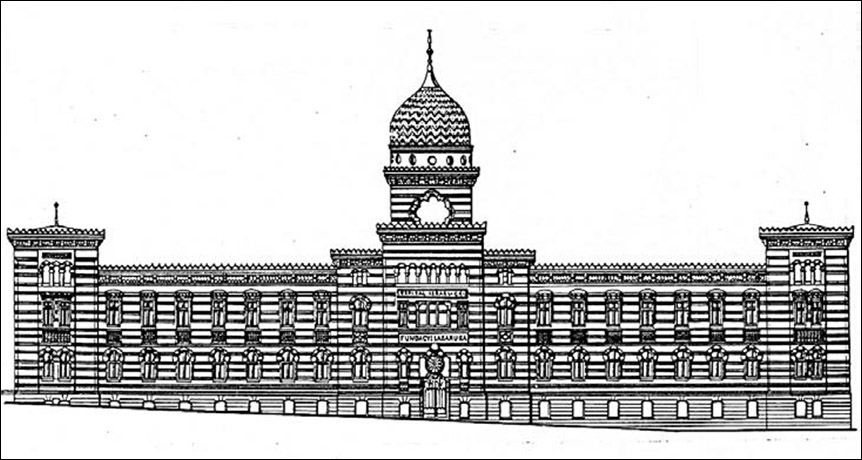
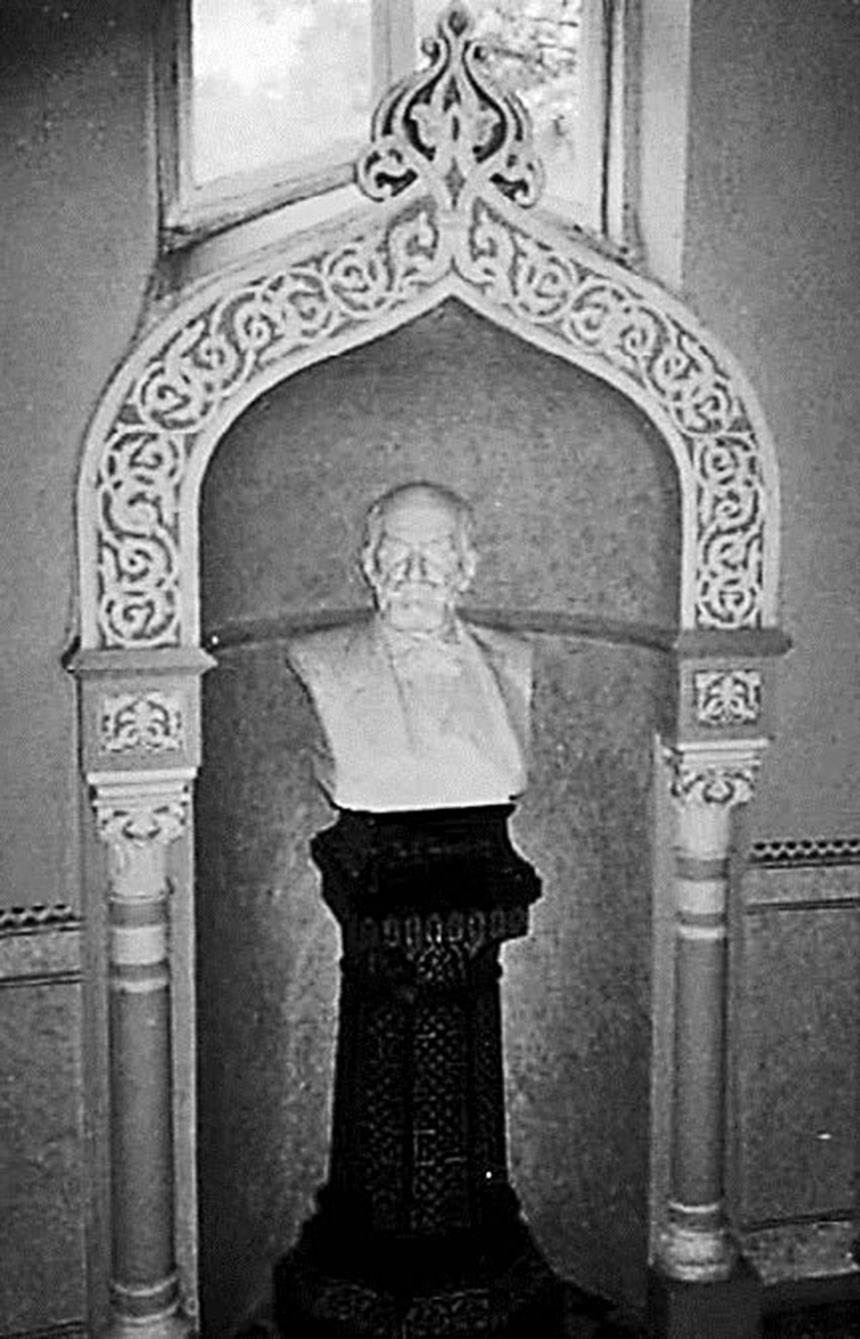
The new hospital included a two-storey front structure, standing on a high basement (fig. 3); its symmetry corresponded to the division between male and female patients. The structure was flanked by three-storey wings, and accentuated by a lofty central mass topped with a tall drum, above which is a three-colour tiled onion dome; the finial bore a Star of David. The structure was faced with red and yellow brick, arranged in horizontal strips and Stars of David. The monumental mass was pierced by pointed, horseshoe-shaped, cusped, and rectangular openings. The street façade bore signage in Polish: Szpital Izraelicki Fundacyi Lazarusa. The whole complex was fenced in by open-work, red-brick wall designed by Władysław Godowski in 1902. The main "bijou" of the interior was its vestibule designed in a "pure Moorish style" and painted by the Fleck brothers, well known for their decoration of public buildings and synagogues. "An absolute novelty" became the hanging gardens for the patients, alluding to those of Babylon, one of the Seven Wonders of the World. [9] Most wards faced Rappaport Street, while the corridor faced the backyard, and enabled good ventilation. The main staircase acquired a niche with a marble bust of the founder (fig. 4) by the renowned Polish sculptor, Antoni Popiel (1865–1910).10[10]
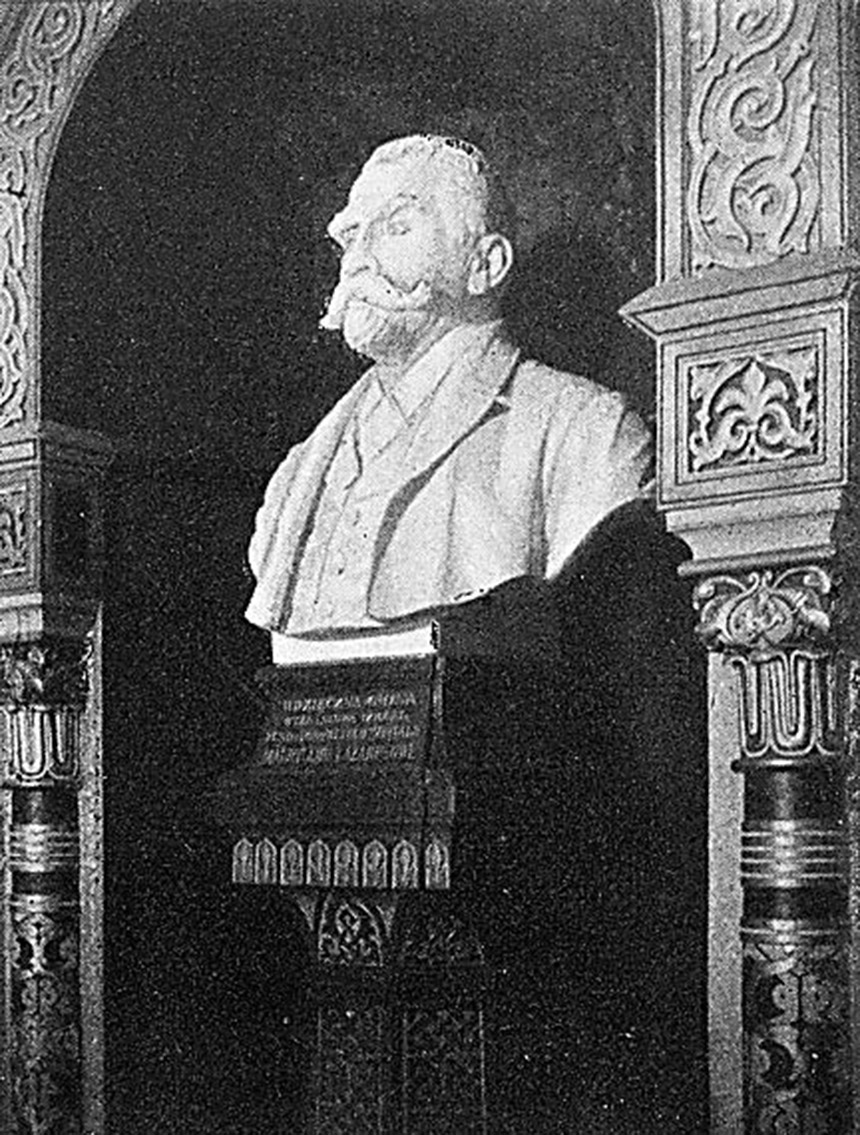
Urban folklore asserts that the 1903 bust was preserved under Soviet rule, since it had been creatively attributed to the Russian surgeon Nikolai Pirogov (fig. 5). At a second glance, the bust is actually a product of Soviet times, a monument to Pirogov (well known from his portrait by Ilia Repin), rather than Lazarus (portrayed, beside Popiel, by Wilhelm Wachtel and Maurycy Trębacz). [11]
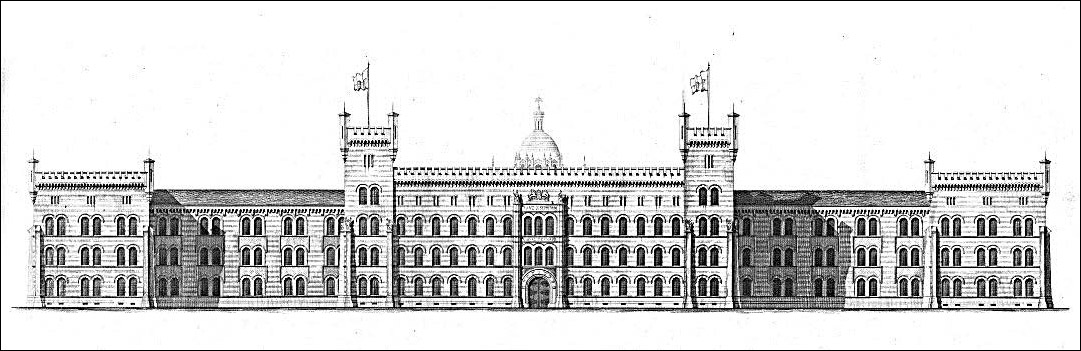
The overall style of the hospital was recognized by contemporaries as "Moorish". [12] It would be called " 'Romanesque oriental'" in the next decade. [13] This style had a particular history in the Habsburg Empire. First introduced by Ludwig Förster (1797–1863) and Theophilus Hansen (1813–1891) in the Baron Adolf Pereira's villa in 1847, it was supposed to "express the romantic, and adopted forms in the Byzantine and related Arab way of building," [14] thus poetically expressing Pereira's Sephardic Jewish roots. After the Revolution of 1848, the same architects merged their oriental style with Romanesque and other stylistic elements, mostly borrowed from the Habsburg's historical domains, including Spain, Italy, and German lands. This style replaced the officious Neo-Classicism of the Vormärz, and in much later literature received the name, Romantic Historicism. [15] Hansen himself pretentiously called this style "the Viennese Renaissance," [16] thus emphasizing its political signification, rather than fidelity to the Italian sources. Due to its synthetic nature, this style was easily tuned towards the diverse identities of varied clients. In the late 1840s and 1850s, Förster and Hansen applied this style to the Orthodox [17] and Protestant churches, [18] an all-purpose chapel, [19] and synagogues, [20] as well as to monumental imperial projects like the Waffenmuseum in Vienna (1852–56) and Invalidenhaus in Lviv (1855–60, fig. 6). It became the style of an empire embracing both East and West, in which diverse religions harmoniously coexisted under the enlightened liberal regime. [21]
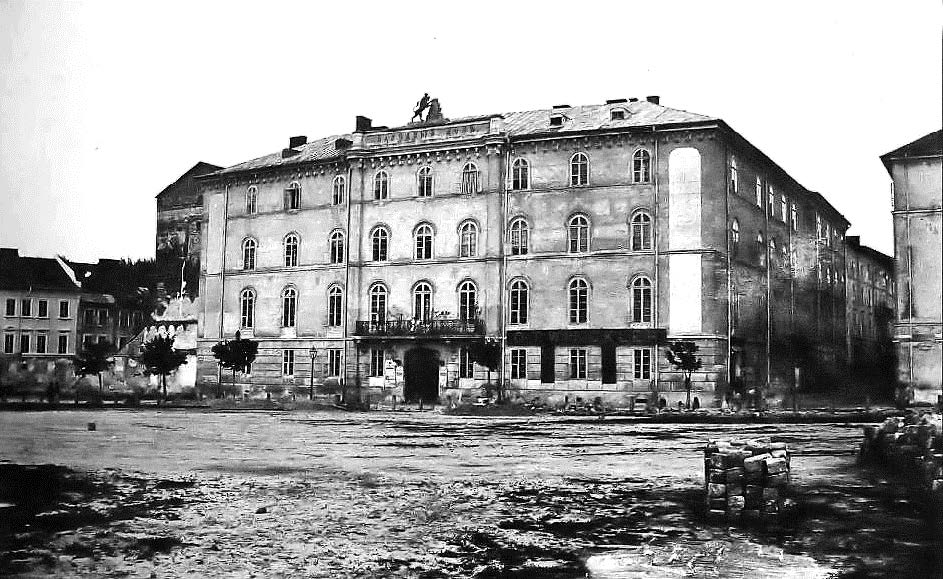
The novel style was adopted also for the needs of Ukrainian community. The Ruthenian National Institute in Lviv (Narodnyi Dim, 1851–64, fig. 7) was constructed in this very style after a design by Wilhelm Schmidt. [22] This master builder, born in the German colony of Weinbergen, otherwise known as the Lviv suburban Vynnyky, worked in the Galician metropolis. [23] The plot of the Ruthenian Institute once housed the Trinitarian Monastery, which was converted into the Lviv University by Emperor Joseph II, and burned down during the revolutionary events of 1848. Emperor Franz Joseph I "rewarded" with this plot the Ruthenian community of Lviv for its loyalty during that turbulent year. The Emperor laid the cornerstone of the future Ruthenian Institute and a church during his visit to Lviv in 1851. [24] Thus, the whole project gained a sound imperial loyalist meaning. However, the exterior appearance of the Ruthenian National Institute was far less expressive than the Viennese examples of Romantic Historicism, and those built by Viennese architects outside the capital, since it was designed by Schmidt, who worked for decades in the provincial Lviv as an adept of the "Biedermeier Classicism". [25] Unlike its polychrome brick analogues, the Ruthenian National Institute was plainly plastered. Indeed, a polychrome open brick-work would have been inappropriate in the surrounding of the evenly plastered Lviv downtown.
In the "Jewish" renditions of the new style ― the synagogues of Vienna and Pest ― Förster further coined its specifically Jewish means: he introduced the idea of Solomon's Temple, thereby charging his design with additional authority. [26]
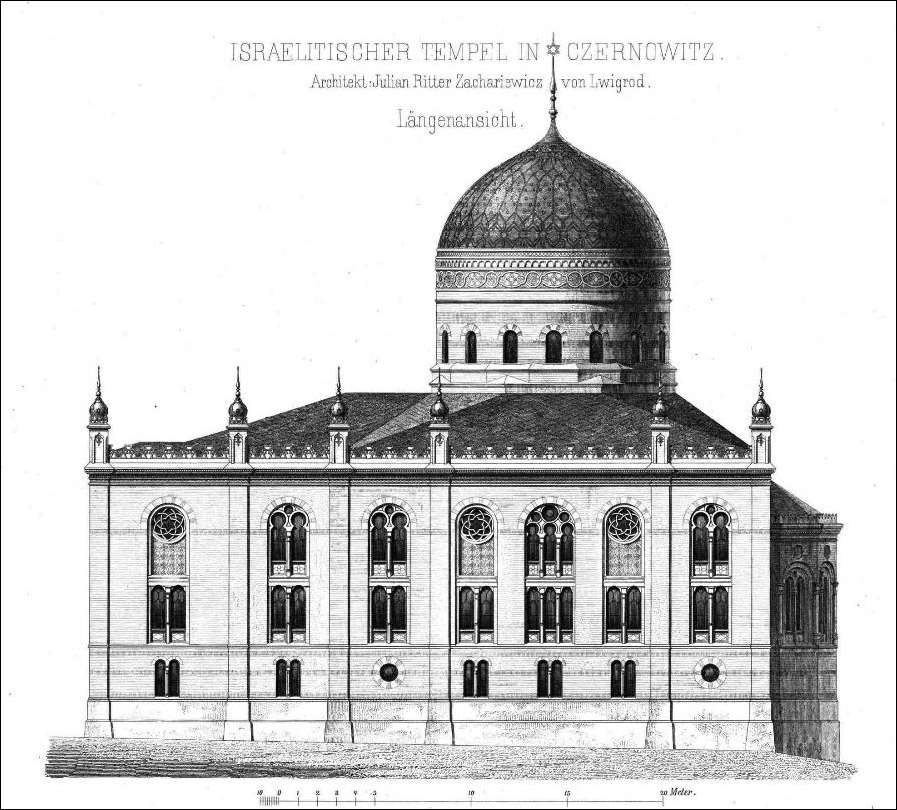
He never used cupolas in synagogues, an element alien to the Temple of Jerusalem as it is described in the Bible. This was proposed by the prominent German architect Gottfried Semper (1803–1879), who interpreted the synagogue cupola as "the seven heavens of the Old Testament." [27] This signification was implied by Julian Zachariewicz (1837–1898), a rising Vienna-educated architect, in his design for the Progressive Synagogue in Chernivtsi (1873–78, fig. 8). He explicated this meaning of the cupola in the presentation of his later work on the Progressive Synagogue in Lviv (before 1894), where Lazarus headed the building committee. [28] These two new synagogues employed domes also as monumental means to demonstrate Jewish presence in the cityscape outside the old Jewish quarters. In the case of the Israelite Hospital, the dome, quite similar in its "oriental" skyline to that of the Progressive Synagogue of Chernivtsi, was borrowed for a secular Jewish building. Though the hospital was not a synagogue, its lofty cupola appeared appropriate, pointing to the heavenly, and not the terrestrial, sphere.
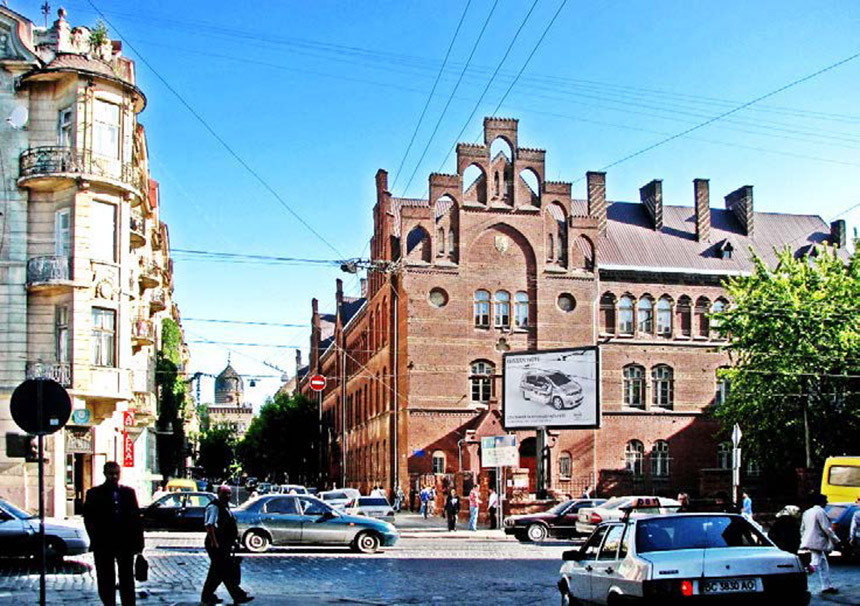
The idea of brick facing — which according to Förster, referred to the archaeological discoveries in the Middle East, but according to Hansen, to Byzantium—was merged in the second half of the nineteenth century with the technique of Brick Gothic. This technique gave way to efficient and sustainable constructions especially suited to meet educational, public health, and penitentiary needs. In this capacity, it was applied to the St. Anna School (fig. 9), constructed by architect Juliusz Hochberger (1840–1905) in 1884 on the corner of St. Anna Street, leading to the future hospital. Though a product of typical school architecture in Europe, it bore suggestive vestiges of Romantic Historicism, visible in material, adornment, and fenestration. Thus, the Israelite Hospital became only a new stage in a long-standing architectural and urban process, a nexus between the Invalidenhaus on Kleparowska Street running on its west (fig. 6), and St. Anna School on its south. From the outset, it was meticulously inscribed into Lviv's urban context on the principles of propriety.
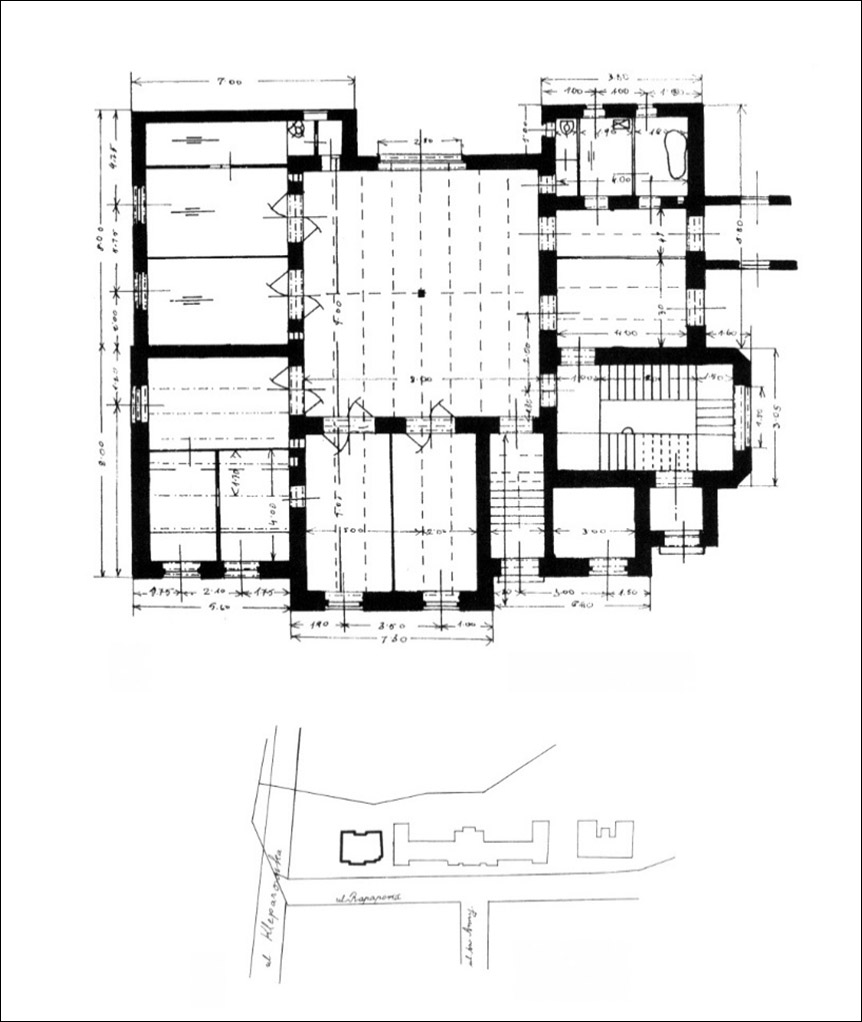
The propriety of the hospital as a new prominent Jewish feature in the urban landscape was supported by the venerably old usage of the plot, which had been in Jewish hands for five centuries. In this case, Jewish urban visibility did not arise as a result of any new acquisitions, as, for instance, was the case with the Progressive Synagogue, increasingly annoying the non-Jews. [29] For the public health and welfare infrastructure of the city, the Israelite Hospital was most appropriate.
The style of the hospital, despite its exoticism, was quite conservative, reminiscent of the styles that were fashionable in the 1850s–60s, when the career of Maurycy Lazarus was rising. Julian Zachariewicz, who had used the "Moorish" style in 1870s, deprecatingly called it "conventional" in 1896. [30] By 1900, the assimilated Jews of Vienna shied away from this style, turning towards Romanesque and Gothic as truly Germanic styles, now circulated by assimilated architects like Jacob Gartner (1861–1921) and Max Fleischer (1841–1905) in Jewish sacred, secular, and funerary architecture. The 'Moorish' style survived in the provinces. Alternatively, it was popularized, even in Vienna, for the Polish Rite Synagogue, by the Viennese architect Wilhelm Stiassny (1842–1910). Many of Stiassny's works at the turn of century, including his protuberant "Moorish" Jubilee Synagogue in Prague (1905–6), were highly exotic. Several reasons might be put forward to explain their exuberant otherness: firstly, Stiassny's Zionist affiliation, and thus his protest against shying away from Jewishness. Secondly, the Jubilee Synagogue was complementary to the emperor celebrating the sixtieth anniversary of his reign, the period when Austrian Jews attained full rights, and at which point the very expression of Romantic Historicism proclaimed the fall of the ancien régime. This conjecture is supported by the overwhelmingly "Moorish" expression of another Jubilee Synagogue, the Orthodox Synagogue of Tarnów (by Władysław Ekielski, 1865–1908). [31] The "Moorish" style of the Israelite Hospital should also be seen as a jubilee retrospection. Indeed, Lazarus explicitly proclaimed his desire "to celebrate the fiftieth jubilee of the reign of Franz Joseph I, to build the new hospital." [32]Simultaneously, Lazarus was honouring himself as the freedom fighter of 1848, celebrating his seventieth birthday in 1902.
This ambitious project was carried out by an "international" team. Ivan Levynsky's firm was hired as the contractor. This outstanding architect and businessman was born in Dolyna, to a Ukrainian father and a Bavarian mother in 1851, went to primary school at Stryi, and Secondary school (Wyższa Szkoła Realna) in Lviv; in 1874 he graduated from the Lviv Technical Academy. He organized a gigantic enterprise, which in its better years employed about a thousand workers sixteen hours a day. Levyns'kyi was designing, building, and supervising; he produced brick, ceramics, gypsum, concrete, artificial stone, stained glass, and many other construction supplies. He worked on the best commissions, including the Opera House and the new Railway Station of Lviv; he managed about 200 construction sites simultaneously. All this was done parallel to a professorship at his alma mater. Levynsky was a Ukrainian patriot: he is honoured as the creator of the "Ukrainian Secession Style" in architecture, a philanthropist, founder of cultural, technical, and educational Ukrainian societies including Prosvita, and for his social welfare work. The collapse of his enterprise ― ruined during the World War ― and his sudden death in 1919 was associated with persecutions by the Polish government in retaliation for his support of the Ukrainian cause. [33] However, Levynsky's company was hired to construct the Israelite Hospital not for its ideas of Ukrainian national style, but rather for their unbeaten reputation as solid engineers, for their being so well-suited to this very ambitious commission.
The hospital project was prepared in 1898–1901 by Levynsky's Polish employee Kazimierz Mokłowski. He was born in Kosiv in 1869, and in 1882–89 studied at the Secondary school in Stanislaviv. In 1889 Mokłowski enrolled at the Polytechnic Academy in Lviv, but as a member of the Socialist Democratic Party of Galicia, was expelled in 1892 "for organizing illegal assemblies." Mokłowski unsuccessfully attempted to continue his training in Vienna and Zurich, and instead became further involved in socialist politics. Unwelcome everywhere as a radical, he moved to Prussia, then to Saxony, and in 1894 to Munich, where he graduated from the Technische Hochschule in 1896. He worked in Munich for a short time, then relocated to Lviv in 1897, where he was employed by Levynsky. For the next three years he was entrusted with the project of the Israelite Hospital. Mokłowski's most personal work was an apartment house at 38 Piekarska Street, designed in 1905 in the Polish National Romanticist Zakopane Style. [34] In this project, Mokłowski used brick rustication to imitate wooden logs of vernacular Carpathian architecture. Mokłowski was restless as a socialist politician and prominent as a conservator of built monuments, ethnographer, architectural historian, and theorist. He was known for his field expeditions and publications, mainly for his monograph Folk Art in Poland of 1903. In this work, he argued with historian Matthias Bersohn, who suggested that wooden synagogues in Poland were original Jewish monuments, and ultimately with the Polish national poet Adam Mickiewicz about the traditions of the carpenters of the Biblical King Hiram of Tyre allegedly surviving in Poland. In Mokłowski's opinion, the wooden synagogues of Poland were a surrogate for an ancient nobleman's manor and genuine products of Polish vernacular architectture. [35] In later years, Mokłowski's theory, among other factors, would contribute to the contextualizing of synagogue architecture in Polish pre-partition culture, and lead to a general rejection of the "Moorish" style together with other historicist conventions. [36] However, Mokłowski the architect employed the "Moorish" expression as the most appropriate in his project for the Israelite Hospital, completed simultaneously with his important book.
The next stage in the construction of the hospital took place in 1912, when a new ambulatory wing was commissioned from the architectural firm of Michał Ulam (1879–1938). This successful Jewish architect and industrialist was born in Lviv, and established his business in 1903. [37] Ulam was the son-in-law of the Progressive Chief Rabbi of Lviv, Jecheskiel Caro (1844–1915), who in turn was a descendant of the Maharal of Prague (ca. 1520–1609). In the twentieth century, the most renowned representative of the family would become Ulam's nephew Stanisław, one of the creators of the American H-bomb. [38] The new wing of the hospital was designed by Michał Ulam's associate Roman Feliński (1886–1953). Born in Lviv, he studied at the Secondary school, and at the Polytechnic School as of 1903, where he passed his first state exam in 1905; he then left for studies in Munich, at the Technische Hochschule, where he graduated in 1908, and completed his training in Paris in 1909. On his return home, Feliński briefly worked for the firm of Alfred Zachariewicz & Oskar Sosnowski, and in 1910–15 for Ulam as his principal designer and supervisor. He carried out 25 projects in five years; he also spent eleven months abroad, improving his qualifications. In 1911, he married Ulam's daughter Róża, who subsequently converted to the Catholic religion. He would hide her from the Nazis during World War II. [39] Ulam and Feliński were remarkable modernists. For instance, the Magnus department store (1912–13) featured concrete frame construction, an open plan, and modernist glazing. Their "Jewish" work of those years, the Beit Tahara (1911–13), was also a modernist structure. Its historicist references were unrelated to any revivalism; they were creative allusions to what could be considered "Jewish". The new wing of the Israelite Hospital was also a modernist project (figs. 10, 11), featuring a functional ground plan, dynamic massing, and concrete and steel constructions.
However, the overall exterior appearance was ultimately contextual. The red and yellow brick-work, pointed windows, cornices and the parapet, all aimed at merging the new annex with the existing "Moorish" structure in a single ensemble, retaining the initial stylistics. The leading design criterion for this stage of the Israelite Hospital was again propriety.
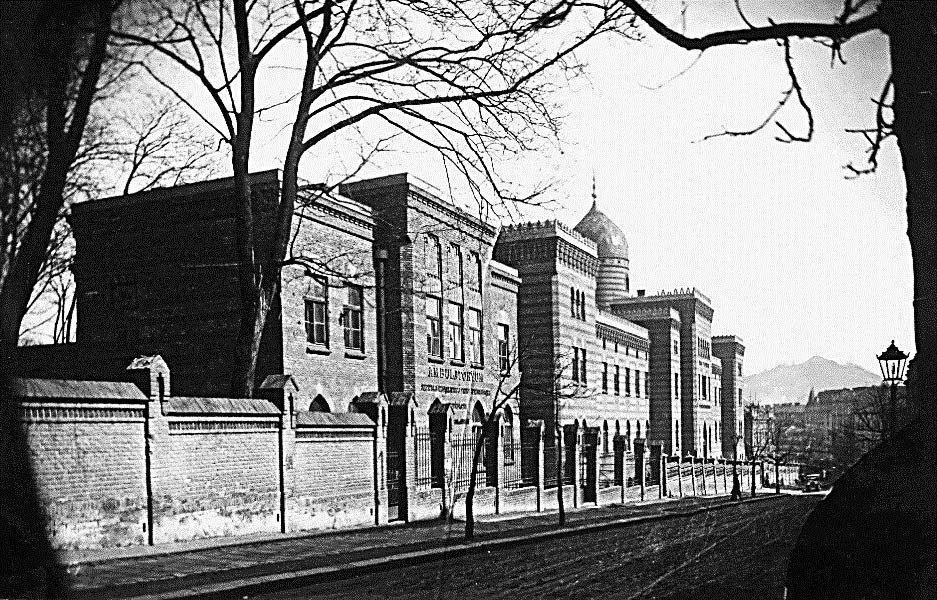
Propriety was undoubtedly one of the central features of Lviv's culture, art, architecture, and urban planning, particularly in the early twentieth century. Avant-garde art was not close to the hearts of fellow citizens, as appears from exhibition reports. [40] The harmonious urban effect resulting from this conservativeness was, and still is, loved by both citizens and visitors. The Israelite Hospital was one of the highly contextual projects, on a large urban scale and within the ensemble itself. Its exotic "Jewish" style did not overstep conventions established in the preceding half century, and was only charged with some nuances of the founders' personal, liberal, and imperial loyalist significations. The "Jewish" elements pointed to the remote oriental roots of the religious community, but by no means to any Zionist destination. In order to construct the hospital, teams of architects and artists, craftsmen and workers—be they Jews, Poles, or Ukrainians—overstepped their own ambitions, put aside their important cultural, social, and academic projects, and worked together, investing great efforts for an appropriate remuneration. The final product was so well-suited to the city that its visible shell survived the community for which, and by which, it was constructed. It is still serving the citizens of Lviv, though its meaning of an architectural and urban statement is effectively forgotten.
[1] Feuerstein, Henryk. "Lazarus, życie i czyny lwowskiego filantropa," in [Majer Bałaban ed.], Almanach żydowski wydany przez Hermana Stachla, zawierający szereg artykułów wybitnych literatów, polityków i publicystów oraz życiorysy czołowych postaci Małopolski Wschodniej (Lviv, 1937), 216–19.
[2] Loewenstein, Stanisław. [Foreword], in Diamand, Herman. Pamiętnik Hermana Diamanda zebrany z wyjątków listów do żony (Kraków, 1932); idem, "Diamand, Herman," in Polski słownik biograficzny, vol. 5 (Warsaw, 1939–46), 151–53; Romaniuk, Marian. "Henryk Diamand (1860–1931)", Przegląd socjalistyczny, 5 (14) (2007) 90–96.
[3] Konarski, Stanisław. "Lazarusówna, Frederyka," in Polski słownik biograficzny, vol.16 (Warsaw, 1971), 588–9.
[4] Bałaban, Majer. Dzielnica żydowska, jej dzieje i zabytki (Lviv, 1909), 69.
[5] Bałaban, Majer. "Szpital żydowski we Lwowie," Wschód 108 (1902): 4.
[6] By the way, my newborn son was washed with water from a kettle, because in 1988 there was no running water! — S.K.
[7] Bałaban, "Szpital żydowski," 4; Henryk Mehrer, Szpital lwowskiej gminy wyznaniowej izraelickiej fundacji Maurycego Lazarusa (Lviv, 1906), 8–12.
[8] Józef Wiczkowski, Lwów, jego rozwój i stan kulturalny oraz przewodnik po mieście
(Lviv, 1907), 319, 477.
[9] Bałaban, "Szpital żydowski," 4.
[10] Biriulov, Yurii. "The Work of Jewish Sculptors in Lviv, 1919–1941," the lecture at the international conference The Ukrainian and Jewish Artistic and Architectural Milieus of Lwów/Lemberg/Lviv: From Ausgleich to the Holocaust, held at the Center for Urban History of East Central Europe on November 5–7, 2012, in Lviv.
[11] Maurycy Lazarus’s protraits are stored at the Borys Voznytsky National Art Gallery of Lviv and the Jewish Historical Institute in Warsaw.
[12] Bałaban, "Szpital żydowski," 4.
[13] Piotrowski, Josef. Lemberg: Handbuch für Kunstliebhaber u. Reisende (Lviv, 1916), 144.
[14] [Förster, Ludwig]. "Die Baron Pereira’sche Willa aus der Herrschaft Königstetten im Tullnerboden nächst Wien," Allgemeine Bauzeitung (1849): 107. English translation of the quote by Rudolf Klein.
[15] Wagner-Rieger, Renate. Wiens Architektur im 19. Jahrhundert (Vienna, 1971), 95–102.
[16] Muthesius, Stefan. "Renate Wagner-Rieger and Mara Reissenberg, Theophil von Hansen (Die Wiener Ringstrasse, Bild einer Epoche, vol. 4 Section VIII) (Wiesbaden, 1980)," The Journal of the Society of Architectural Historians 42, no. 1 (1983): 80–81.
[17] The Greek Orthodox Church in Vienna I (1857).
[18] The Evangelical Church in Gumpendorf, Vienna VI (1849).
[19] The chapel at the Invalidenhaus, Lviv (1855–60).
[20] Synagogues in Tempelgasse, Vienna II (1856–58), and in Dohány Street, Budapest (1854–59).
[21] Kravtsov, Sergey R. "Jewish Identities in Synagogue Architecture of Galicia and Bukovina," Ars Judaica 6 (2010): 94.
[22] Vuitsyk, Volodymyr. "Narodnyi Dim u L’vovi," Visnyk instytutu "Ukrza-khidproektrestavratsia" 14 (2004): 165. The edifice was built under supervision of then young architect Sylwester Hawryszkiewicz (1833–1911).
[23] Łoza, Stanisław. Słownik architektów i budowniczych Polaków oraz cudzoziemców w Polsce pracujących (Warsaw, 1931), 301.
[24] Prokopovych, Markian. Habsburg Lemberg: Architecture, Public Space, and Politics in the Galician Capital, 1772–1914 (West Lafayette, 2009), 146–9.
[25] Biriulow, Jurii. Rzeźba lwowska od połowy XVIII wieku do 1939 roku (Warsaw, 2007), 26–27.
[26] Förster, Ludwig. "Das israelitische Bethhaus in der Wiener Vorstadt Leopoldstadt,"
Allgemeine Bauzeitung (1859): 14.
[27] Semper, [Gottfried]. "Die Synagoge zu Dresden," Allgemeine Bauzeitung (1847): 127.
[28] "Sprawozdanie ze zgromadzenia odb. d. 29 stycznia r.b.," Czasopismo techniczne,
14, no. 5 (1896): 58.
[29] Cf. Jan Sas-Zubrzycki, Zabytki miasta Lwowa (Lviv, 1928), 6.
[30] "Sprawozdanie ze zgromadzenia," 58.
[31] Kravtsov, Sergey R. "Architecture of ‘New’ Synagogues in Central-Eastern Europe," in Reform Judaism and Architecture, Andreas Brämer and Harmen H. Thies eds. (Petersberg, 2016), in press.
[32] Central State Historical Archives of Ukraine, fond 701, opys 2, sprava 1559, f. 55. Lazarus meant to mark the year 1898, when the decision to found the hospital was taken.
[33] Kos, Anna and Onyshchenko, Lilia. Spadshchyna velykoho budivnychoho: Profesor L’vivs’koi Politekhniky Ivan Levyns’kyi (1851–1919) (Lviv, 2009), passim; Zhuk,Ihor. L’viv Levyns’koho: misto i budivnychyi (Kyiv, 2010), passim.
[34] Bieńkowski, Wiesław. "Mokłowski Kazimierz Julian," in Polski Słownik Biograficzny, vol. 21 (Warsaw, 1976), 582–5; Biriulow, Jurii. Lwów: Ilustrowany przewodnik (Lviv, 2003), 222. Mokłowski became an advocate of the Zakopane Style in 1901; see: Kitowska-Łysiak, Małgorzata "Kazimierz Mokłowski (1869–1905) i jego stanowisko w sprawie tzw. stylu narodowego w architekturze polskiej", Lud 70 (1986): 105–23.
[35] Mokłowski, Kazimierz. Sztuka ludowa w Polsce (Lviv, 1903), 352, 424–443.
[36] Kravtsov, Sergey R. "Józef Awin on Jewish Art and Architecture," in Jewish Artists and Central-Eastern Europe: Art Centers — Identity — Heritage from the 19th Century to the Second World War, ed. Jerzy Malinowski, Renata Piątkowska, and Tamara Sztyma-Knasiecka (Warsaw, 2010), 135; idem, "Studies of Jewish Architecture in Central–Eastern Europe in Historical Perspective," in The History of Art History in Central, Eastern and South-Eastern Europe, ed. Jerzy Malinowski, vol. 1 (Toruń, 2012), 184.
[37] Ulam Michał," in [Majer Bałaban ed.], Almanach żydowski wydany przez Hermana Stachla, zawierający szereg artykułów wybitnych literatów, polityków i publicystów oraz życiorysy czołowych postaci Małopolski Wschodniej (Lviv, 1937), 599–600.
[38] Ulam, Stanislaw M. Adventures of a Mathematician (Berkeley, 1991), 109.
[39] Lewicki, Jakub. Roman Feliński, architekt i urbanista: Pioner nowoczesnej architektury
(Warsaw, 2007), 13–15.
[40] Clegg, Elizabeth. "'Futurists, Cubists and the Like': Early Modernism and Late Imperialism," Zeitschrift für Kunstgeschichte 56, no. 2 (1993): 249–77.