




"The Ukrainian-Jewish Encounter: Cultural Dimensions": Part 2.1
The Ukrainian Jewish Encounter was founded in 2008 with the goal of building stronger relations between Ukrainians and Jews, two peoples who, for centuries, lived side by side on the territory of what is modern-day Ukraine. Since then, in keeping with its motto, "Our stories are incomplete without each other," UJE has sponsored conferences, round-table discussions and research, as well as translations and publication of works the organization anticipates will promote a deeper understanding between the two peoples and an appreciation of their respective cultures.
We offer for the first time the book The Ukrainian-Jewish Encounter: Cultural Dimensions in an eBook format.
The book is a collection of essays that examine the interaction between the Ukrainian and Jewish cultures from the seventeenth century onwards. Written by leading experts from Ukraine, Israel, and other countries, the book presents a broad perspective on parallels and cross-cultural influences in various domains — including the visual arts, folklore, music, literature, and language. Several essays also focus on mutual representation — for example, perceptions of the "Other" as expressed in literary works or art history.
The richly illustrated volume contains a wealth of new information on these little-explored topics. The book appears as volume 25 in the series Jews and Slavs, published by the Hebrew University of Jerusalem since 1993. In several previous volumes, considerable attention is given to the defining role of the Old Testament in Ukrainian literature and art and to the depiction of Jewish life in Ukraine in the works of Nikolai Gogol, Taras Shevchenko, Ivan Franko, Lesia Ukrainka, Vladimir Korolenko, and other writers.
This collection of essays was co-edited by Wolf Moskovich, Professor Emeritus, Hebrew University of Jerusalem, and Alti Rodal, Co-Director of the Ukrainian Jewish Encounter, who also wrote the introduction to the volume. It was published in 2016 by Hebrew University of Jerusalem.
Click here for a pdf of the entire book.
Part 2.1
Teachers and pupils: Ukrainian avant-gardists Exter and Bohomazov and the Kyiv Circle of Jewish Cubo-Futurists, 1918–20
The Pedagogical System
Dmytro Horbachov (Karpenko-Kary National University, Kyiv)
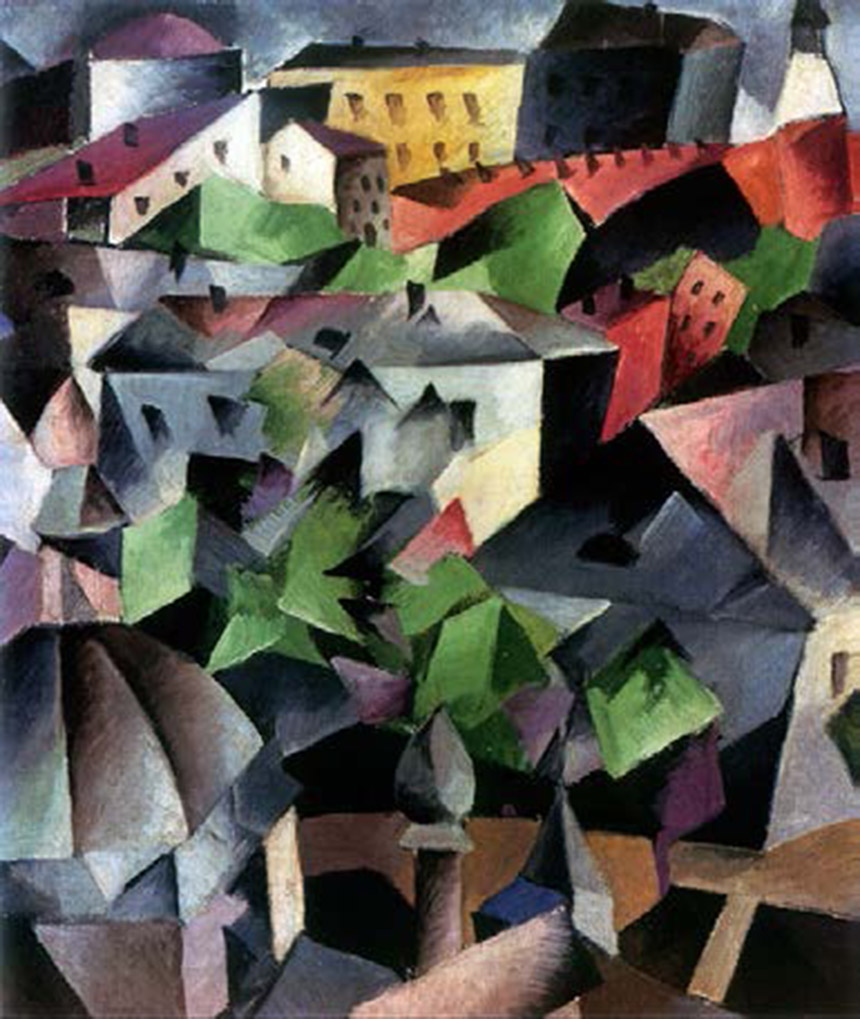
Young Kyiv artists of Jewish background, who were members of the Kultur-Lige, [1] studied Cubo-Futurism and Abstractionism in the now world-renowned Exter-Rabinovich Decorative Art Studio (1918–19). There they were taught by the famous artists and teachers, Alexandra Exter (Oleksandra Ekster) and Oleksandr Bohomazov. The studio included two classes — one for children and one for adults. Instead of academic instruction, the studio members would learn and become knowledgeable about key elements in the art of painting, such as the following:
Rhythm.
This is the main active force in art. They were told about the interaction of rising and falling waves, the alternation of weak and strong rhythms, and their energetic twisting patterns. They were taught to change or interrupt rhythm and to combine different rhythms. They were also taught about the notion of interval — a pause, a white sound/space — as one of the integral parts of rhythm. The principles of interval theory were first formulated in Bohomazov's 1914 work Painting and Elements. [2]
Non-objective approach.
Not many artists in Europe mastered abstract plotless art at that time. However, in Exter's studio this type of art was available even for children — for example, the art of colour paper cutouts and the formation of different rhythmic compositions. Adults were taught composition with wide colour planes in three stages: (a) plane painting — Matisse's work was used as the standard in this regard, but also, as Exter said, they borrowed from the "primitive rhythm of carpet design and painted ceramics"; (b) volumetric painting — as demonstrated in the art of Cézanne, Picasso, and the "dynamic rhythm of Ukrainian Easter eggs"; and (c) deformation — the creation of linear and colour-related harmony and disharmony, and the crossing of compositional axes to create power lines that emit energy and tension. An example of expressive deformation was given by the writer Ilya Ehrenburg. An amateur sculptor, he created a disproportionally large head in his portrayal of a particular man, explaining that he made the head big because this man was very wise.
Bohomazov gave his own example of expressive deformation: "A person was pushing his cart up the street in Kyiv. What I saw when I painted this motif was that the long straight diagonal lines of the cart were so energetic, so powerful, that the buildings had to lean back to keep standing." In his view, such spontaneity of thinking and unpredictability in the nature of artistic solutions represent the poetry of creativity.
Colour.
The sense conveyed was that of "the sound of colour" (an analogy to Rimbaud's perception of "the colour of sound"). A prime example described by Exter was the colourful intensity "that characterizes the art of young Slavonic nations." Just as perspective was important for Renaissance art, colour was the greatest discovery for the avant-garde. It was a kind of potentiometer or way of measuring tension, the main "content of form," according to Bohomazov. As expressed by Exter: "As in ancient icons, where the primal colouration reached maximum tension, so does contemporary art show cleanness of colours and their intensity." [3]
And, finally, facture, the manner in which a work of art is made — for example, an artist's characteristic handling of paint. The theory and practice of paintings "that bulge out, heave and surge, with their surface, rough and uneven," as described by the Russian Futurist poet and playwright Velimir Khlebnikov, was developed by another Russian Futurist, David Burliuk. Exter taught that facture determines the lightness or heaviness of certain colours, and therefore the weight of plastic forms.
Thanks to Exter and Bohomazov, dozens of Cubo-Futurists and Abstractionists appeared in Kyiv. This was unprecedented for most European cities. Their impact on artists belonging to the Kultur-Lige was remarkable.
Theatre
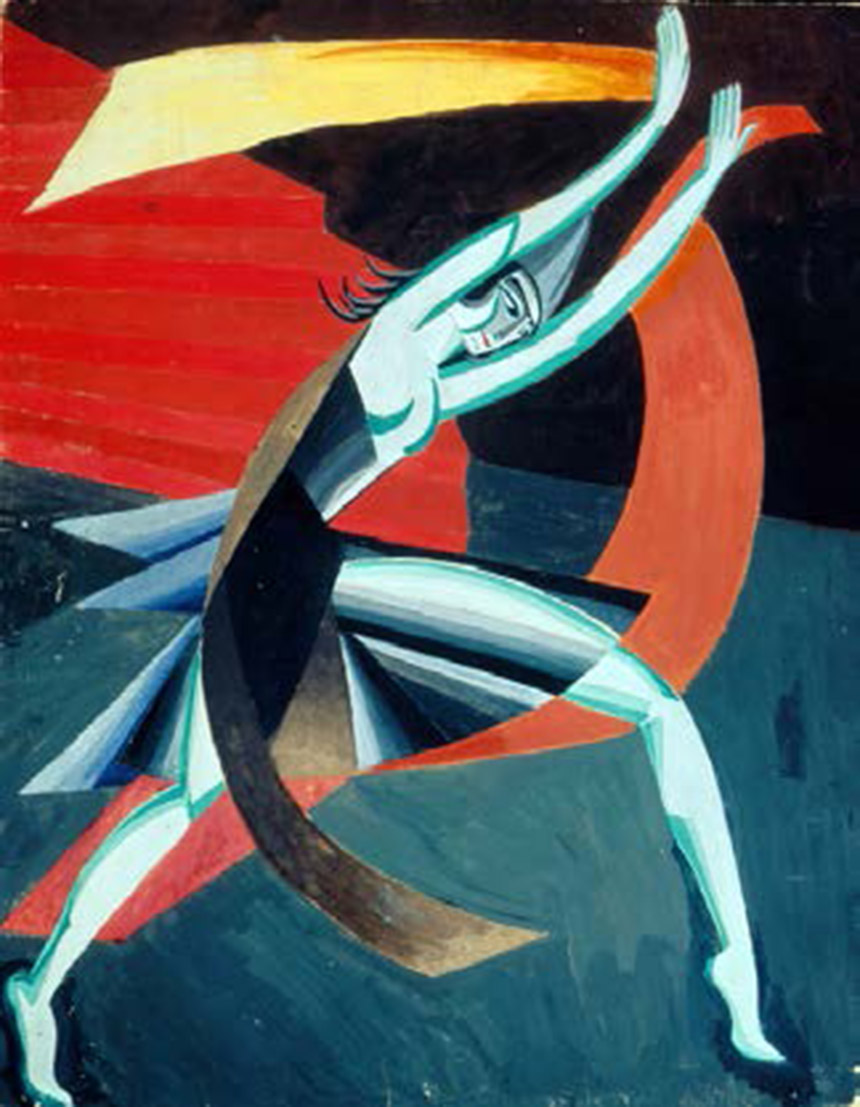
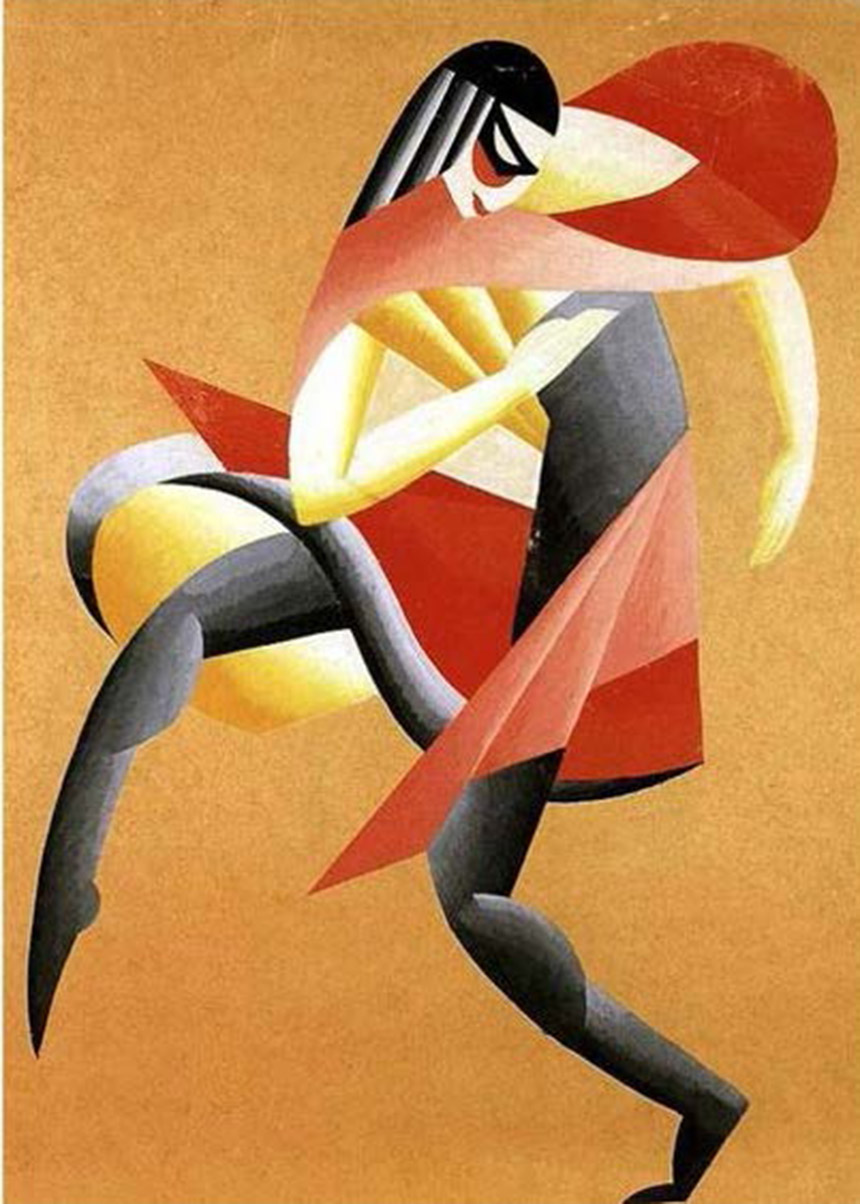
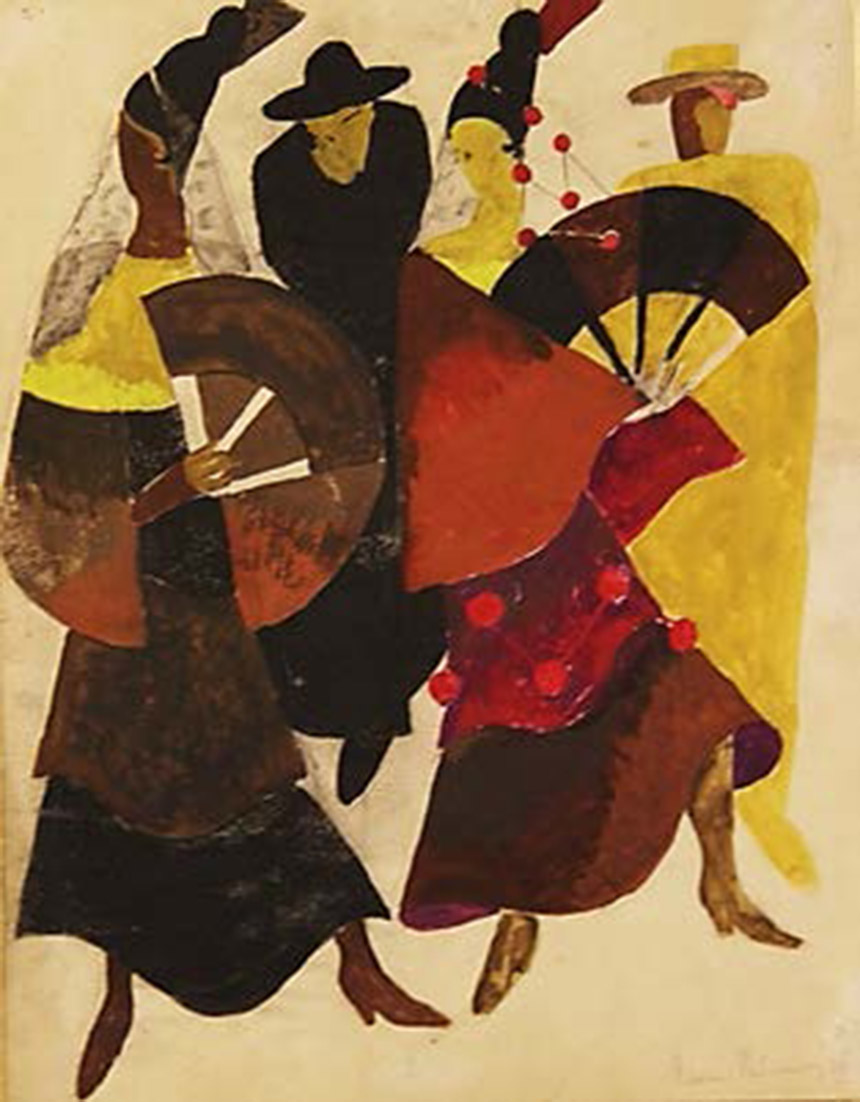
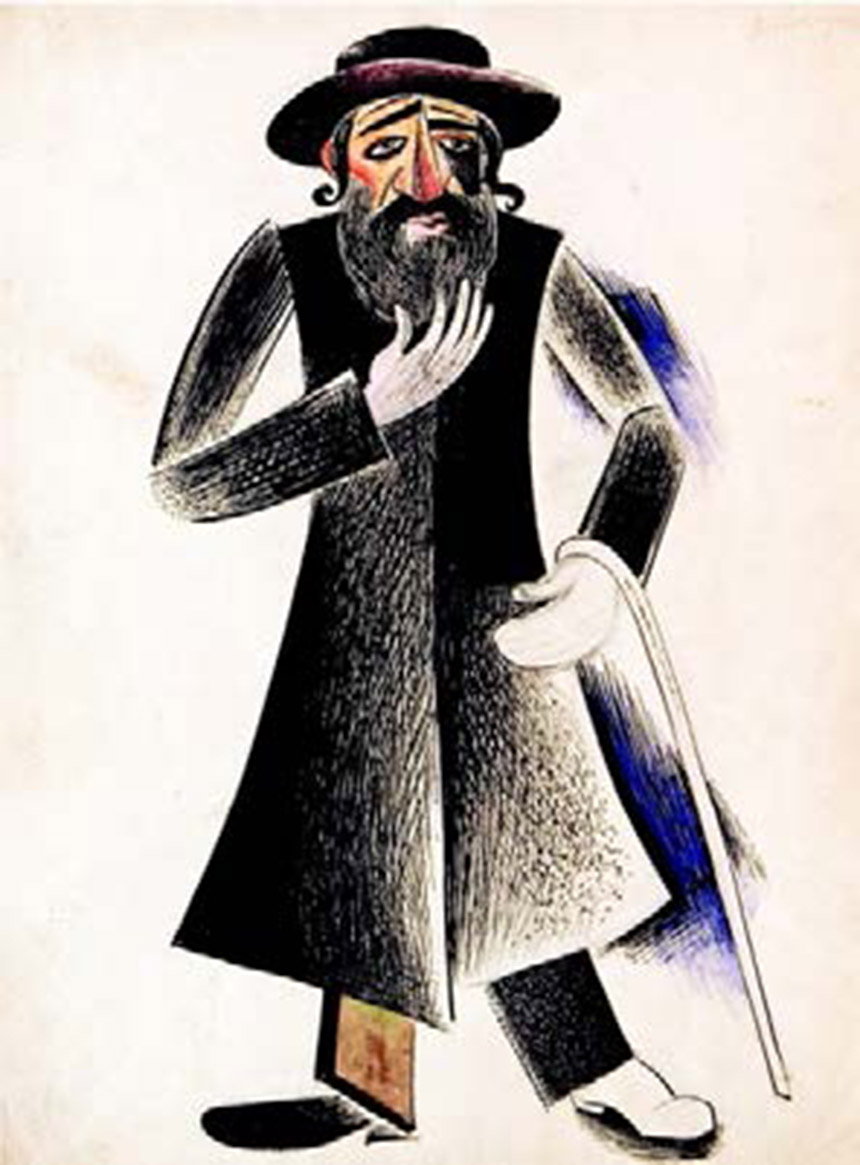
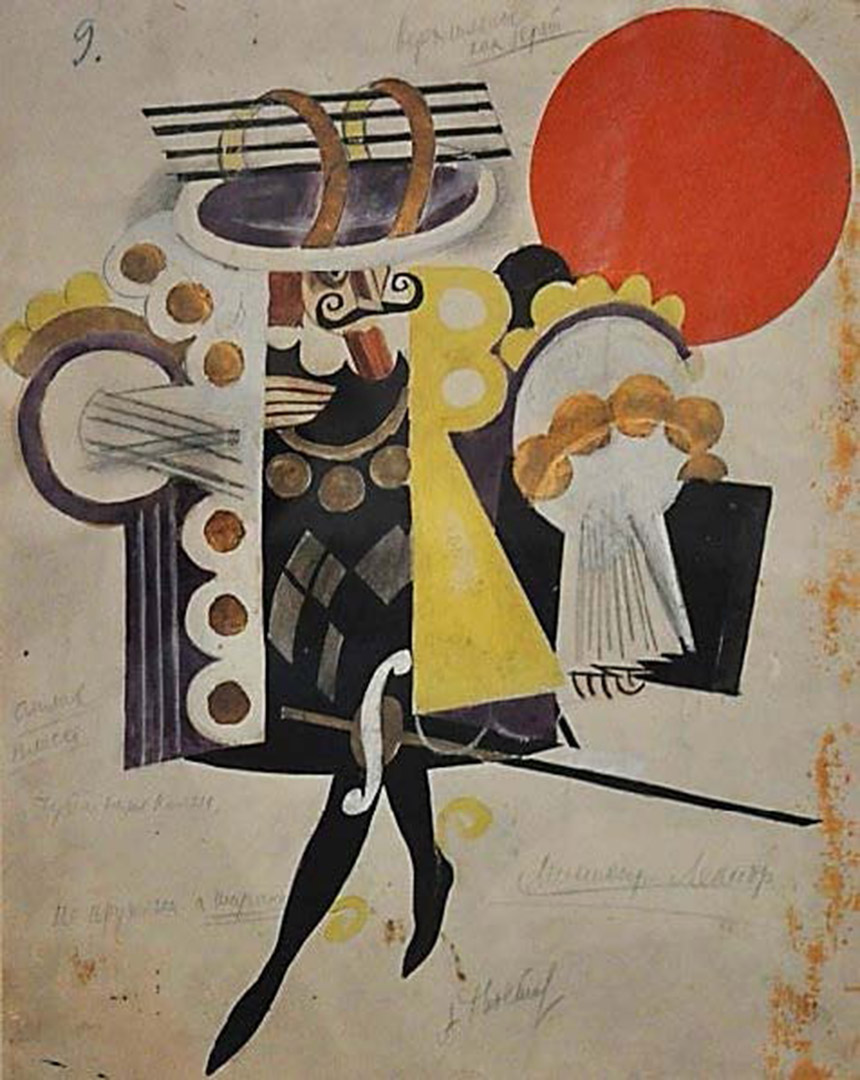
The art of scenic design that was taught at the Exter studio was probably the world's first systematic training course in this field, and its Cubo-Futurist and Constructivist approach was highly innovative. The training provided in this short-term course produced a world-class elite group of set designers, including: Vesnin, Rabinovich, Nivinsky, Petrytsky, Chelishchev, Shifrin, Tyshler, Khvostenko-Khvostov, Meller, Andriienko-Nechytailo, and a dozen theatrical designers who acquired a nation-wide reputation in the USSR (Borys Kosarev) and in France (Simon Lissim). Notable features of these innovative approaches to set design include the following:
- Space.
In addition to the theatre stage floor, the stage cube became the performance space as well. The floor and upper elements of the stage cube were connected through architectural three-dimensional scenery or framework structures. - Colour.
The spectacular effect of the performances was achieved through the movement of colourful decorations and the coordinated gestures of the actors, who also represented colourfully painted spots. The stage was turned into a carnival of colourful elements, resembling Ukrainian wedding customs. - Light.
Exter and her people turned streams of light into components of the rhythmical structure of performance. Today, this approach to lighting is a basic element in the world of set design.
Kyiv's Kultur-Lige and Issues of Abstraction
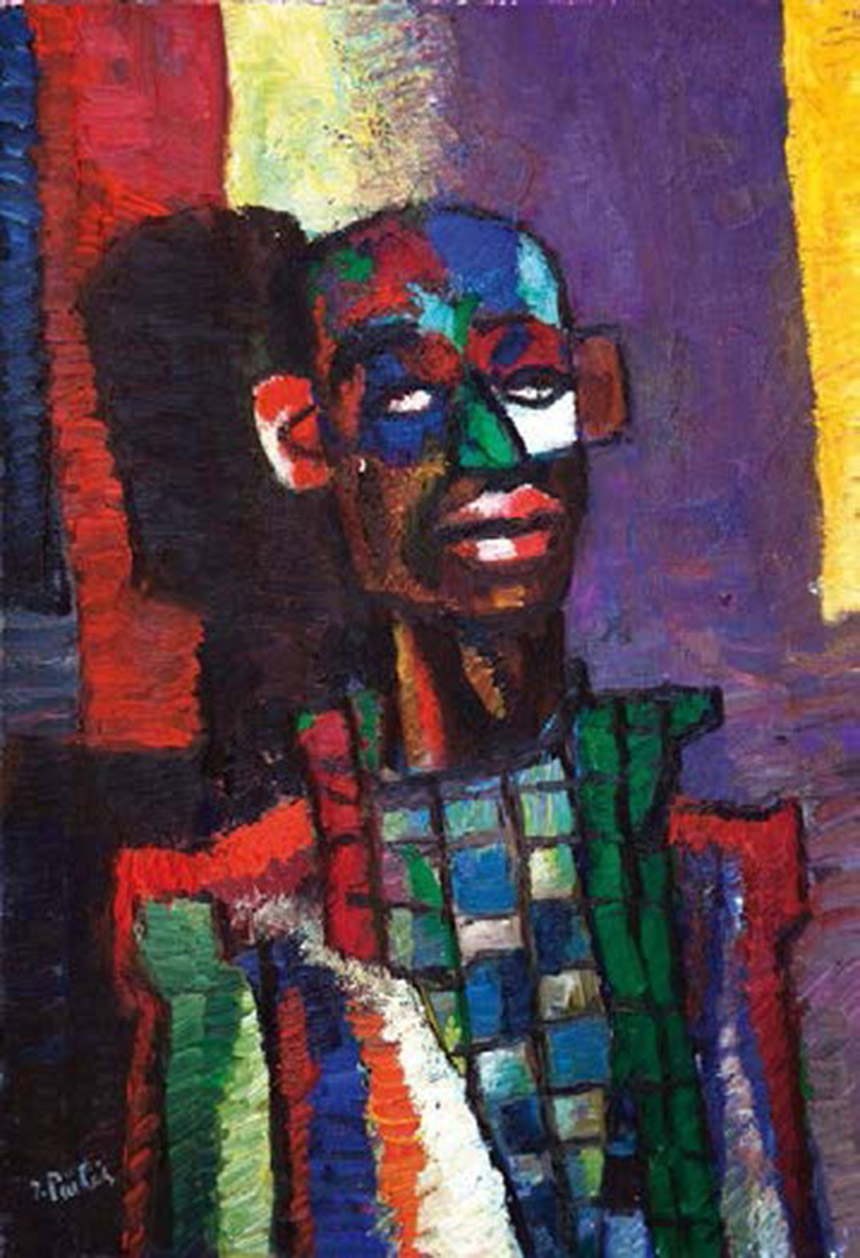
Exter and Bohomazov had considerable influence on Kyiv's Jewish artistic youth, who banded together in the Kultur-Lige's art section. The group included Mark Epshtein, El Lissitzky, Solomon Nikritin, Isaak Rabinovich, Sarah Shor, Aleksandr Tyshler, Isakhar Ber Rybak, Nisson Shifrin, Isaak Pailes, and others. All of them later became acclaimed masters, including in other countries. They all considered abstract plastic conception to be the main indicator of art and proclaimed a decisive "no" to "literalness" and narrative if not first filtered through the contemporary art process.
In light of the religious ban against painting concrete images of human figures on synagogue walls, these artists considered their abstraction to be the manifestation of Jewishness in art. In 1919, the Kyiv Yiddish journal Oyfgang (Dawn) published an article by Boris Aronson and Isakhar Ber Rybak entitled "The Directions of Jewish Art," which stated the following:
Pure abstract form is precisely what embodies the national element…. It is only through the principle of abstract art that one can achieve the expression of one's national self-identity. The form is an essential element, while the content is a bad distraction. The picture's composition is more important than its message, and the variety of colours is more valuable than realistic representation of objects. [4]
For El Lissitzky, the most prominent artist of the Kultur-Lige, Kyiv was his school of abstract art, as expressed in Exter's Cubo-Futurism during 1918–19. Later, in Vitebsk, Moscow, and Germany, he would create masterpieces of Suprematism (the minimalist, draftsman's version of non-objective art focused on basic geometric forms), but Kyiv was the starting point of his artistic evolution. Lissitzky's artwork was multicultural: French (Picasso's influence), Ukrainian (Exter's influence), and Jewish (expressed in the art he produced for Yiddish publications). His Kyiv illustrations of Ukrainian, Jewish, and Belarusian fairy tales also indicate the multifaceted nature of Lissitzky's cultural background. As was the case for a number of other artists of the period, his national self-identity manifested itself in a rather spontaneous, intuitive, and subconscious manner.
It is significant that the catalogues of the Kultur-Lige were printed simultaneously in Ukraine's three official languages of Ukrainian, Russian, and Yiddish. A number of the Kultur-Lige artists became stage designers. Aronson became world famous as a stage designer in New York on Broadway and at the Metropolitan Opera. Others, such as Nisson Shifrin, worked at the Berezil theatre headed by Les Kurbas, which was to find itself at the epicentre of new art in Kyiv.
In Search of Epshtein
In the 1960s, as the Head Custodian of the Ukrainian Arts Museum, I would go to Moscow and visit members of the Ukrainian Diaspora on a regular basis and return with pieces of art to Kyiv. I was told that my visits stirred the Ukrainian and Jewish-Ukrainian community in Moscow. For the first time, I heard Mark Epshtein's name from the artist Irina Zhdanko, the wife of Lev Kramarenko, and a friend of Malevich. Zhdanko mentioned the names of members of OSMU (Organization of Contemporary Artists of Ukraine), and Epshtein was one of them. Zhdanko told me that Epshtein's sister lived close by, in Sokolniki. Her name was Gousta. So I went there. She lived in a shabby single-room apartment. In the narrow hall, there was a folder left on the floor. It was probably left there a few decades ago. The folder contained about a thousand of Epstein's drawings! Over a hundred of them were Expressionist and Cubist paintings of extremely high quality. There were also about two dozen études from a later date, without avant-garde features, because avant-garde was prohibited in the 1930s and 1940s. My first impression was that the drawings belonged to the strong hand of a sculptor. Their plastics were heavy, massive, and Hercules-like. They were also grotesque and hyperbolic. Cubistic "hinge-joint characters" of the early 1920s not only resembled Picasso's paintings but also looked like any tailor's mannequin in the shops of Kyiv's Podil district. A series of drawings from the late 1920s, titled Jews on Earth, were impressive. There were labourers, laundrywomen, fishermen and fisherwomen with big feet, baroque-style curved bodies like tree trunks, with wide faces, as plain as the countryside. In balancing plastic volumes, Epshtein recalled the Cubistic past and moved towards Post-Cubistic Expressionism. Gousta was happy to give me these paintings and I brought them to Kyiv. I didn't want to boast about the discoveries and inform my supervisors about them, as I already had the reputation of being a "politically unreliable" person. I had once overheard a conversation between my director and his deputy, who was sarcastic about Formalism: "We shouldn't pay for Horbachov's trips to Moscow. He brings back Formalist paintings. We should send another guy instead, he brings back Realists." Therefore I decided to register Epshtein's paintings with the so-called auxiliary archive, which was secondary as compared to the primary collection and therefore overlooked by the censors' eyes. In 1967, I suggested to Pavlo Zahrebelny to mount an exhibition in the Writers' House and said it would be just as sensational as the previous Bohomazov exhibition. Zahrebelny, a patron of Ukrainian culture, agreed and the House Director announced the exhibition's opening date. On the day before the opening I came to tell him that I would be bringing in the paintings from the museum. However, the director informed me, with some distress: "Israel attacked the Arabs yesterday. We have to cancel the exhibition." But Epshtein died in 1949! Nobody cared — it was a case of attributing collective guilt.
Nisson Shifrin's Review of Two Exhibitions in Kyiv in 1920
Nisson Shifrin (1892–1961), a member of Kultur-Lige, was an illustrator, graphic artist, and avant-garde painter who studied in Kyiv at the Exter studio (1918–19) and at the Ukrainian Academy of Arts (1920–21) where he was a student of Professor Mykhailo Boichuk. He later taught in several schools in Moscow and gained fame as a Soviet stage designer. The following is a draft review by Shifrin of two exhibitions held in Kyiv in 1920 — an Exhibition of the Art Section of the Kultur-Lige, and an Exhibition of the Ukrainian Academy of Arts — in which he expresses a conceptual stance that reflects that of his teachers Exter and Bohomazov regarding the advantages of abstract art and the rhythmic organization of works of art:
The Kultur-Lige exhibition, though making an impression of good taste, lacks a program. It is not a show of a group, even though all the preconditions are there to make the presenting artists a solid group. It is like they forgot to agree on what they would show and in what way. As a result, some of the artists show a retrospective series of works (Pailes, Chaikov), while others only showcase their present works (Aronson). They nonetheless have something in common. It is clear that they all strive for an abstract understanding of the world, even while allowing for national specifics to add to this purpose.
Nationality is realized thematically in most of the exhibited paintings and not everyone is free from such a "plot-based" approach in their works. Creating paintings on a national subject or theme does not automatically mean creating national art. Nationality could surface in a variety of ways, even when the theme is not national. A Russian church in one of the drawings is depicted in a way that clearly shows the style of a Jew. Lissitzky is probably the most fully developed artist among the presenters. His effective approach in producing book illustrations and his understanding of the printed page and its graphic content demonstrates the author's plastic thinking and strong construction of graphic planes based on rhythm rather than national motifs.
Chaikov has the most graphic works at the exhibition. He is clearly progressive, breaking free of the external, plot-based approach and "dry bone" detail, and comes closer to the rhythmic composition of plastic masses. Two other painters, Aronson and Shifrin, accomplish their composition tasks and build their works concisely. Other artists' works demonstrate an organised approach. They find the source of their inspiration either in Russia and the West or in the ornamentation of the East. Their approach is serious, based on studies of artistic achievements, which makes up for the fact that they are not mature works but in the process of formation. The departure from a plot-based approach is the key to success. We can find proof of this with Chaikov, whose works are well represented at the exhibition. His early works, based on a literal approach, were dry and weak in shape and lines. However, the works show visible progress and the graphic aspects were resonant in his later drawings, which were built on the equilibrium of white and black.
Aronson and Shifrin are the least obsessed with plot domination. They operate solely with the painting data and strive to enhance the internal constructive composition, as opposed to Rabichev, who darkens his mostly simple but adequate drawings by introducing contrived aspects. In addition to all of the above, it is worth noting the works of Tyshler, who is still very "raw" and subject to many influences and airs. Just as with Rabichev, in Tyshler's case we can talk about a gap between his heart and his head. He overdoes the textures of most of his drawings to the point that very little is left from the overall structure, while in watercolours he leaves raw, unprocessed colours (instead of tones), thus spoiling his otherwise interesting compositions.
There are many sculptures at the exhibition, they are massive and they dominate the small graphic works. The works of Pailes and Chaikov are adequately represented. Pailes generally understands the goals of sculpture in his later works, though, overall, the forms are "blown-up" unreasonably, as if they were made of rubber. If you "poke them with your finger" (as Cézanne said wittily), nothing is going to pour out of the holes. Chaikov is very graphic in his sculptures. However, his Head of a Jew is a big step forward towards real sculpture, justifying all his previous mistakes. We should also note the very well sculpted Portrait of the Artist Khazina by Epshtein.
Boichuk's group of artists was the most pleasant phenomenon presented at the exhibition of the Ukrainian Arts Academy. This is a school, a really good school! It demonstrates both the correct approach to painting and an excellent knowledge of composition. Professor Boichuk renews all the painting traditions that were lost back in seventeenth century and, by connecting contemporary artists with the old masters, he teaches his students the most important thing: the mentality of painting. Many of these works may be modest, but the true art of painting, sanctified by the old traditions, grows and ripens in them. This art school presents some timid, amateurish works, but none of them are random. Even the works of the weakest students are organic and logical. This is the basis of art and this is what the students owe to their teacher Boichuk.
A report describing the endless hardships of the Ukrainian Academy of Arts was presented at the exhibition. And if the Academy was able to carry the flame and keep such a gem as Professor Boichuk's School, despite all the difficulties, then its existence is justified.
Narbut's students "sont plus Narbut que lui-même" [are more "Narbut" than Narbut himself — Trans.]. They will function beautifully, but they will not shine "plastically." This is their teacher's shortcoming. Narbut is exclusive in his technique, but he is totally "describable" because he thinks in plots instead of images (shape, colour, etc.). This is why his works, which are beautifully shaped externally, are still composed in a literal rather than plastic manner. To our mind, this does not lead to great composition.
It is not proper to talk about Burachek's school, primarily because there is no such school of painting. There are only several isolated students, who perhaps are not suited to the easel at all. One has to kick this "symbolic-aesthetic vulgarity" out of the presumptuous epigones of Chiurlionis and Bogaevsky before allowing them to take a brush in their hands. [5]
[1] The Kultur-Lige (Culture League), founded in Kyiv in 1917, promoted the development of contemporary secular Yiddish culture in a number of spheres, including education, literature, theatre, art, and music. The Kultur-Ligue is best known for its independent publishing house which put out a journal and books in Yiddish, and especially for its art school and exhibitions. In an effort to create new Jewish art, members of the Kultur-Lige synthesized images of traditional art with Ukrainian avant-garde ideas.
[2] Bohomazov, O. Zhyvopys ta elementy [Painting and Elements] (Kyiv: Zadumlyvy Straus, 1996), 1.
[3] Exter, A. "Vystavka dekorativnykh risunkov E.Pribylskoi i Ganny Sobachko",Teatral'naia zhizn' (Kiev, 1910).
[4] Paradoksy evreiskogo iskusstva. Manifest Borisa Aronsona i Isakhara Bera Rybaka, "Puti evreiskoi zhivopisi" (translation from Yiddish). Zerkalo (Tel Aviv, 1995), 124:15
[5] Source: Russian State Archive of Literature and Art (RGALI), Moscow, Fonds 24 22 (Shifrin Collection), List 1, File 160. pp. 37–38.
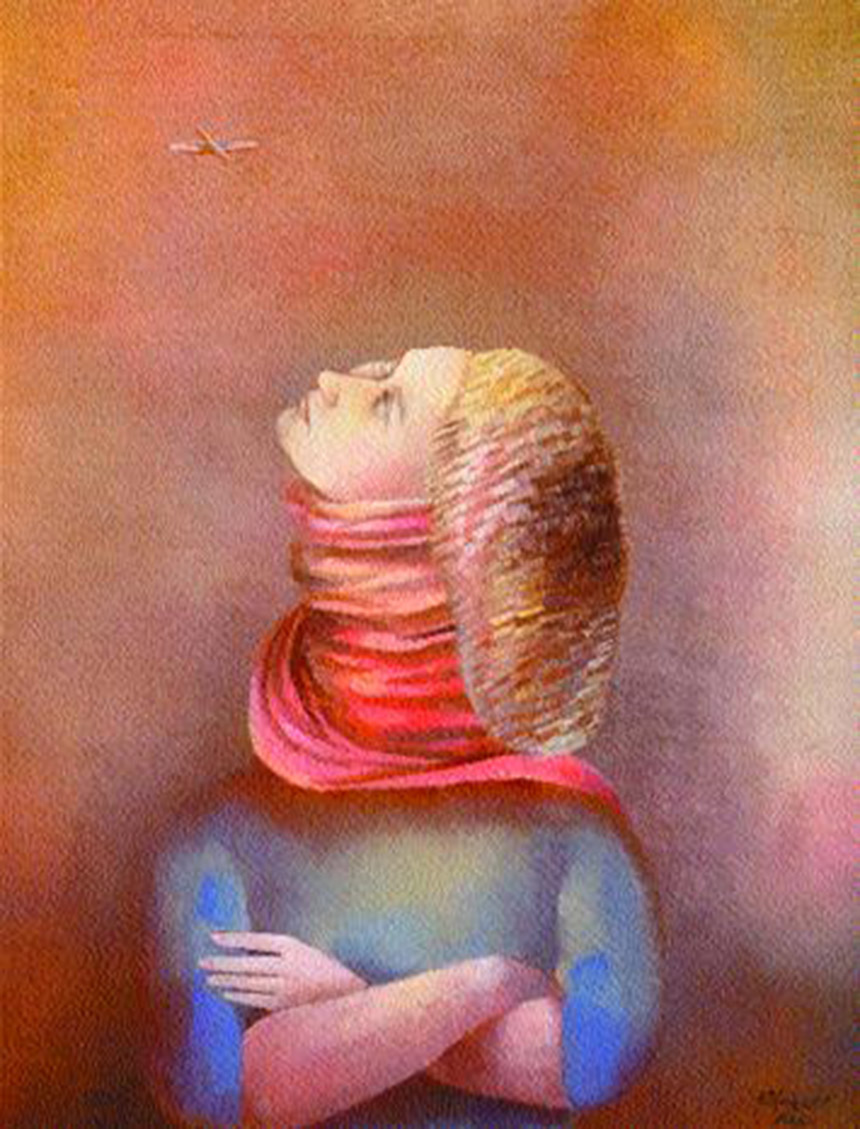
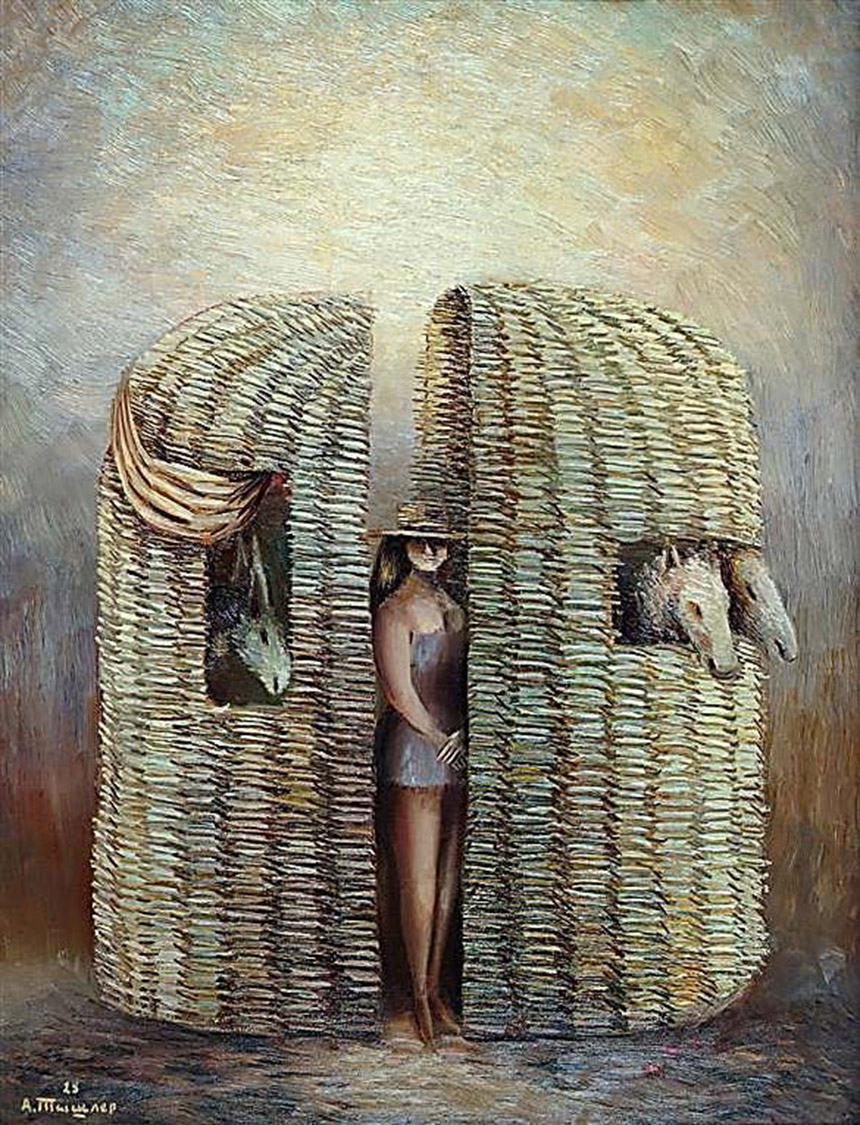
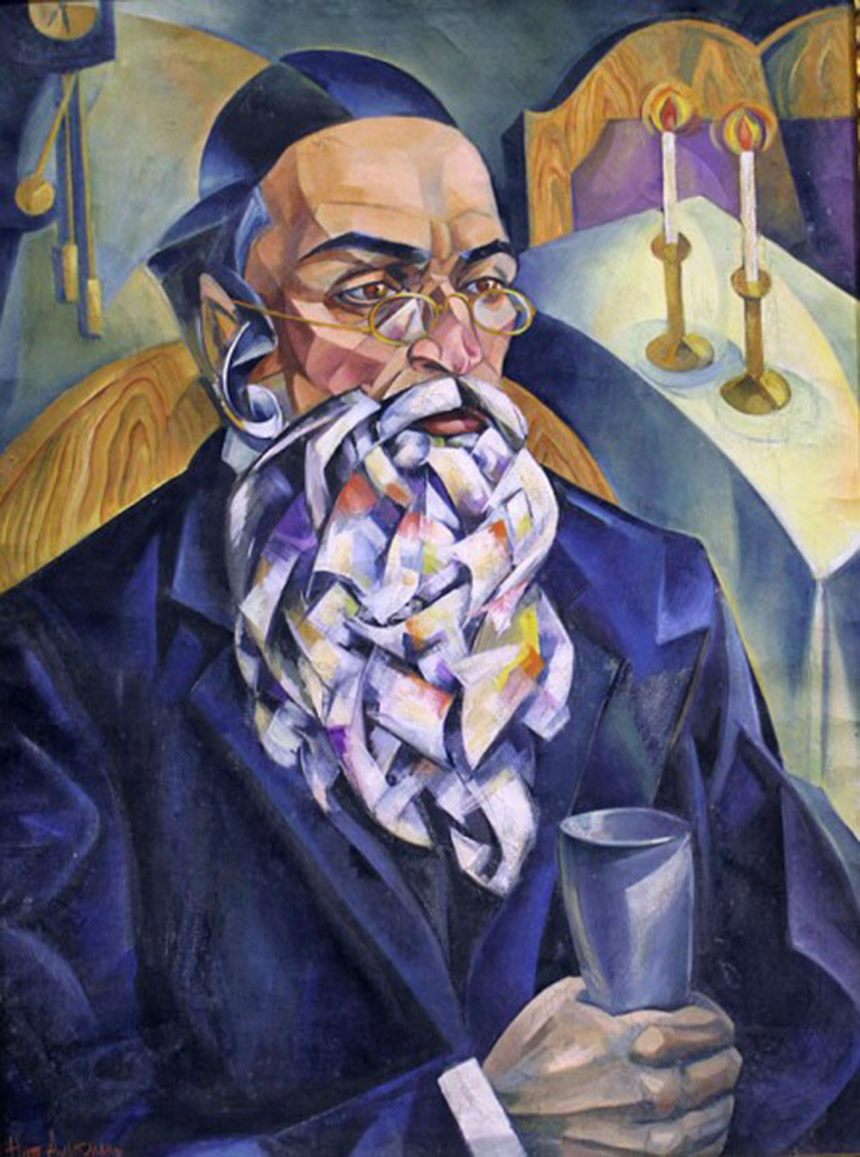
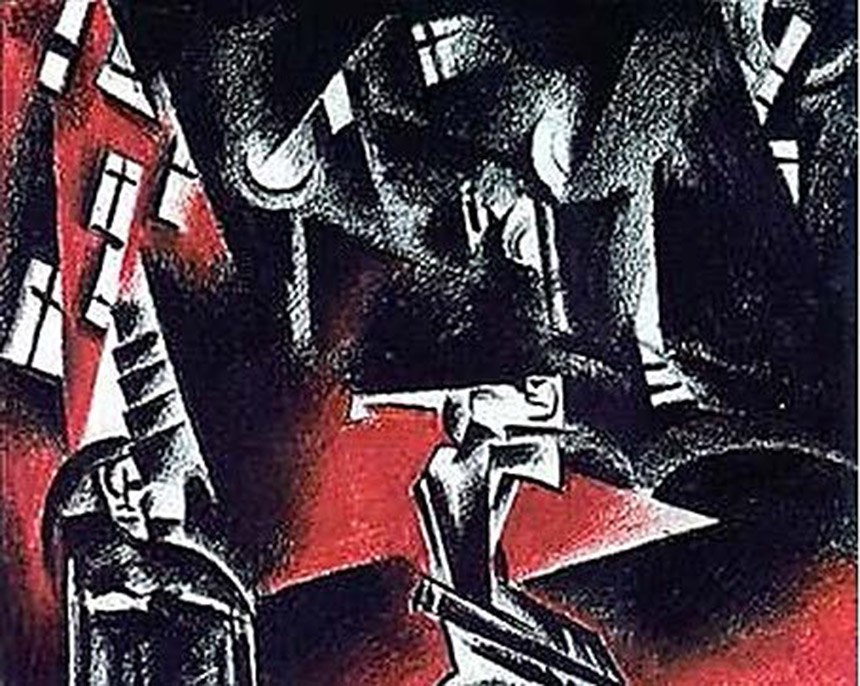
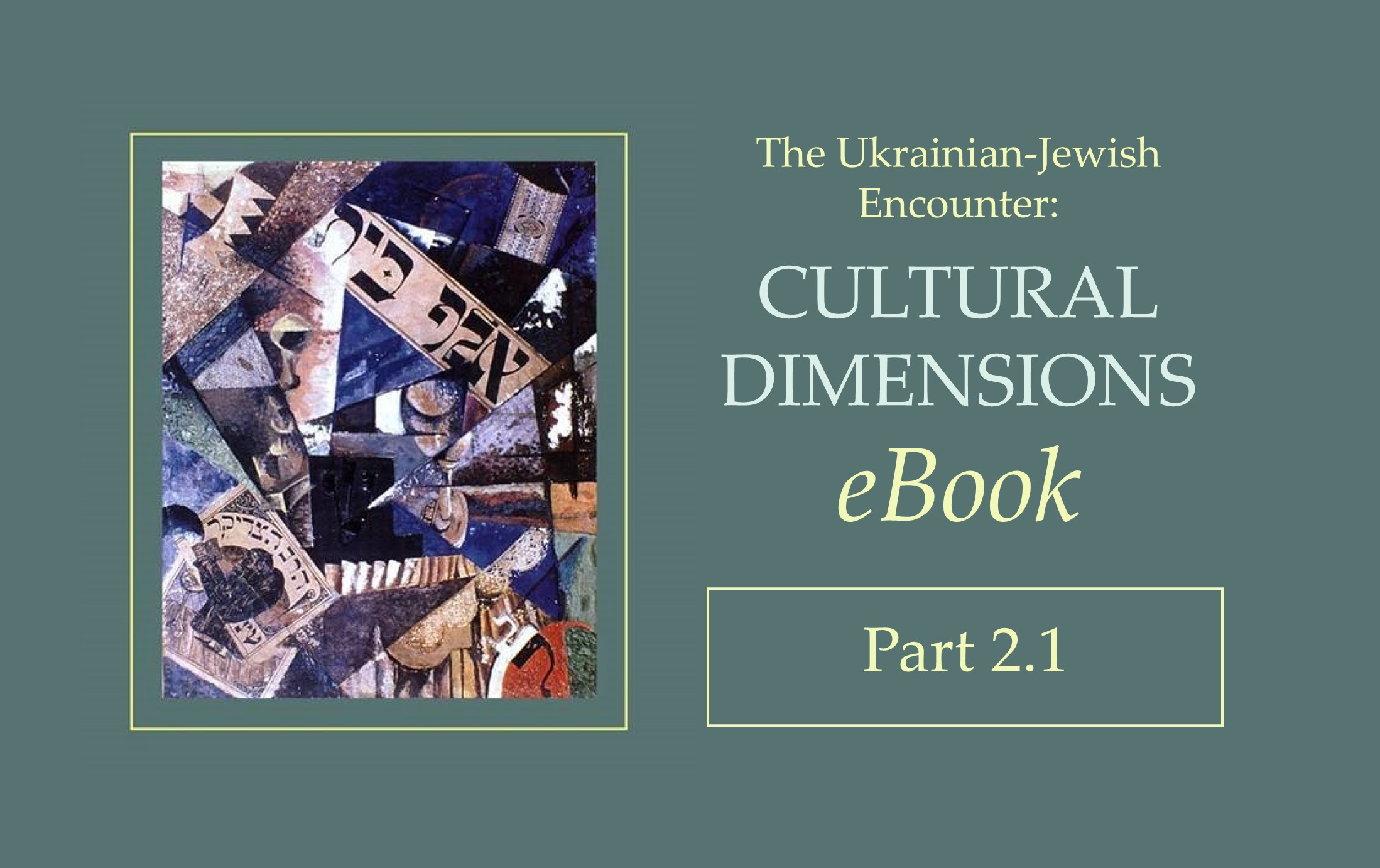
Samples of paintings and set design by Alexandra Exter, Oleksandr Bohomazov and their followers. 1920s.