




The Ukrainian roots of Hasidism

[Editor’s note: The annual Jewish pilgrimage to Uman, Ukraine, will take place around Rosh Hashanah, which in 2026 begins at sundown on Friday, 11 September and will conclude at nightfall on Sunday, 13 September. Thousands of Hasidic Jews — specifically followers of the Breslov Hasidic sect — traditionally gather in Uman during the days leading up to the Jewish New Year to pray at the burial site of Rabbi Nachman of Breslov. Most pilgrims arrive in the days immediately preceding 11 September.]
What is Hasidism? How did it emerge, and what stages of development did it go through? How was Hasidism integrated into the life of communities? These questions are discussed by Dr. Ihor Turov, Senior Research Fellow at the Kuras Institute of Political and Ethnic Studies, the National Academy of Sciences of Ukraine.
The origins and essence of Hasidism
Yelyzaveta Tsarehradska: I have discussed Hasidism multiple times with the guests in this studio, but we have never delved into its origins. How did it begin?
Ihor Turov: Hasidism is the name of a movement of pious people close to God, who may somewhat deviate from the norms of everyday piety due to their closeness to God. Hasidic movements emerged a dozen times over the past 2,500 years. But the most powerful, famous, and widespread one is Hasidism that arose in Ukraine in the mid-18th century. This is a religious movement that made elitist mystical teachings, previously accessible only to a limited circle of advanced people well-versed in rabbinic scholarship, accessible to the broad masses of believers. This was the origin of a mass religious movement based on the teachings of Jewish mysticism, particularly Kabbalah.
Yelyzaveta Tsarehradska: Why did it arise? Why did simply practicing Judaism fail to satisfy the needs of Jews at that time?
Ihor Turov: There are a large number of scholarly theories, but nearly all of them have been refuted to one degree or another. There was a concept that it was caused by the terrible ruins in Ukrainian society at the time and by the mass extermination of Jews, but scholars now believe that Jewish communities were doing well at the time when Hasidism emerged. Another opinion, also refuted by now, held that it was a movement of the poor against the rich, or of the ignorant against the learned rabbinical elite.
The most powerful argument now is the emergence of Hasidism as a consequence of the great demographic explosion in Jewish society in the Polish-Lithuanian Commonwealth and the eastern regions, i.e., the Ukrainian and Belarusian lands. Within 60–70 years, the Jewish population of the Polish-Lithuanian Commonwealth tripled or quadrupled, and many young people were seeking new ways.
Hasidism's evolution and connections to Ukrainian culture
Yelyzaveta Tsarehradska: It was a very progressive trend at that time. How was it manifested? Were rules and dogmas interpreted differently? Incidentally, I've noticed an exciting parallel between Skovoroda's philosophy and Hasidism.
Ihor Turov: I have a scholarly article, translated into English and recognized worldwide, on the possible influence of Orthodox mysticism. Some parallels with Skovoroda can indeed be seen. The situation remains mysterious, but widespread ties to Ukrainian society indeed were a contributing factor at the time. Hasidism involved highly complex religious and philosophical concepts, which were somewhat simplified to make them accessible to a wide circle of believers.
There is Talmudic Judaism, which depicts the universe as the kingdom of God, God as a king who personally communicates with his creatures, makes laws, and judges fairly. People address Him and fulfill His commandments. Alongside this belief, there is Jewish mysticism, which depicts the deity as a highly complex entity, consisting of many manifestations that together form a system of divine attributes that act as individuals. There is a complex system of interaction of the human soul with this divine entity. The deity permeates the entire universe and manifests itself in every detail, manifestation, and phenomenon of our existence. There is a complex system of soul reincarnation as a consequence of actions in this life.
The Hasidim take all this, and the simple means of worship, which were previously perceived as a relationship simply with the King of Heaven, now mean both a relationship with the King and a relationship with this complex picture of mystical existence. Hasidism combines all this. What is also important, and what really connects Hasidism to Skovoroda, is the proclamation that God needs to be served in joy, not in sorrow. Mourning over difficulties or personal sins should recede, yielding the first place to the joy of knowing that God surrounds you and that the whole world is His manifestation.
Hasidism and Yiddish
Yelyzaveta Tsarehradska: I'd also like to speak about the Yiddish language. What is happening to Yiddish at the moment? Is Hasidism developing in parallel to the development of Yiddish?
Ihor Turov: That is not exactly so. Yiddish has been the dominant spoken language of Eastern European Jewry since its very beginning. In ancient Rus', Jews spoke a Slavic dialect in everyday life, but then Yiddish-speaking Jewish emigrants from Germanic lands gradually came and began to dominate in Eastern Europe.
Books are published in Yiddish, and there is a Yiddish translation of the Pentateuch. By the time Hasidism emerged, Yiddish was already the dominant language in Eastern Europe, while Hebrew and Aramaic, the languages of the classical texts, were used by the learned class. Scholarly theological works were written in a mixture of Hebrew and Aramaic.
However, tzaddikim, leaders of Hasidic communities, preached in Yiddish, which was understandable to the people. Their sermons were then memorized, translated into Hebrew, and published. This is how Hasidic literature gradually emerged.
Baal Shem Tov
Yelyzaveta Tsarehradska: It is impossible to talk about Hasidism and its origins without mentioning the Baal Shem Tov. What can we say about this towering figure?
Ihor Turov: The Baal Shem Tov is the founder of Hasidism. As far as we know now, he was very knowledgeable about Kabbalah and produced an interesting, vivid synthesis of various mystical teachings. Before that, he was called a Baal Shem, which literally means a "master of a name," a practicing mystic engaged in healing the sick, solving community problems, overcoming drought, preserving people's lives when they were in danger, helping women give birth, and so on. Baal Shem Tov performed mystical spells, knew various recipes, and used herbs.
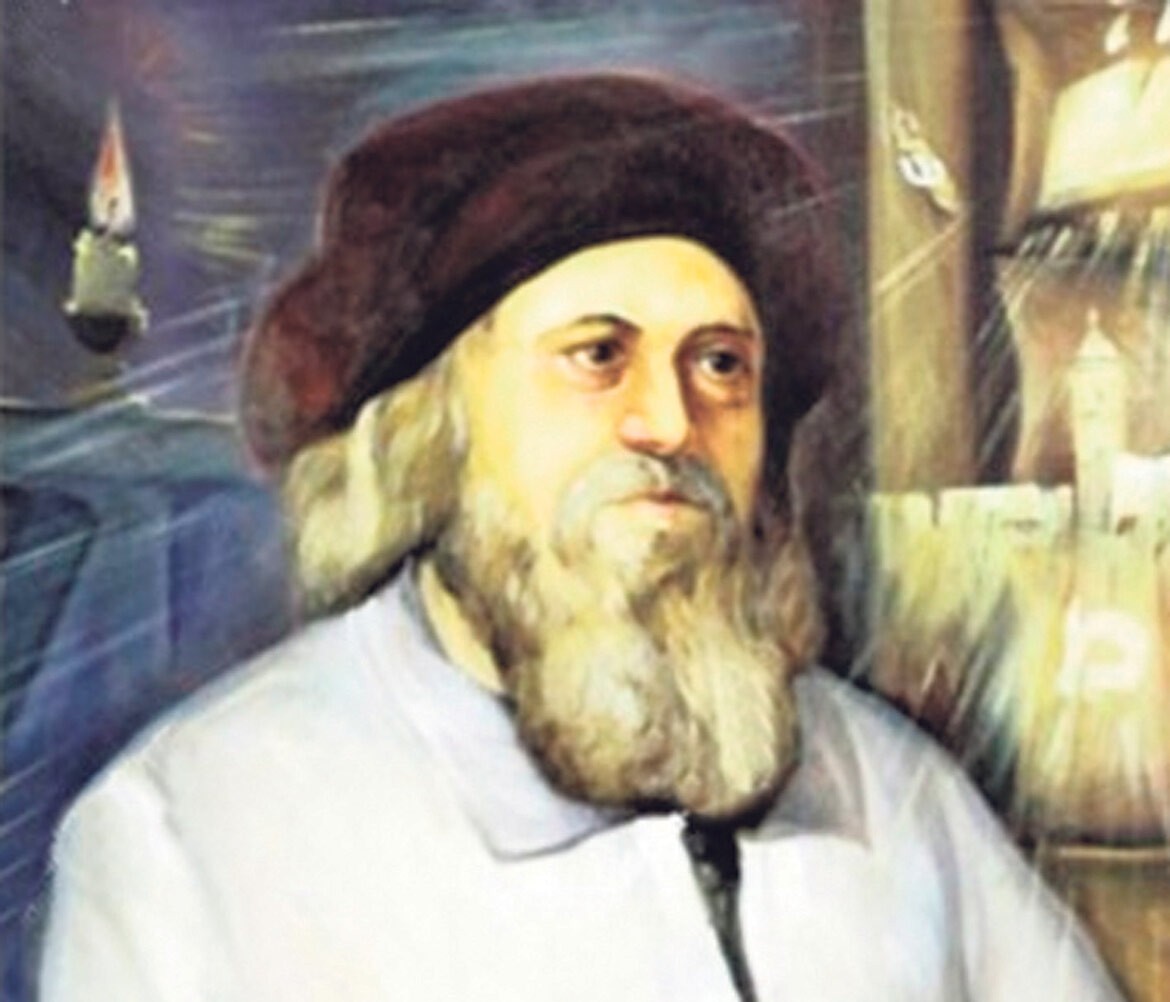
Rabbi Israel ben Eliezer, also known as BeShT, was one of these people. This profession was widespread in Eastern Europe, and he was just one of many Baal Shems. He traveled to various towns in Ukraine, mainly in Podillia and Volhynia. Historical research has established that the Medzhybizh community invited him to live and work there. Polish tax documents mentioned a certain Baal Shem who lived in Medzhybizh and was exempt from taxes.
The Baal Shem Tov gained recognition when he was well advanced in years. He had students in various regions — Podillia, Volhynia, and Galicia — who came to him. He also traveled to them because he was a wandering mystic and healer for much of his life. So, he had supporters in many different remote towns and enjoyed great authority. After BeSht's death, his disciples began preaching his teachings, and Hasidism quickly turned into a mass movement.
Stages of Hasidism
Yelyzaveta Tsarehradska: What are the stages of Hasidism? When did opposition to Hasidism emerge?
Ihor Turov: The second half of the 18th and the beginning of the 19th centuries comprise an early stage in the history of Hasidism. It emerged around 1750 and experienced a period of turbulent development until 1815, when a large number of tzaddikim appeared who did not simply retell the teachings of the Baal Shem Tov but developed a variety of their own teachings, very bright and intellectually or emotionally charged. What they all have in common is attention to the human being and a search for human qualities that play a leading role in relations with God.
This new religion was believed to be filled with mysticism and certain deviations from the letter of the law. The Hasidim were deeply mystical; if they deviated from established customs, they added new and highly interesting ones that became mandatory for all communities. However, early Hasidic studies suggested that the Hasidim were opposed by the old rabbinic elite, who saw the spread of mysticism as a deviation from the proper order.
Now the dominant view is that certain differences in the interpretation of mystical texts prompted the old-style Hasidic mystics, who knew the Talmud well and studied Kabbalah, to reject BeSht's Hasidism, thereby prompting the rabbinic elite to fight against Hasidism. The debate continues, but it is an established fact that there was an early struggle between the old-style mystics and the rabbinic elite against part of Hasidism.
Then the struggle seemed to stop, while alternative cultures gradually developed in the 19th century. The culture of the Litvaks is most widespread in Lithuania, Belarus, and Ukraine. They neither fought with the Hasidim nor accepted them. For them, the Hasidim are a perversion, a wrong turn, and even though they can pray in the same synagogue, the attitude is hostile.
Hasidism today
Yelyzaveta Tsarehradska: Can it be said that Hasidism is now a minority and that we don't see its followers and further development?
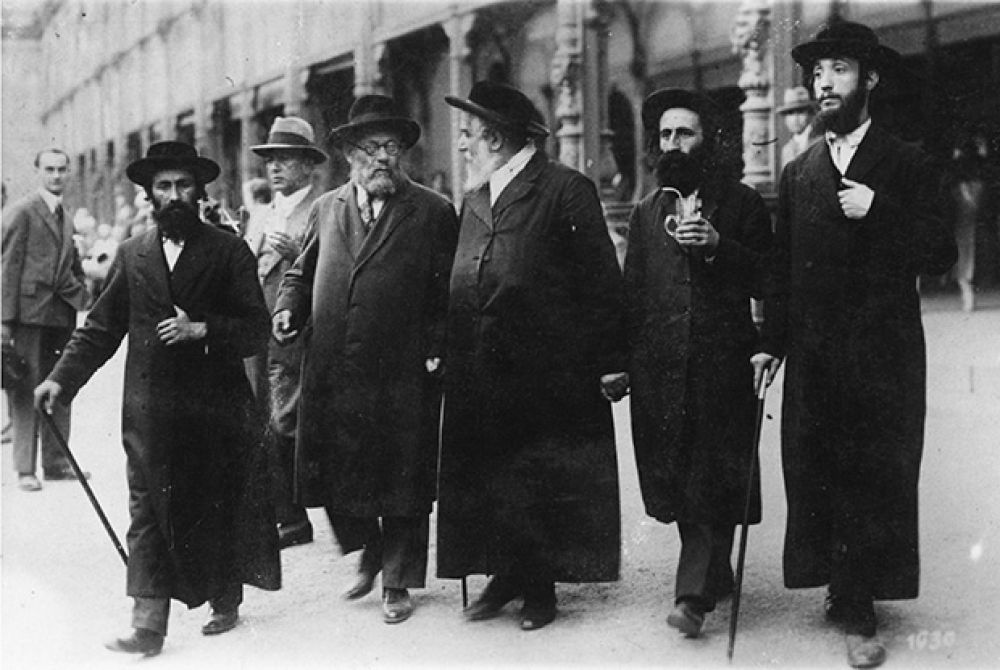
Ihor Turov: That would be an incorrect thing to say. First, Hasidism accounts for a fairly high percentage of modern Orthodox Jewry. About a third of Orthodox Jews who wear black hats, jackets, or lapserdaks are Hasidim.
New trends in Hasidism emerged in the 20th century. Moreover, there are strands of Hasidism that gain large numbers of followers by preaching their teachings to secular people, representatives of other religious movements, etc. For example, Chabad Hasidism gained half a million followers at the end of the 20th century. There are several Chabad communities in Kyiv.
Bratslav Hasidism is very successful. A pilgrimage to the grave of Rabbi Nachman takes place in Uman every year, and Bratslav Hasidim have gained more than 100,000 supporters in various countries around the world. Incidentally, a very high percentage of them are not very religious youth.
Satmar Hasidism is turning into a highly mass movement. They are Orthodox Jews, hostile to the state of Israel, but a very large number of people, both religious and non-religious, have joined them, pushing the total number of supporters beyond 100,000. This is quite a lot. In the early stages of Hasidism, large courts of tzaddikim had up to 30,000 supporters, with the majority attracting from several hundred to several thousand.

Hasidism is quite lively and energetic now. Another thing is that, thanks to the spread of mystical knowledge, Hasidism was perceived as a kind of freethinking in the 18th century. It opened up new horizons and opportunities and was perceived as a way out of the narrow boundaries of traditional religion. In contrast, since the beginning of the 20th century, Hasidism has been more about mysticism that opposes modern rational thought and is perceived by many figures in Jewish society as reactionary.
This program is created with the support of Ukrainian Jewish Encounter (UJE), a Canadian charitable non-profit organization.
Originally appeared in Ukrainian (Hromadske Radio podcast) here.
This transcript has been edited for length and clarity.
Translated from the Ukrainian by Vasyl Starko.
NOTE: UJE does not necessarily endorse opinions expressed in articles and other materials published on its website and social media pages. Such materials are posted to promote discussion related to Ukrainian-Jewish interactions and relations. The website and social media pages will be places of information that reflect varied viewpoints.