




Different dimensions of a shared history: Books shortlisted for the 2026 Encounter prize
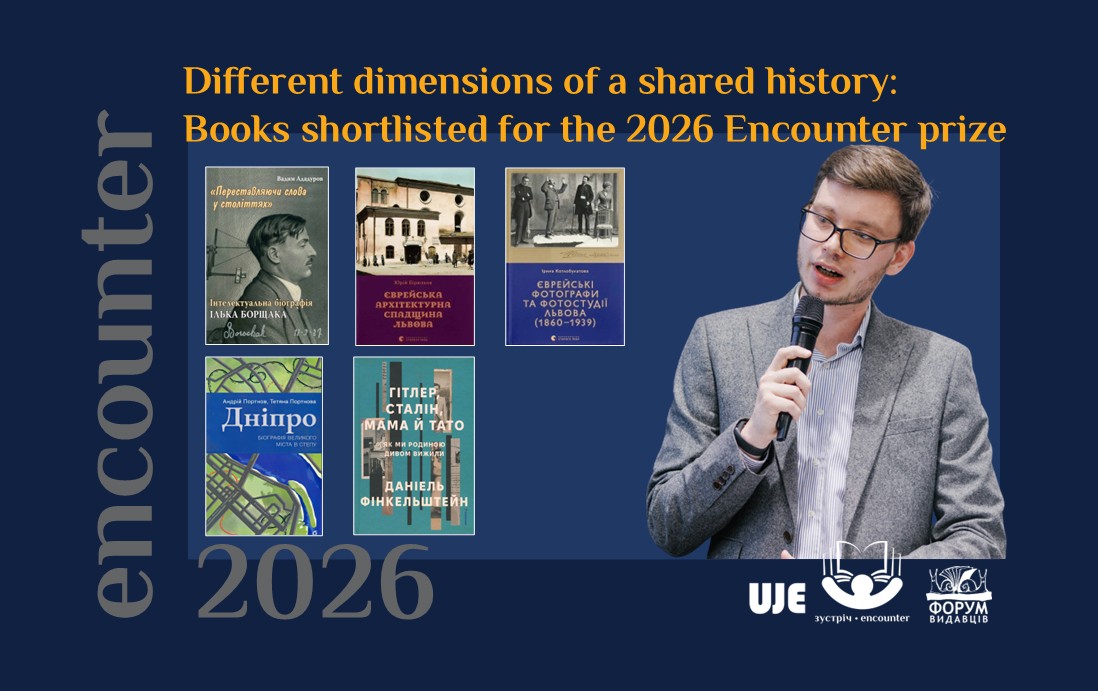
In early September, Encounter: The Ukrainian-Jewish Literary Prize announced its winner for the sixth time — this year in the nonfiction category. The five shortlisted books span diverse genres: encyclopedias with thoughtful introductions, an academic biographical study, a synthesis of a major city's history, and a family history on a global scale. Each of them, in its own way, attempts to look at the shared Ukrainian-Jewish history and Jewish heritage in Ukraine. Here is a brief overview of all the shortlisted books.
Yuriy Biryulov, The Jewish Architectural Heritage of Lviv (Lviv: The Old Lion Publishing House, 2024)
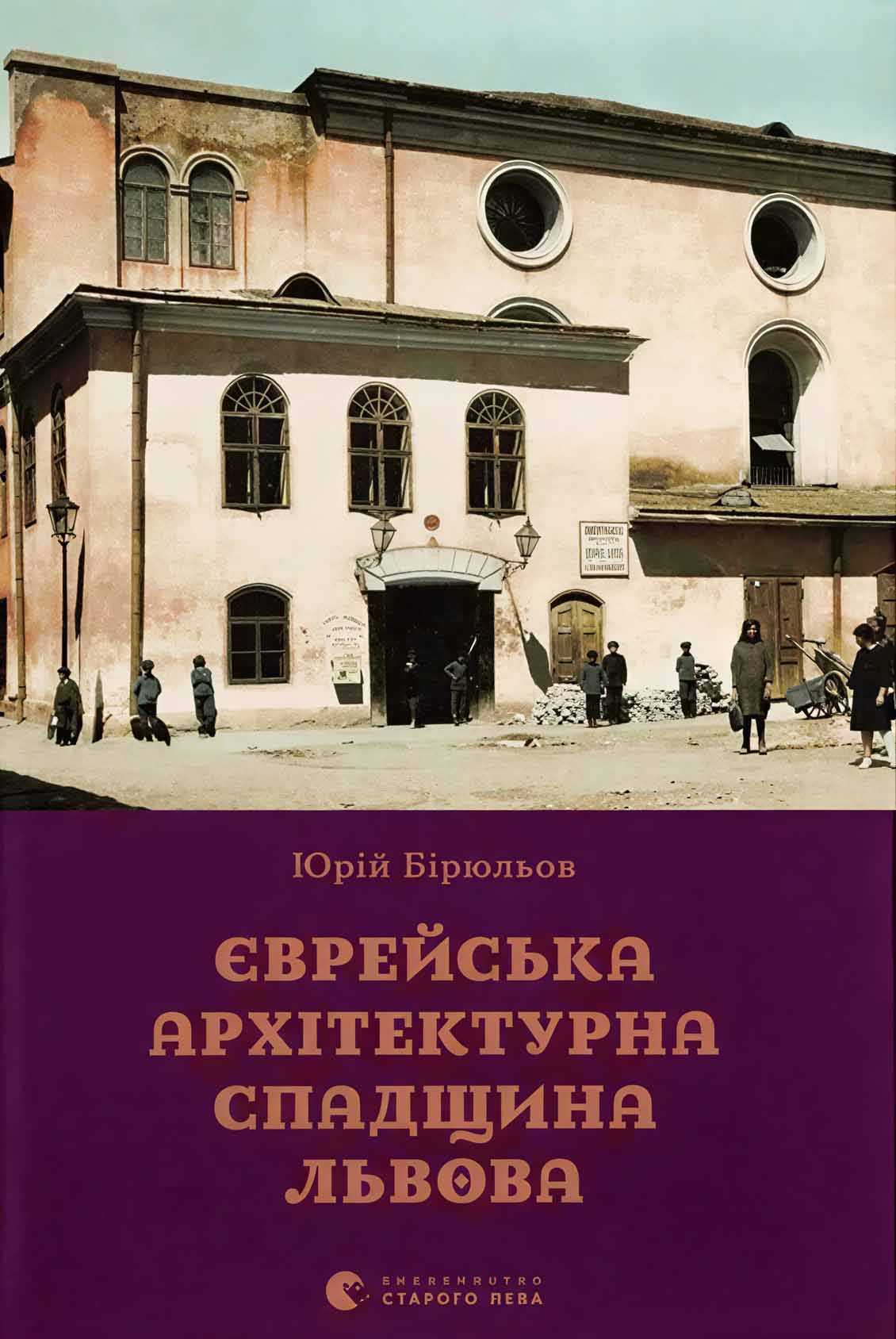 Long celebrated as a signature landmark of Ukraine, Lviv boasts some of the country's best documented and researched architecture. Yuriy Biryulov's new book offers a fresh look at Lviv's familiar architectural landscapes through the lens of Jewish heritage.
This encyclopedic edition provides a comprehensive registry of the city's architectural landmarks attributed to Jewish heritage — a total of 440 sites spanning from the 16th century to 1939. The book is divided into five sections based on the functional purpose of the buildings and concludes with a brief directory of all known Jewish architects of Lviv.
The author defines Jewish heritage broadly, including all properties whose clients, owners, architects, contractors, or residents were of Jewish descent. In some cases, a building's location within a Jewish quarter was reason enough to classify it as part of this heritage.
In the introduction, the author contextualizes the architectural analysis against the historical backdrop of Lviv's Jewish community, as well as the broader evolution of the city's architecture (occasionally drawing comparisons with other European cities). The author describes how the community expanded its footprint across Lviv, shaping entirely new neighborhoods that became Jewish not in an administrative sense, but through their distinct character and cultural background.
Following the emancipation of 1867, Jewish entrepreneurs began investing heavily in rental properties, so that by the interwar period, Jews accounted for nearly 40% of all property owners. Furthermore, the new, modern types of commercial buildings designed for mass consumers were also predominantly owned by Jews.
The author demonstrates that architecture served a clear cultural and social purpose in both pre-modern and modern times, showing that Jews held an equal place in the city's urban fabric. On one hand, it reflected the rapid acculturation processes taking place within the Jewish elite. On the other hand, it was meant to signal a readiness for emancipation and cultural revival, which manifested in the search for a distinct style, ranging from flirtations with Neo-Moorish motifs to the creation of unique elements of "Jewish Secession."
In effect, Biryulov's book is a comprehensive encyclopedia of Lviv's Jewish architecture, a heritage that still largely shapes the city's face and is used by most of its residents today. Yet, the vast majority of its creators and their descendants perished in the Holocaust.
Iryna Kotlobulatova, Jewish Photographers and Photo Studios of Lviv (1860–1939) (Lviv: The Old Lion Publishing House, 2024)
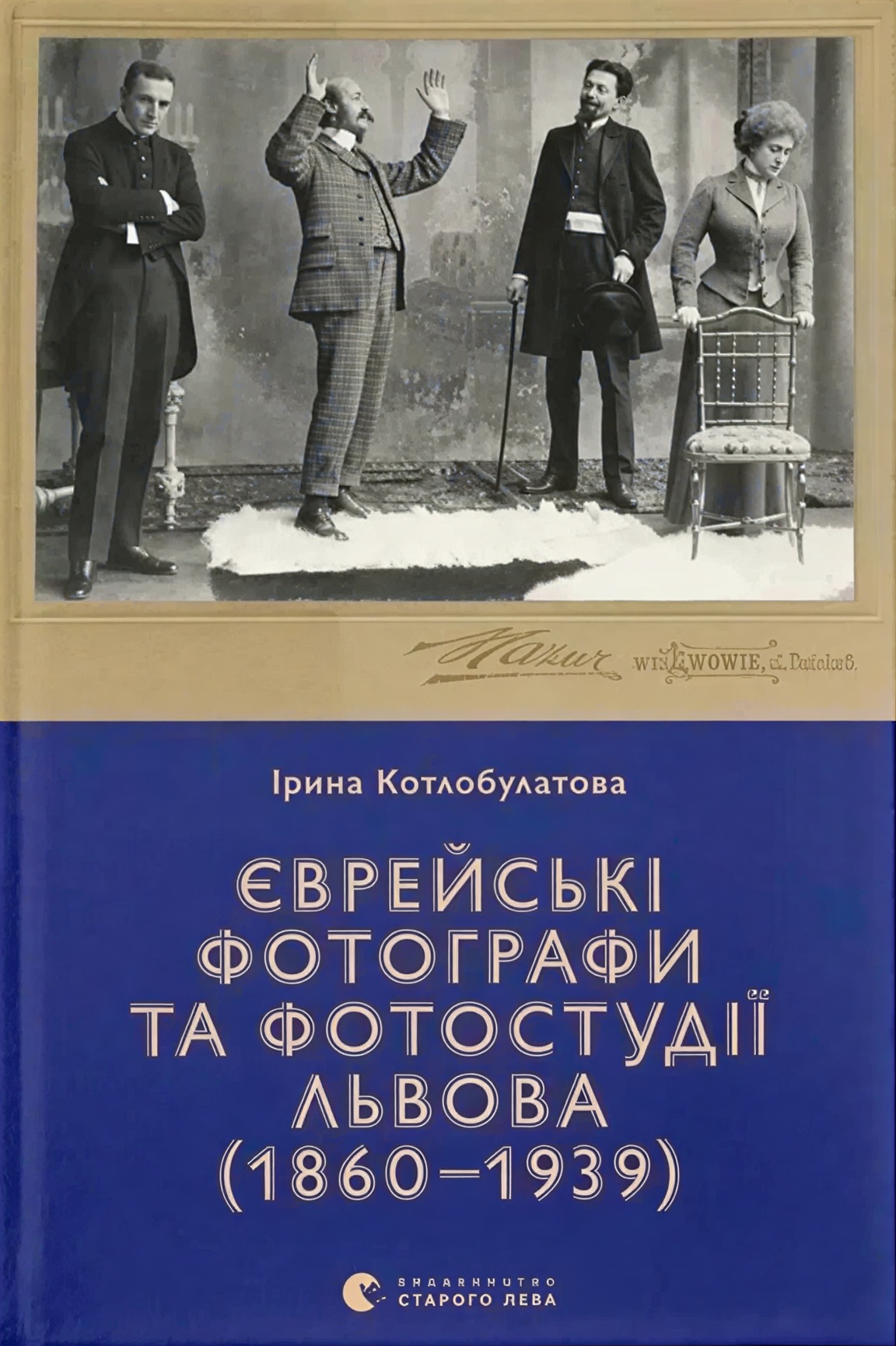 Another Lviv-focused encyclopedic publication on the shortlist is Iryna Kotlobulatova's book on Lviv's Jewish professional and amateur photographers, as well as creators of Jewish-themed photography across all genres.
Similar to the construction industry, Jews made up the absolute majority — up to two-thirds — of Lviv's photographers in the 20th century. The author notes that virtually every decade featured one or two particularly prominent Jewish photographers in Lviv. Just like the architects, nearly all of these individuals and their families perished in the Holocaust.
In the introduction, Kotlobulatova sets the book within the broader context of the development of photography in Lviv and worldwide — from the very first Lviv daguerreotype, through the emergence and heyday of professional photo studios, to the rise of a new type of street photographer during the interwar period.
The author also provides a detailed account of the licensing process required to practice photography, maps out the locations and setups of Lviv's photo establishments, and explores the collaboration between Jewish photographers and periodicals. This covers everything from the earliest lithographic images in the 1860s, to Chwila, one of the city's first photo-illustrated weeklies, and ultimately to the special Illustrated Supplement of the interwar newspaper of the same name.
The author shows how photographers gradually, and with a significant delay, began documenting Jewish life in the city, allowing Jewish themes to claim their rightful place in Lviv photography.
Kotlobulatova also describes various forms of professional self-organization among Lviv photographers, and how these were affected by the sharp rise of antisemitism in the late 1930s, when Jewish photographers were effectively expelled from the Lviv Photographic Society, prompting them to form their own association.
The book's foreword by Yohanan Petrovsky-Shtern deserves special attention. The renowned scholar provides a broader perspective on the evolution of photography and its interaction with the city. He describes how photographers gradually shifted from academic portraits of wealthy families to depictions of individuals in urban environments, thereby capturing the processes of urbanization and creating a new epic narrative of the city.
For Jews, Shtern writes, working as a photographer was one of the most successful vehicles for acculturation. "It provided an unprecedented opportunity to rise to the level of an artist and master without leaving the service sector marked by consumerism," while simultaneously allowing them to "appropriate" the city in a unique, artistic way.
Andrii Portnov, Tetiana Portnova, Dnipro: Biography of a Great City in the Steppe (Kyiv: Vikhola, 2024)
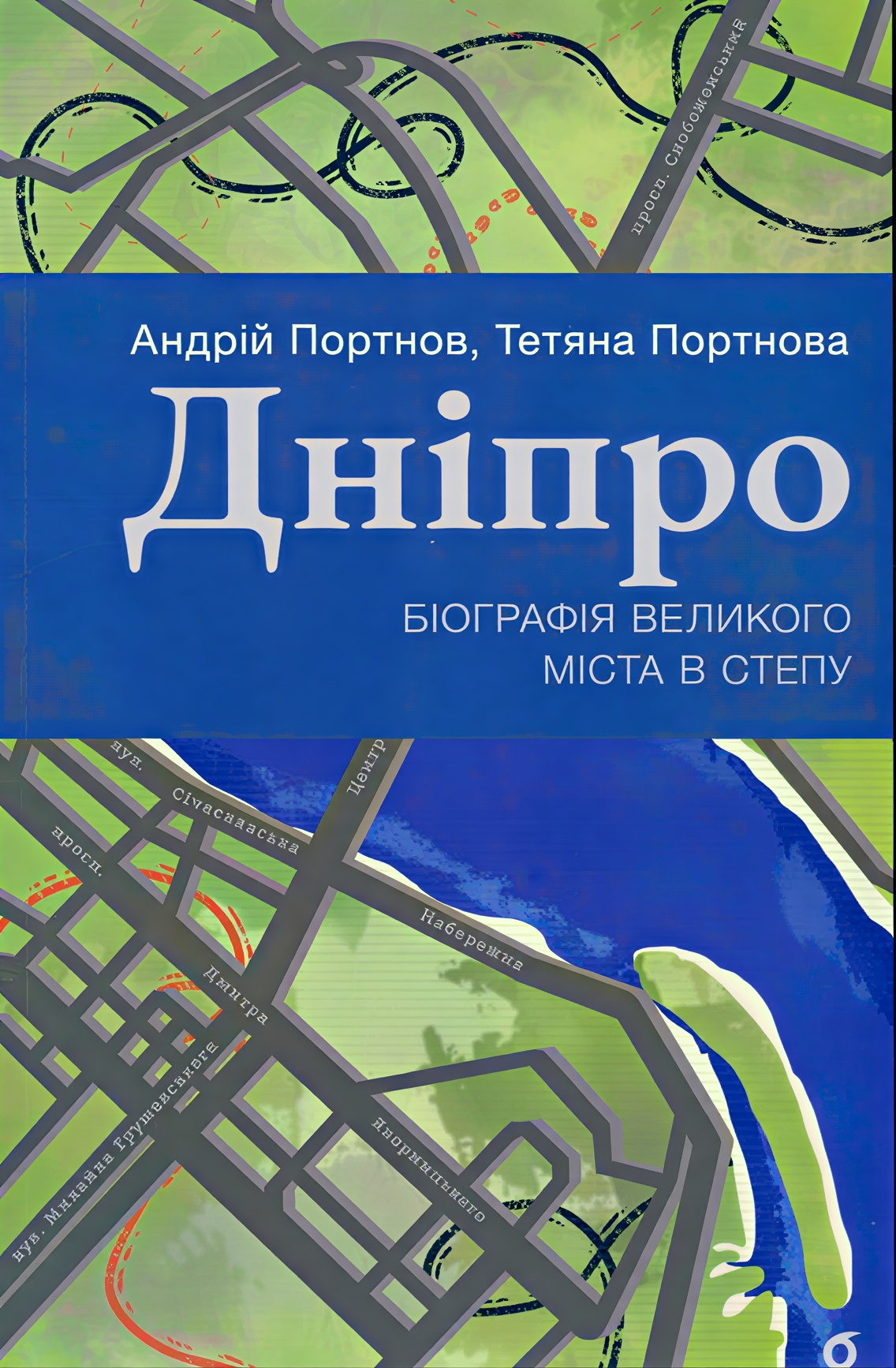 Tetiana Portnova and Andrii Portnov have offered a biography of one of Ukraine's largest and most important cities. This scholarly synthesis is written in a remarkably accessible style. Throughout the book, the authors draw extensively on memoirs and, occasionally, literary texts, thereby highlighting personal lived experiences in Dnipro and breathing life into its history.
The authors begin the history of the city, which is situated on the Great Steppe frontier, with the earliest Cossack and Polish-Lithuanian Commonwealth settlements and fortresses. All of these streams, the book notes, eventually flowed into a single river, shaping the future city and leaving behind distinct traces.
In the Russian empire, the city was initially a classic "Potemkin" project — a university was opened there before the city itself actually existed, and the empress consecrated a cathedral that did not yet have foundations. Nearly a century later, the city was still a provincial settlement, where cattle continued to graze on the wide Potemkin-style avenue.
The primary founder of modern Dnipro, therefore, emerges not so much the empress or her favorite as the daredevil explorer Oleksandr Pol, who lived a century later and whose efforts ultimately transformed the city into the administrative hub of the mining and metallurgical industries.
The authors depict Dnipro as the product of rapid industrialization with all its merits and flaws — a blend of modernity and backwardness typical of borderlands. It was a place where the downtown, complete with a theater and a museum, was encircled by numerous working-class neighborhoods rife with filth and violence. The city resembled a nouveau-riche upstart just learning to live in a modern way; instead of New Athens, New America arose.
Meanwhile, the final — Stalinist — modernization was achieved at the cost of the brutal destruction of heritage and cultural diversity, bloody terror, and crowds of starving peasants stranded at railway stations.
Furthermore, the authors dispel the popular myth of it being Brezhnev's "favorite city." They showcase Soviet Dnipropetrovsk in all its contrasts: as a semi-closed hub of the Soviet missile program on the global map of the Cold War, yet simultaneously as one of the focal points of the dissident movement, which served as the setting for Oles Honchar's novel The Cathedral.
The authors do not isolate the Jews, who made up about a third of the city's inhabitants, from the general narrative; instead, they seamlessly weave them into the history of Dnipro with all its multiculturalism at the time. Their story runs as a continuous thread from their participation in the city's modernization to their destruction in the fires of pogroms and the Shoah, and from Soviet discrimination to a vibrant cultural revival in independent Ukraine.
The authors conclude their narrative with the evolution of Dnipro's self-identity — from the missile capital of the "Red Empire" to the new "heart of Ukraine." They also address the dilemmas and challenges arising from its new status as a frontline city.
Vadym Adadurov, Rearranging Words Across Centuries: An Intellectual Biography of Il'ko Borshchak (Lviv: Ukrainian Catholic University Press, 2024)
Vadym Adadurov's book on Il'ko Borshchak is a detailed and fascinating study of one of the greatest mystifiers in Ukrainian history.
He was a man who shifted through several identities and constructed his own biography depending on the demands of the moment and the needs of his own survival and career advancement. Originally a Jew from Bessarabia named Eliyahu Barshak, he first became an Orthodox Christian "Russian" named Ilya Barshak, built his entire career under the name of the Ukrainian Il'ko Borshchak, and ultimately obtained French citizenship as Élie-François Bartchak. At various times, the book's protagonist claimed military service during World War I, participation in the French Resistance, and work for the French government, eventually spending almost his entire life calling himself a French professor.
Borshchak spun unbelievable tales about meetings and acquaintances with influential figures of his time that never actually happened and published sensational findings on Ukrainian themes from French archives that no one else has ever been able to locate since.
His life is full of contradictions. Borshchak falsified archival sources, yet simultaneously created one of the most influential scholarly publications in the Ukrainian diaspora and served as a major promoter of Ukrainian issues in Western Europe.
For a certain period, he acted as a Soviet intelligence agent, yet his audience concurrently perceived him as a historian of the statehood school, and he later received substantial institutional support from the Greek Catholic Church. Despite all this, he maintained contact with the Russian White émigré community until the end of his life and raised his stepdaughter as a Frenchwoman of Russian descent.
Adadurov unravels this web layer by layer. At every stage, he analyzes what Borshchak wrote about his own life, what his relatives and acquaintances testified about him, and finally, how his life appears in the light of various institutional documents — from the police, intelligence agencies, government structures, and beyond.
The author analyzes how Borshchak falsified his most famous archival "discoveries" and how he constructed his own biography. He reconstructs down to the smallest detail not only Borshchak's professional and intellectual life, but also his personal life, occasionally even delicately attempting to offer a psychological diagnosis.
What emerges before the reader is a captivating, almost detective-like biography of an extraordinarily interesting and unconventional individual. At the same time, it serves as a vivid example of how someone of Jewish birth could consciously choose a Ukrainian identity and, for one reason or another, spend their entire life advocating for the Ukrainian cause in the West and building up Ukrainian culture, regardless of the methods used.
Daniel Finkelstein, Hitler, Stalin, Mom, and Dad: A Family Memoir of Miraculous Survival (Kyiv: Knyholav, 2025)
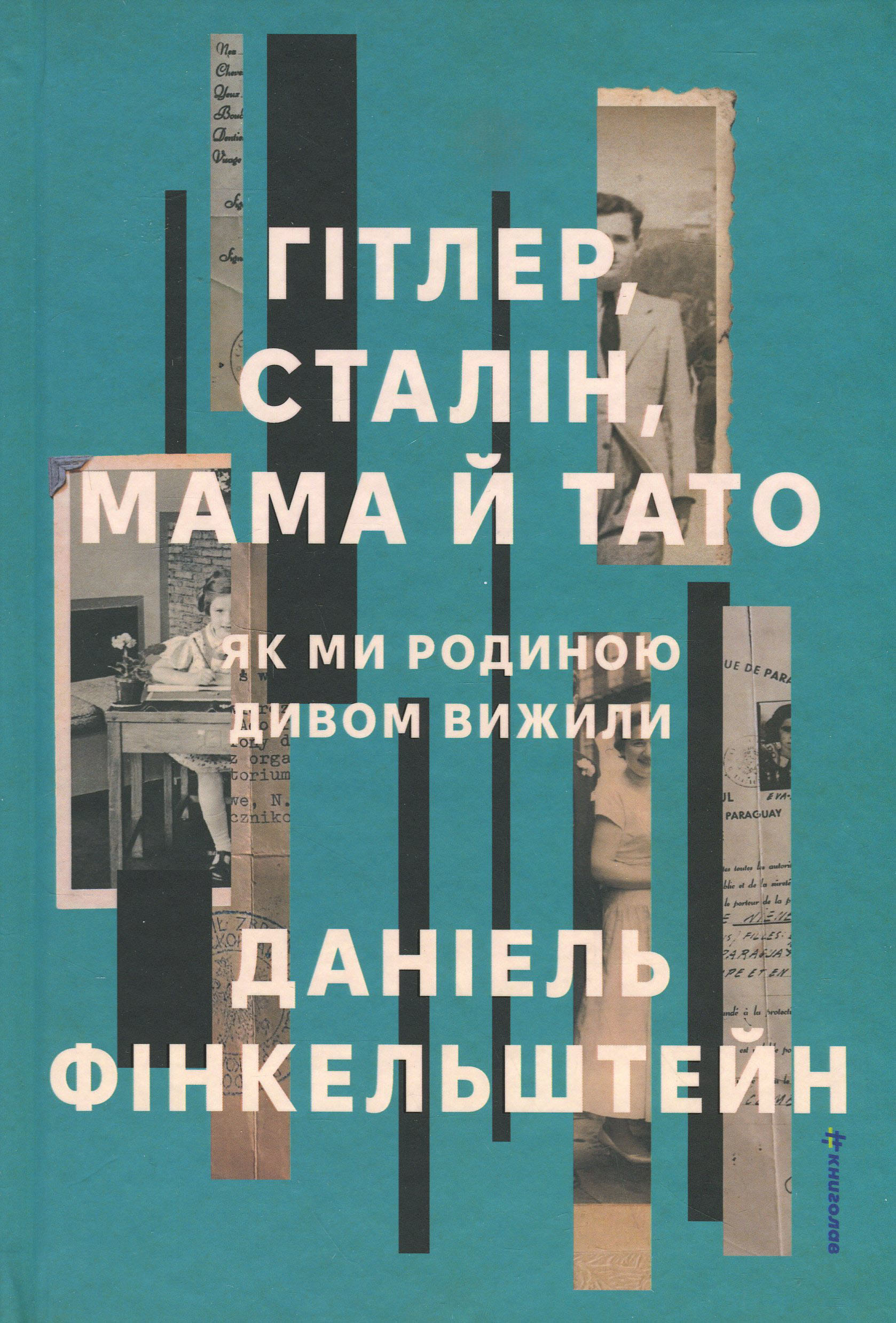 Daniel Finkelstein, a British journalist and former editor of The Times, has written an incredible story. It is a tale of survival of two Jewish families from entirely different countries, facing completely different threats, yet enduring remarkably similar sufferings and experiences. These two families are his father's and his mother's. As expected, he weaves this family history into broad historical contexts, creating a truly captivating work of nonfiction. Reading it evokes a strange mix of horror at the events and experiences described, yet simultaneous pleasure in the author's writing style.
The story is striking in its geography, twists of fate, and the prominence of its figures. Both of the author's grandfathers were, without exaggeration, historical personalities.
On one side was Alfred Wiener, one of the leaders of German Jews after World War I, who was among the first to sound the alarm over the rise of Nazism, foreseeing the future catastrophe. He began systematically researching Nazism, ultimately building what would later become the famous Wiener Library.
On the other side was Adolf Finkelstein, a Lviv bourgeois and local councilman, who owned the largest company in the metallurgical market of Lviv and the region. He was the owner of the famous modernist villa on Lviv's Vuletski Hills, which later served as a residence for Soviet general secretaries and Ukrainian presidents.
The bloody 1940s prepared quite different ordeals for both grandfathers. Wiener, who had fled Berlin for Amsterdam with his family in 1933, traveled to London for work in 1940, just before the occupation of the Netherlands. However, his wife and three daughters stayed behind.
Later, Wiener spent the entire war in London and New York, where he worked for British intelligence, provided the Allies with expertise on the Hitler regime, and simultaneously searched for ways to rescue his family from captivity. They, in turn, survived arrest by the Gestapo and two Nazi camps until their father finally managed to obtain fictitious citizenship for them from Paraguay, issued in Switzerland, thanks to which they were released at the last moment in a prisoner exchange.
The Finkelstein family, on the other hand, were not there to see the arrival of the Nazis. The "Iron King" of Lviv was arrested by the Soviet authorities, and his family was deported to Kazakhstan. Adolf endured the Gulag and forced labor in the Far North until, as a Polish citizen and reserve officer, he was able to volunteer for Anders' Army. His wife and son, meanwhile, spent over a year at a state farm in Kazakhstan, living in a shack they built themselves from dung, with almost no food or heat, until their father secured their release. The reunited family finally made it to the free world via transit through the Caspian Sea and Iran.
Drawing on family memoirs, archival documents, correspondence, and miraculously preserved diaries, the author reconstructs his relatives' entire journey through camps, prisons, government offices, and cattle cars.
He exposes the passivity of Western governments in rescuing Jews, while simultaneously highlighting the admirable initiative and self-sacrifice of certain individuals — often in spite of, rather than because of, the efforts of the authorities. Moreover, it is a story about the paradoxes of history and the stroke of good fortune that sometimes became the key player in saving innocent lives.
Ultimately, this is a book that organically weaves the experiences of Eastern and Western Europe into a single narrative, vividly demonstrating to the reader the equivalent brutality of both totalitarian regimes, only one of which received absolute condemnation and punishment. And it is precisely this, as the author concludes at the end of the book, that prompted the heirs of that second regime to unleash a new war and once again launch missiles at his father's hometown.
On September 11, at a ceremony held during the Lviv BookForum, Encounter: The Ukrainian-Jewish Literary Prize was awarded to Andrii Portnov and Tetiana Portnova for Dnipro: Biography of a Great City in the Steppe (Kyiv: Vikhola, 2024).
Roman Melnyk
PhD in History, a research fellow at the Mykola Haievoi Center for Contemporary History at the Ukrainian Catholic University. He defended his dissertation on interwar discourses regarding the concept of Galicia. His research interests include the political and intellectual history of 19th- and 20th-century Ukraine, transnational and regional history, mental geography, and the history of concepts.
Originally appeared in Ukrainian @Ukraina Moderna
Translated from the Ukrainian by Vasyl Starko