




Genocide Museum in Odesa: A shared space of memory for Ukrainians and Jews
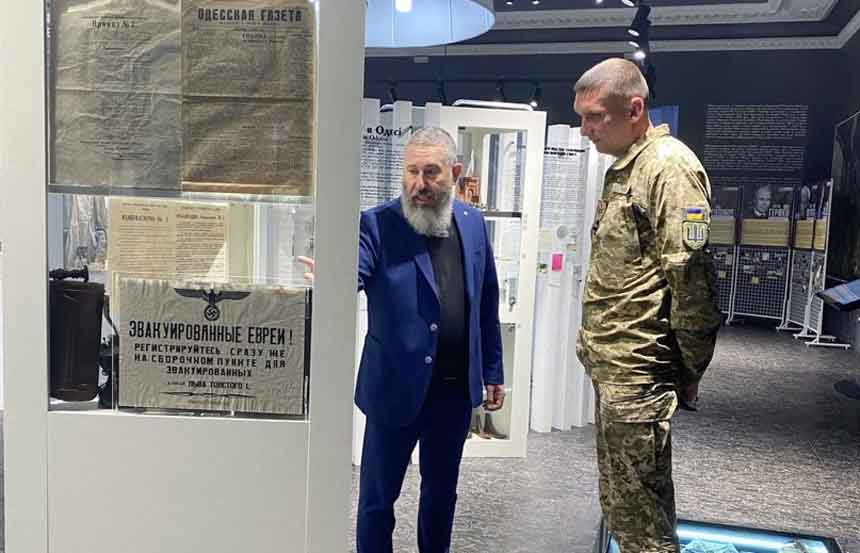
Pavlo Kozlenko outlines the initial milestones of Odesa's new Genocide Museum, an institution that has emerged as a vital platform for fostering mutual understanding among citizens of diverse nationalities amid Ukraine's ongoing resistance against Russian aggression.
A prominent Jewish activist, Kozlenko has dedicated over two decades to Holocaust commemoration and originally conceptualized the Holocaust Museum in Odesa.
"When Russia launched its full-scale invasion of Ukraine, I realized we could no longer speak about the Holocaust exactly as we did before," Kozlenko stated in an interview with the UJE portal. "Ukraine is now enduring its own war, with its own refugees, deportees, and prisoners of war."
This realization prompted the launch of a new project two years ago: "The Genocide Museum: A Territory of Memory." The exhibition is structured around an open-concept space divided into three distinct sections.
The first section documents historical atrocities, including the Armenian genocide, the Holodomor, the Romani genocide, the deportation of the Crimean Tatars, and the genocides in Rwanda, Cambodia, and Srebrenica.
The second section focuses on the Holocaust within Transnistria and Odesa, examining the broader Romanian occupation zone across southern and southwestern Ukraine.
The final section examines the genocidal dimensions of Russia's current war against Ukraine.
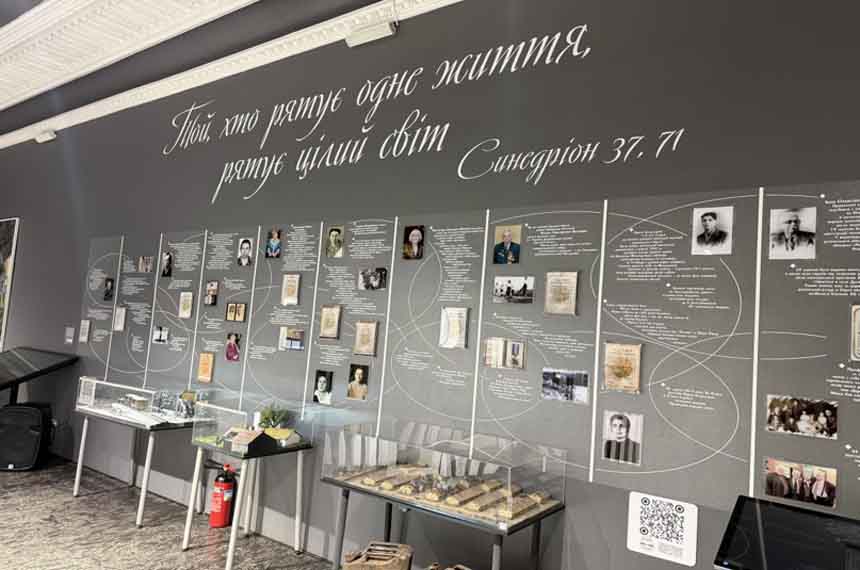
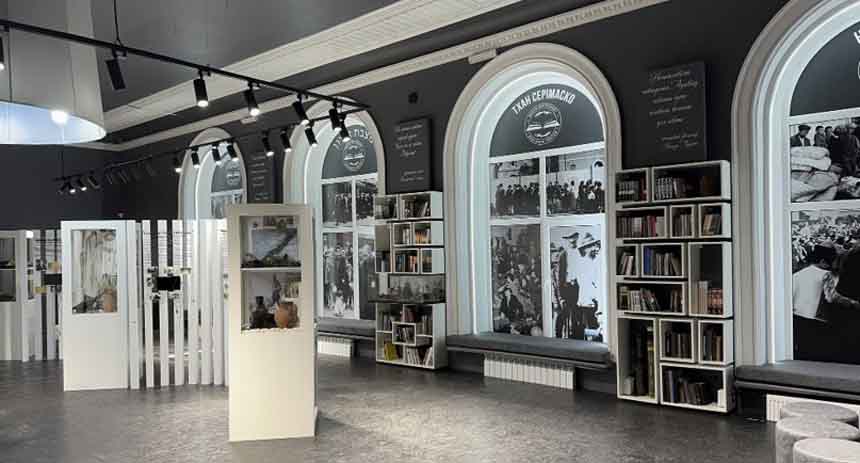
The definition of genocide is rooted in the framework established by Raphael Lemkin.
Strategically located in the heart of Odesa, the facility is leased within the central Ukrposhta (Ukrainian Postal Service) building. Crucially for a wartime institution, the venue features a large, fully functional bomb shelter.
While Kozlenko authored the core concept, the exhibition's visual design was spearheaded by Vitalina Verbovetska, Arina Babentsova, and Arina Honcharova — students at the State Academy of Civil Engineering and Architecture. Their design choices have made the educational space highly engaging for younger demographics.
Prominent scholars and public figures authored the text for the displays. Contributors include Mykola Hnatovsky, a Ukrainian judge at the European Court of Human Rights, and Anton Korynevych, Director of the International Law Department at Ukraine's Ministry of Foreign Affairs, who provided the legal analysis of genocides from the perspective of international law.
Refat Chubarov authored the specialized commentary on the deportation of the Crimean Tatars, while Dr. Igor Shchupak provided the historical narrative on the Righteous Among the Nations. Statements analyzing the incitement to genocide during Russia's current war against Ukraine were drafted by Anna Vishniakova, an international criminal law specialist and former UN intern. Through this collaborative approach, every display panel features authoritative, expert-signed commentary.
To broaden its reach, the institution launched a bilingual Ukrainian-English website hosting all educational materials. Visitors can scan the QR codes on each physical panel to read or listen to the digital versions of the texts on their mobile devices.
A key focal point of the museum is a large-scale digital table featuring an interactive map of the Holocaust in Ukraine. Documenting 1,816 sites of the Jewish genocide, it was developed with the support of the U.S.-based Tsal Kaplun Foundation.
"We are the first in Ukraine to deploy this map," Kozlenko stated. "Every visitor can interact with this map, which details data down to individual villages and towns. They can retrieve statistics on casualties, locate specific tragedy sites, and learn about local pre-war Jewish communities."
According to the founder, the museum currently operates entirely without institutional or organizational funding.
The interactive nature of the exhibition extends to multimedia displays, where visitors can engage digital screens to listen to firsthand testimonies from Holocaust survivors or accounts of the Righteous Among the Nations.
Kozlenko emphasizes that the museum's underlying philosophy serves to bridge historical divides among different ethnic groups. When Jewish and Ukrainian communities traditionally visited separate institutions dedicated to the Holocaust and the Holodomor, respectively, they often remained isolated from one another's historical trauma. The Genocide Museum in Odesa seeks to unify all nationalities that suffered from genocide.
"Crimean Tatars, Roma, Armenians, Jews, and Ukrainians are coming to the exact same museum and discovering the tragedies of their neighbors," Kozlenko noted.
The museum has rapidly integrated into the local academic landscape. Student groups regularly visit the site as part of a formal cooperation agreement established between the museum, local universities, and the Department of Education and Science of the Odesa City Council.
The venue also operates as an active educational hub, hosting professional seminars, teacher panel discussions, historical research competitions, and local heritage contests. Additionally, the museum provides internship opportunities for university history majors.
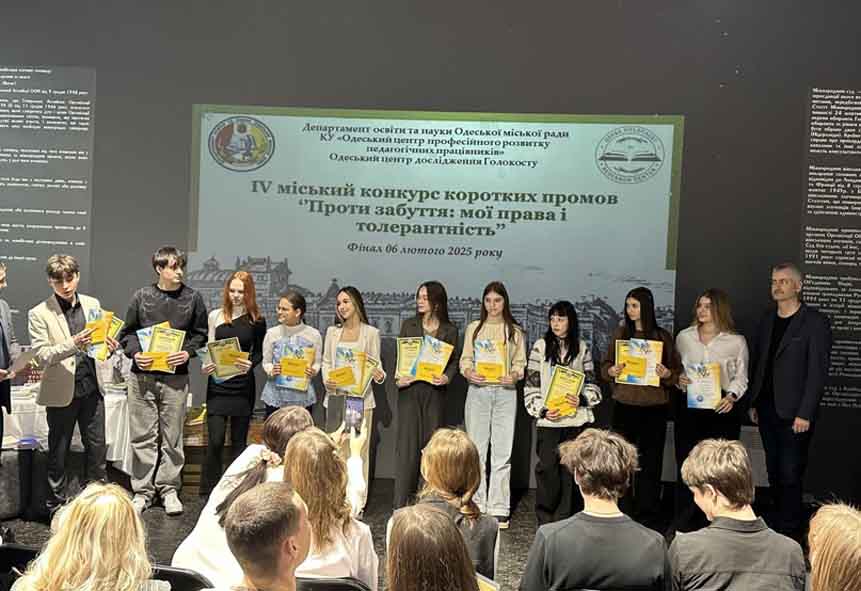
Dr. Igor Shchupak conducts specialized lectures for educators at the museum, focusing on the Holocaust and the Righteous Among the Nations. Additionally, Dr. Anatoly Podolsky, director of the Ukrainian Center for Holocaust Studies, has donated an extensive collection of historical literature to the museum's library.
The institution has also become a frequent destination for personnel from the Ukrainian Armed Forces. The contemporary segment of the exhibition directly addresses the trauma of the full-scale invasion, placing critical emphasis on the role of Kremlin propaganda in disseminating explicit calls for the genocide of the Ukrainian people.
Furthermore, the displays document the forced deportation of Ukrainian children, highlighting systemic occupation policies that prohibit them from speaking the Ukrainian language or accessing Ukrainian literature. The exhibition also details instances of cultural genocide, tracking the ongoing destruction of cultural institutions, educational facilities, and historical heritage sites across Ukraine.
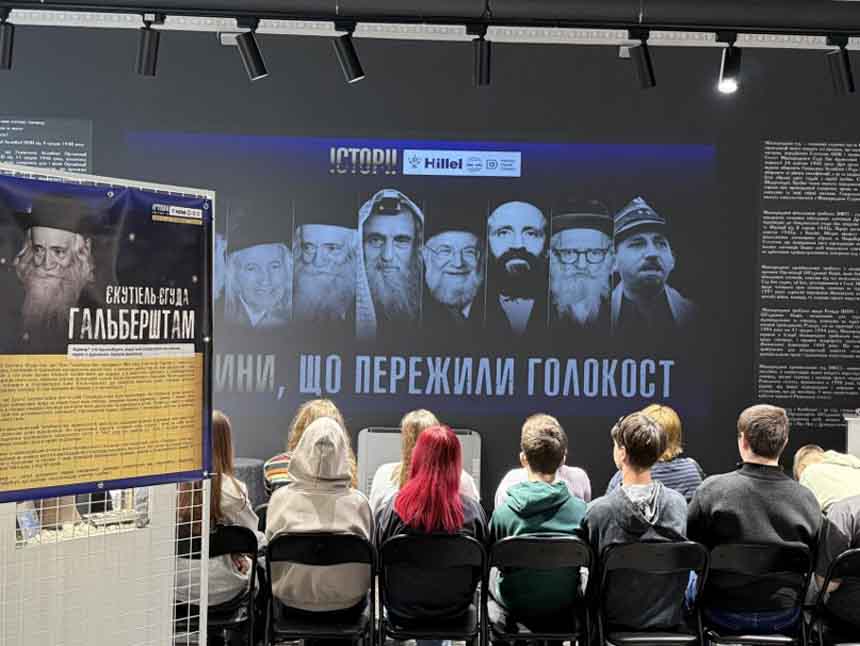
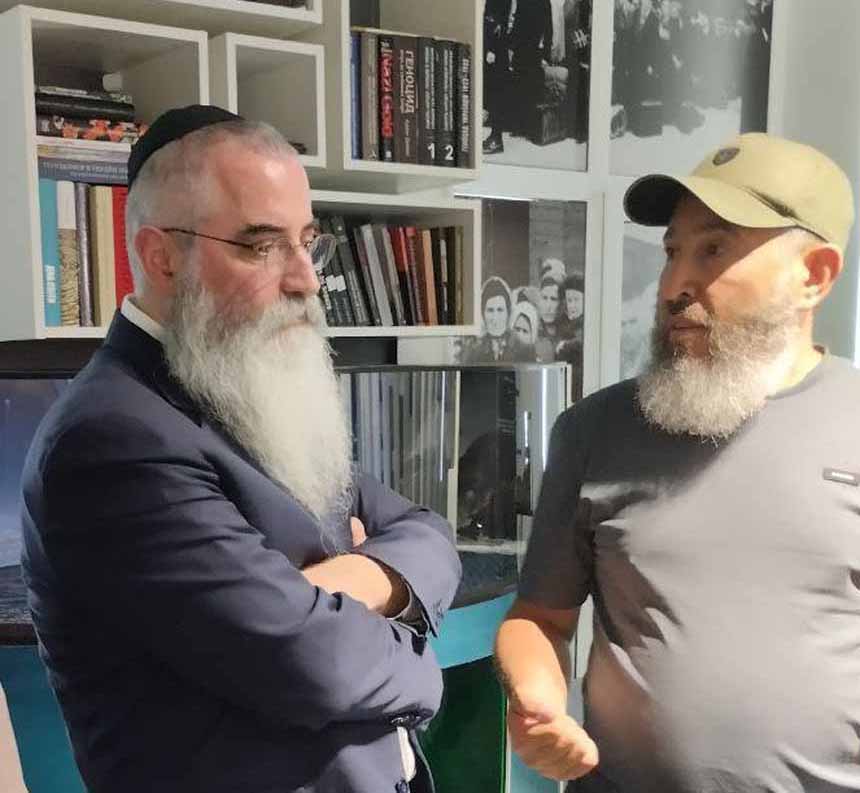
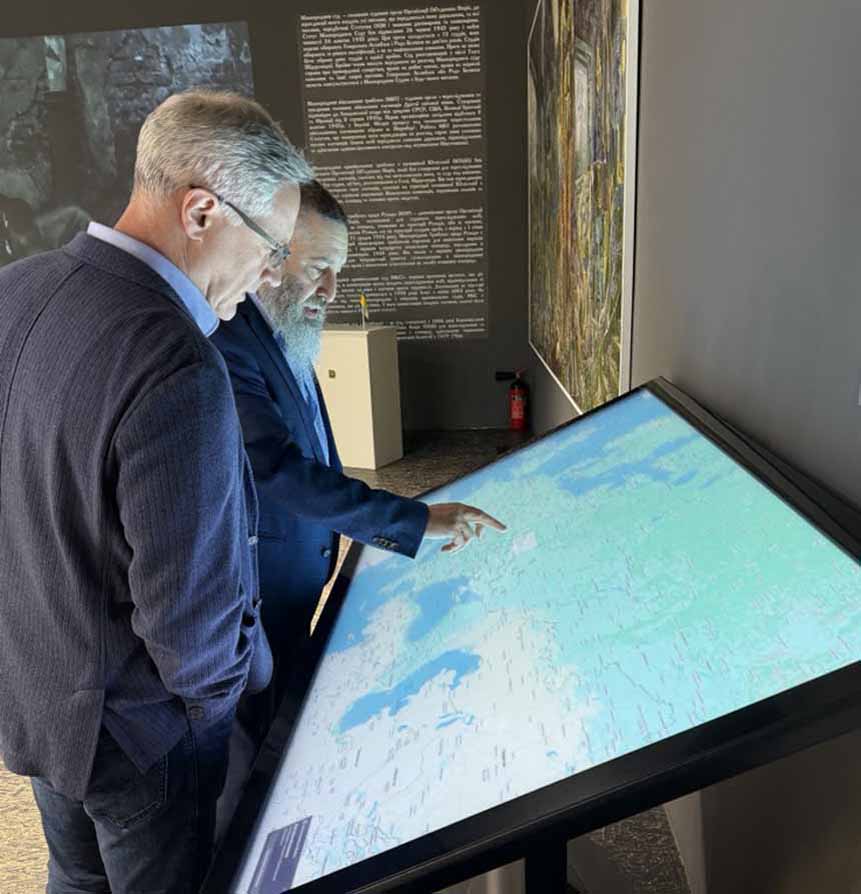
"The core message we want to convey to our visitors is that historically, Ukrainians of diverse ethnic backgrounds were targeted and killed under different regimes, slogans, and ideologies across various eras," Kozlenko emphasized. "Today, however, we are all being targeted together. Whether we are Jewish, ethnic Ukrainian, Armenian, or Crimean Tatar, we remain here in Ukraine, and our shared cities are under the exact same threat from Russian missiles and drones."
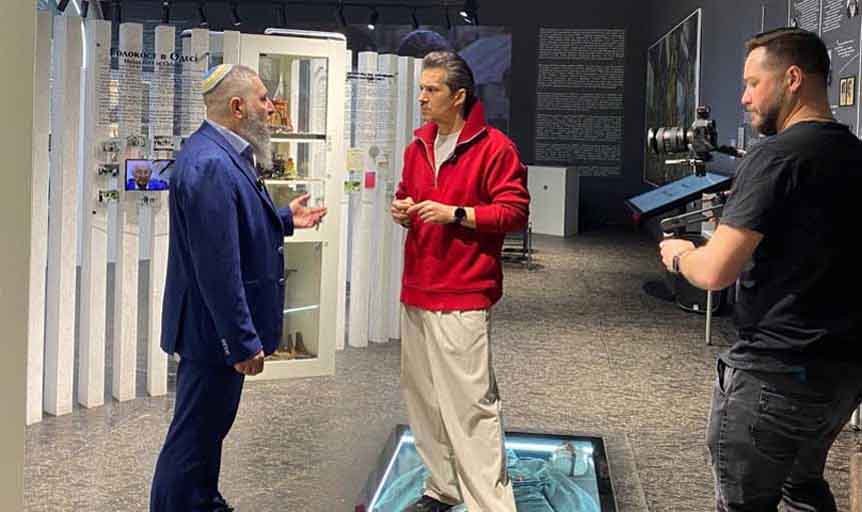
The Genocide Museum's website: https://holocaust.odesa.ua/muzei-henotsydiv
Text: Shimon Briman (Israel).
Photos: From Pavlo Kozlenko's personal archive.
Translated from the Ukrainian by Vasyl Starko.