




Jews of Old Rus': Documents and millennial mysteries
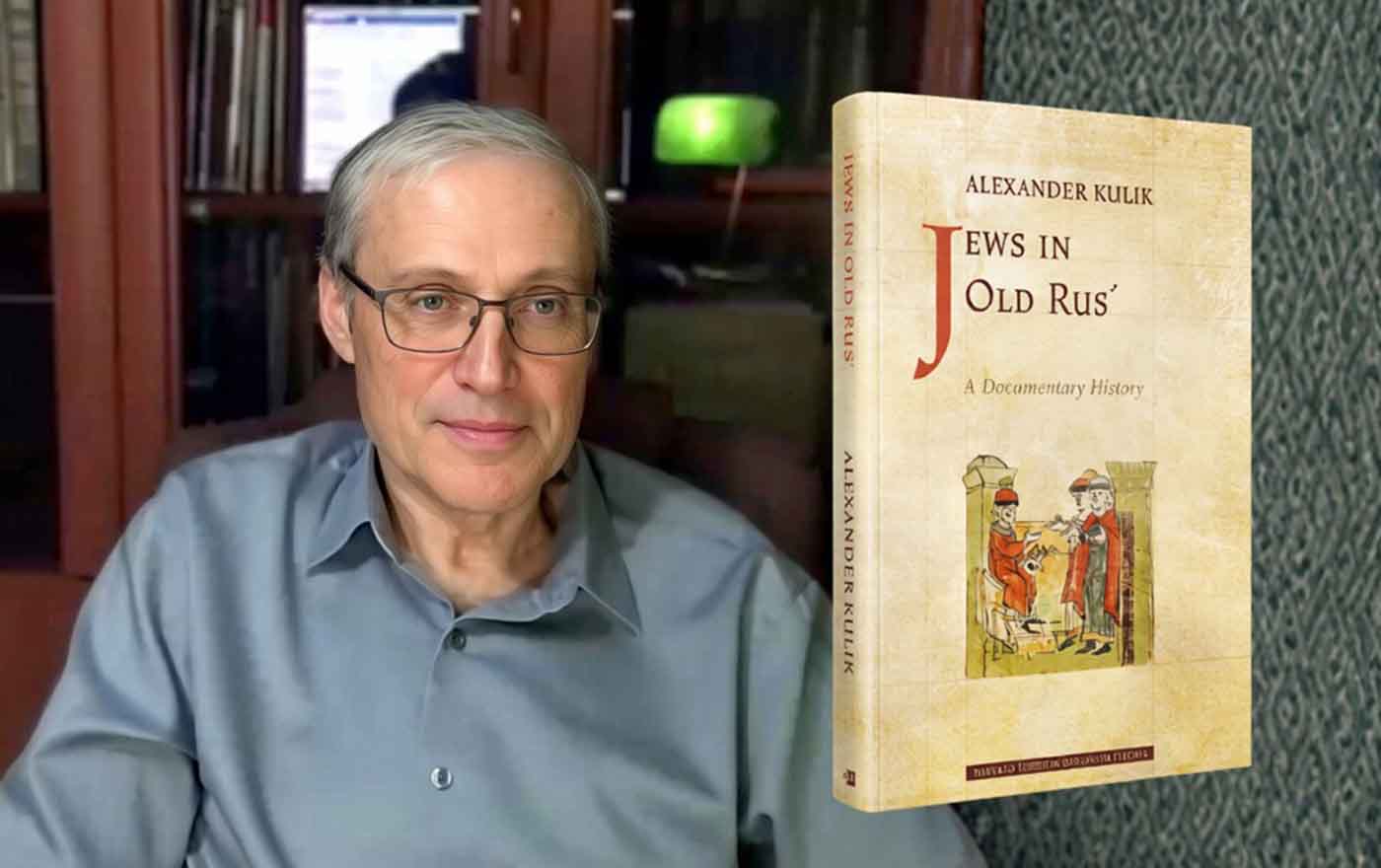
Jews in Old Rus': A Documentary History was launched in September 2026 by the Harvard Ukrainian Research Institute. Professor Alexander Kulik of the Hebrew University of Jerusalem, who compiled this collection of documents on the history of the Jews of Old Rus', spoke with UJE about the features of his book and the historical evidence of Jews living among the Eastern Slavs for centuries.
This volume presents, for the first time, a comprehensive collection of known documents on the history of the Jews of Old Rus' from the 10th to the 14th centuries, offering a fresh perspective on Slavic-Jewish relations. The book includes the original texts in Latin, Hebrew, Church Slavonic, and Arabic, along with their English translations, accompanied by scholarly commentaries.
In addition to clarifying perceptions of the complex relations between Rus' and Khazaria, this new book of documents on the Jews of Old Rus' illustrates the connections between the Jews of this region and the Jewish diaspora in Byzantium, Western Europe, and the Middle East.
Professor Kulik notes that the evidence of Jewish communities on the territory of Rus' in the 10th to 13th centuries is quite compelling.
The earliest mention of Kyiv in a surviving written source is the famous 10th-century Kyivan Letter written in Hebrew, which was discovered in the Cairo Geniza of the Ben Ezra Synagogue. Some of the Jews who signed this letter had Slavic names.
Two of the signatories are designated as parnas (a community leader or benefactor), which, along with the content of the Kyivan Letter itself, points to a well-developed Jewish community in Kyiv as early as the first half of the 10th century, prior to the Christianization of Rus'.
Following the Mongol invasion, the Jewish presence in these lands continued in Halych-Volhynia Rus', and subsequently in the territories that became part of the Grand Duchy of Lithuania and the Kingdom of Poland.
Numerous sources attest to Jewish life in Kyiv. The Primary Chronicle mentions "Khazar Jews" who came to Prince Volodymyr to persuade him to accept Judaism (entries for the years 986–988). Entries from 1113, 1124, 1146, and 1151 make several references to Kyiv's Jewish quarter or the "Jewish Gate" (Zhydivski Vorota), as well as to riots directed against the local nobility and Jews.
The hagiography of Theodosius (mid-11th century), one of the founders of the Kyiv Pechersk Monastery, notes his theological disputes with the Jews of Kyiv.
Medieval Jewish texts from Western Europe also mention a sage named Moshe (Moses) of Kyiv. He is referenced in the responsa of Rabbi Meir of Rothenburg (1215–1293) and most likely appears under the name "Moses of Rus'" in other rabbinic writings.
Sefer ha-Shoham (The Onyx Book) mentions Yitshak (Isaac) of Chernihiv, one of the most important cities and principalities in Rus'. English royal financial documents from 1180–1182 also mention a certain "Isaac of Rus'" (Ysaac de Russie), though his identification with Yitshak of Chernihiv remains hypothetical.
Yitshak of Chernihiv not only hailed from Chernihiv but also knew the language of the Eastern Slavs. Sefer ha-Shoham cites his commentary on yibbum, the Hebrew term for levirate marriage: "Rabbi Yitshak told me that in the land of Tiras, i.e., in Rus', copulation is called yebum."
The name of Yitshak of Chernihiv was also preserved in later Ashkenazi Kabbalistic compendia, where he is credited with interpreting the religious significance of circumcision. "And curiously, he is almost always mentioned in connection with something erotic—he was likely a mystic, a Kabbalist. For him, the realm of the erotic was an important sphere of his mystical worldview," notes Professor Kulik.
The Book of Remembrance by Rabbi Ephraim of Bonn, which describes the events of 1171, mentions Rabbi Benjamin the Generous of Volodymyr, who had traveled to Cologne.
The Jewish presence in Volhynia, on the western periphery of Rus', is reflected in the Galician-Volhynian Chronicle (part of the Hypatian Codex). The account of the death of Prince Volodymyr Vasylkovych in 1288 describes Jews mourning the prince: "And so the multitude of Volodymyr residents wept over him, [...] and the Jews wept for him as at the fall of Jerusalem, when they were being led into the Babylonian captivity."
The responsa of Rabbi Chaim Eliezer ben Yitzhak Ashkenazi (second half of the 13th to early 14th century) discuss the coercion to issue a bill of divorce and note the presence of a rabbinical court in Volhynia.
A later rabbinic text preserves an account of a circumcision in Volodymyr, a town in Volhynia, carried out on Tisha B'Av—the day of mourning for the destroyed Temple of Jerusalem. It names several local Jews and describes the specific features of the ritual.
A document from the Jewish community of the city of Thessaloniki in Byzantium tells of the arrival of a Slavic-speaking Jewish guest "from the land of Rus', who knew neither the holy tongue, nor Greek, nor Arabic," but met his relative from Jerusalem.
"It is worth noting that this is one of the most interesting pieces of evidence regarding the use of Slavic among the Jews of Rus'," emphasizes Professor Kulik.
He further notes that the primary value of his book lies in compiling all known sources on the Jews of Rus' in various languages, combining Slavic and Jewish sources.
"Now, any conversation on the topic of the Jewish presence in Eastern Europe can rely on such a compendium of documents, where everything is neatly organized. The sources are presented exactly as they are, with the addition of notes and scholarly commentaries. All of this is now available to the next generation of researchers," says Professor Kulik.
Despite having supplied the book with an extensive introduction, he believes that the sources themselves provide far more material without forcing a specific interpretation on the next generation of researchers: "I present my hypotheses in the introduction. But the detailed analysis is still ahead. This is not the end of the topic."
Scholars have been studying the presence of Jews in Old Rus' for over 150 years. Kulik himself sees his work as a continuation of the academic lineage of prominent Hebrew University scholars, Professor Moshe Altbauer and Professor Moshe Taube.
In response to my question about the fate of the Jews of Old Rus' and their possible assimilation into the Ashkenazi Jewish population that expanded into Eastern Europe during the late Middle Ages, Professor Kulik suggested that the Ashkenazim might have initially constituted only a part of the region's Jewish population. However, due to their highly developed literary and rabbinic tradition, they may have exerted a strong cultural influence on the local communities, facilitating the spread of Ashkenazi customs and Yiddish.
There is no direct evidence of a mass migration of Ashkenazim to Rus' during the early period. For instance, rabbinic sources from the early 14th century mention a student from Rus' who is referred to as an Ashkenazi.
Additionally, documents refer to Ashkenazi merchants who "traveled the paths of Rus'." However, scholars do not know whether these Ashkenazi merchants remained to live in Rus' or only visited temporarily for trade.
Following the Mongol invasion, a significant portion of the former lands of Rus' gradually became part of the Grand Duchy of Lithuania, forming what is known as "Lithuanian Rus'." The evidence suggests some continuity of Jewish settlement in the western lands of Rus', including the vast area between the Dnieper and the Carpathians, although its extent cannot be reconstructed securely.
The name Rus'/Rusiya remained in Jewish documents of the 13th and 14th centuries, and this toponym should not be conflated with later Russia.
In general, sources available to scholars demonstrate that the Jewish presence on the territory of modern Ukraine has a documented history of over a thousand years. This means that Jews lived on these lands more than 1,100 years ago, side by side with the Slavs of Eastern Europe.
About the author of the new book
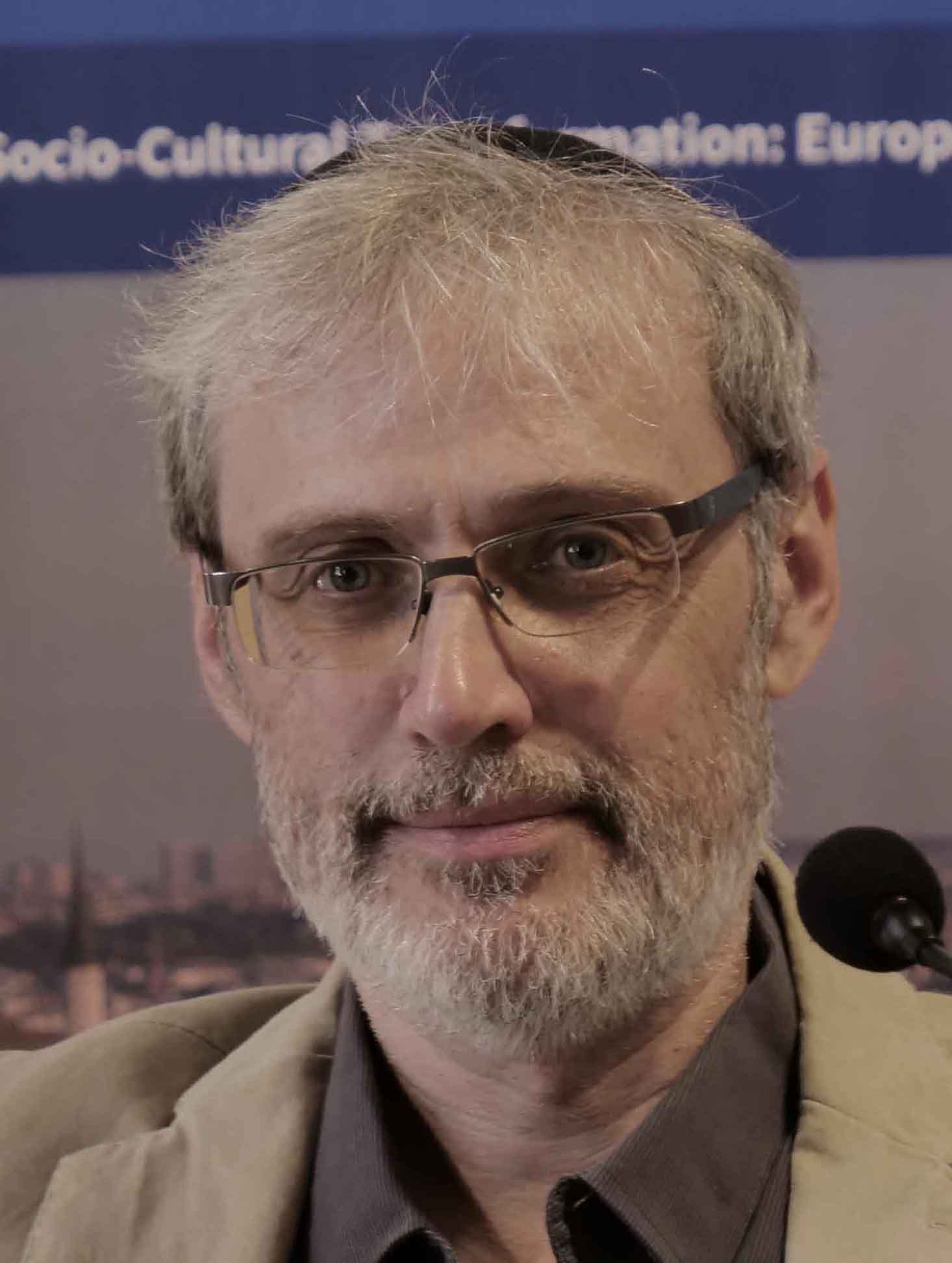
Alexander Kulik received his doctoral degree (PhD) from the Hebrew University of Jerusalem and conducted his postdoctoral research at Harvard University. He served as the director of the Jews and Slavs in the Middle Ages Project and as co-director of the international research group "Cultural Archaeology of Jews and Slavs."
He has held visiting positions at Harvard University, Stanford University, the University of Oxford, University College London, Université de Lausanne, Freie Universität Berlin, and Università Ca' Foscari Venezia. Currently, he is Professor in the Department of Russian and Slavic Studies at the Hebrew University of Jerusalem and a member of the International Committee of Slavists.
Alexander Kulik is the author of several books, the founder and longtime editor of the Brill book series Studia Judaeoslavica and the editor-in-chief of A Guide to Early Jewish Texts and Traditions in Christian Transmission (Oxford University Press, 2019).
Text and collage: Shimon Briman (Israel).