




"Our work in the field of memory studies must be aimed at ourselves, not Russia" — Oksana Dovhopolova
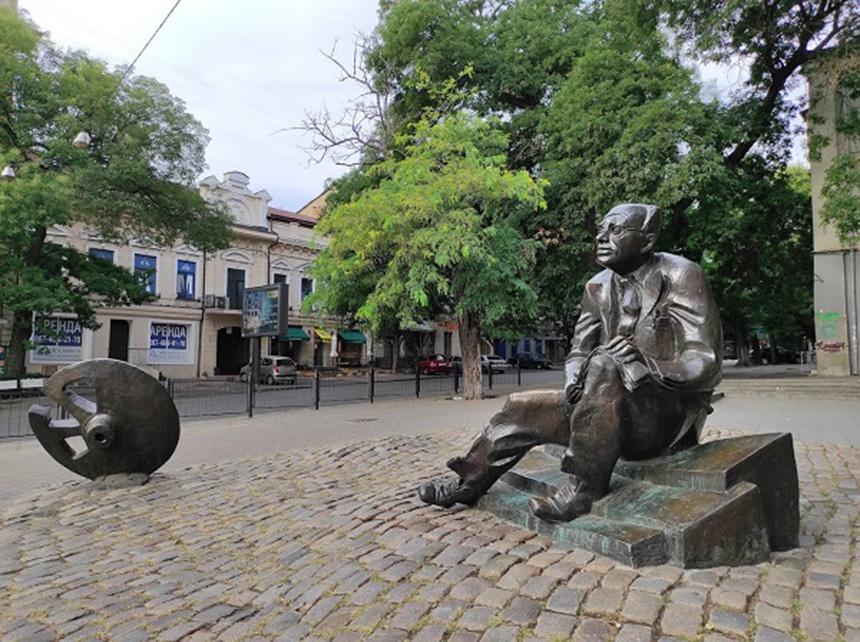
Our conversation with the Odesa philosopher and expert in the field of memory research focuses on the conflict that broke out recently in Odesa around the question of (not) dismantling monuments to Pushkin, Babel, and other figures and events that may symbolize the city's imperial past. We discuss the causes, possible solutions, and the broader contexts of the deimperialization of past narratives. In Oksana Dovhopolova's view, Odesa may become a good role model in the politics of "farewell to empires."
"The conflict is not between those who are waiting for Russia to come and Ukrainian patriots, but within the pro-Ukrainian public"
We are anxiously following the discussions about the decolonization of urban space in Odesa, which are acquiring the attributes of a sharp conflict. Could you comment on this situation as an expert in memory studies and a practitioner of commemorative and memorialization projects?
Disputes connected with decolonization processes are taking place in Odesa because Odesa is at the center of Russia's propaganda efforts. In addition to the fact that we ourselves are supposed to deal with our own history, there is outside intervention. That is precisely what has changed the nature of the discussion, which can no longer be balanced, calm, grounded, scholarly, and objective. Moreover, because Putin constantly mentions that Odesa is a Russian city, the discussion continually appears on the propaganda agenda, to which people in Odesa react very sharply. So, you can often hear the following contention: If you defend the imperial past, Putin will attack. He has already attacked, and things cannot get any worse. Still, such a position seemingly fuels Russia's confidence that Odesa is a Russian city because certain elements there protect the imperial past.
In my view, we should be absolutely indifferent to what Russia says about us. I do not watch Putin's speeches in which he mentions Odesa. Many people do, and they circulate them. I try to detach myself from this. What is most important for me is discussing our domestic problems among ourselves. Unfortunately, we cannot fully disconnect ourselves from Russian influence and from the fact that Russian propagandists are perpetually exploiting this topic.
In wartime, we do not always manage to react calmly to this. So, one can understand those who adopt an aggressive position, declaring that it is necessary to eliminate all elements of the imperial past to prevent Russia from exploiting it. In extreme cases, we also hear the argument that Odesa must be renamed Kochubiiv and that nearly everything built during the Russian imperial era must be dismantled.
The discussions unfolding in this vein are becoming absurd. It is absolutely clear to me that our work in memory studies must be aimed not at Russia (we are at war with it and cannot make things worse or better here) but at ourselves. We must find ways to rethink the imperial past and understand what to do with it.
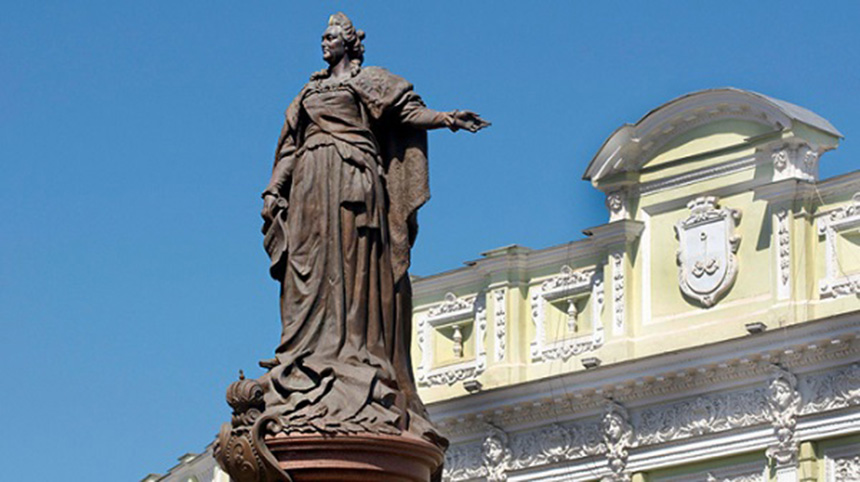
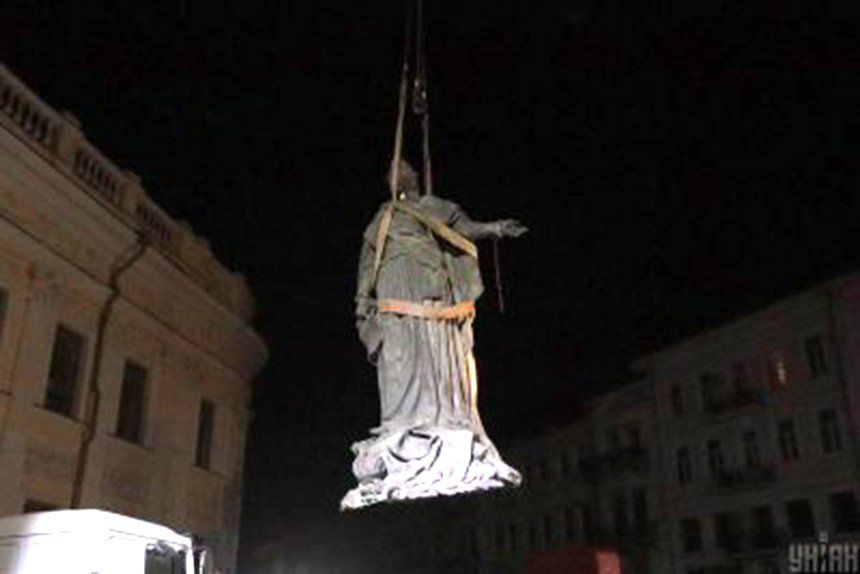
During the first months of the war, we noticed that the monument to Catherine II was dismantled without much controversy. Why have these heated discussions arisen at this time? Are they the result of a combination of local Odesa circumstances or of the war's logic and the direction in which all of Ukraine is moving?
When it came to dismantling the monument to Catherine II, it was easier because it was only a single object that had not previously existed in the urban space. This monument was erected in 2007, i.e., it did not exist between 1920 and 2007 [1]. It was a newly made figure with no historical value.
The procedure for demolishing this monument was quite easy because it did not affect residents' daily lives. The processes taking place today significantly affect people's everyday lives. For example, a mass renaming of streets is happening, and not everyone is ready to accept such a radical reboot of the city's cultural space. This is not because there are some pro-Russian people in Odesa; pro-Russian citizens mostly left the city back in 2014, and some left in 2022, at the beginning of Russia's full-scale invasion. Incidentally, among them were my former colleagues, who are now lecturers in Moscow. So, people with pro-Russian attitudes are now waiting for Russia in Odesa, while living outside the city limits, somewhere in Moscow or elsewhere in Russia. The conflict is not between those who are waiting for Russia to come and Ukrainian patriots but within the pro-Ukrainian public, which cannot reach an understanding. Why? Because there is no space where they can communicate. Regrettably, no conversation is taking place. Owing to this, everyone is imagining some sort of "horrible picture." People are communicating exclusively within their information bubbles and not letting dissenters into their space of like-minded people. They are amplifying their imaginings about people who hold a different standpoint, which has led to the escalation of the conflict.
"Alexander Pushkin and Isaac Babel — the biggest debates are taking place around these two figures"
Which historical figures or topics are triggering the biggest disputes?
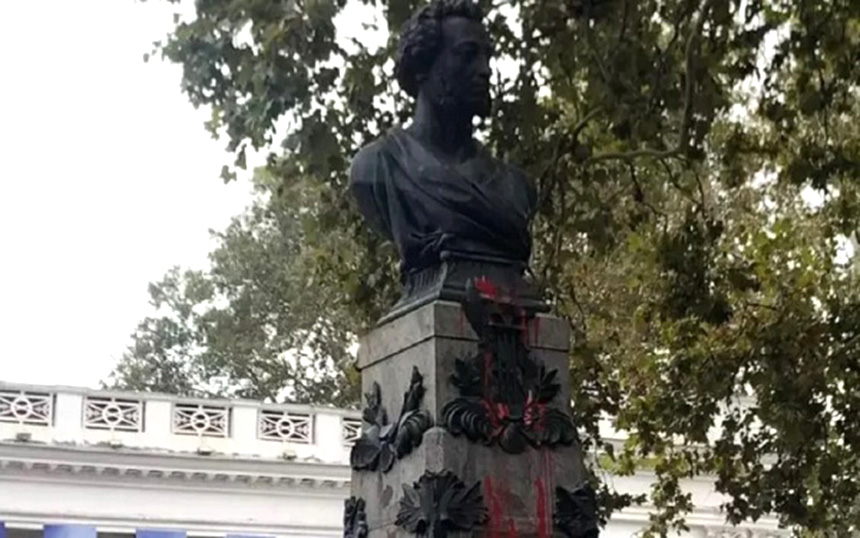
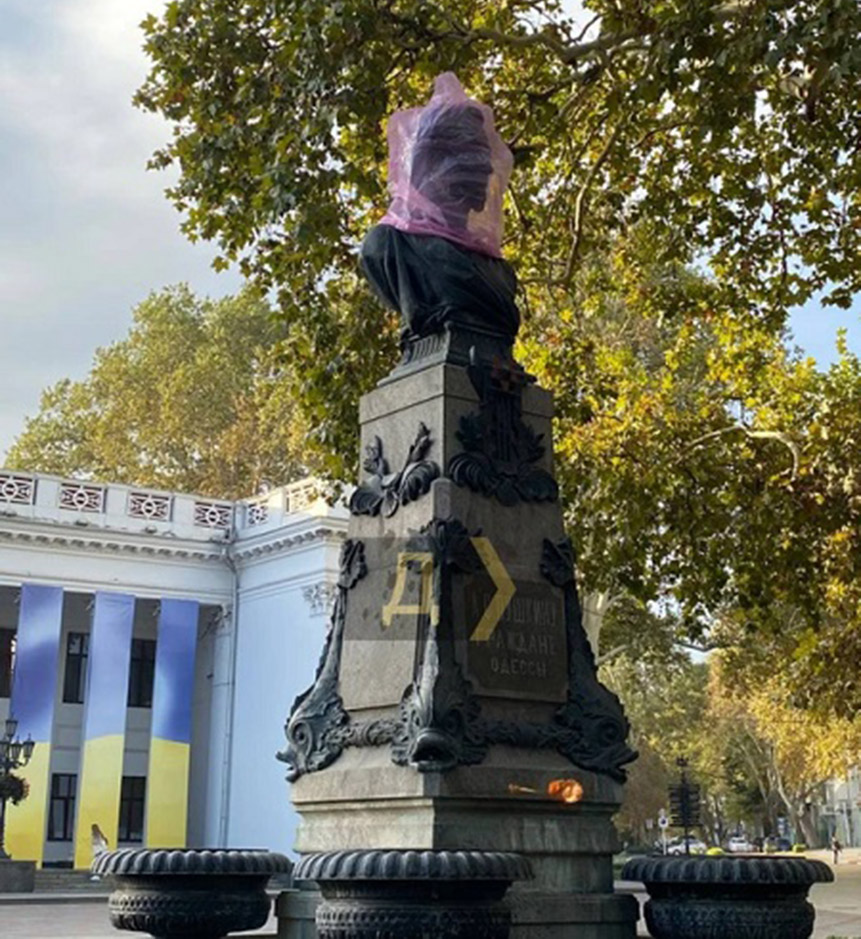
Alexander Pushkin and Isaac Babel — the biggest debates are centered around these two figures. Pushkinfall (Pushkinopad) began taking place all over Ukraine in 2022 (it started earlier but became widespread in 2022). In Odesa, we must rethink Pushkin because both sides of the conflict express rational arguments. The Pushkin monument in Odesa was not erected by the Soviet authorities. This is not the case of the monument in Mukachevo, for example. No one knows why it was installed there. When we see Pushkin in Mukachevo, we understand that this is a case of the Soviet authorities marking their space.
The Pushkin monument has stood in Odesa since 1889; it was erected before the Bolshevik Revolution. Many Odesa residents perceive everything that existed prior to the Bolshevik Revolution as "more normal." This has been the position they have held since Soviet times. People in Odesa distinguished quite clearly and marked everything that had existed prior to 1917 as "normal." This semantic framework is still in play. From this standpoint, the Pushkin monument, which was erected long before the Bolsheviks, is perceived as "good." There is a legend that Odesa residents raised money for the monument because the municipal authorities did not have sufficient resources. One of the patterns in Odesa's urban mythology is the belief that Odesa is made by the people, not the municipal or state authorities. That is why people are protecting this monument and saying it is beautiful. Incidentally, it was constructed in Odesa, and there are many stories about those who built the fountains and other elements of the monument. This is closely connected to the history of Odesa's economy, education, etc., which is why people are safeguarding similar markers in the urban space.
On the other hand, the position taken by people saying that it is impossible at present to preserve Pushkin monuments in the urban spaces of all Ukrainian cities, no matter how they appeared there in the first place, is absolutely understandable. After all, this is the marking of Soviet/Russian imperial power. Unfortunately, in our country, an object in a public space continues to be perceived exclusively in the context of glorifying a specific regime. The idea that an object can be reimagined does not exist because there are no successful examples, and people cannot find common ground because their views fundamentally differ.
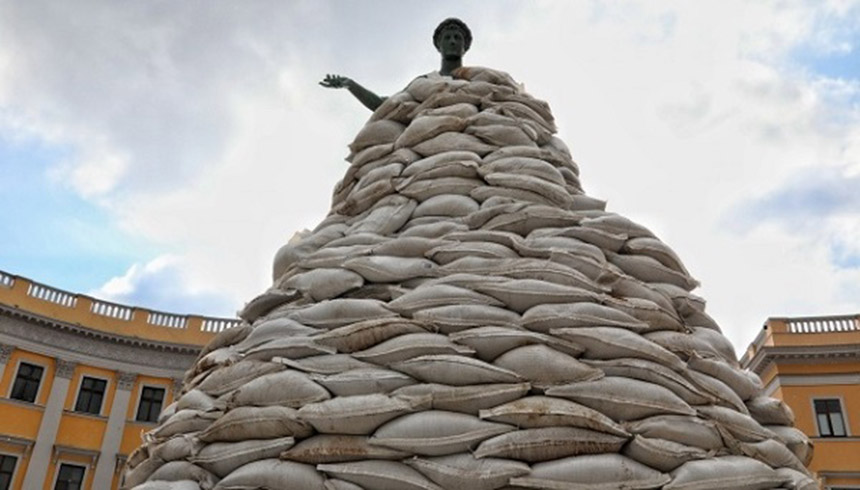
The situation is the same with Isaac Babel. Incidentally, the Ukrainian Institute of National Memory (UINP) declared the renaming of Babel Street unlawful because he had nothing to do with the NKVD, which is precisely what is being attributed to him. There is no documentary evidence. Thus, on the one hand, a movement in defense of this figure is gaining ground in Odesa, while on the other, voices are calling for the removal of the Babel monument. Another aspect, unconnected with the NKVD, plays an important role here: Babel is held answerable for developing a myth of Odesa as a city of bandits and gangsters. In other words, researchers of the Odesa myth have been fighting with Babel for a long time — and productively so.
In my opinion, this is probably the finest monument in Odesa. I am not talking about the Duc de Richelieu monument because its value is more historical than artistic. But the Babel monument is a magnificent work of art. It will be very disappointing if it is removed. Odesa currently has a very complicated relationship with Babel due to the city-of-gangsters myth. This state of affairs must definitely be discussed publicly. Meanwhile, conversations about other figures we see on social media platforms are discrete manifestations of individual opinions. Pushkin and Babel are the two main figures at the center of heated disputes. So far, nothing suggests that the people involved in these disputes can communicate with each other reasonably and seek a compromise-based solution. As far as I know, the Ministry of Culture and Strategic Communications of Ukraine has received a complaint about the Ukrainian Institute of National Memory for declaring that the renaming associated with Babel is not subject to the law. At this time, the outcomes and decisions remain uncertain. For now, no attempts to seek common ground are even being made.
"The local authorities must support professional dialogue, facilitate communication, and show they care"
Do you see a possibility of reconciling the opposing parties? What could a potential compromise, if any, entail?
Problems are resolved through dialogue and open communication. This can take the form of facilitated encounters. Incidentally, the Odesa Regional Mediation Group is quite strong here in Odesa. It is unclear to me why they have not yet become involved in this issue. They wrote to me in passing once the situation shifted to a hot phase, and it was much too late to hold a dialogue. Fortunately, there are examples where, thanks to facilitated encounters, complicated and conflictual processes were successfully resolved in Ukraine. Recall the discussions that took place when the concept for the Maidan Museum was being developed. Those were difficult and exhausting encounters marked by shouting and crying. No matter how unpleasant this is, there is no other alternative. However, I do not see any actor in Odesa who would take up this work now. These days, people easily stick labels on each other, and without doing anything, you can face a whole lot of unpleasantness, making you want to stop speaking to these people. Communication is possible, though, but it requires political will. Unfortunately, given the clashing interests of regional and municipal authorities, it is advantageous for both levels of government to have a conflict, as they derive additional dividends from it. That is why I do not see any way out of this complicated state of affairs at present.
We are seeing an example of a different struggle around memory: the victims of the Polish-Ukrainian conflict during the Second World War. Do you think that this experience can be used in your hometown? What are the similarities and differences?
Here, there are considerably more differences than similarities. I do not even perceive any similarity; it exists only in the word "conflict." The difference lies in the fact that, when we talk about Volyn and relations between Ukraine and Poland, we are dealing with an interstate, international conflict. It is connected with the practices of mass crimes, no matter how we interpret them: as genocidal practices, mass killings, or the Polish-Ukrainian War. In any case, these are crimes and an open conflict in which people on both sides were killed.
In contrast, we are not dealing with a mass killing in Odesa, fortunately. That said, we do have a problem with the date of 2 May 2014 [Violence erupted that day when a United Ukraine rally of about 2,000 was attacked by about 300 pro-Russian separatists — Trans.]. This event is missing from collective memory, the shared, public field, and the "canon" of Odesa memory. Hence, it is being pushed into the space of a provisional memory archive, and an archive always cherishes ressentiment on both sides. When we talk about Poland and Ukraine, political relations are necessarily in play. (Petro Poroshenko traveled to Poland and asked for forgiveness.) In other words, historians will eventually be able to find a formula that is acceptable to both sides. However, the conflict between Poland and Ukraine is politically loaded. Historians can apply a ton of effort, but they decide very little, unfortunately. In the Odesa situation, there is an intrastate discussion. That is why the conflict here is different, and there are other ways to resolve it.
It is crucial for us that the public reach an understanding and develop a common standpoint. For example, this proved possible in Vinnytsia. Of course, there were arguments, but no conflict on the whole. Specific issues were resolved, monuments were moved, reinterment took place, and markers commemorating the Second World War were reimagined (but not destroyed). This was achieved because genuine meetings and discussions took place. Something like this does not require the presidential level. However, the local authorities must support professional dialogue, facilitate communication, and show they care.
Meanwhile, we are skimming the surface of the conflict in Odesa. So, I would not even try to consider the resolution of the Volyn question as a model to be followed in Odesa. Other, more successful examples in Ukraine can be used to resolve the conflict in Odesa. The way I see it, one is the discussion about the concept of the Maidan Museum. Another one is the discussion in Irpin about the framework of the Past/Present/Art memory culture platform. We traveled to Irpin in 2022 when a commemoration-related conflict erupted there, and the situation was extraordinarily acute. A facilitated dialogue took place over six hours. We met with the community, which was very aggressive because we had arrived with members of Ukraine's Ministry of Culture, the State Agency for Tourism Development of Ukraine, and the Ukrainian Institute of National Memory. At first, we were treated like ministry representatives who came to put pressure on them. Community members from every conceivable sphere were present at the meeting — it was important to people. A solution was eventually found, and the community changed its mind. Specific steps were outlined, and the community is getting down to business now and developing solutions. We talked for six hours and later held an online meeting that lasted three hours. This work is exhausting. After seeing that this mechanism was working, local activists eventually initiated such discussions within the Irpin community, and it is producing results. So, we have some fine examples of how conflicts are overcome, which can be confidently utilized in Odesa to reach an understanding.
"I hope Odesa can ultimately become a bellwether of Ukrainian work on deimperialization"
What does Odesa's experience teach us, if anything? What needs to be copied, and what should be rejected?
I hope Odesa can become a bellwether of Ukrainian work on deimperialization. Instead of the concept of decolonization, I am trying to use the term "deimperialization" because it seems more accurate; I mean the work on what the empire did to us. We are the way we are today because the empire had a certain effect on us. If everything is simply canceled, we will not have changed any basic things within ourselves. Odesa offers an opportunity to see not only how to refute myths but also how to reframe one’s vision of a region. If we simply refute the myth, what takes its place? We must come up with something different, something no less attractive than the substance of the myth we are refuting. Odesa offers an opportunity to demonstrate how all this can take place. According to the conditional imperial myth, Odesa was founded in the late eighteenth century "in an empty place" where nothing supposedly ever existed. However, we could look at this past from another angle. We could consider this spot on the map as a much older "gate between worlds," and this gate existed for millennia. Intercivilizational communication took place here as early as the 5th century BC. Against the background of such epochal events, Odesa's imperial history is transformed into a single historical episode. In my view, deimperializing practice resides precisely in this kind of reframing. It is critical that Odesa, which was always perceived as a "maritime city," is now beginning to be understood as a meeting place of the sea and the steppe.
Expanding the vision of the past offers powerful optics: the possibility to contextualize the Greek, Ottoman, and Nogai past as well as the history of the Crimean Khanate. In other words, bridges between civilizations were always built in this place. That is why the people who came here in different eras under different circumstances were people who assumed responsibility. If you look at the region's history from this angle, not just the city as an island, what becomes obvious are the elements of the Odesa myth emphasizing that the city residents are not beholden to anyone and that Odesa is the creation of the people who lived here. For example, the official discourse of the Soviet era never included the tale of the 3,000 oranges: When Paul I refused to provide funds to construct a harbor — and Odesa was relying on this — the urban community decided to offer him a gift of 3,000 oranges. Eventually, Paul I loaned them the money, which was paid back later. Regardless of the historical reality, this account signifies the idea that we are hardly beholden to the authorities. Odesa became known as a "nineteenth-century miracle" not because the empire built it but because the large community did not allow the city to perish and paid back the loan. In other words, the symbolic sense of this story is that we are not dependent on the empire in the financial or management context or in any other way.
With this public perception, it is possible to present the Odesa urban project as anti-imperial, which is what it was. This way, you can reframe perception. We are not refuting facts and myths but creating new optics through which we will suddenly see something that earlier escaped our attention. This is precisely where Odesa's unique chance for Ukraine comes into play. I hope that our country capitalizes on it. Even the Odesa Business Club has begun working on the topic of decolonization, which is very telling. These people shoulder the responsibility of ensuring that Odesa continues to exist. In this regard, I hope that we will be able to offer a pattern for all of Ukraine.
"When talking about empires, it is useful to discuss, at the very least, the Russian, Austro-Hungarian, and Ottoman empires"
In the context of deimperializing processes in Ukraine, what directions would you single out as priority ones?
It is crucial for us to recognize that we carry in ourselves the legacy of several empires, and Odesa can play a role in this regard. At present, it is obvious why we are fighting the Russian Empire, and even the law on decolonization pertains only to the issue of overcoming the consequences of Russian imperial policies in Ukraine. At the same time, we can be proud of the legacy of other empires. Nostalgia for Franz Joseph is absolutely normal, although in reality, the inhabitants of Galicia, when it was part of the Austrian and Austro-Hungarian empires, faced many discriminatory and imperial policies. This influence and its consequences must be described and discussed. When we talk about empire, it is worthwhile discussing, at the very least, the Russian, Austro-Hungarian, and Ottoman empires. In reality, a rather paradoxical situation has emerged. When we work on decolonization, the forgotten legacy of the Ottoman Empire suddenly helps us overcome the influence of the Russian Empire. What is to be done with this? That question is worthy of consideration. There was also the Golden Horde, a massive empire that had a big impact on us. This gigantic empire is never mentioned when deimperialization is discussed. We can even talk about the Grand Duchy of Lithuania. It, too, had imperial characteristics, but in our country, it is not acceptable to discuss this because the Grand Duchy of Lithuania was "good." In other words, a somewhat fallacious deductive logic (or sophistry) is common on the level of everyday discourse: Empire is bad, but the Grand Duchy of Lithuania is good, so it cannot be called an empire.
Therefore, we must discuss various empires, which is a critical direction of work on the imperial past. We need to move from ideas about "good/bad" to what the imperial legacy represents and formulate a concept of the imperial legacy. Legacy is not necessarily something of which we are proud. For example, the Chornobyl accident is part of Ukraine's historical legacy, and we understand how this affected who we are now. The same thing must be done with the imperial legacy. We need to recognize that legacy is not always what we safeguard but what made us the way we are (which, in its essence, was not always good). And this is very important.
Interviewed by Yaroslav Hrytsak and Petro Dolhanov.
This publication uses photographs from the author's personal archive and open sources.
Endnotes
1 The first monument to Catherine II was erected in Odesa in 1900 and dismantled by the new Bolshevik authorities in 1920.
 Oksana Dovhopolova is the curator of the Past/Future/Art memory culture platform. She holds a Doctor of Philosophy and is a professor in the Master of Science in Memory and Public History program at the Kyiv School of Economics. She researches collective memory (local and regional dimensions, memory entrepreneurship, deciphering the tragic past, etc.). Her dissertations focused on mapping the social space with the phenomena of the other, the alien, and the rejected. Since 2014, she has been active in the field of public history and has taken part in memorial, discussion, and art projects with a focus on collective memory.
Originally appeared in Ukrainian @Ukraina Moderna
This article was published as part of a project supported by the Canadian non-profit charitable organization Ukrainian Jewish Encounter.
Translated from the Ukrainian by Marta D. Olynyk
NOTE: UJE does not necessarily endorse opinions expressed in articles and other materials published on its website and social media pages. Such materials are posted to promote discussion related to Ukrainian-Jewish interactions and relations. The website and social media pages will be places of information that reflect varied viewpoints.