




Raisa Troianker's literary and biographical contrasts
I dream of reading a study or essay about what Uman was like in the late 19th century and the first half of the 20th century. A text that would explain how and why, having no university, literary tradition, or significant theater, this town became so important for Ukrainian literature. A wide range of fascinating and distinct authors of the past century came from or had a connection with Uman: poet Ezra Fininberg, playwright and functionary Oleksandr Korniichuk, writer and memoirist Yurii Smolych, revolutionary writer Ivan Kulyk, and, finally, preeminent poet Mykola Bazhan. This was due not to a literary school but rather to an environment.
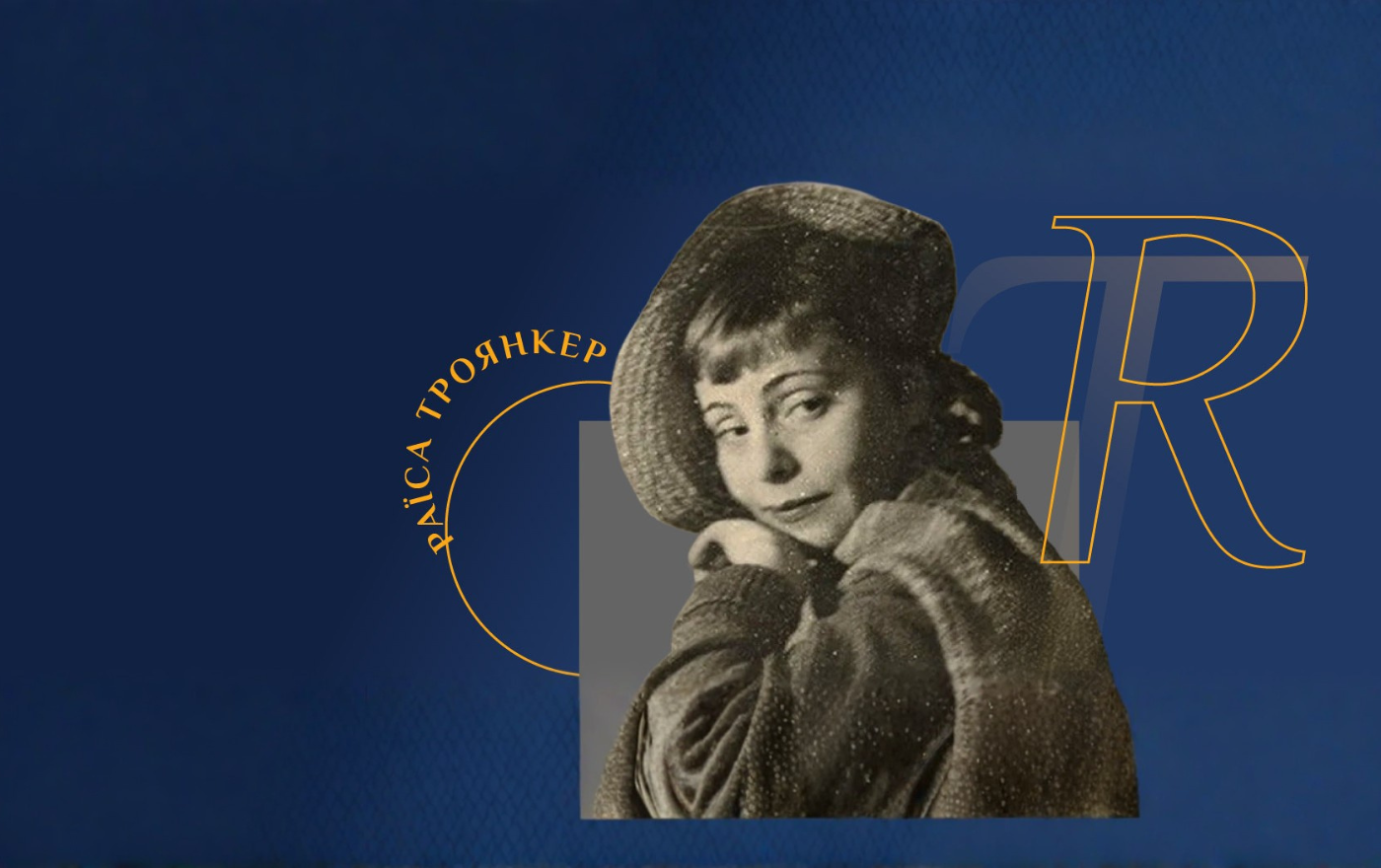
Uman had a multicultural environment with prominent Ukrainian-Jewish ties, including the Bezmezhnyky experimental avant-garde group named in honor of Walt Whitman and consisting of Andrii Chuzhy (Ukrainian- and Russian-language poetry) and Ezra Fininberg (Yiddish poetry); Ivan Kulyk, a Ukrainian author with a Jewish background, and Mykola Bazhan, whose oeuvre featured a constantly recurring Jewish theme. This connection was also significant for poet Raisa Troianker, who was forgotten in Ukraine for a long time but then gradually began to return from oblivion to the Ukrainian readership and literary discourse, finally rising to prominence in 2024 with the release of the Slovo House film.
One of the most detailed sources of information about Troianker is a chapter in Yohanan Petrovsky-Shtern's Anti-Imperial Choice: The Making of the Ukrainian Jew, which was published in English by Yale University Press in 2009 and subsequently in Ukrainian translation in 2018. We recommend this publication as one of the most detailed sources of information about the poetess. [Editor’s note: Petrovsky-Shtern’s book was winner of the 2021 Encounter: The Ukrainian-Jewish Literary Prize.]
Challenge to conservatives
Raisa Troianker was born in Uman on 30 October 1908 or 1909, according to different sources. Biographers note that her father, Leib, was a shammes in the synagogue, while her mother cooked food to order and briefly ran a small shop, which was not very successful. It was a poor and conservative religious family with an active and temperamental daughter, the perfect combination for the generational conflict common at the time. In millions of families of different countries, nations, and religions, young people did not want to live in the old way, yearning for a new, more relaxed lifestyle and sympathizing with more or less radical social reforms and even outright utopias.
The young Raisa Troianker seemed to have had purely personal reasons for denying outdated realities and ethnic and religious prejudices and hoping to be liberated from them. Petrovsky-Shtern, who studied her granddaughter's family archive, reports that her brother was killed in a Jewish pogrom (apparently, in 1917–1920), while her sister Maria went insane after seeing soldiers raping her friend during a pogrom in Uman. One way or another, Troianker was one of those young people who, at least outwardly, supported the communist experiment in Soviet Ukraine.
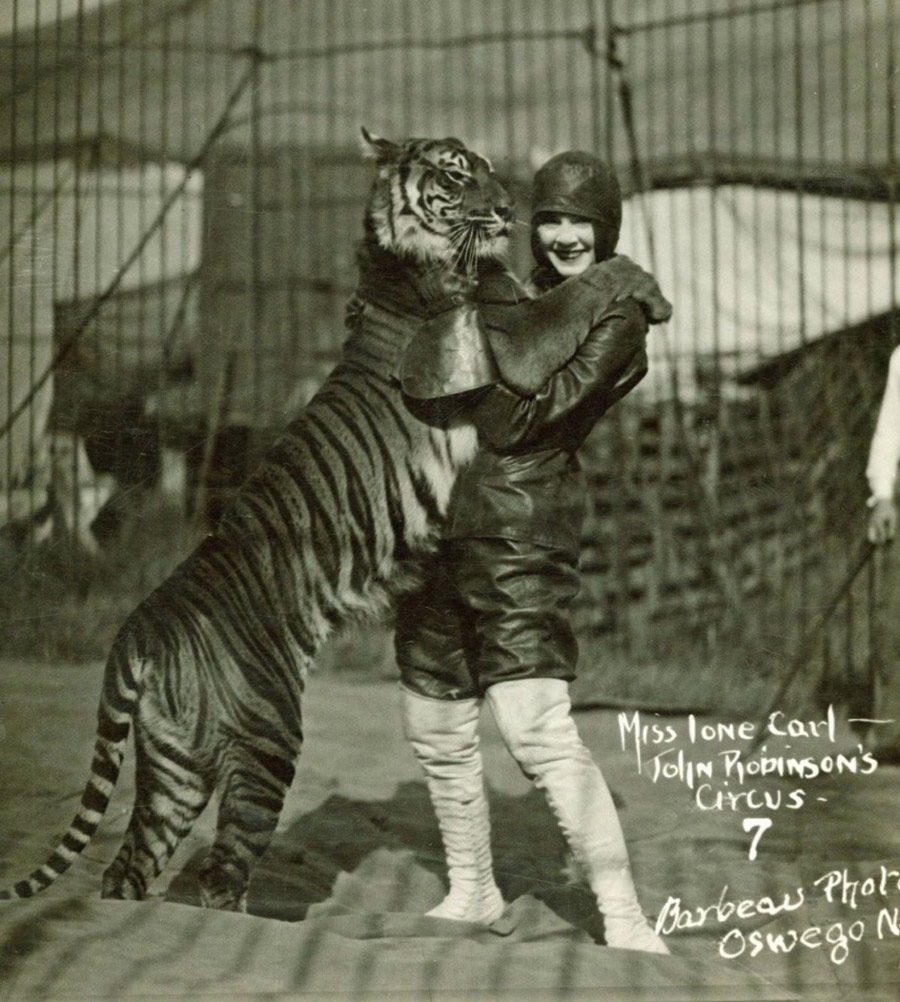
Aged 14 or 15, she ran away from home with a tiger tamer from a traveling circus. The man had a romantic name, Leonid Jordany, and this adventure led Troianker to become a tamer herself. She performed with the circus, doing some extremely dangerous numbers, such as putting her head in the tiger's mouth. She had a scar on her thigh from a tiger's claws as a reminder of the risky game she played. Troianker turned this story into one of her most impressive poems, "Memories."
Memories
To Rayag Rabur Zeiler Jakson
Unforgettable Leonid Jordany
Do you remember the town small
in a distant, remote province,
where there was no tram's clamor,
And love flooded the eaves?
Do you remember the circus small?
A beast tamer I was there.
I can't forget these times
indescribably painful and sincere.
Do you remember — the silent stall
(after the first bell — one more)
You rubbed up against my legs
The stripes of your coat.
Recall our golden dreams
My mute striped lover
Recall the night after the performance,
So prayerful and scary.
I'm in a cage.
The silence is thick.
Your paw on my thigh.
(even now a secret blue sign
crosses my stomach).
Do you remember;
There was in the circus
A young and fiery tigress golden-brown.
I could not tame her —
And quit,
Not wanting to put her down.
Do you remember the last performance,
"A new tamer" announced the drunken clown.
You felt that my public farewell it was
You looked at me, broken-down.
As usual Jordani played his two-step
And the music was angry and tense
You fiercely rubbed up against my legs
The stripes of your coat then.
We had a hell of a game that time.
(recalling still gives me a fright).
Even my enemy, the clown Strulep
Twirled his fingers in excitement.
The public, as if it could smell the blood,
Froze holding their breath.
The next trick performed a young acrobat,
He crushed himself to death.
I've forgotten the town small
in a distant, remote province,
But your claws I still recall,
And love floods the eaves…
A big city.
And in the zoo
The man who was loved
said —
"Look!
What a handsome tiger"—
And so desperately,
So eagerly,
I shouted:
"It's you!"
You recognized me, as did your lips,
(I felt, my Zero, I know),
Like on our last night,
Three times "Ray-a!" roared!
Life was a golden storm…
Now I compose poems.
The head of the zoo informs: —
"The tiger is sick. His health is getting worse."
Kyiv, 1927
Source: https://ukrainian-jewish-poetry.dadada.live/en/authors/raisa-troyanker
A traveling circus was certainly a highly symbolic and meaningful initiation into a new life. Not surprisingly, Troiker's life turned out to be colorful, changeable, and full of wandering. Her circus career ended along with a stormy romance. She learned that Jordany had a wild temperament and a tendency to fight, so she left him and the troupe.
First steps in writing
No matter how much of a slap in the face the circus incident was to her conservative family, Troianker did not stop there. She married Ukrainian writer Onoprii Turhan, and they had a daughter together. In her parents' circle, marriage to a member of another ethnic group and another religious tradition was a blatant challenge and shame. Some of Troianker's poems, which appear to be autobiographical, depict the grandiose conflict between a young Jewish woman who has a "child by a goy" and her parents. Quite possibly, she was a sincere realist when she penned those lines.
My Father Turned Me Out and Cursed Me
My father turned me out and left me cursed
because I have a child from a "goy".
He told us to fall through the earth
You and me, my Olenka, both of us.
My dad! He is as aged
as Talmud's yellowed pages.
He cries: "People will laugh at me.
Because of my daughter's sin"
Mom cries: "She's an Olenka
not a Deborah, not a Leah or Nehama."
Ah, I know, for my gray-haired mother
It's a huge, huge drama.
My dear mother, so old and frail,
With hands coated in fish scale,
To earn some bread for herself
She has to cook for others whole day.
But my Olenka has blue eyes
and fair hue of hair.
And what I have to say to her,
When the 'national question' arises?
Yet my Father still can't forgive
that my child from a "goy" was born.
But my mother said: "Hey, you
May you come sometime with 'this one'."
Source: https://ukrainian-jewish-poetry.dadada.live/en/authors/raisa-troyanker
In any case, the topic of departing from the power of tradition and crossing interethnic boundaries featured prominently in her poetry and was prevalent at the time. In 1930, Mykola Bazhan, also writing in Uman, produced a script for the film Suburban Quarters, built around the vicissitudes of a marriage between a Jewish woman and a Ukrainian man.
This was Troianker's formative period as a poet. Her early contexts were eclectic and indicative of her time and place. Among the influences, one can discern the Silver Age of Russian poetry, various (neo)romanticists, and, for example, Volodymyr Sosiura. As a result, borrowed banalities could sometimes coexist with original metaphors or powerful psychologism in her early poems. These texts were included in Troianker's first book, Povin' (Flood, 1928).

In 1926, Troianker and her family went to Kharkiv, the capital of Soviet Ukraine at the time and the center of key literary events. She and her husband initially belonged to the writers' organization Pluh, but she left it after a while, and their marriage also fell apart some time later.
Erotic myth
The late 1920s and the 1930s were a time when Troianker rapidly integrated into the Kharkiv bohemia, where she developed a specific image of a superlustful woman and an erotic, if not pornographic, poet.
The most consistent creator of this literary myth was Yurii Smolych. It occurred post facto in the 2000s, when a chapter of his intimate memoirs, featuring a fragment on Troianker, was first published. He portrayed her as a talented and well-developed woman, "but" a nymphomaniac. His memoirs are filled with such moralizing and condescending passages as this one: "Sosiura is known to have introduced her to literature, having picked her up somewhere in Uman during a circus tour and now telling everyone that Raia had a big scar almost in her groin. Well, now everyone (it was like a sport) had to see that tiger scar on the poet's leg." According to Smolych, almost all Ukrainian writers of that time became Troianker's lovers.
Smolych's comical and bizarre manner, along with the high probability of "artistic effects" in these stories, does not undermine the fact that Troianker must have been considered one of the most sexually active women in Kharkiv's literary milieu in the second half of the 1920s.
This, of course, correlated with the slogans of free love, which were quite common in the Soviet Union during the experimental 1920s. However, the difficult question remains whether Troianker can be viewed as a conscious "revolutionary" in this regard. The archive of writer Ivan Dniprovsky contains a letter from Raisa, in which she rather painfully interprets her passion and mentions efforts to have it treated "according to Freud." In Smolych's memoirs, she is also sometimes quite self-critical about her sexuality. Both sources seem to suggest a powerful urge she did not want to "come to terms with" in many situations but could not resist, either. That is, even though her conduct was possibly "piquant" for the literary circles of the time, which was, despite all the reforms and utopias, still dominated by men, it was hardly a question of a real "sexual revolution."
The same can be said about the special eroticism or even pornography of Troianker's poems. This criticism was leveled by several memoirists, such as Hryhorii Kostiuk, Smolych, and Lev Kopelev. Troianker's entire surviving literary heritage includes texts with indirect yet expressive sensuality, as noted, for example, by Petrovsky-Shtern. The most famous of them revolves around her first sexual experience, but it is "just" a traditional (neo)romantic love text with a smidgen of naturalism.
There are no distinct sexual details here, let alone pornography (contrary to Yaryna Tsymbal's remarks). It's either Troianker had some kind of "hidden porn" that was never published and got lost (I doubt it), or the young intellectuals in Soviet Ukraine were unsettled by even such restrained sensuality.
Trying her hand at avant-garde
Troianker was attentive to the topic of liberating women from patriarchal restrictions, offering, for example, an image of a modernized young woman in the Soviet Muslim East and drawing attention to the hardships of a young single mother. Add to this the previously mentioned motif of a break with society and the traditional Jewish shtetl. Curiously, such a farewell is depicted in her poems with sentimentality and sympathy but no traces of radical rage.
In the late 1920s, Troianker was indeed involved in a radical project, which was not a surprise, given her temperament. She joined the Avant-garde literary group founded by the charismatic and energetic writer Valerian Polishchuk. At the time, he promoted "constructive dynamism" or "dynamic spiralism," concepts that were quite eclectic and close to constructivism and late futurism, a kind of avant-garde mishmash. Not all the members experimented consistently, even though the group included such Ukrainian avant-garde titans as the artist Vasyl Yermylov and the parody poet Edvard Strikha. Troianker came close to the literary aesthetics set for the group in just a few of her poems. Perhaps Polishchuk's theories fascinated her only conceptually, while he hoped to groom a young poet, given his pedagogical inclinations. Alternatively, personal communication may have played a primary role.
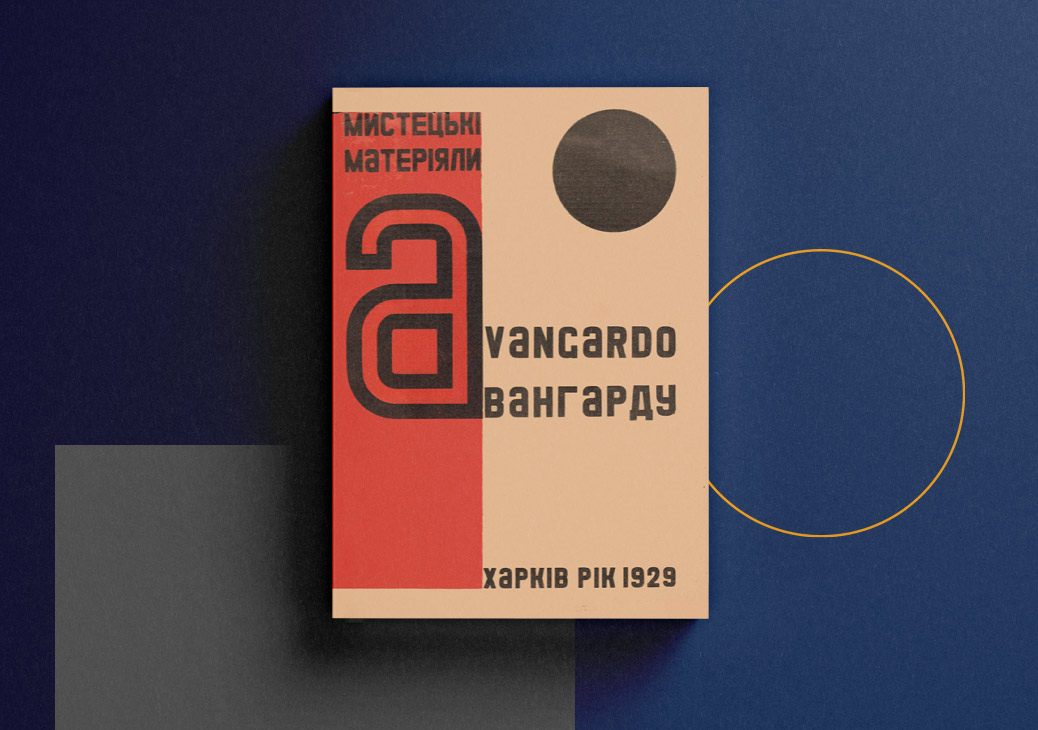
Some poems of a more or less avant-garde nature, such as the resounding, cheerful utopia "My Love," were included in the Troianker's second collection, Horizon (1930). She also published an interesting text, "A Small Poem about an Old Professor," in the Avant-garde group's collection Avant-garde Art Materials. Dynamic, concise, playful, and filled with highly original imagery, it romanticized human rejuvenation, "according to Steinach," a popular topic at the time. Touchingly, Troianker named the main character Valerian Lvovych after Polishchuk. In her poem, he is an old professor, "Faust No. 2," ready to lay down his life on the altar of science.
Troianker wrote poems in Russian, which were first published in Radius Avangardovtsev, the Russian-language publication of the Polishchuk-led group. The brighter one was titled "Kogda ne zanyat vecher" (When the Evening is Free) and the more banal one, "Iz proshkogo" (From the Past). The poet may have written in two languages for a long time. Nothing is known about her poetic attempts in Yiddish, even though Yiddish words occur in her Ukrainian-language poems here and there.
Escaping almost certain death
As Troianker developed, her poetry became more diverse. A multitude of literary paths opened up before her. More metaphorical lyrics hinted at one interesting direction. Avant-garde or quasi-avant-garde attempts pointed elsewhere, holding out equally fruitful prospects. The neoromantic tradition also remained relevant.
One can fantasize about many good things that could have happened to Troianker in literary Kharkiv and Ukrainian culture. But then came the year of 1930.
Political and aesthetic censorship crushed any literary projects that bore even a hint of freethinking or alternative stylistics. Troianker's friend, Polishchuk, was also hit. His periodical was shut down, his group disbanded, and he had to repent and make excuses. The group members came forward with their renunciations. Researcher Yaryna Tsymbal quotes Troianker's statement in Literature and Art, where she promises to "develop a clear proletarian ideology and persistently work on myself to destroy all unwanted traces" of her time in the Avant-garde group.
This marked the beginning of political trials, foreshadowing the mass repressions of the 1930s. One particularly high-profile trial was that of the Union for the Liberation of Ukraine. Forced collectivization laid the groundwork for the Holodomor in the countryside. Active industrialization led the Soviet Union into a new decade: the colorful 1920s gave way to the strict, restrained, and cruel Stalinist 1930s.
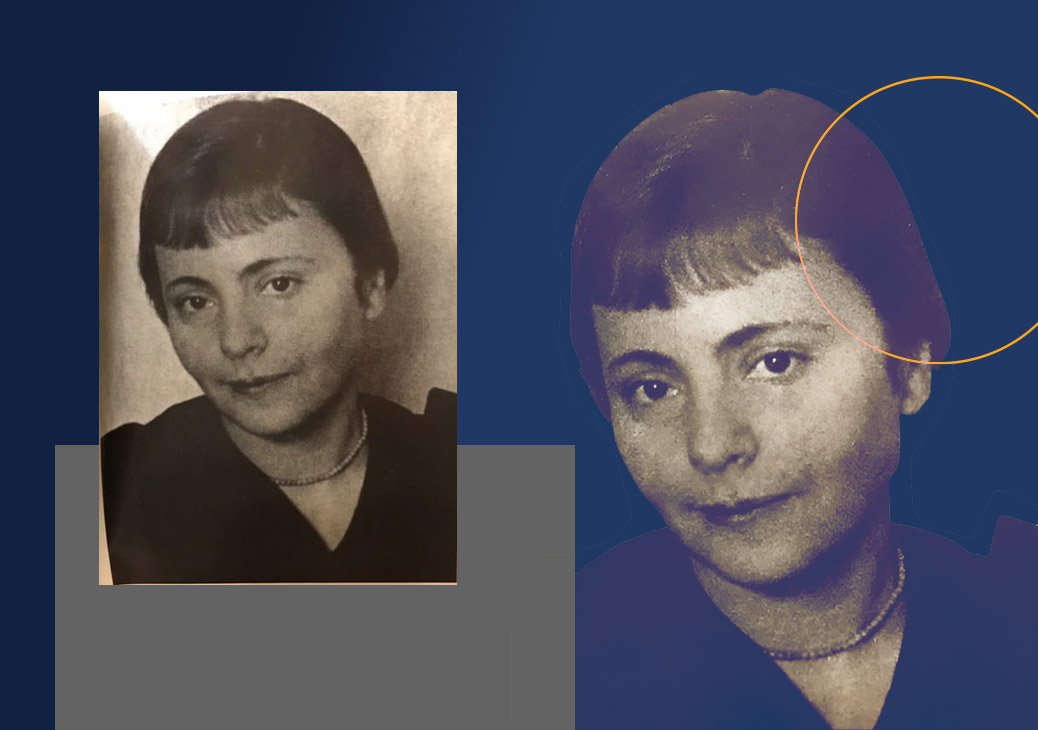
Troianker turned her life upside down again at that time. She fell in love with the Russian poet Ilya Sadofiev and moved to Leningrad with him. Apparently, she quickly left Ukrainian poetry behind, either by not writing or not publishing it anywhere. Later, she presented herself as a Russian-language author only.
By leaving Ukraine, Troianker most likely escaped death. Many people close to her would be persecuted in the subsequent years, with some arrested and others shot to death.
Polishchuk was among the latter. The prosecutor accused him, in particular, of pornography because of his slogan "Long live a juicy public kiss on a naked female breast!" and a note about working on a "bed for love." The risk of getting into this meat grinder was quite high for Troianker.
Leningrad was a safer place in the early 1930s, but not for long. Sergei Kirov, an iconic Bolshevik figure, was murdered under mysterious circumstances there in 1934. A wave of repression swept through the city. In 1935, Troianker broke off relations with Sadofiev due to unbridled jealousy and frequent fights, and went even further north to Murmansk. Coincidence? Intuition? Calculation? Whatever the case may have been, she got lucky again.
Conservative finale
Troianker lived out the last years of her life in that distant city beyond the Arctic Circle, located on the shores of the Kola Bay of the Barents Sea. Unfortunately, her last creative period turned out to be bland.
Troianker switched to a very formulaic and conservative kind of writing. Surprisingly, she gained certain recognition, clearly more than she had in Kharkiv.
This is especially true of World War II years, when heavy fighting was taking place beyond the Arctic Circle, as the Germans wanted to capture Murmansk and cut off the supplies the Allied forces provided under the Lend-Lease Act.
At that time, Troianker was busy writing emotional agitation poetry. She worked in a hospital, often spoke to the military, and published poetic and journalistic texts (in particular, frontline reports) in local periodicals. Her simple, easy-to-understand poems earned her love and respect. According to some researchers, they were similar to Kipling's style but also contained some plain totalitarian madness, for example, "On the fifth day we took this hill. / And not taking time to wash away the smoke of the battle / Or talk about how we fought, / We came to a party meeting." These texts can be read in the collection Surovaya lirika (Tough Lyrics). Today, they appear as nothing but a pathetic, propagandistic testament to the era. It is difficult to understand whether the poet chose this clichéd manner of writing only because the Soviet realities of the 1930s and 1940s left almost no chance for other poetry (marked by antics, as was the case before), or whether she seriously engaged with the new style.
For Troianker, wartime events were not just pathetic propaganda material. She experienced the war firsthand: the constant threat of devastating German air strikes, trips to the front lines, performances in bomb shelters, a dangerous trip to the frontline zone to retrieve her daughter, who was "stuck" there, and the death of her relatives in the occupied territories. Raisa Troianker died of cancer shortly after World War II, on 29 December 1945.
In the second half of the 20th century, she was not included in the canon of Ukrainian poetry and was almost forgotten. Several publications about Troianker appeared in Murmansk and almost none in Ukraine. However, her name was gradually restored from oblivion in the 2000s with the publication of an excerpt from Smolych's intimate memoirs. A number of articles and columns appeared (some penned by the current author). Online publications ensued, followed up a full-fledged book of Troianker's poetry in 2009, which has long become a bibliographical rarity. Add to this the inclusion of her texts in the anthology Ukrainian Avant-Garde Poetry (1910s–1930s). She attracted attention and sympathy.
Her fame reached new heights with the Slovo House film (2024), which featured a modified figure of Troianker brilliantly played by Valeria Khodos. The film sparked active discussions and debates. The image of Troianker is somewhat parodic, caricatured, and sexualized, but irony is generally a significant feature of the film in my view. Most importantly, Troianker's name and poems finally reached a broad audience.
Raisa Troianker did not leave many good texts behind, but those that exist are distinctly individual. Her biography is a fascinating, non-trivial story of a person of contrasts and a poet in the turbulent 20th century.
Sources and literature:
- Troianker, Raisa. Poezii. Cherkasy: Chabanenko, 2009.
- Petrovsky-Shtern, Yohanan. Anty-imperskyi vybir. Postannia ukrainsko-ievreiskoi identychnosti. Kyiv: Krytyka, 2018.
- Tsymbal, Yaryna. Tsyrkachka, dvorianka i komunistka: try erotychni poetesy 20-kh rokiv, Ukrainian Week, 13 March 2016.
- Kotsarev, Oleg and Stakhivska, Yuliia. Rai-ia rodom z avanhardu, Ukrainian Week, 7 March 2008.
- Kotsarev, Oleg. Raisa Troianker: pryhody “romantychnoi imazhynistky,” Druh Chytacha.
- Stakhivska, Yulia. Rai-ia, abo Pryborkannia avanhardnoi, LitAktsent, 13 October 2011.
- Kotubei-Herutska, Olesia. Pryborkuvachka tyhriv, divchyna neabyiakoi erudytsii, nimfomanka: erotyka ta poetyka Rai Troianker v chas Chervonoho renesansu, Suspilne Kultura, 22 May 2024.
- Smolych, Yurii. Raia. Z “Intymnoi spovidi,” Komentar, 3, 2004, p. 15.
 Oleg Kotsarev
Writer, journalist, essayist, and translator. His latest books are the novel People in Nests and the poetry collection Charlie Chaplin Square. Co-editor (with Yulia Stakhivska) of the anthology Ukrainian Avant-Garde Poetry (1910s–1930s).
Originally appeared in Ukrainian @Chytomo
For more poetry by Raisa Troyander see https://ukrainian-jewish-poetry.dadada.live/en/authors/raisa-troyanker.
Translated from the Ukrainian by Vasyl Starko.
This material is part of a special project supported by Encounter: The Ukrainian-Jewish Literary Prize. The prize is sponsored by the Ukrainian Jewish Encounter (UJE), a Canadian charitable non-profit organization, with the support of the NGO "Publishers Forum." UJE was founded in 2008 to strengthen and deepen relations between Ukrainians and Jews.