




Why Christian, Muslim, and Jewish chaplains of the Ukrainian Army met in a synagogue
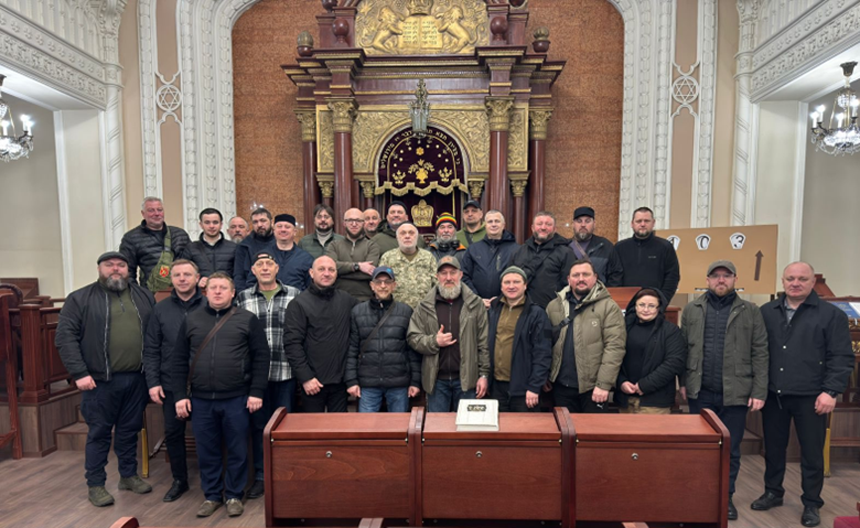
In April 2026, the Central Synagogue of Ukraine (Kyiv Brodsky Synagogue) welcomed unusual guests — a large group of Christian and Muslim priests. David Milman, a Jewish chaplain of Ukraine's Armed Forces, welcomed his fellow military chaplains who visited the synagogue to familiarize themselves with Jewish traditions and community life.
The Christian chaplains included representatives of the Orthodox, Greek Catholic, Roman Catholic, and Protestant clergy. The guests were given a tour of the synagogue and learned about the foundations of Jewish law and customs, prayers and holidays, and the day-to-day activities of the Jewish community in Ukraine.
"Such meetings are very important. They help us better understand each other, remove unnecessary barriers, and build genuine respect between people of different traditions who serve Ukraine together today!" emphasized Ukraine's Chief Rabbi Moshe Reuven Azman following the meeting. He expressed special gratitude to Yakov Syniakov, the Jewish chaplain of the 7th Corps of the Airborne Assault Forces of Ukraine, for his help in organizing the visit.
Military chaplain David Milman, who gives Torah lessons at the Brodsky Synagogue in Kyiv between trips to various military units, told the UJE portal about this meeting and his everyday life as a religious Jew and a chaplain of the Armed Forces of Ukraine.
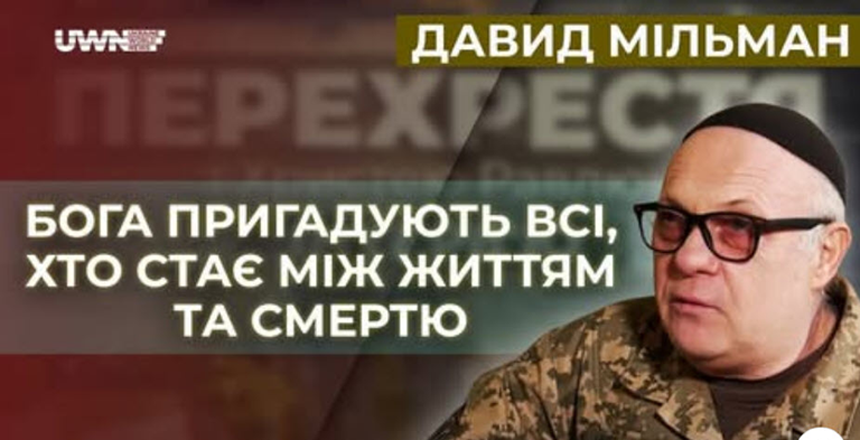
"To become a chaplain, a person needs to have a higher education (preferably in theology) and complete special courses at the Military Institute in Kyiv or Lviv. The training includes lectures on various religions, including Judaism. Visiting a synagogue and meeting with a rabbi is part of the training program for Ukrainian chaplains," Milman says.
He adds that most of the visitors who came to the synagogue were students at the Military Institute, some with real war experience. There is a concept of a "de facto chaplain" when a person begins performing the duties of a chaplain without having any special training. There are especially many such chaplains among Protestants. After some time in the army, they are sent to study to become a chaplain.
"Our guests really liked everything. Since these were priests of different denominations, the questions mainly focused on the peculiarities of worship, the everyday norms of religious Jewish life, and so on. The meeting ended with tea, kosher pizza, and pastries," Milman says.
In his opinion, the awareness about Jews among Ukrainian commanders at various levels has increased noticeably. Thus, religious and everyday issues are now resolved a little more easily. But the hard realities of the ongoing five-year war complicate chaplains' work. "It has become more difficult to move Jewish soldiers to serve in places where there are Jewish communities nearby, which would give them a chance to go to synagogues at least occasionally. Previously, this could be arranged within a few weeks, while now you have to wait several months," Milman explains.
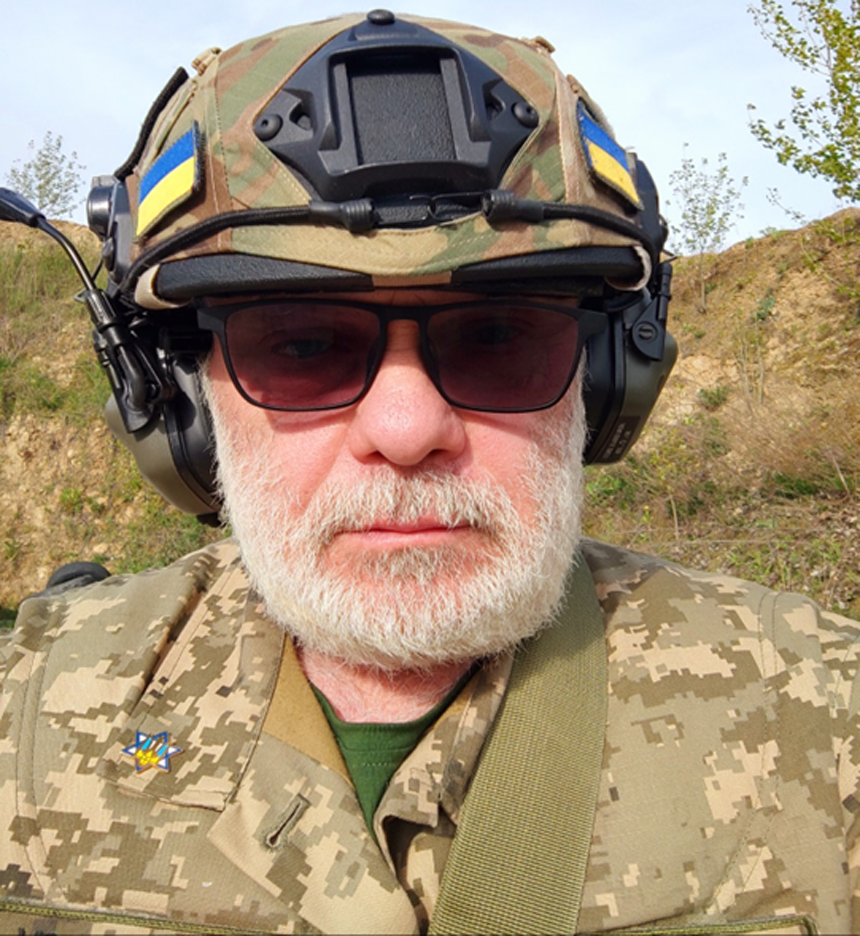
Unfortunately, more Jewish soldiers died or were wounded in 2025 and the first months of 2026 than in previous years of the war, according to Milman's assessment, which is based on personal contacts, as there are no exact statistics. Some Jews who were killed in action are buried in common cemeteries because their relatives are, for some reason, afraid of losing their cash payments, although there is no connection between the payments and the place and religious rite of burial.
"This is especially true of mixed families. I had at least eight refusals [to have a Jewish burial — Sh. B.]. When one Jewish soldier [from a mixed family. — Transl.] was buried, his wife wanted the burial to be conducted according to the Christian rite, while his mother urged for the Jewish one. The result was an unnatural mixture, and it was a good thing that the priest was understanding and tactful in that situation," Milman notes.
"Importing humanitarian aid has become very complicated. After several scandals involving the sale of humanitarian aid, many items can now be imported only directly, i.e., the aid must go exclusively to the final recipient. For example, a car goes directly to soldier Rabinovich, an optical sight to soldier Abramovich, and so on. But this is practically impossible to do with medications, medical equipment, and bulletproof vests. More papers, more checks, and as a result, fewer people willing to do it. Add to this the fatigue and cooling down of the sending party," Milman shares his impressions.
Humanitarian aid to Jewish soldiers of Ukraine's Armed Forces is provided not only by Jewish organizations in the USA, the EU, and Israel, but also by foreign Protestant organizations. Among the items sent are Jewish religious items (tefillin, tallithim, kosher food, Jewish books, and prayer books), as well as generators, water purification systems, body armor, tactical uniforms, and chargers.
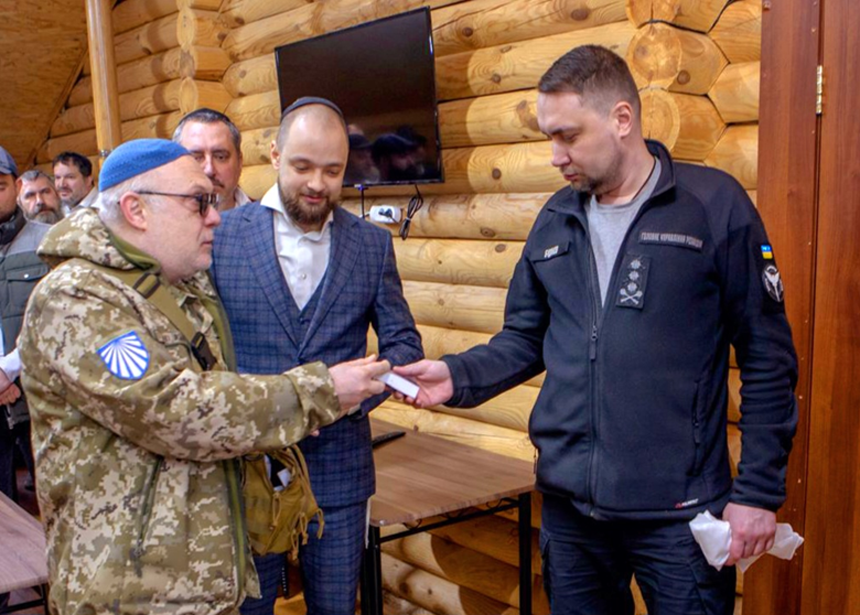
"We always try to provide assistance not only to Jewish soldiers, but also to their non-Jewish combat comrades in the same unit," Milman says, adding that the pocket-sized books of Psalms in Ukrainian (Tehilim in Hebrew) are very popular among both Christian soldiers and Jews.
Text: Shimon Briman (Israel).
Photos: From David Milman's private archive.
Translated from the Ukrainian by Vasyl Starko.