




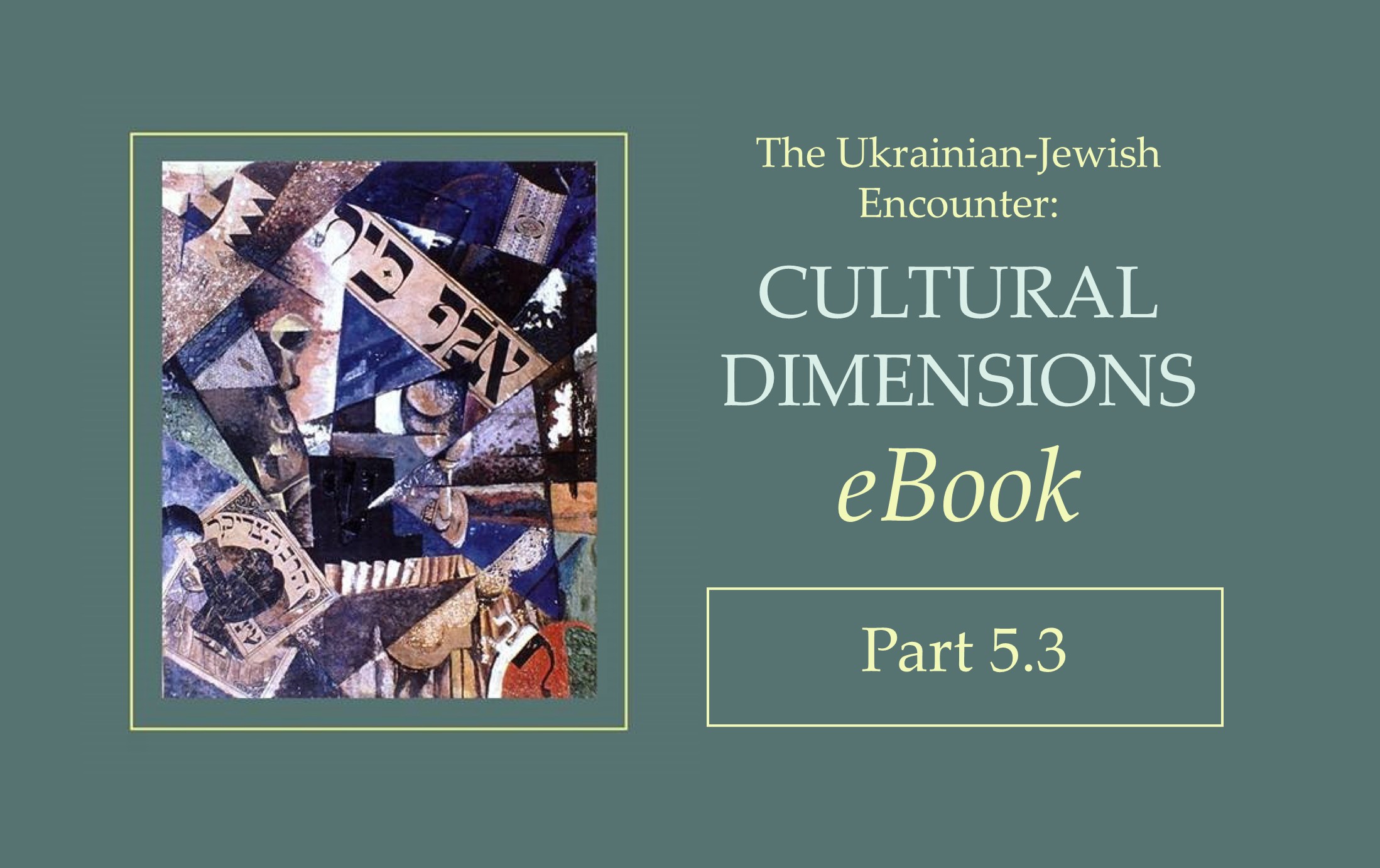
"The Ukrainian-Jewish Encounter: Cultural Dimensions": Part 5.3
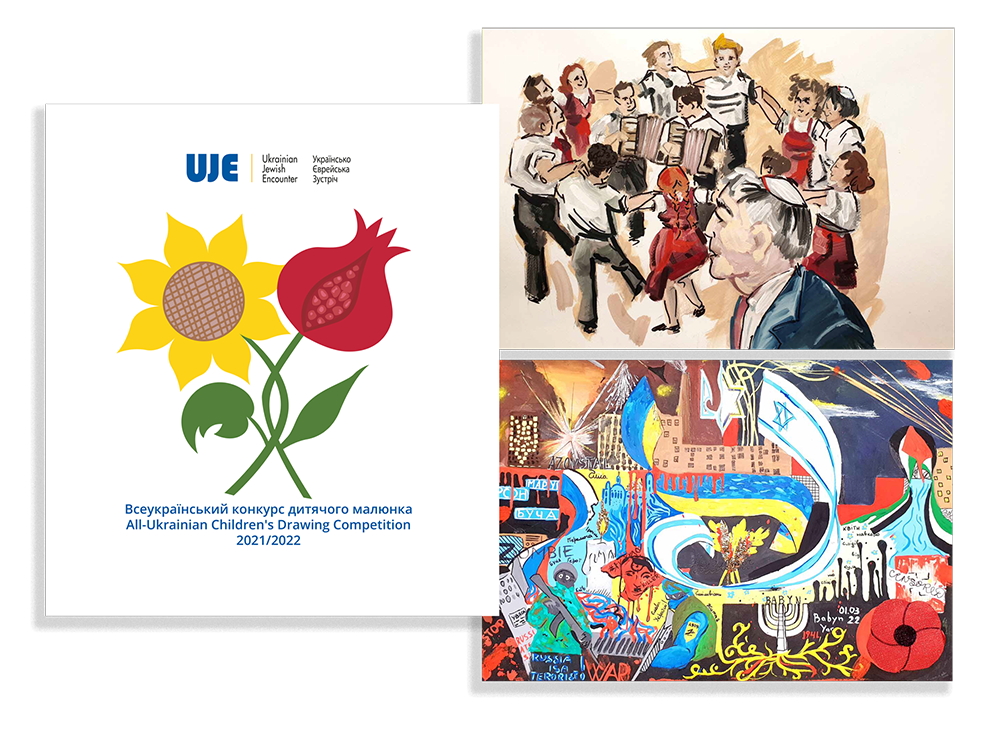
The Ukrainian Jewish Encounter was founded in 2008 with the goal of building stronger relations between Ukrainians and Jews, two peoples who, for centuries, lived side by side on the territory of what is modern-day Ukraine. Since then, in keeping with its motto, "Our stories are incomplete without each other," UJE has sponsored conferences, round-table discussions and research, as well as translations and publication of works the organization anticipates will promote a deeper understanding between the two peoples and an appreciation of their respective cultures.
We offer for the first time the book The Ukrainian-Jewish Encounter: Cultural Dimensions in an eBook format.
The book is a collection of essays that examine the interaction between the Ukrainian and Jewish cultures from the seventeenth century onwards. Written by leading experts from Ukraine, Israel, and other countries, the book presents a broad perspective on parallels and cross-cultural influences in various domains — including the visual arts, folklore, music, literature, and language. Several essays also focus on mutual representation — for example, perceptions of the "Other" as expressed in literary works or art history.
The richly illustrated volume contains a wealth of new information on these little-explored topics. The book appears as volume 25 in the series Jews and Slavs, published by the Hebrew University of Jerusalem since 1993. In several previous volumes, considerable attention is given to the defining role of the Old Testament in Ukrainian literature and art and to the depiction of Jewish life in Ukraine in the works of Nikolai Gogol, Taras Shevchenko, Ivan Franko, Lesia Ukrainka, Vladimir Korolenko, and other writers.
This collection of essays was co-edited by Wolf Moskovich, Professor Emeritus, Hebrew University of Jerusalem, and Alti Rodal, Co-Director of the Ukrainian Jewish Encounter, who also wrote the introduction to the volume. It was published in 2016 by Hebrew University of Jerusalem.
5.3
Click here for a pdf of the entire book.
Judaica in the Lviv Museum of Ethnography and Arts and Crafts: History, contents, and the current situation
Roman Chmelyk (Museum of Ethnography and Arts and Crafts, Lviv)
The cultural heritage of Jews in eastern Galicia originated in the ancient Jewish tradition with its oriental roots, but it developed on Ukrainian ethnic territories within the Polish and Habsburg states, in contact with and under the influence of European culture. All these factors contributed to the originality and uniqueness of the life of the Galician Jews, both everyday and on holy days. Their religion and worldview functioned in the Ukrainian-Polish environment of the border zone between the Orthodox and Catholic worlds. The influence of the multiconfessional, polycultural and international milieus on Jewish spiritual life contributed to the evolution of Judaism as a religion, a philosophical system, and a culture with its literature and arts. The result was the emergence of the cultural phenomenon of Galician Jewry, with its distinctive mentality [Chmelyk 2006, 9–10].
The Jewish culture in Europe at large, and in Galicia in particular, was strongly tied to religion, which regulated all spheres of Jewish life, regardless of state borders. Religion not only affected the distinctive way of thinking about God and the world, but also regulated the details of everyday life, from holiday rituals to the physical appearance of people and their dwellings, to behavioural norms. In the nineteenth century, parallel to the development of modern scholarship about Judaism (as well as the appearance of progressive synagogues and the rise of new religious and ideological movements such as Hasidism and Zionism), there emerged among the Jewish elites an interest in Jewish cultural artefacts. This led to the creation of some important private and museum collections. [Hońdo 2006, 40–50].
The second half of the nineteenth century witnessed the establishment of various museums on the territory of contemporary Ukraine. Museum collections featuring historical, ethnographic, and arts and crafts exhibits came into existence in Kyiv, Dnipropetrovsk, Lviv, and other places. Several museums were established in Lviv, which at that time was one of the most important centres of Ukrainian, Polish, and Armenian political, religious, and cultural life. These included the City Industrial Museum (1874), the Historical Museum (1893), and the Taras Shevchenko Society Museum of Antiquarianism (1895).
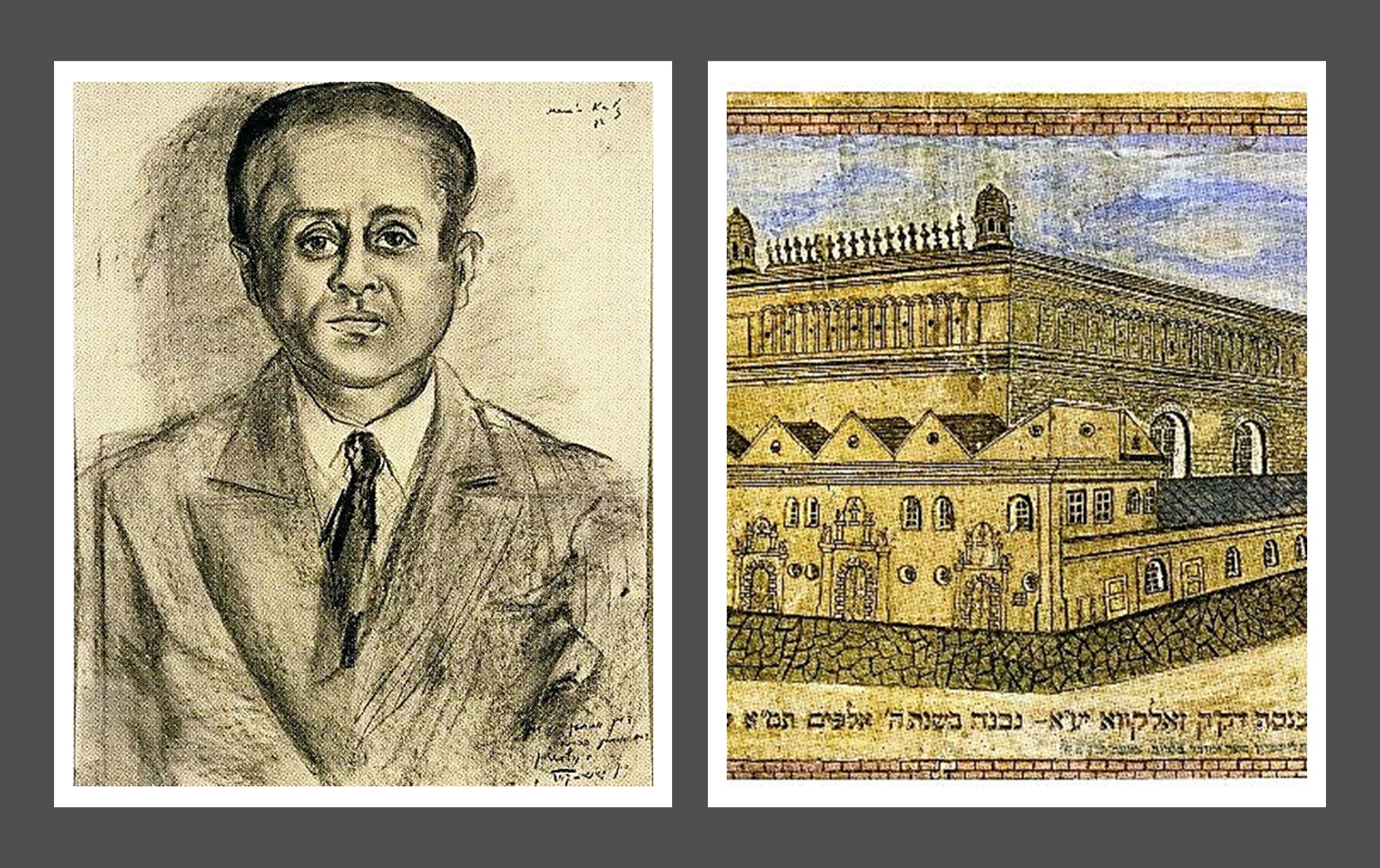
The main motivation behind the creation of the Industrial Museum in the city of Lviv, as for other institutions of this kind, was the idea of recovery and development of crafts that had been refined in ancient arts. A series of industrial exhibitions, accompanied by the subsequent organisation of museum and industrial schools in the majority of large European cities, served as perfect role models [Pavliuk and Chmelyk 2005, 6]. It was the Industrial Museum of the city of Lviv that in the late nineteenth century began to collect the artefacts of traditional Jewish culture, along with the works of Polish, Ukrainian, and Armenian art. Already in 1895, it acquired two lecterns from the synagogue in Yabluniv near Kolomyia. The Museum's Judaica collection received two hundred paper-cuts from the late nineteenth century donated by Professor Julian Zachariewicz [Petriakova 1994, 75]. By the turn of the century, at least two Lviv museums — the City Museum of Crafts and the Taras Shevchenko Society Museum of Antiquarianism — had already assembled interesting collections of Jewish ethnography and arts. At that time, Jewish collections also began to be assembled at the Lviv Historical Museum and at the Jan III Sobieski National Museum [Horban' 2006, 46].
In 1910 Maximilian Goldstein, the famous collector and supporter of Jewish antiquarianism, spoke in favour of creating Jewish Museum in Lviv. But it was only in 1925 that the Jewish community in Lviv managed to form a "Curatorium for the Preservation of Jewish Artistic Heritage." The latter was to register all works of Jewish art, ensure their preservation, and popularize the rich national traditions [Kuratorium 1928, 1–4]. One could therefore say that the tasks and practical activities of the Curatorium completely coincided with the requirements generally placed upon museums.
One also should mention other institutions and measures directed at the study, preservation, and popularization of Jewish culture in Lviv in the early twentieth century. In 1901 the Jewish community in Lviv built a library. In 1910 Goldstein and the artist Joachim Kahane founded the "Circle of the Lovers of Jewish Art," which periodically organised exhibitions of Jewish art, as well as lectures and classes on painting and drawing. In 1925, its functions were taken over by the recently founded "Jewish Literary and Artistic Association." The latter boosted the activities of renowned Jewish collectors in Lviv — including Marek Reichenstein, Michał Toepfer, Karol Katz, Ludwig Feigl and many others [Horban' 2006, 47–48].
An important step towards the creation of the Jewish Museum in Lviv was the exhibition of Hebrew books and other works of Jewish art organised by the Curatorium in 1928. The exhibition took place in the building of the Jewish community and was dedicated to the Congress of Polish Bibliophiles [Glembots'ka 2003, 16]. Naturally, the exhibition privileged printed books and manuscripts, while other artefacts were relatively few in number and came from private collections.
The above-mentioned activities of the Jewish community in Lviv set a good example for other towns in eastern Galicia. For example, the Jewish community in Ternopil organized a separate section of Jewish artefacts at the regional exhibition in 1931. Such measures, however, were sporadic and small in scope [Hartleb 1933, 4].
On 26 February 1933 the Jewish community of Lviv passed a decision to create the Curatorium of the Museum. The rabbi and chairman of the Jewish community council, Doctor Levi Freund, was appointed president of the board of directors. [Horban' 2006, 49–50].
The first large-scale exhibition of Jewish culture in interwar Poland took place at the Lviv Museum of Artistic Crafts in March–April 1933. From the moment of its inception, this museum prioritized the gathering, study, and popularization of artistic crafts of the various peoples and ethnographic groups populating Galicia. Preceding the Jewish exhibition, the museum successfully displayed works of Hutsul and Armenian art. The Jewish exhibition of 1933 featured more than six hundred exhibits from repositories of the Museum of Artistic Crafts, as well as from synagogues in Lviv, Ternopil, and Brody, and from the private collections of Doctor Marek Reichenstein and Maximilian Goldstein. According to the catalogue, all the artefacts were divided into several sections representing the traditional Jewish life cycle, the synagogue, religious holidays (Rosh Hashanah, Yom Kippur, Sukkot, Hanukkah, Purim and Passover), and personal and household items.
One of the curators of the exhibition was Kazimierz Hartleb, subsequently director of the Museum of Artistic Crafts. Henryk Cieśla collaborated in the staging of the exhibition, while Ludwik Lille, a renowned connoisseur of Jewish art, prepared the catalogue. The program of the exhibition also included a one-day seminar on Jewish art [Hoshen 1994, 58–60].
The 1933 exhibition gave a powerful impetus to the creation of a unified Jewish Museum in Galicia. Officially, the latter was opened on 17 May 1934 at the community headquarters, 12 Bernstein Street (today Sholem Aleichem Street). Thus the idea of Maximilian Goldstein was realized by the leader of the Jewish community, the bank director Wiktor Chajes. The collection of the Jewish Museum consisted of three parts:
- collections of the family of Doctor Reichenstein;
- the property of the Association of Friends of the Jewish Museum; and
- the property of the Museum of the Jewish Religious Community. [Schall 1935, 66].
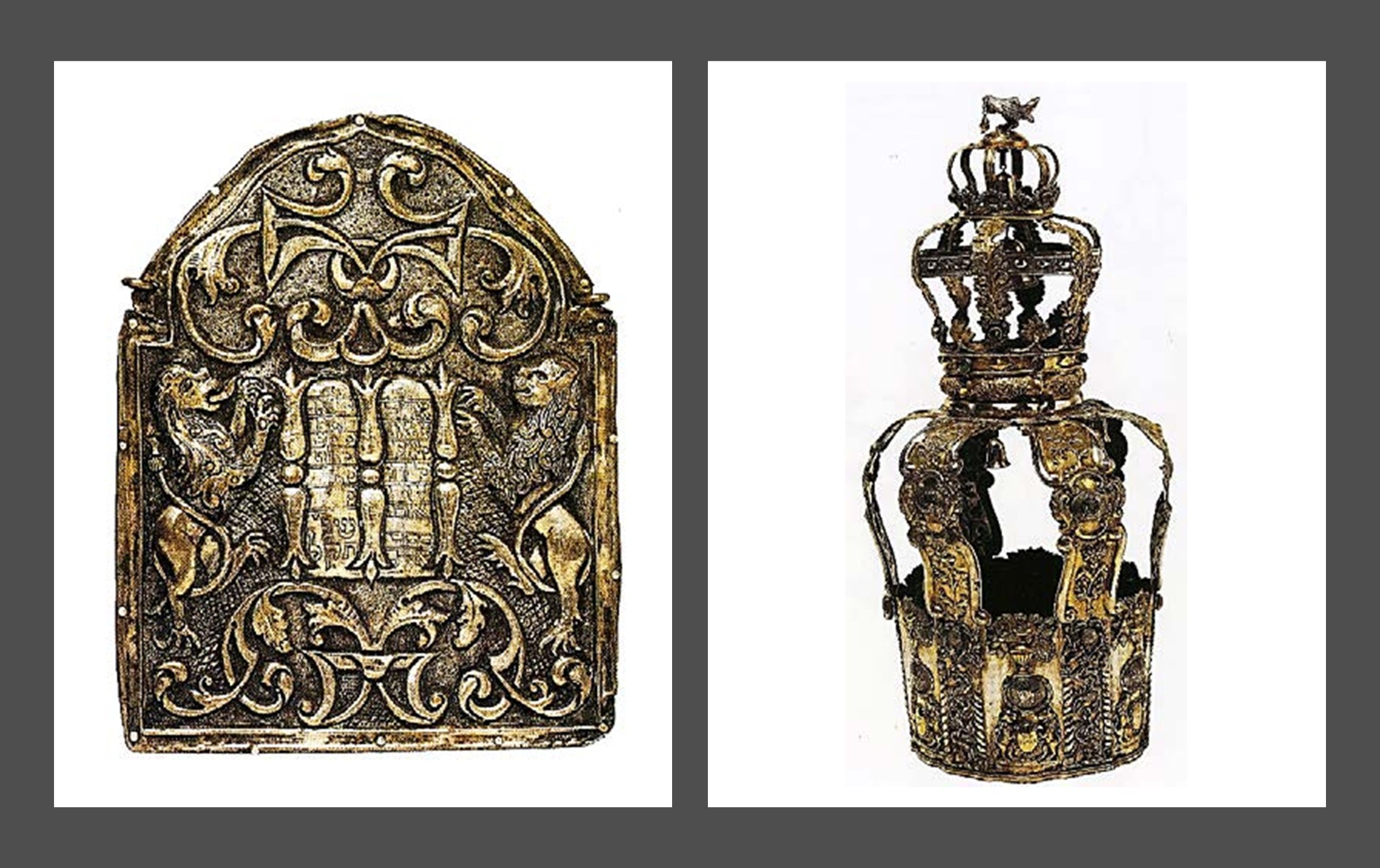
The Museum occupied the third floor of the community building, while its exposition was set in five rooms and in the corridor. Visitors could familiarize themselves with artefacts pertinent to the religious service (crowns and shields of the Torah, Torah ark curtains and valances, etc.), everyday items (paper-cuts, repoussé metalwork, and china), paintings (portraits of prominent members of the Jewish community), and drawings, aquarelles, and photographs of architectural monuments and tombstones. A separate exhibition hall was allocated to the commemoration of the deceased Marek Reichenstein. The Lviv painter, art historian, and collector Ludwik Lille became curator of the museum. The museum was open everyday from 11 a.m. to 3 p.m., with the exception of Jewish holidays, and entry was free of charge [Horban' 2006, 50].
This situation persisted until the start of the Second World War. Following the occupation of western Ukraine by the Red Army in September 1939, a Provisional Administration of the city of Lviv and region was formed, and among other matters began to concern itself with the reorganization of Lviv museums. At the request of the museum directors, on 25 December 1939 the Commission for the Preservation of Cultural Memorials at the Provisional Administration of the Lviv region appointed Goldstein as Director of the Museum of the Jewish Community, which, like many other civic institutions, was subsequently closed. [Hoshen, 1994, 68]. Already on 3 January 1940 Goldstein resumed work at the Museum of Crafts to which the authorities had earlier attached the Museum of the Jewish community. By February 14, in accordance with the decision of the conference of the Lviv regional executive committee, all the collections of the Museum of the Jewish Community had also been transferred there.
Maximilian Goldstein managed to hold on to his private collection during the total nationalization conducted by the Soviet authorities in western Ukraine throughout 1940 and in the first half of 1941. However, during the German occupation, Goldstein decided on 7 July 1941 to transfer his collection to the repository of the Museum of Artistic Crafts, which de facto happened on 30 August 1941 [Horban' 2006, 51].
In 1949, as part of the effort to bring order into existing collections, the Museum of Artistic Crafts handed to the Lviv Region's Picture Gallery (today the Lviv Gallery of Arts) a series of Jewish paintings and graphic works. The numismatic collection from Goldstein's depository went to the Lviv Historical Museum. In 1951 the merger of the Lviv State Museum of Artistic Industry and the State Ethnographic Museum (previously the Museum of the Shevchenko Society) resulted in the creation of the Lviv Museum of Ethnography and Artistic Crafts, which currently possesses one of Europe's largest collections of Jewish traditional art. Thus, the contemporary depository of Judaica artefacts consists primarily of collections of the City Museum of Crafts, the Museum of the Taras Shevchenko Society, the Museum of the Jewish Religious Community, and Goldstein's private collection. In the 1950s to 1970s, as a result of the efforts of the well-known Ukrainian museum activist and art historian Pavlo Zholtovsky, this collection of Judaica received hundreds of additional ethnographic and artistic items. (Zholtovsky found many of these valuable artefacts at the markets or dumping grounds). In 1973 a portion of the Jewish ritual objects was transferred from the Museum of Ethnography (as well as from a few other Lviv museums) to the newly founded Museum of Religion and Atheism, which initially functioned as a unit of the Lviv Historical Museum.
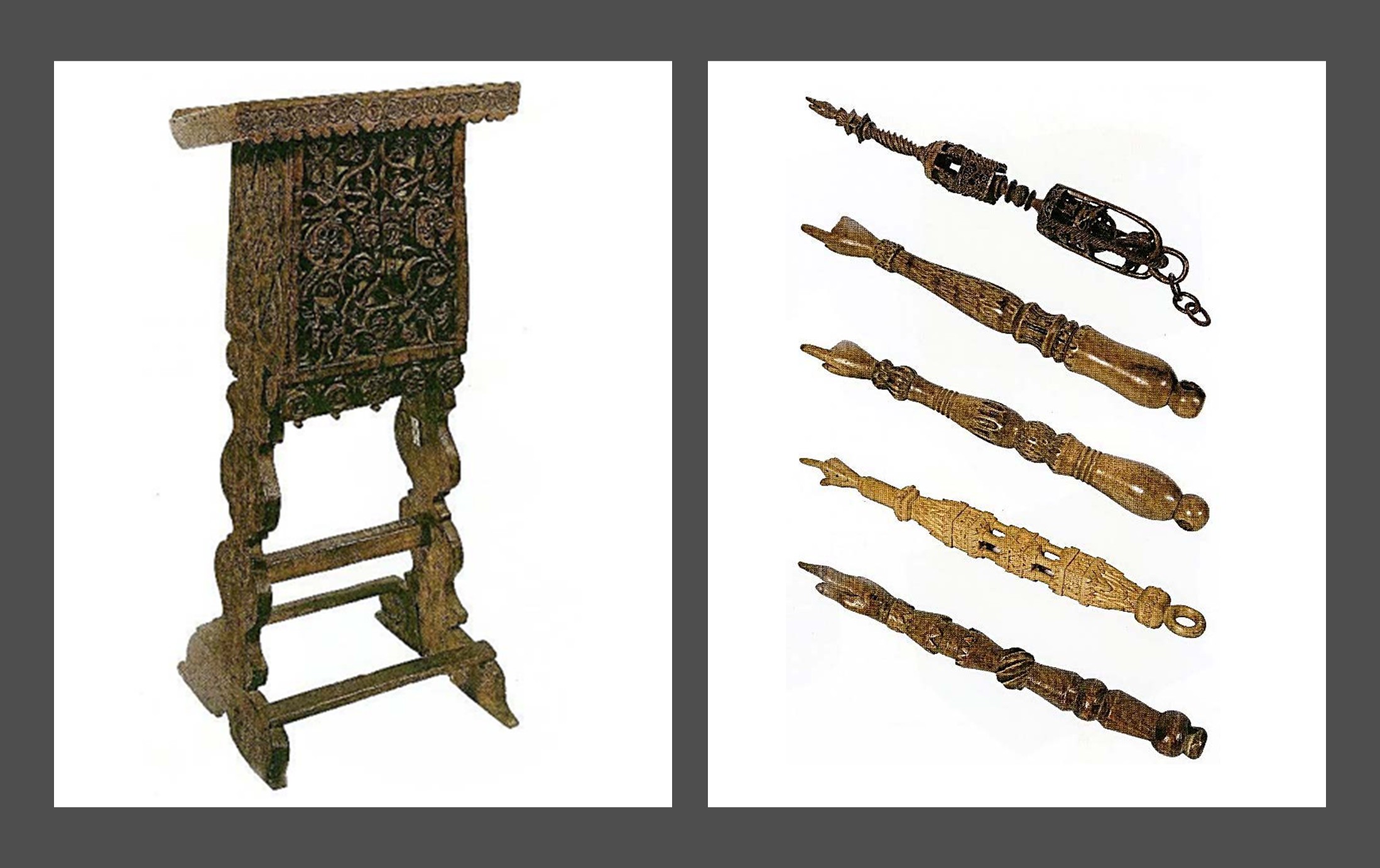
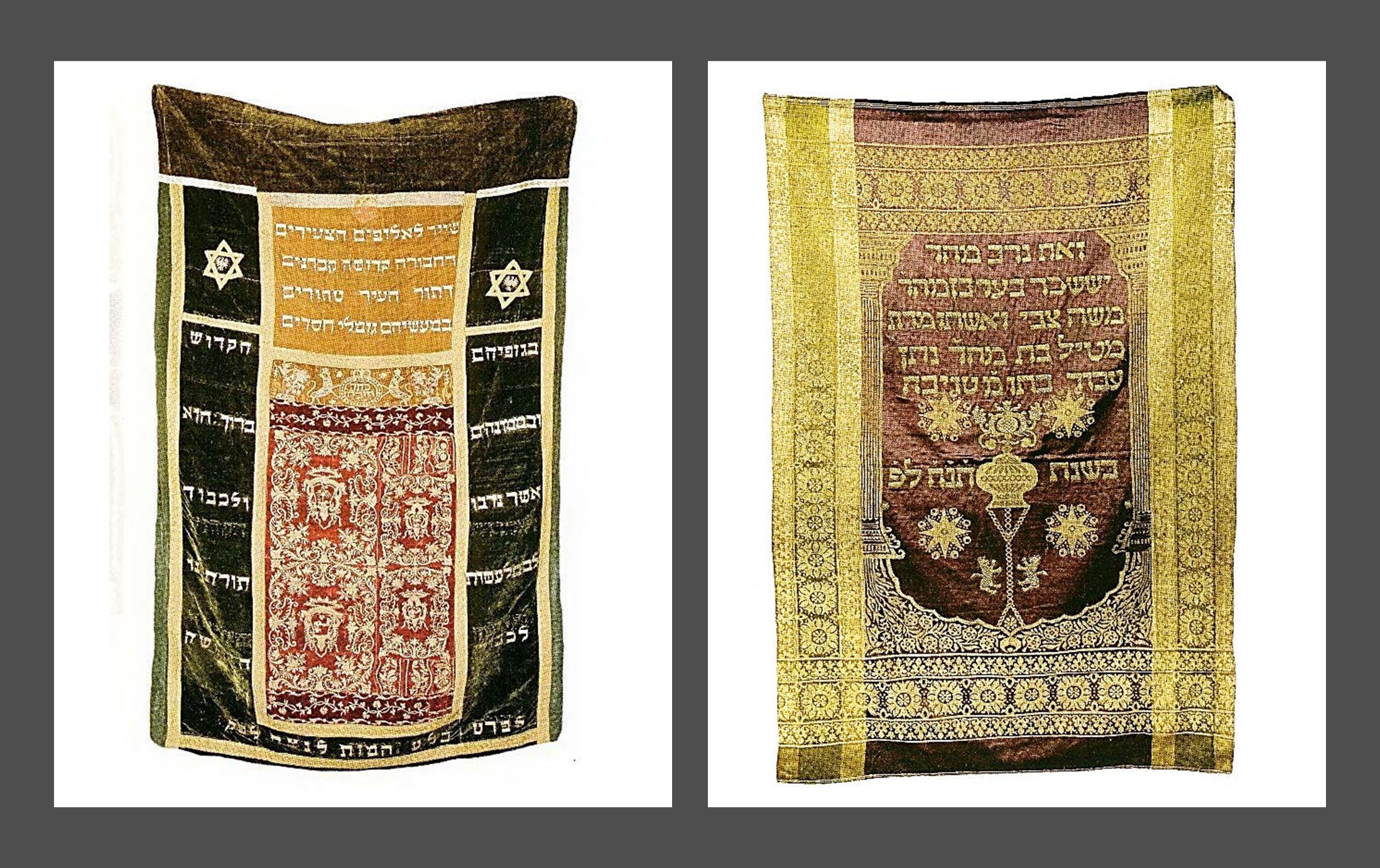
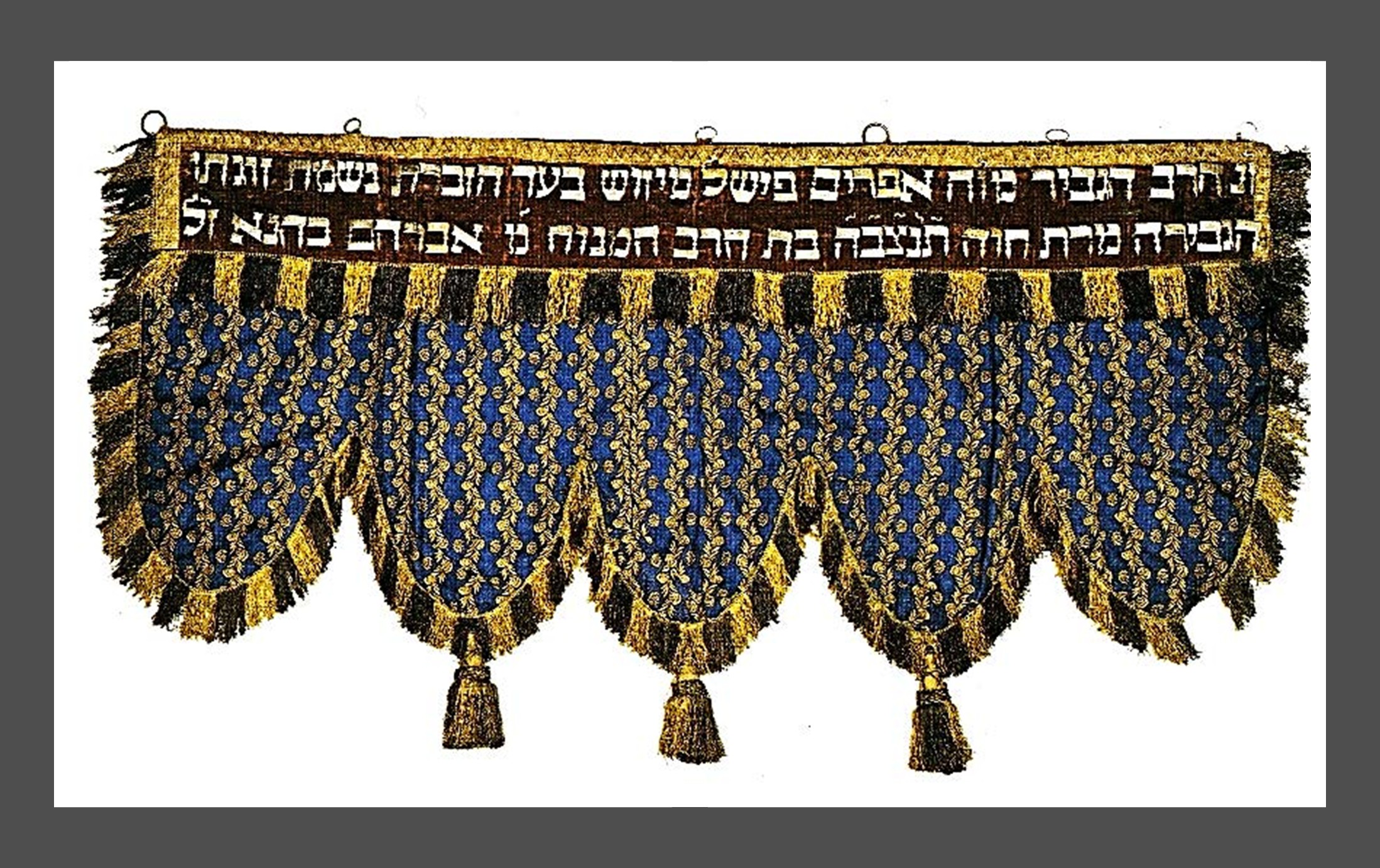
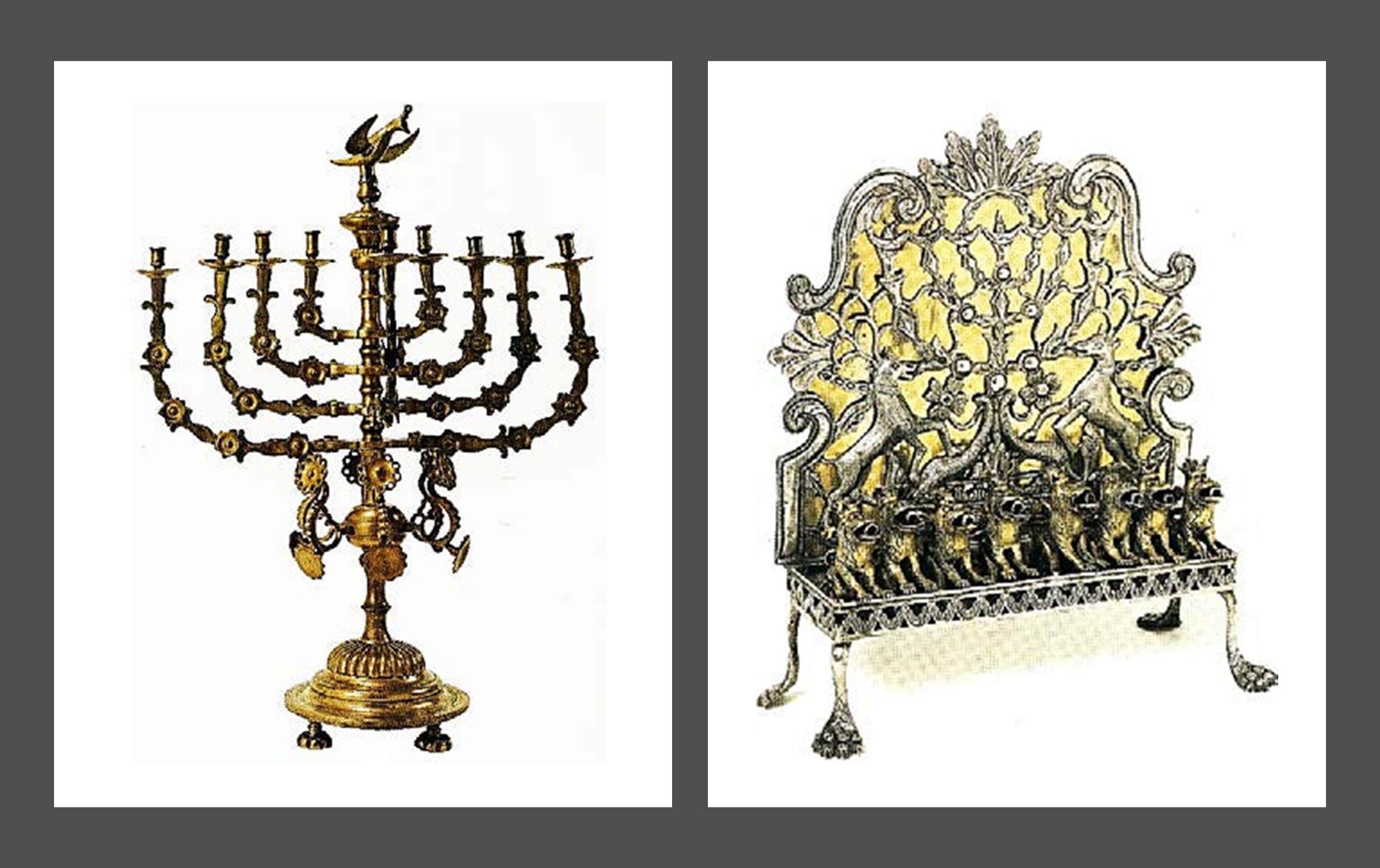
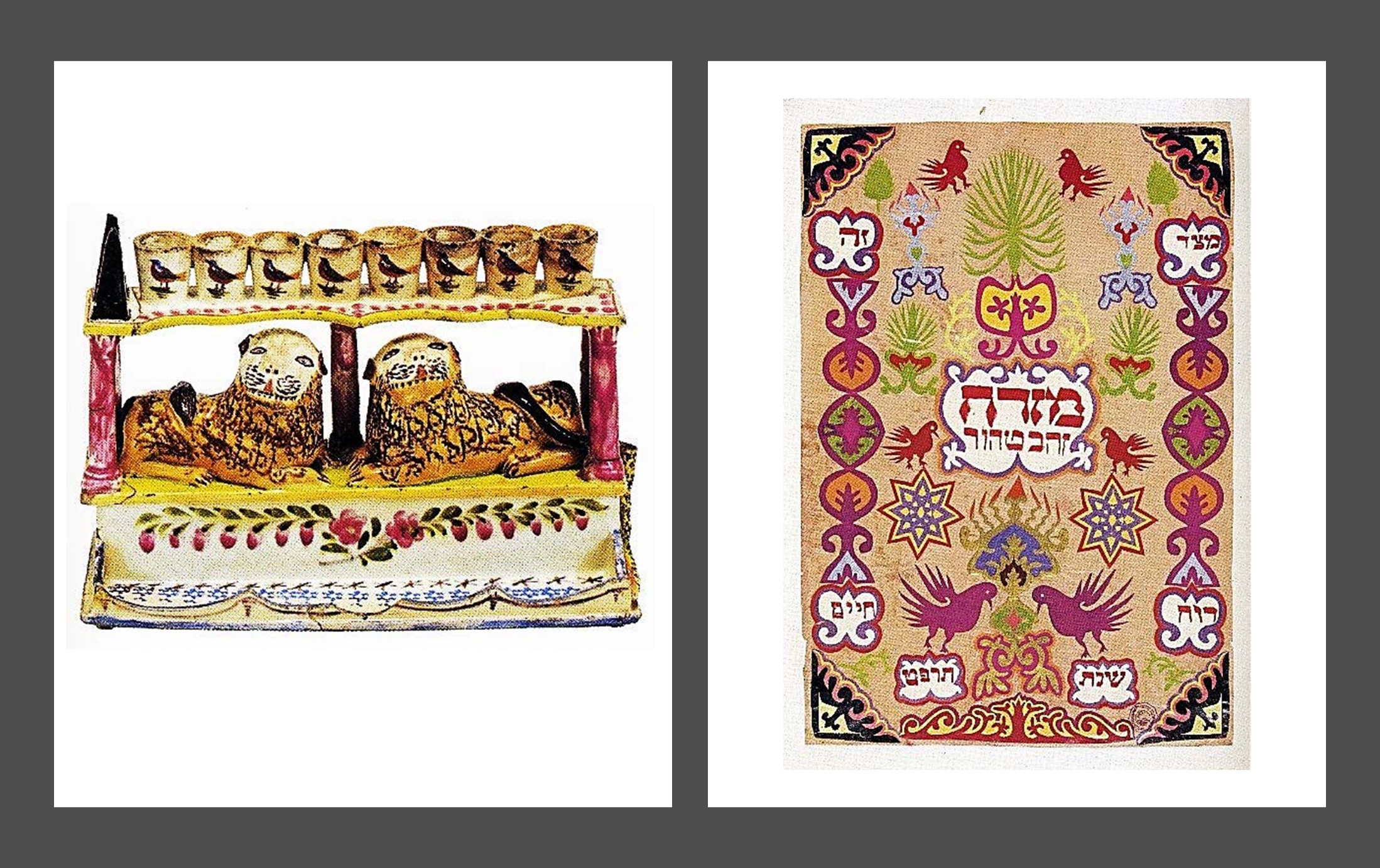
Today our collection of Judaica encompasses ritual objects from the seventeenth to early twentieth centuries, primarily from eastern Galicia, which had been in use in synagogues and in Jewish homes during the holidays, family celebrations, or in connection with everyday rituals. The collection also contains items of everyday usage. The synagogue artefacts include parokhot (curtains for the Torah arks, where Torah scrolls were kept) from the seventeenth to twentieth centuries, and kapporot (Torah ark valances) from the eighteenth to twentieth centuries. The parokhot and kapporot were always made of expensive fabrics and were richly embroidered with ornaments. Dominating the décor were sacral Judaic symbols, for example, the Tablets of the Law, the Torah Crown, and the Star of David, as well as images of lions, birds, and other animals. The almost obligatory elements were inscriptions in Hebrew, which simultaneously served as decorations and informed the readers about the creators of the fabric and the date of its donation. Occasionally, inscriptions bore testimony to the usage of curtains and valances, for instance, during the New Year's service or the ceremony of circumcision. The synagogue items also include Torah mantles (seventeenth to twentieth centuries), cloth bags for matzos (nineteenth century), Torah crowns (eighteenth to nineteenth centuries), Torah shields (eighteenth to nineteenth centuries), wooden, metal, and ivory Torah pointers (nineteenth century), wooden pulpits (eighteenth century), candlesticks, and reflectors (decorative metal plates used to reflect and enhance candlelight and allow for the possibility of evening prayer). All these memorabilia impress not only with their décor, but also with the artistic skill of their creators.
A large group of exhibits consists of religious and holiday clothing items, such as eighteenth and nineteenth century skullcaps, belts, collars, and nineteenth century bodice-pieces etc.
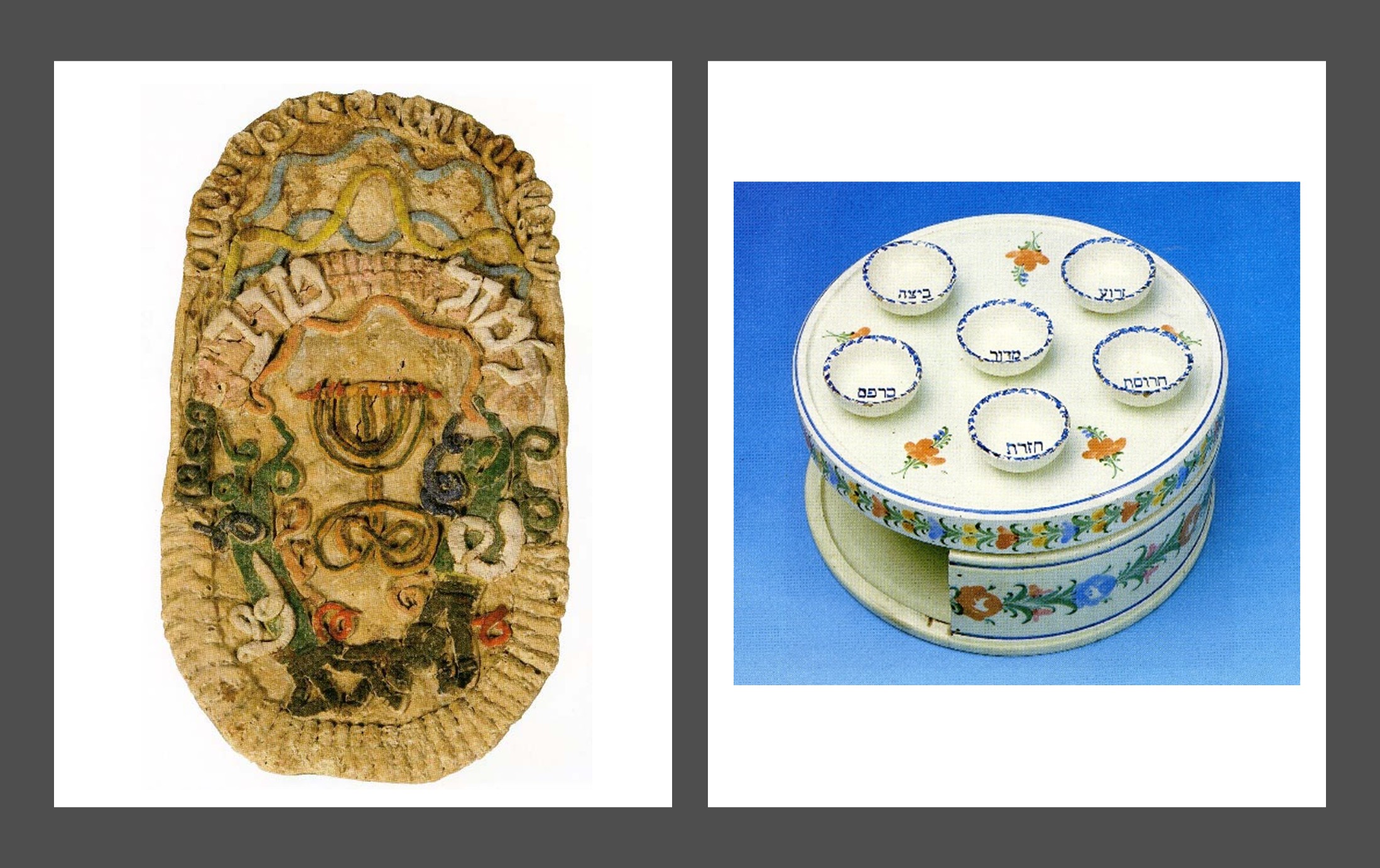
Typical of Jewish prayer garb for the Day of Atonement were belts with metal buckles and depictions of lions, with various inscriptions. Holiday skullcaps, neckbands, and bodice-pieces with plant and geometrical ornaments exhibit beautiful embroideries with golden and silver threads. A significant portion of museum items are associated with everyday and holiday rituals — including ritual kitchen utensils from the nineteenth to twentieth centuries, Passover plates (nineteenth to twentieth centuries), Hanukkah lamps (eighteenth to nineteenth centuries), and metal spice boxes (eighteenth to nineteenth centuries). In the collections of the Museum of Ethnography and Crafts one could find things that accompanied a person from the time of birth until the day of death, including items used during various rituals and celebratory ceremonies, such as circumcision and weddings, as well as items of everyday life. Of some interest are paper-cuts prepared specifically for the holiday of Shavuot, wedding rings from the nineteenth century, wooden and metal mezuzot (eighteenth to twentieth centuries), metal cauldrons (eighteenth to nineteenth centuries), wooden caskets, snuffboxes (late nineteenth to early twentieth century), drawings, lithographs, aquarelles, and other memorabilia.
During the Communist period, there was little interest in the collection, and organising or popularizing it was out of the question. The situation changed only in the late 1980s. The national renaissance in Ukraine created favourable conditions for the development of national-cultural associations. Simultaneously, state institutions began to actively popularize the cultural heritage of Ukraine's national minorities. In February–March 1990, the Museum of Ethnography and Artistic Crafts organised the exhibition Traditional Jewish Art in the Seventeenth to Twentieth Centuries, the first of its kind on the territory of the Soviet Union. The conception of the exhibition came from the long-standing museum worker and Doctor of Arts, Faina Petriakova, who subsequently became the curator of the exhibition. That same year, the Jewish memorabilia were successfully exhibited at the Palace of Youth in Moscow. Residents of Kyiv had an opportunity to view the exhibits from our museum's collection of the art of Galician Jews in October 1991.
In 1993 the exhibition Treasures of the Galician Jewish Heritage: Jewish Collection from the Museum of Ethnography and Artistic Crafts in Lvov made its first trip abroad — to Kraków, the second most significant city of interwar Galicia. The trip was undertaken at the request of the Museum of History of Kraków. It was in Kraków that the first postwar bilingual (Polish-English) catalogue of our collection of Judaica was printed.
From Kraków, the slightly modified exhibition travelled to Tel Aviv. In 1994 it was exhibited by our partner institution, the Museum of the Jewish Diaspora (Beit Hatfutsot). The latter prepared not only a beautiful exposition but also a detailed catalogue, Treasures of Jewish Galicia: Judaica from the Museum of Ethnography and Crafts in Lvov, Ukraine. The exhibition in Tel Aviv was to be followed by a tour of the United States. Unfortunately, the tour got cancelled because of the arrest of the collection by an Israeli court due to an unfounded property claim by one of Goldstein's indirect heirs. Our Israeli partners, the Ministry of Foreign Affairs of Ukraine, and the Ministry of Culture of Ukraine did everything possible to secure the return of the entire collection to Ukraine in 1996. One should note that this unfortunate incident had a significant resonance in Ukraine and created a tense atmosphere around our collection. For several years following the return to Ukraine, the exhibits remained in the repositories of our museum. Only in the year 2000, on my initiative, was a tour of cities in eastern Ukraine, including Dniprodzerzhynsk (2000), Dnipropetrovsk (2000), and Zaporizhzhia (2001), organised. The exhibition provoked a great deal of interest not only among the local Jewish communities, but also among other residents of the region, since it gave them an opportunity to learn about the little-known aspects of the history of Ukraine relating to the Jewish heritage.
In 2002, upon the request of Thomas Mueller, the director of the Shloessberg Museum in Chemnitz (Germany), the exhibition Treasures of Jewish Galicia was also organised in that city on the occasion of the opening of the new synagogue. The main goal of the exhibition was to display sacral memorabilia of the synagogue and the interior of a Jewish household. The organizers paid particular attention to items ornamented by the so-called "Spanish technique." In March–October 2005, on my initiative, the exhibits of Jewish art from our collection were displayed at the Ethnographic Museum Schloss Kittsee in Austria. The latter is an affiliate of the Vienna Ethnographic Museum. One should also note that earlier our joint Austrian-Ukrainian research project on Boiko and Hutsul lands had concluded with the exhibition on the Boiko and Hutsul highlanders in the Carpathian Mountains in the twentieth century, which took place at Kittsee. The active long-term collaboration with many Polish museums, which included scholarly exchange and sharing of literature, allowed us to expand the thematic range of our work. Traditional Ukrainian and Polish studies were now complemented by Judaica. One result of this cooperation was the travelling exhibition Galician Jewry Culture in the Collections of the Lviv Museum of Ethnography and Crafts, organised with the active participation of the Regional Museum in Stalowa Wola and the Historical Museum of the City of Gdańsk. This exhibition was displayed in Stalowa Wola, Gdańsk, Szczeczin, and Katowice. A detailed trilingual (Polish-Ukrainian-German) catalogue accompanied the exhibition.
In 2008 we approached the Embassy of Ukraine in Canada with a proposal to organise a tour of this exhibition in various Canadian cities in cooperation with the Embassies of Israel and Poland. Unfortunately, this idea has not yet been realized. One should note that throughout the years of Ukraine's independence no other collection of our museum was popularized as actively in Ukraine and abroad, as was our collection of Judaica. Items from our collection have repeatedly been cited in scholarly works by researchers from around the world. We are prepared to cooperate with all organizations and individuals interested in researching, preserving, and publicizing the Judaica collection at the Museum of Ethnography and Crafts. The previous activities of our Museum have aimed to realize the spiritual outlook of the Ukrainian Greek Catholic Metropolitan Andrei Sheptytsky, who during the opening ceremony of the National Museum in Lviv on 13 December 1913 made the following statement: "We do not want to be guardians of coffins, but would rather be witnesses of resurrection."
References
Chmelyk, Roman. 2006. Vidrozhennia znyshchenoho svitu. In Kul'tura halytskykh ievreiv zi zbirok Muzeiu etnografii ta khudozhnioho promyslu u L'vovi, 9–10.
Glembots'ka, G. 2003. Iudaika. Z istorii pryvatnoho ta muzeinoho kolektsionuvannia u Lvovi. In Obrazy znykloho svitu. Ievrei Skhidnoi Halychyny (seredyna XIX st.-persha tretyna XX st.). L'viv.
Horban', I. 2006. Oseredky zberihannia kul'turnoi spadshchyny ievreis'koho narodu u L'vovi: istoriia ta suchanyi stan. In Ievrei u Liublini — Ievrei u L'vovi: Mistsia-Pamiat'-Suchasnist', 46–52. Lublin.
Leszek, Hońdo. 2006. Ievrei u halychyni ta ikhnia kul'tura. In Kul'tura halyts'kykh ievreiv zi zbirok Muzeiu etnografii ta khudozhnioho promyslu u L'vovi, 40–50.
Kuratorium. 1928. Kuratorium Opieki nad Zabytkami Sztuki Żydowskiej Gminie Wyznaniowej we Lwowie, Katalog wystawz książki lwowskiej hebrajskiej i zabytków sztuki żydowskiej, 1–4. Lwów.
Pavliuk, S. and Chmelyk R. 2005. Skarby Muzeiu etnografii ta khudozhnioho promyslu Instytutu narodoznavstva. L'viv: NAN Ukrainy.
- Hartleb, Obecna wystawa zabytków żydowskiego przemysłu artystycznego, [w:] Tymczasowy Katalog wystawy żydowskiego przemysłu artystycznego. Lwów, 1933.
Hoshen, Harel S. 1996. Research and Collection of Judaica in Lvov: 1874–1942. In Treasures of Jewish Galicia: Judaica from the Museum of Ethnography and Crafts in Lvov, Ukraine, ed. S. Harel Hoshen, 51–73. Tel Aviv: Beit Hatfutsot, The Nahum Goldmann Museum of the Jewish Diaspora,
Petriakova, F.S. 1996. The Collection of Jewish Art of the Museum of Ethnography and Crafts in Lvov. In Treasures of Jewish Galicia: Judaica from the Museum of Ethnography and Crafts in Lvov, Ukraine, ed. S. Harel Hoshen, 75–80. Tel Aviv: Beit Hatfutsot, The Nahum Goldmann Museum of the Jewish Diaspora.
Schall, Jakub. 1935. Przewodnik po zabytkach żydowskich m. Lwowa i historia żydów Lwowskich w zarysie. Lwów.