




"The Ukrainian-Jewish Encounter: Cultural Dimensions": Part 6.1
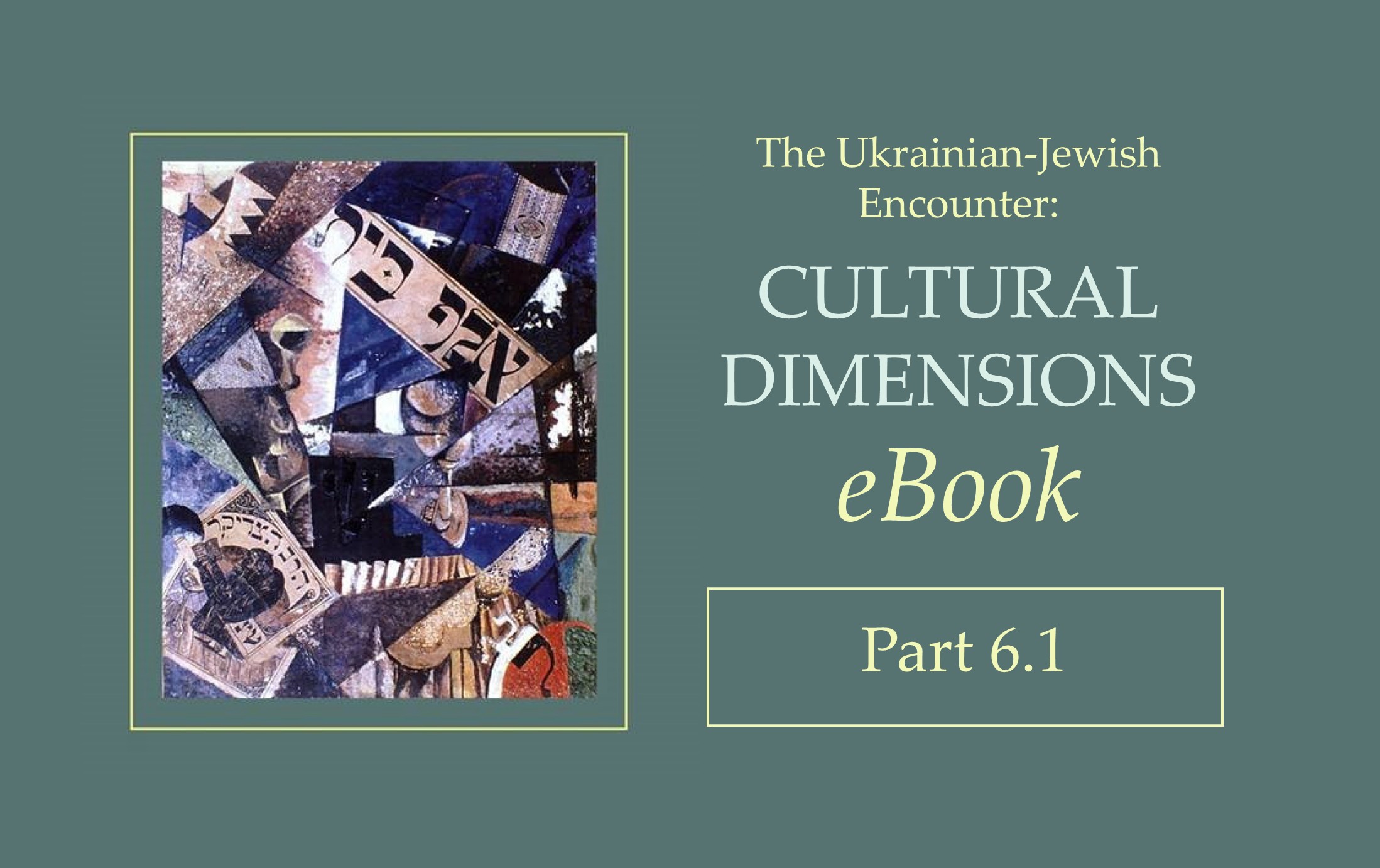
The Ukrainian Jewish Encounter was founded in 2008 with the goal of building stronger relations between Ukrainians and Jews, two peoples who, for centuries, lived side by side on the territory of what is modern-day Ukraine. Since then, in keeping with its motto, "Our stories are incomplete without each other," UJE has sponsored conferences, round-table discussions and research, as well as translations and publication of works the organization anticipates will promote a deeper understanding between the two peoples and an appreciation of their respective cultures.
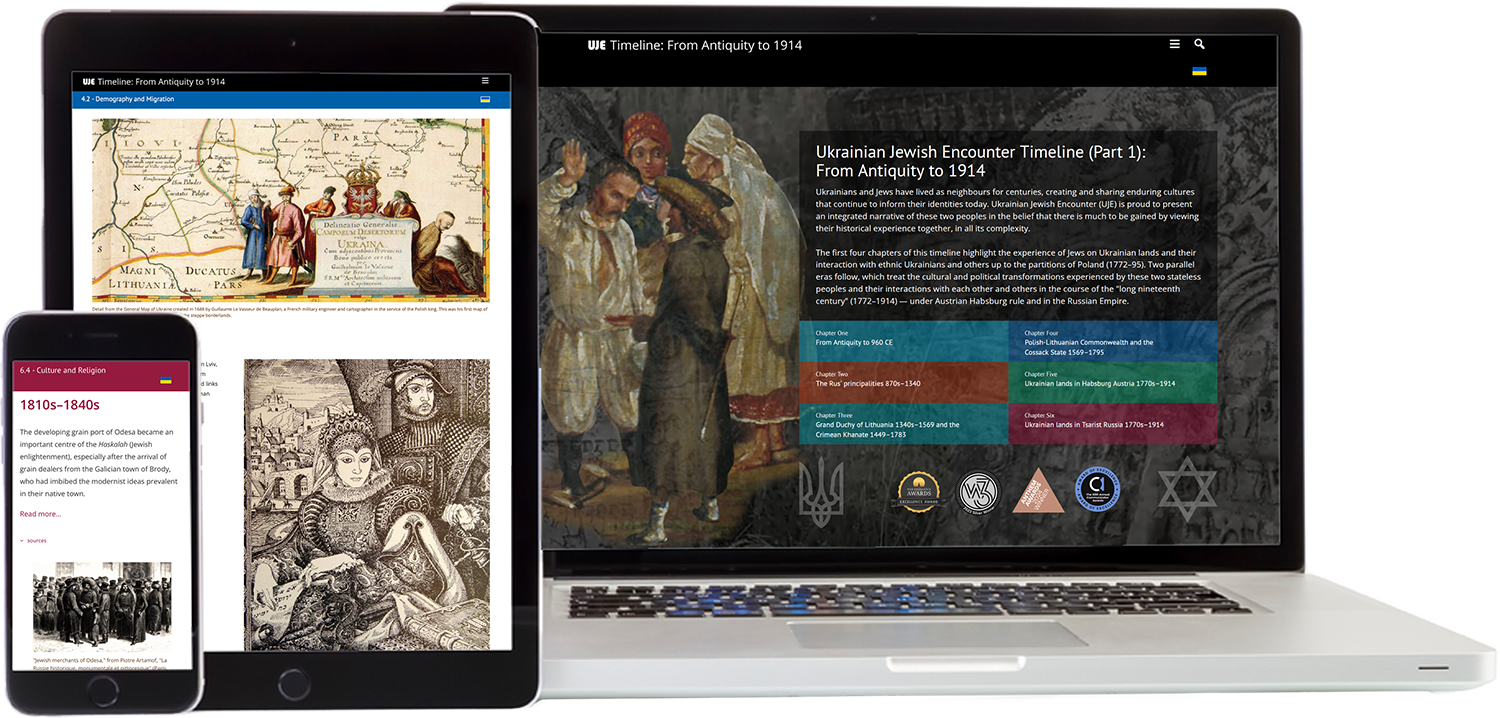
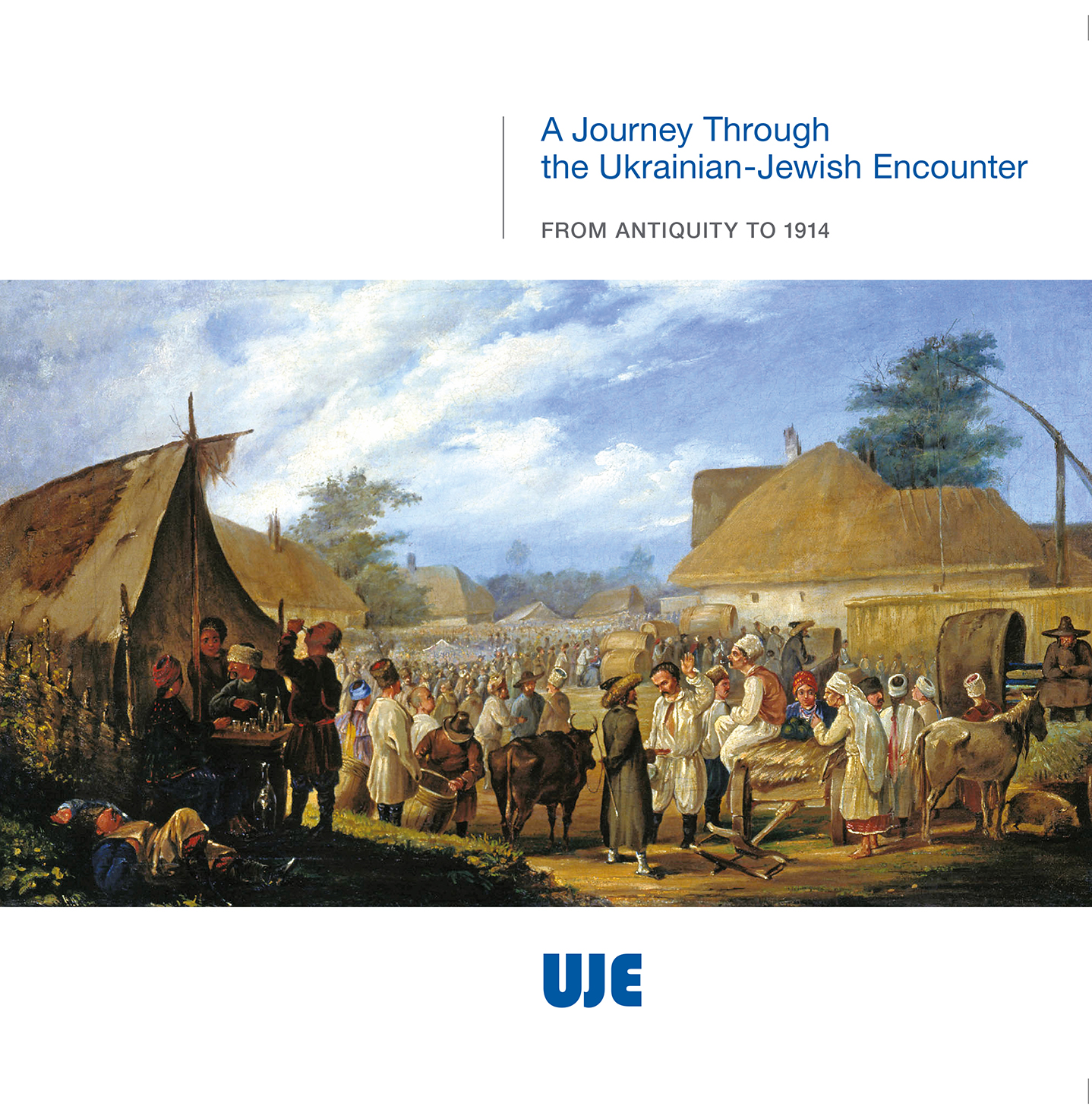
We offer for the first time the book The Ukrainian-Jewish Encounter: Cultural Dimensions in an eBook format.
The book is a collection of essays that examine the interaction between the Ukrainian and Jewish cultures from the seventeenth century onwards. Written by leading experts from Ukraine, Israel, and other countries, the book presents a broad perspective on parallels and cross-cultural influences in various domains — including the visual arts, folklore, music, literature, and language. Several essays also focus on mutual representation — for example, perceptions of the "Other" as expressed in literary works or art history.
The richly illustrated volume contains a wealth of new information on these little-explored topics. The book appears as volume 25 in the series Jews and Slavs, published by the Hebrew University of Jerusalem since 1993. In several previous volumes, considerable attention is given to the defining role of the Old Testament in Ukrainian literature and art and to the depiction of Jewish life in Ukraine in the works of Nikolai Gogol, Taras Shevchenko, Ivan Franko, Lesia Ukrainka, Vladimir Korolenko, and other writers.
This collection of essays was co-edited by Wolf Moskovich, Professor Emeritus, Hebrew University of Jerusalem, and Alti Rodal, Co-Director of the Ukrainian Jewish Encounter, who also wrote the introduction to the volume. It was published in 2016 by Hebrew University of Jerusalem.
6.1
Click here for a pdf of the entire book.
Sharing the divided past: Symbols, commemorations, and representations at Babyn Yar
Georgii Kasianov, (Institute of History, National Academy of Sciences of Ukraine, Kyiv)
This article presents an overview of the different representations of history and memory of the mass killings that took place in 1941–43 at Babyn Yar in Kyiv, Ukraine. The account describes how the tragedy was visualized and represented in different memorialisation and commemorative projects, and how — from Soviet times to independent Ukraine — Babyn Yar has become a field for competition of memories. [1]
The first attempt to commemorate the Babyn Yar victims dates from as early as 1945. The government of Soviet Ukraine (Sovnarkom) and the Central Committee (CC) of the Communist Party in Ukraine (CPU) issued a decree "On Construction of the Monument to Those Who Perished in Babyn Yar" (13 March 1945). In 1946 the Babyn Yar monument was included in the register of new monuments to be erected in the Ukrainian SSR, and fifty percent of the funds planned for the construction work were included in the state budget. The design of the monument was undertaken by O. Vlasov and I. Kruglov.
These plans were stopped by the central authorities, possibly due to the start of the ideological campaigns of 1946–51. After 1951, the Babyn Yar terrain was used for collecting pulp from a brick factory nearby. There were plans to fill the ravines of Babyn Yar with stones, sand, and cement, and to create a recreational park on this land. On 13 March 1961 the dam at Babyn Yar failed after heavy rains, with the result that hundreds of tons of pulp flooded the neighbouring area. Officials reported that 146 people died in the catastrophe, but popular estimates pointed to over 1,500 victims. During Khrushchev's "Thaw," intellectuals in Kyiv and Moscow commenced a public campaign for the commemoration of the wartime victims at Babyn Yar. Yevgeny Yevtushenko wrote the poem "Babi Yar", which began with the words: "There is no monument at Babyn Yar," and launched a clear anti-judeophobia appeal. The opening part of Dmitri Shostakovich's Symphony No. 13 in B-flat minor (1962), based on Yevtushenko's poem, was devoted to Babyn Yar.
In 1965, the Ukrainian SSR authorities decided to establish a monument to Babyn Yar victims. The plan was that the monument would be dedicated by September 1966, the twenty-fifth anniversary of the tragedy. A closed competition was announced, and about sixty projects were presented to the commission. The guest-book at the closed exhibition was filled with occasional antisemitic notes.
The special selection committee did not reach any decision, and under pressure from officials, the discussions gradually turned to the idea that the monument should be devoted to the memory of the Soviet soldiers, the POWs who were killed at this site. The competition was halted, the committee dispersed, and a new competition was announced. The new competition was also soon cancelled; the project proposed to the authorities presented a huge figure of a Soviet soldier holding a flag. [2] This project was personally rejected by Petro Shelest, the First Secretary of the CPU. Another project was stopped — supposedly because the memorial plan reportedly contained the image of the Star of David that would be seen from an airplane. [3]
Finally, a memorial stone was established close to the site of killings, bearing the following text in Ukrainian: "On this site there will be a monument to the Soviet people, victims of the crimes of fascism during the temporary occupation of Kyiv in 1941–1943."
On 29 September 1966, the twenty-fifth anniversary of the massacres, an informal meeting initiated by young Jewish activists and supported by Ukrainian intellectuals (Ivan Dziuba, Yevhen Sverstiuk) took place at the site. The speech that Dziuba delivered, about Ukrainian-Jewish relations, circulated in samvydav (self-published newsletters/journals), and was occasionally used as corpus delicti during the repressions against dissidents. The speech was devoted to the solidarity of Ukrainians and Jews in their sufferings and tragedies.
The site itself then became a place for informal pilgrimage, commemorative gathering, and protest actions for Jews in the Soviet Union. According to the memoirs of participants, the first meeting occurred in September 1968, the last in 1981. On several occasions, the number of participants reached almost a thousand. Only four people attended the last gathering, as the rest were identified and detained by militia; sometimes people were stopped at railway and bus stations and sent back.
In the meantime, continuous public appeals to the authorities to announce the project competition results and to begin construction of the monument were ignored. However, in the second half of 1960s, the issue attracted international attention. The writer Viktor Nekrasov, who was not allowed to return to the USSR after one of his international trips, did his utmost to organize public pressure from the outside. As a result, an open conflict occurred between Nekrasov and the Ukrainian SSR representative at one of the UNESCO sessions.
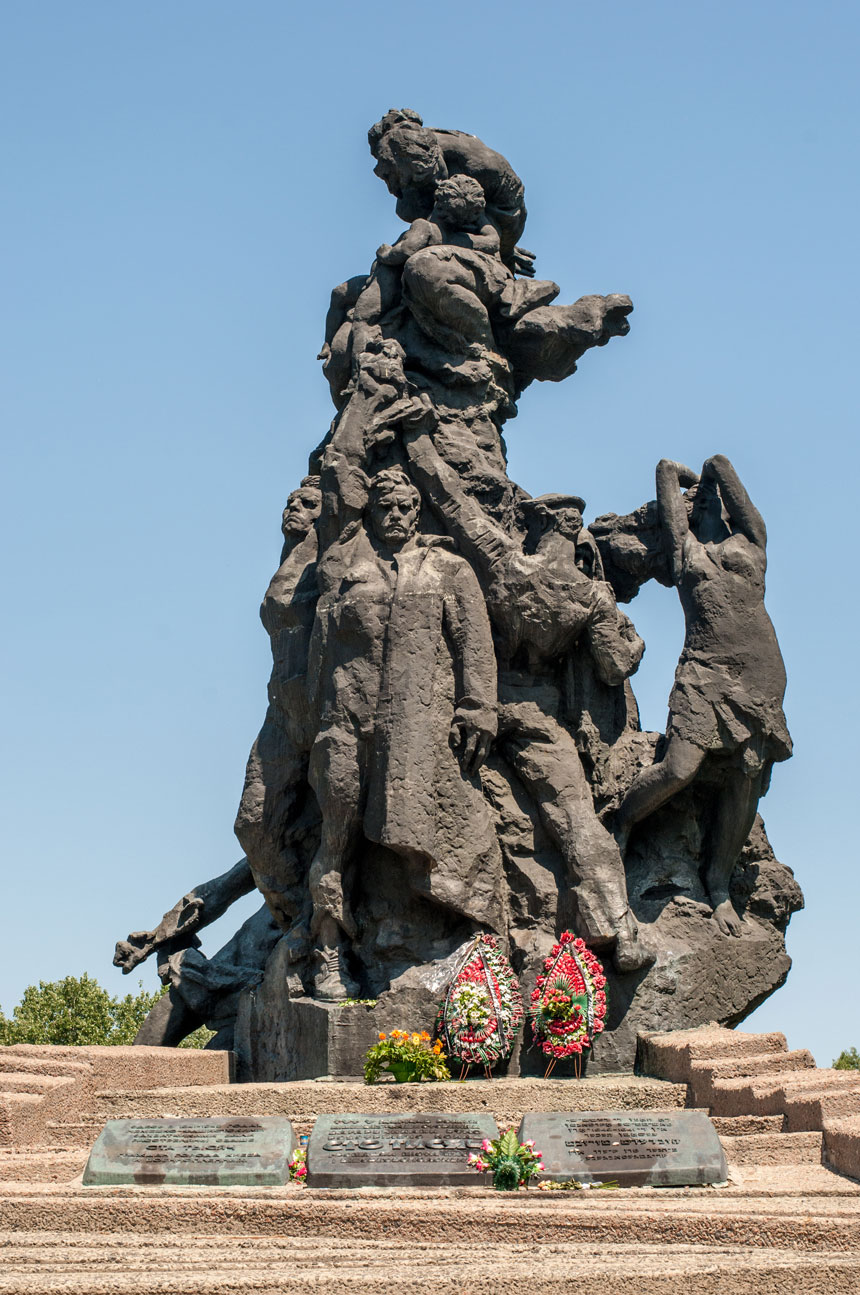
Subsequently, a new project was commissioned to the group of Kyiv architects and sculptors headed by the sculptor M. Lysenko and the architect A. Ignashchenko. The preparatory work began in 1974, and an official memorial monument was opened to the public in July 1976. Preliminary discussions about the dedication text focused mostly on the topic of avoiding the mention of Jewish victims. It was absolutely unacceptable to the official authorities that Jews be mentioned as the primary victims. The discussions about "to whom it may concern" culminated in the following text in Russian: "Here, in 1941–1943, more than 100,000 citizens of Kyiv and prisoners of war were shot by the German-Fascist invaders."
In the years that followed, the authorities largely neglected the monument, as official commemoration policies focused on military heroics. The Monument of Eternal Glory and the Tomb of the Unknown Soldier erected on 6 November 1957 (the anniversary of the liberation of Kyiv in 1943) became an official commemoration site. The occasional official commemorations at Babyn Yar were used primarily to counteract the unofficial ones mentioned above.
Since 1991, the ideological restrictions imposed by the Communist regime have been lifted. The Soviet version of the Babyn Yar tragedy was openly confronted and disputed from the perspectives of different "national" memory projects. Babyn Yar was turned into a new battlefield — this time for competing memory projects, to bolster different versions of history, and even for discussions about the contemporary state of affairs in inter-ethnic relations in Ukraine.
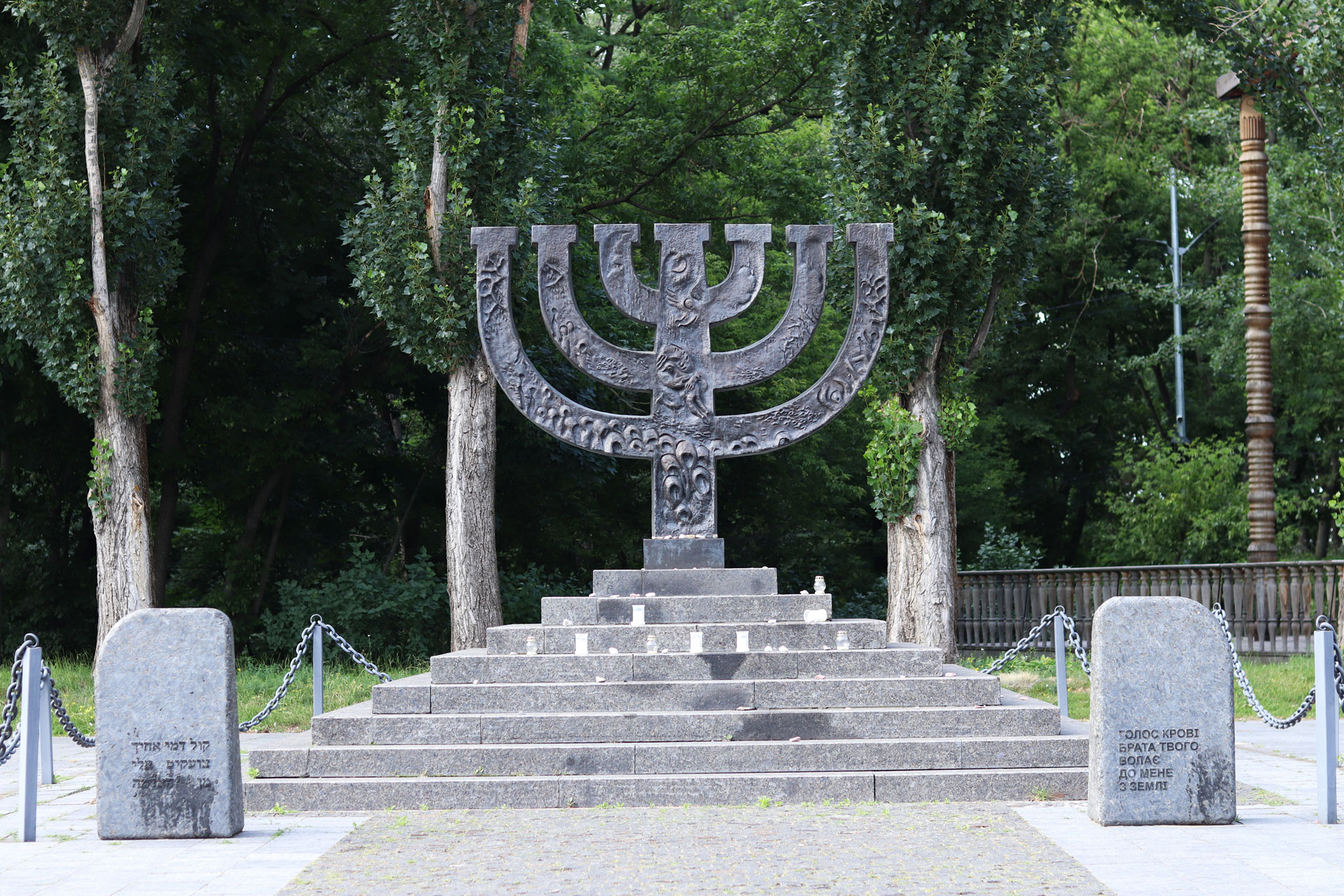
On 29 September 1991, the Menorah monument was erected close to the sites of mass shootings. The monument almost immediately became an object of vandalism. The president of Israel, Moshe Katsav, visited the site in January 2001. In the years that followed, the memorial plaque, with the words "And my sorrow is always with me," was destroyed several times, and the monument itself was occasionally defaced by vandals. In 2006, unknown vandals once again attacked the monument and a militia patrol was sent in. It was the sixty-fifth anniversary of the mass killings, and there was concern that the shameful neglect of the monument by the authorities might provoke an international scandal. [4]
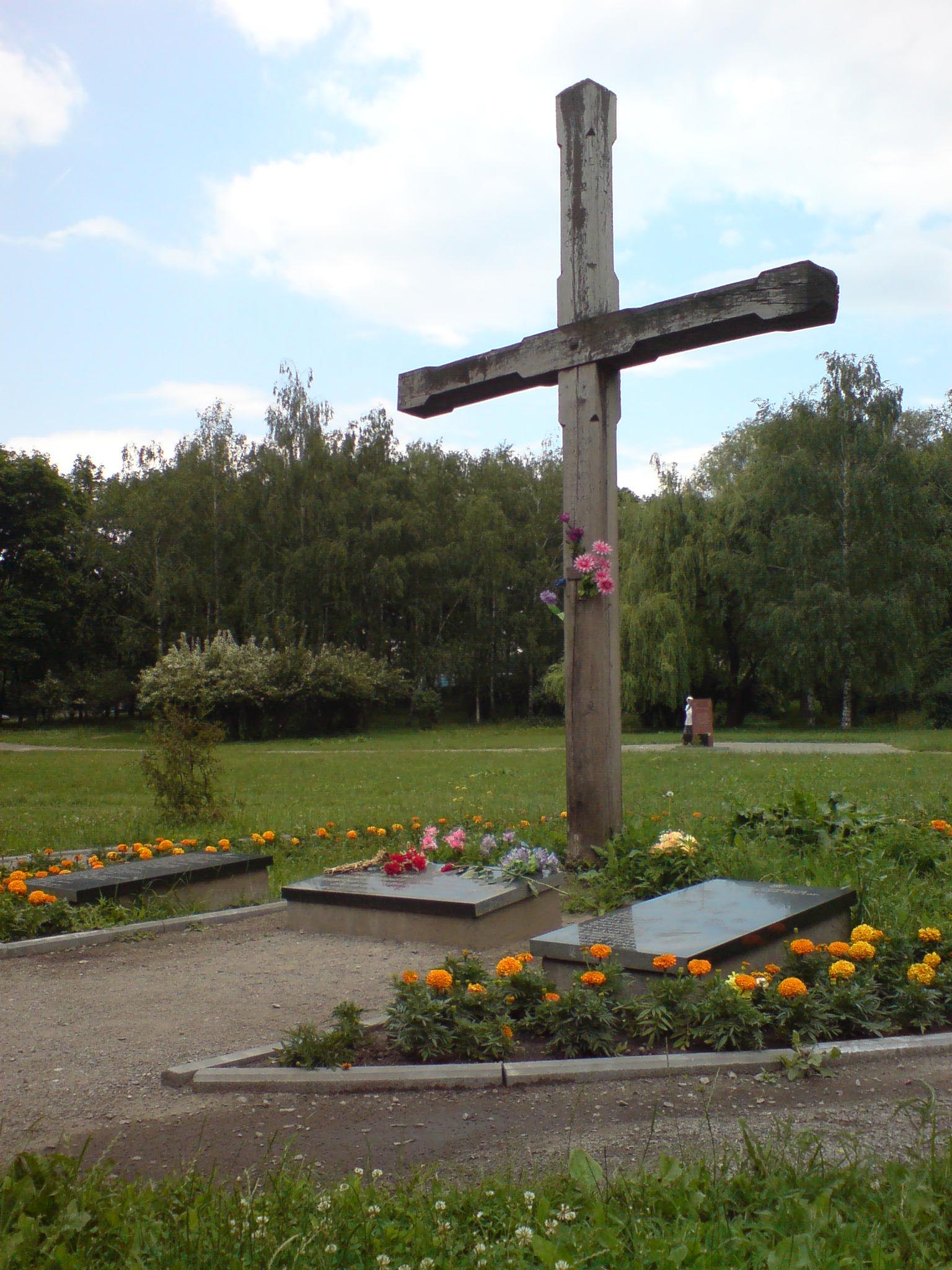
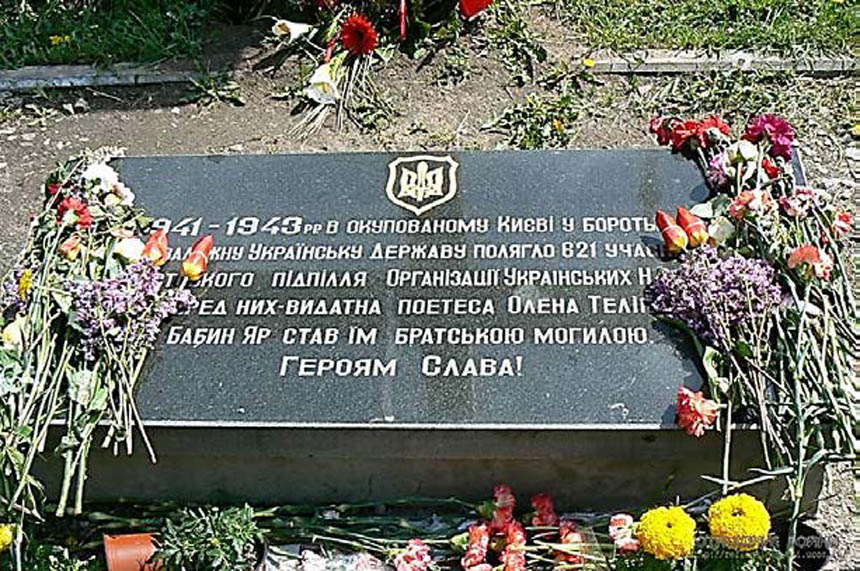
By this time other monuments appeared on the site. On 21 February 1992, a memorial cross was erected, dedicated to members of the Organisation of Ukrainian Nationalists (OUN) said to have been executed at Babyn Yar in 1942. The text at the renovated monument stated the following: "In 1941–1943, in occupied Kyiv, 621 members of the OUN have fallen in the struggle for an independent Ukrainian state. Babyn Yar has become a bed of honour for them." In 2009–2010 this cross also became an object of acts of vandalism committed by unknown persons. [5]
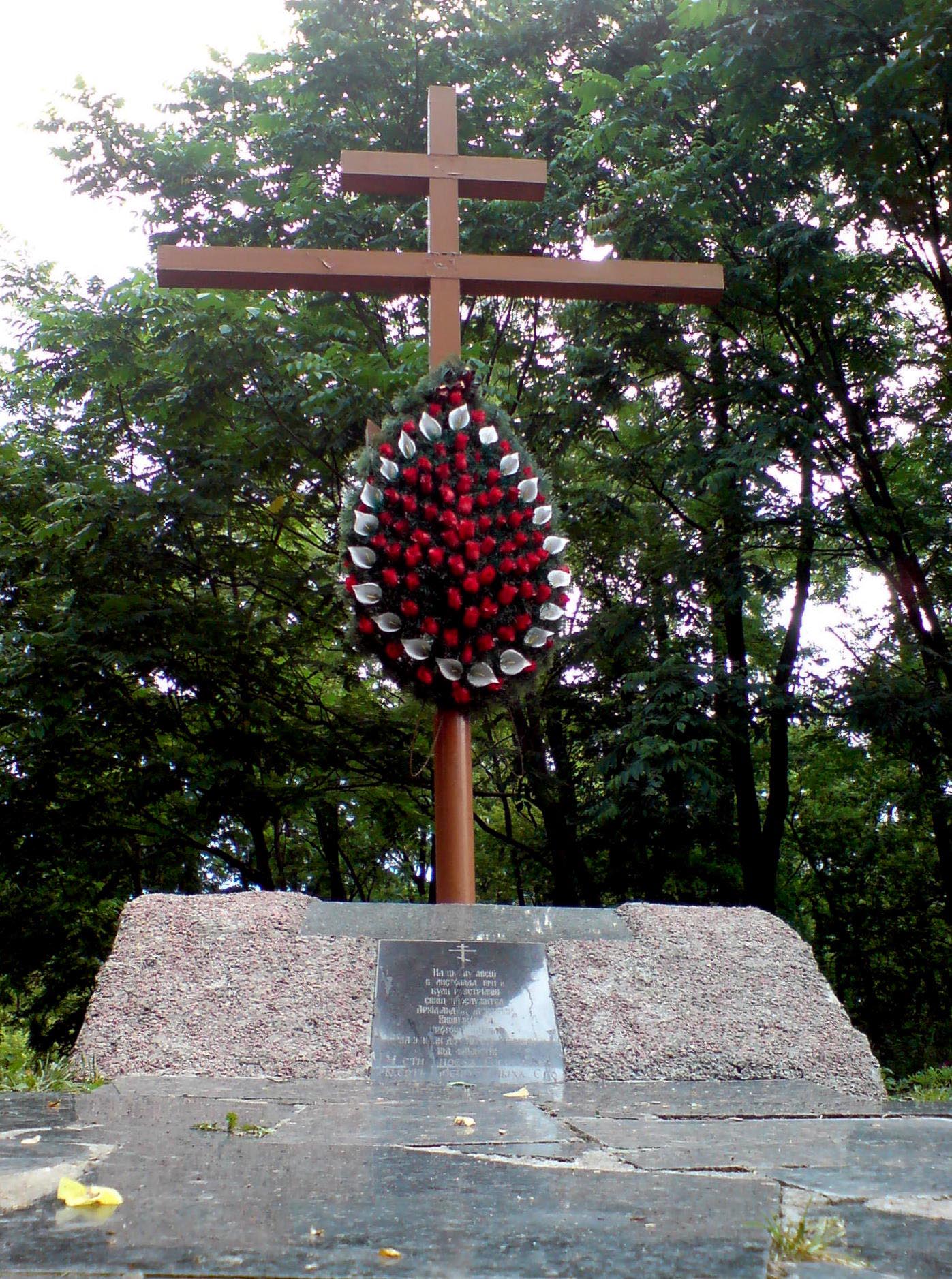
In November 2000, not far from the Menorah monument, another cross was erected to commemorate the Orthodox priests, Archimandrite Alexandr and Archpriest Pavel, who were shot by the Nazis on 6 November 1941 — allegedly for their agitation for resistance.
At the beginning of the 2000s, the American Jewish Joint Distribution Committee (JDC or Joint) declared its intention to provide ten million dollars for the construction of a Jewish communal-cultural centre to be named "Heritage." On 30 September 2001, the sixtieth anniversary of the Babyn Yar massacre, the memorial stone was placed around two hundred metres from the Soviet-period monument. The triangular stone was inscribed with epigraphs in Ukrainian, Hebrew, and English stating: "I will put my breath into you and you shall live again."
As some commentators have noted, different meanings could be found in the three inscriptions. In April 2001, the Kyiv City Council decided to allocate a piece of land for the construction of the "Heritage" community centre. According to the initial concept, the centre was to be designed as a major site for the revival of the Jewish community in Ukraine. In 2002 the project was presented for public discussion. It very soon became obvious that the idea of establishing this kind of institution on the Babyn Yar site was not acceptable — neither for a segment of the Jewish community in Ukraine and beyond, nor for many intellectuals, and also not for the central authorities. The discussion, which lasted for almost two years, revealed three different opinion groups.
The arguments of the opponents may be summarized as follows: Babyn Yar is a commemorative site for many nationalities, and as it is a sacred place for them, the establishment of a separate Jewish center would hurt the feelings of other national groups; the centre (which would include, apart from educational facilities, a museum, library, cafe, shops, and music centre) should not be built on a site of mass killings, literally, on the bones of the victims. The opponents also envisaged that the construction of the Jewish centre would provoke a war of symbols at Babyn Yar. [6]
The proponents stated that the actual killings took place at the other end of Babyn Yar, exactly at the location where a recreational park has been established. Some present quite a different argument — that the memorial, which is designed to be a centre for spiritual resurrection of the Jewish community, should in effect be placed where Jews were exterminated.
Some proposed a consensus: to establish a Jewish memorial and museum at Babyn Yar and to build the cultural-community centre at some other location. In the course of discussions, the name to be given to the centre was changed — from "The Jewish Cultural and Community Heritage Centre" to "Memorial-Educational Community Centre." [7]
The discussions stopped in September 2005, when the incumbent President Viktor Yushchenko decreed that there should be preparatory work for the establishment of a state-owned "Babyn Yar" historical-cultural sanctuary. In 2006, the governmental and city of Kyiv institutions were to present the proposal for the sanctuary. However, no further practical steps were undertaken to advance the project. All state resources were concentrated on the planned construction of the Holodomor (the 1930s Terror-Famine) memorial on the Dnipro hills in Kyiv.
Concurrently, an unfinished building and a piece of land at Babyn Yar was reportedly rented (or perhaps purchased) by Vadim Rabinovich from Kyiv city authorities — with plans to build a Jewish community centre with a museum, synagogue, and school. These plans provoked another wave of heated debates about the "practicability" of such an action. [8]
In October 2009 Yushchenko issued another decree to enact a set of measures that would lead to the construction of the sanctuary by 2011 — one of which was the establishment of a memorial museum at Babyn Yar. Finally, in February 2010, Yushchenko elevated the official status of the future sanctuary to "national." [9]
In May 2010, the Jewish community of Ukraine announced another competition for a Jewish memorial at Babyn Yar. It is noteworthy that this discussion also provoked some antisemitic reactions. The public was introduced to denial arguments (with some stating that the mass extermination of the Kyiv Jews is a complete fraud), as well as to standard antisemitic speculations about a "Jewish conspiracy," with the Babyn Yar issue being part of it.
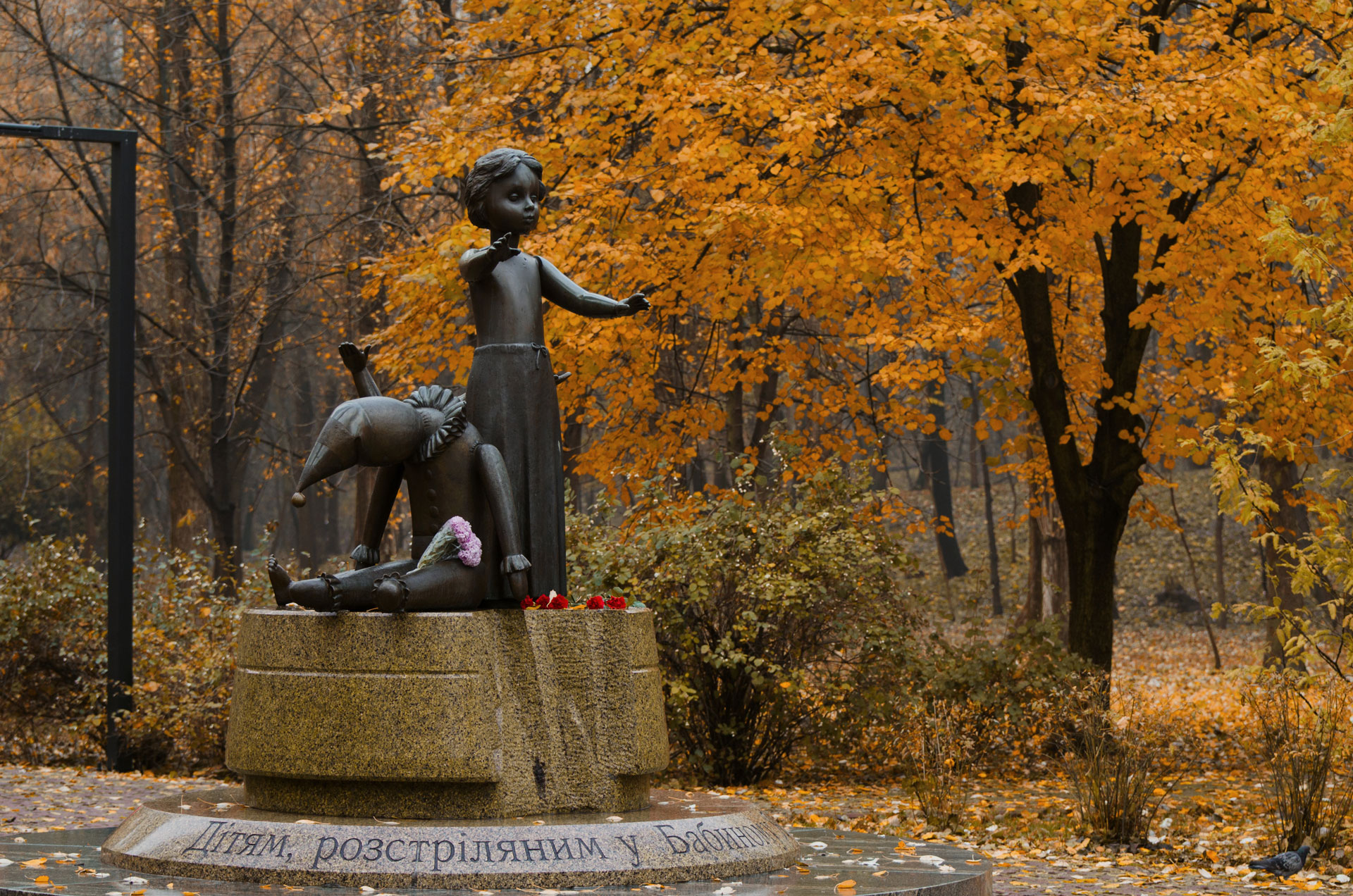
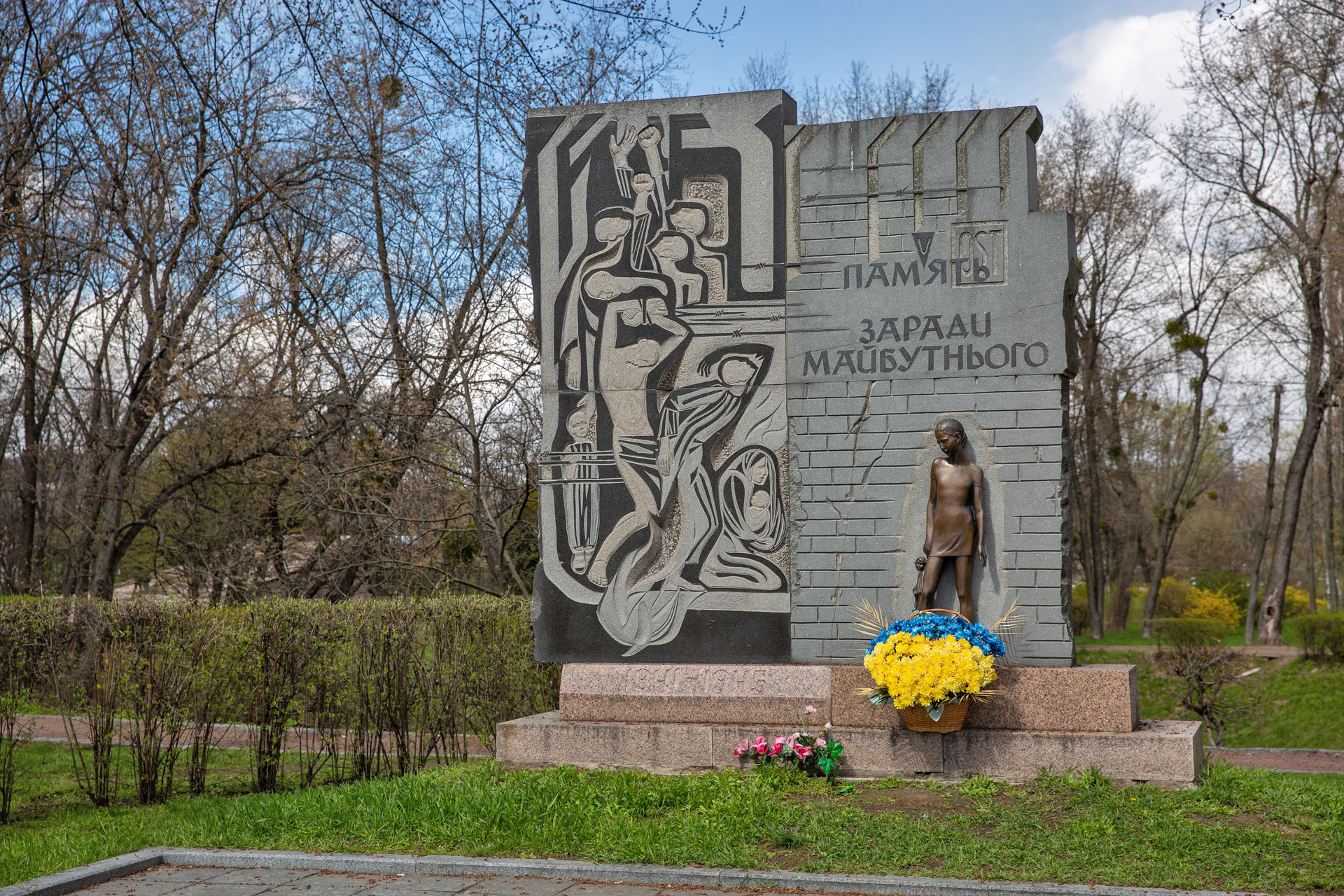
Over this period, the Babyn Yar terrain has been gradually "populated" by other sites of memory and monuments. In September 2001, the monument to children murdered at Babyn Yar was erected in a location believed to be close to the site of the actual killings. This monument consists of a sculpture group that presents three broken dolls. In September 2005, the monument dedicated to Ostarbeiters was erected. The inscription on this monument is: "Memory for the future" and "Let us honour the memory of three million citizens of Ukraine forcibly deported to Nazi Germany during the Second World War, many of them murdered by back-breaking slave labour, hunger and torture, killed and burned in crematoria."
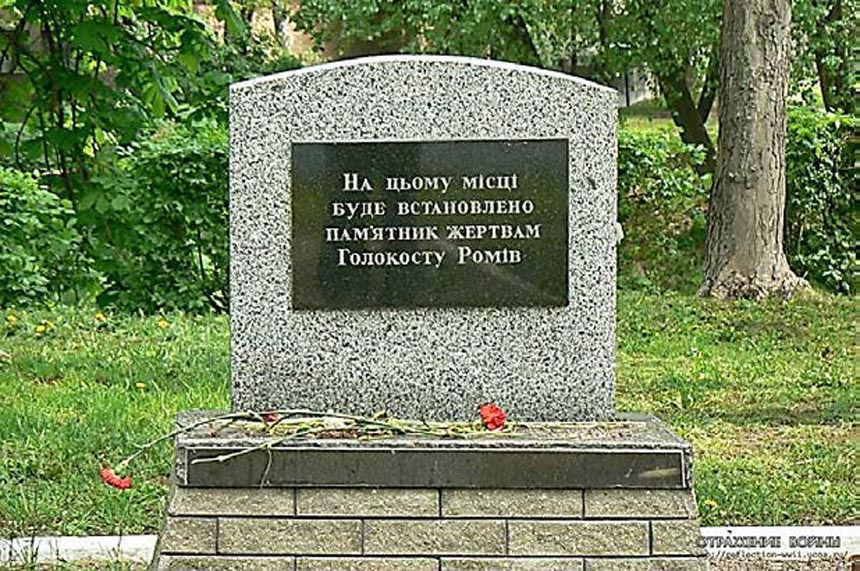
Recently a memorial plaque to the Roma people was also established near the Ostarbeiters monument. The epigraph states: "At this site, the monument to the victims of the Holocaust of the Roma people will be erected." Two attempts to erect a monument to Roma people were abruptly stopped by the authorities.
A Final Note
According to different estimates and documented data, Babyn Yar is a mass grave for some 100,000 victims of Nazism, murdered in a series of massacres between 1941 and 1943, of whom an estimated two-thirds (or three-quarters by other estimates) were Jews. The most documented of the massacres took place on 29–30 September 1941, when 33,771 Jews were killed in a single operation. The shooting of Jews continued for another three days. Other victims included thousands of Soviet POWs, communists, Roma, Ukrainian nationalists, Orthodox priests, mentally ill patients from the Pavlov Hospital, and civilian hostages of different nationalities. Ukrainian authorities have yet to find a way to properly acknowledge the fact that the primary and vast majority of the victims at Babyn Yar were Jews, while paying due respect to the other groups murdered there.
[1] The first systematic account on Babyn Yar history, which includes research articles, archival texts, and photos, was published in Russian in 2004: Babii Yar: chelovek, vlast`, istoriia. Kniga 1. Istoricheskiia topografiia, khronologiia sobytii (Kyiv, 2004). The text is available online: http://www.kby.kiev.ua/book1/.
[2] Photos and descriptions of some of these projects can be found here: Neosushest-vlennye proekty http://www.babiyar-discus.narod.ru/BY-Nesush.html.
[3] "Babii Yar: Tragediia o tragedii," Zerkalo nedeli, 27 September 1997.
[4] Kyiv: pamiatnik zhertvam Babiego Yara "Menora" vnov` razrushaetsia http://www.holocf.ru/facts/861 (accessed 31 August 2011); "Babii Yar oskvernili!" Stolichnye novosti, 18–24 July 2006.
[5] Kharkivs'ka PRP oburena aktom vandalizmu u Babynomu Yaru http://kharkiv.unian.net/ukr/detail/192174 (accessed 21 June 2010).
[6] Vladimir Kutcheriavy, "Tsivilizovannoe sviatotatstvo," Zerkalo nedeli, 12–25 July 2003.
[7] For more detailed information about this public discussion and its further outcomes see: http://day.kyiv.ua/uk/article/cuspilstvo/babin-yar-ne-treba-monopolizuvati-pamyat-pro-tragediyu
[8] See for instance: Vitalii Nakhmanovich, Semion Gluzman, "Vadim Rabinovich kak personal`nyi magnit," Telekrytyka, 29 July 2006 and Myroslav Marynovych, "Izbezhat` voiny simvolov," Zerkalo nededli, 19–25 August 2006.
[9] Ukaz Prezydenta Ukrainy 258/2010 "Pro nadannia derzhavnomu istoryko-memorial`nomu zapovidnyku 'Babyn Yar' statusu natsional`noho http://zakon5.rada.gov.ua/laws/show/258/2010